Last Updated on October 4, 2026 by Umar Farooq
How to clean roof shingles without pressure washing? Spray a 50:50 mix of laundry-strength chlorine bleach and water with a pump sprayer, let it dwell 15 to 20 minutes, then rinse with low-pressure water from a garden hose. Never scrub, never use a power washer, and protect plants before and after.
Learning how to clean roof shingles without pressure washing is not a compromise — it is the only method the roofing industry actually endorses. A pressure washer strips the ceramic granules that protect asphalt shingles from ultraviolet light, and once those granules are gone the shingle ages fast and the warranty is usually void. The good news is that the correct method is cheaper, easier and lasts longer than blasting. Chemistry does the work, water only rinses.
Why You Should Never Pressure Wash Asphalt Shingles
An asphalt shingle is a mat saturated in asphalt and coated on top with ceramic-coated mineral granules. Those granules are not decoration. They block UV radiation, add fire resistance, and shield the asphalt underneath from heat. Strip them and the asphalt is exposed directly to sunlight, where it dries, hardens, cracks and curls years ahead of schedule.
The Asphalt Roofing Manufacturers Association is unambiguous. Its guidance on algae and moss prevention and cleaning for asphalt roofing systems states that you should never use a pressure washer to clean an asphalt shingle roof, because it will cause granule loss and premature failure. Its separate algae discoloration bulletin goes further and rules out brushes and brooms as well, noting that high-pressure washing systems are likely to damage asphalt roofing.
There is a second problem that granule loss gets all the attention for hiding. Shingles are lapped to shed water flowing downhill. A pressure washer aimed up-slope drives water underneath the courses, past the laps, and onto the decking and underlayment. That water has no fast way out. Leaks and sheathing rot from a single aggressive wash can take a year to show up, long after anyone connects the two events.
What Granule Loss Actually Costs You
A little granule loss is normal. New roofs shed loose granules for the first few rains, and old roofs shed slowly as they weather. Pressure washing is different: it removes bonded granules across whole sections in minutes.
Watch the gutters and the ground at the downspouts. A handful of granules after a storm is routine. A cup or more after a cleaning means damage. Once granules are gone in patches, the exposed asphalt takes on a shiny, dark, slightly bald look, and those areas will blister and crack long before the rest of the roof.
Most manufacturers list pressure washing under excluded causes of damage in their limited warranties. That means the cost is not only a shorter roof life, it is also losing the coverage that would have paid for early failure.
How to Clean Roof Shingles Without Pressure Washing: The 4 Real Methods
There are four legitimate approaches, and they are not interchangeable. Two clean, one is gentler but slower, and one prevents regrowth rather than removing it.
| Method | Pressure at the roof | Typical cost | Risk to shingles | Effectiveness on black algae | Regrowth timeline |
| Pressure washing | 1,500-3,000 PSI | $0-100 (own machine) | Severe; usually voids warranty | Fast but destructive | 1-2 years |
| DIY chlorine wash with pump sprayer | Under 60 PSI | $30-60 in supplies | Low | Very high | 2-4 years |
| Professional soft wash | Under 100 PSI | $400-900 | Low | Very high | 3-5 years |
| Oxygen bleach (chemical only) | Garden sprayer | $40-80 | Very low | Moderate, slower | 1-2 years |
| Zinc or copper strips | None | $60-200 materials | Low if fitted at replacement | Prevention only | Ongoing |
Read the regrowth column carefully, because it is the one homeowners judge results by six months later. Pressure washing looks impressive on day one and greens up fastest, because force removes what you can see while leaving the living organism inside the granule bed. A chlorine solution with proper dwell time kills the organism, so the roof stays clean two to four times longer.
Method 1: The ARMA Bleach and Water Wash
This is the industry standard and the cheapest effective option. You need laundry-strength liquid chlorine bleach (sodium hypochlorite), water, and a pump sprayer or hose-end sprayer. You do not need any equipment that generates pressure.
One thing to be clear about, because almost every page online gets it wrong: the 50:50 figure below is the common trade starting point, not an ARMA specification. ARMA recommends a household bleach and water solution and then sends you to your own shingle manufacturer for the mixing directions, deliberately declining to publish one universal ratio. That matters because “bleach” is not one strength — what actually lands on the roof depends on what is in your jug.
Mix equal parts bleach and water. Many cleaners add a small amount of surfactant so the solution clings to the slope instead of running straight into the gutter, which is what actually makes the difference between a mediocre result and a clean roof.
Mixing, Dwell Time and Rinsing
Apply from the ridge downward in overlapping bands, wetting the surface without flooding it. ARMA specifies leaving the solution on the roof for at least 15 minutes but no more than 20 minutes, then rinsing thoroughly with low-pressure water. Do not let the solution dry on the shingles, because dried residue is far harder to rinse away and can leave visible marks.
| Solution | Mix ratio | Dwell time | Plant risk | Best for |
| Chlorine bleach and water | 50:50 | 15-20 min | High; must pre-soak and rinse plants | Black algae streaks, mildew |
| Chlorine plus surfactant | 50:50 plus cling agent | 15-20 min | High | Steep slopes where solution runs off fast |
| Oxygen bleach (sodium percarbonate) | 1 cup per gallon warm water | 20-30 min | Low | Plant-heavy yards, ponds nearby |
| Household vinegar solution | 1:1 with water | 20-60 min | Very low | Very light surface algae only |
| Plain water rinse | N/A | N/A | None | Loose debris and dust |
Rinsing matters as much as mixing. Use a garden hose with a standard spray nozzle, working from the ridge down toward the gutters so water always travels the direction the shingles are designed to shed it. If a streak survives, do not scrub it. Re-apply solution and give it a second dwell.
Method 2: Oxygen Bleach for Plant-Heavy Properties
Chlorine is the fastest killer, but it is hostile to plants, and if your roof runoff drains directly into flower beds, a vegetable garden, or a pond, the tradeoff changes.
Oxygen bleach, sold as sodium percarbonate, releases hydrogen peroxide and soda ash in water. It is much gentler on landscaping and safer to have running off a roof, and it will not corrode metal flashing or gutters the way chlorine can over repeated applications.
The tradeoff is speed and strength. Oxygen bleach needs a longer dwell, roughly 20 to 30 minutes, needs the surface to stay wet the whole time, and often needs a second treatment on heavy black streaking. On moderate algae it works well. On thick lichen it will underperform.
Mix roughly one cup of powder per gallon of warm water, dissolve fully so it does not clog your sprayer, and apply the same way: ridge down, no scrubbing, low-pressure rinse.
Method 3: Professional Soft Washing
Soft washing is the same chemistry delivered by a purpose-built low-pressure system. A 12-volt pump or a downstream injector puts solution on the roof at roughly 40 to 100 PSI, which is around garden-hose pressure and a fraction of what any pressure washer produces.
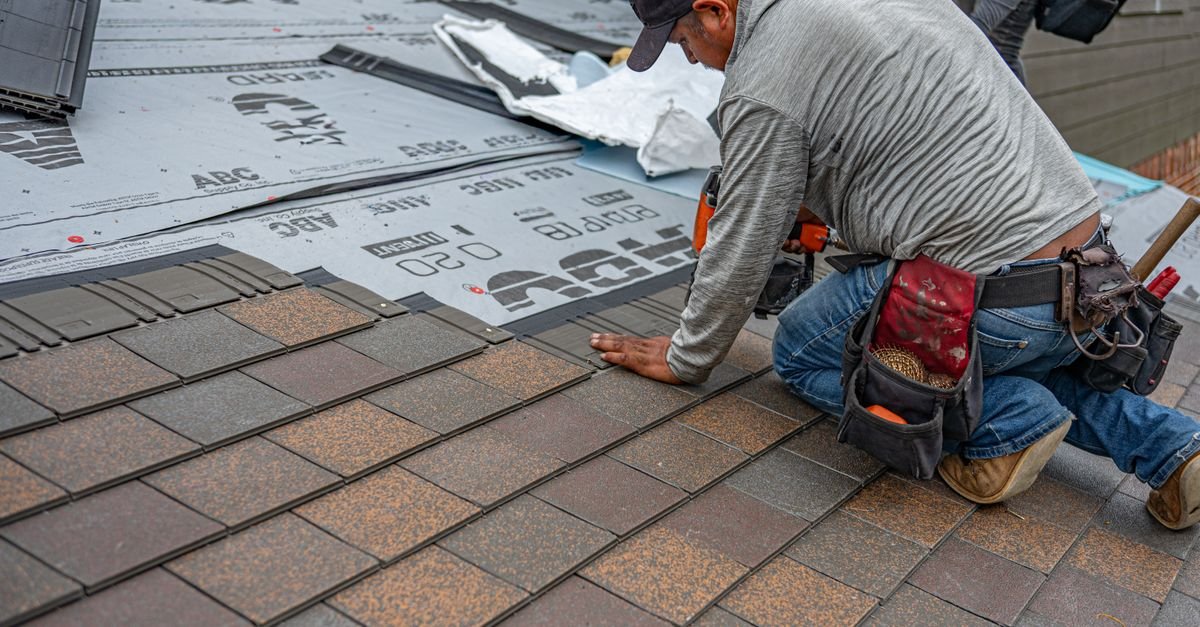
The advantage is not the pump. It is reach and consistency. A soft-wash operator can treat a whole roof from the ground or from a ladder at the eave, without walking the slope, and can hold an even application rate across a large area so the roof dries uniformly instead of blotchy.
Hire it out when the roof is two storeys, the pitch is steep, the growth is heavy lichen, or you simply do not want to be up there. Expect roughly $400 to $900 for an average single-family roof depending on size, pitch and severity. That is far less than a section of replaced decking.
If you already own a pressure washer and are tempted to use it on a low setting instead, understand that even the lowest setting on most consumer machines lands well above the safe range. Our guide to what PSI pressure washer you need shows where roofs sit relative to every other exterior surface, and the answer is that they sit off the chart entirely.
Method 4: Prevention Strips — Zinc and Copper
Metal strips at the ridge are the classic long-term fix. Rain picks up trace metal ions as it passes over the strip and carries them down the slope, suppressing algae and moss below.
They genuinely work. Guidance collected by the University of Washington’s Elisabeth C. Miller Library on roof moss removal notes that zinc strips can suppress growth up to about 15 feet below the flashing, that most proprietary strips stay effective for around a year, and that heavier galvanized flashing can keep working for decades.
There is an important catch that most articles never mention. ARMA specifically advises against adding zinc or copper strips to an existing roof, because installing them means either driving exposed nails through shingles, which creates leak points, or lifting shingles and breaking the factory sealant bond, which creates wind-uplift risk. Strips belong on a roof at the time it is replaced, not retrofitted onto a roof mid-life.
If your roof is due for replacement anyway, ask about algae-resistant shingles with copper-containing granules built in. That gives you the same protection with no fasteners and no broken seals.
One environmental note: zinc runoff is a pollutant and is toxic to aquatic life. If you have a fish pond, a rain barrel used on edibles, or a stream at the property edge, keep runoff away from it.
Black Streaks vs Moss vs Lichen: Three Problems, Three Fixes
Most guides treat everything growing on a roof as one problem. It is three, and they respond very differently. The image above shows moss and lichen on clay tile — a different roofing material with its own rules — but the growths themselves behave the same way on asphalt.
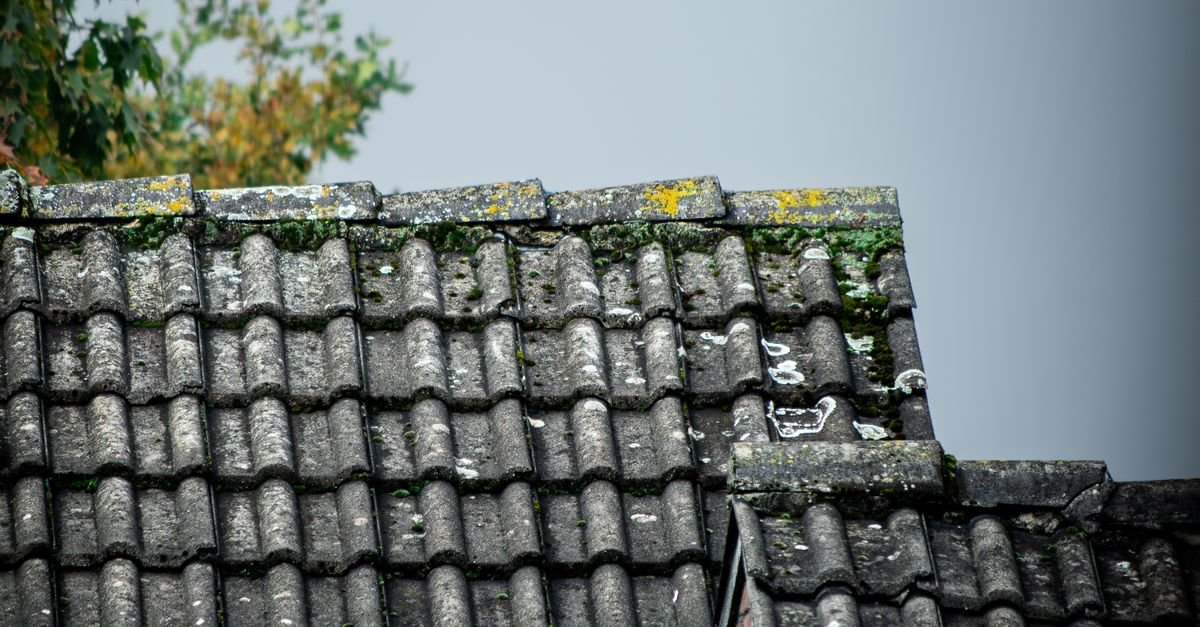
| Growth | What you see | What it actually is | Treatment | How fast it clears |
| Black streaks | Dark vertical stains running down-slope, worst on north faces | *Gloeocapsa magma*, a blue-green algae feeding on limestone filler in the shingle | 50:50 chlorine wash, 15-20 min dwell | Visibly lighter within an hour, fully clears over 2-6 weeks of rain |
| Moss | Green, spongy clumps sitting proud of the surface, often at lap edges | True plant holding water against the shingle | Chlorine or oxygen bleach; let dead moss weather off | Dies in days, sheds over 1-3 months |
| Lichen | Crusty grey, green or orange discs bonded flat to the surface | Fungus and algae living together, rooted into the granule bed | Repeat chlorine applications; expect partial results | Slowest; may leave faint marks permanently |
How to Tell Them Apart From the Ground
Use binoculars from the driveway rather than climbing. Streaks run vertically and look like something spilled down the roof — that is algae, and it is cosmetic. Moss looks fuzzy and three-dimensional and casts a shadow, and it is the one that causes real damage, because it holds moisture against the shingle and can lift lap edges as it thickens.
Lichen looks like flat, dry paint splatter that will not wash off. It is the most stubborn of the three because it has physically grown into the granule layer, and this is where people reach for a pressure washer out of frustration. Do not. Removing lichen with force removes the granules it is attached to, which is why lichen is the single most common cause of pressure-wash roof damage.
For moss specifically, kill it first and let weather take it away. If you must remove clumps by hand, work only in the down-slope direction with a soft brush and accept leaving some behind. The same patience pays off on hard surfaces too, as covered in our guide to removing moss from a concrete driveway.
Roof Safety: Why Most Homeowners Should Stay Off the Roof
A dry asphalt roof at a shallow pitch is walkable for a fit person in soft-soled shoes. A roof that is wet with a slippery chemical solution is a different surface entirely, and that is exactly the state your roof will be in for the twenty minutes you are waiting out the dwell time.
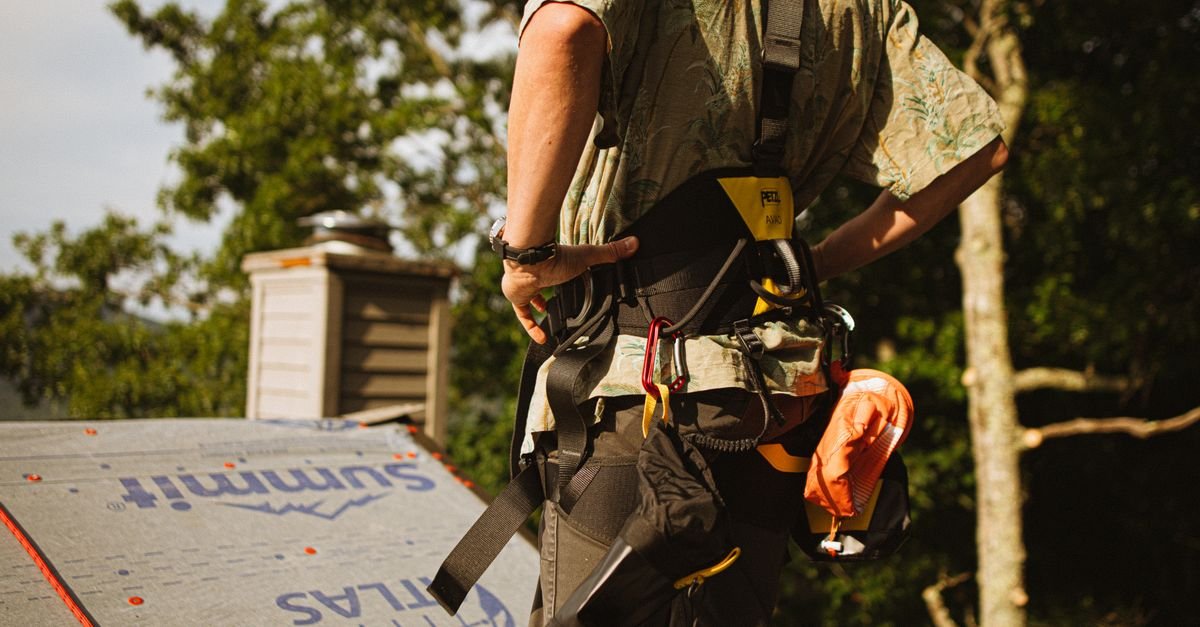
| Situation | Treat from the ground | DIY on the roof | Hire a professional |
| Single storey, pitch under 4:12, dry | Yes, with a hose-end or pole sprayer | Acceptable with harness and anchor | Optional |
| Single storey, pitch 5:12 to 7:12 | Preferred | Only with proper fall protection | Recommended |
| Two storeys, any pitch | Rarely possible | No | Yes |
| Pitch above 7:12 | Not reachable | No | Yes |
| Heavy moss or lichen, any height | Partial | No | Yes |
| Roof over 15 years old, brittle shingles | Yes | No, foot traffic cracks shingles | Yes |
Age matters as much as pitch. Shingles get brittle with time, and on a roof past about 15 years, simply walking on it in cool weather can crack tabs. If you cannot reach it from a ladder at the eave or with a pole sprayer, that is the signal to hire it out.
Never Work a Roof From a Ladder With a Wand
This deserves its own warning because it is the specific scenario that injures people every year. A pressure washer wand produces real backward thrust. On solid ground you absorb it without thinking. On a ladder, that thrust is enough to push you off balance, and there is nothing to catch you.
The same applies to leaning sideways to reach one more foot of roof. Move the ladder. If the job needs a wand and a ladder at the same time, the job needs a different method or a different person.
Protect yourself on the ground as well: chlorine solution splashes back, and you want eye protection, gloves, long sleeves and closed shoes. Work on a still day, because drift onto cars, siding and plants is the most common collateral damage.
How to Clean Roof Shingles Without Pressure Washing, Step by Step
1. Pick a cool, overcast, still day. Heat dries the solution too fast and wind carries it where you do not want it.
2. Clear loose debris with a leaf blower or a long-handled roof rake used gently, down-slope only.
3. Close windows, cover or move patio furniture, and cover any exposed AC condenser.
4. Soak all plants, shrubs and lawn below the roofline with plain water until saturated.
5. Mix your solution in the sprayer and test one small area on a rear elevation first.
6. Apply from the ridge down in overlapping bands until the surface is evenly wet.
7. Let it dwell 15 to 20 minutes for chlorine, 20 to 30 for oxygen bleach, re-misting if any area starts to dry.
8. Rinse with a garden hose from the ridge down, never up-slope, using a plain spray nozzle.
9. Rinse the plants a second time, then rinse siding, walkways and the driveway.
10. Flush the gutters and downspouts so dead growth and residue do not sit in them.
11. Wait two to six weeks. Dead algae and moss continue to fade and shed with normal rain.
That last step is the one people skip. A treated roof keeps improving after you put the sprayer away. Judging the result on the same afternoon is what pushes homeowners into a second, harsher attempt they did not need.
Mistakes That Ruin Roofs
Scrubbing with a brush or broom. ARMA rules out brushes and brooms alongside power washers, for the same reason: both drag granules off.
Spraying up-slope. Water and solution forced under the laps reach the underlayment and decking. Always work with the shingle direction, never against it.
Skipping plant protection. Undiluted chlorine hitting dry foliage burns it within minutes. Pre-soaking dilutes anything that lands and is the single most effective precaution.
Treating a dry roof in full sun. The solution evaporates before it can kill anything and leaves streaky residue. Overcast and cool is the goal.
Assuming siding rules apply. Roofs and walls are not the same problem. Vinyl tolerates far more than shingles do, as our guide to pressure washing vinyl siding explains, and stucco has its own limits set out in our guide to what PSI to pressure wash stucco. Neither set of numbers transfers to a roof.
FAQ
Can you pressure wash a roof on a low setting?
No. Even the lowest setting on a typical consumer pressure washer produces well over 1,000 PSI at the nozzle, and manufacturers set the ceiling for shingles at garden-hose pressure. Backing off the trigger does not turn a pressure washer into a soft-wash system, because the pump still cycles at high pressure.
Does cleaning a roof with bleach damage shingles?
Diluted sodium hypochlorite applied at low pressure, dwelled 15 to 20 minutes and rinsed thoroughly is the method the roofing industry itself recommends. Problems come from letting it dry on the surface, using it repeatedly at high strength, or failing to rinse metal flashing and gutters afterwards. Rinse everything the runoff touches.
How often should roof shingles be cleaned?
Every three to five years suits most homes. Shaded, humid or heavily treed properties may need attention every two to three years. Cleaning more often than that adds chemical exposure without much benefit, so it is better to reduce shade by trimming overhanging branches.
Will vinegar clean roof algae?
Vinegar handles very light surface algae and is the safest option around plants, but it is weak against established black streaking and useless on lichen. Expect a partial result and a fast return. Use it when the growth is minor and plant safety is the priority.
Do zinc strips work on an existing roof?
They work chemically, but ARMA advises against retrofitting them because installation requires either exposed nails, which invite leaks, or lifting shingles and breaking the sealant bond, which invites wind damage. Save strips or algae-resistant shingles for the next roof replacement.
Why do black streaks come back so quickly after pressure washing?
Because force removes the visible layer but leaves the living organism embedded in the granule bed. Within a season it regrows from what is left. A chlorine solution with proper dwell time kills it, which is why chemical cleaning lasts two to four times longer than blasting.
Should I remove moss by hand?
Only gently, and only after killing it. Scraping live moss pulls granules and can lift shingle edges. Treat it, wait, then use a soft brush working down-slope for any clumps that remain, and accept leaving stubborn pieces to weather away.
Does roof cleaning void a shingle warranty?
Pressure washing generally does, because it appears in the excluded-damage list of most limited warranties. Low-pressure chemical cleaning following manufacturer guidance normally does not. Check your specific manufacturer’s bulletin and keep a record of the method used.
Can I clean the roof from the ground?
Often yes, on a single-storey home. A hose-end sprayer or a pole-mounted low-pressure sprayer can reach most of a shallow single-storey roof from a ladder set at the eave or from the ground. Two-storey homes and steep pitches usually need professional equipment.
What about the gutters and the driveway afterwards?
Flush the gutters and downspouts after treating, since dead growth and residue collect there and will restain your fascia. Rinse siding, walkways and the driveway before runoff dries, and check the nozzle setup you use for those surfaces against our pressure washer nozzle chart.
This Is the Correct Method, Not the Lesser One
The honest answer on how to clean roof shingles without pressure washing is that this is not the lesser method, it is the correct one. Asphalt shingles depend on a granule layer that force removes and cannot restore, and every major manufacturer body says the same thing: no power washers, no brushes, no brooms.
Use a 50:50 chlorine and water solution from a pump sprayer with a 15 to 20 minute dwell, or oxygen bleach where plants and water features make chlorine a bad fit. Rinse from the ridge downward at hose pressure. Soak your landscaping before and after. Stay off steep, wet or aging roofs entirely and treat from the ground or hire it out. Then give the roof a few weeks of rain to finish the job. You will spend less, keep the warranty intact, and the roof will stay clean two to four times longer than any pressure-washed result.