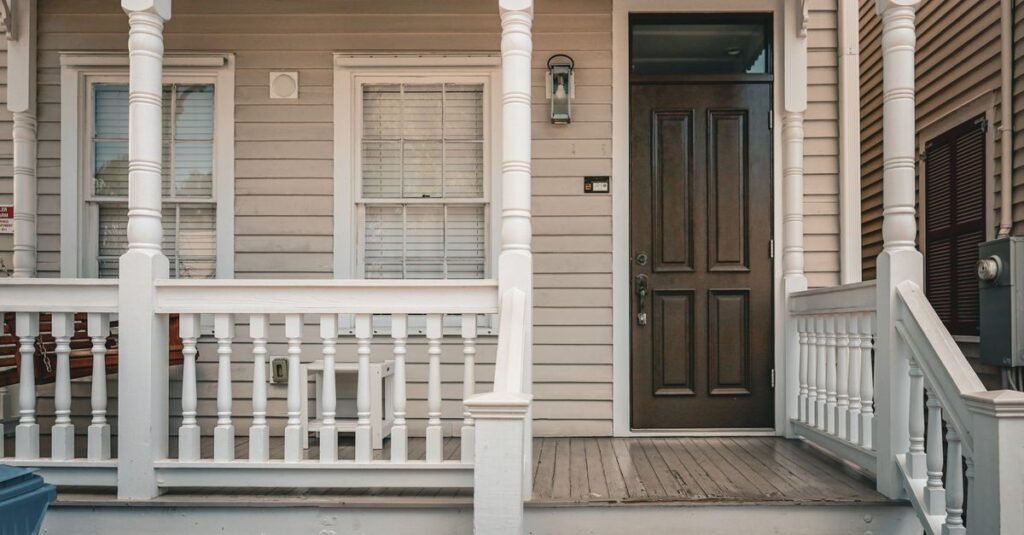
Last Updated on October 4, 2026 by Umar Farooq
Can you pressure wash an asphalt driveway? Yes, but asphalt needs far gentler settings than concrete. Use 1,000–1,500 PSI, a 25-degree or 40-degree nozzle, and keep the tip at least 12 inches from the surface. Never use a 0-degree tip, and never wash asphalt that was laid less than six months ago.
Can you pressure wash asphalt driveway surfaces the same way you wash a concrete one? No — and that single mistake causes more asphalt damage than anything else homeowners do. Concrete is a rigid stone. Asphalt is stone held together by a soft petroleum binder, and that binder softens in heat and gives way under a hard jet.
Most pages that rank for this question either give no PSI numbers at all or quietly drift into concrete advice halfway through. This one keeps the two surfaces separate the whole way and tells you exactly where the ceiling is.
Can You Pressure Wash Asphalt Driveway Surfaces Without Damaging Them?
Yes, within limits. Understanding *why* the limits exist makes them easy to remember.
Asphalt is roughly 95% aggregate — crushed stone and sand — bound together by about 5% bitumen, a thick petroleum binder. That binder is what holds the stones in place, and it has three weaknesses:
- It softens with heat. On a hot day the surface temperature of black asphalt can run far above air temperature, and softer binder releases stone more easily.
- It oxidises with age. Sun and air harden and shrink the binder over years, which is what turns a driveway grey and starts the surface ravelling.
- It has no tensile strength against a jet. A narrow high-pressure stream lifts stones out of the matrix and leaves a permanently rough, lighter-coloured patch.
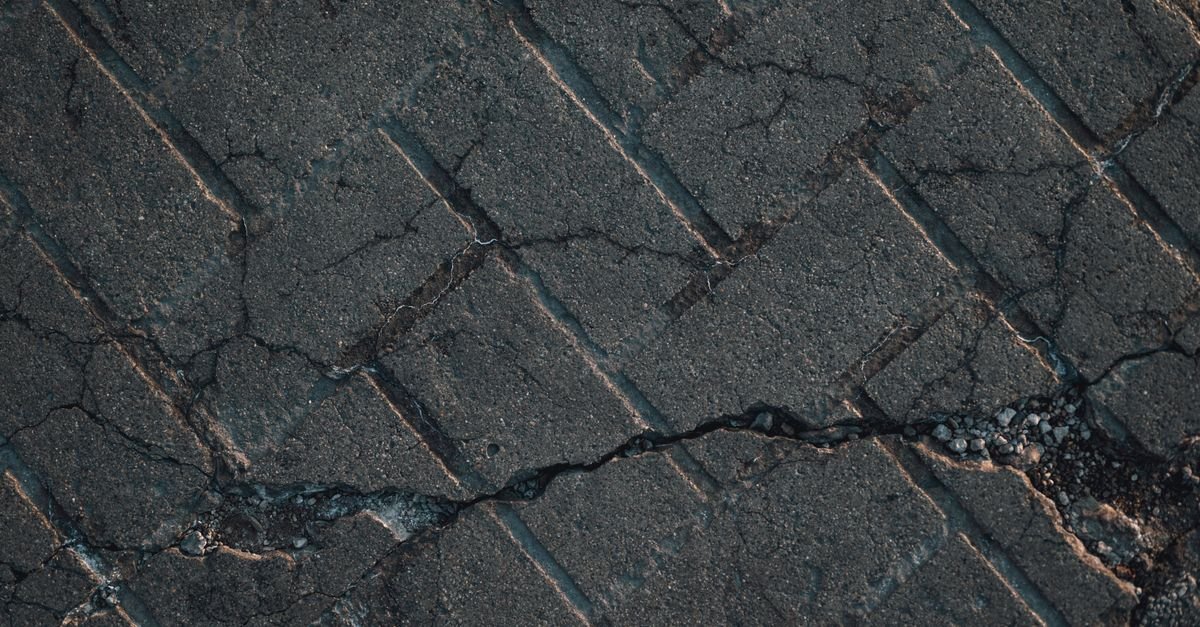
That is why the damage from over-pressuring asphalt looks different from concrete damage. Concrete etches into visible stripes. Asphalt ravels — it loses its top layer of stone, goes rough underfoot, and starts shedding grit into your garage.
The Asphalt-Only Spec Table
No concrete numbers in this table. These are asphalt figures only.
| Setting | Recommended | Absolute ceiling | Notes |
| Pressure at the machine | 1,000–1,500 PSI | ~2,200 PSI | Above 2,200 the binder starts releasing stone |
| Nozzle angle | 40° for general, 25° for stains | 25° | 15° only on isolated stains, briefly |
| Distance from surface | 12–18 in | 12 in minimum | Closer multiplies effective pressure sharply |
| Flow rate | 2.0–3.0 GPM | — | Flow rinses; pressure damages |
| Water temperature | Cold or lukewarm | Under 100°F | Hot water softens the binder |
| Surface temperature | Below 85°F | — | Work early morning or on a cloudy day |
| Wand angle | 30–45° to the surface | — | Never straight down at 90° |
| Surface cleaner attachment | Yes, best option | — | Spreads force over a wide disc |
| Minimum age of asphalt | 6 months | 12 months preferred | See the age gate below |
The follow-up nobody answers: what if my machine only does 3,000 PSI? You can still use it. Fit a 40-degree tip, back off to 18–24 inches, and add a surface cleaner if you have one. Effective pressure at the surface falls off fast with distance and fan width. If your machine has an adjustable unloader or a low-pressure setting, use it. Details on how ratings translate to real cleaning force are in what PSI pressure washer do I need.
Asphalt vs. Concrete: The Numbers Are Not Interchangeable
This is the most damaging assumption a homeowner can make, so here is the comparison in full.
| Factor | Asphalt driveway | Concrete driveway |
| Safe working pressure | 1,000–1,500 PSI | 2,500–3,500 PSI |
| Practical ceiling | ~2,200 PSI | ~4,000 PSI |
| Recommended nozzle | 40° (25° for stains) | 15° or 25° |
| Minimum distance | 12 in | 6–8 in |
| Reaction to a 0° tip | Cuts a groove in seconds | Etches a visible line |
| Failure mode when overdone | Ravelling, aggregate loss | Etching, surface striping |
| Heat sensitivity | High — binder softens | Very low |
| Hot water safe? | No | Yes |
| Chlorine bleach safe? | Avoid — degrades binder | Yes, with rinse |
| Degreaser safe? | Only asphalt-safe, pH neutral | Most degreasers fine |
| Sealing needed after washing | Yes, every 2–3 years | Optional |
| Typical safe wash frequency | Once a year | 1–2 times a year |
Read the first row twice. Concrete guidance commonly says 3,000 PSI. Applying 3,000 PSI to asphalt strips the surface. If you have both surfaces at your house, change your nozzle and your distance when you cross from one to the other — the concrete figures live on how much PSI to clean a concrete driveway.
Nozzle Choice: Why Yellow Is Risky and Red Is Forbidden
| Nozzle | Colour | Effect on asphalt | Use it? |
| 0° | Red | Cuts through the binder and gouges a channel within seconds | Never |
| 15° | Yellow | Concentrates enough force to lift aggregate; leaves lighter etched strips | Only on a specific stain, brief, 18 in back |
| 25° | Green | Good balance for oil marks and ground-in dirt | Yes, with care |
| 40° | White | The workhorse for general asphalt washing | Yes, default |
| 65° | Black (soap) | Applies cleaner at low pressure | Yes, for the detergent pass |
| Surface cleaner | — | Spreads force across a spinning disc; most even result | Best option |
Why a Surface Cleaner Beats a Wand on Asphalt
A surface cleaner is a flat round housing with two or three nozzles on a spinning bar underneath. It is the single best upgrade for driveway work, and on asphalt the reasons are specific:
- Consistent distance. The housing rides on wheels or skirts, so the tips stay a fixed height above the surface. Hand-wanding varies by several inches with every step, and those variations are what create light and dark banding.
- Force spread over a moving arc. The bar rotates fast enough that no single point takes a sustained hit, which is exactly what asphalt cannot tolerate.
- No overlap streaks. The disc cleans a full circle at once, so there are no wand-stroke edges.
- Two to three times faster, and it keeps the dirty water contained rather than throwing it across the lawn.
Match the cleaner to your machine’s flow. An undersized machine driving an oversized cleaner produces a weak, patchy result — the constraint is GPM, not PSI.
The 15-degree yellow tip deserves a specific warning. On concrete it is a normal working tip. On asphalt it sits right at the boundary where the binder begins to release stone, and the damage it causes shows up as parallel lighter stripes that never blend back in. If your asphalt is more than about eight years old and already oxidised, skip yellow entirely. The full tip reference is in the pressure washer nozzle chart.
The Age Gate: When New Asphalt Is Ready to Be Washed
This is missing from almost every guide, and it is the difference between a clean driveway and a ruined one.
New asphalt *dries* in days but *cures* over months. Drying is the surface cooling and hardening. Curing is the volatile oils in the binder oxidising away, which takes 6 to 12 months — the driveway shifting from jet black to grey is the visible sign it has happened. Sealcoating is normally recommended 30 to 90 days after installation, and full cure comes much later, as McConnell & Associates explains in its asphalt curing timeline.
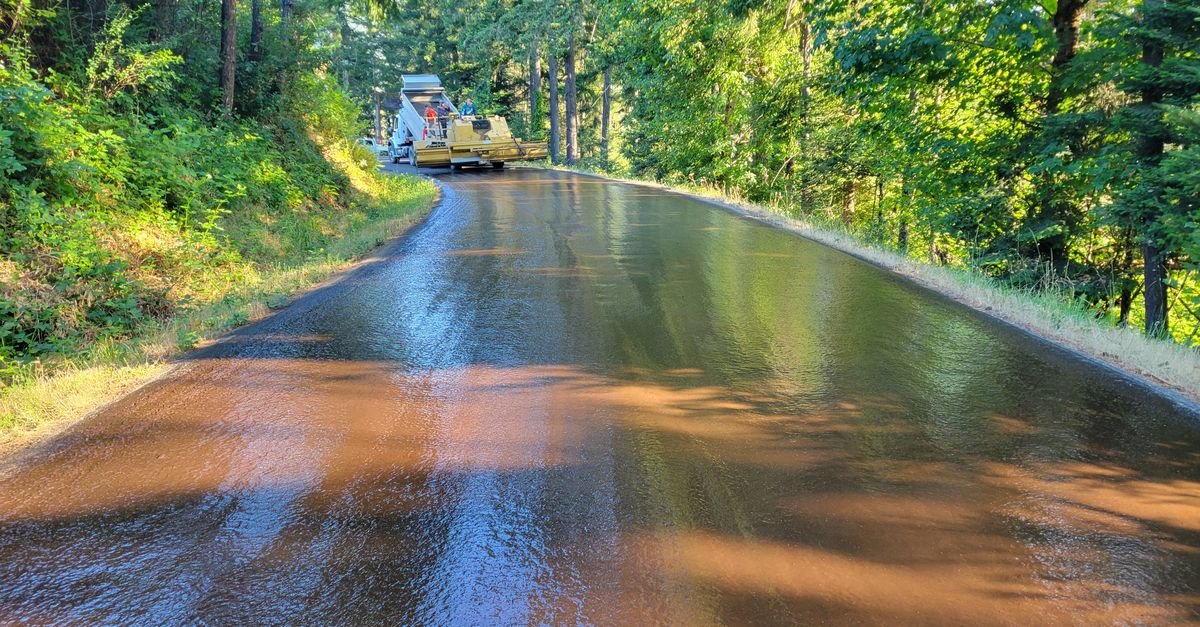
| Age of the asphalt | Pressure washing verdict | Why |
| 0–30 days | Absolutely not | Binder is still soft; water strips aggregate immediately |
| 1–6 months | No | Still curing; surface easily marked |
| 6–12 months | Rinse only, garden hose or under 1,000 PSI | Cure is well advanced but not complete |
| 12 months–8 years | Yes, 1,000–1,500 PSI | Prime condition for washing |
| 8–15 years | Yes, but drop to 1,000 PSI, 40° only | Binder is oxidised and brittle |
| 15+ years or visibly ravelling | Rinse only | Washing accelerates aggregate loss |
The obvious follow-up: how do you clean a brand-new driveway that got dirty? A garden hose, a bucket of mild detergent and a stiff broom. That is genuinely all it needs, and it will not cost you the top layer of your new pavement.
How to Tell If Your Asphalt Has Cured
If you inherited the house and have no idea when the driveway was laid, you can read the pavement itself:
- Colour. Fully cured asphalt is grey-black to grey. Deep jet black means it is either very new or recently sealed.
- The coin test. Press a coin edge firmly into the surface on a warm day. If it leaves a mark, the binder is still soft and it is too early to wash.
- Smell. Fresh asphalt has a distinct petroleum odour on hot days for the first several months. Cured asphalt does not.
- Tyre marks. New asphalt scuffs when you turn the wheel while stationary. Cured asphalt does not mark.
- Aggregate visibility. On a cured surface you can see the individual stones in the top layer. On new asphalt they are still coated in binder.
If two or more of those say “new”, give it more time. Waiting costs you nothing; washing early costs you the surface.
What Pressure Washing Removes From Asphalt — and What It Will Not
Setting expectations correctly saves people from cranking the pressure up in frustration.
It removes well:
- Dirt, dust, pollen and general road film
- Green algae and surface moss
- Loose debris in the crack lines
- Leaf tannin staining
- Light tyre scuff
It removes partially:
- Older oil marks — the surface film comes off but the stain that soaked into the binder often stays
- Rust marks from patio furniture or fertiliser
- Deep black mildew in shaded areas
It will not remove:
- Oil that has penetrated the asphalt. Asphalt is petroleum-based, so petroleum oil dissolves *into* it rather than sitting on top. This is the key difference from concrete, where a poultice can draw the stain back out — see will pressure washing remove oil stains from concrete.
- Fading and greying from UV oxidation. That is the binder itself, not dirt. Only sealcoating restores the colour.
- Cracks, potholes and ravelled patches. Those need patching.
Step by Step: Washing an Asphalt Driveway Safely
1. Check the age. Under 12 months, stop and use a hose.
2. Sweep first. Loose grit under a pressure jet becomes a projectile and scours the surface.
3. Pull weeds from the cracks by hand. Blasting them just drives the roots deeper and widens the crack.
4. Pick a cool, overcast day or work early. Hot asphalt is soft asphalt.
5. Pre-treat oil spots with an asphalt-safe, pH-neutral degreaser. Let it dwell 10–15 minutes, do not let it dry.
6. Apply a general cleaner with the soap tip, working in sections you can rinse before they dry.
7. Fit the 40-degree tip and start at the high end so dirty water runs away from clean areas.
8. Hold 12–18 inches back at a 30–45 degree angle, sweeping in long overlapping passes.
9. Keep the wand moving constantly. A two-second pause is enough to mark the surface.
10. Rinse from the top down and push all water toward the drainage side.
11. Let it dry fully — 12 to 24 hours — before sealing or before parking on it.
Can You Pressure Wash Asphalt Driveway Sealer Off by Accident?
Yes, easily, and this catches people out. Sealcoat is a thin surface film, not part of the pavement. A 15-degree tip at close range will lift a sealed layer in patches, leaving a blotchy driveway that looks worse than before you started.
If your driveway was sealed within the last two years:
- Use the 40-degree tip only
- Stay at 18 inches or more
- Keep pressure at or under 1,200 PSI
- Skip the pre-treat degreaser on large areas — many degreasers soften sealer
If the sealer is already patchy and worn, washing is fine — you are going to reseal anyway.
Reseal Sequencing: Dry Times and Cadence
Washing and sealing belong together. Sealer will not bond to a dirty driveway, and it will not bond to a wet one either.
| Stage | Time required | What goes wrong if you rush |
| Wash the driveway | 1–3 hours | Sealer over dirt peels within a season |
| Dry before sealing | 12–24 hours minimum | Trapped moisture blisters the sealer |
| Dry after rain, before sealing | 24–48 hours | Same — cracks hold water longest |
| Crack fill before sealing | Cure per product, often 24 h | Sealer sinks into unfilled cracks |
| Apply sealer | 2–4 hours | — |
| Cure before foot traffic | 12–24 hours | Footprints set permanently |
| Cure before vehicles | 24–48 hours | Tyre marks and power-steering scuffs |
| Reseal cadence | Every 2–3 years | Too often traps moisture; too rarely lets UV oxidise the binder |
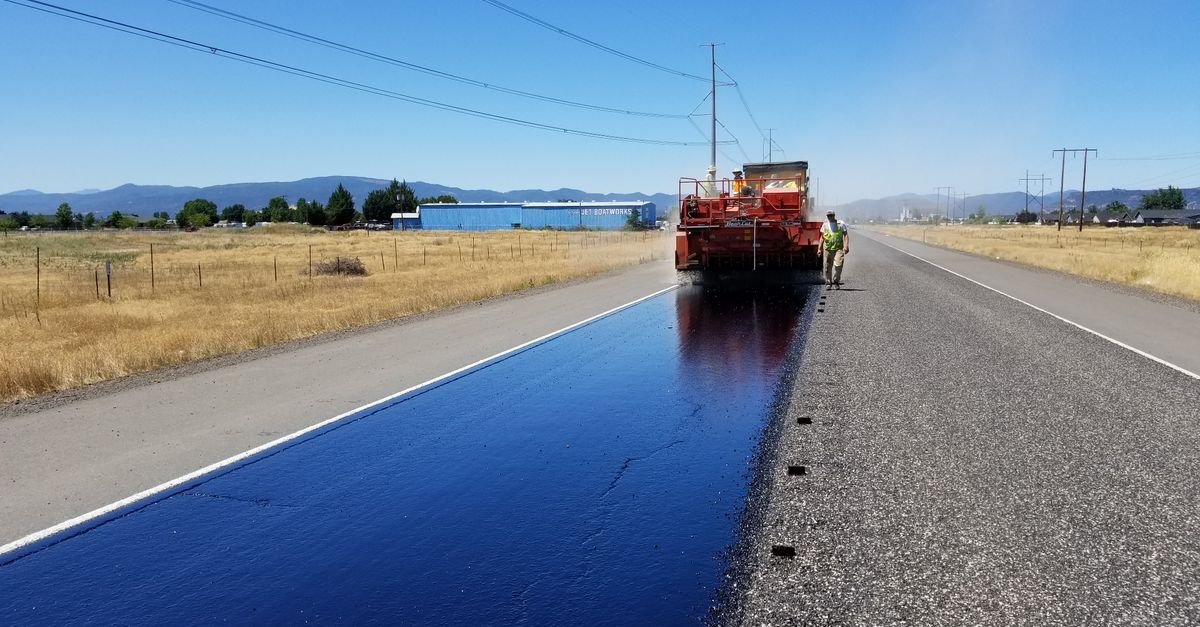
Richfield Blacktop’s asphalt washing guidance puts routine sealing on a similar two-to-three-year rhythm and recommends a wide fan tip at a minimum of 12 inches — the same limits used throughout this page.
When You Should Not Pressure Wash Asphalt At All
Walk the driveway before you start and look for these. Any one of them means rinse only, or repair first.
- Ravelling — loose stone that comes away when you scuff it with a shoe
- Alligator cracking — an interconnected pattern like reptile skin, which means the base beneath has failed
- Potholes or edge crumbling — water under pressure will enlarge them
- Asphalt under 12 months old
- Air temperature above 85°F, or a surface too hot to hold your palm on
- A driveway sealed within the last three months
What Affects the Cost of the Job
Cost intent is strong on this topic, so here is the honest informational version. Whether you hire it out or do it yourself, the same four variables drive the effort.
| Variable | Effect on the work | Why |
| Driveway size | Largest single factor | Everything scales per square foot |
| Level of staining | Adds a pre-treat pass | Degreaser plus dwell time doubles the passes |
| Surface condition | Older asphalt takes longer at lower pressure | You cannot speed it up with pressure |
| Slope and drainage | Steep drives are slower | Water and debris must be managed uphill |
| Sealing added on | Roughly doubles the total job | Separate materials plus a full cure window |
| Access to water | A weak tap slows everything | Flow, not pressure, is the limit — see what GPM do I need |
Two things reliably reduce the effort: sweeping and hand-weeding beforehand, and washing annually rather than letting five years of grime build up.
Gentler Alternatives Worth Knowing
- Hose and stiff broom. For new asphalt and light dirt, this is the correct tool, not a compromise.
- Oxygen bleach soak. Safe on asphalt, effective on organic staining and algae, and it needs no pressure at all. It is the same approach used for moss on concrete, and it works here too.
- Surface cleaner attachment. Technically still pressure washing, but the spinning disc spreads force evenly and is the single best upgrade for driveway work.
- Spot treatment only. Most driveways have three or four ugly patches and an otherwise fine surface. Treating just those beats washing the whole slab at higher pressure.
FAQ
What PSI is safe for an asphalt driveway?
1,000–1,500 PSI is the practical working range, with roughly 2,200 PSI as the ceiling. Above that, the water begins releasing aggregate from the binder. If your machine is rated higher, control the force with a 40-degree tip and 18 inches of distance instead of dialling in the pressure.
Will pressure washing damage asphalt?
Only if the pressure, nozzle or distance is wrong, or the asphalt is too new or too old. Correctly done at 1,000–1,500 PSI with a wide tip at 12 inches or more, washing is safe and is normal maintenance before sealing.
How soon can I pressure wash a new asphalt driveway?
Wait at least six months, and twelve is better. Fresh asphalt cures over 6 to 12 months as the binder oils oxidise, and high-pressure water before then strips surface aggregate. Use a hose and broom in the meantime.
Can I use a 15-degree nozzle on asphalt?
Only briefly on an isolated stain, from at least 18 inches back. It concentrates enough force to lift stone and leaves lighter etched strips that will not blend back in. The 25-degree green tip does almost the same work with far less risk.
Does pressure washing remove oil stains from asphalt?
Partially at best. Asphalt is itself petroleum-based, so motor oil dissolves into the binder rather than sitting on top of it. A pH-neutral, asphalt-safe degreaser with a long dwell will lift the surface film, but a deep stain usually stays until you reseal.
Can I use bleach on my asphalt driveway?
Avoid chlorine bleach. It can degrade the binder, lighten the surface unevenly and kill anything it runs off onto. Oxygen bleach or a dedicated asphalt-safe cleaner does the same job on algae and organic stains without attacking the pavement.
How often should I pressure wash an asphalt driveway?
Once a year is right for most homes, ideally in spring or just before sealing. Shaded or heavily wooded properties may want a light algae rinse mid-season. Washing more often than that adds wear without adding much benefit.
Should I seal my driveway after pressure washing?
Washing is the standard first step of a sealing job, so if you are due for sealer, do them together. Let the surface dry a full 12 to 24 hours in between. If you are not sealing, washing on its own is still fine.
Can I use hot water on asphalt?
No. Heat softens bitumen, and softened binder gives up its aggregate far more easily. Keep inlet water cold or lukewarm — under about 100°F — and wash on a cool or overcast day rather than in afternoon sun.
Is a surface cleaner attachment better than a wand on asphalt?
Yes, for large areas. The spinning bar inside the housing spreads the force across a wide disc and keeps a consistent distance from the surface, which eliminates the streaking that hand-wanding causes. It is also two to three times faster.
Check the Age Before You Check the Pressure
Can you pressure wash asphalt driveway surfaces? Yes — as long as you treat asphalt as its own material and not as dark-coloured concrete. Work at 1,000–1,500 PSI with a 40-degree tip, hold 12 to 18 inches back at a 30 to 45 degree angle, keep the wand moving and stay off the 0-degree tip entirely.
Check the age first. Under six months, put the machine away and use a hose. Over fifteen years, or if stone comes loose when you scuff it, rinse only. And once it is washed, give it a full day to dry before you seal, then keep the reseal cycle at every two to three years.
Do that, and washing extends the life of your driveway. Borrow concrete numbers instead, and one afternoon can cost you the top layer of pavement.
Verified sources: Richfield Blacktop — How to Pressure Wash an Asphalt Driveway Without Damaging It · McConnell & Associates — Asphalt Curing and Drying Time