Last Updated on October 5, 2026 by Umar Farooq
How much PSI does it take to clean a concrete driveway? Use 2,500 to 3,200 PSI for a plain concrete driveway, and 2,000 to 3,000 PSI for patios and sidewalks. Pair that pressure with at least 2.0 GPM of water flow and a 25-degree nozzle held 8 to 12 inches from the slab. Decorative, coloured, sealed or newly poured concrete needs far less — as little as 1,200 PSI.
If you have been wondering how much PSI to clean concrete driveway slabs really needs, the honest answer is that the headline number matters less than three things nobody puts in the spec sheet: what kind of concrete you have, how much water your machine moves, and how you hold the wand. A 3,200 PSI machine with 1.4 GPM will take three hours and leave stripes. A 2,700 PSI machine with 4 GPM and a surface cleaner will finish in forty minutes with an even finish.
This guide gives you the numbers, then explains everything that changes them.
How Much PSI to Clean Concrete Driveway Surfaces: The Baseline Numbers
Concrete is the most pressure-tolerant surface around a typical house, which is why it is the default job for a pressure washer. But “tolerant” is not “indestructible”, and the right number depends on what you are trying to shift.
| Job | PSI | Minimum GPM | Nozzle |
| Light dust and pollen rinse | 1,200–1,800 | 1.5 | 40° white |
| General annual driveway clean | 2,500–3,000 | 2.0 | 25° green |
| Heavily soiled or neglected driveway | 3,000–3,200 | 2.5 | 25° green + surface cleaner |
| Patio and walkway | 2,000–3,000 | 2.0 | 25° green |
| Garage floor | 2,000–2,800 | 2.0 | 25° green |
| Oil and grease spots | 2,500–3,000 + degreaser | 2.5 | 15° yellow, brief |
| Concrete steps and kerbs | 2,000–2,500 | 1.8 | 25° green |
Two things to notice. First, the range is narrow. Everything useful happens between about 2,000 and 3,200 PSI. Going beyond 3,200 buys you very little extra cleaning and a lot of extra risk. Second, GPM appears in every row, because water volume is what carries dirt away once pressure has broken it loose.
What if my machine only does 1,800 PSI? You can still clean a driveway. You will need a proper concrete detergent, longer dwell times and more passes, and you should accept that deeply embedded stains may not come fully clean. Chemistry substitutes for pressure surprisingly well on concrete. Our guide to what PSI pressure washer you need covers where the practical floor sits for each surface.
PSI Is Only Half the Job — GPM Decides How Long You Stand There
PSI breaks the bond between dirt and concrete. GPM flushes it off the slab. On a small vertical surface, flow barely matters. On 600 square feet of horizontal driveway, flow is the whole game.
Cleaning speed roughly tracks cleaning units, which is simply PSI × GPM. It explains why two machines with identical PSI can feel completely different:
| Machine | PSI | GPM | Cleaning units | Realistic time for a 600 sq ft driveway |
| Entry electric | 1,800 | 1.2 | 2,160 | 3–4 hours, wand only |
| Better electric | 2,300 | 1.7 | 3,910 | 2–3 hours |
| Homeowner gas | 2,800 | 2.3 | 6,440 | 60–90 min with surface cleaner |
| Prosumer gas | 3,200 | 2.8 | 8,960 | 45–60 min with surface cleaner |
| Contractor gas | 4,000 | 4.0 | 16,000 | 25–40 min with surface cleaner |
The pattern is consistent: pressure decides *whether* the dirt comes off, flow decides *how fast*. If you are choosing a machine specifically for flatwork, buy flow. Our GPM guide explains how flow interacts with nozzle sizing and why most electric units never clear 2.0 GPM.
How Much PSI to Clean Concrete Driveway Types: Finish Changes Everything
Here is where most advice falls apart. “Concrete” covers a plain grey slab, a decorative stamped patio and a 3-month-old pour, and those three surfaces have wildly different tolerances.
| Concrete type or condition | Max safe PSI | Nozzle | Distance | Why |
| Plain poured, cured, 2+ years | 3,200 | 25° | 8–12 in | Fully hardened, no decorative layer |
| Broom finish | 3,000 | 25° | 10–12 in | Texture traps dirt but also holds pressure marks |
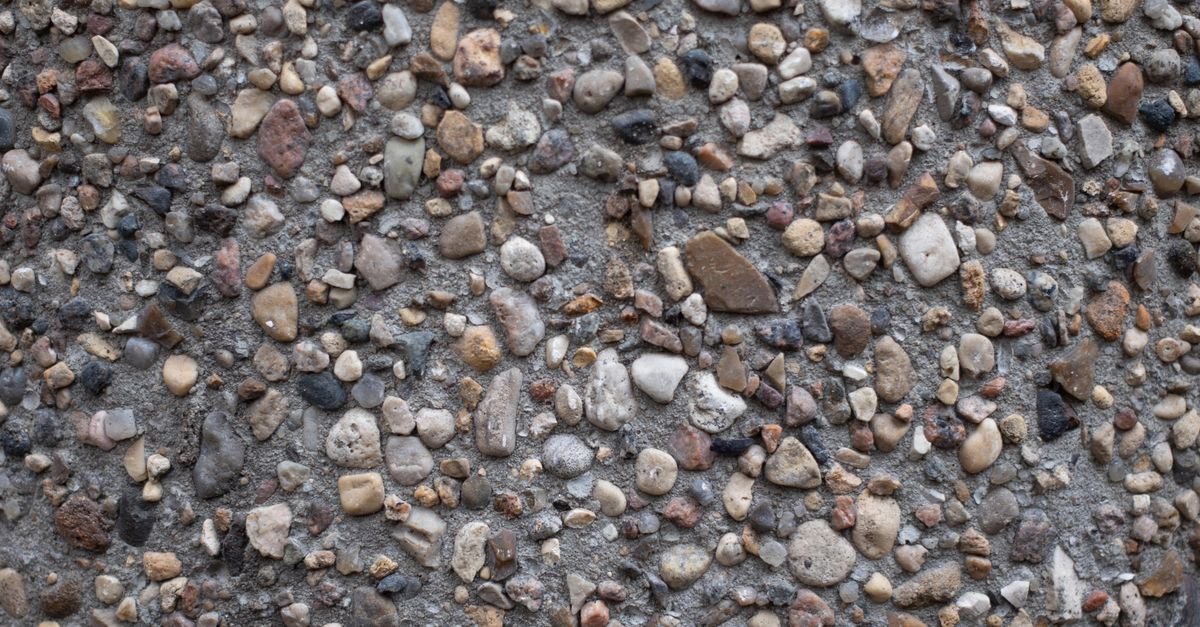
| Exposed aggregate | 2,000–2,500 | 25–40° | 12–18 in | Jets wash out the paste holding stones |
| Stamped concrete | 1,500–2,000 | 40° | 12–18 in | Colour hardener and release agent sit on top |
| Integrally coloured | 2,000–2,500 | 25° | 12 in | Pigment is through-body but surface paste is not |
| Acid-stained | 1,200–1,800 | 40° | 18 in | Stain lives in the top 1–2 mm only |
| Sealed concrete | 1,500–2,000 | 40° | 12–18 in | High pressure peels and clouds the sealer |
| New pour, under 30 days | Do not wash | — | — | Still gaining strength |
| New pour, 30 days to 12 months | 1,500–2,000 | 40° | 18 in | Surface paste is soft; efflorescence likely |
| Cracked or spalling | 1,200–1,800 | 40° | 18 in | Pressure widens cracks and lifts loose material |
Plain Poured and Broom Finish
This is the easy case and the one all the generic 3,000 PSI advice is written for. A cured grey slab with a broom texture takes 2,500 to 3,200 PSI without complaint. The texture actually helps: the ridges hide minor inconsistency in your passes, which is why broom-finish driveways forgive sloppy technique better than smooth trowelled ones.
Exposed Aggregate
Exposed aggregate is decorative stone held in place by cement paste. High pressure erodes the paste, the stones loosen, and you end up sweeping up pea gravel every time it rains. Drop to 2,000 to 2,500 PSI, widen to a 25 or 40-degree tip, and hold the wand 12 to 18 inches back. If you see stones moving or a gritty rinse running off, stop and back off further.
Stamped and Coloured Concrete
Stamped concrete gets its look from a colour hardener dusted onto the wet surface and a release agent that tints the low spots. Both live in the top couple of millimetres, and both come off under pressure. Treat stamped concrete like decorative tile: 1,500 to 2,000 PSI, 40-degree tip, 12 to 18 inches, and lean on a neutral pH cleaner instead of force. Most stamped surfaces are also sealed, which lowers the ceiling further.
Sealed Concrete
If water beads on your driveway, it is sealed. Blasting a sealed slab peels the film in patches and leaves a blotchy, cloudy finish that looks worse than the dirt did. Wash sealed concrete at 1,500 to 2,000 PSI with a 40-degree tip, or plan to strip and reseal the whole slab.
New Concrete Under 12 Months
Concrete reaches most of its design strength around 28 days but keeps hardening for months. The cement paste at the very surface is the last part to fully cure. Do not pressure wash a slab under 30 days old at all. Between one month and a year, cap yourself at about 2,000 PSI with a wide tip.
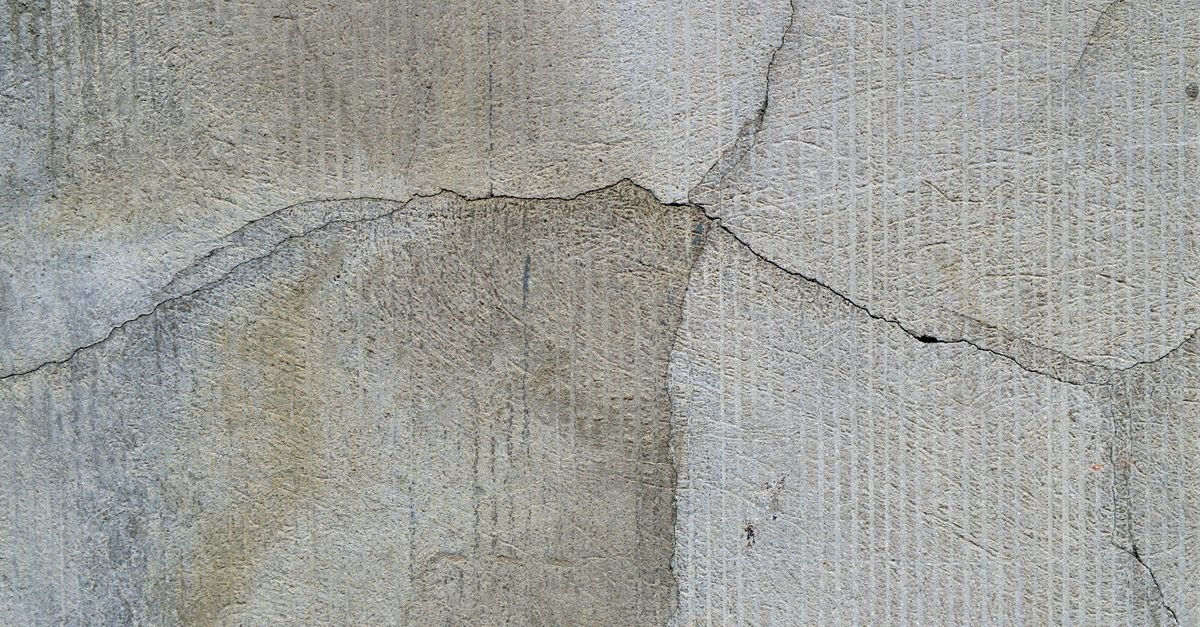
New slabs also produce efflorescence — a white powder that is not dirt. It is salt carried to the surface by evaporating water. Techo-Bloc describes the mechanism as moisture, salts and migration acting together, and advises waiting at least 60 days before treating it, because it commonly fades on its own within weeks or months. Pressure will not remove it; an efflorescence cleaner will.
Nozzle Selection and Distance: The Settings You Actually Control
Your pump has one pressure rating. The nozzle and your arm decide how much of it reaches the concrete. Doubling the distance from the surface roughly quarters the impact force, and a 25-degree tip spreads that force across a strip five times wider than a 15-degree tip.
| Nozzle | Distance | Result on cured plain concrete |
| 40° white | 12 in | Rinse only; light dirt; safe on everything |
| 25° green | 12 in | The standard driveway setting; even, no marks |
| 25° green | 6 in | Faster but starts leaving faint wand lines |
| 15° yellow | 12 in | Good for spot work; visible stripes if used broadly |
| 15° yellow | 4 in | Etches within a couple of seconds |
| 0° red | Any | Gouges concrete; never use on flatwork |
| Turbo / rotary | 12 in | Very effective on stains; leaves spiral marks if paused |
| Surface cleaner | Fixed | Even, stripe-free finish; the correct tool for driveways |
The 15-degree yellow tip has a legitimate role: short, controlled work on a specific oil spot or a stubborn tyre mark. It is a scalpel, not a broom. The moment you start using it to clean whole sections, you are writing stripes into your driveway. The full colour-by-colour breakdown is in our pressure washer nozzle chart.
Surface Cleaners: Why They Need 2,000 PSI and 2.0 GPM
A surface cleaner is a shrouded disc with two or four nozzles on a spinning bar. It looks like a small floor polisher and it is the single biggest upgrade for driveway work.
Why it matters: the nozzles sit at a fixed height, spin at high speed, and overlap their own paths. That means the pressure landing on any square inch is even, the operator cannot accidentally pause, and there are no wand arcs. The result is a uniformly clean slab in a fraction of the time.
But surface cleaners need to be fed. The spinning bar is driven by water reaction force, so a machine that cannot supply enough flow leaves the bar turning slowly, which produces uneven cleaning and — ironically — stripes.
| Surface cleaner size | Minimum PSI | Minimum GPM | Suits |
| 11–12 in | 1,800 | 1.6 | Electric machines, patios, small paths |
| 14–15 in | 2,000 | 2.0 | Homeowner gas, standard driveways |
| 16–18 in | 2,700 | 3.0 | Prosumer gas, large driveways |
| 20 in+ | 3,000 | 4.0 | Commercial units only |
The rule of thumb: 2,000 PSI and 2.0 GPM is the practical entry point for a surface cleaner that actually works on concrete. Below that, use the wand. Concrete Network makes the same point about flow for flatwork, recommending at least 3000 psi and a flow rate of at least 4 gallons per minute for contractor-grade driveway work, with heavily soiled surfaces calling for 5 or 6 GPM.
Always match the surface cleaner’s nozzles to your machine. Nozzles sized for a 4 GPM unit will drop your working pressure badly on a 2.5 GPM machine.
Why Your Driveway Looks Striped After Washing — and How to Stop It
This is the number one complaint after a first pressure wash, and almost nobody explains it properly. There are three separate causes and they have different fixes.
1. Wand arc stripes. You swung the wand in an arc from a fixed elbow, so the tip was closer to the concrete in the middle of the sweep than at either end. The middle got cleaned harder. Fix: move your whole arm and body so the tip stays at a constant height, keep passes short and straight, and overlap every pass by at least 30 percent.
2. Missed-overlap stripes. You cleaned in strips and left thin uncleaned bands between them. These read as dark lines. Fix: overlap generously and work in one direction across the whole slab, not in patches.
3. Uneven soil removal. The driveway was more soiled in some areas than others — tyre tracks, drip zones, shaded edges — so an even wash produces an uneven result. This is the frustrating one, because your technique was fine.
How to fix stripes you already have. Re-wash the entire slab, not just the stripes. Spot-treating makes the problem worse by adding a third tone. Apply a concrete cleaner across the whole driveway, let it dwell 10 minutes, and pass over everything again with a surface cleaner if you have one. Most striping evens out after a full second pass because the lightly cleaned bands catch up. Where a stripe is actually etched into the concrete rather than just a cleaning difference, nothing removes it — the surface texture has changed, and it will slowly weather back over a season or two.
How to guarantee no stripes next time: use a surface cleaner, use a 25-degree tip on the wand for edges, never a 15-degree tip for broad work, keep constant height and speed, and pre-treat the whole slab with detergent so you rely less on pressure.
Etching: What Too Much Pressure Actually Does to Concrete
Etching means the water jet has eroded the cement paste at the surface and exposed the sand and aggregate underneath. The affected area becomes rougher, slightly lighter, and permanently more prone to holding dirt — so etched patches get dirty faster than the concrete around them, and the mark becomes more visible over time rather than less.
Warning signs while you work:
- The rinse water turns gritty or milky.
- You can see sand grains standing proud in a freshly washed area.
- A section looks noticeably lighter and rougher than its surroundings.
- A narrow tip has left a visible groove you can feel with a fingertip.
The moment you see any of these, back the wand off, widen the nozzle and keep moving. Etching is not repairable — the only cures are resurfacing or waiting for weathering to blend it. Note that Concrete Network also warns against reaching for muriatic acid as a shortcut, since it is powerful enough to burn skin, damage your concrete, or harm surrounding grass and plants when used carelessly.
Concrete vs Asphalt: Do Not Reuse These Numbers
This is the most expensive mistake in this article. Asphalt is aggregate held together by a petroleum binder that softens in heat and is directly attacked by degreasers. Concrete is a rigid cement matrix. They are not interchangeable surfaces.
| Concrete driveway | Asphalt driveway | |
| Typical safe PSI | 2,500–3,200 | 1,200–1,500 |
| Absolute ceiling | ~3,200 | ~2,000 |
| Nozzle | 25° | 40° |
| Distance | 8–12 in | 12–18 in |
| Hot water | Fine | Risky — softens binder |
| Degreaser | Standard practice | Can dissolve the binder |
| Damage mode | Etching, striping | Aggregate stripping, divots, gouges |
| Best time to wash | Any temperate day | Cool day, never in direct summer heat |
If you point a 3,000 PSI machine at asphalt with a 25-degree tip, you will strip the binder and blow loose stones out in seconds, leaving a bald patch. Our asphalt driveway guide covers the correct approach in full.
Stain-by-Stain Approach
Pressure is a blunt instrument. Most driveway stains are chemistry problems, and adding PSI to a chemistry problem just damages the slab while failing to shift the mark.
| Stain | Approach | PSI after treatment |
| General dirt and grime | Concrete detergent, 10 min dwell | 2,500–3,000 |
| Fresh oil | Absorbent powder, then alkaline degreaser | 2,500–3,000 |
| Old, soaked-in oil | Degreaser + poultice, 2–3 cycles | 2,500–3,000 |
| Transmission or hydraulic fluid | Heavy-duty degreaser, hot water if available | 3,000 |
| Rust | Oxalic acid rust remover; never chlorine bleach | 1,500 rinse only |
| Fertiliser burn | Oxalic acid rust remover | 1,500 rinse only |
| Algae and mould | Sodium hypochlorite solution, 10 min dwell | 2,000–2,500 |
| Moss | Moss killer several days ahead, then sweep | 2,500 |
| Efflorescence | Efflorescence cleaner, brush | 1,200 rinse only |
| Tyre marks | Citrus degreaser + stiff brush | 2,500–3,000 |
| Paint | Masonry-safe stripper | 2,500 after stripping |
| Leaf and berry tannin | Oxygen bleach soak, 20–30 min | 2,000–2,500 |
Oil and Transmission Fluid
Oil that has been on a slab for years has migrated several millimetres into the pores. No pressure washer reaches it. Apply an alkaline degreaser, agitate with a stiff brush, dwell, rinse hot if you can, and repeat. Deep stains need a poultice — a paste that dries on the surface and wicks oil upward — left under plastic for 24 hours, repeated two or three times. Full method in our oil stain guide.
Rust and Fertiliser Burn
Both are iron oxide and both respond to oxalic acid rust removers. Chlorine bleach does nothing to rust — hypochlorite works by oxidising and the iron is already fully oxidised, so there is no reaction left to give it — and it lightens the paste around the stain, which usually makes the mark look worse once the slab dries. Keep the two products separate. Pre-wet, apply, dwell per the label, agitate, rinse at low pressure.
Algae, Mould and Moss
Green film on a shaded driveway is biological and dies with sodium hypochlorite or a proprietary algae killer at a 10-minute dwell. Moss is thicker and needs killing days in advance so it can be swept off dead. Attacking live moss with pressure just spreads spores across the slab. See removing moss from a concrete driveway for the full sequence.
Detergent and Dwell Time: Chemistry Beats Pressure
The professional habit that homeowners skip is pre-treating. Apply a concrete detergent through the machine’s soap injector at low pressure, let it work for 5 to 10 minutes, then rinse at pressure. Two rules make it effective:
- Never let the detergent dry on the slab. Mist it if the sun starts baking it. Dried detergent leaves streaks and can spot the concrete.
- Work in sections you can rinse within ten minutes. On a hot day that might mean quarters of the driveway rather than the whole thing.
Pre-treating typically lets you clean at 500 to 1,000 PSI lower than you otherwise would, which directly reduces striping and etching risk. It also cuts the time you spend leaning on a wand by roughly a third.
Step-by-Step: Washing a Concrete Driveway
1. Clear and sweep. Remove vehicles, bins and toys. Sweep loose grit so it does not get blasted into siding or windows.
2. Protect the surroundings. Wet lawns and beds before and after. Close windows. Cover outlets and light fittings.
3. Pre-treat stains individually. Oil, rust and moss get their specific treatment now, before the general wash.
4. Apply detergent to the whole slab at low pressure, working bottom to top so runoff does not streak dry concrete.
5. Dwell 5 to 10 minutes, keeping the surface damp.
6. Rinse with a surface cleaner in straight overlapping passes, or with a 25-degree wand tip at 8 to 12 inches if you do not have one.
7. Detail the edges with the wand — the perimeter a surface cleaner cannot reach.
8. Final rinse from the high side down, pushing all the dirty water in one direction to a drain or lawn.
9. Let it dry fully before deciding whether it needs sealing. Wet concrete always looks better than it is.
Runoff, Water Use and Being a Good Neighbour
Nobody covers this and it matters. A 3.0 GPM machine running for an hour uses roughly 180 gallons of water, and all of it leaves your driveway carrying detergent, oil residue and dirt.
Practical guidance:
- Direct runoff to lawn or planting beds where possible, not straight into a storm drain. Soil filters far better than a storm sewer, which usually discharges untreated to a local waterway.
- Sweep and pre-treat oil spots before you wash so you are not simply flushing hydrocarbons off the property.
- Choose biodegradable concrete detergents and use the dilution on the label rather than pouring in extra.
- Wash in the morning on a mild day. Detergent dries too fast in afternoon heat, and gas machines are loud enough that early-evening washing tends to annoy neighbours.
- Never wash below about 40°F. Runoff freezes on the slab into an invisible sheet, and any water left in the pump afterwards can freeze and crack the housing.
FAQ
Is 3,000 PSI too much for a concrete driveway?
No, 3,000 PSI is a normal and safe working pressure for cured plain concrete when paired with a 25-degree nozzle held 8 to 12 inches away. It becomes too much when you switch to a narrow tip, hold the wand close, or point it at decorative, sealed or newly poured concrete. The pressure rating alone never causes damage — the combination of pressure, nozzle and distance does.
Can 2,000 PSI clean a concrete driveway?
Yes, but slowly and with help. At 2,000 PSI you need a concrete detergent with a proper dwell time, a 25-degree tip and more passes. Expect it to take roughly twice as long as a 3,000 PSI machine and to leave the most deeply embedded staining behind. It is enough for routine annual maintenance, not for rescuing a neglected slab.
Do I need a gas pressure washer for a driveway?
Not strictly, but flow is the deciding factor. Most electric machines stop around 1.2 to 1.8 GPM, which is below the practical threshold for running a surface cleaner well. If you plan to clean a full driveway more than once a year, a gas unit at 2.5 GPM or above will change the job from an afternoon to an hour.
Why is my concrete lighter in some places after washing?
Usually because those areas were cleaned harder — closer wand, slower pass, narrower tip — and the surface paste has been slightly eroded. Occasionally it is genuine: the concrete underneath was always that colour and years of grime hid it. Re-washing the whole slab evenly is the only fix that helps; spot-washing makes it look worse.
How much PSI to clean concrete driveway stains like oil?
Pressure is not what removes oil. Use an alkaline degreaser and, for old stains, a poultice, then rinse at 2,500 to 3,000 PSI. Cranking a narrow tip to 3,500 PSI on a soaked-in oil stain will etch a lighter patch into the concrete while leaving the stain visible, giving you two problems instead of one.
Should I seal my driveway after pressure washing?
Sealing helps concrete resist oil, salt and freeze-thaw damage, and it makes future cleaning far easier. Wait until the slab is completely dry — at least 24 to 48 hours of dry weather — and never seal over efflorescence or you will trap the white haze permanently under the film. Most driveway sealers need reapplication every 2 to 5 years.
What nozzle should I use on a concrete driveway?
The 25-degree green tip for general cleaning, held 8 to 12 inches from the surface. Use the 40-degree white tip on decorative, coloured, sealed or newly poured concrete. Keep the 15-degree yellow tip for brief spot work on individual stains, and never use the 0-degree red tip on flatwork at all.
How long does it take to pressure wash a driveway?
A typical 600 square foot driveway takes 45 to 90 minutes with a 2.5 to 3.0 GPM machine and a surface cleaner, including detergent dwell time. With a wand only, budget two to four hours depending on your machine’s flow. Pre-treating with detergent is the single change that saves the most time.
Can I use the same PSI on my concrete patio?
Almost. Drop to 2,000 to 3,000 PSI on patios and sidewalks, mostly because patios are more likely to be stamped, coloured, sealed or laid with sand joints, and because they sit closer to plants and furniture. If your patio is plain grey slab, the driveway numbers apply unchanged.
Will pressure washing damage the expansion joints in my driveway?
High pressure blows out the flexible sealant in control and expansion joints, which then lets water into the sub-base and accelerates cracking. Sweep across joints rather than following them, keep a 25-degree or wider tip, and inspect the joints afterwards. Replacing lost joint sealant with a self-levelling polyurethane is a cheap, worthwhile afternoon.
Enough Flow, a Wide Enough Tip, a Steady Hand
The short answer to how much PSI to clean concrete driveway surfaces is 2,500 to 3,200 PSI with at least 2.0 GPM and a 25-degree nozzle at 8 to 12 inches. The longer answer is that this number only applies to plain, cured concrete. Exposed aggregate wants 2,000 to 2,500, stamped and sealed slabs want 1,500 to 2,000 with a 40-degree tip, and anything under a year old should be washed gently or left alone.
Get the three variables working together and the finish takes care of itself: enough flow to carry dirt away, a wide enough nozzle to spread the force, and constant height and speed so no square foot gets more energy than its neighbour. Pre-treat with a proper detergent, use a surface cleaner if your machine can drive one, and reserve the narrow tips for individual stains. Do that and you get an even, stripe-free driveway without a single etched mark — and you never have to guess at the pressure again.