Last Updated on September 25, 2026 by Umar Farooq
You can power wash a sidewalk with the same settings you would use on a driveway — around 2,000 to 3,000 PSI, a 25-degree tip or a surface cleaner — but three things about a public footpath make it a different job: you probably do not own the concrete, the runoff has nowhere to go except a storm drain, and a clean slab shows every trip hazard it was hiding.
The technique is not the hard part. The procedure for flatwork is settled and it is written up in how to pressure wash a driveway; the pressure numbers live in how much PSI to clean a concrete driveway. What almost nobody writes about is the context — that the path outside your gate is a piece of public infrastructure that strangers walk on in the dark, and that this changes what you may put on it, what you may wash off it, and what you are obliged to notice while you are down there.
Whose Sidewalk Is It, Actually?
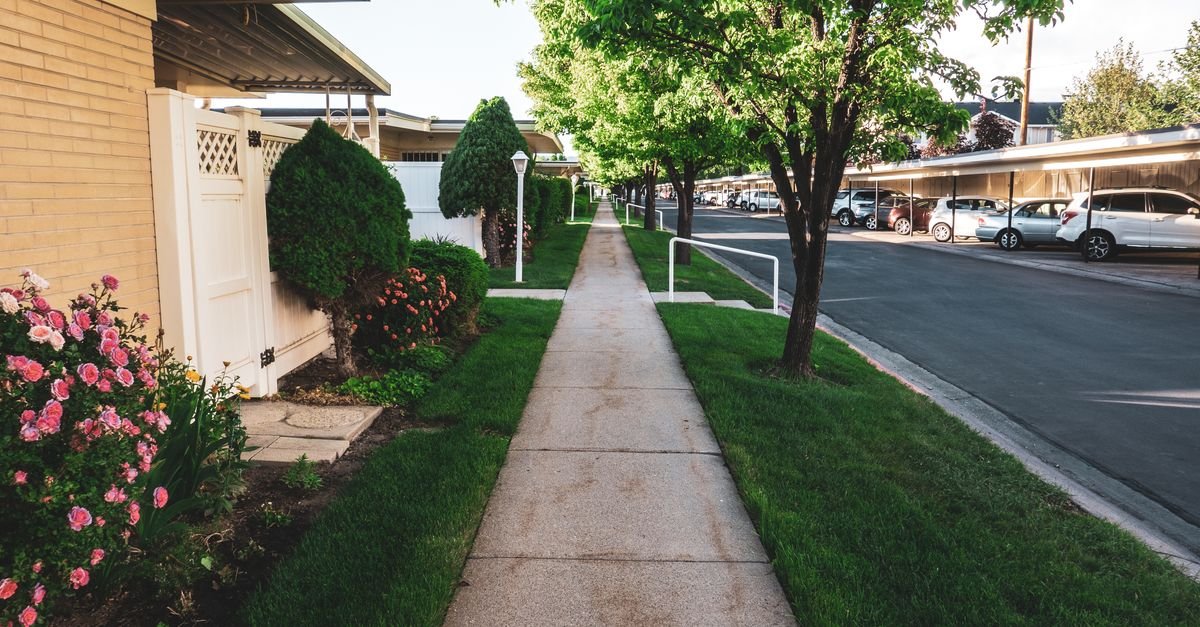
In most American towns the strip between your property line and the kerb sits in the public right-of-way. The municipality owns it. You are frequently the one required to maintain it. Both things are true at once, which is a legal arrangement nobody would design on purpose and almost every city has anyway.
Practically it splits into three questions worth five minutes before you uncoil a hose:
- May I clean it? Almost always yes. Cleaning is maintenance, and maintenance is usually your job in the first place.
- May I change it? Almost always no. Coatings, sealers, anti-slip paints and anything else that alters the surface generally need the city’s say-so, because the city is the one that gets sued when it goes wrong.
- May I block it? Only briefly, and only while you are managing it. A charged hose lying across a public footpath is a trip hazard you personally created, which is a bleak way to turn a tidy Saturday into a claim. A cone at each end and staying with the machine is the whole mitigation.
Search your own city’s name plus “sidewalk maintenance responsibility” and read the ordinance rather than a contractor’s summary of it. Two minutes, and it is the only way to find out whether your town is one of the ones with an opinion about what you rinse into the right-of-way. Which is the part most guides skip entirely.
Power Wash Sidewalk Runoff: Only Rinse Water Goes Down the Drain
A driveway lets you aim runoff at your own lawn. A sidewalk does not. It is built with a cross-slope that sends water toward the gutter, the gutter runs to a storm drain, and in a separate storm sewer system that drain discharges to a creek or a river without passing through treatment of any kind. The path outside your house is a funnel, and you are standing at the top of it holding a pressure washer.
Cities write this down. Portland’s rules on residential non-stormwater discharges are a clear example of the pattern: wash water from cleaning pavement or buildings is prohibited, while “routine street and pavement rinse waters (provided that chemicals, soaps, detergents, steam, or heated water are not used)” are allowed, and the same page asks that the surface be broom-cleaned first (City of Portland, residential non-stormwater discharges). Read that twice, because the distinction is not the one most people expect. Nobody is regulating your PSI. They are regulating what is dissolved in the water when it leaves. Plain cold water rinsing a swept path is fine. The identical job becomes a prohibited discharge the moment you pull degreaser through the injector.
So here is the opinion, and it is the one thing on this page I would argue about. On the public half of the path, keep the chemistry in a bucket. Not on a downstream injector, not sprayed across forty feet of slab and chased into the gutter. Spot-treat the two stains that genuinely need a product, brush them, rinse that patch onto the verge or your own lawn where soil and microbes get first refusal on it, then let plain water and the wand handle the rest. It costs about ten minutes. It is also the difference between washing a footpath and dosing a watershed, and ten minutes is not a hard trade.
Sweeping first is not a courtesy here either, it is the condition. Grit and leaves swept up and binned are grit and leaves that never reach the drain, and a swept slab needs noticeably less pressure to come clean, because you have stopped using a 3,000 PSI jet as a broom with a water bill attached.
The Lip You Can Feel Through Your Shoe
Concrete slabs move. Tree roots lift them, frost heaves them, the sub-base washes out from under one corner and it settles. What you get is a vertical step at a joint, and the federal accessibility guidelines for public rights-of-way put real numbers on how much of one is tolerable: changes in level up to 1/4 inch may be vertical, between 1/4 and 1/2 inch they must be beveled at a slope no steeper than 1:2, and anything over 1/2 inch needs a proper ramped transition (US Access Board, PROWAG technical requirements). The same section requires walking surfaces to be “stable, firm, and slip resistant.”
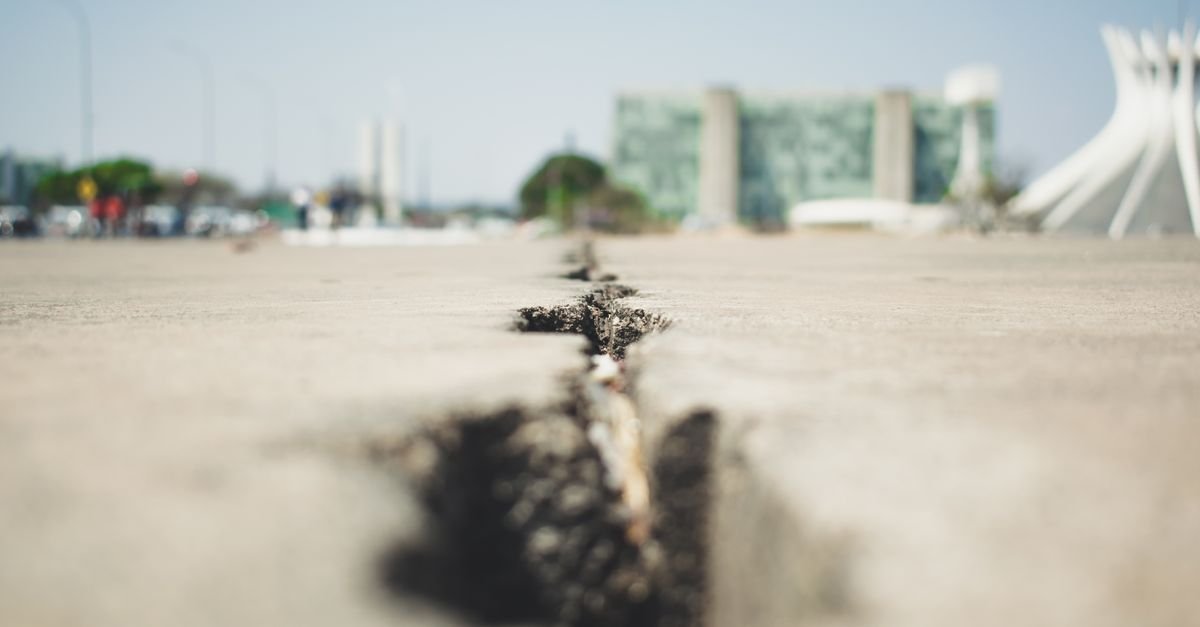
Washing does not create a lip. It does three other things to one. It strips off the grime and moss that were quietly feathering the edge into a ramp, so the step gets sharper rather than softer. It makes the height difference visible for the first time, usually on a dry Sunday while you are admiring the rest of your work. And if you run the jet *along* the joint at a slab that has already lifted, you hydro-excavate the bedding out from underneath it — the same washout that tipped the slab originally, now being applied on purpose by someone with a spray wand.
Take a tape measure to the worst joint before you start and find the 1/2 inch mark on it. Under a quarter inch, wash normally and cross every joint at right angles instead of tracking down it. Over half an inch and you have a repair job rather than a cleaning job: grinding, patching to a beveled ramp, or slab lifting. In a lot of towns the city does that work on request, because it is their concrete and their liability. Reporting it costs a phone call. Not reporting it costs whatever the person who catches their toe decides it costs.
Steps Are Not Flatwork Standing Up
Steps are the part of this job that can actually hurt somebody, and the geometry is against you twice over. The nosing — the front inch of each tread — is the most walked, most worn strip of concrete on the property. It is also the bit you are standing directly above, pointing a jet down at, on a surface that is now wet.
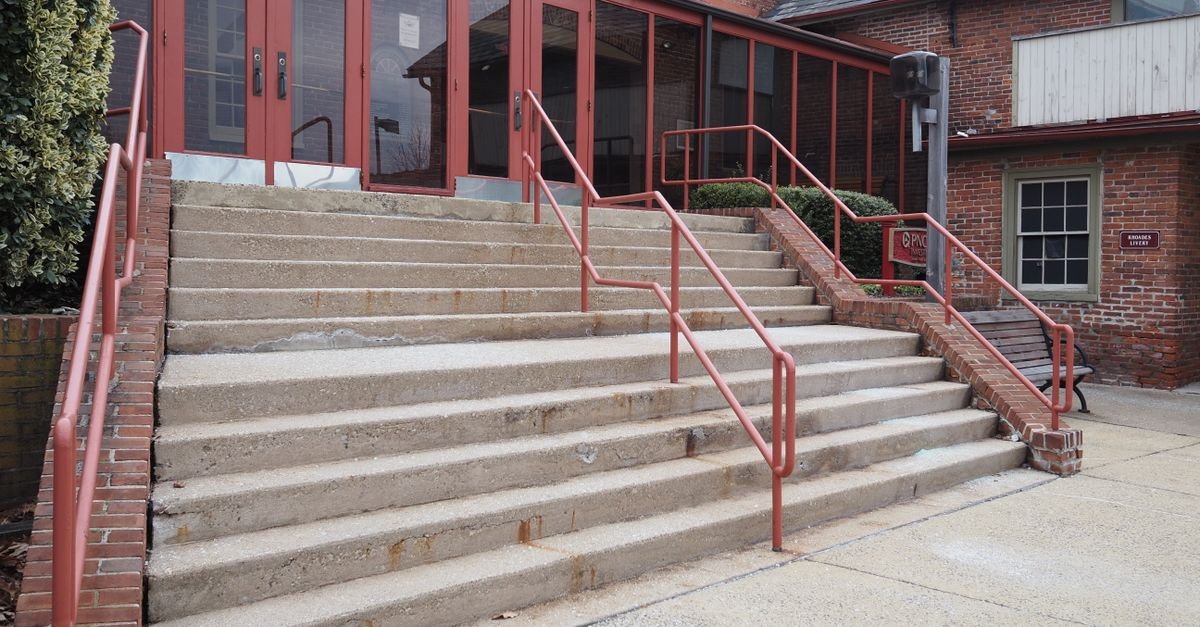
Finish decides everything here. A broom finish is a deliberate texture with a published depth: ACI 330.1 specifies brooming “to produce corrugations between 1/16 and 1/8 in. deep,” drawn perpendicular to the direction of travel (Construction Specifier, specifying broomed exterior concrete surfaces). A sixteenth of an inch of ridge is the entire margin between a wet step and a slide, and twenty years of shoes take it off the nosings first while leaving it perfectly intact in the corners where nobody walks. A steel-trowelled step never had it at all. Smooth concrete photographs beautifully and is a genuinely poor idea outdoors.
That gives you a test rather than a vague warning. Run a fingertip across the middle of a tread, then across its nosing. If you can feel ridges in one place and not the other, the traction on that step has already gone and cleaning will not bring it back, because a jet removes material and texture is material that is missing. What it will do is make the step look dependable again, which is worse than looking dirty. Taking the algae off genuinely does improve grip, since a biofilm is slippery in its own right — but on a polished nosing what you are left with is clean polish.
So wash steps last, top down, standing on the tread above rather than the one below. Let them dry fully before anybody uses them, because wet clean concrete and wet dirty concrete feel identical to a foot in a hurry. And if the nosings have gone smooth, the fix is grit tape or a sealer with anti-slip aggregate in it, not another pass at higher pressure.
Edge It Before You Wash It, Not After
Turf creeps over a path an inch or two a season and builds a soil lip along both sides, which is why an old sidewalk is always narrower than it was poured. Deal with that first, in the dry, with a half-moon edger or a string trimmer turned on its side. Then sweep. Then wash.
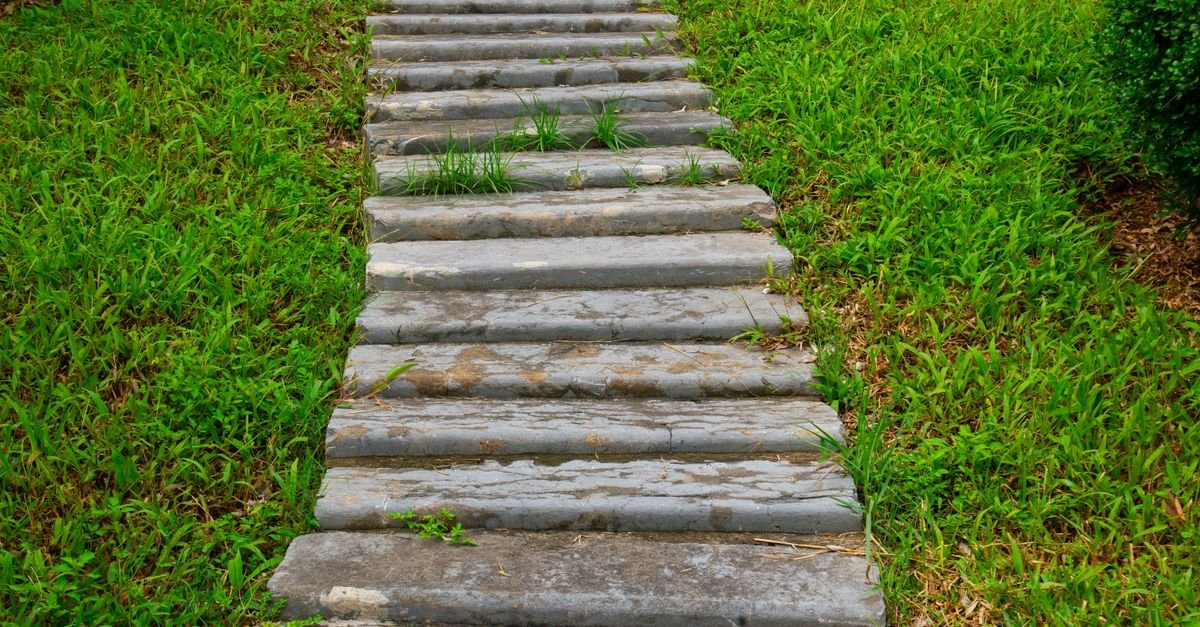
Do it the other way round and you finish a clean path by dragging wet soil back across it. There is a mechanical reason not to use the jet as an edging tool, too: a 25-degree tip at 3,000 PSI aimed into a soil edge excavates it, and what you are left with is an undercut trench along the slab that holds water, freezes, and goes to work on the concrete edge every winter. You will also redecorate the bottom four feet of your siding in a fine, even coat of mud, which is a result that is hard to explain to anyone who was watching.
Treat the last two inches as a deliberate detail pass instead. Wand at roughly 45 degrees, aimed from the grass *inward* toward the centre of the path, so soil and clippings land on concrete you are about to rinse rather than in the lawn or up the wall.
The Green Band on the Shaded Half of the Path
Most front paths are not evenly dirty. They have a band — a green stretch that starts where the hedge, the porch or the north side of the house begins throwing shade, and stops where the sun gets back in. That band is not a cleaning failure. It is a map of where the surface stays damp longest.
The reason it is green rather than black is worth knowing, because it tells you what to do about it. Green algae have no pigmented sheath to protect them from UV, so they dominate shaded, low-light, persistently damp surfaces. The darker cyanobacteria that do build such a sheath tolerate drying and sunlight, and take the exposed stretches instead. Water availability decides whether anything grows at all; light decides which of the two wins. So the green band is marking the one part of your path where water lingers, and it will return on exactly the same schedule next year unless something about the shade or the drainage changes.
Washing it is maintenance, not a cure, and the honest version is that most people should simply plan on doing it annually. If you want the interval to stretch, take twelve inches off the overhang, move the sprinkler head that has been watering the concrete since 2019, or redirect the downspout emptying beside it. Where the growth has gone past a film and into actual cushion, how to remove moss from a concrete driveway covers the scraping and the chemistry — the same approach works on a path, with the storm drain caveat above applied rather more carefully.
FAQ
What PSI do I need to power wash a sidewalk?
The same range as any concrete flatwork — roughly 2,000 to 3,000 PSI with a 25-degree tip held 8 to 12 inches off the surface, or a surface cleaner if your machine has around 3 GPM to drive one. Sidewalks are narrow enough that a 12-inch surface cleaner is usually the practical size rather than a 15 or 16.
Do I need permission to power wash a sidewalk outside my house?
Generally no. Cleaning counts as maintenance, and maintenance is usually the adjoining owner’s responsibility anyway. Permission becomes an issue when you want to seal, coat or repair the slab, or when you would be closing the footpath for any length of time. Check your city’s sidewalk ordinance rather than guessing.
Can I use bleach or degreaser on a public sidewalk?
Not as a broadcast application that runs to the gutter. Municipal stormwater rules commonly allow plain rinse water and prohibit wash water containing chemicals, soaps or detergents, because a storm drain discharges untreated. Spot-treat with a bucket and a brush, keep that runoff on soil, and rinse the rest with water.
Will power washing make my concrete steps slippery?
Washing itself does not, and taking algae off usually improves grip. The problem is a worn or steel-trowelled nosing with no texture left — cleaning makes it look safe without making it safe. Feel the nosing against the middle of the tread. If the ridges are gone, add grit tape or an anti-slip sealer.
How often should a sidewalk be power washed?
Once a year suits most paths, and a shaded section may want twice. Every wash takes a little surface paste off the concrete, so anything more frequent is wear you are choosing to buy.
Does power washing fix an uneven sidewalk?
No, and it can make the lip more pronounced by stripping out the debris that was ramping it. A vertical step over half an inch needs grinding, patching or slab lifting. Since the concrete is usually municipal, start by reporting it — plenty of cities will come and do the work.
Should I seal a sidewalk after cleaning it?
Usually not without asking first. Sealers change the surface of a public walkway, several of them reduce wet traction noticeably, and altering right-of-way concrete is exactly the category cities want a say in. On your own private front path it is your call — wait for 24 to 48 hours of dry weather before you start.
Clean the Path for Footing, Not for the Photo
The wand work on a sidewalk is the easy part, and if the flatwork basics are right the slab looks after itself. What actually separates this job from a driveway happens before the trigger: find out who owns the concrete, sweep it, keep the chemistry off the public half and out of the drain, measure the worst joint, and treat the steps as the one place where a good-looking result and a safe result are not automatically the same result.
Then let it dry properly before the first person walks up it in the dark. They are not going to notice the even colour. They will absolutely notice the nosing.