Last Updated on October 5, 2026 by Umar Farooq
How do you remove moss from a concrete driveway? Scrape the thick clumps off dry with a stiff brush or flat scraper first, then apply a diluted sodium hypochlorite or oxygen bleach solution and let it dwell 15 to 20 minutes. Rinse at 2,000 to 3,000 PSI with a 25-degree nozzle or a surface cleaner. Then fix the shade and drainage, or it grows back within months.
Working out how to remove moss from concrete driveway surfaces is easy. Keeping it gone is the hard part, and that is where most guides stop. Moss is not a stain you scrub away once. It is a plant that has found the spot on your property that stays damp and shaded, and unless you change that spot it comes back every season.
This guide covers the whole job: identifying what you have, removing it in the right order, real dilution ratios, correct pressure settings, the shortcuts that quietly damage your slab, and the prevention that breaks the cycle.
Why Moss Grows on Concrete in the First Place
Moss has no true roots. It anchors with tiny structures called rhizoids and absorbs water straight through its leaves, so it needs no soil, only a rough damp surface that stays wet for hours.
Concrete is close to a perfect host. It is porous, holds water in its surface pores long after rain stops, and collects a film of dust, pollen and debris for moss to cling to.
Five conditions cause almost every case:
- Shade. North-facing drives and areas under trees or the house’s own shadow never dry properly.
- Poor drainage. A low spot, a settled slab, or a flat section where water pools.
- Constant moisture. A downspout discharging onto the drive, a sprinkler clipping the edge, or a condensate line.
- Age and porosity. Old concrete has an eroded surface with open pores. Sealed concrete sheds water far better.
- Overhanging trees. Leaf litter holds moisture against the slab and blocks the drying sun.
Four of those five are really about water sitting still. That is your target.
The Slip Hazard Nobody Talks About
Moss on a driveway is not only ugly. Wet moss on concrete is genuinely slippery, roughly comparable to wet ice, and it is a common cause of falls on residential paths.
The risk peaks in autumn and early spring, when the moss is fully hydrated and often hidden under wet leaves. If your patch is on a slope, near steps, or on the route you carry groceries, treat it as a safety job rather than a cosmetic one.
Moss vs Green Algae vs Black Spots: Know What You Have
People call all three “moss”, but they behave differently and need different effort. Getting this right saves a lot of scrubbing.
| Growth | Appearance | Texture | Where it grows | Difficulty |
| Moss | Thick green cushions, visible tiny leaves, 1-3 cm deep | Spongy, holds water | Shaded edges, expansion joints, cracks | Easy to scrape, hard to prevent |
| Green algae | Flat green film or streaks, no depth | Slimy wet, dusty dry | Wherever water runs or pools | Easy chemically, no scraping |
| Black algae | Dark grey to black blotches | Flat, feels part of the slab | Sun or shade, often north side | Hardest; embeds in pores |
| Lichen | Grey-green crusty circles | Crusty, cemented on | Old, unsealed concrete | Needs long dwell and agitation |
| Plain dirt | Even grey-brown haze | Gritty | Whole slab, worst near the street | Easy |
The quick test: run a stiff brush over the dry patch. Moss lifts in clumps. Algae smears. Black algae and lichen do not move at all.
Black Spots That Are Not Algae at All
Before buying anything, check whether your black spots are even biological. Tar tracked in from a resealed road leaves soft smears that go sticky in heat, and tyre marks leave dark arcs where you turn the wheel. Neither responds to a moss killer; both need a degreaser.
If a drop of household bleach lightens the spot within a minute or two, it is biological. If nothing happens, it is a chemical stain. The same test separates oil stains from organic growth.
How to Remove Moss From Concrete Driveway: Start Dry and Manual
The common mistake is reaching for chemicals or the pressure washer first. On thick moss that wastes both. A 2 cm moss mat is mostly water and plant tissue, so chemicals have to soak all the way through before reaching the base, and a pressure washer just fires wet clumps around the yard. Remove the bulk mechanically and everything after becomes fast and cheap.
Scrape Dry First, Then Stiff-Brush the Whole Slab
Wait until the slab has been dry for a day, because dry moss shrinks and loses its grip, so it comes off in sheets.
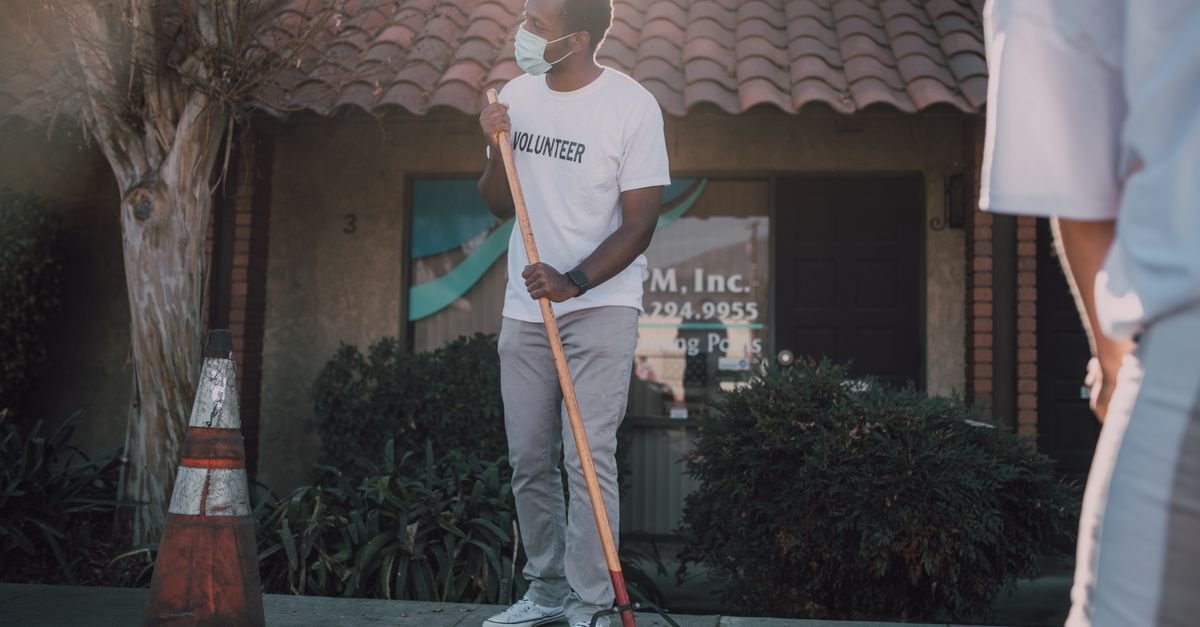
Use a flat-edged scraper, a garden hoe held nearly flat, or a plastic snow shovel to lift the clumps, pushing away from you at a shallow angle. For moss packed into expansion joints, a joint knife or old screwdriver clears the channel quickly. Do not gouge the concrete; you are lifting a mat, not chiselling stone.
Then go over everything with a stiff-bristled push broom. This lifts the thin remaining layer and opens the surface so any chemical can reach the pores where the spores live.
Sweep the debris off the slab and bin it. Do not leave the pile on the lawn edge, because a single moss fragment can regrow into a new colony. A light infestation may be finished here.
Chemical Options and Real Dilution Ratios
Here is the honest comparison, including the home remedies that do not deserve their reputation.
| Method | Mix / dose | Dwell | Kills spores in pores? | Plant safe? | Best use |
| Sodium hypochlorite | 1 part 5-6% bleach to 3 parts water | 15-20 min | Yes | No, pre-wet and rinse plants | Black algae, heavy moss, lichen |
| Oxygen bleach | 120-180 g per 4 L warm water | 20-30 min | Yes, more slowly | Yes | Drives beside lawns and beds |
| Soap-based moss killer | Per label, usually 1:10 | 1-2 hours | Partly | Yes, biodegradable | Touch-ups, pet areas |
| Powdered laundry detergent | Sprinkle dry on damp moss | 2-4 hours | Partly | Moderate | Small patches, cheap |
| White vinegar | Undiluted 5% | 20-30 min | No | Mostly | Very small patches only |
| Boiling water | As is | Instant | No | No | A few square feet at most |
Sodium Hypochlorite: The Strongest Option
Diluted chlorine bleach is the most reliable way to kill moss, both algae types and lichen in one pass. A 1:3 mix of standard 5 to 6 percent household bleach gives roughly 1.5 percent active chlorine, which is enough for concrete without being harsh.
Add a squirt of dish soap so the solution clings instead of running into the gutter. Apply with a watering can or pump sprayer on a still, overcast day.
The precautions are real. Pre-soak every plant and lawn edge within 2 metres, cover what you can, and rinse again with plain water afterwards. Never mix bleach with vinegar, ammonia or any acid cleaner. Wear eye protection and gloves.
Oxygen Bleach and Soap-Based Moss Killers
Sodium percarbonate dissolves into hydrogen peroxide and washing soda. It kills moss and algae by oxidation, works more slowly than chlorine, and is far kinder to grass, beds and any pond your run-off reaches. Use warm water to dissolve it fully and allow 20 to 30 minutes. Black algae may need a second pass.
Commercial killers based on potassium salts of fatty acids are gentler still. They break down moss cell membranes on contact and are biodegradable, though slower and pricier. They suit a drive bordering a vegetable garden.
One warning from the University of Alaska Fairbanks Cooperative Extension: iron-based moss killers, common in lawn products, will stain concrete and painted surfaces. If the label lists ferrous or iron sulfate, keep it off your driveway.
Why Vinegar and Boiling Water Are Overrated
Both work. Neither scales.
Vinegar at 5 percent acetic acid burns the visible top growth. It does not penetrate a thick mat and does nothing to spores in the pores. On a small patch by a step, fine. On a 60 square metre driveway you would need litres and be repeating in six weeks. Repeated acid also slowly etches the cement paste.
Boiling water kills moss through heat, and it is the least practical driveway method ever recommended. A full kettle covers half a square metre, cools within seconds on cold concrete, is a scald risk to carry outdoors, and kills any grass it splashes. Use it between two paving slabs, not on a drive.
How to Remove Moss From Concrete Driveway With a Pressure Washer
Once the chemical has dwelled, the pressure washer is a rinse-and-lift tool, not the killing tool. In that order it is fast and effective.
| Concrete condition | Pressure | Nozzle | Distance | Notes |
| New or sealed (under 5 years) | 1,800-2,200 PSI | 25° green | 25-30 cm | Test a hidden corner first |
| Standard sound driveway | 2,500-3,000 PSI | 25° green | 15-20 cm | The usual setting |
| Old, rough, weathered | 2,000-2,500 PSI | 25° green | 20-30 cm | Higher pressure erodes it |
| Cracked or spalling | 1,500-2,000 PSI | 40° white | 30 cm | Do not force water into cracks |
| Stamped or decorative | 1,200-1,800 PSI | 40° white | 30 cm | Colour layer is thin |
| Expansion joints | 1,500 PSI max | 25° green | 30 cm | Do not blast out the filler |
Flow matters as much as pressure. A machine at 2.5 GPM and 2,500 PSI clears a drive faster than one at 1.4 GPM and 3,000 PSI, because volume carries debris away. See how much PSI you need for a concrete driveway and the nozzle chart for what each colour tip does.
Surface Cleaner vs Wand
A flat surface cleaner is the single biggest upgrade for driveway work. It is a round housing with spinning jets underneath that covers a 30 to 40 cm swath at a constant height.
It beats a wand for three reasons: no zebra striping, because every square centimetre gets identical treatment; two to four times the speed; and a fixed nozzle height, which removes the main cause of accidental etching.
Use the wand only for edges, joints and the strip along the garage door. Work in overlapping passes and keep the tip moving. Never use a 0-degree red tip on concrete, which carves a permanent line into the slab in under a second.
Why Pressure Alone Fails: Spores Live in the Pores
You can strip a driveway bare and have green fuzz back within two months. Here is why.
Concrete is porous. Even a smooth-looking slab has a network of tiny capillaries at the surface. Moss spores, algae cells and lichen fragments settle inside those pores, where water pressure applied from above cannot reach them.
Aggressive pressure washing also makes things worse over time. High-pressure water erodes the cement paste between sand particles and leaves the surface rougher and more open than before, and a rougher surface holds more water and debris.
That is the argument for the sequence used here: scrape, kill chemically with a real dwell, then rinse at moderate pressure. The chemical reaches the pores; the water only removes what is already dead.
What NOT to Do to a Mossy Driveway
Three popular shortcuts cause damage that costs more than the moss ever did.
Wire Brushes That Leave Rusting Fragments
A wire brush looks like the obvious tool for scrubbing moss out of concrete. It is not. Steel bristles snap off constantly and the fragments lodge in the surface pores, where every one of them rusts within weeks. The result is a field of orange-brown pinpoint stains far harder to remove than the original moss. A stiff synthetic-bristled brush works just as well and leaves nothing behind.
Acid Cleaners and Rock Salt: Two Ways to Wreck a Slab
Muriatic acid and other strong acid cleaners strip organic growth quickly. They also dissolve the cement paste that binds the surface together. The slab looks clean for a season, then feels sandy, sheds grit and becomes more porous, so the next colony establishes faster than the last. Acids also burn skin and kill whatever they run off onto.
Rock salt is older advice and worse advice for anyone who gets winter frost. The University of Nebraska-Lincoln Extension explains the mechanism: the most common winter damage to concrete is scaling, caused by freeze-thaw cycling driven by deicing agents. Water absorbed into fine capillary spaces freezes, expands and flakes mortar off the surface. Their guidance also notes that ammonium nitrate and ammonium sulfate damage concrete more than sodium or calcium chloride, so garden fertiliser is worse still. Salt also leaches into soil and kills edge planting.
Prevention: Stop the Moss Coming Back
This section decides whether you do this job once or every single year.
Fix the Shade and the Water
Trim overhanging branches so the driveway gets a few hours of direct sun. This is the highest-impact change available and usually costs one afternoon. Sun dries the slab, and dry concrete does not grow moss. Cut back shrubs and hedges along the edges too, because dense planting traps humidity at ground level.
Check where your downspouts discharge. One emptying onto or beside the drive keeps a permanent wet patch, so extend it to a gravel bed at least 1.5 metres away. Do the same for condensate lines.
Watch your irrigation cycle. Sprinkler heads clipping the driveway edge every morning are a very common cause of a green stripe down one side. Finally, keep the slab swept, because leaf litter left over winter is the best moss nursery you can build.
Seal the Concrete and Set a Schedule
A quality penetrating sealer is the long-term answer for a drive that keeps regrowing. Sealer fills the surface pores so water beads and runs off instead of soaking in, and it removes the anchoring texture moss relies on.
Apply only to fully clean, fully dry concrete, ideally 48 hours after the final rinse. Silane or siloxane penetrating sealers are the usual choice, because they soak in rather than forming a film that can peel or turn slippery. Expect to reapply every three to five years, and let new concrete cure 28 days first.
| Task | Frequency | Why |
| Sweep leaves and debris off the slab | Monthly in autumn | Removes moisture-trapping litter |
| Rinse shaded sections with a hose | Every 2-3 months | Clears the film moss feeds on |
| Trim branches and edge shrubs | Annually | Restores sun and airflow |
| Check downspout discharge points | Twice a year | Removes the standing-water source |
| Full chemical treatment | Every 1-2 years | Kills anything re-established |
| Reseal the driveway | Every 3-5 years | Closes the pores that hold spores |
The same shade-and-damp logic applies elsewhere. If your driveway grows moss, your brick patio pavers and your north-facing vinyl siding are probably in the same state. And if your drive is asphalt rather than concrete, the rules differ, so read whether you can pressure wash an asphalt driveway first.
FAQ
What kills moss on concrete permanently?
Nothing kills it permanently, because spores land on the surface continuously. What ends the cycle is changing the conditions: more sun, better drainage, no standing water and a sealed surface. A chemical treatment kills the current colony, but only the environmental fixes stop the next one.
Will bleach damage my concrete driveway?
Diluted household bleach at roughly 1 part bleach to 3 parts water is safe on sound concrete and is widely used by professional cleaners. It can lighten coloured or stamped concrete, so test a hidden corner first. The bigger risk is to nearby plants and metal fixtures, so pre-wet everything and rinse well afterwards.
How long does it take for moss to grow back after removal?
If you only pressure washed, expect visible regrowth in one to three months in a shaded, damp spot. If you scraped, treated chemically with proper dwell time and rinsed, you typically get one to two years. Add sealing and better drainage and it can stretch to three or four years.
Can I use vinegar to remove moss from a concrete driveway?
Vinegar burns the visible top growth but does not reach the spores in the concrete pores, so the moss returns quickly. It is workable for a small patch between two slabs. For a full driveway it is impractical, and repeated acid use slowly etches the surface.
What PSI do I need to remove moss from concrete?
Most sound driveways clean well at 2,500 to 3,000 PSI with a 25-degree nozzle held 15 to 20 cm away. Older, weathered or cracked concrete should stay at 1,500 to 2,200 PSI with more distance. Never use a 0-degree red tip, which will carve a permanent line into the slab.
Is a surface cleaner better than a wand for a driveway?
Yes, for the open field of the driveway. A surface cleaner works two to four times faster, leaves no zebra striping, and holds the nozzles at a fixed height so you cannot accidentally etch the concrete. Keep the wand for edges, joints and corners.
Why is my concrete slippery even after I removed the moss?
Two likely reasons. A thin film of algae often remains after moss removal and is slick when wet even though it is barely visible. Alternatively, aggressive pressure washing can leave patches smoother than before. A chemical treatment with proper dwell time usually solves the first, and a textured sealer helps the second.
Does moss damage concrete or just look bad?
Moss does not eat concrete, but it holds water against the surface constantly. In freeze-thaw climates that trapped water expands when it freezes and accelerates surface scaling and cracking. Over years, moss shortens the life of the slab as well as making it slippery.
Should I seal my driveway after removing moss?
Sealing is the most effective prevention step available, because it closes the pores where spores settle. Wait until the concrete is completely clean and dry, typically 48 hours after the final rinse. Use a penetrating silane or siloxane sealer rather than a film-forming topcoat, which can become slippery when wet.
A Sequence, Not a Single Product
The right way to think about how to remove moss from concrete driveway surfaces is as a sequence, not a single product. Scrape the bulk off dry, brush the surface open, apply diluted sodium hypochlorite or oxygen bleach with a genuine 15 to 20 minute dwell, then rinse at 2,500 to 3,000 PSI with a 25-degree nozzle or a surface cleaner.
Skip the wire brush, skip the acid and definitely skip the rock salt. Each trades one season of clean concrete for permanent damage to the slab.
The step that actually matters comes after the cleaning. Trim the branches, extend the downspouts, aim the sprinklers away, sweep the leaves off in autumn and seal the concrete once it is properly dry. Do the cleaning and you get a good-looking driveway this month. Do the prevention and you get one that stays that way for years.