Last Updated on October 6, 2026 by Umar Farooq
Why does my pressure washer keep shutting off? On electric models the most common cause is not a fault at all — the Total Stop System is designed to cut the motor every time you release the trigger. Real shutdowns come from a thermal overload cutout, a tripped GFCI, or an undersized extension cord. On gas models the usual culprits are the low-oil sensor, stale fuel, a blocked fuel cap vent, or a dirty air filter. The single best clue is how long the machine runs before it dies.
If your pressure washer keeps shutting off, most causes are free to fix and take under fifteen minutes. The problem is that gas and electric machines fail for almost completely different reasons, so generic advice sends people chasing the wrong part. This guide splits the two apart, gives you a timing chart that narrows the fault down before you touch a tool, and explains bypass mode — a heat problem that quietly kills pumps.
First, Check Whether It Is Even a Fault
A huge share of “my machine keeps cutting out” complaints are electric washers behaving exactly as designed.
Nearly every modern electric machine has a Total Stop System (TSS), also called auto-stop. A pressure switch senses that you have let go of the trigger, and cuts power to the motor within about a second. Pull the trigger again and it restarts instantly.
This is a feature, not a failure. TSS stops the pump running dry against a closed gun, which is what destroys seals. It also cuts noise and saves electricity.
How to tell TSS from a real fault in ten seconds:
- Squeeze the trigger. Motor starts immediately and runs smoothly? That is TSS working.
- Release the trigger. Stops within a second or two? Normal.
- Stops *while you are still spraying*? That is a genuine fault — keep reading.
- Cycles on and off every few seconds with the trigger closed? A leak, not TSS.
That last one matters. If the motor kicks on by itself every 20 to 60 seconds while the gun is shut, water is escaping somewhere. Check hose connections, the gun and the pump body for drips. A leak bleeds pressure off, the switch senses the drop, and the motor restarts to make it up.
How Long It Runs Before Dying Tells You the Cause
Time it. Start a stopwatch the moment the machine fires up and note when it dies. That single number eliminates most of the possible causes immediately.
| Runs for | Most likely cause | Machine type | First thing to check |
| 1–3 seconds | Low-oil sensor tripping; fuel bowl empty; TSS with no water supply | Gas / Electric | Oil level on the dipstick; water tap fully open |
| 5–20 seconds | Choke still engaged; carburetor idle jet blocked; GFCI plug tripping under load | Gas / Electric | Choke lever position; press RESET on the GFCI plug |
| 30–90 seconds | Fuel starvation from a partly blocked vent or filter; weak spark plug | Gas | Loosen the fuel cap and restart |
| 3–8 minutes | Fuel cap vent vacuum lock; failing motor start capacitor; voltage drop on a long cord | Gas / Electric | Fuel cap vent; plug straight into the wall |
| 10–25 minutes | Thermal overload cutout; bypass mode overheating; clogged engine cooling fins | Gas / Electric | Let it cool 30 minutes, then restart |
| 25–60 minutes, restarts after cooling | Engine overheating; blocked air intake; low oil at operating temperature | Gas | Cooling fins and air filter |
| Only when the trigger is released | Total Stop System working normally | Electric | Nothing — this is correct behaviour |
| Only when the trigger is pulled | Voltage sag on startup; unloader valve fault; water starvation | Gas / Electric | Cord gauge and water flow rate |
Two patterns are especially telling. Dies hot, restarts after cooling means a heat problem — either the motor’s thermal cutout or an engine that cannot shed heat. Dies cold, restarts instantly means a fuel or electrical supply problem instead.
Why a Gas Pressure Washer Keeps Shutting Off
Gas machines have an engine, a fuel system and a pump, so there are more things to go wrong. Work through these in order — they are sorted by how often they are the answer.
1. The Low-Oil Sensor Is Cutting the Engine
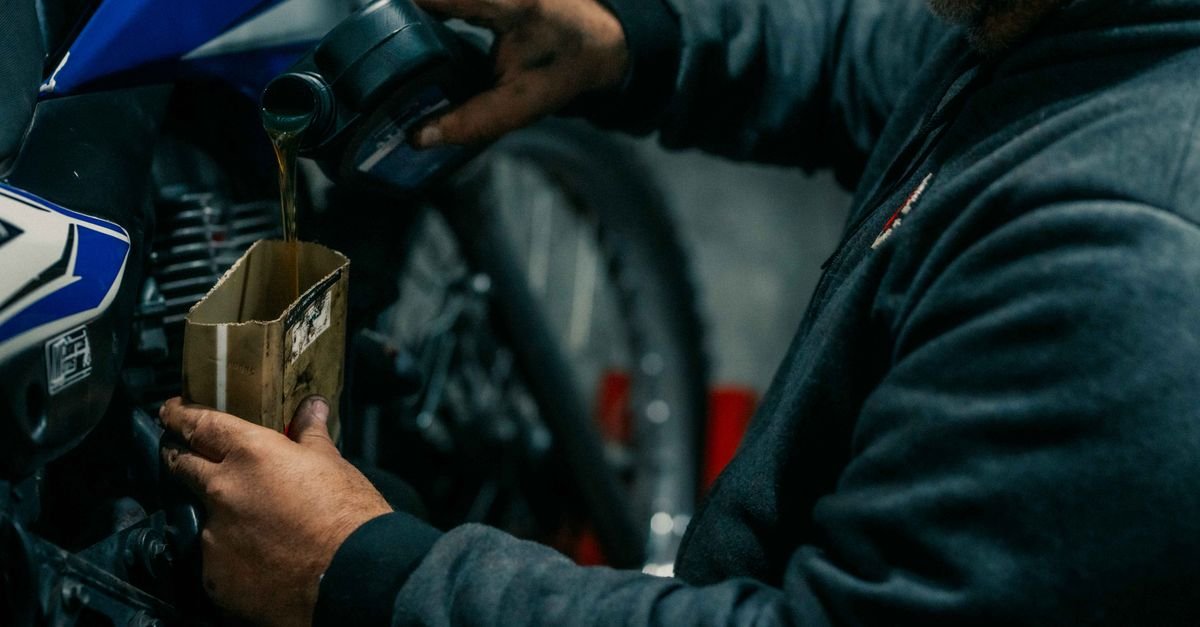
Almost every small engine sold in the last twenty years has a low-oil shutdown sensor. It is a float switch in the crankcase. When oil drops below a set level, it grounds the ignition and the engine dies — usually within a few seconds of starting, and often with no warning light.
Check the oil on level ground, engine cold. Wipe the dipstick, reinsert it fully, pull it out and read. Most residential engines hold 0.6 to 0.9 litres (20 to 30 fl oz) of SAE 30 or 10W-30.
The follow-up people always have: *my oil looks fine, so why is it still cutting out?* Two reasons. The sensor reads level, not condition, so a machine parked on a slope trips it even at correct level — always test on flat ground. And the sensor itself can corrode and fail closed. If oil is correct and level and it still dies in seconds, the sensor is a suspect.
2. Stale Fuel and a Gummed-Up Carburetor
This is the number one gas pressure washer fault overall. Modern petrol containing ethanol starts breaking down in 30 days. By 90 days it can leave varnish in the carburetor bowl and jets. The engine starts on choke, runs on the rich mixture for 20 to 60 seconds, then dies when it needs the main jet.
Symptoms that point at fuel:
- Starts fine, dies as soon as the choke is opened
- Runs only while you hold the choke half on
- Surges up and down before stalling
- Fuel smells sour or looks dark
Drain the old fuel, clean the carburetor bowl and jets, and refill with fresh petrol treated with a stabiliser. Briggs & Stratton’s storage and winterizing guide explains the fuel treatment and circulation routine that prevents this happening at all, and our winterizing walkthrough covers the same ground step by step.
3. A Blocked Fuel Cap Vent Creates a Vacuum
This one fools people because the machine runs perfectly for several minutes first.
The fuel cap has a tiny vent hole so air can replace the petrol as it is used. Block that vent with dirt or a swollen gasket and a vacuum builds in the tank. Fuel flow slows, then stops, and the engine dies. Five minutes later the vacuum has equalised, so it starts right up and you assume the problem has gone.
The 60-second test: when it stalls, loosen the fuel cap half a turn. If you hear a hiss of air, the vent is blocked. Restart with the cap loose. If it now runs indefinitely, replace or clean the cap.
4. A Dirty Air Filter Starves the Engine
A clogged foam or paper filter chokes airflow, makes the mixture too rich, and causes stalling under load — which on a pressure washer means as soon as you pull the trigger and the pump loads the engine.
Pull the filter out and hold it up to a light. If you cannot see light through it, it is finished. Foam filters can be washed in warm soapy water, dried fully, and lightly oiled. Paper filters are replace-only — never wash them.
5. Overheating and Clogged Cooling Fins
Small engines are air-cooled. Grass clippings, dust and detergent residue pack into the cooling fins under the shroud. Heat cannot escape, and the engine trips a heat-related sensor or seizes momentarily.
Signs: it runs 20 to 45 minutes, dies, and will not restart for half an hour. The recoil housing is uncomfortably hot to touch.
Remove the shroud and clear the fins with compressed air and a stiff brush. Keep the machine out of corners with no airflow, and never run it inside a garage or shed — it needs open air for cooling and exhaust safety.
6. A Faulty Unloader Valve Causes Pressure Spikes
The unloader diverts water back into the pump when you release the trigger. If it sticks shut, pressure spikes hard, the engine bogs against the load and stalls.
The tell-tale is a machine that stalls the instant you release the trigger, or one that gets progressively harder to start with the hose connected. A hose that goes rock-hard and pulses is another sign.
Rule out a blocked nozzle first — it produces almost identical symptoms by restricting outflow. Husqvarna’s nozzle cleaning guide is clear that you should use only the supplied cleaning pin, never a nail or wire, both of which enlarge the orifice and ruin the tip. See why nozzles keep clogging if it is a recurring theme.
Why an Electric Pressure Washer Keeps Shutting Off
Electric machines have far fewer failure modes, and three of the five below cost nothing to fix.
1. Thermal Overload Cutout — the “Repair” Is Waiting
Electric motors have a built-in thermal protector. When winding temperature exceeds a safe limit, it opens the circuit and the motor stops dead. Husqvarna’s support documentation on washers that stop suddenly names the thermal protector as the first cause to check, and points at a blocked air intake or long unbroken run times as the trigger.
There is no part to replace. Unplug the machine, move it into shade, and leave it 30 minutes. Most protectors reset automatically once the windings drop below roughly 70 °C. Some units have a small red reset button on the motor housing.
What triggers it:
- Running more than 20 to 30 minutes without a break
- Motor air vents packed with dust
- Direct sun on a hot day — a machine fine at 18 °C can cut out at 32 °C
- Voltage sag, which makes the motor draw more current and run hotter
- Long spells in bypass mode with the trigger released
2. GFCI or Circuit Breaker Trips
Electric pressure washers ship with a GFCI plug on the cord for a good reason — you are combining mains electricity with water. If it trips, press RESET. If it trips again immediately, stop.
| Trip pattern | Likely cause | Action |
| Trips the moment you plug in | Failed GFCI module or moisture in the plug | Dry fully; replace the cord set if it repeats |
| Trips when the motor starts | Inrush current too high for a weak circuit | Use a dedicated 15 A circuit with nothing else on it |
| Trips after several minutes of use | Water ingress into the motor or a degrading winding | Stop using it; have it inspected |
| Trips only in wet weather | Moisture in the plug or extension coupling | Keep connections off the ground and covered |
| House breaker trips, GFCI does not | Circuit overloaded by other appliances | Unplug everything else on that circuit |
A 1,800 W electric washer draws about 15 amps at 120 V, which is the full rating of a standard household circuit. Sharing that circuit with a fridge, a shop light or a radio is enough to push it over.
3. Extension Cord Voltage Drop
This is the most under-diagnosed electric fault. A thin or overlong cord drops voltage. The motor compensates by drawing more current, gets hot, and trips its thermal cutout. Owners blame the machine.
The industry rule of thumb is to keep total voltage drop under 5 % — about 6 volts on a 120 V supply. Here is what different cords actually deliver at a 15 A load:
| Cord length | 16 AWG | 14 AWG | 12 AWG | 10 AWG |
| 25 ft | ~3.0 V drop (2.5 %) | ~1.9 V (1.6 %) | ~1.2 V (1.0 %) | ~0.7 V (0.6 %) |
| 50 ft | ~6.0 V (5.0 %) — marginal | ~3.8 V (3.2 %) | ~2.4 V (2.0 %) | ~1.5 V (1.3 %) |
| 100 ft | ~12.0 V (10 %) — unsafe | ~7.6 V (6.3 %) — too much | ~4.8 V (4.0 %) | ~3.0 V (2.5 %) |
| 150 ft | Do not use | ~11.4 V (9.5 %) — unsafe | ~7.1 V (6.0 %) — too much | ~4.5 V (3.7 %) |
Practical guidance: 12 AWG up to 50 ft, 10 AWG beyond that, and never daisy-chain two cords. Coiled cords run hotter than uncoiled ones, so lay the cord out flat rather than leaving it looped on the reel.
The fastest test costs nothing: plug the washer straight into a wall socket with no extension at all. If the shutdowns stop, the cord was the problem. Our electric vs gas comparison covers the power supply trade-offs in more detail.
4. A Failing Motor Start Capacitor
The capacitor gives the motor the extra torque it needs to spin up. As it degrades, the motor struggles to start under load, draws heavy current, and trips its own protection.
Symptoms: a humming or buzzing noise instead of a clean start, a motor that needs a nudge to get going, a bulged or leaking cylindrical component visible near the motor, or shutdowns that get worse as the machine warms.
Capacitors store a dangerous charge even when unplugged. This is a job for a service technician, not a driveway repair.
5. Water Starvation and Pressure Switch Cycling
Electric machines are far less tolerant of poor water supply than gas ones. Starve the pump and the switch reads erratic pressure, cycling the motor until the thermal cutout gives up.
Confirm your supply with a bucket test: time how long your tap takes to fill a 5-gallon (19-litre) bucket.
| Bucket fill time | Flow rate | Suitable for |
| Under 40 seconds | 7.5+ GPM | Any residential machine |
| 40–60 seconds | 5–7.5 GPM | Any residential machine |
| 60–90 seconds | 3.3–5 GPM | Most machines up to 2.5 GPM |
| 90–150 seconds | 2–3.3 GPM | Small electric units only |
| Over 150 seconds | Under 2 GPM | Too low — expect cycling and cutouts |
A good rule is that your tap should supply at least twice the machine’s rated GPM — that headroom is what stops cavitation. If the machine also loses pressure, read the low pressure diagnostic guide, and if nothing comes out at all, start with no water coming out.
Bypass Mode: The Overheating Cause Nobody Explains
This is the one that costs people pumps.

When the machine is running and you are not squeezing the trigger, water has nowhere to go. The unloader valve diverts it in a loop back through the pump. That is bypass mode: the same water circulates over and over, and every pass adds friction heat.
Nobody publishes how fast that water heats. The rates quoted online cite each other rather than a manufacturer, so this page will not give you one. What manufacturers do publish is a time limit: Simpson’s manuals state in two separate places that the machine must not run in bypass for more than two minutes, because “internal components of the pump can be damaged” (Simpson generic pressure washer manual). Above roughly 60 °C (140 °F) the pump’s rubber seals and O-rings begin to soften and deform. Thermal relief valves on better machines dump hot water at around 60 to 63 °C (140–145 °F), but plenty of consumer units have no thermal relief at all.
What that does to you:
- On gas machines, heat raises pump load and the engine bogs down or stalls
- On electric machines, the motor fights rising resistance and the thermal cutout trips
- On any machine, prolonged bypass shortens seal life and causes leaks weeks later
The rule: never leave the machine running more than two minutes with the trigger released. Moving a ladder, taping something down, answering the door — shut it off. Restarting costs three seconds and can save a pump.
This is also why TSS is genuinely a good thing. By cutting the motor between trigger pulls, it eliminates bypass heating entirely.
Symptom-to-Cause Quick Reference
| What you observe | Gas cause | Electric cause |
| Dies within 3 seconds every time | Low oil sensor; empty fuel bowl | No water supply; TSS with air lock |
| Dies when you open the choke | Blocked main jet | N/A |
| Dies after 5 minutes, restarts after 5 minutes | Fuel cap vent vacuum | Capacitor heating up |
| Dies after 20+ minutes, needs 30 minutes to restart | Clogged cooling fins; overheating | Thermal overload cutout |
| Stops the instant you release the trigger | Unloader stuck | Normal TSS operation |
| Cycles on and off with trigger closed | N/A | Leak bleeding pressure; failing switch |
| Motor hums but will not turn | N/A | Start capacitor failure |
| Stalls only under spray load | Dirty air filter; weak spark | Voltage drop on the cord |
| Kills the breaker or GFCI | N/A | Overloaded circuit; water ingress |
| Runs rough then dies, fuel smells sour | Stale fuel; varnished carburetor | N/A |
A 10-Minute Diagnostic Sequence Anyone Can Follow
Do these in order and stop as soon as the machine behaves.
1. Time the shutdown. Note the seconds or minutes. Match it against the timing table above.
2. Check the water first, always. Tap fully open, hose kink-free, inlet screen clean. Trapped air alone will cause cutouts, and bleeding it takes seconds — Husqvarna’s guide on a washer that starts but delivers no water covers bleeding the line and cleaning the inlet filter.
3. Electric only: bypass the extension cord. Plug straight into the wall. Press the GFCI RESET.
4. Gas only: check oil on level ground. Then loosen the fuel cap and restart to test the vent.
5. Run it with no nozzle fitted. If it now runs indefinitely, the fault is downstream — a blocked tip or a sticking unloader.
6. Feel the temperature. Hot motor housing or hot engine shroud means a heat fault. Cool machine means fuel or electrical supply.
7. Cool it 30 minutes and retry. If it runs the same length of time again, the diagnosis is thermal, full stop.
8. Stop for a technician on a capacitor, a failed sensor, an internal motor fault, or a GFCI that keeps tripping after the plug has fully dried — that last one means water inside live parts.
If the machine will not fire up at all rather than shutting off mid-job, work through pressure washer won’t start instead.
Maintenance Intervals That Prevent Repeat Shutdowns
Most repeat shutdowns are maintenance debt catching up. This schedule prevents nearly all of them, and every line on it maps back to a cause listed above.

| Task | Gas interval | Electric interval | Why it prevents shutdowns |
| Check engine oil | Every use | N/A | Stops low-oil sensor cutouts |
| Change engine oil | First 5 hours, then every 50 hours | N/A | Prevents heat-related stalling |
| Clean or replace air filter | Every 25 hours | N/A | Stops fuel-rich stalling under load |
| Replace spark plug | Every 100 hours or annually | N/A | Eliminates intermittent misfire cutouts |
| Drain or stabilise fuel | Before any 30-day idle period | N/A | Prevents carburetor varnish |
| Clean cooling fins / motor vents | Every 50 hours | Every 25 hours | Prevents thermal cutouts |
| Clean water inlet screen | Every 10 hours | Every 10 hours | Stops water starvation cycling |
| Clean nozzles with the supplied pin | Every use | Every use | Prevents pressure spikes and unloader strain |
| Inspect cord and GFCI plug | N/A | Every use | Catches moisture and damage before a trip |
| Pump saver before storage | Annually | Annually | Keeps seals pliable, avoids leak-driven cycling |
FAQ
Why does my pressure washer keep shutting off when I release the trigger?
On an electric machine that is the Total Stop System doing its job. It cuts the motor within about a second of the trigger closing so the pump is not left running against a shut gun. On a gas machine, stalling on trigger release instead suggests a sticking unloader valve creating a pressure spike the engine cannot absorb.
How long should I wait after a thermal overload shutdown?
Give it a full 30 minutes with the machine unplugged and out of direct sun. Most thermal protectors reset automatically once the motor windings cool below roughly 70 °C. Restarting after five minutes usually just trips it again within a minute or two and adds more heat stress to the windings.
Can a bad extension cord really shut a pressure washer off?
Yes, and it is one of the most common causes. A 16-gauge 100-foot cord drops around 12 volts under a 15-amp load, which is 10 % of your supply. The motor draws extra current to compensate, overheats, and trips its own thermal cutout. Plugging directly into a wall socket is the quickest way to confirm it.
My gas washer runs five minutes then dies, then restarts fine. What is that?
That pattern is classic fuel cap vent blockage. Petrol leaves the tank, no air can replace it, a vacuum forms and fuel flow stops. Sitting for a few minutes lets the vacuum equalise, so it restarts. Loosen the cap half a turn when it stalls — if you hear a hiss, that is your answer.
Is it bad to leave a pressure washer running with the trigger off?
Yes. Water recirculating in bypass has nowhere to dump the pump’s energy, and past roughly 60 °C (140 °F) the seals begin to soften. How quickly it gets there is not something manufacturers publish, so treat the time limit as the rule rather than any temperature: Simpson’s manuals cap bypass running at two minutes. Switch it off if you are pausing for anything longer than that.
Why does my pressure washer keep shutting off only when I pull the trigger?
Pulling the trigger loads the pump, and that load exposes weak links. On electric machines it is usually voltage sag from a long or thin cord. On gas machines it is normally a dirty air filter, a weak spark plug, or a partly blocked carburetor jet — all faults that only show under load.
Could low water pressure from my tap cause shutdowns?
It can. If the supply delivers less than about twice the machine’s rated GPM, the pump cavitates and the pressure switch reads erratic pressure, cycling the motor until it overheats. Time a 5-gallon bucket fill: under 90 seconds is comfortable for most residential machines.
Does a clogged nozzle make the machine cut out?
Indirectly, yes. A blocked tip restricts outflow, pressure climbs sharply, and the engine or motor has to work against that spike. On gas machines it can stall the engine outright. Clear tips with the manufacturer’s cleaning pin only — wire or a nail will enlarge the orifice and permanently reduce pressure.
When should I stop troubleshooting and take it to a shop?
Stop if the GFCI trips repeatedly after the plug has fully dried, if the motor hums without turning, if you see a bulged or leaking capacitor, or if a gas engine dies within seconds despite correct oil on level ground. Those point at electrical faults or sensor failures that are not safe to poke at with the unit plugged in.
Time the Shutdown Before You Open Anything
When a pressure washer keeps shutting off, resist the urge to open anything. Time the shutdown first — that number alone eliminates most of the possible causes. On electric machines, confirm you are not simply watching the Total Stop System work as designed, then plug straight into the wall and press the GFCI reset before suspecting the motor. On gas machines, check oil on level ground, loosen the fuel cap, and treat any fuel older than 30 days as guilty until proven innocent.
The one habit that prevents the most damage is also the easiest: never leave the machine running with the trigger released for more than two minutes. Bypass heat is invisible and cumulative, and it turns a machine that keeps shutting off today into leaking pump seals next month. Add a 12-gauge cord, fresh fuel and a clean air filter, and you have covered the overwhelming majority of shutdowns.