Last Updated on September 25, 2026 by Umar Farooq
What does chalked mean? It means a painted surface has begun shedding its own colour as loose powder, because sunlight has broken down the resin that was holding the pigment in place and the pigment now has nothing to hold onto. Run a dry hand across the wall and a pale version of the house colour comes away on your palm. That powder did not land on the wall. It came out of it.
If you arrived here from a video game, “chalked” means something else entirely and you are in the wrong aisle. If you arrived here with a white hand and a slightly worried expression, stay.
Four other pages on this site mention chalking and then hurry past it, because each of them is really about something else — a metal roof, an aluminium wall, a brush. This is the page they were all leaning on. One phenomenon, explained once, so nobody has to keep apologising for the digression.
What Does Chalked Mean? The Pigment Outlived Its Glue
Every exterior coating is two components doing completely different jobs. The pigment is solid particles: colour, opacity, UV screening. The binder is the resin that glues those particles to each other and to the substrate. On its own, pigment is coloured dust. The binder is the only reason it stays where the painter put it.
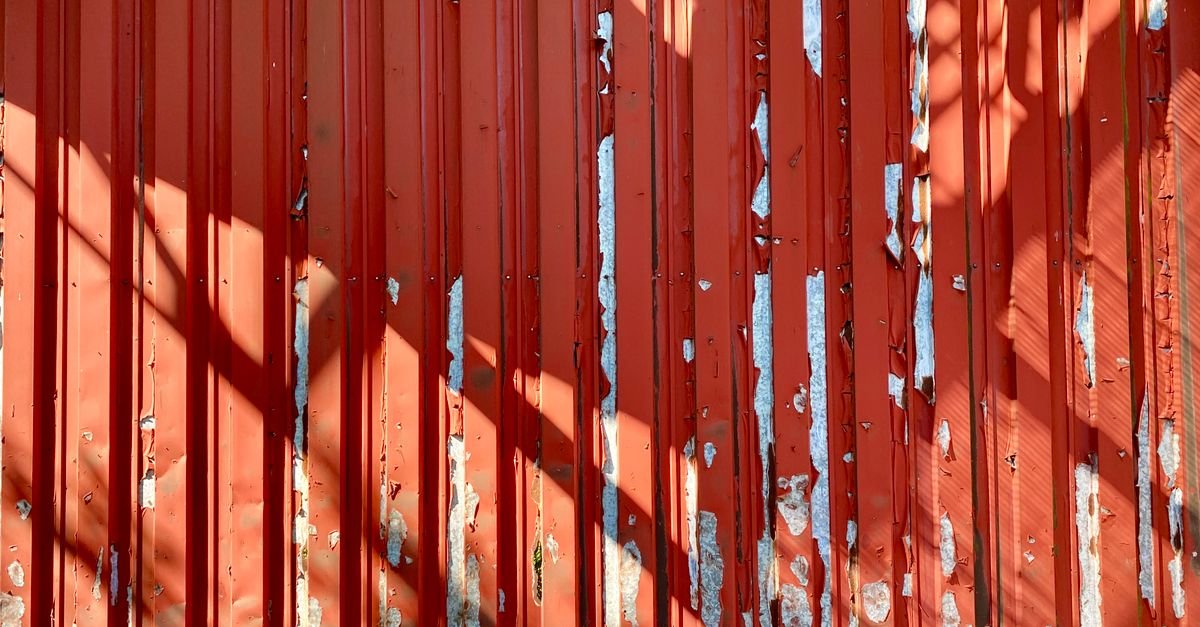
Ultraviolet light takes the binder apart from the outside in. The resin at the very surface breaks into smaller and smaller fragments, some of which are volatile enough to simply leave. The pigment particles underneath it do not degrade — they are minerals, and minerals do not care about sunlight. So the film erodes downward a fraction of a micron at a time, and every particle it uncovers is left sitting on the surface, loose, still perfectly coloured, attached to nothing. Chalk.
Here is the part almost nobody tells you, and it is the reason white and pale colours chalk hardest. The most common white pigment on earth is titanium dioxide, and titanium dioxide is a photocatalyst. It does not passively wait while UV destroys the resin around it. Under ultraviolet light it generates reactive radicals at its own surface, and those radicals attack the binder holding it. A study of titanium white paint formulations puts it plainly: “the binder is broken down into volatile components until the pigment is left unbound at the paint surface (chalking)” (Heritage Science, 2018).
Which is to say your paint contains an ingredient that industry uses deliberately, in self-cleaning glass and air-purifying render, to break down organic matter. Inside a paint film, the organic matter available for breaking down is the paint.
Paint chemists have known this for a century and have spent it in retreat. Early titanium white used the anatase crystal form, which the same paper describes as having the highest photocatalytic activity of the lot. Modern pigment is rutile, “known to have much lower photocatalytic activity than anatase,” and the good grades are wrapped in a shell of silica or alumina — inorganically coated rutile is “relatively photostable and even photoprotective.” That is the practical difference between a cheap exterior white that chalks in four years and a quality acrylic that takes fifteen. Same colour on the card, different pigment underneath it.
Finger, Cloth or Tape: Which Test Actually Tells You Anything
All three tests are real, all three are standardised, and they are not interchangeable. ASTM D4214, the standard method for evaluating the degree of chalking of exterior paint films, covers “procedures recommended for transferring the chalk to a fabric or fingertip,” compared against photographic reference standards, or lifting it with adhesive tape and reading the result off a reflectance table (ASTM D4214).
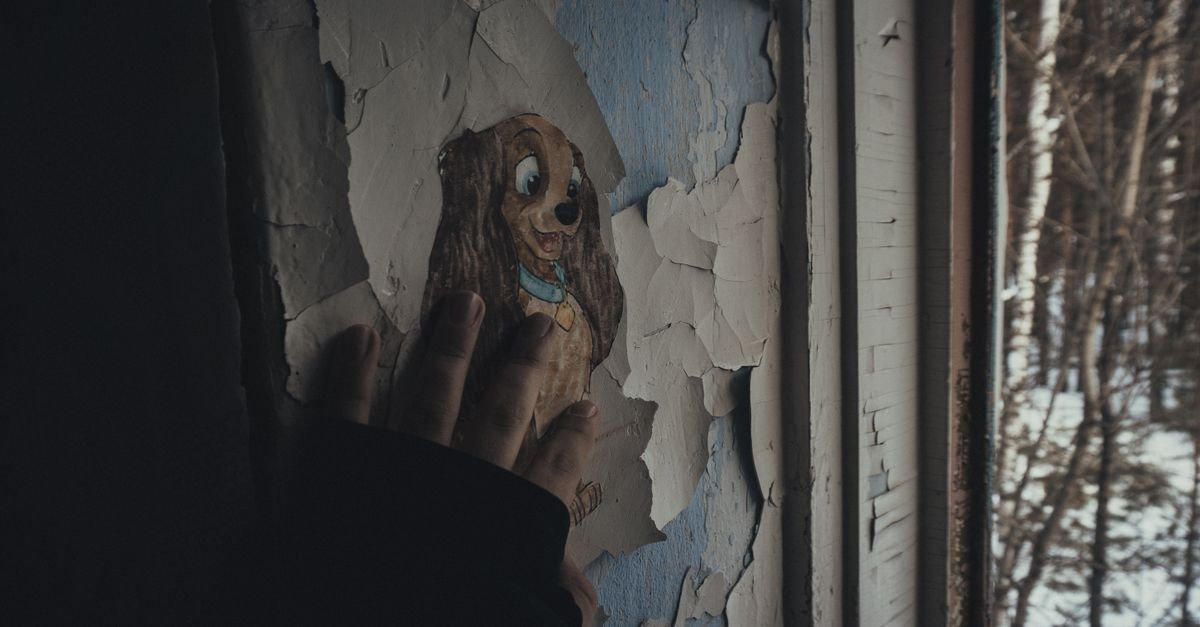
The finger is the fastest and the least honest. It tells you instantly whether something transfers, and then lies to you about how much, because a pale palm against a pale powder hides most of the answer. On beige, cream or white — which is most houses — the finger will tell you a wall is fine when a cloth would not.
The dark cloth is the one to use. Not because the trade says so, but because the laboratory does: the researchers behind the titanium white study assessed chalking by “swiping a black cotton swab across the paint surface,” and recorded why in the method itself — “the contrast between the white pigment and the black cotton swab enhances chalk visibility.” A dry black rag is the same instrument, scaled up to a wall.
The tape is the quantitative one, and it is the reason a coatings lab can give a warranty claim a number rather than an opinion. It is overkill for a homeowner, but it explains why the industry treats chalking as a measurement rather than a complaint.
Three rules make the result mean something. Test dry — a wall that has had rain on it in the last day will under-report, because water floats the loose layer off and redeposits it unevenly. Test in shade, on a surface that is not warm. And test more than one elevation: the south wall is several years ahead of the north wall on the same house, and if you only check the shaded side you will be pleasantly and expensively misinformed.
A Ten Means New and a Zero Means Gone
D4214 scores the transfer from 10, meaning no chalking at all, down to 0, meaning heavy. The scale is inverted from what most people expect, which catches people out reading spec sheets.
What makes that scale worth knowing is where the architectural standards put their thresholds. AAMA 2605, the top organic coating specification for architectural aluminium — the finish on curtain wall, storefront and premium window systems — requires a chalk rating of no less than 8 after a ten-year natural weathering exposure in South Florida, facing south at 45 degrees. AAMA 2604, the middle tier, permits a maximum chalk rating of 8 as well, but with no natural weathering requirement behind it at all (Fairview Architectural, AAMA 2604 vs 2605).
Read that slowly, because it reframes the whole subject. The most demanding architectural finish specification in North America does not require zero chalking. It requires a faint 8 after a decade of the harshest UV and humidity on the continent. Chalking is not a defect and not a failure. It is a designed wear mechanism, written into the spec, with a permitted rate. The only question it asks a homeowner is which side of a threshold they are on — and that is the opinion I will defend on this page: a chalked wall is not a problem to be fixed, it is a clock to be read, and the mistake people make is treating a normally weathering surface as a dirty one and reaching for more pressure.
| Cloth result | Roughly | What it is telling you |
| Nothing transfers | 10–8 | Film intact. Anything on this wall landed there. |
| Faint tint, visible in good light | 8–6 | Normal weathering. Wash annually and stop worrying. |
| Obvious colour, cloth needs rinsing | 6–4 | Mid-life. Wash it properly, and price a recoat for the decade. |
| Palm loaded, comes off on your sleeve | 4–0 | The film is spent. Wash once, evenly, and paint. |
Binder Chalks. Bare Material Does Not.
The rule is one sentence: chalking requires a pigment held in an organic binder, exposed to ultraviolet light. Where all three are present it happens eventually, and no product prevents it — the good ones only slow it down. Where one is missing, whatever is happening on that wall is something else with a different fix.
So a factory-coated metal panel chalks, whether that is aluminium siding, steel siding or a standing-seam roof, because the baked-on finish is exactly the pigment-in-resin system described above. Site-applied exterior paint on wood, masonry paint on render, and the factory coat on fibre cement all chalk for the same reason. Powder-coated railings and window frames chalk, which is what AAMA is measuring in the first place.
Vinyl siding is the interesting one, and it catches people who have read half of this. There is no separate coating on a vinyl panel — the pigment is dispersed through the PVC itself. But the top few microns of that PVC are still a polymer holding pigment in sunlight, so it degrades exactly the same way and hands you exactly the same powder. On vinyl the whole panel is the paint film, which is why you cannot sand it, cannot strip it, and cannot get the gloss back. Painted metal is the mirror image: the coating is a separate layer, which is why aluminium siding has a repaint option and a chalked vinyl wall mostly does not.
What does not chalk: bare wood, which greys instead as lignin breaks down and the surface fibres let go. Unpainted brick and concrete, which produce salt rather than powder. Mill-finish and anodised aluminium, glass and stone. If the surface has no pigmented film on it, the white stuff is not chalk and the rest of this page does not apply to it.
Three Other White Powders People Call Chalk
This is where most diagnoses go wrong, and there is a single test that separates them: chalk is the colour of the wall. Loose pigment on a red wall comes off pink. On a beige wall it comes off beige. If the powder is white and the wall is not, you are looking at something else.
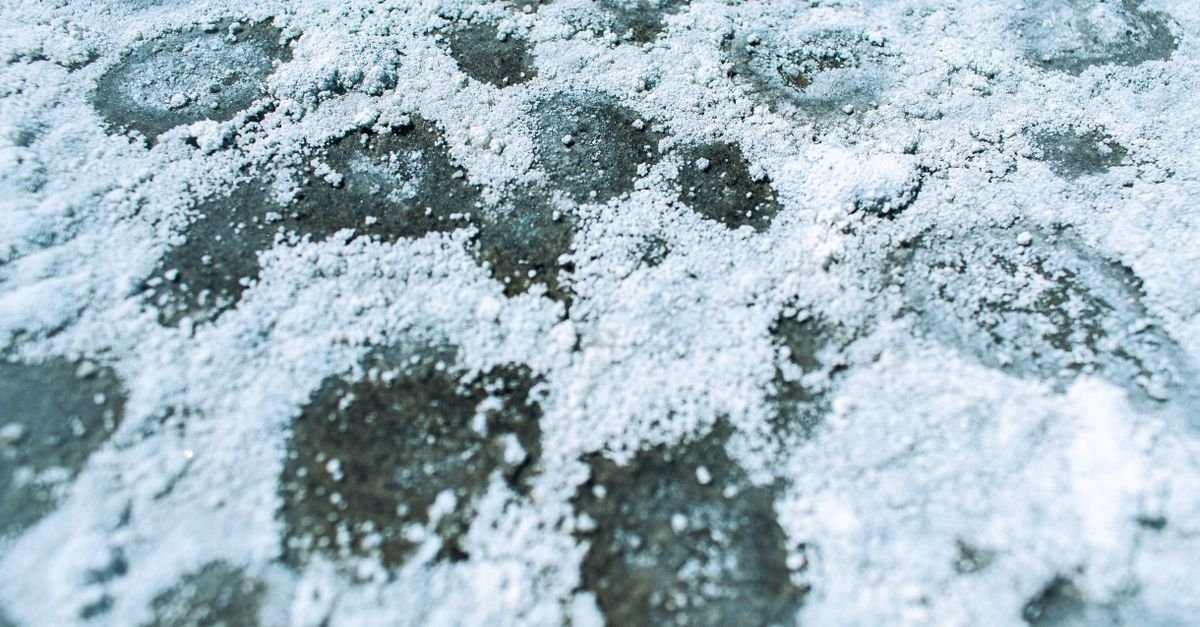
Efflorescence is soluble salt carried out of masonry by moving water and left behind when the water evaporates. It is white on any colour of brick, it feels gritty rather than soft, it dissolves in water where chalk does not, and it comes back after rain because the water supply is the cause. Powder plus a damp problem is efflorescence, not chalk, and washing the wall without dealing with the water is an annual appointment.
White rust on galvanised steel — gutters, fasteners, unpainted flashing — is zinc corrosion product, formed where moisture sat against the zinc with no air movement. It is bulkier than chalk, sits in patches rather than evenly, and is the metal itself, not a coating over it.
Hard water scale from sprinkler overspray is calcium, deposited from the outside. It is adherent rather than loose, it forms fans and arcs that point back at the sprinkler head, and it resists a dry cloth entirely.
And the persistent one: the white powder on aluminium siding is not aluminium oxide. Aluminium’s oxide film is transparent and self-repairing, which is the whole reason aluminium cladding from 1968 is still hanging on houses. The powder is degraded coating. That mistake is worth a page on its own, and it has one.
Why the Powder Comes Back After a Good Wash
Washing removes chalk that has already formed. It does nothing whatsoever to the thing producing it, which is still up there and will be back tomorrow morning. Underneath what you removed is a film that is now thinner and lower in binder than the day it went on, freshly exposed, and it starts again from there.
Water on its own barely counts as removal. It floats the loose pigment, the wall dries, and a good proportion of it settles straight back down — which is why a chalked house can look freshly washed and still fail a cloth test an hour later. What actually takes chalk off is detergent with a surfactant in it, dwell time, and mechanical agitation, delivered the way any exterior wash is delivered: bottom-to-top, never allowed to dry, rinsed top-to-bottom at low pressure.
The interval is the useful part. One season of chalk is a thin loose film that lifts with detergent and no scrubbing at all. Ten years of it is layered, partly bonded, and needs a brush — and a brush on a chalked wall removes material in proportion to how hard each patch was worked, which is how walls come out of a wash looking striped rather than clean. Annual washing is not about the dirt. It is about never letting the chalk layer get thick enough to need force.
Paint Sticks to Whatever You Leave Behind
The one consequence that costs real money is adhesion. A new coating bonds to the surface it is applied to, and on a chalked wall that surface is loose powder bonded to nothing. The coating then holds on beautifully to a layer that is already on its way off, and in three years both of them leave together.
The sequence is wash, dry thoroughly, and then test again — that second cloth test is the step people skip, and it is the only one that tells you whether the prep worked. If colour still transfers after a proper wash, that residual chalk is precisely what bonding primers and masonry conditioners for chalky substrates exist for, and they are a different product from ordinary primer rather than a more expensive version of it. More pressure is not an option in this sequence, because painted wood generally tops out around 500–800 PSI and there is nowhere to go.
FAQ
What does chalked mean on siding?
It means the pigment in the siding’s finish is no longer bound to the surface and transfers when touched. On painted metal or fibre cement that is the coating breaking down; on vinyl it is the surface of the PVC itself. Either way, a dry cloth comes away the colour of the wall.
Is chalking bad?
Not by itself. AAMA 2605, the premium architectural coating specification, still permits a chalk rating of 8 out of 10 after ten years of South Florida exposure, so a slow chalk is normal service life rather than a fault. Heavy chalking is different — that is a film near the end of its useful life.
How do you test for chalking paint?
Rub a dry black or dark cloth firmly across a shaded section of dry wall, in a short stroke rather than a wipe. Nothing on the cloth means the film is intact. Colour on the cloth means chalking, and the amount of colour is the rating. Check a sunny elevation too, because it will be years ahead of a shaded one.
Can you paint over chalking paint?
Only after it has been removed and the surface has passed a second cloth test. Paint applied over chalk bonds to loose powder and fails early. Where a light transfer persists after washing, a bonding primer formulated for chalky substrates is the correct answer rather than a heavier topcoat.
Does pressure washing remove chalking?
Detergent, dwell time and agitation remove chalking. Pressure on its own mostly relocates it, and on a chalked wall high pressure removes coating unevenly and leaves visible bands. The wash is a chemistry job with water as the rinse, not a pressure job.
Why is my white paint turning to powder?
Because titanium dioxide, the white pigment in it, is photocatalytic — under UV it generates radicals that degrade the binder immediately around it. Cheaper exterior whites use pigment grades with higher photoactivity and less binder holding them, so they chalk noticeably faster than a quality acrylic.
Does chalking mean my siding needs replacing?
Almost never on its own. Chalk is a coating condition, not a structural one. Painted metal and painted masonry can be washed and recoated; vinyl can be washed and lived with. Replacement is a decision about panels that are cracked, loose or leaking, not about powder on your hand.
Chalk Is a Clock, Not a Stain
All of this resolves into one dark rag, one short stroke, and what you decide afterwards. A clean cloth means the finish is doing its job and the wall is merely dirty. A faintly tinted cloth means it is weathering on schedule and wants a wash once a year. A loaded cloth means the film has spent its binder, and the honest move is one thorough even wash followed by a paint quote, rather than the same afternoon again every spring until the substrate shows through.
The powder on your hand is not the wall failing at you. It is the wall telling you, fairly politely and about a decade in advance, what it is going to need.