Last Updated on October 4, 2026 by Umar Farooq
What PSI to pressure wash stucco? Use 200-500 PSI on EIFS or synthetic stucco and on acrylic finish coats. Use 1,200-1,500 PSI on sound, unpainted traditional cement stucco. Drop to 800-1,000 PSI on older or painted walls. Always pair the pressure with a 25-degree or 40-degree tip held at least 18 inches away.
Knowing what PSI to pressure wash stucco at is the one decision that separates a clean wall from a repair bill, and there is no single number. “Stucco” covers at least five wall systems that look identical from the sidewalk but fail at wildly different pressures. A 1,500 PSI setting that barely cleans 40-year-old cement stucco will blast a hole through synthetic stucco in two seconds. Identify your system first, then apply its ceiling.
What PSI to Pressure Wash Stucco: The Short Answer by Wall Type
Stucco is not a material. It is a category. Under it sit traditional Portland cement stucco, painted cement stucco, acrylic or elastomeric finish coats, EIFS (Exterior Insulation and Finish System, often called synthetic stucco), and loose decorative textures like dash and lace. They share a look. They do not share a pressure tolerance.
Traditional cement stucco is the toughest, because you are cleaning roughly half an inch of fiber-reinforced Portland cement over wire lath. EIFS is the most fragile, because the surface is a base coat only 1/16 to 3/32 of an inch thick sitting on foam board. Acrylic finishes sit in between and soften with age. Painted stucco is only as strong as its weakest layer, which is usually the paint.
That is why online advice ranges from 200 PSI to 2,500 PSI for “stucco.” Both numbers are right. They describe different walls.
Four Field Tests Anyone Can Do in Five Minutes
You do not need building plans to figure out which system you own. Four quick tests get you there.
The tap test. Rap the wall with your knuckles in the middle of a large flat area, away from windows and corners. Cement stucco sounds solid and dead, like knocking on a sidewalk. EIFS sounds hollow and drummy because there is foam behind the thin coating.
The push test. Press your thumb into the wall. Cement stucco gives you nothing. EIFS deflects slightly because the thin lamina sits on compressible insulation board. Engineering firm Lerch Bates explains this in its EIFS versus stucco identification guide, noting that stucco feels like pressing a finger against a concrete wall.
The edge test. Look where the cladding meets the foundation, or at a window opening. If the wall stands proud of the foundation by three-quarters of an inch or more, or you see white foam at a cut edge, you have EIFS. Traditional stucco ends in a thin metal weep screed.
The crack and joint test. Cement stucco cracks in the middle of wall areas and usually shows control joints. Properly installed EIFS rarely cracks in the field of the wall. Hairline map cracking is a strong signal of cement stucco.
If two or more tests agree, trust them. If you are still unsure, treat the wall as EIFS and use the lowest pressure. Guessing low costs you an extra hour. Guessing high costs you a wall.
Stucco PSI Chart: Safe Limits for Every Wall Type
This chart is the working reference. “PSI at the wall” means the pressure actually landing on the surface, not the number printed on your machine. The next section explains why those two numbers are very different.
| Wall system | Safe PSI at the wall | Nozzle | Minimum distance | Key caution |
| EIFS / synthetic stucco | 200-500 | 40° white or 65° soap | 24-48 in | Chemistry cleans, not pressure |
| Acrylic or elastomeric finish | 300-600 | 40° white | 24-36 in | Aged finishes chalk off easily |
| Traditional cement stucco, sound & unpainted | 1,200-1,500 | 25° green or 40° white | 18-24 in | Test a hidden patch first |
| Traditional cement stucco, 30+ years or hairline cracks | 800-1,200 | 40° white | 24-36 in | Water enters every crack |
| Painted cement stucco, paint intact | 1,000-1,200 | 40° white | 24 in | Paint fails before stucco does |
| Painted stucco, peeling or chalking | 0-500 (soft wash only) | 65° soap | 36 in | Pressure will strip paint |
| Dash, lace or loose decorative texture | 500-800 | 40° white | 36 in | Sand grains knock loose |
| Stucco applied within 60 days | Do not wash | — | — | Cement is still curing |
Two rules sit behind every row. The “Safe PSI at the wall” column is a ceiling, not a target, so start at half of it. And if your machine cannot go below that ceiling, back away instead. Distance is a free pressure regulator, and it is the tool most homeowners never use. For the wider picture across every exterior surface, see our guide to what PSI pressure washer you need.
Why Your Machine’s Max PSI Is Not the PSI Hitting the Wall
Here is the detail almost every stucco article skips, and it is why people damage walls while believing they followed the rules. The PSI rating on your machine is measured at the nozzle outlet. It is not the pressure that arrives at the stucco.
Water leaving a fan tip spreads and slows immediately, dividing its energy across a wider band of wall. Two feet out, force per square inch has fallen dramatically. That is why a pro can safely clean EIFS with a 3,000 PSI commercial machine while a homeowner wrecks the same wall with an 1,800 PSI electric unit held six inches away.
Distance Is Your Real Pressure Dial
The table below shows approximate delivered pressure at various distances with a 40-degree tip. Treat them as field estimates, not lab values, since temperature, GPM and nozzle wear all shift the result. The pattern is what matters.
| Distance from wall | Approx. share of machine PSI delivered | 1,500 PSI machine | 2,800 PSI machine |
| 6 inches | ~85% | ~1,275 PSI | ~2,380 PSI |
| 12 inches | ~60% | ~900 PSI | ~1,680 PSI |
| 18 inches | ~45% | ~675 PSI | ~1,260 PSI |
| 24 inches | ~33% | ~495 PSI | ~925 PSI |
| 36 inches | ~20% | ~300 PSI | ~560 PSI |
| 48 inches | ~12% | ~180 PSI | ~335 PSI |
Read that table again with EIFS in mind. A 2,800 PSI machine at 48 inches with a 40-degree tip delivers roughly 335 PSI, comfortably inside the EIFS window. The same machine at 12 inches delivers around 1,680 PSI, about three times the manufacturer limit. Nothing changed except your arm.
The Association of the Wall and Ceiling Industry makes the same point in its guidance on washing EIFS, where contributors recommend a 30-degree wide nozzle held three to five feet away or farther, and note that 300 to 400 PSI is plenty for aged acrylic finishes. One line there is worth taping to your machine: it is the chemical that does the cleaning, not the pressure on the pressure washer.
What PSI to Pressure Wash Stucco With Each Nozzle Tip
Nozzle choice is not a preference. It is a safety device. The tip decides how the same pump pressure is spread, and on stucco that spread is everything.
| Tip color | Spray angle | Safe on stucco? | Correct use |
| Red | 0° | Never | Concentrates all force into a pencil stream; cuts stucco instantly |
| Yellow | 15° | Never | Strips paint and finish coats even at low PSI |
| Green | 25° | Sound cement stucco only | Final rinse at 24 in or more, never on EIFS or acrylic |
| White | 40° | Yes, default choice | General cleaning and rinsing on all stucco types |
| Black | 65° soap | Yes | Applying detergent at very low pressure |
The black soap tip is the most under-used tip in the box for stucco. It drops line pressure to a fraction of the machine rating so you can lay chemistry onto the wall without driving anything into it. Simple Green’s stucco cleaning instructions follow exactly this pattern: apply cleaner with a 65-degree tip from a minimum of 18 inches, then rinse with a 25 to 40-degree tip at a safe standoff. Our pressure washer nozzle chart breaks down angle, flow and use for every color.
Tips also wear out. An eroded orifice sprays wider and softer, which sounds harmless until you compensate by moving closer. Replace fan tips every season if you wash regularly.
What Actually Happens at Each Pressure Above the Limit
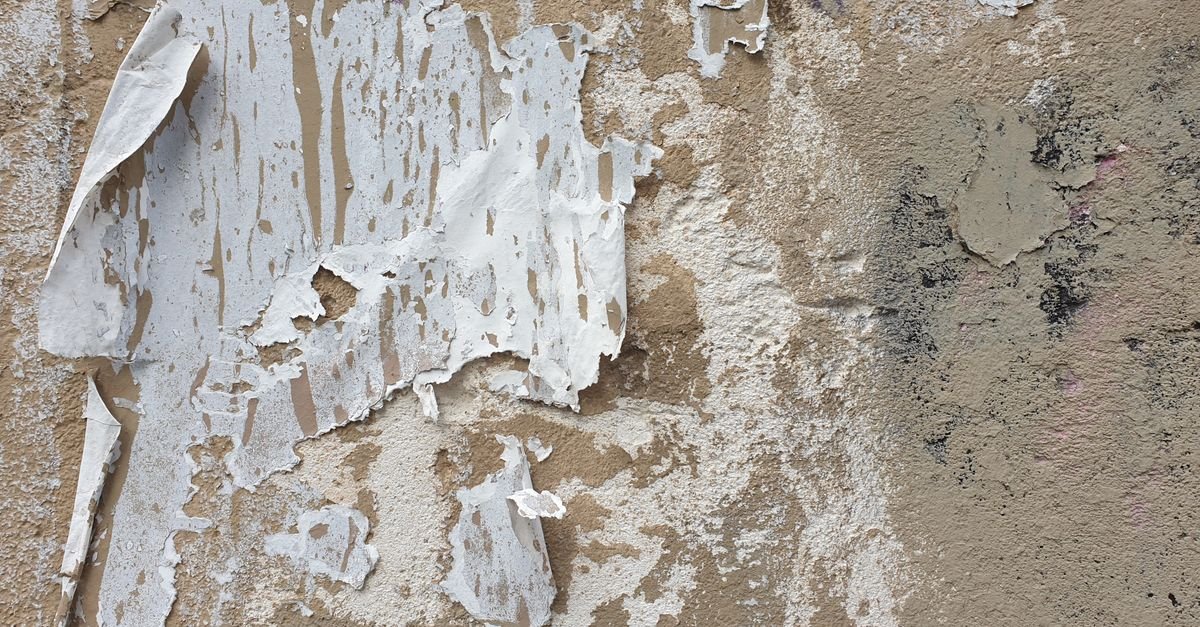
Most guides warn vaguely about “damage.” That is useless when you are standing at the wall with a wand in your hand. Here is what each pressure band actually does, and how to spot it before you wreck an entire elevation.
| Pressure at the wall | Effect on EIFS / acrylic finish | Effect on cement stucco | Reversible? |
| Under 500 PSI | Safe; dirt film lifts with chemistry | Safe but slow on heavy soiling | N/A |
| 500-900 PSI | Colored aggregate granules wash off; wall lightens in patches | Safe on sound walls | Repaint or refinish |
| 900-1,500 PSI | Finish coat thins; fiberglass mesh pattern shows through | Sand grains loosen; runoff turns gritty | Refinish required |
| 1,500-2,200 PSI | Base coat exposed; foam board can be reached at edges | Surface texture erodes; hairline cracks widen | Patch and refinish |
| 2,200-3,000 PSI | Holes cut through lamina in seconds | Chunks of finish coat blow off; lath can be exposed | Professional repair |
| Any pressure aimed at a joint | Water driven behind the system | Water driven behind the weather barrier | Often hidden until rot appears |
The tell-tale sign of over-pressuring is the runoff. Water coming off a stucco wall should be dirty, not gritty or colored. If sand, colored aggregate or paint chips collect at the base of the wall, stop, back off twelve inches, and switch to a wider tip. The second sign is banding: if the clean wall shows lighter stripes matching your wand path, you did not clean unevenly, you eroded the finish where you lingered.
The Damage You Cannot See: Water Behind the Wall
Surface erosion is the visible problem. Water intrusion is the expensive one. Stucco systems shed water that falls downward, not water fired upward under pressure.
Every one of these is an entry point: the gap under a window sill, the joint where trim meets the wall, the head of a weep screed, a control joint, a hose bib, a light fixture box, and any crack wider than a hair. Push water into one at 1,500 PSI and it travels behind the cladding, soaking sheathing and framing with no fast way out.
Two habits prevent almost all of it. Never aim upward at a horizontal edge; keep the wand straight on or angled slightly down so water runs down the face rather than under laps and flashings. And never hold the spray on one spot — move in long, steady horizontal passes.
The Pre-Wet Step Almost Everyone Skips
Dry stucco is thirsty. Cement stucco is porous, so cleaning solution sprayed on a dry wall gets pulled deep into the pores instead of sitting on the surface where the dirt is. You get weaker cleaning and chemical trapped inside the wall that can bleed back out later as a stain.
The fix takes four minutes. Rinse the wall section with plain water at low pressure first, bottom to top, and let it sit a minute so the surface saturates. A saturated wall cannot absorb much more, so your cleaner stays where it works.
Pre-wetting also knocks off loose dust so detergent is not wasted, cools the surface to extend dwell time, and stops the streaking that happens when cleaner dries onto hot stucco. Apply bottom to top, rinse top to bottom. Cleaner running down a dry wall leaves permanent tiger stripes. On a wet wall it does not.
Match the Chemistry to the Stain, Not the Pressure
When a stain will not come off, the instinct is to turn the pressure up. On stucco that instinct is always wrong. Change the chemical instead, because these stains have completely different causes and none of them respond to force.

| Stain | What it looks like | Cause | Correct treatment |
| Mildew and algae | Black, grey or green blotches, worse on north and shaded walls | Biological growth in damp shade | Sodium hypochlorite solution with surfactant, 10-15 min dwell, low-pressure rinse |
| Efflorescence | Fine white powder or crusty white bloom | Water-soluble salts migrating out of the cement | Dry brush first; mild acidic masonry cleaner only if needed; fix the moisture source |
| Rust | Orange or brown vertical streaks under fixtures and screws | Corroding fasteners, rails or irrigation water | Oxalic-acid-based rust remover; never chlorine bleach, which sets rust |
| Dirt and pollution film | Uniform grey dullness, heaviest under eaves | Airborne soil and traffic film | Mild alkaline house wash detergent with soft agitation |
| Tannin and mud splash | Brown splatter along the lower 24 inches | Rain bouncing soil off beds and walkways | Detergent plus soft brush; extend gutter downspouts to prevent it |
Efflorescence vs Mildew vs Rust: How to Tell Them Apart
These three cause most stucco discoloration, and homeowners routinely confuse them, which leads to bleach on rust and acid on mildew.
Run a fingertip across the stain. Dry white powder on your finger means efflorescence, which is a moisture symptom rather than a dirt problem. Cleaning removes today’s bloom, but if you do not fix the water source — a leaking gutter, a sprinkler hitting the wall, a failed sealant joint — it returns within weeks.
If the stain is dark, worse on the shaded side, and lightens when you dab diluted bleach on it, it is biological. Mildew and algae need chlorine chemistry and dwell time, not pressure.
If the stain is orange and runs from a specific point such as a screw head, handrail base or sprinkler head, it is rust. Chlorine bleach oxidizes iron and can set rust permanently. Use an oxalic acid product made for masonry and rinse thoroughly.
Whatever you use, soak the plants at the base of the wall first, cover them, and rinse them again afterwards. The same method carries over if you also deal with mold on vinyl siding.
When Soft Washing Beats Pressure Washing on Stucco
Soft washing means applying a cleaning solution at garden-hose pressure, letting it dwell, then rinsing at very low pressure. Water does no scrubbing at all. In several stucco situations it is not just safer, it cleans better.
Choose soft washing if any of these apply. You have EIFS or synthetic stucco. Your acrylic or elastomeric finish is more than ten years old. The paint is chalking, meaning a dry hand comes away powdered. The staining is biological rather than physical dirt. The wall has visible cracking. Or the house is two storeys and you would otherwise be on a ladder with a wand — wand recoil on a ladder is how people fall. If a section is out of reach from the ground, use a long lance with a downstream injector, or hire it out.
Soft washing also wins on the metric homeowners care about: how long the wall stays clean. Pressure knocks visible algae off but leaves the root structure inside the pores, so the wall greens up within a season. A hypochlorite solution with proper dwell time kills the organism, and the result holds for one to three years depending on shade and climate.
Repairs to Finish Before You Ever Pull the Trigger
Washing a damaged stucco wall turns a cosmetic problem into a structural one. Walk the elevation first and deal with these.
Patch any crack wider than about 1/16 of an inch, roughly a credit card’s thickness. Hairline map cracking is normal and can be washed at reduced pressure, but open cracks are direct water channels into the wall cavity.
Re-seal failed joints. Run a finger along the sealant where stucco meets window frames, door frames, trim and penetrations. Anything cracked, shrunken or loose gets cut out and replaced before washing.
Check the weep screed at the base of the wall for blockage by soil or mulch, since that is the drainage path the system depends on. Tap suspect areas too: a hollow or crumbly sound in cement stucco can mean delamination, and pressure will take that section off.
Finally, look for peeling paint. Pressure washing does not strip loose paint neatly. It removes some, leaves ragged edges, and drives water into the exposed substrate. If the wall needs repainting, scrape and prep it as a paint job. Mixed-cladding homes follow similar logic on masonry, covered in our guide to pressure washing brick.
A Safe Step-by-Step Stucco Washing Method
Work in sections no wider than about 10 feet so nothing dries before you rinse it.
1. Identify the system with the tap, push, edge and crack tests, then pick your ceiling from the PSI chart.
2. Finish repairs, close windows, cover fixtures and outlets, and move or cover plants.
3. Soak the surrounding landscaping with plain water so any drift is diluted on contact.
4. Pre-wet the wall section bottom to top at low pressure.
5. Apply cleaner with a 65-degree soap tip from at least 18 inches, bottom to top.
6. Dwell 10 to 15 minutes, re-misting if the sun starts drying it.
7. Agitate stubborn spots with a soft-bristle pole brush, never a wire brush.
8. Rinse top to bottom with a 40-degree tip at your chart distance, wand moving and angled slightly down.
9. Rinse the plants again, then the walkway and driveway, before runoff dries.
10. Let the wall dry, then inspect in raking light before deciding on a second pass.
A second gentle pass always beats one aggressive pass. Stucco does not grow back.
Five Mistakes That Cost Homeowners the Most
Using a turbo or rotary nozzle. A turbo tip spins a zero-degree stream and carves visible circular scars into any stucco. No distance makes it safe.
Washing in direct afternoon sun. Solution dries onto hot stucco and leaves streaks harder to remove than the original dirt. Follow the shade around the house.
Choosing pressure over GPM. Rinsing stucco is about volume carrying dirt away, not force. Higher flow rinses faster at lower pressure, which is exactly what you want here — see what GPM pressure washer you need.
Standing on a ladder with a wand. Recoil plus a ladder is the most common serious injury in home exterior cleaning. Use extension lances from the ground or hire the high work.
Washing new stucco. Cement stucco cures for weeks. Washing inside the first 60 days can pull color, raise efflorescence and weaken the surface.
FAQ
What PSI is too high for stucco?
Anything above 1,500 PSI at the wall is too high for traditional cement stucco, and anything above 500-600 PSI is too high for EIFS or acrylic finishes. Because delivered pressure drops sharply with distance, a 2,800 PSI machine can still be safe at three to four feet with a 40-degree tip.
Can I pressure wash stucco with a 2,000 PSI electric washer?
Yes, on sound traditional cement stucco, with a 40-degree tip held 18 to 24 inches away. That combination lands roughly 700 to 900 PSI on the surface. On EIFS or acrylic finishes, back out to three or four feet or soft wash instead.
Is 3,000 PSI too much for stucco?
The machine rating alone does not decide it. Professionals use 3,000 PSI units on stucco daily, but always with a wide fan tip, a long standoff and often a turned-down unloader. A homeowner running 3,000 PSI at close range with a 15-degree tip will damage any stucco wall in seconds.
Should I use bleach on stucco?
Diluted sodium hypochlorite is the standard treatment for algae and mildew on stucco, and it is what makes the result last. Keep it off plants, rinse thoroughly, and never use it on rust, which it sets permanently. Test a small patch on painted or colored stucco first.
Why did my stucco lighten in stripes after washing?
Those stripes are erosion, not cleaning. You held the wand too close, lingered too long, or used too narrow a tip, and removed a thin layer of finish or colored aggregate along your wand path. Light banding may blend after weathering. Deeper banding needs a fog coat or a refinish.
How do I know if I have EIFS before I start?
Tap the wall in a large open area. A hollow, drummy sound means EIFS; a dead, solid sound means cement stucco. Confirm with a thumb press for slight give and by checking whether the cladding stands proud of the foundation. If two tests disagree, assume EIFS and use the lowest pressure.
Do I need to seal stucco after pressure washing?
Not routinely. Cement stucco is designed to breathe, and the wrong sealer traps moisture inside the wall. If you want protection, use a breathable vapor-permeable masonry sealer and apply it only after several dry days. Never seal a wall showing active efflorescence.
How often should stucco be washed?
Most homes do well with a gentle wash every 18 to 24 months. Shaded, humid or heavily treed properties may need annual attention because algae returns faster. Washing more often than yearly adds wear without adding much benefit, especially on acrylic and EIFS finishes.
Can I use hot water on stucco?
Cold water is safer. Hot or warm water can soften acrylic and elastomeric finishes and increase the risk of removing or marking the coating. Hot water offers no meaningful advantage on organic staining, since dwell time and the right chemical do that work.
What about the roof and gutters while I’m washing?
Do them separately and never with pressure. Asphalt shingles lose protective granules under pressure and most manufacturers prohibit it outright, so use the low-pressure approach described in our guide to cleaning roof shingles without pressure washing. Clean gutters before washing walls so debris and gutter runoff do not restain fresh stucco.
Identify the System, Then Pick the Pressure
The right answer to what PSI to pressure wash stucco at depends on which of the five systems is on your wall, and identifying it takes five minutes with your knuckles and your thumb. Use 200-500 PSI on EIFS and synthetic stucco, 300-600 PSI on acrylic and elastomeric finishes, 800-1,200 PSI on aged or painted cement stucco, and 1,200-1,500 PSI as the ceiling on sound unpainted traditional stucco.
Then remember the rule that carries all the rest: pressure at the wall is not pressure on the label. A wide fan tip and two extra feet of standoff cut delivered force by more than half, so almost any machine can be made safe. Pre-wet the surface, let chemistry do the cleaning, keep the wand moving and angled down, and repair cracks and joints first. Do that and the wall gets clean, stays clean longer, and stays intact.