Last Updated on September 24, 2026 by Umar Farooq
Roof tile cleaning is a chemical job with one published pressure ceiling: concrete tile makers permit a pressure cleaner at approximately 1,200 PSI with the nozzle held one to two feet back, while clay and slate get treated and rinsed instead. On a tile roof the damage almost never comes from the water. It comes from feet.
Roof tile cleaning gets lumped in with asphalt shingles by people who never looked up the difference, and the result is a blanket “never pressure wash a roof” that is right for one material and lazily applied to three others. Tile is a fired or cast product. The tile *is* the weather surface. That changes what force does to it, and it changes where you are allowed to put your boots.
Tile Is Not a Shingle, and the Rules Do Not Transfer
An asphalt shingle is a mat soaked in asphalt with ceramic granules glued to the top. Those granules are the only UV protection the asphalt has, they cannot be put back, and that is why our guide to cleaning roof shingles without pressure washing contains no pressure number at all. There is no safe figure, because any figure removes something irreplaceable.
Tile is different in a specific way: the protective material and the structural material are the same material. Clay is fired ceramic all the way through, slate is metamorphic rock all the way through, and concrete tile is cast concrete with a colour layer on top — the one real exception, and the reason it gets its own section below.
So the failure modes move. On asphalt you worry about stripping a coating. On tile you worry about fracture, water driven under the laps, and finish wear. A wand at ten feet will not chip a sound clay tile. A size 11 boot in the wrong place will split it in a second, and you will not hear it happen.
Clay, Concrete and Slate Fail in Three Different Ways
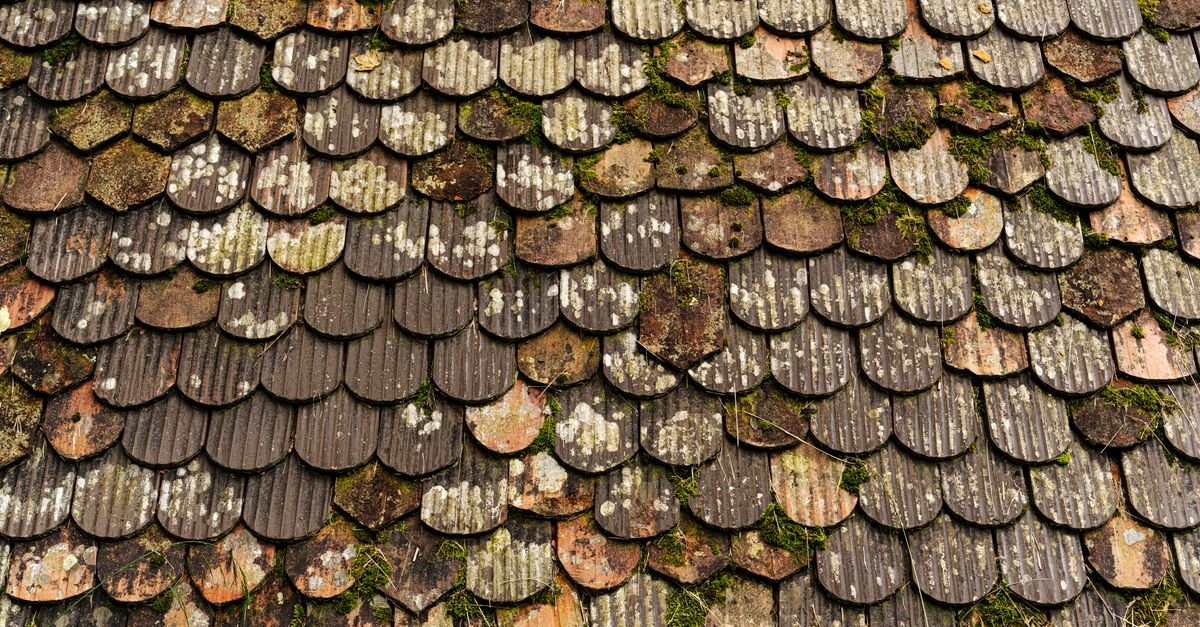
If you know nothing else about your roof, find out which of these three you have. A roofer will tell you from the driveway, or you can look at a broken piece in the gutter: clay is orange-red through the body, concrete is grey through the body with colour only at the surface, slate is dark grey rock that splits in sheets.
| Material | What it is | Main weakness | Growth behaviour | Pressure verdict |
| Glazed clay | Fired ceramic with a vitrified glaze | Brittle; glaze crazes with age | Sits on the glaze, rinses off | Soft wash; glaze needs no force |
| Unglazed clay / terracotta | Fired ceramic, porous body | Freeze-thaw spalling, brittle underfoot | Roots into surface pores, stains persist | Soft wash only; no published PSI exists |
| Concrete tile | Cast concrete, slurry-coated or colour-through | Porous; colour layer is consumable | Feeds on debris held in the pores, returns fast | Up to about 1,200 PSI at 1-2 ft, per makers |
| Natural slate | Cleft metamorphic rock | Delaminates with age; cracks under weight | Clings to the surface, low porosity | Soft wash; tap-test before anyone walks it |
Read the growth column rather than the pressure column. Porosity, not hardness, decides how fast the green comes back, and it is why two roofs cleaned on the same day can look completely different eighteen months later.
Glazed or Unglazed? The Answer Changes Everything Else
Clay tile comes two ways and homeowners routinely do not know which they have. A glazed tile has been fired with a vitrified ceramic coating, which is effectively a layer of glass fused to the surface. The Tile Roofing Industry Alliance describes clay tile with a matte or glazed ceramic finish as essentially maintenance-free, and that is not marketing. There is almost nothing for algae to hold onto.
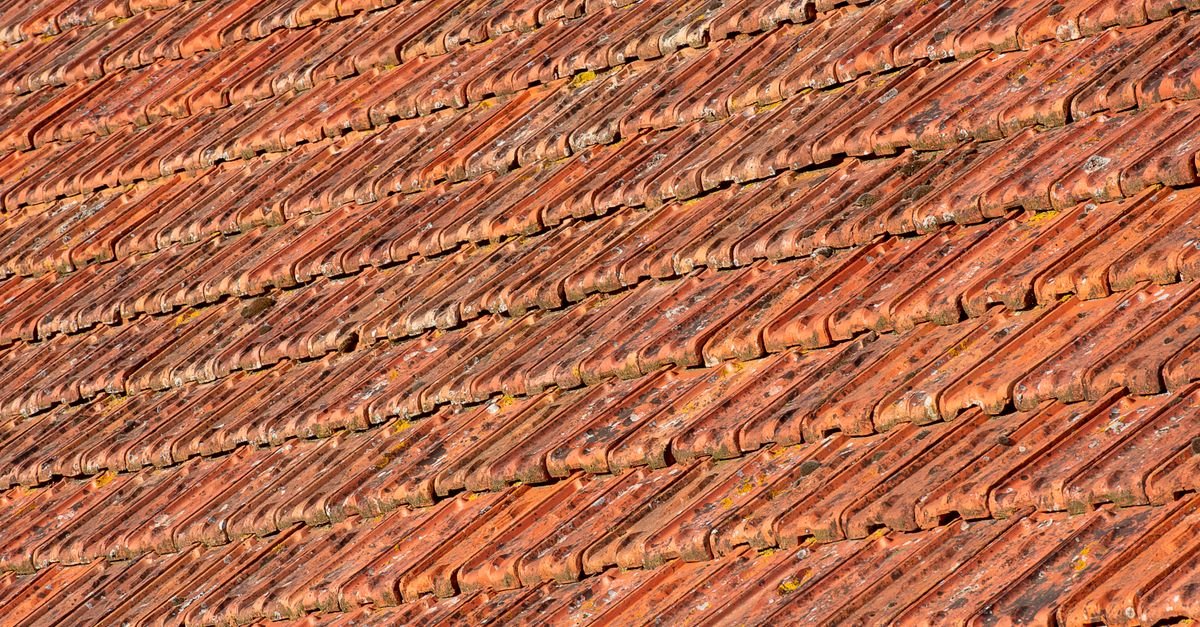
Unglazed clay — the classic terracotta on Mediterranean and Mission roofs — is porous. Water goes into it, and so do the dust and pollen that algae actually feeds on. That is why an unglazed roof streaks and a glazed one next door does not.
The test takes ten seconds and a cup of water. Find a spare tile; there is usually a stack in the garage from the original install, because there always is. Put a splash of water on the face. If it beads and sits, you have a glaze. If it darkens within a few seconds and the mark takes a minute to fade, the tile is porous and drinking.
That result changes the plan. Glazed clay needs a solution, a dwell and a rinse; the growth is sitting on glass and will let go. Unglazed clay needs a longer dwell and often a second application, because the organism is *in* the tile rather than on it, and no amount of extra pressure reaches it. Pressure that cannot reach the problem is just pressure you aimed at your roof for nothing.
Concrete Tile Is a Sponge With a Paint Job
Concrete tile is the most common tile in North America and the least understood. Two things about it matter for cleaning, and neither shows up in the usual advice.
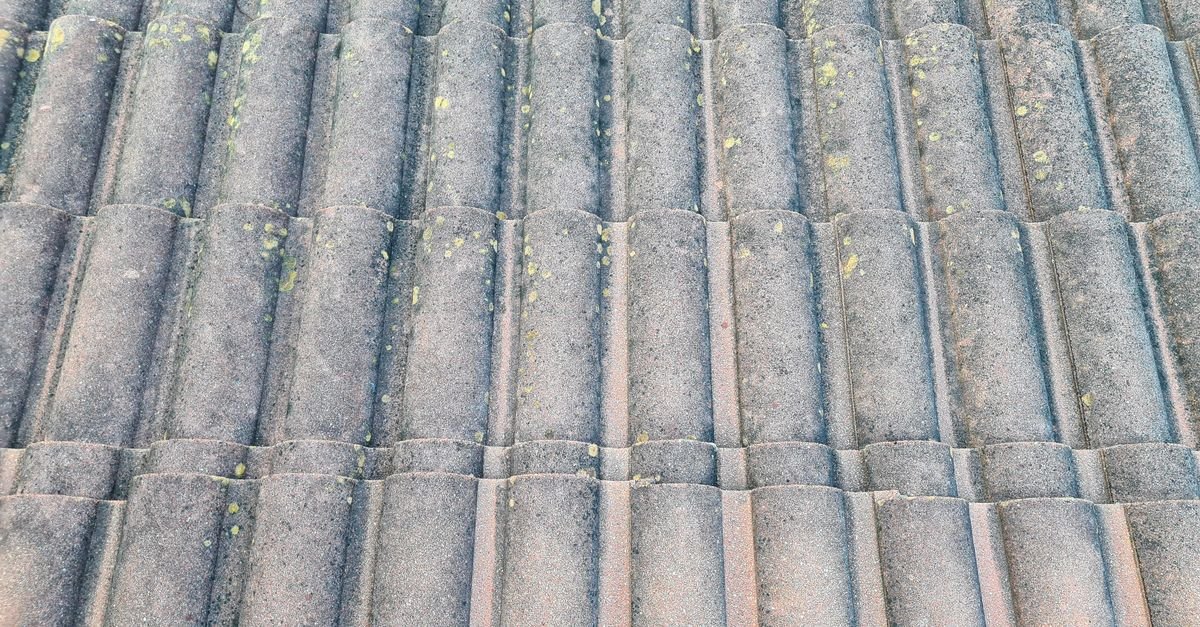
First, it is genuinely porous. Mildew, algae and moss do not grow on the tile itself — they grow on the dust and organic debris that settles into the surface and stays damp. That is why concrete tile greens up again faster than any other roof material on the property, and why a wash that removes the visible layer without killing the organism buys you about one season.
Second, the colour is a layer, and it is consumable. Concrete tiles are pigmented one of two ways: a slurry coat of pigmented cement applied to the surface after forming, or integral colour mixed through the body. Boral’s warranty and maintenance guide for concrete roof tile is blunt about what happens next. A slurry-coated tile “can oxidize and turn chalky before gradually wearing down to the concrete base.” Even an integral-coloured tile carries a cement layer drawn to the surface during forming that is “slightly softer than the body of the tile and will typically erode away within the first twenty years.”
That is the closest thing tile has to granule loss, with one important difference. When a shingle loses granules, the roof is dying. When a concrete tile loses its slurry coat, the roof is fine and the colour is not. Aggressive washing does not shorten the tile’s life. It ages the look of it by a decade in an afternoon, and repainting a roof costs considerably more than cleaning one properly did.
The White Bloom That Is Not Your Fault
If patches of concrete tile go chalky white, that is efflorescence, and it is not dirt. Free lime in the cement reacts with water and releases calcium hydroxide, which meets carbon dioxide in the air and deposits as a white crystalline salt on the surface. It is superficial, it does not affect how the tile performs, and rainwater and carbon dioxide gradually remove it on their own.
The mistake is treating it as a stain and escalating until it shifts. It will not shift at 1,200 PSI, and it will not shift at 3,000 either — you will reach the colour coat first. Leave it. That is the rarest instruction in exterior cleaning and it is the right one here.
Slate Comes Apart From the Inside
Slate is the material where the honest answer is the most cautious, and the reason is chemistry rather than hardness.
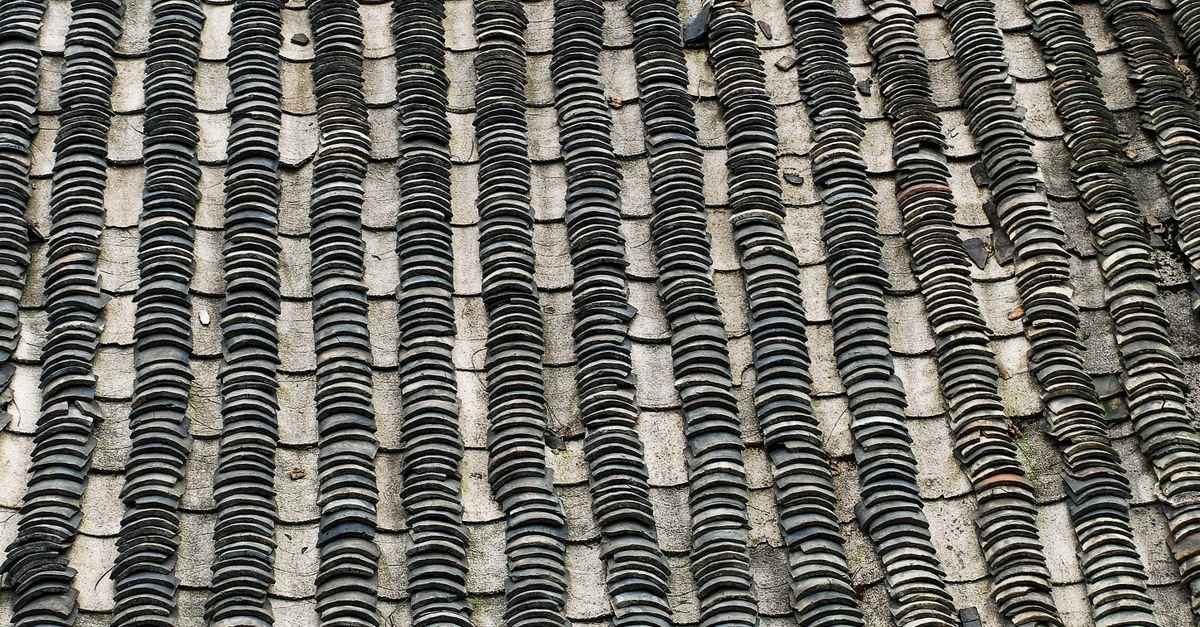
The National Park Service’s Preservation Brief 29 on historic slate roofs describes the mechanism precisely. Slate weathers by chipping and scaling along its cleavage planes; paper-thin laminations flake off and “the slate becomes soft and spongy as the inner layers begin to come apart, or delaminate.” The cause is mineral impurities, mostly calcite and iron sulphides, which react under alternating wet/dry and hot/cold cycles to form gypsum. Gypsum molecules take up about twice the volume of the calcite they replaced, so the stone is quietly prising itself apart from the inside.
The detail I did not expect, and went back to the Brief to check, is that delamination is just as bad or worse on the *underside* of a slate as on the face. That is why weathered slates cannot simply be flipped over and reused. It also means a slate that looks sound from a ladder may already be half gone on the side you cannot see.
So before anyone cleans or walks a slate roof, use the test the Brief gives: tap it. High-grade slate poised on the fingertips and struck gives a clear, solid sound. Severely weathered slate is “much less sonorous” and gives off a dull thud. A dull roof is a roof you treat from a ladder with a sprayer and nothing else.
Before the thud panics you, check the expected lifespan. The Brief puts Vermont and New York slate at about 125 years, Buckingham Virginia slate at 175 years or more, and Pennsylvania Soft-Vein slate in excess of 60. If the house dates from 1930 and wears Pennsylvania soft-vein, that roof is not tired. It is retired.
1,200 PSI Is the Only Number Tile Makers Put in Writing
Here is the opinion, and it contradicts most of what gets written about roofs.
The blanket “never put a pressure washer near a roof” rule is correct for asphalt and wrong for concrete tile, and repeating it anyway is how homeowners end up paying for work they could have done themselves. Eagle Roofing, a concrete tile manufacturer, publishes guidance on cleaning a concrete tile roof specifying “water pressure never exceeding 1200 pounds per square inch.” Boral’s maintenance guide gives the same figure — “a pressure cleaner set at approximately 1200 psi” — and adds the part everyone drops: the nozzle tip “should be kept approximately one to two feet from the tile,” with roughly a 10% chlorine-to-water solution drawn through the injector.
Three things about that number, because it is easy to misread.
It is a system pressure, not a licence. Standoff is part of the specification, not a suggestion. Impact pressure falls off sharply with distance, so 1,200 PSI at 18 inches and 1,200 PSI at three inches are different events. If your machine cannot be turned down, distance and a wider tip are the only pressure control you have.
It applies to concrete. Clay and slate carry no equivalent published figure, and the absence is meaningful rather than an oversight. A brittle fired tile and a delaminating stone have no tested threshold, so they get the low-pressure approach set out in our guide to roof soft cleaning.
Pressure still never goes uphill. Tile sheds water down-slope exactly as shingles do. A jet aimed up under the laps puts water onto the underlayment, and on a tile roof the underlayment is the actual waterproofing. The tiles are a rain screen; the felt beneath them is the roof. Soak that and you have a problem that surfaces next winter with no obvious cause.
Step on the Bottom Three Inches, or Stay on the Ladder
This is where tile roofs are genuinely different, and where nearly all the real damage happens.
A tile is only supported in some places. Boral’s guide is specific: step at the bottom three inches of the installed tile, because that section rests on the lapped tile below it and transfers your weight through to the deck. Anywhere else is an unsupported span of fired clay or cast concrete with a person standing on it. On high-profile barrel tiles — Barcelona, Tejas España, Mission “S” — put your weight on the high points of adjacent tiles instead, so the load spreads across two.
A few more rules worth having before you go up:
- Hips, ridges and valleys are off limits. Those tiles are cut to fit and are the hardest to replace.
- Walk pads spread the load. Two-foot plywood squares backed with carpet or rigid foam are the standard trick.
- Roof traffic is a warranty exclusion, named in the special exclusions section, so a tile you crack is a tile you pay for twice.
- On slate, stay off entirely. Preservation Brief 29 recommends hooking ladders over the ridge and walking on the ladders to distribute weight. If slates must be trodden, soft-soled shoes and the lower-middle of the exposed portion.
Notice that the concrete and slate guidance converge on the same place: the lower, supported part of the exposed tile. Everything above that is a span. And a wet tile roof with solution on it is the slipperiest surface at your address, so gutter clearing and light hanging get done from a ladder.
A Roof Tile Cleaning Sequence That Does Not Break Tiles
The order matters more than the products. This is the sequence, whichever of the three materials you have.
1. Identify the material, and for clay the finish. Water-bead test on a spare tile. For slate, tap-test a few before deciding whether anyone goes up at all.
2. Inspect from a ladder at the eave first. Cracked, slipped or missing tiles get fixed before anything wet happens, because a gap is a direct route to the underlayment.
3. Clear loose debris dry, with a blower, worked down-slope. Never a stiff brush on unglazed clay or weathered slate.
4. Soak the landscaping below the roofline until it is saturated, and again afterwards.
5. Apply the solution from the top down at low pressure. Diluted sodium hypochlorite is the standard active ingredient; handling and mixing detail is in our guide to sodium hypochlorite for pressure washing.
6. Let it dwell without drying. Re-mist anything going dry. The kill determines how long the roof stays clean, and it happens during the wait, not during the rinse.
7. Rinse down-slope only. Concrete tile: up to about 1,200 PSI, nozzle one to two feet off. Clay and slate: garden-hose pressure with a wide fan.
8. Leave dead moss to weather off. Scraping moss off unglazed clay takes surface with it, dead or alive.
9. Flush gutters and downspouts, then rinse walls, paving and anything the runoff crossed.
10. Wait. Treated roofs keep improving for weeks as rain carries the dead growth away.
Step 10 is the one people skip, and skipping it is what leads to a harder second attempt nobody needed.
FAQ
Can you pressure wash a tile roof?
Concrete tile, yes, within limits — manufacturers including Eagle Roofing and Boral publish approximately 1,200 PSI with the nozzle held one to two feet from the surface. Clay and slate have no published pressure figure and should be soft washed. In every case the cleaning is done by the solution; the water only rinses.
What PSI is safe for a concrete tile roof?
Around 1,200 PSI machine pressure, with 12 to 24 inches of standoff and a wide fan tip. Higher pressure, or the same pressure at close range, wears the pigmented surface layer and can drive water up under the tile laps onto the underlayment.
How can I tell if my clay tiles are glazed?
Put a splash of water on a spare tile. A glazed tile beads and stays dry-looking. An unglazed tile darkens within seconds as it absorbs. Glazed clay releases growth easily; unglazed clay holds it in the surface pores and needs a longer dwell and often a second application.
Why do my concrete roof tiles look white and chalky?
That is efflorescence. Free lime in the cement reacts with water to release calcium hydroxide, which meets carbon dioxide and deposits as a white salt on the surface. It is superficial, it does not affect the tile, and rain and carbon dioxide remove it over time. Escalating pressure to shift it reaches the colour coat first.
Can you walk on a tile roof?
Only in specific places, and preferably not at all. On flat-profile concrete or clay tile, step on the bottom three inches of the tile, where the lap beneath supports it. On high-profile barrel tile, bridge your weight across the high points of adjacent tiles. On slate, stay off and work from ladders hooked over the ridge. Tiles broken by foot traffic are excluded from most warranties.
How do you get moss off roof tiles without damaging them?
Kill it and leave it. A roof-strength sodium hypochlorite solution applied at low pressure with a proper dwell kills moss within days, and rain and wind shed it over the following weeks. Scraping or brushing moss off unglazed clay or weathering slate removes surface material along with the moss.
Should a tile roof be sealed after cleaning?
It is optional, and it is a maintenance commitment rather than a fix. Manufacturers describe priming with a clear alkyd primer and then coating with a 100% acrylic sealer, or acrylic paint where a colour change is wanted. Sealing slows recolonisation on porous concrete tile, but it needs redoing, and it is no substitute for killing the growth first.
Tile Can Take Pressure. It Still Should Not Need It.
The useful conclusion on roof tile cleaning is not that tile is tougher than shingle, although it is. It is that tile has published numbers where asphalt has a flat prohibition, and those numbers are lower and far more conditional than people assume once you read them properly: approximately 1,200 PSI on concrete, one to two feet of standoff, always down-slope, and nothing published at all for clay or slate.
Sort the material first. Water-bead the clay, tap the slate, assume the concrete is porous and coloured with something you can wear off. Then let the chemistry do the work and use the water to rinse, not to persuade.
If you get all that right and still break a tile, I can almost guarantee it happened under your left foot rather than in front of the wand. Put the ladder up, stay on it, and let the roof come clean while you stand on something built for standing on.