Last Updated on September 24, 2026 by Umar Farooq
Low pressure roof cleaning means the water leaves the tip at under 100 PSI — garden-hose pressure — and it is the one specification almost nobody using the phrase can quote for their own setup.
That is not a cheap shot. I went through nine roof cleaning pages looking for a figure. Six gave none at all. One said 60 PSI. Another said “less than 500 PSI.” Those last two are both offered as the definition of the same phrase, and one of them is more than eight times the other. If a spec can be off by a factor of eight and still count as correct, it has stopped being a spec and become a mood.
So this page is about the number. What low pressure is in actual PSI, what sits in each band above it, which of the things you already own can genuinely get you down there, and how to find out what is coming out of your tip rather than assuming.
Low Pressure Roof Cleaning Is a Number, Not a Setting
The working figure is 40 to 100 PSI at the tip for applying solution. Some operators rinse a little higher. That is the whole range, and the reason it is so low is that at those pressures the water is not cleaning anything — it is a delivery fluid carrying chemistry up and residue down.
Here is the part that makes the whole topic awkward. Municipal water arrives at the tap at roughly 40 to 70 PSI. The gentlest consumer pressure washer on the shelf starts around 1,300 PSI. There is no overlap. There is not even a near miss. The soft wash window sits entirely below the floor of every pressure washer sold, which means “turn it down to low pressure” is not a setting you have failed to find. It is a setting that does not exist on your machine.
That single fact explains most of the confusion in this subject. People hear “low pressure” and reasonably assume it describes a position on a dial they own. It does not. It describes a different class of pump — and quite often, no pump at all.
The industry settled on a phrase that describes a number and then quietly agreed not to say the number. Once you know the number, every contractor conversation gets shorter.
Five Pressure Bands and What Each Does to a Shingle
Laying the bands out side by side is the fastest way to see where your equipment actually lands.
| Band | What produces it | Standing on an asphalt roof |
| 40–60 PSI | Hand pump sprayer, garden hose with an open nozzle | Carries solution, removes nothing by force. The intended state. |
| 60–100 PSI | 12-volt soft wash pump | Same job, more reach and a steadier application rate. Still the intended state. |
| 150–400 PSI | Some professional rinse setups | Above anything the shingle manufacturers endorse, and past the point where it is only delivering. |
| 1,300–2,000 PSI | Entry-level electric pressure washer, gentlest configuration | The floor of the pressure washer category. Already ruled out. |
| 2,000–4,400 PSI | Gas homeowner and prosumer machines | Not a roof tool in any configuration, on any tip, at any distance. |
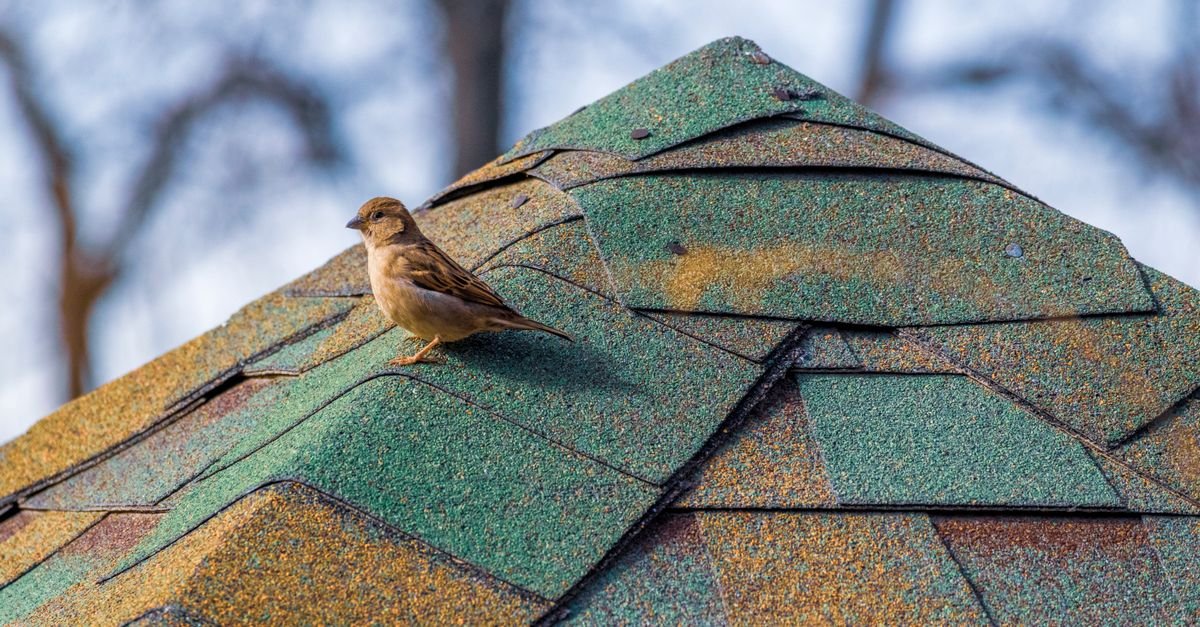
Now the honest caveat, because this is where most competing content quietly invents something. The Asphalt Roofing Manufacturers Association does not publish a PSI limit for shingles. It publishes a prohibition: “DO NOT use a power washer or any type of brush or broom to clean algae from the roof surface,” and “high-pressure washing systems are likely to damage asphalt roofing and should not be used” (ARMA, Algae Discoloration of Roofs).
Read the first quote again and notice the broom. A broom generates zero PSI. It is on the banned list anyway, which tells you the real variable is not pressure — it is anything that mechanically disturbs the granule bed. The granules are ceramic-coated mineral chips pressed into hot asphalt, they are the entire wear surface, and there is no procedure for putting them back.
So the bands above 100 PSI are not a damage curve with a threshold you can ride up to. They are a list of places the people who make the roof will not follow you. Anyone who hands you a specific “safe maximum” for asphalt shingles has produced it themselves, because the manufacturers declined to.
Your Pressure Washer Does Not Have a Volume Knob
This is the mechanism nobody explains, and it is the reason well-intentioned people ruin roofs.
A pressure washer pump is positive displacement. Every revolution moves a fixed volume of water, whether you want it or not. The pump does not make pressure — it makes flow, and pressure is what happens when that flow meets the restriction at the end of the hose. The nozzle orifice creates the pressure. The pump just refuses to take no for an answer.
That has three consequences people run straight into:
Feathering the trigger does not reduce pressure. It reduces how much water gets past a partly open valve. The pressure at the orifice stays near full until you are almost closed, at which point the unloader dumps the flow back into the pump and you are spraying nothing at all. It is not a dimmer switch. It is a door being held slightly ajar while the same crowd keeps trying to get through.
Throttling the engine down does less than you would hope. Lower RPM means lower GPM, which does lower pressure — but a small engine at low idle is still comfortably over 1,000 PSI, and running it that way sits the pump in bypass heating its own water. You will reach the point where the machine is unhappy long before you reach the point where the roof is.
The unloader is not a pressure dial either. It sets where the machine goes into bypass, not what the tip delivers under load. There is an adjustment on most of them, it has a legitimate use, and roof cleaning is not it — our guide to pressure washer unloader valve adjustment covers what it actually does and why winding it down is not the shortcut it looks like.
A pressure washer pump has roughly two states: delivering rated pressure, and sitting in bypass quietly cooking itself. Neither of those is 80 PSI.
Four Ways to Actually Reach 100 PSI
Three of these work. The fourth is the one everyone tries, and it deserves a straight answer rather than a shrug.
1. A hand pump sprayer. Two to five gallons, a plunger, under 60 PSI, costs about as much as lunch. It is genuinely in band. Its limit is reach, not capability — you will move the ladder a great many times, and the application goes patchy at the edge of your range, which shows up later as a striped roof.
2. A 12-volt diaphragm pump. Sixty to 100 PSI, fed from a tank of pre-mixed solution. This is what almost every professional soft wash rig actually is, and the reason is not power. It is that one person can hold a steady application rate across a whole roof from the ground, so the surface wets evenly instead of in bands.
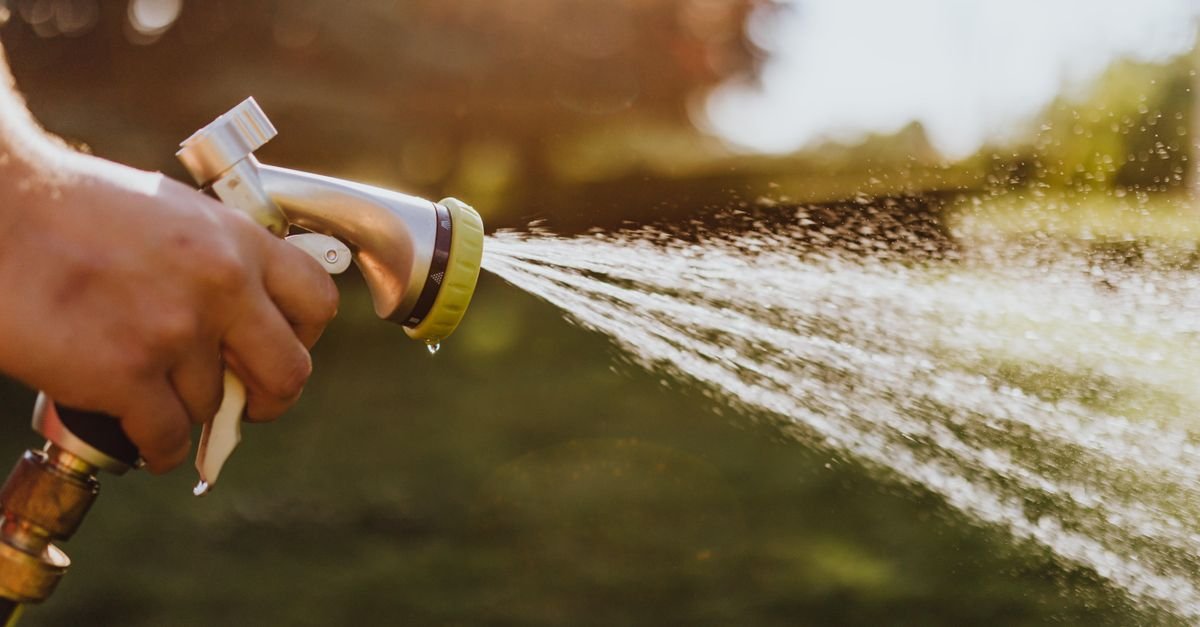
3. A garden hose for the rinse. No pump at all, 40 to 70 PSI straight off the municipal supply, which is exactly where you want to be. The rinse is the step people get wrong by upgrading it. The rinse does not need help.
4. Your pressure washer with the black soap nozzle — as a delivery pump only. Here is the honest version. Fitting the widest-orifice tip drops system pressure substantially, and that drop is precisely what lets a downstream injector draw chemical at all; a machine that will not pull soap is very often a machine with the wrong tip on it. But the drop does not land you at 100 PSI. It lands you somewhere in the hundreds, which is band three, and nobody publishes what that figure is for your specific machine.
So the rule is narrow and it is not negotiable: if you use your pressure washer this way, the soap nozzle stays on for the entire job and the rinse comes off the garden hose. The classic failure is applying solution correctly through the black tip, then swapping to a green 25-degree tip to “just rinse it off” — and pressure washing the roof after all, at the last step, when you had already done the hard part right.
Standoff Distance Is a Fudge, Not a Fix
Impact pressure at the surface does fall off with distance. That is real physics and it is a legitimate adjustment when a tip change is not available. On a roof it is still the wrong control, and I will put that plainly because it is the one place this page disagrees with most of the internet.
Distance is the only pressure control on a roof that you cannot read, cannot hold steady, and cannot write down. Your standoff changes by a foot every time your arm moves, and you are working off a ladder or a telescoping pole where your arm moves constantly. A control you cannot hold at a value is not a control. It is a hope with a number attached.
Look at how the one manufacturer who does publish a figure handles it. Eagle Roofing caps concrete tile at 1,200 PSI and separately specifies a nozzle standoff, because neither on its own was considered sufficient. The pressure cap does the work; the distance is a second guard behind it. Distance was never offered as a substitute for the cap — it was offered on top of it.
The same reasoning kills the “I’ll use a 40-degree tip instead” argument. A wider fan spreads the same energy over more area, which lowers impact pressure at the surface, but the pressure at the orifice is unchanged and the machine is still a pressure washer. A gentler way of doing a prohibited thing is still the prohibited thing.
How Do You Know What Is Leaving the Tip?
Assume nothing here. There are three ways to actually find out, in descending order of how much I trust them.
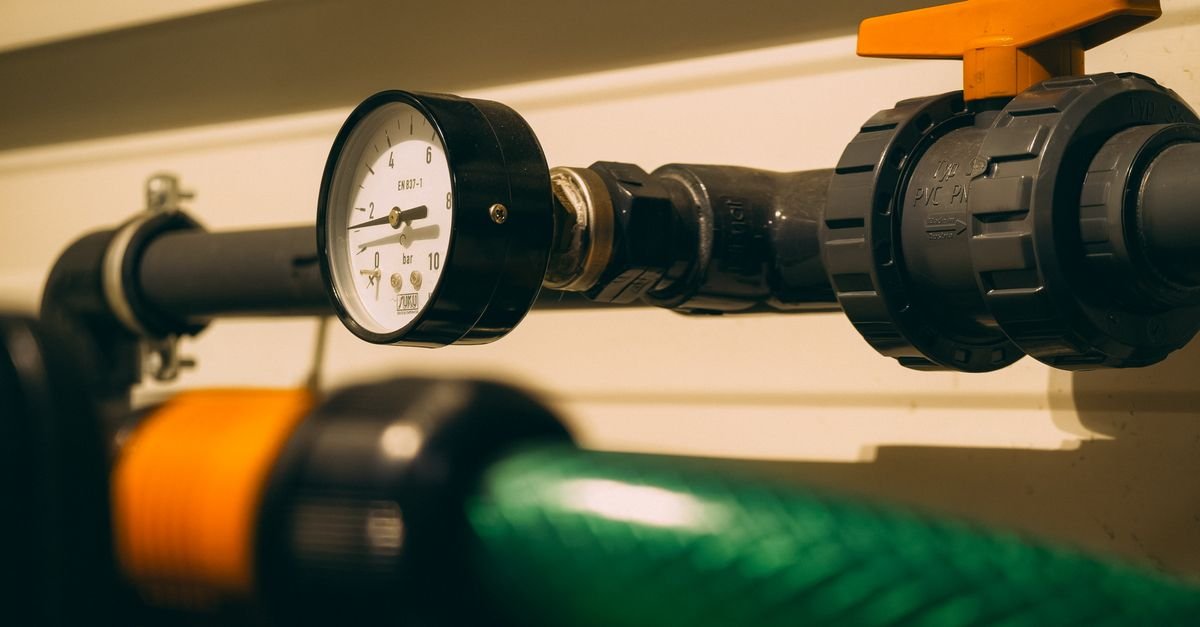
Fit an inline pressure gauge. A gauge that screws in at the quick-connect between the pump outlet and the hose is the only direct reading you will get, and it costs less than a square of shingles. This is the whole answer to the question and it is strange how rarely anyone mentions it. Every other method on this list is arithmetic.
Read the number on the nozzle. Pressure washer tips are stamped with four digits: the first two are the fan angle, the last two the orifice size. A tip marked 2503 is a 25-degree fan with a number three orifice. Given your machine’s rated flow, that orifice fixes the pressure it develops — there is no third variable. Our pressure washer nozzle chart has the sizing, and the relationship behind it is worth understanding because it is steeper than people expect.
Pressure through a fixed hole rises with the square of the flow. Hold the flow constant and vary the hole instead, and pressure falls with roughly the fourth power of the orifice diameter, because area goes as diameter squared and it is squared again. Double the orifice diameter and the pressure drops to about a sixteenth. A 3,000 PSI machine fitted with a tip of twice its rated orifice diameter would be sitting somewhere near 190 PSI. That is arithmetic rather than a measured spec, but it is the reason a tip change moves the number far more than anything else you can do, and the reason the black soap nozzle drops pressure as hard as it does.
Put your hand in the stream. At genuine soft wash pressure you can hold your palm in the flow at the tip and feel nothing more than a firm garden hose. At any pressure a pressure washer produces, you cannot, and you must never try — a jet that breaks skin drives water and contamination into the tissue and turns a pinhole into a surgical emergency. So use it strictly as a one-way test: if the answer is obviously no, you are not doing low pressure roof cleaning.
What does not work is the test patch. On siding or decking a hidden test patch is excellent advice. On a roof, granule loss does not announce itself — the surface looks fine while wet, and the evidence is a slightly darker, slightly shinier patch you notice from the driveway three weeks later, by which point you have done the whole roof.
Tile Publishes 1,200 PSI. Asphalt Publishes Nothing.
The contrast between the two roof types is the most useful thing in this whole subject, and it is not the contrast people expect.
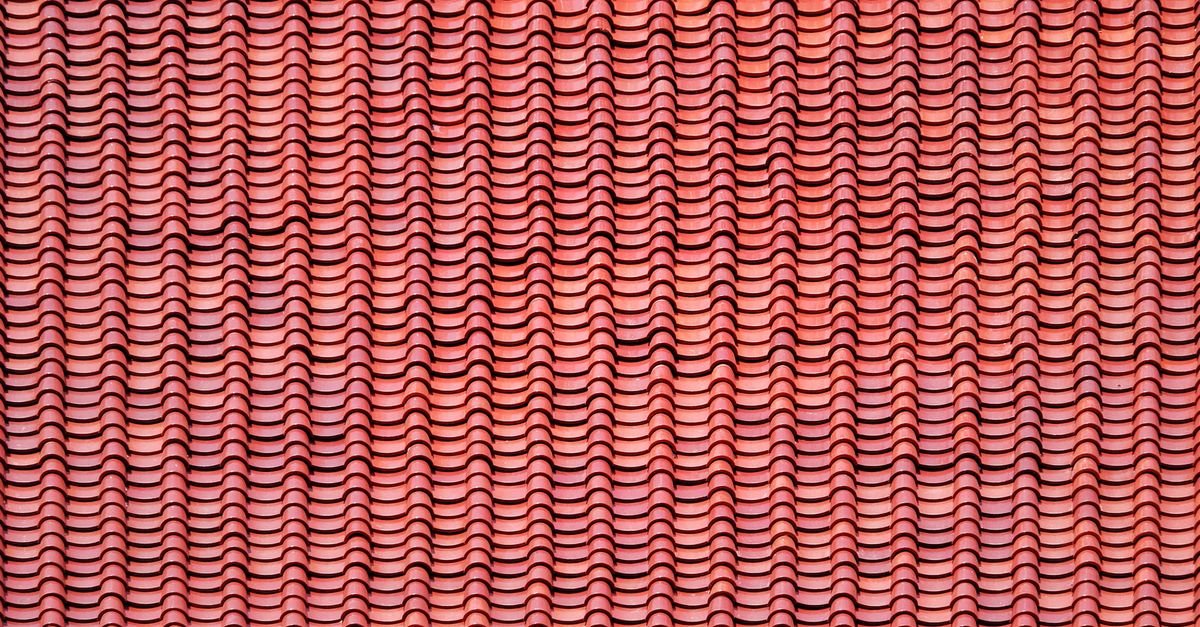
Concrete tile has a published number. Eagle Roofing states that you should “use only water with the water pressure never exceeding 1200 pounds per square inch (psi)” when cleaning a concrete tile roof, with the nozzle held back from the surface (Eagle Roofing, How to Properly Clean Your Concrete Tile Roof). As far as I could find, that is the only written manufacturer pressure figure for any residential roof covering. Tile is a cast concrete slab. It has a limit, and the limit is high enough to be worth stating.
Asphalt has no number, and the absence is the strongest statement in the document. ARMA did not decline to publish a figure because the research was incomplete. It ruled out the entire class of tool, brooms included. You cannot write a maximum for a method you are not endorsing at any value.
This is why importing advice across roof types goes so badly. Someone reads 1,200 PSI, remembers it as “roofs can take 1,200,” and applies it to a shingle roof where the correct figure is not a smaller number but no number at all. If your roof is asphalt shingle, the numbers on this page above 100 PSI are there to be recognised and avoided, not to be aimed at. Our guide on how to clean roof shingles without pressure washing covers the method that replaces them.
FAQ
What PSI is low pressure roof cleaning?
Forty to 100 PSI at the tip for applying solution, which is ordinary garden-hose pressure. Some operators rinse higher, into the low hundreds. Anything above that is no longer low pressure regardless of what it is called, and the gentlest consumer pressure washer starts around 1,300 PSI.
Can I set my pressure washer to 100 PSI?
No. A positive-displacement pump makes a fixed flow, and the nozzle orifice determines the pressure that flow develops. Easing the trigger, throttling the engine and adjusting the unloader all change the machine’s behaviour without putting the tip anywhere near 100 PSI. You need a different pump, or no pump.
Is 500 PSI safe for a roof?
Not for asphalt shingles. ARMA rules out power washing entirely and also rules out brushes and brooms, which produce no pressure at all, so the concern is abrasion of the granule layer rather than a specific PSI threshold. For concrete tile the published manufacturer ceiling is 1,200 PSI, which is a different surface and a different rule.
Does the black soap nozzle turn my pressure washer into a soft wash system?
It turns it into a delivery pump, which is genuinely useful. The widest orifice drops system pressure enough for the downstream injector to draw chemical, but it does not drop it to garden-hose level. Apply with it, then rinse with the garden hose, and never swap to a narrower tip mid-job.
How do I measure the pressure at my nozzle?
Fit an inline pressure gauge at the quick-connect between the pump outlet and the hose. It is the only direct reading available and it costs very little. Failing that, read the four-digit number stamped on the tip — the last two digits are the orifice size, which fixes the pressure for your machine’s rated flow.
Does holding the wand further away count as low pressure?
It lowers impact pressure at the surface, but not pressure at the tip, and on a roof you cannot hold a standoff steady from a ladder or a pole. Manufacturers that publish a distance figure publish it alongside a PSI cap rather than instead of one, which tells you how much weight distance is meant to carry on its own.
Is a garden hose enough to rinse a roof?
Yes, and it is the correct tool. Forty to 70 PSI off the municipal supply is what the rinse is supposed to be. Rinse from the ridge down so water runs the way the shingles are lapped to shed it, never uphill under the laps.
What pressure does a 12-volt soft wash pump run at?
Sixty to 100 PSI, which is the top of the soft wash band. Its advantage over a hand sprayer is not force — it is reach and a steady application rate, so one person can wet a whole roof evenly from the ground instead of in patches around a ladder.
Say the Number Out Loud Before You Pull the Trigger
Low pressure roof cleaning is a specification, not an attitude. Under 100 PSI at the tip, from a sprayer or a 12-volt pump or a plain garden hose, with the chemistry doing every bit of the actual cleaning. Everything above that band is a list of pressures that exist, not a menu to choose carefully from.
If you cannot say what your setup delivers, fit a five-dollar gauge and find out — it is the cheapest certainty in this entire hobby. And if the honest answer is “somewhere over a thousand,” that is useful too. You have just learned that the machine in your hand is the wrong tool, which is a much better thing to learn in the garden than from the driveway three weeks later.