Last Updated on September 25, 2026 by Umar Farooq
How to get hard water stains off of windows comes down to chemistry rather than force: a mild acid to dissolve the calcium, a non-scratch pad to lift what the acid has loosened, and a fast, thorough rinse — and if the glass underneath is already etched, none of that brings it back.
Here is the part that gets left out when someone hands you the vinegar. You can wash an outside window properly — soap, squeegee, clean edges, the whole routine — and the white spots will still be there when it dries, in exactly the shape they were in before. That shape is a clue. Nine times out of ten it is the throw arc of a sprinkler head, printed onto the glass over a couple of summers.
The White Spots Are Minerals, Not Dirt
Hard water is water carrying dissolved calcium and magnesium, picked up as it moves through limestone, chalk and dolomite on its way to your tap or your well (Sengupta, *International Journal of Preventive Medicine*, 2013). Those minerals are invisible while the water is liquid. The moment it evaporates off a pane of glass they stay behind as a ring of crystalline solid, mostly calcium carbonate, in the exact outline of the drop that dried there.
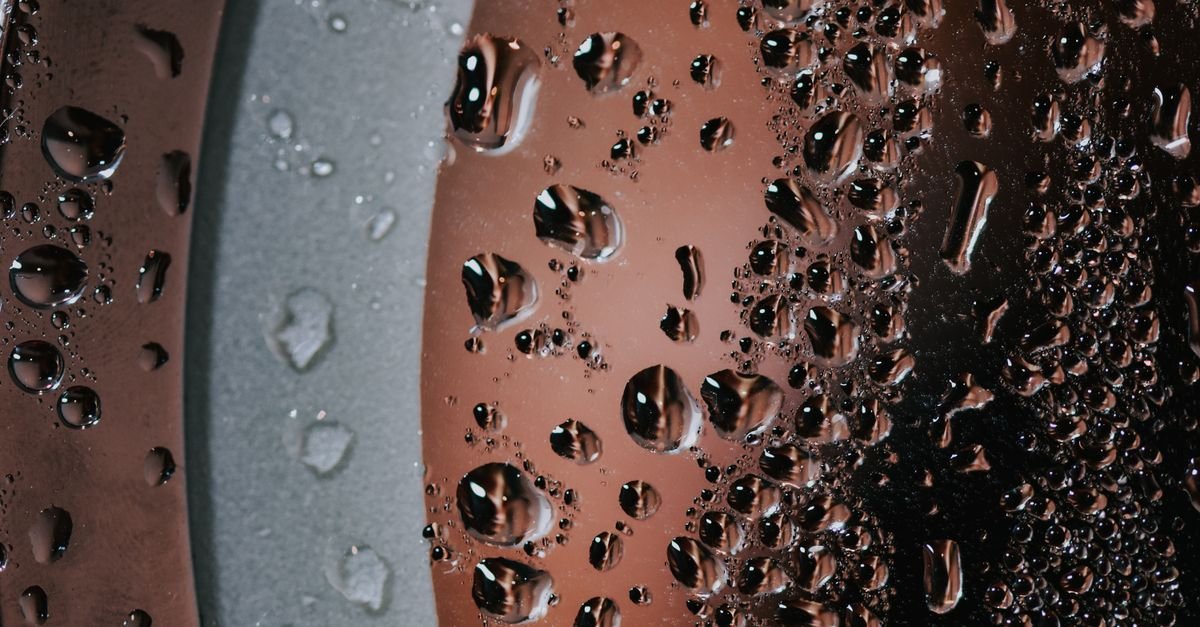
One cycle leaves a faint film you would never notice. The problem is that outside glass gets the same cycle over and over, in the same place, from the same source — sprinkler or irrigation overspray hitting the pane, rain splashing up off concrete into a low window, water running down from a blocked gutter, or runoff off fresh masonry, which is alkaline and considerably nastier than ordinary rain.
Each cycle lays its deposit on the last, and what starts as haze becomes a crust with a slightly gritty feel. That is why these spots appear on precisely three windows on a house and nowhere else — those are the three the sprinkler reaches.
Why Soap and a Squeegee Slide Straight Over Them
Glass cleaner and house-wash detergent are surfactants. Their job is to surround oily and particulate soil, break its grip and let water float it away. That works beautifully on pollen, road film and spider mess, all of which sit loosely on top of the glass.
Calcium carbonate is not soil. It is a bonded mineral scale, and most cleaning detergents sit on the alkaline side of neutral, which is the wrong direction entirely. Alkaline chemistry has no useful reaction with an alkaline-earth carbonate, so you are asking a product to dissolve something it cannot dissolve and then blaming your technique.
Acid converts that carbonate into a soluble salt and a puff of carbon dioxide, which is why the right product fizzes faintly on a heavy deposit. That reaction is the entire job. Everything else here is about giving it enough time and getting the residue off without scratching anything.
(Which is also why the internet’s favourite ritual — vinegar, then a sprinkle of baking soda — accomplishes nothing. You have neutralised your acid with a base and produced a foaming bowl of salty water. It looks like science. It is not cleaning.)
Is It a Stain or Is the Glass Already Etched?
Before you buy anything, do the wet test, because it decides whether this is a forty-minute job or a conversation with a glazier. Hose the pane down until it is evenly wet and look at it with the water still on it.
If the white marks disappear under the water and reappear as the glass dries, the deposit is sitting on the surface and it will come off. If they are still clearly visible while the pane is soaking wet, the glass surface itself has been altered, and no cleaner fixes that, because there is nothing left to dissolve.
The second case is well documented in glass durability research: water in prolonged contact with a silicate surface pulls sodium out of the glass network by ion exchange and leaves a silica-rich altered layer behind. In the Ballidon burial experiment, now running over fifty years, researchers found sodium depletion in the first few micrometres of glass and alteration layers that kept evolving with each new influx of fluid rather than reversing (Ballidon experiment analysis, 2025). Buried glass and your kitchen window are not the same object, but the chemistry is the same family and the direction of travel is one-way.
I went looking for a sourced timeline — how many months of sprinkler contact it takes before a window is etched rather than stained. I found window cleaning companies confidently quoting six months and other window cleaning companies confidently quoting twelve, none of them citing anything. So I will not give you a number. What everyone agrees on is that fresh deposits come off easily, old ones come off with difficulty, and at some point they stop coming off at all.
How to Get Hard Water Stains Off of Windows Without Scratching Them
Work on cool glass in the shade. Acid drying on a hot sunny pane concentrates as it goes, which is both less effective and more likely to mark the frame. Test a bottom corner first, wear eye protection and gloves, and keep everything wet throughout.
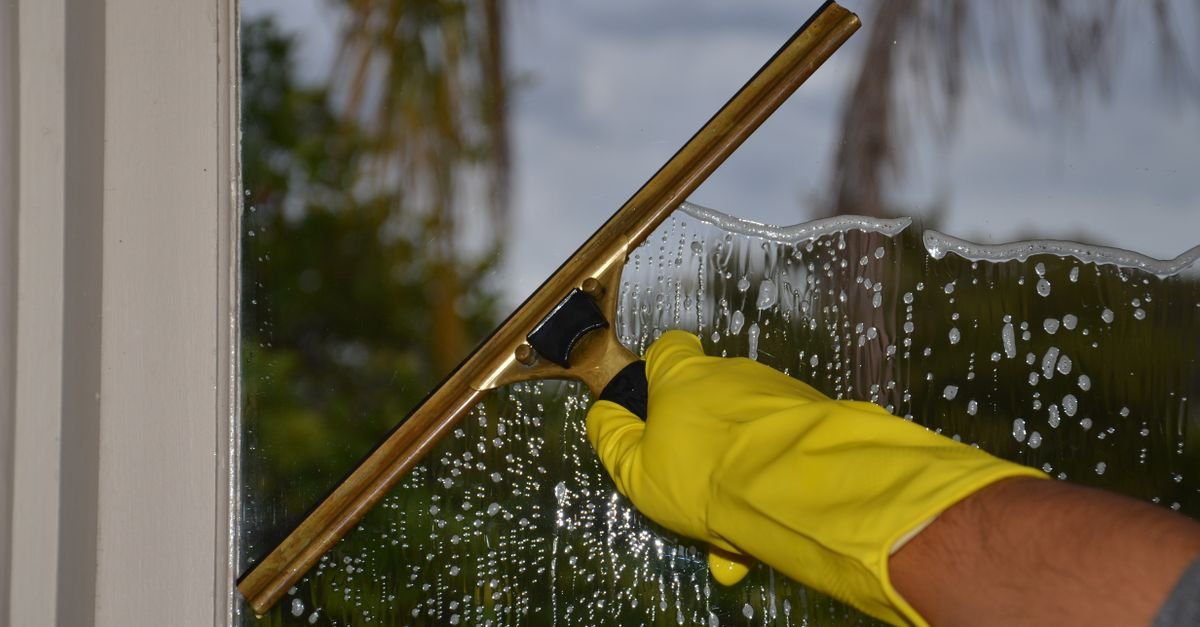
Then climb the ladder of aggression one rung at a time, and stop the moment the glass is clear.
| Stage | What to use | Dwell | Good for |
| 1 | White vinegar, 50/50 with warm water | 10 minutes, re-wetted | Light haze and early spotting |
| 2 | Dedicated glass descaler (phosphoric or oxalic acid base) | Per the label | Hardened, layered scale |
| 3 | 0000 bronze wool or a white non-scratch nylon pad, kept wet | Mechanical | Residue the acid has already softened |
| 4 | Cerium oxide polishing compound | Mechanical | Light etching — removes glass, not deposit |
A few things matter more than the product choice:
- Never let the acid dry on the glass. Re-mist every couple of minutes. A dried acid film is a new stain.
- Wet the pad, always. Dry bronze wool on dry glass is an abrasive with grit trapped in it. Wet, on wet glass, with acid still working, it is a carrier.
- Bronze wool over steel wool. Steel rusts, and a rusting pad leaves iron on the glass that stains in its own right.
- Rinse far more than feels necessary, then squeegee. Acid left in the frame corners keeps working on the gasket long after you have packed up.
- Check whether your glass is coated first. Low-E coatings usually live on an inside face, but self-cleaning and reflective coatings can sit on the outer surface, where acid and abrasive take the coating off before the stain. If you do not know, ask the window manufacturer rather than finding out.
Stage 4 deserves a pause. Cerium oxide is a genuine glass polishing compound and it can restore clarity on light etching, but it works by removing a thin layer of the glass itself. By hand on a large pane you get an obvious distorted patch. It is a machine job, done slowly and wet, by someone who has done it before.
Where a Pressure Washer Actually Helps on Glass
Here is the opinion, and it is not the one you want from a pressure washing site: on hard water stains, your pressure washer is a rinse tool. It is not the fix, and no amount of PSI will make it one. The deposit is held on by chemical bonding, and impact pressure does not break a chemical bond — it just delivers water to it faster. Turning the pressure up does not move the needle on the stain, and it does move the needle on everything around it.
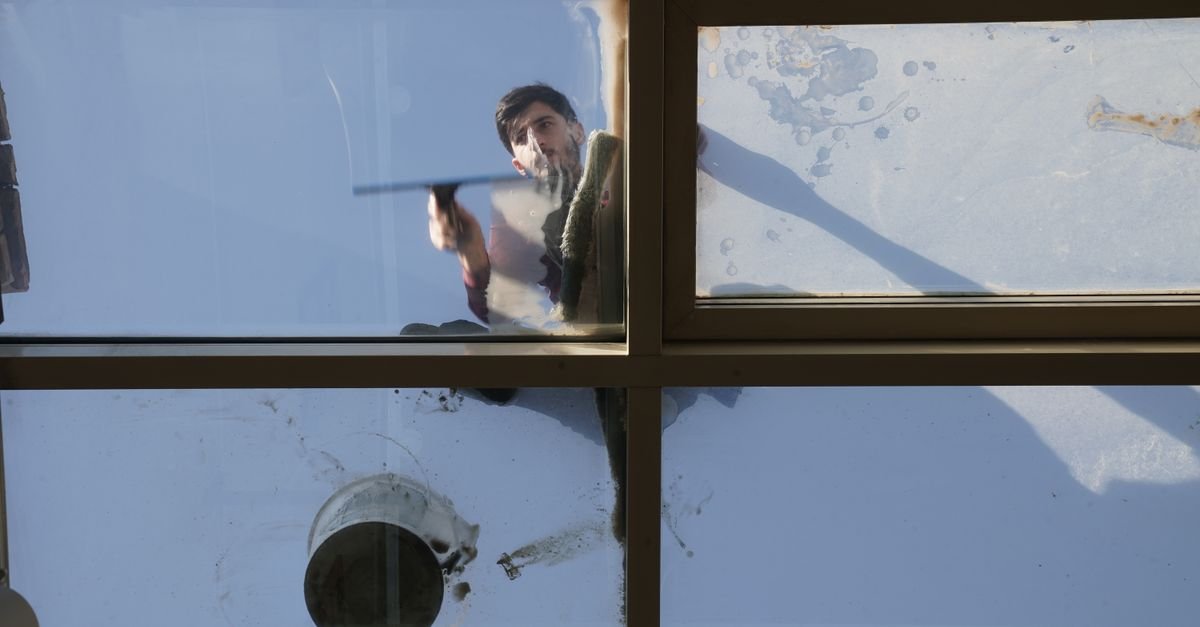
Windows sit at the bottom of the pressure table for a reason. Published guidance puts glass at garden-hose pressure with a 40-degree white tip — the widest, gentlest fan in the standard nozzle set, the same one used for painted surfaces and cars. Distance is a pressure control in its own right, so standing further back is the adjustment when you cannot change the tip.
What the machine earns its place doing is rinsing. Pre-wet the pane so your acid has something to spread into, flush the loosened residue off afterwards along with the grit in the frame, and wash the siding above so the first rain does not carry dirt back down onto clean glass.
What it must not do is get aimed into the joint between glass and frame. A jet fired upward under a trim lap or into old glazing putty finds failed seals, weep holes and dried-out gaskets with great efficiency, and the water it puts behind them does not come back out. Spray across and downward, never up into a window.
The Bleach-and-Acid Combination That Makes Chlorine Gas
This one is not optional reading, because exterior glass usually gets cleaned as part of a house wash, and a house wash means sodium hypochlorite. The ATSDR states it plainly: sodium hypochlorite “releases chlorine gas when it comes in contact with acids” (ATSDR, Medical Management Guidelines for Chlorine).
Every descaler in the table above is an acid. So the order of operations is not a preference, it is a safety rule:
- Do the house wash first, on its own day if you can manage it.
- Rinse the walls, glass, sills and ground heavily afterwards, and let everything dry before any acid comes out.
- Never mix them, never run both through the same sprayer or downstream injector without flushing it with clean water, and never put acid on a wall still wet with hypochlorite runoff.
- Store the two jugs apart. A leaking bleach container next to a leaking descaler in a closed garage is the same reaction with nobody watching.
Nothing about this is exotic. It is the same reason you do not mix bleach with toilet cleaner. It is just easier to forget when both bottles are legitimately part of the same afternoon’s work.
Aim the Sprinklers Somewhere Else
Every hour spent on stage 3 of that table is an hour you are paying for an irrigation head that has been pointed at your house since it was installed. Prevention here is not vague advice. It is an afternoon with a screwdriver.
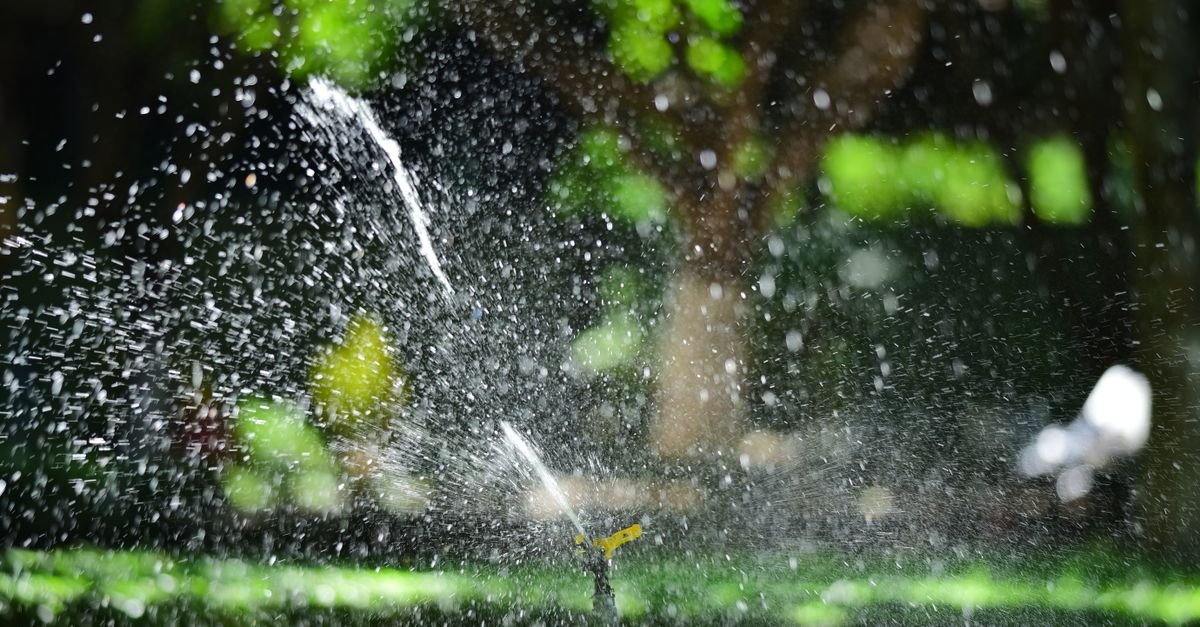
Run each zone and stand and watch it, which nobody ever does. Any head throwing onto glass, brick, painted trim or a garage door gets its arc reduced, its radius shortened, or its nozzle swapped for a lower-trajectory one. If a head is simply in the wrong place, moving it half a metre is cheaper than restoring a window.
Then deal with the other sources. Clear the gutters and downspouts, because water running down a pane from above stains the whole thing rather than spotting it. Check low windows within a foot or so of concrete, where splash-back carries minerals and alkaline runoff off the slab. After masonry work, wash the glass that same week.
Hydrophobic glass sealants do help, in the honest sense: they make water bead and run off rather than sit and dry. They last months rather than years and need genuinely clean glass to bond to, so treat one as a bonus after the sprinkler is reaimed, not instead of it.
FAQ
Does vinegar remove hard water stains from windows?
On light haze and recent spotting, yes. Household white vinegar is roughly 5% acetic acid, enough to convert thin calcium carbonate into something rinsable if you give it ten minutes and keep re-wetting so it never dries. On layered, crusty scale it softens the top and stalls. That is a concentration limit rather than a technique failure, and it is where a dedicated descaler earns its price.
Can hard water stains on glass be permanent?
Yes. Once the deposit has altered the glass surface rather than sitting on it, the marks are etching and cleaning chemistry has nothing left to act on. Use the wet test: soak the pane and look at it wet. Marks that vanish while wet are removable. Marks still visible on soaking wet glass are in the glass. Light etching can sometimes be polished out with cerium oxide; heavy etching means a new pane.
Will a pressure washer remove hard water stains from windows?
No, and turning it up makes matters worse. The bond is chemical rather than mechanical, so the jet rinses the pane without touching the mineral, while glass sits at garden-hose pressure with a 40-degree tip on every published surface table. Use the machine to pre-wet and rinse, and acid to do the actual work.
What causes hard water stains on outside windows in the first place?
Mineral-bearing water drying on the glass, over and over, in the same spot. Sprinkler and irrigation overspray is the most common source by a distance, followed by rain splashing off concrete into low windows, gutter overflow and masonry runoff. Hard water is just dissolved calcium and magnesium; the staining is what remains once the water has gone.
Do the toothpaste and WD-40 hacks work?
Toothpaste is a mild abrasive with mint in it, so it will polish a small mark and leave you a streaky, oddly fresh-smelling window. WD-40 is a water-displacing oil that hides spots by coating them, then collects dust for a fortnight. Neither dissolves calcium.
How often should I clean exterior glass to stop stains coming back?
Twice a year suits most houses, but the trigger is the source rather than the calendar. A window catching sprinkler overspray needs clearing every few months until the head is reaimed, after which it mostly stops needing anything.
Fresh Spots Come Off, Old Ones Do Not
Almost everything about this job is decided before you buy a product. Wet the glass and look at it. If the marks vanish under water you have a forty-minute job and a bottle of vinegar. If they do not, you have a polishing job or a glazier, and no amount of scrubbing changes that answer.
So go and watch your sprinklers run for ten minutes. It is the least interesting thing you will do this month, and it will save you the whole of this article next summer.