Last Updated on September 25, 2026 by Umar Farooq
Power washing siding safely comes down to two decisions: matching the pressure to the material — around 1,300–1,600 PSI on vinyl with a 25- or 40-degree tip — and holding the spray level or slightly downward instead of aiming it up under the courses. The second decision matters more than the first, and almost nobody talks about it.
That is the odd thing about this job. Most surfaces punish you immediately. Wood furs, mortar crumbles, paint lifts, and you watch it happen. A wall of siding gives you nothing. It looks clean, it dries, and whatever you pushed in behind it becomes somebody’s problem in about eighteen months.
Your Siding Sheds Rain, It Does Not Resist a Jet
Look at any siding wall side-on and the design gives itself away. Each course overlaps the one below it, the way roof tiles do. Water arriving from above runs down the face, reaches the lap, and carries on downward. That geometry is the entire weatherproofing strategy, and it is a good one — for rain, which has the decency to fall.
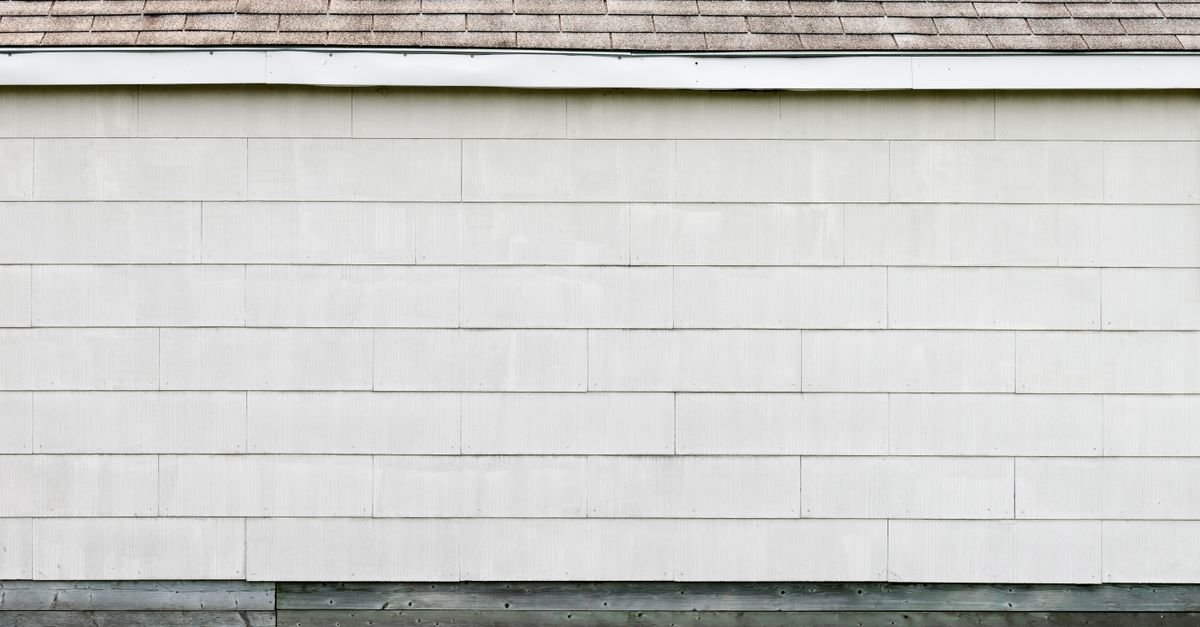
Nothing in that assembly is built to stop water travelling upward with a pump behind it. Aim a 40-degree fan up under a lap at 1,500 PSI and you are not testing the siding’s strength. You are feeding water into a gap that was designed as an exit. Behind it sits housewrap, sheathing and sometimes insulation — materials that dry slowly, dry from one side only, and are completely hidden from you.
The trade body says the same thing in plainer language. The Vinyl Siding Institute’s guidance is to hold the washer straight at eye level, and it warns against aiming the stream upward because water can be driven behind the panels (PEPA/VSI, Cleaning and Maintenance). It also notes something most homeowners never check: some manufacturers do not recommend power washing at all, and many caution specifically against pressure near windows, doors, wiring and plumbing.
So the rule is boring and non-negotiable. Level, or tilted slightly down. If you cannot reach a spot without pointing the wand up at it, you have found the boundary of this job, not a reason to lean harder on the trigger.
What Each Cladding Material Will Actually Take
“Siding” is four fairly different materials wearing similar shapes. The pressure that is routine on one is a warranty conversation on another.
| Material | Working pressure | Tip | The failure mode |
| Vinyl | 1,300–1,600 PSI | 25°–40° | Water forced behind the laps |
| Fibre cement | Manufacturer directs you to a low-pressure hose | Soft nonmetal brush | Surface erosion, warranty |
| Aluminium | Below the vinyl range, test first | 40° | Denting and chalk striping |
| Painted wood | 500–800 PSI | 40° | Paint loss and raised grain |
Vinyl is the forgiving one, and the range above is where it lives. It is also the material most likely to be on the wall of someone about to wash it badly, which is why what PSI a pressure washer needs for vinyl siding has a full breakdown of its own.
Fibre cement is where I will put the strongest opinion on this page: if your walls are Hardie board, the correct pressure washer setting is off. James Hardie’s own cleaning guidance says not to use a high-pressure power washer, and to use a low-pressure hose with a soft medium-bristle nonmetal brush instead, worked in the direction of the plank (James Hardie, cleaning your siding). Their suggested interval is a hose-down every 6 to 12 months. That is the company that makes the product telling you the machine is the wrong tool, in writing, on its own website. Difficult to argue with the people who made the wall.
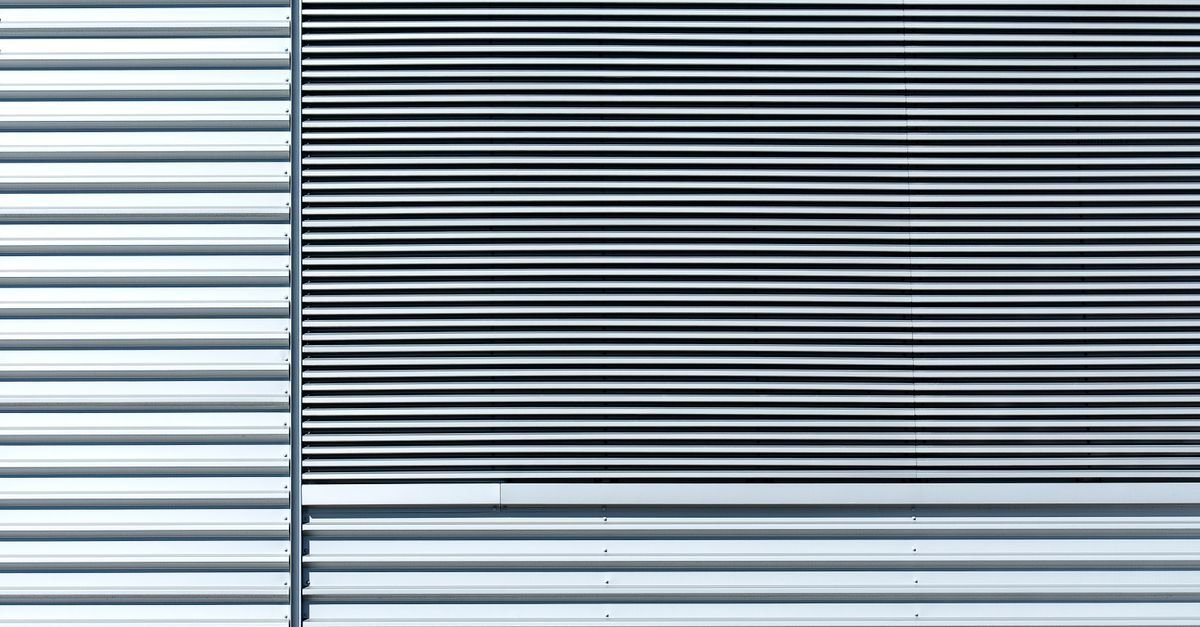
Aluminium catches people out, because the metal is not really the problem — the paint is. Older aluminium siding oxidises and the finish turns to a fine chalk. Pressure lifts that chalk unevenly, so the wall does not come out clean, it comes out striped, lighter wherever the wand lingered. The metal is also soft enough to dent from close range. Detergent, a soft brush and a low-pressure rinse beat pressure here every time.
Wood carries the lowest numbers on the wall. Painted wood siding sits around 500–800 PSI with a 40-degree tip, bare softwood clapboard around 500–600. Above that the fibres tear loose and you get the furred texture that only sanding removes. One extra check: if the house went up before 1978, assume lead paint until proven otherwise and read the EPA’s Renovation, Repair and Painting rule first. Washing flaking paint off a wall disturbs it, and the rule exists because of where those chips end up.
The Five-Figure Damage Numbers Nobody Can Source
Here is something I went looking for and did not find.
The internet is full of confident claims that power washing forces water behind siding and causes damage running into five figures. I went hunting for one documented case — a claim record, a court filing, an incident report, anything with a source attached. What I found was dozens of contractor blogs asserting it, most quoting each other’s figures. That is not a source. That is a rumour with a sitemap.
So I am not going to repeat those numbers, and I would be suspicious of any page that does without saying where they came from.
The mechanism, though, is not in dispute. The assembly drains downward, and a jet aimed upward puts water somewhere with no way to drain and very little way to dry. Whether that costs you nothing or costs you a wall depends on how much water, how often, and how well that cavity breathes — none of which you can assess from the driveway. That is reason enough to keep the wand level, and it needs no invented invoice attached to it.
If you want the longer version of what goes wrong on a vinyl wall and in what order, whether you can pressure wash vinyl siding covers it in detail.
The Order of Operations for Power Washing Siding
The sequence does more work than the pressure setting. Get it wrong and you will be washing the wall twice.

1. Close everything and cover the electrics. Windows, doors, vents. Tape plastic over exterior outlets, light fittings and the meter. Wet the plants at the base of the wall before you mix anything and rinse them again afterwards — damp leaves take up far less detergent than dry ones.
2. Fix the siding first. A loose, cracked or missing panel is an open door. Washing around one is how a small repair becomes an interesting repair.
3. Test somewhere nobody looks. A square metre on the back wall: lowest pressure, widest tip, furthest distance that still cleans. Move closer only if you have to. Distance is a pressure control, and it is the one you can adjust without changing tips.
4. Detergent bottom to top. Fit the black soap nozzle, which drops system pressure far enough for the injector to draw at all. Working upward stops clean streaks running down dirty siding and drying there.
5. Let it dwell 5 to 10 minutes. Never let it dry on the wall. On a hot, sunny day, work smaller sections and re-wet as you go.
6. Rinse top to bottom, level, overlapping. Gravity is doing half the job. Keep the tip moving, keep it level with the wall, and overlap each pass by about a third.
7. Walk the wall while it is still wet. Wet siding shows drips, missed patches and — more usefully — water seeping back out from under a lap it should never have been inside.
Gable Ends, Ladders and the Two-Storey Problem
The honest answer to “how do I reach the top of a two-storey wall” is that the geometry is against you, and no amount of technique fixes it.
From the ground, a wand pointed well above head height is a wand pointed upward — precisely the angle the first half of this article was about. An extension wand helps, because it carries the tip up to the work and lets you keep the spray level once it arrives. Standing further back does not: you get a weaker spray landing at exactly the wrong angle.
What you should not do is climb a ladder with a pressure washer. A wand produces genuine reaction force, the trigger releases it all at once, and a ladder is the one place where being shoved backwards has consequences. Contractors do upper storeys from the ground with low pressure and chemistry, or from proper access equipment, and there is a reason those are the only two entries on the list.
If the top storey genuinely needs cleaning and you cannot reach it level, that is where hiring someone stops being an extravagance and starts being the cheaper outcome.
When a Hose and a Soft Brush Is the Correct Answer
Most siding is not dirty. Most siding is stained, and a stain is a chemistry problem.
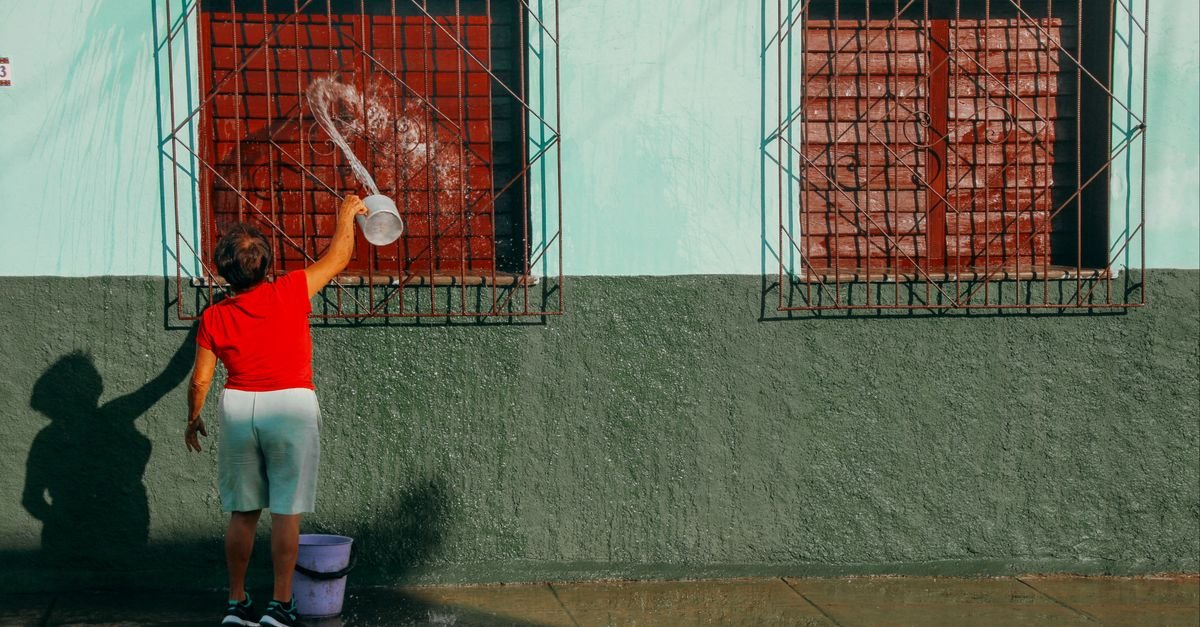
Green film is algae. Black speckling is usually mould. The grey haze on a north wall is biological growth that has been living there comfortably since the last time anybody looked. None of it comes off because the water hit harder. It comes off because something killed it and then got rinsed away — detergent and dwell time clean your wall, and the rinse tidies up afterwards.
That is why the humble option is not a compromise. A garden hose, a long-handled soft brush and a house-wash solution will clean a single-storey wall properly, with no pressure, no laps to think about and no chance of striping the paint. It takes longer and your arms will notice. Nothing behind the wall will.
For the specific case of black speckling that keeps coming back to the same shaded wall, removing mould from vinyl siding covers the solutions and the reason it returns.
FAQ
What PSI is safe for power washing siding?
Vinyl sits around 1,300–1,600 PSI with a 25- or 40-degree tip. Painted wood is much lower, roughly 500–800 PSI with a 40-degree tip. Fibre cement manufacturers generally direct you to a low-pressure hose rather than a washer at all, and aluminium should be treated below the vinyl range because the finish chalks and the metal dents.
Can you power wash fiber cement or Hardie board siding?
James Hardie’s published cleaning guidance says not to use a high-pressure power washer, recommending a low-pressure hose and a soft medium-bristle nonmetal brush instead, worked in the direction of the plank. If your walls are fibre cement, the machine is the wrong tool, and using it anyway puts the finish and the warranty at risk.
Will power washing damage aluminium siding?
It can, in two ways. Aluminium is soft enough to dent at close range, and older painted aluminium oxidises into a chalky surface layer that pressure removes unevenly, leaving visible light and dark stripes. Detergent, a soft brush and a gentle rinse give a far more even result.
How do I know if water got behind my siding?
Watch the wall while it is still wet. Water seeping back out from under a lap after you have stopped spraying means water went in. Later signs are musty smells indoors, staining or bubbling on the inside face of that wall, and panels that stay damp or discoloured long after the rest of the wall has dried.
What detergent should I use on siding?
A dedicated house-wash solution applied through the black soap nozzle, or a mild detergent solution applied by hand. Check your siding manufacturer’s guidance before choosing, because several publish lists of accepted cleaners and a few explicitly rule out solvents and abrasive products that dull the finish permanently.
How often should siding be washed?
Once or twice a year suits most homes, and James Hardie specifically suggests hosing the exterior down every 6 to 12 months. Shaded and north-facing walls grow algae faster and may want doing more often — which is an argument for a quick wash twice a year rather than one aggressive one annually.
Aim Level, Work Downward
If you take one thing from this page, make it the angle. Match the pressure to the material, absolutely — 1,300–1,600 PSI on vinyl, 500–800 on painted wood, a hose and a brush on fibre cement — but the number is the easy part. The wand drifting upward towards that stubborn patch under the eaves is the part that costs you something you cannot see.
Let the detergent do the work, keep the tip level, and walk the wall while it is still wet enough to tell you the truth about where the water went.