Last Updated on September 25, 2026 by Umar Farooq
Power washing chemicals come in four working families — sodium hypochlorite for anything that is alive, surfactants to make it stick, alkaline degreasers for oil, and acids for rust and mineral staining — and reaching for the wrong family is the single most common reason a surface stays dirty at 3,000 PSI.
Here is the position this whole site is built on, stated plainly. The chemistry does the cleaning. Pressure only rinses it off. A green wall is not dirty, it is colonised — algae, mildew and lichen are organisms rooted into the pores of the surface. Water at high pressure knocks the top off the colony and leaves the rest to regrow in six weeks. Sodium hypochlorite kills it outright, and it does not come back for a year or more.
Most people skip the detergent step anyway, because pressure feels productive and waiting does not. Standing in a driveway watching foam sit there is the least satisfying eight minutes in home maintenance. It is also the eight minutes that lets you clean the whole thing at 1,200 PSI instead of 3,000.
The Four Families of Power Washing Chemicals
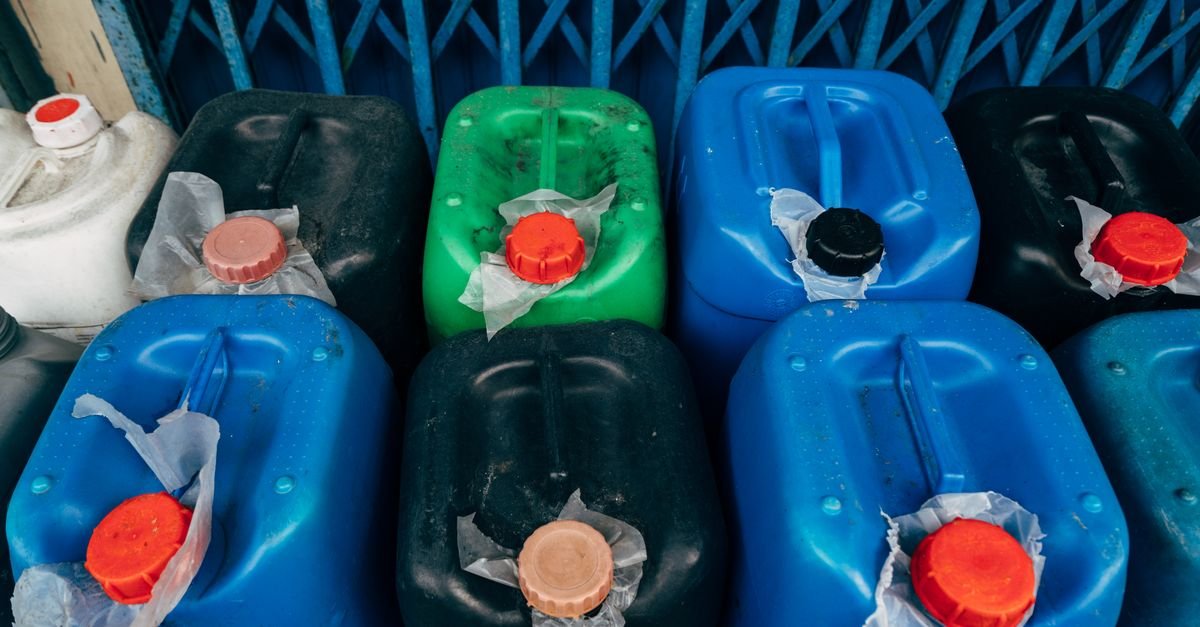
Every product on the shelf at a pressure washing supplier is one of these four, or a blend of two. Once you can name the family, the label stops mattering.
| Family | What it removes | Typical form | Where it does nothing |
| Sodium hypochlorite (SH) | Algae, mould, mildew, lichen, black roof streaks | 10–12.5% liquid concentrate | Oil, rust, efflorescence, ground-in dirt |
| Surfactants and soaps | Loose dirt, road film, light grease — and they carry the SH | Concentrated liquid or powder | Living growth, on their own |
| Alkaline degreasers | Motor oil, grease, exhaust soot, cooking fats | High-pH liquid, often diluted 20:1 to 10:1 | Rust, mineral deposits, algae |
| Acids | Rust, efflorescence, red clay, hard water scale, mortar smear | Oxalic, citric or hydrochloric | Oil and grease, entirely |
The failure mode is always the same, and it is worth saying out loud: a degreaser will not touch a rust stain, and an acid will not touch an oil stain. They sit at opposite ends of the pH scale doing opposite chemistry. So when a product “is not working,” the first question is not whether you need a stronger one. It is whether you bought the right family at all.
Surfactants are the ones people underestimate. On their own they are just soap. Mixed into a hypochlorite solution they change how long it stays where you sprayed it, which on a vertical wall is the difference between a working dwell time and a puddle around your boots.
Sodium Hypochlorite Is Doing Most of the Work
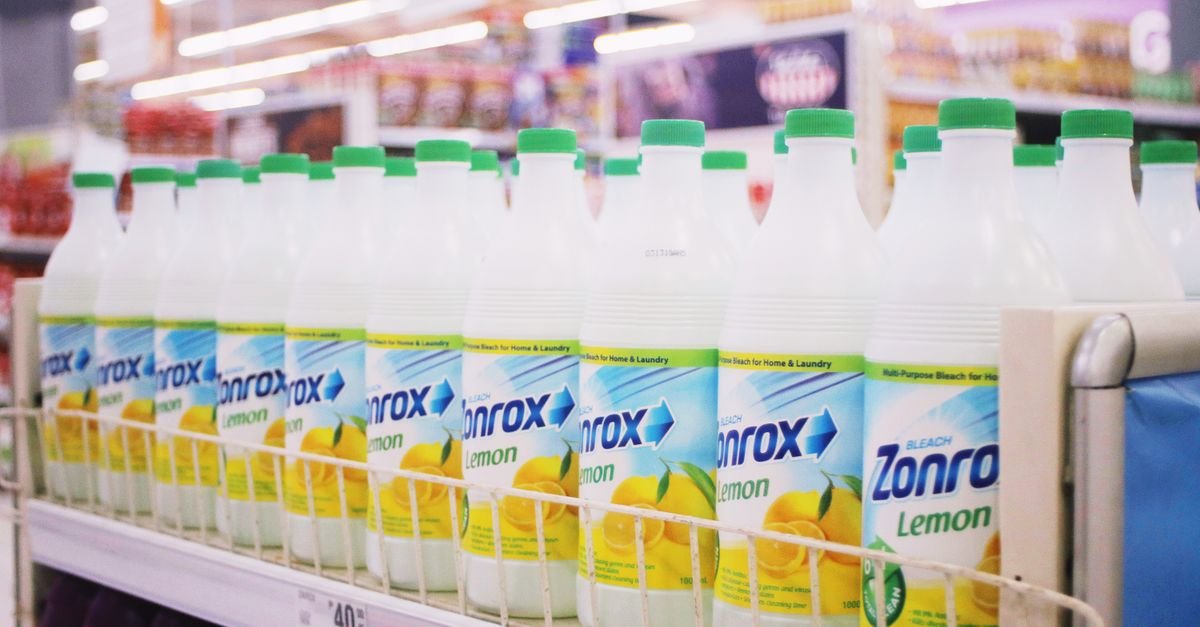
If you only ever buy one chemical, this is it. Sodium hypochlorite handles house washing, roof streaks, north-facing fences, shaded patios, green sheds and essentially every complaint that begins with “it has gone green.”
Two things about strength catch people out:
- Supermarket bleach is roughly 5–6% sodium hypochlorite. Pressure washing suppliers sell 10% or 12.5%. That is not a rounding difference — a 12.5% jug does about twice the work per litre, which is why professional mix ratios read so strangely if you assume everyone starts from the same bottle.
- It goes off. Hypochlorite loses strength on the shelf, faster in heat and faster in sunlight. A jug that has spent a summer in a sunny garage is weaker than its label claims, and “the SH stopped working” is very often “the SH is a year old.”
For a typical house wash, the industry target is around 1% hypochlorite on the surface. For roof algae, roughly 3%. Below about 0.5% you are mostly rinsing. Well above 4% you are adding risk to paint, plants and metal without killing anything deader.
Then there is the part that makes it stick. On its own, hypochlorite is water-thin. Sprayed at a wall it runs to the bottom in about fifteen seconds and does its finest work on the flowerbed. A surfactant — sold as a “chlorine surfactant” or a soft wash soap — thickens the solution and gives it something to hold onto. Same chemical, same concentration, several times the contact time. Buy the surfactant.
Degreasers and Acids Are Not Interchangeable
Oil and rust present as the same problem — a dark mark on concrete that will not rinse off — and they need chemistry that is the exact opposite of each other.
Oil, grease and exhaust soot need an alkaline degreaser. High-pH cleaners break fats and oils into water-soluble soaps, a process with the excellent name of saponification. The oil is not being lifted off the concrete; it is being converted into something that will rinse. That takes time, and it usually takes two rounds, because concrete is porous and the stain you can see is the top of a stain that went down. Our guide to removing oil stains from concrete covers the absorb-then-degrease sequence properly.
Rust, efflorescence and hard water scale need an acid. Oxalic acid is the standard for rust and red clay staining, and it is mild enough to double as a wood brightener. Citric acid is the gentler, more plant-tolerant option. Hydrochloric (muriatic) acid strips efflorescence and mortar smear from new masonry, and it should be the last thing you reach for rather than the first.
Three rules for acids, each with a repair bill attached:
- Always add acid to water, never water to acid. The reaction gives off heat, and the wrong order makes it spit back at you.
- Wet the surface first. Dry masonry drinks acid straight into its pores instead of working on the face where the stain is.
- Neutralise and rinse thoroughly. Acid left sitting in mortar carries on working long after you have packed up.
Acids also attack things you were not aiming at — polished and galvanised metal, anodised aluminium, limestone, and aged mortar that was already crumbling. If the mortar between your bricks is soft enough to scratch out with a key, the job is repointing, not cleaning.
Never Mix Bleach With Acid or Ammonia
This is the one thing on this page that can put you in a hospital, so it gets its own heading and no qualifiers.
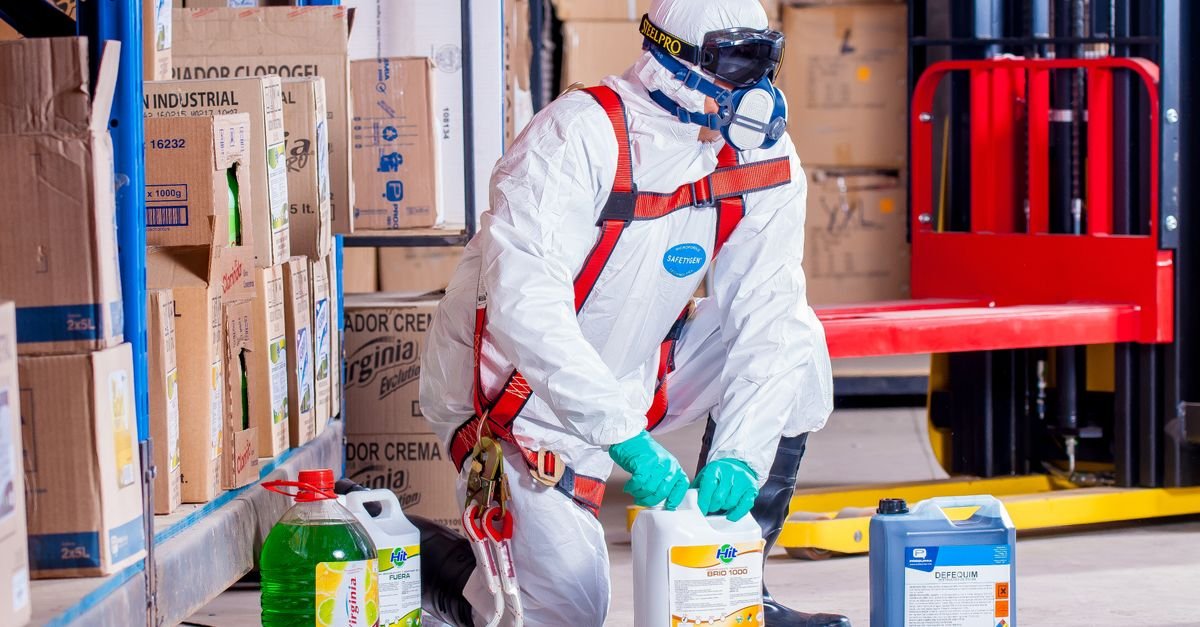
Sodium hypochlorite and acid make chlorine gas. Not “can, under certain conditions.” The ATSDR puts it flatly: sodium hypochlorite “releases chlorine gas when it comes in contact with acids” (ATSDR, Medical Management Guidelines for Chlorine). Outdoors in a breeze you might get away with a lungful and a bad afternoon. In a garage, under a carport, or in the footwell of the van where the jugs live, you might not.
Sodium hypochlorite and ammonia make chloramine vapours, which do much the same thing to your airway. Ammonia turns up in glass cleaners and in plenty of general-purpose cleaners, so this is not an exotic risk requiring exotic products.
The practical version:
- Never pour two products into one bucket unless the manufacturer states that specific pair is fine.
- Never run an acid through equipment that still has hypochlorite in it. Flush with plain water between chemicals — injector, chemical hose, downstream line, all of it.
- Store jugs separated, upright, capped and labelled. Most accidental mixes are a tipped container in a van, not a deliberate blend.
- Gloves, sealed eye protection and old clothes. Hypochlorite locates your one good pair of jeans with genuinely impressive accuracy.
Flushing matters for the machine as well as for you. Hypochlorite degrades pump seals and O-rings if it is left sitting in the system, so the last job of any day is two minutes of clean water pulled through the injector.
How Long Should Chemicals Dwell?
Five to ten minutes. That covers nearly everything — house wash, concrete, fences, patio furniture, vehicle pre-soak.
The rule that travels with the number matters more than the number: never let the chemical dry on the surface. A detergent that has dried has stopped cleaning and started staining, and on glass, dark paint and anodised trim the mark it leaves can be permanent. On a hot day in direct sun you have three or four minutes before that happens, not ten. Work small sections, stay in shade where the sun lets you, and re-mist the panel rather than watching it go chalky.
The roof is the exception, and the number comes from the industry body rather than from folklore. The Asphalt Roofing Manufacturers Association specifies that its household bleach and water solution “should be left on the roof for at least 15 minutes but no more than 20 minutes” before a gentle rinse — and, in the same guidance and in capital letters, that you should not use a power washer on shingles at all (ARMA, Algae Discoloration of Roofs). I read that page three times, largely because an industry association writing DO NOT in capitals is rarer than it ought to be. If the roof is your job, the no-pressure method has its own article, and that is the one to follow.
Two ordering habits that cost nothing and prevent most streaking:
- Apply bottom to top. Detergent running down a dry wall leaves clean streaks that set and will not rinse out evenly afterwards. Detergent running down an already-wet wall does not.
- Rinse top to bottom. Gravity is free labour, and everything you dislodge up top has to come past the bottom regardless.
Getting the Chemical Onto the Surface
You have the right product at the right strength, and nothing is coming out of the wand. This is where most of the “my soap will not work” traffic comes from, and the soap is rarely the culprit.
A downstream injector only draws at low pressure. The injector is a venturi: water rushing past a narrow throat creates the suction that pulls detergent up out of the bottle. At full system pressure there is no pressure drop across that throat, so there is no suction, so nothing moves. Fit the black soap nozzle — the widest orifice in the set, around 65 degrees — and pressure falls, the venturi starts working, and the detergent appears. The machine feels broken the first time you do this, because it drops a 3,000 PSI jet to something closer to a garden hose. That is not a fault. That is the entire mechanism.
If it still refuses once the black tip is on, the causes run in this order: a blocked injector filter, a detergent too thick to draw, a chemical hose with a split or a loose barb, and only then the injector itself. We worked through all of them in why a pressure washer soap dispenser stops working.
The other thing worth knowing is the draw ratio. A downstream injector pulls roughly 10:1 to 20:1, water to chemical, and longer hose runs weaken it further. That is why professional mixing instructions look so aggressive: 12.5% hypochlorite drawn neat through a 10:1 injector lands on the wall at a shade over 1%, which is exactly the house wash target. Dilute the bucket first and then downstream it, and you have diluted it twice.
| Method | Pressure at the surface | Best for | Watch out for |
| Downstream injector | Low — black nozzle only | House washing, general soft washing | Draw ratio dilutes the bucket 10–20 times |
| Upstream / onboard tank | Low | Mild detergents only | Chemical passes through the pump — never hypochlorite |
| 12V soft wash pump | Very low, adjustable | Roofs, tall walls, exact mixes | Extra kit and extra setup time |
| Pump-up garden sprayer | None | Small patches and spot treatment | Slow, and your forearm will mention it |
| Foam cannon | Low, thick foam | Vehicles, long dwell on vertical panels | Needs decent GPM to foam properly |
One line in that table is worth underlining: never run sodium hypochlorite through an upstream injector or an onboard soap tank. Both routes send the chemical through the pump, and hypochlorite and pump seals have a short, unhappy relationship.
Protecting Plants, Pets and the Storm Drain
Competing pages skip this section, which is odd, because it is the part of the job whose consequences outlast the wash.
Sodium hypochlorite kills vegetation at the concentrations you are washing with. Not “may harm” — it is the same mechanism that kills the algae, and a hydrangea is considerably more complicated than an alga. The routine takes four minutes:
1. Soak the plants, grass and soil before you start. Wet foliage holds a film of clean water, so anything landing on it arrives pre-diluted and runs off rather than soaking in.
2. Keep them wet while you work. A quick pass with the garden hose between sections is enough.
3. Rinse everything thoroughly when you finish, including the ground where the runoff pooled.
4. Tarp what you cannot rinse — vegetable beds, new planting, anything you would be sad about.
Bleach neutralisers exist and are worth having for the plants directly under a wall you have just soft washed. They are not a substitute for the pre-wet. They are insurance for the bit you missed.
Keep pets indoors while chemicals are on the ground and until the surface has been rinsed and dried. Cats in particular will cross a treated patio and then wash their feet, which is a sequence with an obvious ending.
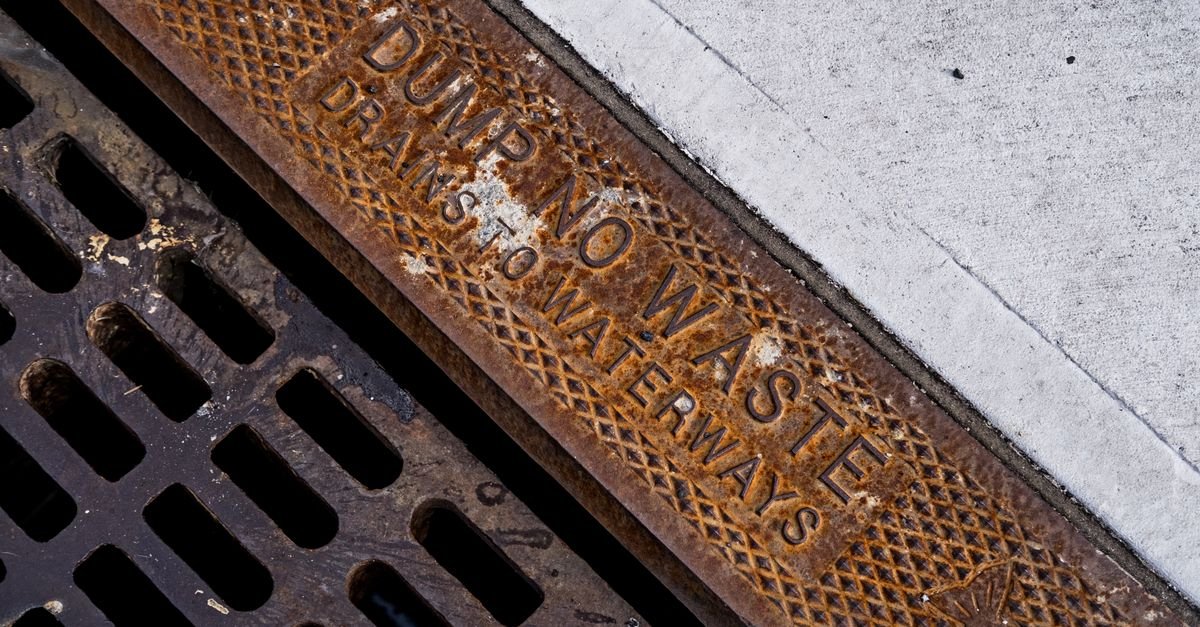
Then there is where the water goes. Wash water carrying detergent, hypochlorite or freshly loosened engine oil is a pollutant, and across most of the US a storm drain runs straight to a creek with nothing in between — which is why the EPA’s stormwater programme treats wash water as a regulated municipal stormwater discharge rather than as household waste. For a homeowner doing a patio, steering the runoff onto grass or gravel instead of down the gutter is usually enough, because soil filters it. For anything involving a degreaser and a driveway full of oil, a drain mat and a wet vac is the honest answer, and your local authority may have rules that make it the required one.
FAQ
What power washing chemicals do professionals actually use?
Mostly sodium hypochlorite at 10–12.5% with a chlorine surfactant, an alkaline degreaser for oil and traffic film, and an acid — usually oxalic — for rust and efflorescence. Nearly everything sold under a brand name is one of those four with a fragrance added.
Can I put bleach in my pressure washer?
Through a downstream injector, yes, and that is how most house washing is done. Never through an upstream injector or an onboard detergent tank, because those send it through the pump and it attacks the seals. Flush the injector and the chemical hose with clean water afterwards either way.
Can I use dish soap in a pressure washer?
It will foam and it will do very little. Dish soap is formulated for hot water, a sink and a sponge doing the agitating. It contains no biocide, so it does not touch algae or mould, and thicker household soaps are often too viscous for a downstream injector to draw at all.
How much should I dilute power washing chemicals?
Work backwards from the strength you want on the surface — around 1% hypochlorite for a house wash, around 3% for roof algae — then account for how you are applying it. A downstream injector dilutes the bucket another 10 to 20 times, so a bucket you have already diluted will land far weaker than you intended.
Do I need chemicals at all, or can I just use more pressure?
For loose dirt and mud, water alone is fine. For anything green, black or greasy, pressure alone removes only the visible layer and the growth returns within weeks. More pressure also means more etched concrete, furred wood and stripped paint, and none of that grows back.
How long should power washing chemicals sit before rinsing?
Five to ten minutes on almost every surface, and never long enough to dry. Roof algae is the exception: ARMA specifies at least 15 minutes and no more than 20 for its bleach solution, applied and rinsed at garden-hose pressure.
Turn the Pressure Down Before You Turn It Up
That is the whole argument. Pick the family that matches the stain, mix it so it lands at the right strength on the surface, give it five to ten minutes without letting it dry, then rinse at the lowest pressure that lifts it. Nine times out of ten the surface comes clean at half the PSI you were about to use, and the parts of your house that were never dirty stay exactly as they were.
Pressure is what you reach for when chemistry has already failed. Most of the time chemistry has not failed — it was simply never given the eight minutes it asked for.