Last Updated on October 4, 2026 by Umar Farooq
Why is my pressure washer soap dispenser not working? Nine times out of ten, the wrong nozzle is fitted. The detergent injector works by suction, and suction only exists when pressure drops — so it physically cannot pull soap while a high-pressure tip (red, yellow, green or white) is on the wand. Swap to the black low-pressure soap nozzle, and soap starts flowing in seconds. If it still will not siphon, the next suspects are thick undiluted detergent, a clogged siphon filter, and a stuck injector check valve.
If your pressure washer soap dispenser is not working, put the tools down before you spend an hour taking things apart. This is the single most misdiagnosed pressure washer complaint there is, and the fix for the majority of cases costs nothing and takes ten seconds. This guide starts with that fix, then works through every remaining cause in order of likelihood — including the difference between upstream injection, downstream injection and a foam cannon, which most articles blur together and which is exactly why generic advice so often fails.
The Ten-Second Fix: Fit the Black Soap Nozzle
Your machine uses a venturi injector. High-velocity water rushes past a small side port, and the drop in pressure at that point creates suction that pulls detergent up the clear siphon tube.
The catch is that the venturi effect only works at low velocity and low pressure. Fit a narrow high-pressure tip and the water in the injector body stays at full pressure — there is no low-pressure zone, so there is no suction. Detergent sits in the bottle and nothing happens.
The black nozzle has a much wider orifice. It drops outlet pressure to roughly 200 to 400 PSI, which collapses pressure at the injector and lets suction begin almost immediately.
Do this now:
1. Shut the machine off and release trigger pressure.
2. Pull back the quick-connect collar and fit the black tip (or turn a variable wand to its low-pressure setting).
3. Restart and squeeze the trigger.
4. Wait 20 to 60 seconds. Soap has to travel the whole length of the high-pressure hose before you see it.
That waiting period matters more than people expect. With a 25-foot hose, expect around 20 seconds. With 50 feet, closer to a minute. Plenty of owners swap the nozzle, spray for five seconds, see clear water and conclude the fix did not work.
Nozzle Colour Chart: Which Tips Let Soap Flow
| Nozzle colour | Spray angle | Approx. outlet pressure | Will soap siphon? | Typical use |
| Red | 0° | 100 % of rated PSI | No | Pinpoint stain removal — rarely worth using |
| Yellow | 15° | ~95 % of rated PSI | No | Stripping paint, heavy concrete grime |
| Green | 25° | ~90 % of rated PSI | No | General surface cleaning |
| White | 40° | ~80 % of rated PSI | No | Gentle rinsing, siding, vehicles |
| Black | 65° | ~15–25 % of rated PSI | Yes | Detergent application only |
| Turbo / rotary | 0° rotating | 100 % of rated PSI | No | Concrete and hard surfaces |
The pattern is simple: only the black tip drops pressure far enough to create suction. Every other colour keeps the injector at full pressure and guarantees no soap.
A common follow-up: *my machine only came with four tips and none of them are black.* Some manufacturers supply a brass low-pressure tip instead, or a dual-lance wand where you pull the outer sleeve forward to switch to soap mode. Others use an adjustable nozzle you twist. Check your manual for which one is the low-pressure position. If you want a full breakdown of what each tip does, see our pressure washer nozzle chart.
Pressure Washer Soap Dispenser Not Working: The 8 Real Causes
If the black nozzle did not solve it, work through these in order.
1. Wrong Nozzle or Wrong Wand Position
Covered above, but worth restating because it accounts for the majority of cases. Also check that the tip is fully seated — a quick-connect that has not clicked home can sit half-engaged and leak pressure in odd ways. Pull on it after fitting; it should not move.
2. Detergent Is Too Thick or Undiluted
Injectors are designed to lift thin, water-like liquid through a narrow tube. Thick car shampoos, gel-style cleaners and undiluted concentrates are simply too viscous to lift.
If your detergent pours like syrup rather than like milk, dilute it. Most concentrates are meant to be mixed at 1 part detergent to 5–10 parts water before they go anywhere near the siphon tube. Diluting also protects the injector from gumming up.
3. Clogged Siphon Tube or Filter Screen
The end of the clear siphon hose usually has a small mesh filter. Dried detergent, grit and mineral scale block it, and once it is blocked no suction in the world will pull liquid through.
Pull the filter off and soak it in warm water for ten minutes, then rinse it. Flush the tube itself by holding it under a running tap. If the tube has hardened detergent inside, soak the whole thing in warm water with a splash of white vinegar.
Do this after every use: drop the siphon tube into a bucket of clean water and run the machine on the soap setting for a minute. That flushes the injector and the tube, and it prevents this failure entirely.
4. Cracked, Kinked or Loose Siphon Hose
The siphon side operates on suction, which means any air leak kills it. A pinhole crack, a loose barb fitting or a kink where the tube bends over the edge of the bottle will let the injector pull air instead of detergent.
Inspect the whole length of the clear tube with it stretched straight. Look for hairline splits near the fittings, where flexing concentrates. Check that the push-fit connection at the injector body is fully home. And make sure the filter end is fully submerged — if it is resting on the bottle’s shoulder above the liquid line, it is drinking air.
5. Blocked Injector Check Valve
Inside the injector body is a small ball or spring-loaded check valve. It stops high-pressure water being forced back down the siphon tube. Detergent residue causes it to stick shut, and once it is stuck, nothing siphons.
You can test the injector directly. Disconnect the high-pressure hose from the machine, put the siphon tube into water, and run the machine briefly. If it draws water now, the injector is fine and the restriction is downstream. Briggs & Stratton’s own detergent siphoning FAQ recommends exactly this approach — reconnect components one at a time until the siphoning stops, and you have found the blockage.
If the injector itself is at fault, most are removable. Soak the body in warm water, work the check ball gently with a wooden cocktail stick, and rinse. Never use a metal pick, and never force the ball.
6. Detergent Tank Valve Closed or Selector Set Wrong
Machines with an onboard tank often have a small dial, lever or knob that selects between “soap” and “off”, or between two tanks. It is easy to knock and easy to forget.
On onboard-tank machines there is a second trap: the tank has a pickup tube that must reach the bottom. If the tank has been removed and refitted, the tube can end up bent, or resting above the liquid level. Look inside with a torch.
7. Too Much Hose Between the Injector and the Gun
Every extra foot of high-pressure hose adds back-pressure at the injector, and back-pressure is the enemy of suction. Adding a 50-foot extension to an already 25-foot hose is a very common reason a soap system that worked last season stops working now.
| Hose length after the injector | Siphon behaviour |
| Up to 25 ft | Strong, soap appears in ~20 seconds |
| 25–50 ft | Good, soap appears in ~40–60 seconds |
| 50–100 ft | Weak and slow, noticeably diluted mix |
| Over 100 ft | Usually no siphon at all |
If you must work far from the machine, remove the extension while applying soap, then reconnect it for rinsing.
8. Inlet Water Pressure Is Too High
This one is counter-intuitive. Very high supply pressure can raise pressure inside the injector enough to weaken the venturi. Briggs & Stratton suggests slowly closing the water supply valve while spraying with the soap nozzle until suds appear. Once you see foam, that is the sweet spot. Note it and use it next time.
Upstream vs Downstream vs Foam Cannon
Almost every confusing piece of advice about soap comes from mixing these three up. They behave completely differently and fail for completely different reasons.
| Feature | Upstream injector | Downstream injector | Foam cannon |
| Where soap enters | Before the pump | After the pump | At the gun, after everything |
| Detergent passes through pump? | Yes | No | No |
| Nozzle required | Any nozzle works | Black low-pressure only | Cannon has its own orifice |
| Typical dilution ratio | 1:10 to 1:20 | 1:10 to 1:25 | 1:5 to 1:15 |
| Foam thickness | Thin | Moderate | Thick, clinging |
| Suits bleach or harsh chemicals? | No — destroys seals | Yes, with rinsing | Yes |
| Common on | Some gas machines, older units | Most consumer machines | Aftermarket accessory |
| Main failure mode | Chemical damage to pump seals | Wrong nozzle fitted | Blocked mesh or wrong mix |
Upstream injection draws detergent in ahead of the pump, so it works at any pressure and with any nozzle. That sounds better, and for pure suction it is — but everything you put in the tank goes straight through the pump. Bleach and strong alkaline cleaners will wreck the seals.
Downstream injection is what almost every consumer machine uses. Soap joins the water after the pump, which is why it needs the pressure drop from a black nozzle and why it is safe with harsher chemicals.
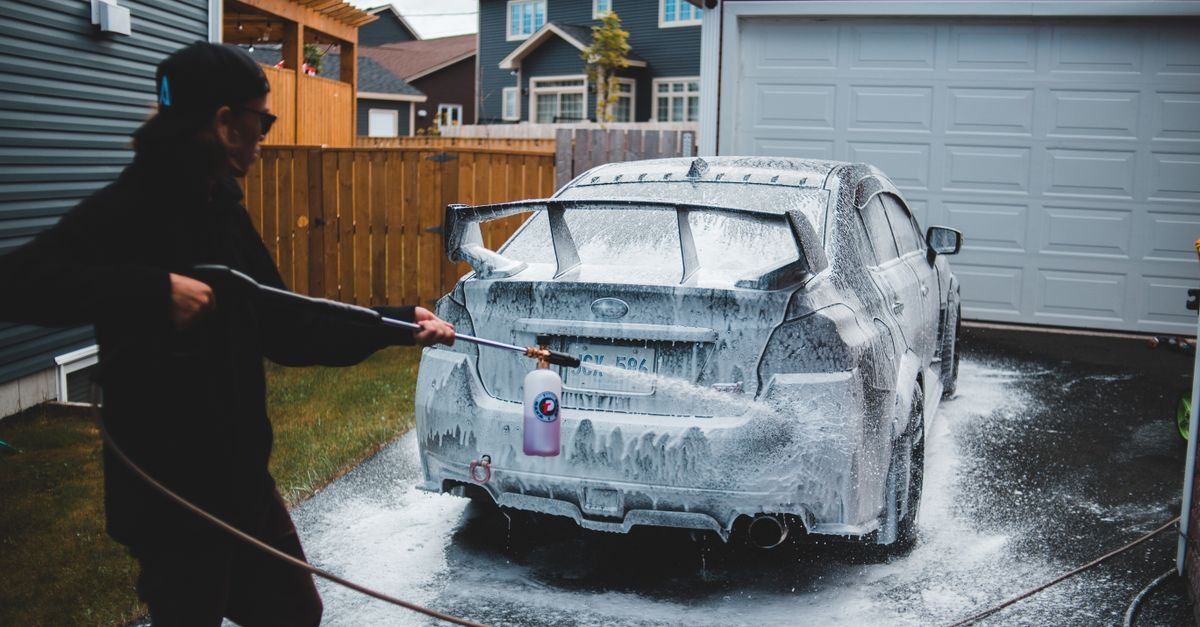
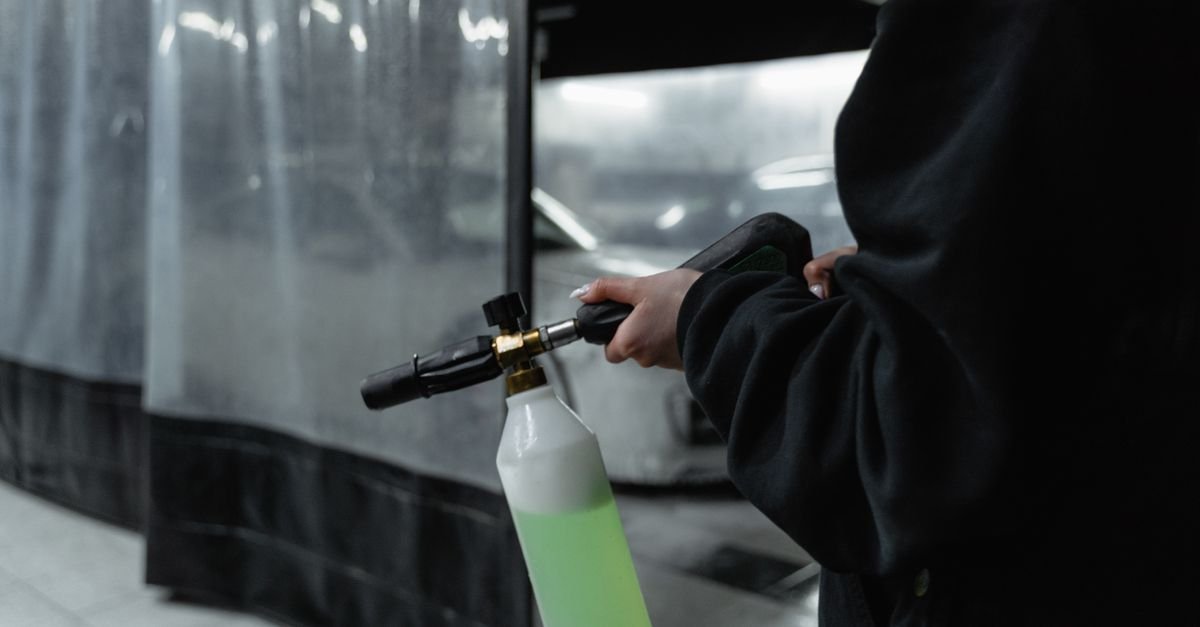
A foam cannon is a different animal entirely. It has its own bottle, its own mixing chamber and a fine mesh screen that whips soap and air into thick foam. It bolts onto the gun and bypasses the machine’s injector completely. If your onboard soap system is broken and you cannot fix it, a cannon sidesteps the whole problem. Our foam cannon vs foam gun comparison explains which one suits which job.
Foam cannons fail in their own ways: a clogged brass or stainless mesh, a soap-to-water ratio that is too thin, a dial set to maximum water, or a machine with too little GPM to drive the cannon properly. Most cannons want at least 1.4 GPM to foam well.
How to Test Your Injector in Five Minutes
This sequence isolates the fault without any disassembly.
1. Water test. Put the siphon tube in a jug of plain warm water, fit the black nozzle, and spray. If water level in the jug drops, suction works and your detergent is the problem — too thick, or too little in the bottle.
2. Suction test at the port. With the machine running and the black tip fitted, pull the siphon tube off the injector barb and put a fingertip over the port. You should feel a distinct pull. No pull means the injector or check valve is blocked.
3. Short-hose test. Swap to your shortest high-pressure hose. If soap now flows, back-pressure from hose length was the cause.
4. No-hose test. Disconnect the high-pressure hose entirely, run the machine for a couple of seconds with the siphon tube in water, and watch for draw. This is the definitive injector test.
5. Tube integrity test. With the machine off, blow gently into the siphon tube. It should offer resistance. Free-flowing air with no resistance suggests a split.
If step 4 draws water but the assembled machine does not, the restriction is between the injector and the nozzle — hose length, a partly blocked tip, or a nozzle that is not fully seated. If clogging is a recurring theme, our guide on why nozzles keep clogging explains what causes it and how to stop it.
Detergent Dilution and Thickness Guide
Detergent chemistry decides whether the injector can lift it. Use this as a starting point, then check your bottle.
| Detergent type | Concentrate-to-water | Consistency needed | Injector-friendly? |
| House and siding wash | 1:10 | Thin, water-like | Yes |
| Vehicle shampoo (pressure washer grade) | 1:15 to 1:20 | Thin | Yes |
| Vehicle shampoo (bucket-wash grade) | Not designed for injectors | Thick, gel-like | No — will clog |
| Concrete degreaser | 1:5 to 1:10 | Thin | Yes |
| Deck and fence cleaner | 1:8 | Thin | Yes |
| Sodium hypochlorite (bleach) mix | 1:10 or weaker | Thin | Downstream only |
| Dish soap | Not recommended | Thick, high-foaming | No — clogs and leaves film |
| Undiluted concentrate of any kind | — | Syrupy | No |
Two practical rules. First, if it does not pour freely from the bottle, it will not lift up a 3 mm tube. Second, warm water dilutes concentrates far better than cold — mix with warm water and the injector will thank you.
Why Bleach and Thick Detergent Damage Pump Seals
This matters most on machines with upstream injection, where everything you feed the tank passes through the pump.
Pressure washer pumps rely on rubber and elastomer seals, O-rings and valve components. Sodium hypochlorite attacks those materials directly — it hardens rubber, causes it to crack, and corrodes brass and aluminium pump castings. A pump that would happily run for 500 hours on plain water can start weeping within a few dozen hours of bleach exposure.
Thick undiluted detergent causes a different kind of harm. It does not corrode, but it dries into a hard residue inside the injector passages, the check valve seat and the unloader. That residue restricts flow, and restricted flow means the pump works harder and heats up.
Practical protection:
- Use downstream injection for anything containing bleach, and never upstream
- Dilute before pouring, never after
- Flush with clean water for 60 seconds after every detergent job
- Store the machine empty of detergent, never with soap sitting in the tank
- If the machine has been left with detergent inside for months, flush it twice before use
If you are cleaning organic growth, downstream bleach or a dedicated cleaner is the right approach — our guide to removing mold from vinyl siding covers the correct concentrations and dwell times.
When Your Pressure Washer Soap Dispenser Not Working Points to Something Bigger
Occasionally the soap problem is a symptom rather than the disease.
If the machine also delivers weak pressure, pulses, or struggles to hold a steady stream, the injector is not the root cause — a failing pump or a starved water supply is. A pump that cannot generate full pressure also cannot generate the velocity the venturi needs. In that case start with the low pressure diagnostic guide and fix the pressure first; the soap will usually come back on its own.
Similarly, if the machine cuts out during soap application, the fault is not the detergent system at all. Look at why a pressure washer keeps shutting off instead.
And if you are getting no water at all, not just no soap, the problem is upstream of everything — a blocked inlet filter, a kinked hose, or trapped air. Husqvarna’s guidance on a washer that starts but produces no water covers bleeding trapped air and cleaning the inlet screen, both of which take under five minutes.
One more thing worth checking before you conclude the injector is dead: the nozzle itself. A partially blocked black tip raises back-pressure and kills suction just as effectively as a green tip does. Husqvarna is explicit in its nozzle cleaning instructions that you should use the supplied cleaning pin and never a nail or a piece of wire, because anything harder than the manufacturer’s pin will enlarge the orifice permanently.
FAQ
Why is my pressure washer soap dispenser not working even with the black nozzle on?
The next most likely causes are a blocked siphon filter and detergent that is too thick. Pull the filter off the end of the clear tube, soak it in warm water, and try again with detergent diluted at least 1:10. If it still will not draw, test the injector with the high-pressure hose disconnected to see whether the fault is in the injector or downstream of it.
How long should it take for soap to appear?
Between 20 and 60 seconds, depending on hose length. The detergent has to travel the entire length of the high-pressure hose before it reaches the nozzle. With a 25-foot hose expect about 20 seconds; with 50 feet, closer to a minute. Most people give up too early.
Can I use dish soap in my pressure washer?
You should not. Dish soap is far too thick for an injector to lift, it foams excessively inside the pump, and it leaves a film that is hard to rinse off. Use a detergent specifically labelled for pressure washers, which is formulated to be thin enough to siphon and safe for pump components.
Will bleach damage my pressure washer?
Through an upstream injector, yes — bleach passes through the pump and attacks rubber seals and brass fittings. Through a downstream injector it never touches the pump, so it is acceptable at diluted strength. Either way, flush the system with clean water for a full minute afterwards.
Why does my soap come out watery instead of foamy?
Usually because the venturi is only partly working. Common reasons are a hose that is too long, a partly blocked siphon filter, detergent that is over-diluted, or supply pressure that is too high. A foam cannon produces much thicker foam than any onboard injector, because it mixes air into the solution.
What is the difference between the soap nozzle and a foam cannon?
The black soap nozzle simply drops pressure so the machine’s own injector can siphon. A foam cannon is a separate attachment with its own bottle and a mesh screen that aerates the mixture into thick, clinging foam. The cannon bypasses the machine’s injector entirely, which is why it still works when the onboard soap system is blocked.
Do all pressure washers have a soap dispenser?
No. Some entry-level machines have no injector at all and expect you to use an add-on foam attachment. Others have an onboard tank; others use a clear siphon tube you drop into a bucket. Check your manual before assuming a fault exists — you may not have a detergent system to begin with.
Does hose length really stop soap from siphoning?
Yes. Every extra foot of hose after the injector adds back-pressure, and back-pressure reduces the suction the venturi can generate. Beyond about 100 feet most consumer injectors stop drawing altogether. Apply soap with a short hose, then add the extension for rinsing.
How do I clean a clogged detergent injector?
Remove it if your model allows, soak the body in warm water for 20 minutes, and gently work the check ball with a wooden stick — never metal. Flush it through with clean water in both directions. Prevention is far easier: run clean water through the siphon tube for a minute at the end of every job.
Should the siphon tube be in the bottle or a separate bucket?
Either works, but a bucket gives you better control. It lets you mix the exact dilution you want, it makes it easy to confirm the filter is fully submerged, and it means you can swap straight to a bucket of clean water to flush the system when you finish.
Fit the Black Tip First, Then Troubleshoot
A pressure washer soap dispenser not working is almost never a broken machine. The injector needs a pressure drop to create suction, and only the black low-pressure nozzle provides it — fit that tip, wait a full minute, and the majority of these cases resolve themselves on the spot.
If it does not, the order of attack is simple: dilute the detergent until it pours like water, clean the siphon filter, check the clear tube for splits and air leaks, shorten the hose, and only then suspect the injector check valve. Test with plain water in a jug at every stage so you always know whether you are chasing a suction problem or a chemistry problem.
Finally, build one habit. Run clean water through the siphon system for sixty seconds after every detergent job. Dried soap in the filter, the tube and the check valve is what causes nearly every genuine injector blockage, and one minute of flushing prevents all of it.