Last Updated on September 25, 2026 by Umar Farooq
The right car wash soap for pressure washer use is a pH-neutral automotive shampoo — around pH 6.5 to 7.5 — diluted for the way your particular machine delivers it, and never dish soap or the house-wash detergent already sitting in the shed.
The thing about washing a car with a pressure washer is that you are not allowed to use much pressure. Vehicles sit at 1,200–1,900 PSI with a 25- or 40-degree tip, roughly half what a mid-range gas machine puts out at idle. You have deliberately taken away your strongest tool, so the soap is what is left doing the work. Here are the five ways that choice goes wrong.
Why Car Soap Is a Different Product From House Wash
House-wash and car-wash chemistry are built to opposite specifications, which is why the jug that did a beautiful job on your siding does a mediocre-to-expensive job on your paint.
A house wash is asked to kill something and stay put: a biocide for algae and mould, and enough cling to hold on a vertical wall for ten minutes. Cling and dwell are the entire design brief. A car soap is asked to do almost the reverse:
- Lubricate. The soap film is what lets grit slide off the panel instead of being dragged across it. On a car, lubricity is a safety feature for the paint.
- Release, not cling. It must lift road film, let go of it, then sheet off cleanly rather than drying into a haze. A soap that clings beautifully to brick leaves streaks on a bonnet.
- Leave nothing behind, fast. No biocide residue, no salt, nothing to sit in a panel gap and go chalky — and it has about ninety seconds to do all of it before the rinse.
The one-machine, one-jug approach has a hole in it. The machine is fine for both. The bucket is not.
pH Is the Number That Decides Whether Your Wax Survives
Everything in this category divides on one number, and it is not PSI. pH 7 is neutral; below is acidic, above is alkaline. Car chemicals cluster into three bands:
| Band | Typical pH | What it is | What it does to protection |
| Acidic | 2–5 | Wheel cleaners, bug and water-spot removers | Can etch and dull coatings; stains polished alloy |
| Neutral | 6.5–7.5 | Maintenance shampoo, pH-neutral snow foam | Cleans without removing wax, sealant or coating |
| Alkaline | 9–11 | Traffic film removers, pre-wash, degreasers | Strips wax and most sealants, by design |
The mechanism is not mysterious. Alkaline cleaners saponify oils — they turn grease into something water-soluble and carry it away. Carnauba wax is an oil, and most spray sealants are polymer-and-oil blends. An alkaline soap cannot tell the difference between the road film you want gone and the wax you paid for, because chemically there is not much of a difference to tell.
That does not make alkaline products bad. It makes them the wrong tool for the weekly wash and the right tool once a year, when you do want the old wax gone before applying something new. Stripping is a job. It is just not a Saturday.
The annoying part: most bottles do not print a pH. I went looking for a figure on the back of half a dozen labels and mostly found “pH balanced”, which is marketing for “a pH exists.” What you can check is the ingredient list. California’s Cleaning Product Right to Know Act of 2017 and New York’s disclosure programme force manufacturers to publish what is in their cleaning products, and the better ones put it straight on the website — Kärcher, for instance, publishes ingredient statements and safety data sheets for every detergent it sells. A brand that will not tell you what is in the bottle has told you something.
What Dish Soap Actually Does to Wax, Trim and Rubber Seals
Dish soap is the default answer in every forum thread on this subject, usually from someone who has done it for years and whose car looks fine. Here is the honest version.
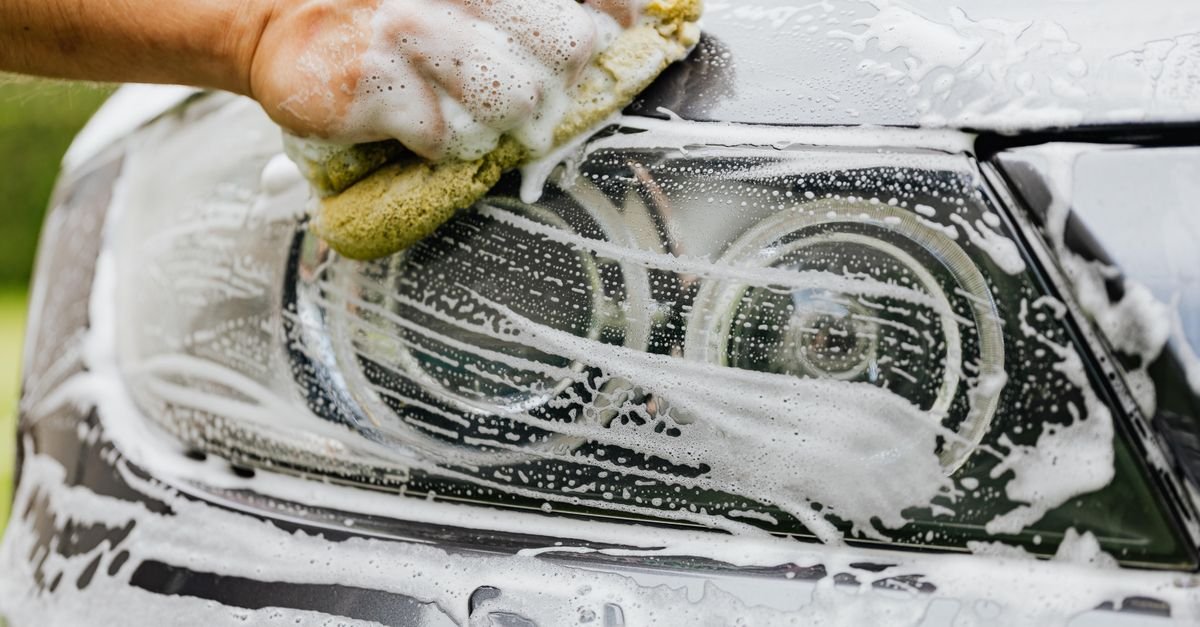
It is a degreaser. That is the entire product. Washing-up liquid exists to remove animal fat from ceramic using hot water and a sponge. It does not stop being good at that when it meets your paint, and wax is the fat on that panel.
It has no lubricity to speak of. Sink detergents leave no slip film, because a plate does not care. Paint does. If any part of your wash involves a mitt, this is where the fine swirls come from.
It is thickened with salt for the pour. That satisfying viscosity is why a downstream injector often will not draw it, and why it gives large, loose, fast-collapsing bubbles in a foam cannon.
The rubber-and-trim claim needs care. The internet will tell you dish soap dries out door seals and greys black trim, and the mechanism is plausible: seals and unpainted trim rely on retained oils, and a detergent built to strip oils will take some. But I went looking for a controlled study putting a number or a timescale on it and found only blogs quoting each other. Treat it as a reason to stop, not a figure to repeat.
One wash with dish soap on an unprotected work truck is not a tragedy. Using it fortnightly on a waxed car is paying for protection on Saturday and removing it on Sunday.
Snow Foam Is a Pre-Wash, Not a Wash
These are two different products sold in similarly shaped bottles, and buying one when you needed the other is mistake number three.
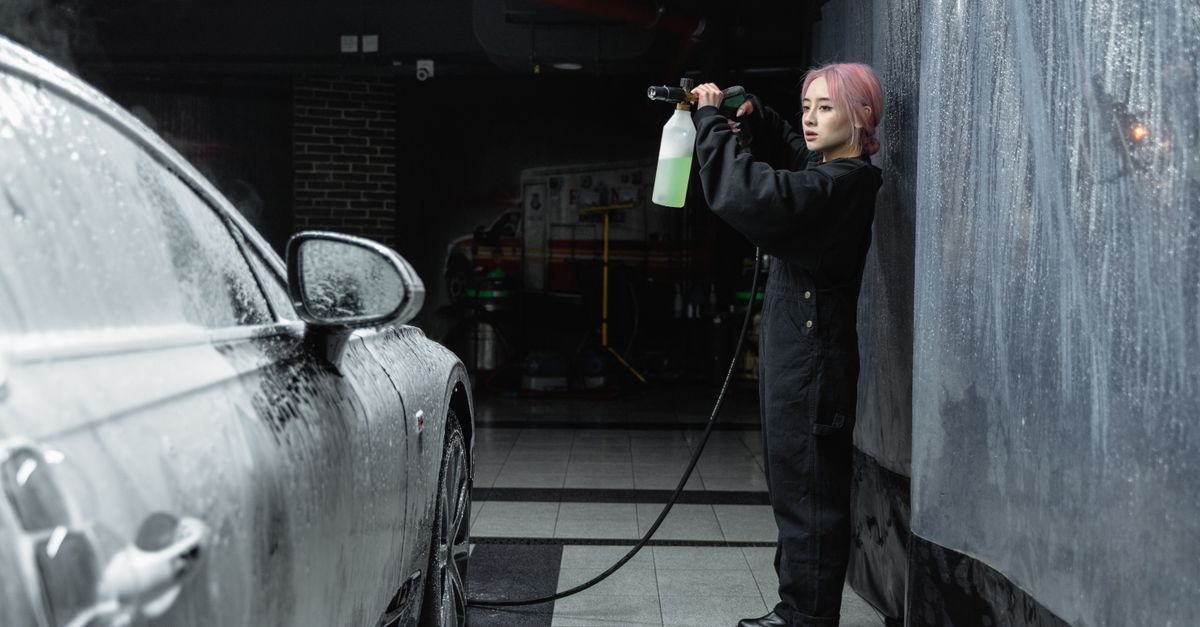
Snow foam, or pre-wash, is a thick, high-foaming chemical applied to a dirty car and left to dwell five to ten minutes untouched. Its job is to soften and carry away loose grit *before* anything solid goes near the paint. It is not trying to clean the car. It is trying to make the next step safe.
Contact wash shampoo is the soap that goes in the bucket with the mitt: high-lubricity, lower-foaming, rinsed within a minute or two.
Snow foam comes in both pH bands. Neutral is the maintenance option, safe over wax and coatings. Alkaline traffic film remover is the winter option for salt and heavy road film, and it strips protection exactly as the table above says.
The mistake that costs money is treating the pre-wash as the whole wash. It removes what is *sitting on* the paint, not what has *bonded to* it — and bonded traffic film is most of what makes a car look tired. Touchless washing is a real option, but it is a trade, not a shortcut.
Two rules for the dwell: five to ten minutes, and never let it dry on the surface. A panel in direct sun will dry a foam in half that.
What to Look For in a Car Wash Soap for Pressure Washer Use
A short list. Everything not on it is decoration.
1. It states pH-neutral, and the ingredients are published somewhere. Both, ideally.
2. It is a concentrate with a stated dilution range — better still, separate ratios for a cannon and an injector, because those are not the same number.
3. It matches your delivery method. High-foaming blends are for cannons and lances. A low-foaming shampoo in a foam cannon produces disappointment at speed.
4. No bleach, no solvents, no ammonia. Your pump seals, injector check valve and hose O-rings are downstream of whatever you pour in the bucket.
5. No “wash and wax” if the car is already protected. Which brings me to the opinion.
Skip wash-and-wax soaps and buy two products instead of one. A soap that claims to leave wax behind has been given contradictory instructions. Surfactants exist to hold oils in suspension and carry them to the drain; a wax exists to bond to the paint and stay there. Asking one bottle to do both, in the ninety seconds it is on the panel before you rinse it, gets you a film with the durability of a good intention. Buy a pH-neutral concentrate for every wash and put a proper sealant on twice a year, onto a clean, dry, cool panel where it can actually cure. That is two purchases rather than one, and it still costs less over a year, because a gallon of neutral concentrate used at an ounce a wash outlives most people’s ownership of the car.
Dilution Changes Completely Depending on How the Soap Is Delivered
This is the part the detailing sites skip, because they assume a foam cannon and stop there. A pressure washer gives you up to three ways of getting soap onto a car, and the bucket mix is different for each.
1. Foam cannon. The bottle *is* the mix — nothing dilutes it further before it hits the paint. One to two ounces of concentrate in a 32-ounce bottle topped with warm water is the standard starting point, around 1:16 to 1:32. This is the strongest of the three and the one most people over-dose, on the theory that more soap means thicker foam. Past a point it just means more rinsing. The foam cannon vs foam gun comparison covers what actually thickens foam.
2. Downstream injector with the black soap nozzle. Here is the trap, and it catches people who did everything else right. The injector dilutes your bucket *again* on the way through — units are typically sold with draw ratios in the region of 10:1 to 20:1. A bucket carefully mixed to 1:16 therefore arrives on the panel somewhere between 1:160 and 1:320. That is water with an opinion. For injector use, mix the bucket several times stronger than you would for a cannon; it is why good concentrates print two different ratios.
The injector will also not draw unless the black soap nozzle is fitted. That tip has the widest orifice in the set, around 65 degrees, and the pressure drop it creates is the only reason the venturi can pull anything. Fitting it feels like the machine has broken. It has not — see the pressure washer nozzle chart for where it sits, and the guide to a soap dispenser that draws nothing if it still refuses.
3. Onboard detergent tank or siphon tube. Same low-pressure requirement, usually a fixed internal ratio you cannot adjust, and the weakest of the three. Fine for a maintenance wash, not the tool for winter salt.
Whichever you use: apply bottom to top so run-off does not streak through dry dirt, dwell five to ten minutes, rinse top to bottom.
Iron and Fallout Removers Are Not Soap
Mistake number five is filing these under “soap” and treating them accordingly.
An iron or fallout remover is a decontamination chemical, usually thioglycolate-based, that reacts with the embedded metal particles a wash cannot touch — brake dust welded into clear coat, rail dust on a car that came by train. It runs purple as it works, which is useful feedback and also why half the internet thinks it is dissolving the paint. It is dissolving iron. Three things about them:
- They are an occasional step, not a wash. Once or twice a year, on a car that feels gritty after washing. Not fortnightly.
- They do not belong in a foam cannon or a downstream injector. They go on neat or barely diluted, from a dedicated pump sprayer, onto a cool, rinsed, shaded panel. Run one through your injector and it is in the check valve and hose for the rest of the day, smelling like a chemistry lesson gone wrong.
- Never let one meet a chlorine product. This one is genuinely dangerous rather than merely expensive. Acidic wheel cleaners and fallout removers plus anything hypochlorite-based produces chlorine gas — ATSDR states plainly that sodium hypochlorite “releases chlorine gas when it comes in contact with acids”. The realistic way this happens is not a deliberate mix. It is one machine doing the house on Saturday and the car on Sunday. Flush the injector and hose with clean water between jobs, every time.
On coatings, fallout removers are sold as coating-safe and, used as directed, they are. The failure mode is letting one dry on a hot panel, not the chemistry.
Where the Rinse Water Ends Up
Nobody’s favourite section, and it takes ninety seconds to act on.
The water coming off a car is not just soap. It carries oil, brake dust, heavy metals and road film, and a driveway drains to a storm drain, which in most places reaches a creek untreated. The EPA’s stormwater guidance for vehicle washing is short and specific: use a phosphate-free, biodegradable detergent, use as little as you can, and wash on grass or gravel where the ground can filter it rather than on pavement running to the street (EPA, Vehicle Maintenance and Washing).
One cheerful fact to finish on: a pressure washer at 1.2 to 1.6 GPM uses considerably *less* water than an open garden hose at full flow for the same wash. The machine that feels wasteful is the efficient one. The lawn gets a drink and the creek does not get your brake dust.
FAQ
Can I use dish soap to wash a car with a pressure washer?
You can, and it will foam, and it will take your wax with the dirt. Dish soap exists to strip oils, and wax and most sealants are oils. It is also salt-thickened, so a downstream injector often cannot draw it. Survivable on an unprotected vehicle; on a waxed or coated one it undoes the thing you paid for.
What pH should car wash soap be?
Neutral for a normal maintenance wash, roughly 6.5 to 7.5. Alkaline products at pH 9 to 11 are pre-washes and traffic film removers, and they strip wax and sealant by design. Acidic products under about pH 5 are wheel cleaners and spot removers, which can etch a coating if left to dry.
Is car wash soap safe on a ceramic coating?
A pH-neutral shampoo is, and it is the only category that reliably is. It cleans without attacking the coating hydrophobic layer, so beading and sheeting survive the wash. What shortens a coating life is repeated alkaline degreaser, dish soap, or anything allowed to dry on the panel.
Why will my pressure washer not draw the car soap?
Nine times out of ten the black soap nozzle is not fitted. A downstream injector only draws when system pressure drops, and that wide tip is what drops it. After that, check the soap is thin enough to siphon, then the injector filter and the check valve.
Do I need snow foam and a separate shampoo?
If you are washing touchless with the pressure washer and nothing else, one neutral foam is enough. If a mitt is going to touch the paint at any point, the pre-wash matters more than the shampoo, because its job is removing the grit the mitt would otherwise drag around.
Can I use the same soap on my car and my siding?
Not well in either direction. House-wash mixes carry a biocide and cling agents built to hold on a wall for ten minutes, neither of which belongs on paint. Car shampoo has no biocide, so on siding it lifts the dirt sitting on top of an algae colony and leaves the colony.
Will car wash soap damage the pump or the injector?
A purpose-made automotive detergent will not. What kills pump seals, O-rings and injector check valves is bleach, solvents and ammonia. Running clean water through for a minute at the end of every job clears the line and costs nothing.
Neutral, Diluted, and Never From the Sink
The soap is the part of a car wash you are allowed to make stronger. Pressure is capped at 1,200 to 1,900 PSI whether you like it or not, so chemistry is the only lever left, and it is the better lever anyway.
Buy a pH-neutral concentrate. Mix it for the way your machine actually delivers it, which is a different number for a cannon than for an injector. Let it sit, do not let it dry, rinse top to bottom. And leave the washing-up liquid where it is — it has a sink to get back to.