Last Updated on September 24, 2026 by Umar Farooq
Cleaning roof with bleach, done properly, is one specific method: a liquid household bleach and water solution, applied at garden-hose pressure, left on the shingles for at least 15 minutes but no more than 20, then gently rinsed off. Sodium hypochlorite kills the algae colony where it sits, which is why the method works without force. That procedure is published by the roofing industry itself. The number it refuses to publish is the dilution.
Most of what goes wrong with cleaning a roof with bleach has nothing to do with the bleach. It happens below the roofline, in the twenty minutes you spend waiting, and in the hour afterwards when nobody rinses anything. Sodium hypochlorite is the correct chemical for this job and it is also a chloride-rich oxidiser running downhill over aluminium, zinc and whatever you planted under the eaves. Both things are true at once, and the gap between them is the article.
Cleaning Roof With Bleach: What the Solution Is Actually Doing
The dark streaks running down the north face of your roof are *Gloeocapsa magma*, a blue-green alga that feeds on the limestone filler inside asphalt shingles and sheaths itself in a dark pigment to survive the sun. It is not dirt. You cannot wash it off, because there is nothing sitting on top to wash.
Hypochlorite does two separate jobs here, and people credit it with the wrong one. It oxidises the cell walls of the colony, which kills it. Then it bleaches the dark pigment, which is why the roof looks better within the hour. The killing is the part that lasts. The bleaching is the part you notice.
This is why a treated roof keeps improving for weeks after you have put the sprayer away. Dead colony and dead moss stay attached to the granule bed until rain and wind work them loose. Judging the result the same afternoon is what pushes people into a second, stronger application they did not need.
It also explains the one thing bleach cannot do. Hypochlorite has no detergency whatsoever. It kills and it bleaches, and the dead biofilm and road grime sitting on top still have to be carried away by water or by a surfactant. A roof washed with nothing but bleach and water comes out pale and slightly grubby, and the usual diagnosis is “not strong enough,” which is almost never the problem.
The Dilution Nobody Will Put in Writing
Here is where the reading gets interesting. The Asphalt Roofing Manufacturers Association tells you to use “a solution of liquid household bleach (sodium hypochlorite) and water,” tells you exactly how long to leave it on, tells you in capital letters not to use a power washer — and then declines to give you a ratio. Its stated reason is that “directions for mixing solutions of these ingredients may vary among shingle manufacturers,” and it adds that other chemicals or methods “should not be used without the approval of the shingle manufacturer” (ARMA, Algae Discoloration of Roofs).
I read that three times looking for the number, because every roof cleaning page on the internet quotes ARMA and then confidently supplies a 50:50 mix as though ARMA had said it. ARMA did not say it. An industry body wrote the procedure and deliberately left the concentration blank, which means the number you actually want is on your own shingle manufacturer’s technical bulletin rather than on a blog.
What you can control is knowing what is in your jug, because that is the variable nobody checks:
| What you bought | Sodium hypochlorite in it | 1:1 with water lands at |
| Supermarket bleach | 5-6% | roughly 3% |
| “Concentrated” household bleach | 7-8% | roughly 4% |
| Pool liquid chlorine | 10-12.5% | 5-6%, which is too hot |
| Trade SH from a supplier | 10% or 12.5% | 5-6%, which is too hot |
The arithmetic is one line: final percentage equals stock percentage divided by total parts. Two people following the same 50:50 instruction with two different bottles land nearly two strengths apart, and the one holding pool chlorine ends up with a streaky roof and a dead hedge. It is the same chemical; it is not a substitute at the same ratio. Our guide to sodium hypochlorite for pressure washing covers strength, storage and what the stuff does to pump seals.
Here is the opinion, and it is the one I will defend hardest on this page: strength is not the variable you think it is. Dwell is. The kill is a function of concentration multiplied by contact time, and contact time is the half you get for free. A roof that stays wet at 3% for a full fifteen minutes comes out better than a roof hit at 6% that flashed dry in seven. Going stronger is what people reach for because it feels like action. Staying wet is what actually works, and it costs nothing but a second pass with the sprayer.
Why the Clock Starts When the Shingle Is Wet
ARMA’s window is specific and both ends of it are instructions rather than suggestions. “The solution should be left on the roof for at least 15 minutes but no more than 20 minutes.”
The floor is about biology. Under fifteen minutes you have bleached the pigment without finishing the colony, which buys a roof that looks better for one season and streaks again by the following autumn. That is the single most common reason people conclude that bleach “does not really work on roofs.”
The ceiling is not about chemical aggression. Hypochlorite does not suddenly start eating shingles at minute twenty-one. The ceiling exists because past twenty minutes, on a real roof in real weather, the solution is no longer liquid. Dried hypochlorite has stopped reacting and started depositing salt, and salt residue on a shingle is both harder to rinse off and visible as a pale bloom you will be looking at for years.
So the useful way to hold the number in your head is this: fifteen minutes of *wet* contact, with twenty as the outer limit before you are gambling. If a section starts going matte and dry at minute eight, re-mist it. Re-misting is not cheating and it does not restart the clock — it keeps the clock running.
Cold Slows the Kill; Sun Ends It Early
Everything in the paragraph above depends on the weather, which is why the trade obsesses over the forecast and the homeowner usually does not.
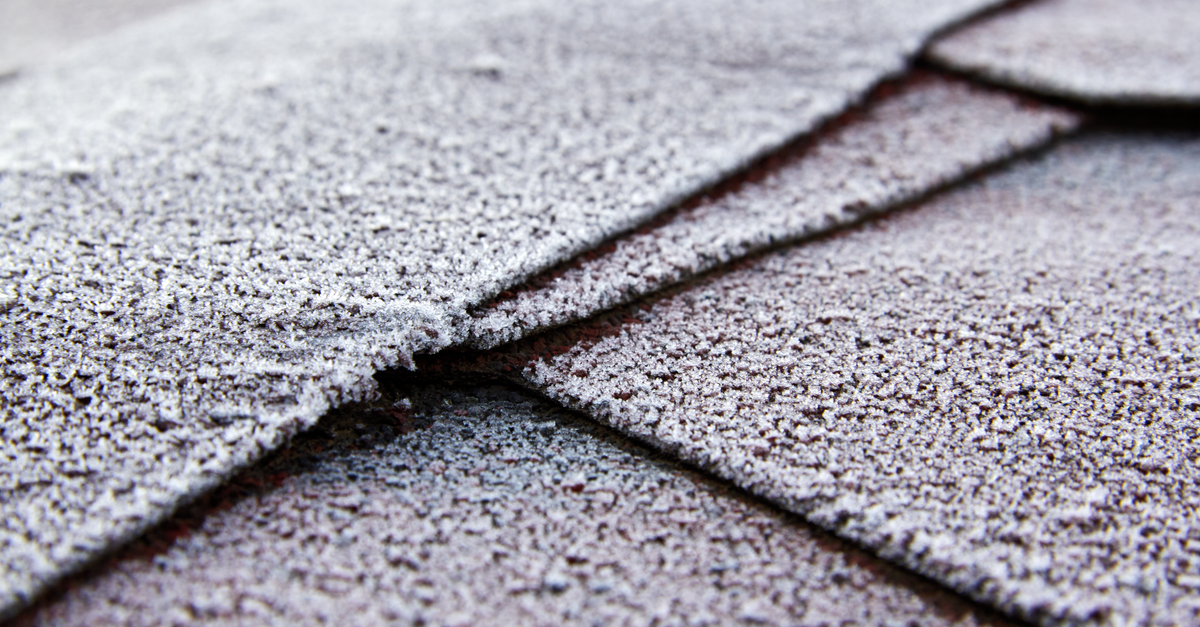
Hypochlorite reacts faster warm. A north-facing slope on a still November morning at 6 degrees C is working at a fraction of the rate it would manage in July, and the honest fix is more dwell time or a second application, never more pressure. Direct summer sun is the opposite failure. A dark shingle in full sun sits well above air temperature, and solution sprayed onto it can be dry inside five minutes. You have then applied bleach, waited twenty minutes, and killed nothing.
Wind is the one nobody takes seriously until they see the car. Fine droplets of hypochlorite drift a long way and they do not announce themselves — the spots on dark paintwork, the pale patch on the neighbour’s fence and the bleached streak on the cedar gate all show up the next day.
The conditions that make a fifteen-minute dwell achievable are cool, overcast and still. That is not a nice-to-have. It is the difference between the method working and the method being a performance.
The Metal Underneath: Flashing, Fixings and Gutter Interiors
This is the part of roof bleaching that nobody covers, and it is where the lasting damage actually happens.
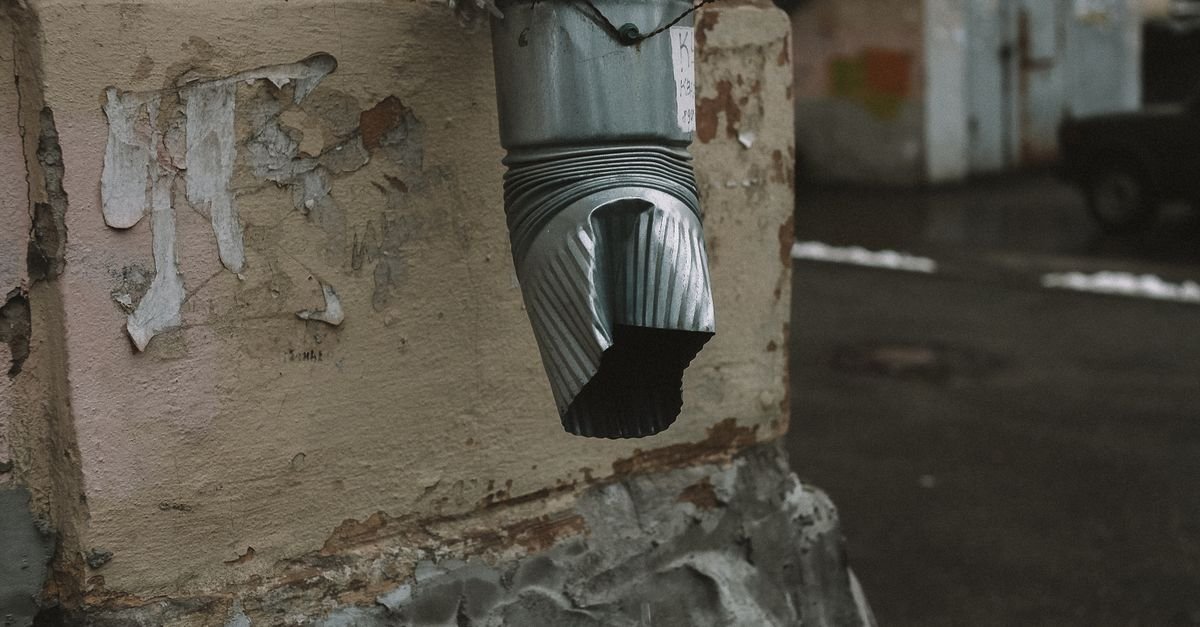
A roof is not only shingles. There is aluminium or galvanised drip edge at the eave, step flashing up the side walls, a collar around every vent pipe, a skylight frame, exposed fastener heads at the ridge cap, gutter hangers, and an aluminium gutter that every drop of your solution is about to sit in. Hypochlorite solution is an oxidiser carrying a large load of chloride ion, and chloride is the classic aggressor against the passive oxide film that keeps aluminium and galvanised steel from corroding. As the authors of a 2018 *Nature Communications* paper put it, “the best-known inducer of localized passive film breakdown is the chloride ion” (Unmasking chloride attack on the passive film of metals).
In plain terms: on the roof surface the solution is applied, dwells and gets rinsed. In the gutter it pools, concentrates as water evaporates, and stays there until the next rain.
| What it is | Why bleach reaches it | What to do about it |
| Aluminium gutter and downspout interior | Every drop of runoff ends up here and sits | Flush with plain water from the high end until it runs clear |
| Galvanised or aluminium drip edge | Directly in the runoff path, all of it | Rinse from above, then check for pale dulling |
| Exposed fastener heads, ridge cap nails | Bare cut edges, already the weak point | Rinse, and inspect for fresh rust streaking after a fortnight |
| Vent pipe collars and skylight frames | Solution pools in the upslope corner | Rinse the upslope side deliberately, it is the spot people miss |
| Copper flashing or chimney counterflashing | Runoff crosses it | Rinse promptly; expect some patina change regardless |
One thing I could not find, and I went looking: a manufacturer or standards-body figure for how many hypochlorite washes it takes to pit an aluminium drip edge. What exists is trade blogs asserting it and quoting each other. The chemistry is real and the rinse is cheap, so rinse — but I am not going to hand you a number I cannot stand behind.
And if the fastener heads are already leaving rust streaks down the shingles, do not solve two problems in one afternoon. Rust removers are acidic, and ATSDR states plainly that sodium hypochlorite “releases chlorine gas when it comes in contact with acids” (ATSDR, Medical Management Guidelines for Chlorine). One product, one day, and rinse the sprayer in between. Chlorine gas on a sloped surface you are standing on is a considerably worse afternoon than a rust streak.
Follow the Run-Off Down
ARMA’s own wording is “be sure to apply it carefully to avoid damage to other parts of the building and the surrounding landscape,” which is polite for: everything you spray is going somewhere, and gravity already knows where.
Trace it before you mix. Solution leaves the shingles, crosses the drip edge, enters the gutter, travels to the downspout, and exits either onto a splash block, into a bed, into a rain barrel, or into a drain. Every one of those endings needs a decision.
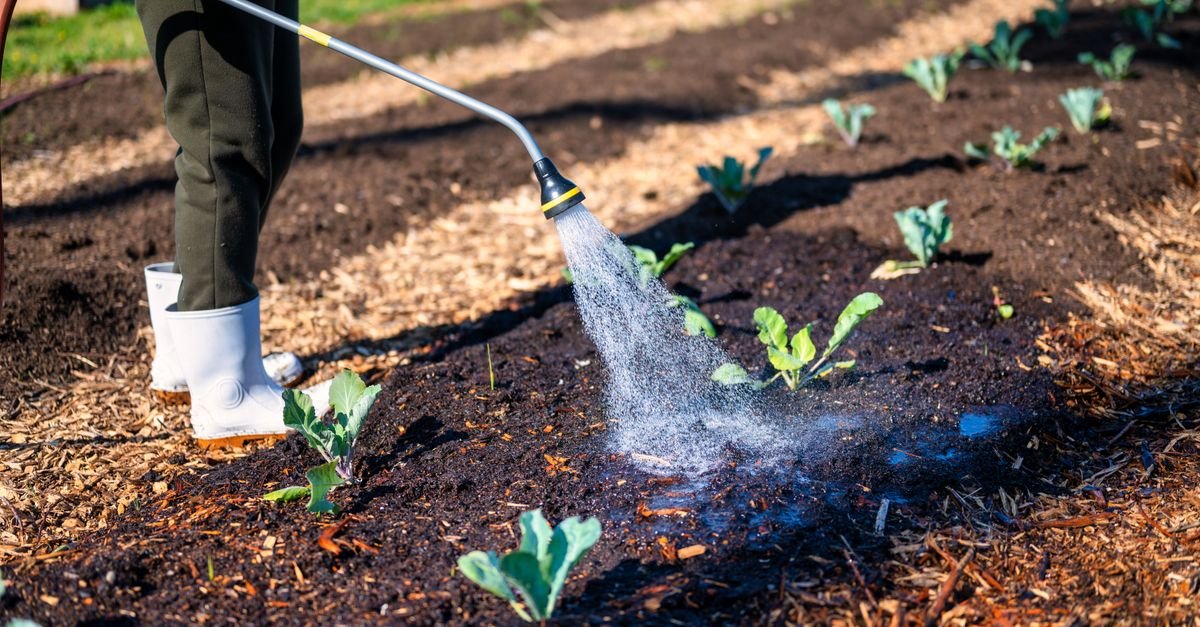
Soak the planting below the roofline with plain water until the soil is saturated, *before* you spray anything. This is the single most effective precaution in the whole job and it is almost always skipped. Wet foliage and wet soil dilute what lands on them; dry foliage takes the hit neat. Then soak them again afterwards. Hypochlorite breaks down fairly quickly in soil and sunlight, but the sodium and chloride left behind do not, and repeated years of concentrated runoff into the same narrow bed is a slow way to sour it.
Three endings that need more than a rinse. A rain barrel used on edibles should be disconnected and the downspout run to waste for the job and the next rainfall. A pond, a stream or a ditch at the property line wants the downspout temporarily extended away from it, because hypochlorite is genuinely hostile to fish. And a downspout discharging straight into a single shrub deserves a length of flexible extension for the afternoon — the cheapest piece of plant protection available.
Cover or move the patio furniture, close the windows on that elevation, cover the condenser, and move the car. All four take about four minutes together, and one bleached cushion takes considerably longer to explain than that.
Rinse, Don’t Rinse, or Rinse What?
There is a genuine split in the trade on whether a shingle roof needs rinsing at all. The no-rinse camp argues that rain finishes the job and that every extra pass is another opportunity to put water somewhere it should not go — under the laps, onto the underlayment, into the decking. ARMA settles it for the roof itself: “rinse the solution from the roof by gently spraying the surface with water.” That is the published method and I would not argue with it.
But the better question is not whether to rinse, it is *what* to rinse, and the answer is that everything below the shingles needs it more than the shingles do. In order of priority: the gutter interiors and downspouts, the flashing and fastener heads, the planting, then the siding, walkways and driveway, where runoff that dries in place leaves visible streaks. The shingles come fifth on that list and they are the only item most people actually rinse.
Rinse from the ridge downward, at hose pressure, with a plain spray nozzle. Never up-slope. Shingles are lapped to shed water downhill, and a stream aimed under the laps lands on the underlayment and decking where it has no quick way out — a leak that surfaces a year later, long after anyone connects the two events. The full low-pressure procedure, including the alternatives to chlorine, is set out in our guide on how to clean roof shingles without pressure washing.
One habit worth borrowing from the trade: add a chlorine-stable surfactant to the mix. It drops the surface tension so the solution clings to the slope instead of racing into the gutter, which buys you the dwell time the whole method depends on, and it gives the mix the detergency hypochlorite completely lacks. Our guide to pressure washing surfactant explains the mechanism and the dose.
FAQ
Will bleach damage my roof shingles?
Applied dilute, at garden-hose pressure, dwelled 15 to 20 minutes and rinsed, it is the method the roofing industry publishes. The damage comes from letting it dry on the surface, repeating strong applications every year, or rinsing with a pressure washer afterwards. ARMA is explicit that a power washer, brush or broom should never touch the roof surface.
What is the correct bleach to water ratio for a roof?
ARMA deliberately does not publish one, because mixing directions vary between shingle manufacturers. Check your own manufacturer’s technical bulletin first. If you go with the widely used 1:1 household bleach and water mix, confirm you are holding 5-6% supermarket bleach and not 12.5% pool chlorine, which lands at roughly double the strength.
Do I have to rinse bleach off a roof?
Yes, gently, from the ridge down at hose pressure. More importantly, rinse the gutters, downspouts, flashing, fastener heads, plants and any siding or paving the runoff crossed. Residue left in a gutter concentrates as it evaporates, which is worse than what sat on the shingles.
Will roof bleach kill my plants?
It can, and dry foliage is far more vulnerable than wet. Soak everything below the roofline with plain water until saturated before you spray, and soak it again afterwards. Divert downspouts away from ponds, rain barrels used on edibles, and any single shrub taking the full discharge.
Does bleach damage gutters and flashing?
Hypochlorite solution carries chloride ion, which is the best-documented attacker of the passive oxide film protecting aluminium and galvanised steel. On the roof it is rinsed away; in a gutter it pools and concentrates. Flush gutters and downspouts with plain water from the high end until the water runs clear.
How long does bleach take to work on roof algae?
The colony dies within the 15 to 20 minute dwell and the dark pigment starts lightening inside an hour. Full clearing takes several weeks of ordinary weather as rain and wind lift the dead growth off the granule bed. Judging the result on the same day is how people talk themselves into an unnecessary second application.
Can I use pool chlorine instead of household bleach?
It is chemically the same thing, usually 10 to 12.5% rather than 5 to 6%. Use it only if you adjust the ratio for the strength, not at the same ratio, or you will apply roughly twice the intended concentration and increase the risk of streaking, plant damage and metal corrosion.
Can I add a rust remover to the same mix?
No. Rust removers are acidic and sodium hypochlorite releases chlorine gas on contact with acid. Treat rust streaks on a completely separate day, with the sprayer rinsed out in between, and never store the two where a leaking cap can introduce them to each other.
Weak Enough to Trust, Wet Enough to Work
If you remember one thing from all of this, make it the trade-off between strength and time. The kill is concentration multiplied by contact, and contact is the free half. A dilute mix that stays wet for a full fifteen minutes on a cool, overcast, windless morning will out-clean a hot mix that flashed dry in seven, and it will not bleach the hedge or pit the drip edge on its way past.
So: find your shingle manufacturer’s ratio rather than the internet’s, check what percentage is actually in the jug, soak the garden before you start, keep the roof wet for fifteen minutes and off it by twenty, and then rinse everything the runoff touched — gutters first, shingles last. Then leave it alone for a month and let the weather finish the job.
The roof will be visibly better by teatime and genuinely clean by the time you have forgotten you did it. That delay is the whole method working, not the method failing.