Last Updated on September 23, 2026 by Umar Farooq
A pressure washing surfactant is a wetting agent that lowers the surface tension of your mix so it spreads, wets, clings and rinses clean instead of sheeting straight off the wall into the flowerbed — and on a vertical surface it is the only reason sodium hypochlorite gets enough contact time to kill anything.
Four jobs, then. It wets, so the liquid touches the surface instead of sitting on top of it. It clings, so gravity takes longer to win. It emulsifies, so oily road film breaks up rather than smearing. And it suspends what it lifted, so the rinse carries the mess away instead of moving it around.
That is a lot of work for the cheapest jug on the shelf, which is also the one most people leave in the shop. There is a specific kind of disappointment in mixing a strong batch of bleach, spraying a north wall, watching it arrive, and watching it leave. It looked like it was working for about eleven seconds.
What a Surfactant Does to Water
Water molecules are unusually keen on each other. At the boundary with air they have nothing to hold on the outside, so they grip inward and sideways, and the result is that faint elastic skin you can float a paperclip on. That skin is surface tension, and for cleaning purposes it is the enemy: it makes a droplet hold its shape, bridge over a pore instead of sinking into it, and roll off a chalky panel without ever really touching it.
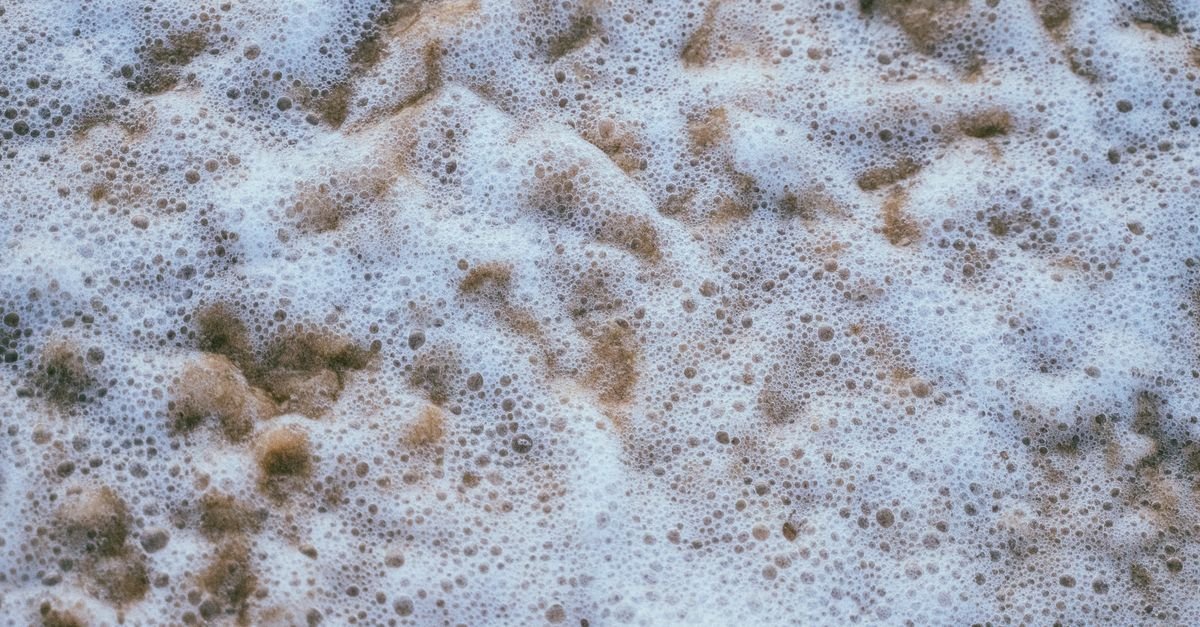
A surfactant molecule is built in two halves that want different things — a head that likes water, a tail that does not. Dropped into a bucket, those molecules migrate to the air-water boundary and wedge themselves into it, tails sticking out, breaking up the hand-holding. The skin goes slack.
The numbers are worth having. Pure water sits around 72 mN/m. Researchers varying surfactant concentration to study wetting drove solutions down to roughly 35 mN/m, about half (Counteracting Interfacial Energetics for Wetting of Hydrophobic Surfaces, 2018). I went to that paper expecting a tidy “surfactants improve wetting” result and got something more interesting: on a genuinely water-repellent surface, the contact angle tracks the surface tension and nothing else. There is no bonus effect hiding in the chemistry. The surfactant does one physical thing, and everything you want follows from it.
Why Sodium Hypochlorite Runs Straight Off Siding
By the time it reaches your wall, a soft wash mix is mostly water. It has water’s surface tension, water’s viscosity and water’s complete lack of interest in staying put. Sodium hypochlorite does not thicken a solution and does not wet better than water. It is an oxidiser dissolved in water, and hydraulically it behaves exactly like what comes out of the garden hose.
Now consider what it is landing on. Vinyl siding is designed to shed water — that is its entire job. The panels overlap, the face is textured, and after a few summers the surface carries a chalky oxidised film that water beads on rather than wets. Spray a thin, high-surface-tension liquid at it and the droplets bead, the beads merge, the merged film finds the bottom of the panel, and within seconds your chemical is doing its most thorough work on the hydrangea.
The tell is easy to spot once you know it. If the bottom two courses of a wall come out noticeably cleaner than the top, the mix was never staying where you aimed it — it was cleaning on the way down. Getting the chemistry family right comes first, and our guide to power washing chemicals covers which family handles which stain. This article is about the part that makes the chosen chemical stay long enough to matter.
Cling and Dwell: Buying Minutes on a Vertical Wall
Detergent dwell time is five to ten minutes on almost every surface, and the rule that travels with it is that it must never dry. Hypochlorite kills by oxidation, and oxidation is a contact-time reaction — the chemical has to stay in liquid contact with the organism while the reaction runs. A wall that was wet for eight seconds has not had a dwell time. It has had a rinse.
Here is the opinion, and it is the one thing on this page I would argue about at length: if your mix is not working, add surfactant before you add bleach. Doubling the hypochlorite doubles what you spend per wall, doubles the risk to paint, plants and metal trim, and does nothing at all about the fact that the liquid is leaving in eight seconds. Two ounces of the right surfactant turns those eight seconds into minutes. The reaction is not short of oxidiser. It is short of time.
Two habits that come with the cling and cost nothing:
- Work bottom to top. Chemical running down a dry wall leaves clean streaks that set. Chemical running down an already-wet wall does not.
- Re-mist rather than wait it out. On a hot wall in direct sun you have three or four minutes before the film goes chalky, not ten. A light second pass resets the clock.
Foaming vs Non-Foaming Pressure Washing Surfactant
Foam is not the cleaning. Foam is surfactant plus air, and a thick blanket of it on a wall is evidence that a surfactant is present, not evidence that it is working. The distinction matters because foam gets sold as a result when it is really a delivery format.
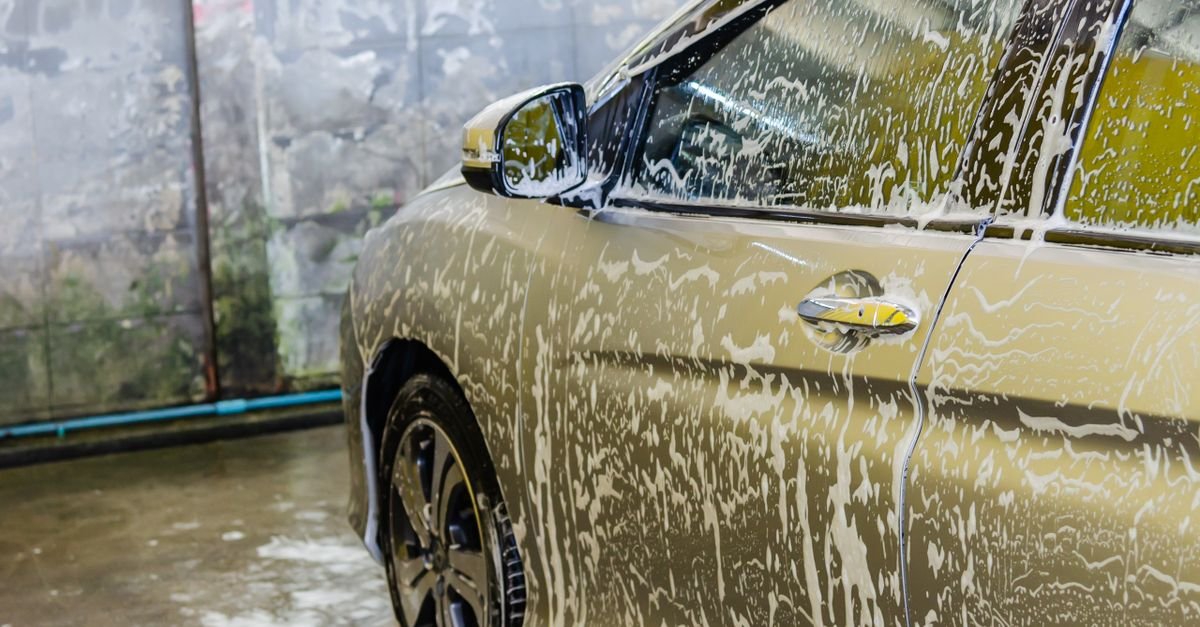
What foam genuinely gives you is two things. You can see exactly where you have been, which on a long wall in flat light is more useful than it sounds. And the liquid held in the bubble walls has to drain out of that structure before it can run down the panel, which buys contact time through pure physical delay.
What it costs you is rinsing. High-foam mixes on glass, screens and window frames leave residue that needs a second pass, and high-foam on a roof turns into suds arriving at the gutter outlet and then the drive. So the split runs roughly like this:
| Surfactant type | Best for | Trade-off |
| High-foam | House washing, fences, vehicles, anywhere visible coverage helps | Longer rinse; residue on glass and screens |
| Low-foam, high-cling (“slick”) | Roofs, tall walls, anything awkward to rinse | No visual feedback on where you sprayed |
| Blended house-wash soaps | General residential work | Middling at both jobs, which is usually fine |
If you are chasing thick foam on a vehicle specifically, the surfactant is only half the story and the applicator is the other half — we compared the hardware in foam cannon vs foam gun. For a house wash, thickness is worth far less than cling, and the two are not the same property.
The Surfactants That Sodium Hypochlorite Eats
This is the part that gets skipped, and it is the expensive one.
Sodium hypochlorite is an oxidiser. It does not check what it is oxidising. Algae, mildew, the dye in your jeans and the surfactant you stirred in five minutes ago are all organic molecules, and some of them survive the encounter considerably better than others.
This has been measured. Rosen and Zhu tracked hypochlorite loss at 40°C against a set of surfactants and found stability fell in a clear order: sodium linear alkanesulfonate held up best, then alkyldiphenylether sulfonate, then alkylbenzene sulfonate — and then a long gap before the nonionic they tested, N-octylpyrrolidinone (Journal of the American Oil Chemists’ Society, 1992). The gap between the last sulfonate and the nonionic is the interesting bit. Two jugs that both say “surfactant” on the front can sit on opposite sides of it.
The practical version:
- Buy one sold explicitly as chlorine-stable or SH-stable. The jug should say so in those words. If it does not, assume it is not.
- Sulfonate chemistry is the safer bet. A label mentioning alkane sulfonate or alkylbenzene sulfonate is describing the class that held up in that testing. A plain “ethoxylate” with nothing else said is a gamble.
- Mix fresh. Even a stable pairing is a slow reaction rather than no reaction. Batching tomorrow’s mix tonight is how a good surfactant becomes an expensive one.
The symptom is recognisable. The mix clings beautifully on the first wall, by the third the cling has gone, the chlorine smell has faded, and you find yourself blaming the weather. Nothing changed outside. The oxidiser and the soap spent an hour in a tank together and one of them lost.
How Much Surfactant Per Gallon of Mix
Most labels land between 1 and 3 ounces per gallon of finished mix, and the reason that range is so consistent across brands is not marketing coordination. It is the critical micelle concentration.
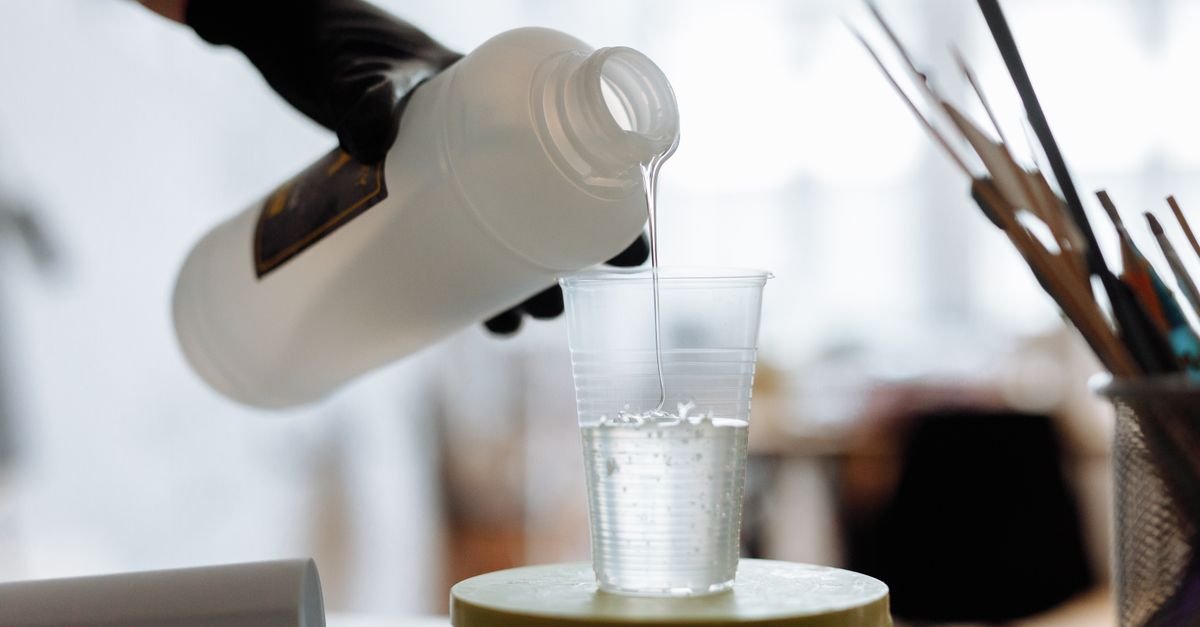
Surfactant molecules only lower surface tension while there is room for them at the air-water boundary. Once that boundary is saturated, every extra molecule has nowhere useful to go, so they clump into little spheres in the body of the liquid called micelles. Surface tension stops falling. Add four times the label dose and you have bought viscosity, foam and a longer rinse, with essentially no extra wetting. The curve flattens, and it flattens earlier than most people expect.
The trap is the injector. A downstream injector draws roughly 10:1 to 20:1, water to chemical. Dose your bucket at 2 ounces per gallon, downstream it, and the wall receives something between 0.1 and 0.2 ounces per gallon — which is not a weak mix, it is effectively no surfactant at all. Either concentrate the bucket to account for the draw, or apply the mix undiluted with a pump-up sprayer or a 12V soft wash pump and skip the injector. If nothing is coming through at all, that is a different fault and we worked through it in pressure washer soap dispenser not working.
One more thing worth two minutes: if you are spraying anywhere near vegetable beds or a pond, the EPA’s Safer Chemical Ingredients List is organised by functional class and has a surfactants category, so you can check what you are about to put on the ground rather than trusting the front of the bottle.
Why Dish Soap Is Not a Surfactant Substitute
Dish soap contains surfactants. So does shampoo, and nobody is washing a house with shampoo. The surfactants in it were selected for a completely different set of conditions, and every one of those choices works against you outdoors.
- It was designed for hot water, immersion and a sponge. In a sink, agitation does most of the work and the surfactant only has to hold grease in suspension for thirty seconds. On a wall there is no sponge and no hot water, and the surfactant is being asked to hold position on a vertical surface for ten minutes. Nothing in the formulation is aimed at that.
- It is thickened with salt for the pour. That satisfying viscosity is a deliberate product decision, and it is exactly what a downstream injector cannot draw.
- Chlorine may take it apart. Dish detergents lean on nonionic surfactants and amine oxides, which is the broad chemistry that fared worst in the hypochlorite testing above. You can get one promising wall out of the pairing and then a flat grey puddle.
- It kills nothing. There is no biocide in dish soap. On a green wall it lifts the loose dirt sitting on top of a living colony and leaves the colony exactly where it was.
Cheap in the bottle, expensive per wall. A jug of purpose-made soft wash surfactant costs less than the second attempt at the same house.
Test the Cling on a Pane of Glass
Nobody publishes the actual surfactant chemistry in their product, so “chlorine stable” on a label is a claim you are taking on trust. You can check it on a window in about five minutes, which is less time than reading the reviews.
The cling test. Mix a quart at your intended dose. Spray a clean pane of glass, or a spare offcut of siding held vertical, and start a timer. Note when the surface stops looking wet. Plain water in shade gives you somewhere around fifteen to thirty seconds. A working mix should still be visibly wet several minutes later. If it is not, raise the dose once and retest — and if that does not move the number, the product is wrong rather than under-dosed.
The stability test. Mix your surfactant into your hypochlorite in a sealed jar, leave it an hour somewhere shaded, then spray the same pane again and time it. If the cling has collapsed, the chlorine has been busy oxidising the surfactant rather than waiting for the algae, and that pairing should never be batched ahead of time.
Both tests tell you whether something has failed, not by how much. It is a kitchen-table check, not a titration, and I am not going to pretend otherwise. It is still the only direct evidence most of us will ever get about what is in the jug.
FAQ
What is a surfactant in pressure washing?
It is a wetting agent added to a cleaning mix to lower its surface tension. That single change lets the liquid spread instead of beading, sink into pores instead of bridging over them, cling to vertical surfaces for minutes rather than seconds, and hold lifted dirt in suspension so the rinse carries it away.
Is a surfactant the same as a detergent?
Not quite. A surfactant is one ingredient class; a detergent is a finished product containing surfactants plus builders, solvents, fragrance and sometimes a biocide. In soft washing, “surfactant” normally means a dedicated additive you put into a sodium hypochlorite mix to make it cling — it is not expected to do much cleaning on its own.
How much surfactant per gallon of bleach mix?
Most products are labelled at 1 to 3 ounces per gallon of finished mix. Going much above that buys foam and viscosity rather than wetting, because surface tension stops falling once the air-water boundary is saturated. If you are applying through a downstream injector, remember it dilutes your bucket another 10 to 20 times on the way to the wall.
Can I use a pressure washing surfactant without bleach?
Yes, and for loose dirt, road film and light grease it is the right call. What it will not do is kill anything. Algae, mould, mildew and lichen are living colonies rooted into the surface, and a surfactant has no biocidal action — it removes what sits on top and leaves what is growing underneath to come back.
Why does my soft wash mix stop clinging after an hour?
Almost always because the surfactant is not chlorine-stable and the hypochlorite has oxidised it. Stability varies enormously between surfactant classes, with sulfonates holding up far better than the nonionic tested in the published work. Mix fresh batches rather than premixing, and if a product fails inside an hour, replace the product rather than the routine.
Will a surfactant harm my plants?
The surfactant is a minor concern next to the hypochlorite it is carrying, but it does help the mix stick to foliage rather than run off it. Soak the plants and the soil with clean water first, keep them wet while you work, and rinse thoroughly afterwards. Wet leaves arrive pre-diluted and shed most of what lands on them.
Make It Stick Before You Make It Strong
Everything on this page reduces to one arithmetic problem. Hypochlorite needs minutes of wet contact to kill a colony, and an unthickened mix gives it seconds. You can respond by making the chemical stronger, which costs more, risks more, and still leaves in seconds. Or you can spend two ounces making it stay.
Get a chlorine-stable one, dose it near the label, test it on a window before you test it on the house, and mix it fresh. Then go and stand there for eight minutes doing nothing, which remains the least satisfying and most productive part of the entire job.