Last Updated on September 25, 2026 by Umar Farooq
Cleaning garage floor concrete safely comes down to one question you answer before you plug anything in: where is the water going to go? If the bay has a working floor drain, or a slab that genuinely falls out to the door, a pressure washer is on the table. If it does not, you are cleaning this floor with a brush, a bucket and a squeegee, and the result will be just as good. The machine was never the part that mattered.
A garage floor is the only slab in the house treated as a workbench, a car park and a chemical store at the same time, and then expected to look like a driveway. It collects things a driveway never sees: brake fluid, coolant, gearbox oil, road salt melting off a wheel arch in February, and a set of four dark ovals where the car has stood all summer quietly leaking wax into the concrete. Most of that does not respond to more pressure. Some of it does not respond to pressure at all.
Before any of this, work out what you are actually standing on — bare, sealed, painted or epoxy-coated. That diagnostic, and the water-drop test that settles it in sixty seconds, is in our guide to cleaning concrete floors. Everything below assumes you have done it, because the same degreaser that is fine on a bare slab will haze a coating.
Where Is All That Water Going to Go?
Garage floors come in three drainage types, and you can identify yours in about two minutes with a jug of water.
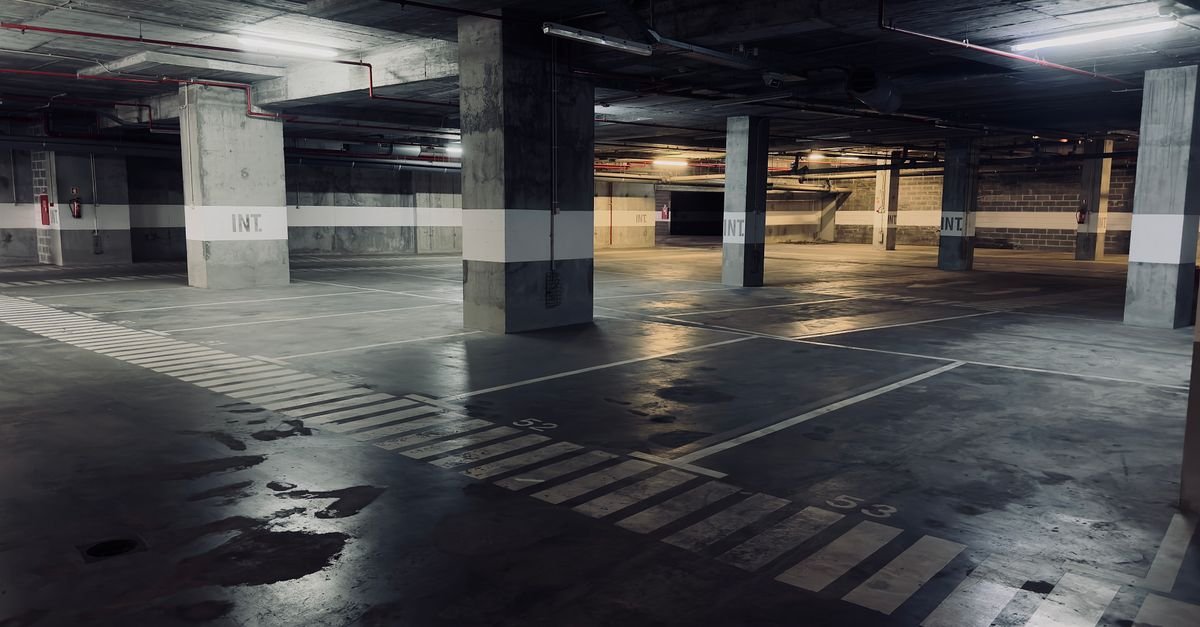
Pour roughly a litre onto the middle of the bay and watch. If it moves off with purpose and heads for a drain or the door within thirty seconds, you have fall and you have somewhere to put the runoff. If it spreads into a slow lens and sits there, the slab is flat — common in older attached garages, and it means every gallon you introduce is a gallon you have to lift back out with a vacuum. And if it runs inwards, towards the house wall, stop and put the jug down. That is a slab that will send your wash water under the internal door.
Then find out where the drain actually goes, because this is the bit nobody checks. Garage drains fall into three camps: a trapped gully into the sanitary sewer, a pipe to a sump and out to daylight, or a hole into gravel under the slab. Only the first is designed to receive detergent and traces of engine oil, and plenty of municipalities restrict even that. The other two put whatever you wash off the floor into your garden or your groundwater. If the drain is a mystery, absorb and bag the oily part before you wash anything, and send only the soapy rinse down it.
The volume is smaller than people fear and larger than they plan for. A typical electric machine runs 1.2 to 1.6 GPM, so twenty minutes of actual trigger time is somewhere near thirty gallons. That is three full bathtubs arriving in a room with one exit and no gutter. On a sloped bay with a drain it leaves on its own. On a flat bay it becomes your evening.
A Gas Engine Does Not Run in a Garage
This is the most important sentence on the page, so it gets a section to itself. Never run a gas-engined pressure washer inside a garage. Not with the door up. Not for five minutes. Not parked in the doorway with the exhaust pointed out.
Carbon monoxide has no smell and no colour, and the first symptom is usually the one that stops you leaving. Open doors are not ventilation; they are the feeling of ventilation. If your machine has a fuel cap, it works outside and the hose comes in to you. Fifty feet of hose costs less than a night in hospital and removes the argument entirely.
There is one recall that makes this concrete in a way I did not expect. In May 2026, Generac expanded a recall covering about 16,260 electric-start pressure washers in the US — models G0089111, G0088941, G0088951 and DR Power DPW3109DEN, sold at Menards, Home Depot and Amazon from November 2021 through February 2026 for $500 to $590. The fault is that the start/stop button can malfunction and start the engine by itself. Six reports, no injuries, free repair, and in the meantime the machine can be run with the battery removed using the pull cord. Read the hazard again, though: the reason it is a recall at all is a gas engine sitting in a closed garage that does not need anybody to start it. If you own one of those four models, go and check the notice before you finish this article.
While we are on the subject of a room where the air does not move — do not mix chemistry in here either. ATSDR states plainly that sodium hypochlorite releases chlorine gas when it comes into contact with acids, and a garage is exactly where a jug of bleach and a tub of rust remover end up on the same shelf. Outdoors that mistake makes you cough. In a closed bay it does considerably more.
Tyre Marks Are Rubber Bleeding, Not Dirt
Tyre marks are the stain people scrub hardest and understand least. They are not skid rubber, and they are not road grime. They are the tyre’s own chemistry leaving the tyre.
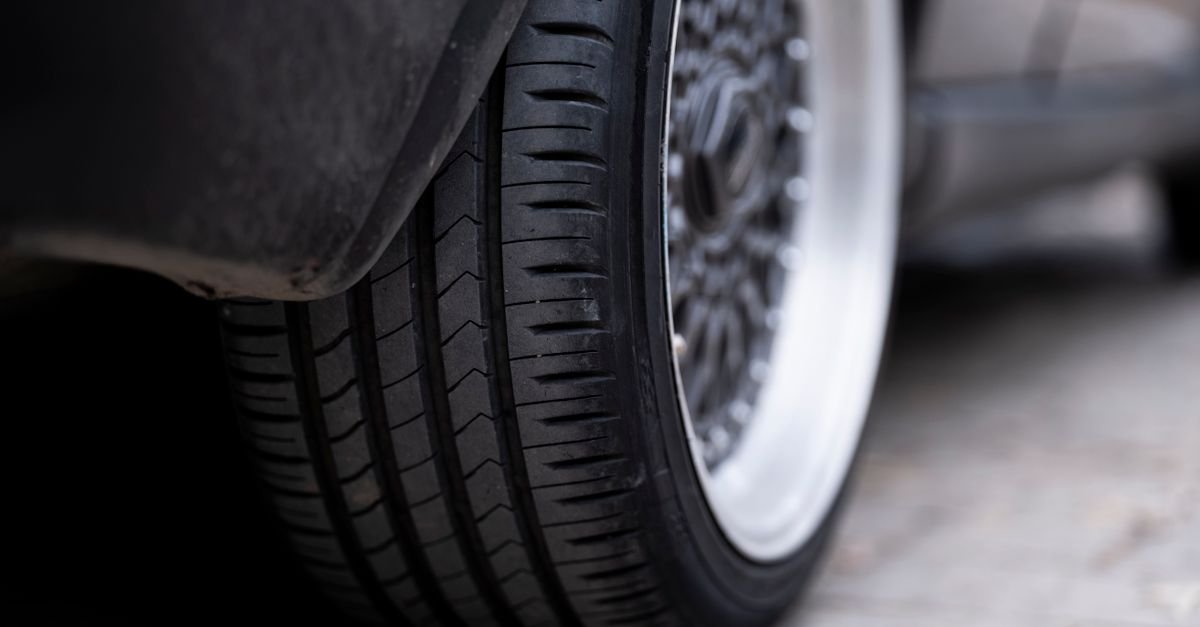
I went looking for why they keep coming back and ended up reading a tyre patent, which is not where I expected the evening to go. Rubber compounds carry waxes and antiozonants that are designed to travel to the surface, because that migrating film is what protects the rubber from ozone cracking. The patent says the quiet part out loud: the most effective antiozone compounds “are also characterized by a very high tendency to migrate through their polymeric substrate and end up staining and coloring the adjacent surfaces.” On a tyre sidewall that shows up as brown bloom. On the slab under a warm tyre, the adjacent surface is your concrete.
Two things follow. On bare concrete, the mark is a wax and oil blend pressed into open pores by the weight of a car, so a general alkaline degreaser lifts the top of it and leaves a ghost. What works better is a citrus or solvent-type degreaser that dissolves wax, a long dwell, and a stiff nylon brush — plus a second pass, because there will be a second pass. On a coated floor the same migration causes hot tyre pickup, where the plasticiser softens a thin coating and the tyre peels it up like tape on the next drive out.
The honest part: I could not find a published removal protocol from any tyre manufacturer or any concrete association. There is not one. What there is, is mechanism — and the mechanism points somewhere cheap. Put something between the rubber and the slab. A pair of parking mats, or in the meantime two strips of scrap plywood under the front tyres, stop the transfer entirely for the price of not buying a fifth bottle of degreaser. Less satisfying than a chemical. Works better.
Why Road Salt Deserves a Plain Water Rinse
Everything thrown at the road in winter comes home packed into the wheel arches and drops onto your slab. The water evaporates. The chloride does not.
Salt left on a garage floor is not mainly a cosmetic problem, and the mechanism is worth having. Chloride is hygroscopic — it pulls moisture out of the air and holds it in the surface pores, keeping the top few millimetres of concrete wetter for longer than they would otherwise be. The Pennsylvania Aggregates and Concrete Association puts the result plainly: deicers “tend to amplify freeze-thaw deterioration which can lead to surface defects and possible structural failure”, and the same page adds that under no circumstances should a deicer be used on concrete that has not fully cured. Scaling — the shallow flaking that takes the smooth top off a slab in patches — is what this looks like a few winters later.
An attached garage adds a twist that driveway advice misses. Your driveway freezes, so the salt on it sits inert half the time. Your garage sits a few degrees above freezing, so the salt stays dissolved and keeps working its way in all winter. The bay you park in is getting the longer exposure, not the driveway you scraped.
So the routine is dull and it is plain water. Once a month through the salt season, on a day above freezing and early enough that the floor dries before dark, flush the parking strip with warm water and a neutral soap and squeegee it out. No acid — acid dissolves the cement paste holding the surface together, which is precisely the damage you were trying to prevent. And do not seal a slab that still has salt in it, because you will be sealing the chloride in with it.
Drips Versus a Spill Is the Whole Diagnosis
Oil on a garage floor is two entirely different problems wearing the same colour, and treating them the same way is how people end up with a bigger, paler stain than they started with.
A fresh spill is still sitting on top, and the clock matters more than the chemistry. Cover it with clay cat litter or oil-dry, tread it in, leave it a few hours. Do not put water on it first. Water spreads a fresh spill into a wide thin one and pushes its edges into pores that were clean a minute ago. Sweep the absorbent up, bag it, then clean what is left.
A chronic drip is a different animal. Six months of a rear main seal weeping onto the same square foot means the oil is not on the concrete, it is in it, and no amount of surface work reaches it. That is a drawing-out job — a poultice, or an enzyme product that works over days rather than minutes — and the full method, including exactly what a pressure washer can and cannot do about it, is in our piece on whether pressure washing removes oil stains from concrete. Short version: pressure rinses, it does not extract.
Identify the fluid before you choose anything, because a garage slab sees at least five and they do not behave alike.
| Fluid | Colour and clue | Treat it as |
| Engine oil | Amber to near-black, slick, little smell | Petroleum. Absorb, then degreaser or poultice |
| Transmission fluid | Red or pink, thin, faintly burnt-sweet | Petroleum, but it travels further and faster |
| Coolant | Green, orange or pink, sweet, sticky when dry | Water-soluble. Warm water and detergent, and clean it fast — it is toxic to pets |
| Brake fluid | Clear to pale amber, slippery, strips paint | Solvent. Never let it near a coated floor or a painted line |
| Fuel | Evaporating ring, unmistakable smell | Do not wash it. Ventilate, absorb, dispose |
That last row is not a formality. Fuel vapour is heavier than air, it pools at floor level, and the motor on an electric pressure washer is an electrical device you are about to switch on at exactly that height. Open the door, absorb it, let the bay air out, and clean the residue tomorrow.
Choosing a Degreaser for a Slab That Sees Brake Fluid
The degreaser choice matters far more than the machine, and there are only three decisions in it.
Match the chemistry to the mess. Alkaline degreasers handle general grime, fresh grease and the ordinary black film of a working bay. Citrus and solvent degreasers are the ones that touch waxy, rubbery and tarry deposits, which is why they beat alkalines on tyre marks. Enzyme and microbial products are slow — days, not minutes — and are the only family that digests soaked-in oil rather than relocating it.
Pre-wet the slab. This is the step nearly everyone skips, and it changes the outcome. Bare concrete is thirsty, and a degreaser applied to a dry slab is partly drunk by the floor within seconds, where it cannot work on anything and is a nuisance to rinse out later. Dampen the area with plain water first and the product stays on the surface, in contact with the stain, which is the only place it does any good.
Respect the dwell time, and shrink your sections until you can. Five to ten minutes of wet contact, and never let it dry on the slab. On a warm afternoon in a closed garage it will be dry in three, so do a quarter of the bay at a time and mist it if it starts going matte. A degreaser that dried is not a degreaser that worked; it is a residue you now have to remove as well.
One thing to avoid outright on a garage slab: acid as a general cleaner. It has a real job — etching bare concrete before a coating goes down — and cleaning is not it. Acid dissolves the cement paste, opens the pore structure, and hands the next oil drip a deeper hole to live in.
Cleaning Garage Floor Concrete When the Washer Stays Outside
Here is the part I expect to be argued with about. Do not buy a pressure washer for your garage floor. If you already own one and the bay drains, by all means use it. But as a reason to buy, a garage slab is a poor one, because the limiting factor in here is never how hard the water hits — it is that every drop you loosen has to be caught again, and a machine makes that part worse, not better. Spend the money on a proper degreaser and a 24-inch floor squeegee and you will have change.
Seven steps, and they work whether the machine comes into it or not:
1. Empty the bay and sweep it dry, then vacuum the perimeter and the door track where grit collects. Anything you wet before you sweep it becomes mud with ambitions.
2. Absorb every wet fluid first. Litter on the spills, a few hours, sweep it up and bag it. Washing is for what is left behind.
3. Pre-wet the slab with plain water so the degreaser stays where you put it.
4. Apply degreaser to a section you can finish in ten minutes — a quarter of a single bay is about right.
5. Let it dwell five to ten minutes, keeping it visibly wet the whole time.
6. Agitate with a stiff nylon deck brush on a pole. Nylon, not wire. Steel bristles break off into the pores, and each fragment is a new rust stain waiting for the next wet week.
7. Lift the dirty water out rather than chasing it around. Squeegee to the drain if there is one, wet vac if there is not, then rinse and repeat on the quarter that needs it.
If the bay does drain and you are going to use the machine, keep it electric, keep it on the floor, and treat this as flatwork: concrete generally takes 2,500 to 3,000 PSI with a 15 or 25-degree tip, and the settings logic is in our guide to how much PSI to clean a concrete driveway. A surface cleaner attachment is what keeps the overspray off the walls, but most need around 3 GPM to spin properly, which is more than a homeowner electric machine has. And whatever tip is fitted, keep it away from the bottom of the drywall and out of the garage door track — the first wicks water upward, and the second holds it against steel.
Drying a Room That Has No Wind in It
Outdoors, a wet slab is a non-issue: sun, breeze, gone by lunchtime. A garage has one opening, no cross-flow and a concrete floor that has just absorbed a few gallons, and it will stay damp for a day or more if you let it.
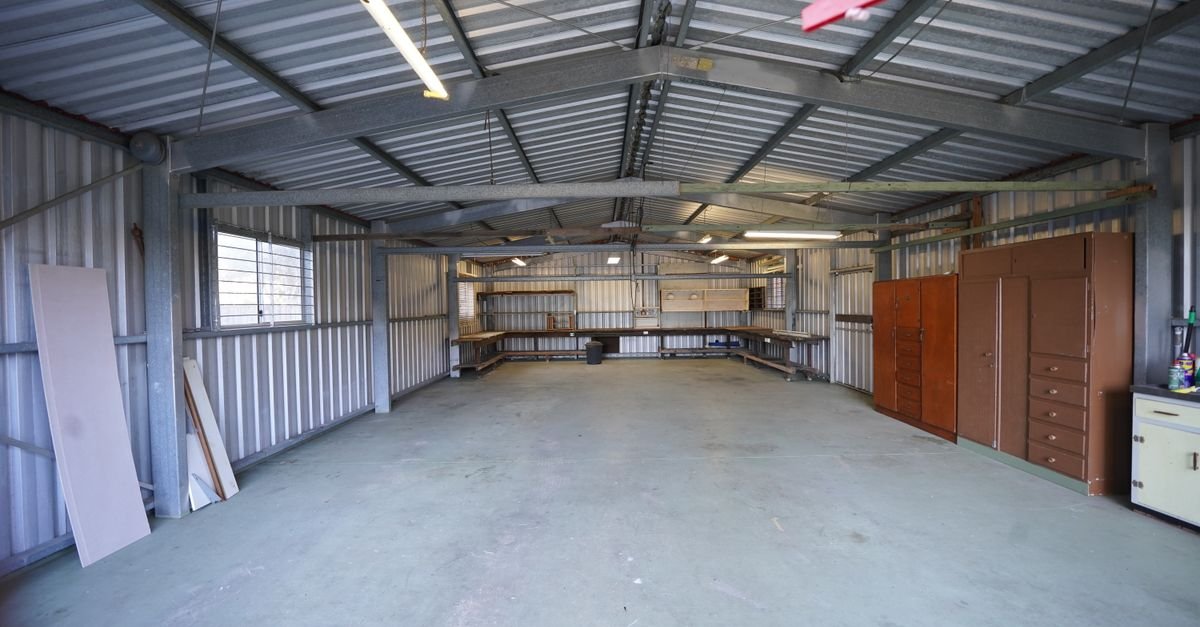
Squeegee first, and squeegee properly. Mechanical removal takes out the overwhelming majority of the water in about ten minutes, and everything after that is evaporation working against a room with no air exchange. Then set a fan so the air leaves — a box fan in the doorway angled outward, pulling damp air out, rather than one in a corner stirring it around. If you have a second fan, put it at the far end pointing at the first. Air that only circulates moves the moisture from the floor to the walls and your stored boxes, which is not progress.
Two thresholds before the car comes back in. The slab should be dry to the touch right across the bay, including under where the tool chest sits, because a damp floor under a steel cabinet foot or a cast iron vice base leaves a rust ring that will outlast the cabinet. And cardboard stays off the floor until it is genuinely dry, since a box on a damp slab wicks overnight and delaminates by the weekend.
The timing rule matters most in winter: do not wash a garage floor if the slab will drop below freezing before it dries. You have just filled the pores with water, which is the one condition under which the freeze-thaw damage described earlier actually happens. Pick a mild week. The floor will still be there.
FAQ
What is the best thing to clean a concrete garage floor with?
A degreaser matched to the mess, a stiff nylon brush and a squeegee. Alkaline degreasers cover general grime and fresh grease, citrus or solvent products handle tyre marks and tar, and enzyme products are the slow option for oil that has soaked in. Pre-wet the slab, keep the product wet for five to ten minutes, and lift the dirty water out rather than spreading it.
Do I need a floor drain to pressure wash a garage?
You need a drain or a slab that falls to the door — one of the two. Pour a litre of water in the middle of the bay and watch where it goes. If it sits in a flat lens, you have nowhere to put thirty-odd gallons and you should be brushing and vacuuming instead. If it runs towards the house wall, definitely not.
How do you get tyre marks off a concrete garage floor?
Use a citrus or solvent degreaser rather than a general alkaline one, because the mark is migrated wax and rubber chemistry rather than dirt. Give it ten minutes wet, agitate with a nylon brush, and expect to repeat. Then stop it coming back by putting parking mats or even scrap plywood between the tyres and the slab, since the transfer happens every time the car stands there warm.
Can I run a gas pressure washer in the garage with the door open?
No. Carbon monoxide is odourless and colourless, an open door is not ventilation, and people have died in far more open spaces than a garage. If the machine has a fuel cap it stays outside and the hose comes in to you. There is even a live recall on electric-start machines that can start themselves in a closed garage, which tells you how seriously the hazard is taken.
Will bleach clean a concrete garage floor?
It will kill mould and lighten organic staining, and it does nothing at all to oil, grease or tyre marks, because there is nothing there for it to oxidise the way it oxidises a living stain. It is also the wrong thing on sealed or coated floors. And never put it on the same slab as an acid cleaner — that combination makes chlorine gas, and a garage is the worst room to make it in.
Why does my garage floor look worse after I washed it?
Usually one of three things. Water spread a surface stain into a bigger pale one. A degreaser was allowed to dry and left a residue. Or you dissolved and redistributed salt and old oil that was sitting quietly in the pores, which then wicks back to the surface as the slab dries. The third is why absorbing before washing matters so much.
Should I seal the floor after cleaning it?
Only once the slab is genuinely dry and genuinely clean, which after a deep clean means days rather than hours. Sealing over trapped moisture blisters the coating, and sealing over chloride locks the salt in. If you have been through a salt season, flush with plain water first and give it a proper dry spell.
The Drain Decides, Not the Machine
Everything above hangs on the two minutes at the start with a jug of water. Fall and a drain, and you have options. Flat slab, and you have a brush — and a floor that comes out exactly as clean, just with more shoulder in it.
The one line that is not up for discussion: if it has a fuel cap, it stays outside. Run the hose in, close the door on the engine, and be the person standing in a clean dry garage rather than the one everybody talks about afterwards.