Last Updated on September 25, 2026 by Umar Farooq
Every concrete cleaning acid works by dissolving a thin layer of your slab, and the entire skill is picking one that takes the stain without taking much of the concrete with it. That is the sentence the label never prints. Acid is not a detergent that lifts dirt off a surface — it is a reagent that eats the surface until the dirt has nowhere left to sit.
Which is fine, as long as you know that is the deal you are making. Mortar smear, efflorescence, hard-water scale and rust all come off concrete with acid and almost nothing else. But the shelf at the hardware store is sorted by strength, and strength is exactly the wrong axis to shop on.
So this is the selection and safe-handling guide: which of the four acids fits which job, why you wet the slab before the acid touches it, how to neutralise afterwards, what to wear, and where the rinse water is allowed to go. The rust-specific version of this argument lives in cleaning rust stains off concrete — this article is the one that stops you buying the wrong bottle in the first place.
What Acid Actually Does Down in the Cement Paste
Concrete is not inert. It is aggregate glued together with hydrated portland cement paste, and that paste is loaded with calcium — calcium silicate hydrate, calcium hydroxide, and calcium carbonate where the surface has carbonated with age. Acid reacts with all of it, converting calcium compounds into soluble salts that leave in the rinse water.
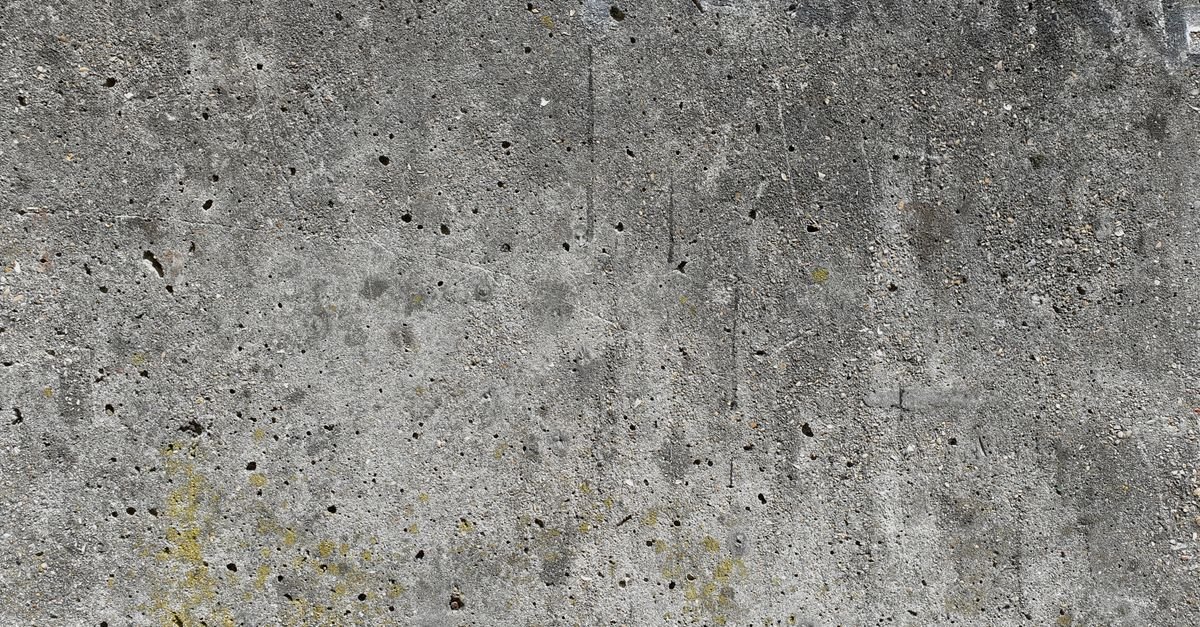
That is the whole mechanism, and it has one consequence worth sitting with: acid cannot tell the difference between the stain and the binder. It attacks a lime deposit and the cement paste underneath it with the same enthusiasm, because chemically they are close relatives. Every acid job on concrete is therefore a controlled amount of damage. The work is keeping that damage thin, even, and smaller than the problem you started with.
This also tells you what acid is genuinely for. It works on deposits that are mineral or metallic:
- Efflorescence and lime bloom
- Mortar smear and grout haze on new work
- Hard-water scale from a sprinkler or a leaking downpipe
- Rust and fertiliser staining, via the right acid
- Deliberate etching to open the surface before a coating
And it does nothing useful on the two stains people most often point it at. Algae, moss and mildew are organic and want an oxidiser. Motor oil and grease are petroleum and want an alkaline degreaser. Acid on either one gives you a faintly etched, still-stained slab and a wasted afternoon.
Muriatic, Phosphoric, Sulfamic or Oxalic: Which One Is Yours?
Four acids cover essentially every concrete job a homeowner will meet. They are not interchangeable, and the differences between them are bigger than the price tags suggest.
| Acid | Sold as | Best at | What it costs you |
| Muriatic (hydrochloric) | Liquid, roughly 14.5–31.45% | Heavy mortar smear, thick efflorescence, etching before a coating | Fast cement paste loss, aggressive fumes, chloride left in the pores |
| Phosphoric | Liquid, often inside blended cleaners | Light rust, hard-water scale, mineral haze, prep on coloured concrete | Slower and weaker on thick deposits, wants more dwell time |
| Sulfamic | Dry crystals you mix on site | Mortar smear and efflorescence on coloured, stamped or decorative slabs | Costs more, not strong enough for badly neglected flatwork |
| Oxalic | Powder or ready-mixed rust remover | Iron and rust, which it chelates rather than dissolves | Toxic if swallowed, and it does very little for lime or mortar |
Three practical notes on that table.
Sulfamic acid is the one most people have never heard of and most people should be using. It arrives as a dry crystal, which means it travels safely, stores without quietly fuming at the inside of your shed, and lets you mix an exact strength instead of guessing at a glug. It is meaningfully gentler on decorative and coloured concrete than hydrochloric, and gentler on the metal parts of whatever you apply it with. If your slab is stamped, coloured or stained, start here and stay here.
Oxalic acid is a different kind of tool entirely. It does not so much dissolve rust as grab the iron and hold it in solution, which is why it lifts the stain while leaving the cement paste largely intact. That distinction deserves its own article and has one — cleaning rust stains off concrete covers the dwell times, the restaining loop and why the wire brush is a trap.
Buffered proprietary cleaners exist and are usually the smart buy. PROSOCO’s Sure Klean 600, a long-standing masonry trade product, is supplied as a concentrate diluted with “4–12 parts clean water to one part concentrate,” and the manufacturer describes it in its own product data sheet as “safer than muriatic acid for new masonry surfaces” (PROSOCO Sure Klean 600 product data sheet). Buffering and wetting agents are not marketing. They are what stops an acid spending itself on the first square foot it touches and streaking everything downhill of it.
Here is the position I will argue for the rest of this page: the strongest acid on the shelf is almost never the right one, and muriatic acid on a homeowner’s driveway is a surface-preparation chemical being used as a cleaner. It will work. It will also hand you a slab that stains faster than the one you had this morning, for reasons that are about to get their own section.
Dry Concrete Drinks It Straight Down — Pre-Wet First
If you take one working instruction from this page, take this one. Wet the slab thoroughly with clean water before any acid touches it.

The reason is capillary. Dry concrete is a sponge with the pores empty, and it pulls whatever liquid lands on it straight down and inward. Put acid on a dry slab and a good share of it disappears below the surface within seconds, where it goes on reacting with cement paste you never wanted touched, in a place your rinse water cannot properly reach. The deposit you were aiming at, meanwhile, is on the face — which is exactly where the acid was supposed to stay.
Pre-wetting fills those pores with clean water first. The acid then works on the surface, at a dilution that is already partly controlled for you, and the rinse can actually retrieve it afterwards. This is not a homeowner shortcut. It is step one in the trade’s own instructions: PROSOCO’s application sequence opens with “Working from the bottom to the top, thoroughly prewet a large area with fresh water,” and its limitations section says flatly, “Always prewet to reduce potential for detergent residue.”
Three companion rules from the same document, all worth more than they look:
- Do not let the acid dry on the slab. The instruction reads “Do not let cleaner dry into the masonry. This may leave residue or stains.” A dried acid has stopped cleaning and started being a second problem.
- Apply at low pressure, not with the machine. The data sheet specifies a 50 psi maximum for application, because spraying harder “will drive the chemicals deep into the surface, making complete rinse difficult.” A hand pump sprayer is the correct tool. Your pressure washer comes out at the rinse, and only then.
- Mind the temperature. Clean when surface and air are at 40°F (4°C) or above, and never when it is freezing or will freeze overnight.
Work bottom to top on a wall, and in manageable sections on flatwork — a patch you can wet, treat, dwell and rinse before the leading edge dries. On a hot slab in full sun, that patch is a lot smaller than you think.
Muriatic Trades a Stain for a Sponge
Muriatic acid is diluted hydrochloric acid, usually sold somewhere between 14.5% and 31.45%. It is the cheapest and most available option on the shelf, and it is what people reach for when a milder approach has stalled, on the reasonable-sounding theory that stronger means better.
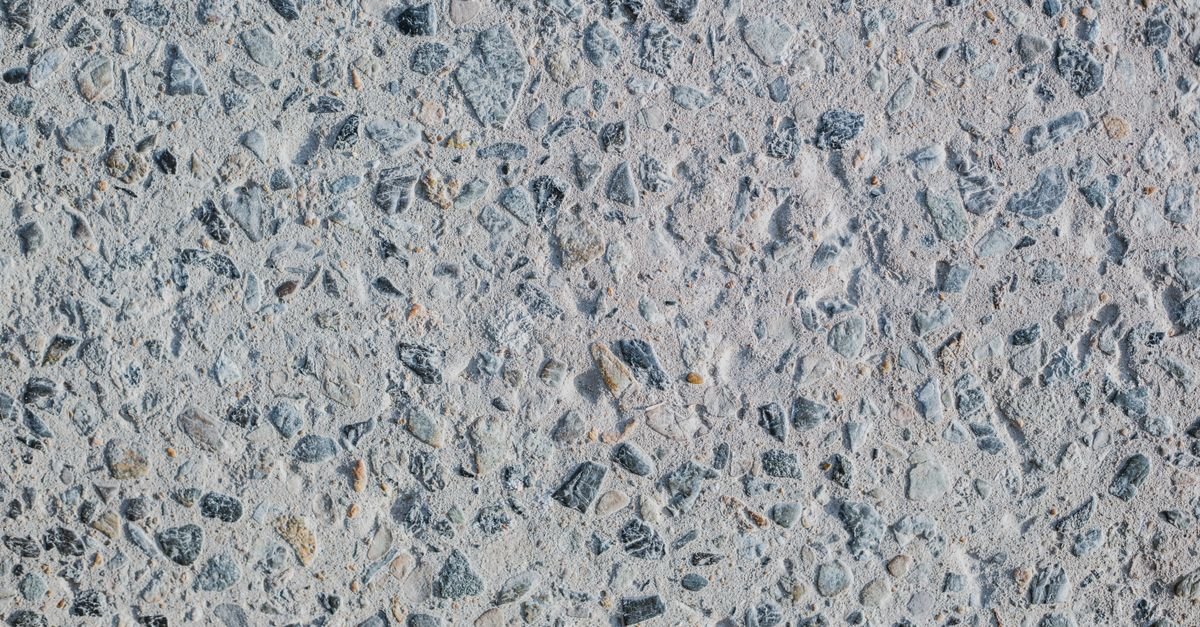
On concrete, stronger means *different*, and the difference is permanent.
Hydrochloric acid removes a stain by dissolving the cement paste that holds the stain. The mark goes because the concrete containing it went. What is left behind is a patch that is paler, rougher and — the part almost nobody mentions — considerably more porous than the slab around it. Capillary pores that were partly closed by cement paste are now open at the surface.
That porosity is the real cost, and it arrives late:
1. The next stain goes in faster and deeper. Oil, iron-bearing sprinkler water and leaf tannin all soak into an etched patch far more readily. You have improved the slab’s ability to absorb precisely the thing you just removed from it.
2. The texture change is forever. Etched cement paste does not grow back. The area catches light differently from every angle, which is often more noticeable than the original stain was.
3. Go slightly too far and the aggregate shows. Sand and stone at the surface reads as a repair, not a clean.
None of that makes muriatic acid a bad chemical. It makes it a chemical with a different job. Acid etching is a legitimate, standard process — it is surface preparation before an epoxy, a sealer or a coating, where an open, profiled surface is exactly what you want the adhesive to key into. Etch a slab and then coat it and you have done the job properly. Etch a slab and then walk away and you have left bare, open concrete out in the weather with nothing on top of it.
So the honest question before you open the jug: am I cleaning this, or am I preparing it for something? If the answer is cleaning, put it down and go and buy the sulfamic.
Acid and Bleach Cannot Share an Afternoon
This is the one non-negotiable item on the page, and it matters more here than on most sites, because a great deal of the surface cleaning advice you will read on this one involves sodium hypochlorite.
ATSDR states it without qualification: sodium hypochlorite “releases chlorine gas when it comes in contact with acids” (ATSDR, Medical Management Guidelines for Chlorine).
The realistic risk is not someone deliberately mixing two bottles in a bucket. It is the ordinary Saturday where you soft wash the house or the slab with an SH mix in the morning, decide the efflorescence along the bottom of the wall needs dealing with, and reach for an acid cleaner after lunch. The hypochlorite is still in the puddles, still in the pores, still in your sprayer and still in the downstream injector. And you will be crouched directly over the reaction at roughly nose height.
What that means in practice:
- Rinse the whole area thoroughly and let it dry before any acid arrives. A different day is better than the same day.
- Never share a bucket, a pump sprayer, a tank or an injector between the two. Label them and keep them apart.
- Outdoors is not a free pass. Chlorine gas outdoors is still chlorine gas, and a slab in a still, walled courtyard is not the open air you are picturing.
Our guide to sodium hypochlorite for pressure washing covers how long the stuff lingers and how to store it without it going off.
The Neutralising Rinse Nearly Everyone Skips
Acid does not have an off switch, and it does not care that you have gone inside for a cup of tea. Whatever is left in the pores keeps working — slowly, unevenly, and in the direction of more etching.
Three things go wrong when residual acid is left in a slab. It carries on consuming cement paste, so the patch keeps roughening for days after you finished. It dries into a white haze or salt bloom that looks a great deal like the efflorescence you were trying to remove, which is a dispiriting way to end a weekend. And it attacks whatever you put on top of it — sealers and coatings laid over acid residue fail early, bubble, or simply refuse to bond.
The fix is mostly water. Rinse hard, rinse long, and rinse with far more volume than feels necessary, working from the bottom of the area upward so the run-off never crosses untreated surface. If you are rinsing with the machine, wide and low is the setting: PROSOCO’s rinse specification for porous masonry is 400–1,000 psi at 6–8 gallons per minute with a 15–45° fan tip, and it warns that “rinsing pressures greater than 1000 psi and fan spray tips smaller than 15° may permanently damage sensitive masonry.” That is a long way below what a 3,000 psi gas machine does with a yellow 15° tip in hand. Our guide to how much PSI to clean a concrete driveway has the full set of concrete numbers.
Where flooding the area with water is not practical — an enclosed patio, a garage floor, anywhere the run-off has nowhere to go — use a chemical neutraliser. The trade procedure is specific and simple: rinse with clean water, then apply a neutralising rinse of 2 ounces of baking soda to 1 gallon of water, saturate the surface, leave it three to five minutes, and follow with a final rinse of clear water. Sodium carbonate — washing soda — does the same job and is slightly stronger.
Then check your work instead of assuming it. A pool or aquarium pH strip pressed against the wet slab costs almost nothing and tells you whether you are back near neutral. Do this before you seal, coat or stain anything. That is the moment a missed acid residue stops being invisible and starts being expensive.
Dressing for a Job That Fumes at You
Acid on concrete is a low-drama process right up until it is not, and the failure modes are splash and vapour rather than anything cinematic.
- Gloves that are rated for acid. Nitrile, neoprene or butyl, with a long cuff. Not latex washing-up gloves, and not fabric-backed garden gloves, which wick acid against your skin and then hold it there.
- Sealed goggles, not safety glasses. Glasses are built for things arriving from in front of you. Acid arrives as fine rebound off a hard flat surface at shin height, travelling upward, which is a direction glasses have never heard of.
- A respirator with an acid-gas cartridge if you are using muriatic. Hydrogen chloride fumes off the solution, it is heavier than air, and it pools at about the height of a person kneeling on a slab. A dust mask does nothing at all here.
- Long sleeves, long trousers, rubber boots. Acid goes through canvas trainers without slowing down.
- Plastic containers only. The PROSOCO sheet is blunt about it: “Handle in high-density polyethylene or polypropylene containers only. No metal. Acidic materials and fumes attack metal.” That includes the metal pickup tube inside a cheap garden sprayer.
- Acid into water, never water into acid. Dilution is exothermic. Get the order wrong and the heat concentrates at the point of contact and spits concentrated acid back out at you. Cold water into the empty bucket first, then the acid, slowly.
- Pre-wet everything downhill. Grass, beds, and the neighbour’s border. Water before, water after. Keep a hose running nearby, because the first thirty seconds after a splash decides how the rest of the day goes.
Work outdoors and upwind, and never in a closed garage or a basement. Vapour does not disperse in a room with one door.
Concrete Cleaning Acid Step by Step, Bucket to Storm Drain
Everything above, in the order it actually happens.
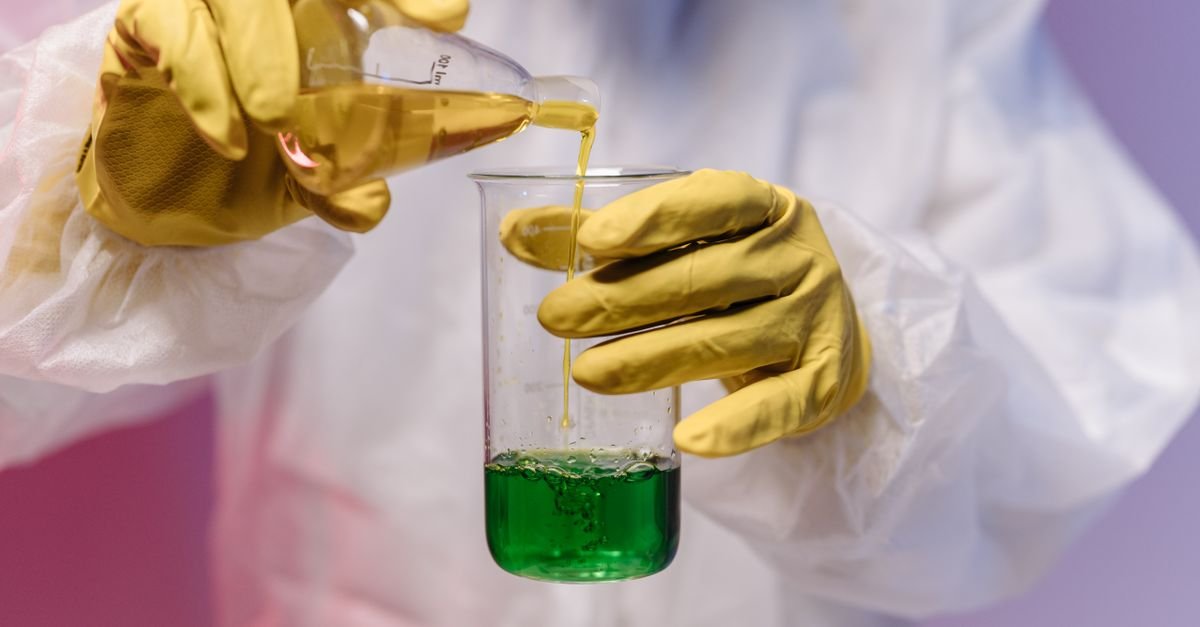
1. Sweep and degrease first. Acid cannot reach a mineral deposit through a film of oil or a season of road grime. Dry sweep, degrease if there is anything greasy, rinse, and let it dry.
2. Test a patch. A four-foot square minimum, treated exactly the way you intend to treat the rest, somewhere out of sight. Trade practice is to let a test area dry three to seven days before judging it; give it at least a full day. Wet concrete lies about colour.
3. Mix cold water first, then add the acid. Plastic bucket. Start at the weakest dilution the label allows. You can always run it again; you cannot un-etch.
4. Protect and pre-wet. Plants, metalwork, glass and any adjacent surface. Then saturate the concrete itself with clean water.
5. Apply at low pressure with a pump sprayer. Bottom to top on walls, in sections you can finish on flatwork.
6. Dwell three to five minutes and keep it wet. Re-mist rather than re-pour. Do not let it dry.
7. Agitate with a stiff nylon brush. Never steel bristles. They leave fragments behind in the surface, and acid-cleaned concrete is more porous than it was, so those fragments sit deeper.
8. Rinse thoroughly, low and wide, bottom to top.
9. Neutralise if you could not flood it, then rinse again. Baking soda solution, three to five minutes, clear-water final rinse. Confirm with a pH strip.
10. Deal with the run-off deliberately. This is a step, not an afterthought.
On that last point: wash water carrying acid, dissolved metals and cement fines is not rainwater, and a storm drain is not a treatment plant. In most places it discharges to a creek. UNC’s environmental health guidance for pressure washing puts it plainly — even “biodegradable and ‘green’ soaps and chemicals must not be discharged to the storm drain” — and its instruction is to “develop a plan to contain and collect the wastewater from the pressure washing,” using “tarps, berms, storm drain covers or mats, pipe plugs, pumps” (UNC Environment, Health and Safety, Pollution Prevention During Pressure Washing).
For a domestic job that realistically means: berm or sandbag the low edge, cover the drain, steer the flow onto a vegetated area where it can soak in and dilute rather than run, and neutralise the collected liquid to somewhere near pH 7 before it goes anywhere. Small neutralised volumes can often go to the sanitary sewer through an indoor drain — but local rules govern that, and a two-minute call to your water utility is cheaper than finding out the other way.
FAQ
What is the best acid to clean concrete?
For most homeowner jobs, sulfamic acid or a buffered proprietary masonry cleaner. Sulfamic comes as a dry crystal so you can mix an exact strength, it fumes far less than muriatic, and it is much gentler on coloured, stamped and decorative concrete. Muriatic is stronger, cheaper and more available, and it is the right answer only for heavy mortar smear or for deliberate etching before a coating.
Will muriatic acid damage my concrete?
Yes, by design. It dissolves the calcium compounds in the cement paste, which is how it removes the stain — by taking away the concrete holding it. The result is a paler, rougher, more porous patch that absorbs the next stain faster than the slab around it. That is an acceptable trade when you are etching before a coating and a poor one when you only wanted the surface clean.
How do you neutralise acid on concrete?
Rinse with plenty of clean water first, then apply a solution of 2 ounces of baking soda per gallon of water, saturate the surface, leave it three to five minutes and follow with a clear-water rinse. Washing soda works the same way. Check the result with a pH strip before you seal or coat anything.
Do you have to wet concrete before applying acid?
Yes, and it is the step that separates an even clean from a blotchy one. Dry concrete wicks acid straight down into the pores, where it attacks cement paste below the stain and cannot be rinsed out properly. Pre-wetting with clean water fills those pores so the acid stays on the surface where the deposit actually is.
Can you mix acid and bleach for cleaning concrete?
No, and this rule has no exceptions. ATSDR states that sodium hypochlorite releases chlorine gas on contact with acids. If you have soft washed with an SH mix, rinse the area thoroughly and let it dry before any acid arrives, and never share a bucket, sprayer or injector between the two chemicals.
What dilution should I use for muriatic acid on concrete?
Follow the label on the bottle you actually bought, because concentrations run from about 14.5% to over 31%. Published guidance for concrete cleaning typically ranges from around 50:1 water to acid for light work down to roughly 20:1 for heavy deposits. Start weaker than you think you need, always add acid to water, and always test a patch first.
Does acid washing concrete remove oil stains or algae?
No. Oil is petroleum and needs an alkaline degreaser to break it down; algae, moss and mildew are organic and need an oxidiser. Acid attacks minerals and metal oxides, so on either of those stains it etches the surface slightly and leaves the stain exactly where it was.
Can I apply acid with my pressure washer?
No. Acid goes on at low pressure — trade guidance caps application at 50 psi, because anything harder drives the chemical deep into the pores and makes a complete rinse impossible. Use a plastic hand pump sprayer to apply it and bring the machine out only for the rinse, with a wide tip and low pressure.
The Weakest Acid That Works, on the Wettest Slab You Can Get
That is the whole method in one line. Choose the mildest acid that will shift your particular deposit, put it on concrete already saturated with clean water, keep it wet for the few minutes it needs, then rinse it off with more water than feels reasonable and neutralise whatever is left behind.
The mistake worth avoiding is not a dramatic one. It is buying the strongest bottle because it stood next to the weak one and cost the same, then discovering next spring that the clean patch has become the dirtiest part of the driveway. Acid is a fine tool for mineral stains and a genuinely poor general cleaner.
And if you have already etched a patch pale and rough, nothing is ruined that anyone but you will notice. Seal the slab, or stain the whole thing, and file it under the afternoon you found out what the label meant by “etching compound.”