Last Updated on September 24, 2026 by Umar Farooq
Composite roof cleaning is a bucket, a mild detergent and a soft-bristle brush — not a machine. On a moulded polymer roof the colour runs all the way through the tile, so there is no granule layer to strip. The thing that actually ends warranties here is chemistry: solvents, strong oxidisers and metal, all of which appear by name in the exclusions.
That is the short version, and it only applies if you have the product this phrase is supposed to describe. Before anything else, we need to sort out a word that the American roofing trade has quietly ruined.
| # | The rule | Why |
| 1 | Confirm the brand before you mix anything | Every maker publishes a different approved list, and most of them say “ask us first” |
| 2 | Dry removal before wet removal | A leaf blower and a soft broom shift most of what is up there |
| 3 | Mild detergent, soft or medium bristles, clean-water rinse | This is the method the makers actually print |
| 4 | No solvents, no acids, no metal | These are written exclusions, not cautions |
| 5 | Work down-slope, never scrub a dry tile | Abrasion removes the weathered skin and leaves a flash mark |
First, Work Out Which “Composite” You Own
There are two roofs hiding behind this search, and they need opposite advice.
Composition — “comp” on a supply house ticket or an insurance estimate — means an ordinary asphalt shingle. Fibreglass mat, asphalt, ceramic granules glued to the top. Roofers have called it that for sixty years and the habit has bled into the word “composite,” which is why half the pages ranking for composite roof cleaning are actually about asphalt.
Composite, in the premium roofing trade, means something else entirely: a moulded polymer tile that imitates slate or cedar shake. DaVinci Roofscapes, Brava Roof Tile, EcoStar Majestic Slate, CeDUR, Euroshield. These are engineered resins with UV and thermal stabilisers and fire retardant compounded in, and they cost roughly three to five times what asphalt does.
If you have asphalt, stop here and read our guide to cleaning roof shingles without pressure washing instead. Everything below is about the polymer product, and the granule rules that govern asphalt do not apply to it.
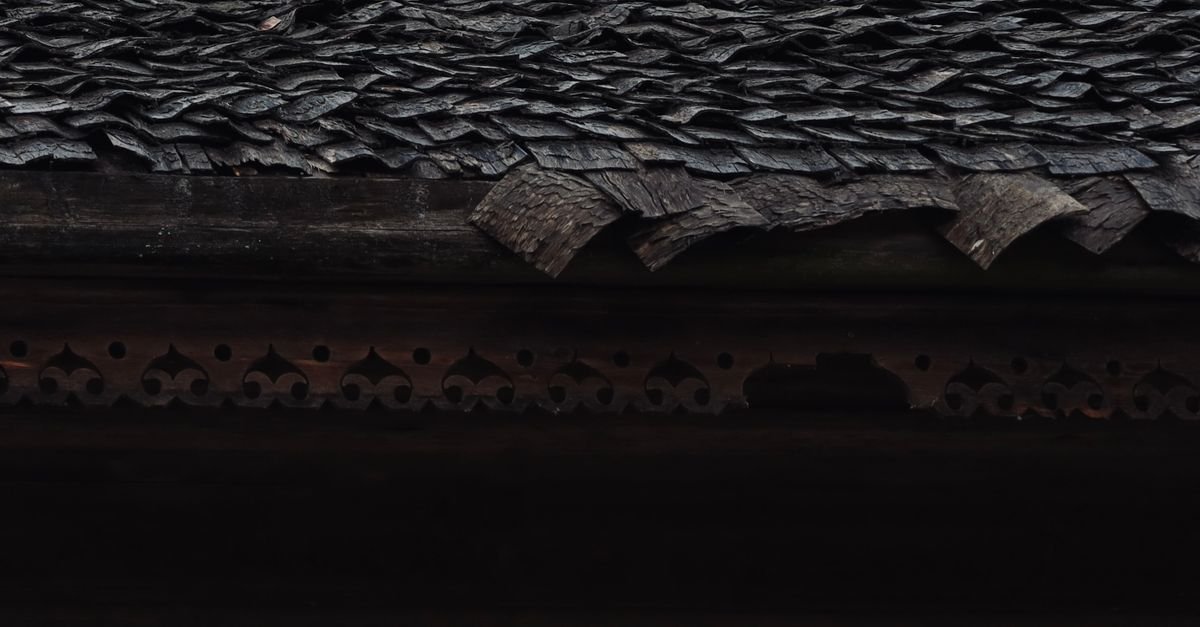
Here is how to tell from the ground, or from a ladder at the eave:
| What you see | Asphalt (composition) | Polymer composite |
| Surface texture | Sandy, matte, granular under a fingertip | Smooth or moulded grain, slightly waxy |
| Thickness at the butt | 3–6 mm, flexible | 12–25 mm, rigid, casts a hard shadow line |
| Repeat pattern | Long strips with cut tabs | Individual tiles, often in three or four random widths |
| Underside | Plain asphalt and release film | Mould marks, ribs, a brand stamp |
| Edge chips | Black asphalt under the granules | Same colour as the face |
That last row is the giveaway and it takes four seconds. Chip a corner on a spare tile: if the wound is black, it is asphalt. If the wound is the same colour as the roof, you own a composite, and that single fact changes every instruction that follows.
Colour That Goes All the Way Through Changes the Rules
An asphalt shingle is a coated product. So is a concrete roof tile, which carries a pigmented slurry on its face. Both can be ruined by removing a layer that is only microns thick, which is why the entire asphalt roof-cleaning literature is a long argument about not touching the surface.
A polymer composite tile is not coated. The pigment is compounded into the resin before it is moulded, so the colour is the same at the face, in the middle and at the back. You cannot strip it off, and you cannot wear through to a different material underneath.
This leads people to a reasonable-sounding and wrong conclusion: that a composite roof is therefore indestructible and you may as well point a machine at it.
What you can damage is the weathered skin. Photo-oxidation in a pigmented polymer is a surface event, and it is thin. Work on dark-coloured PVC published in 2024 mapped the zones: an oxidised superficial layer around 50 micrometres deep, a degraded underskin from roughly 50 to 300 micrometres, and unaffected polymer below that, with pigment and filler released from the outermost layer as “a white powdery deposit; this phenomenon is known as ‘chalking'” (surface chalking on weathered PVC, PMC11053820).
Fifty micrometres is about half the thickness of a human hair. A turbo nozzle will take it off, and so will an enthusiastic wire brush. What is underneath is not damaged — it is simply newer, and it will not match the tile next to it until it has weathered for a few seasons. That is a flash mark, and it is the characteristic way a composite roof gets wrecked by cleaning.
So the failure mode inverts. On asphalt you can clean too hard and destroy the roof. On composite you can clean too hard and end up with a roof that works perfectly and looks like someone drew on it.
Algae Has Nothing to Eat Up There
Black streaking on asphalt is *Gloeocapsa magma*, and the reason it thrives is that the shingle feeds it — the limestone filler in the mat is the food source. A moulded polymer tile has no limestone filler, no organic mat and, in the case of Brava’s closed-cell recycled plastics, effectively no water absorption either. There is nothing up there for algae to get its teeth into.
Which means the marks on a composite roof are almost never rooted growth. They are deposits, and deposits come off with soap.
| What you see | Where it shows first | What it actually is | What shifts it |
| Green fuzz in the laps | North slopes, under trees | Moss rooted in trapped leaf litter, not in the tile | Remove the litter, and the moss goes with it |
| Grey-brown film | Whole slope, worse near roads | Atmospheric soot and road film | Mild detergent and a soft brush |
| Dark tea-coloured runs | Directly below overhanging branches | Tannin washing out of leaves | Detergent, repeated; it fades with rain |
| Grey-white powder on a cloth | Older roofs, south slopes | Chalking — degraded surface polymer | Nothing. This is not dirt |
| Footprint-shaped smears | Wherever someone walked | Mud tracked across the tiles | Soap and water, and stay off next time |
That last one has an unusually blunt source. EcoStar’s Majestic Slate installation guide tells installers to minimise traffic over finished areas because “the tiles will show any mud or dirt tracked across them,” makes it the applicator’s or the owner’s job to clean it off, and specifies the method: “A mild detergent should be used in combination with a bucket of water to remove the mud or dirt. Clean water can then be used to finish the cleaning process.”
A bucket. That is the manufacturer’s published cleaning procedure for its own roof, in its own installation manual, and it is the single most useful sentence in this article.
Solvents Are the Hazard Here, Not Pressure
This is the one place where this site’s standing position flips, so I want to state it plainly.
On nearly every other surface we cover, pressure is the risk and chemistry is the safe route — let the detergent work and keep the PSI down. On a polymer roof the chemistry is the risk. Force will give you a cosmetic flash mark. The wrong chemical is a written warranty exclusion.
Read the two documents side by side. EcoStar’s installation guide says: “Do not use any chemicals or solvents without first checking with the EcoStar technical department,” and follows it with “EcoStar is not responsible for the cleaning of any tiles.” DaVinci’s Lifetime Limited Material Warranty lists, among the circumstances that will not result in a permitted claim, “Exposure to chemicals, paints, solvents, or metals including copper, zinc or any other metal that might discolor” — and, three bullets earlier, “Damage related to algae or moss, insects, or animals.”
Put those together and the position is uncomfortable but clear. The growth is not covered, and the chemical you would reach for to remove it is an exclusion. You are on your own either way, so the correct move is the mildest thing that works.
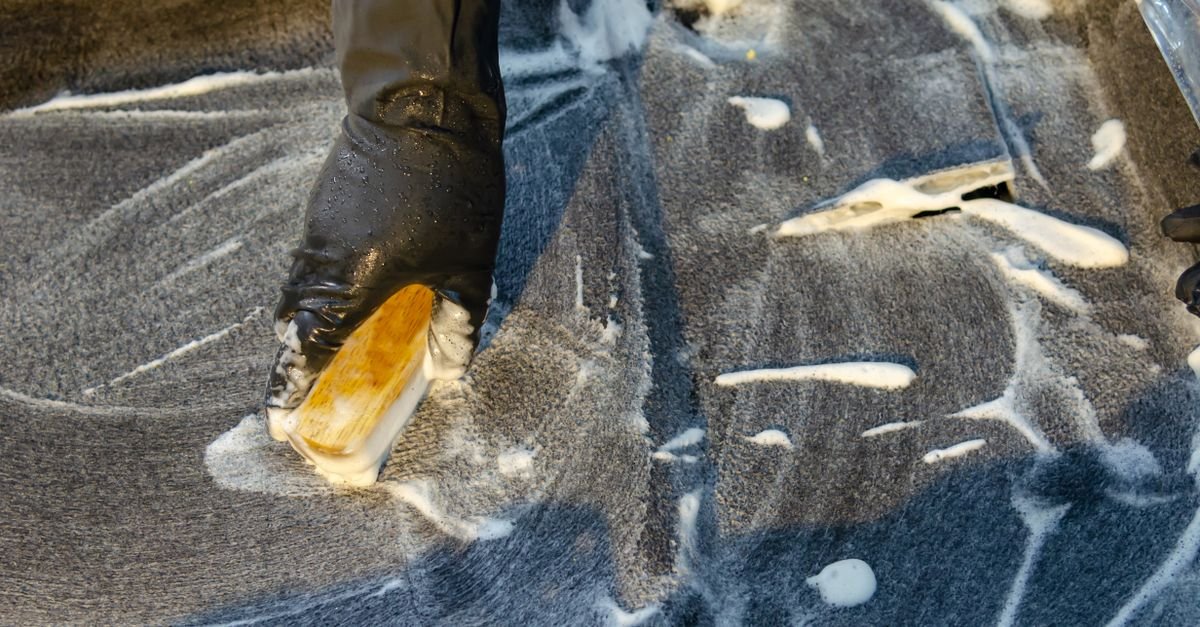
What that rules out, and why:
- Solvent degreasers, acetone, lacquer thinner, MEK. These do not dissolve the resin outright, but they swell and craze the surface. You get a permanent dull patch.
- Citrus and terpene cleaners. Sold as the gentle option. D-limonene is a solvent. It belongs in the paragraph above.
- Muriatic and oxalic acid. Fine on concrete, and genuinely useful on rust. Not on a stabiliser package you cannot replace.
- High-strength sodium hypochlorite. The roof-cleaning trade’s default mix, used at asphalt concentrations.
- Wire brushes and abrasive pads. See the 50-micrometre number above.
I went looking for a published maximum sodium hypochlorite concentration for polymer roof tile — a number I could hand you the way we hand out the Trex figure for decking. I could not find one from any of the major makers. What I found instead was the same sentence in different words from each of them: ask us first. That is not evasion on their part; it is a young product category with no shared standard yet. But it does mean anyone quoting you a confident SH ratio for a synthetic slate roof made it up, and the strength question deserves its own reading — our guide to sodium hypochlorite for pressure washing covers what the concentration actually does.
Composite Roof Cleaning, Step by Step With a Bucket
The sequence below is deliberately unglamorous. It is also the one the manufacturers print.
1. Identify the tile. Brand stamp on the underside of a spare, the original roofing invoice, or a photo emailed to the maker’s technical services desk. DaVinci and Brava both staff one.
2. Ring them before you mix anything. Two minutes on the phone beats a discoloured slope. Ask specifically about the product you intend to use, by name.
3. Dry removal first. Leaf blower from the ridge down, then a soft broom. On most roofs this is eighty per cent of the job and it carries no risk at all.
4. Clear the valleys, the laps and the gutters by hand. Moss on a composite roof is almost always rooted in trapped debris. Take away the debris and you have taken away the moss.
5. Test patch, rear elevation. One tile, out of sight, and then wait for it to dry before you judge it.
6. Mild detergent in a bucket of water. Soft or medium bristles on a long handle. Work with the lap direction, down-slope, never up under the courses.
7. Rinse with clean water. A garden hose is correct. If reach forces you to use the machine, fit the black soap nozzle, stand well back and treat it as a rinse — never as a cleaner. The black tip has the widest orifice on the rack, which is exactly why it drops system pressure so far.
8. Never let anything dry on the tile. Work in shade, in cool weather, in sections small enough to rinse before they flash off.
9. Judge it dry, twenty-four hours later. If a mark survives, repeat step six. Do not escalate. The temptation to reach for something stronger is exactly the failure mode this whole article is about.
There is no step ten where you get the turbo nozzle out. I checked.
Faded or Dirty? Four Hunter Units Settle It
Here is a question nobody asks before they start scrubbing: is the roof dirty, or has it faded?
They look the same from the driveway and they have completely different answers. Dirt comes off. Fade does not, and chasing it with progressively harsher chemistry is how people damage roofs that were never dirty in the first place.
DaVinci puts an actual number on the difference. Its warranty covers colour fading only where the fade exceeds four Hunter units beyond what is normal for the geographic area in which the roof sits, measured in accordance with ASTM D2244, and it requires that all fading or discoloration claims be reported within ten years of the original purchase date.
Two things follow from that, and both are useful.
First, there is a free diagnostic you can run this afternoon. Find a tile that has been shielded from the sun — under a solar array, behind a chimney cricket, tucked in the ridge, or the spare the roofer left in the loft. Wash a patch of exposed roof, let it dry, and hold the two side by side. Match means it was dirt and you are finished. A visibly lighter exposed tile means fade, and no detergent on earth will bring that back. The loft spare has finally found a job.
Second, that ten-year window is a deadline. Fade is gradual, and gradual is exactly the kind of problem a homeowner notices in year twelve. If your roof is eight years old and looking tired, that is the moment to photograph it, run the shielded-tile comparison, and open a conversation — not the moment to buy stronger cleaner.
Chalking is the third state, and it is the one people misread most often. Wipe a dry tile with a dark cloth. If the cloth comes away grey-white, that powder is pigment and filler released from the degrading surface, not dirt sitting on top of it. Scrubbing it harder simply takes more surface with it.
Zinc and Copper Strips Belong on Somebody Else’s Roof
The standard long-term fix for algae on an asphalt roof is a zinc or copper strip at the ridge. Rain picks up metal ions on the way past and suppresses growth down-slope. It works, it is cheap, and every roofing article on the internet recommends it.
Do not put one on a composite roof.
DaVinci’s warranty names the hazard directly: “Exposure to chemicals, paints, solvents, or metals including copper, zinc or any other metal that might discolor” sits in the list of circumstances that will not result in a permitted claim. The retrofit that helps an asphalt roof is, on this product, a written exclusion — and it is solving a problem you do not have, because nothing is eating the tile.
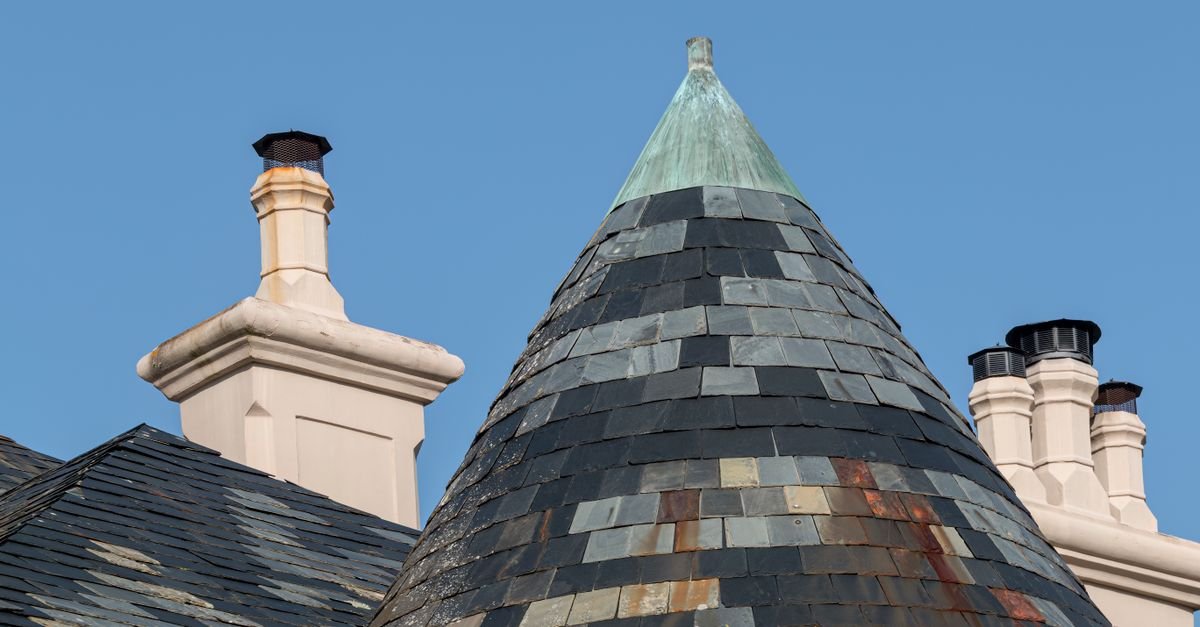
The same clause is worth reading as a general warning about metal above the roof plane. Copper chimney caps, copper gutters and half-round flashing all shed ions when it rains, and on a light-coloured polymer tile that shows as a green-blue run that will not wash off. If you are specifying a new composite roof, that is a conversation to have with the architect, not with a bottle of cleaner afterwards.
Nor is metal the only contact risk in the exclusions. The same list covers damage related to “equipment coming in contact with the roof related to work on chimneys, ventilation systems, satellite dishes, HVAC, etc.” Aluminium ladder standoffs, roof jacks and a dropped scaffold clip all fall under that heading. If a satellite installer is going up there, it is worth mentioning what the roof is before he leans a ladder on it.
Twenty Degrees Is Where Polymer Stops Being Forgiving
Polymer gets stiffer and more brittle as it cools, and the manufacturers know it. DaVinci’s warranty excludes claims arising from “Installation of Products while the temperature is less than 20 degrees Fahrenheit.” That is an installation clause rather than a cleaning one, and I am reading across from it rather than quoting it at you as a cleaning rule — but the underlying material behaviour is the same on a Saturday in January as it is on an install day. Cold tiles take impact badly and flex badly. Wait for a mild, overcast day.
Foot traffic is the other half of it. EcoStar’s guidance to minimise traffic over completed areas is not only about mud — walking a roof concentrates load on individual tiles and lap edges, and on a wet, soapy slope you are also concentrating it on one foot. You arrived to clean marks off a roof. Do not leave more behind than you removed.
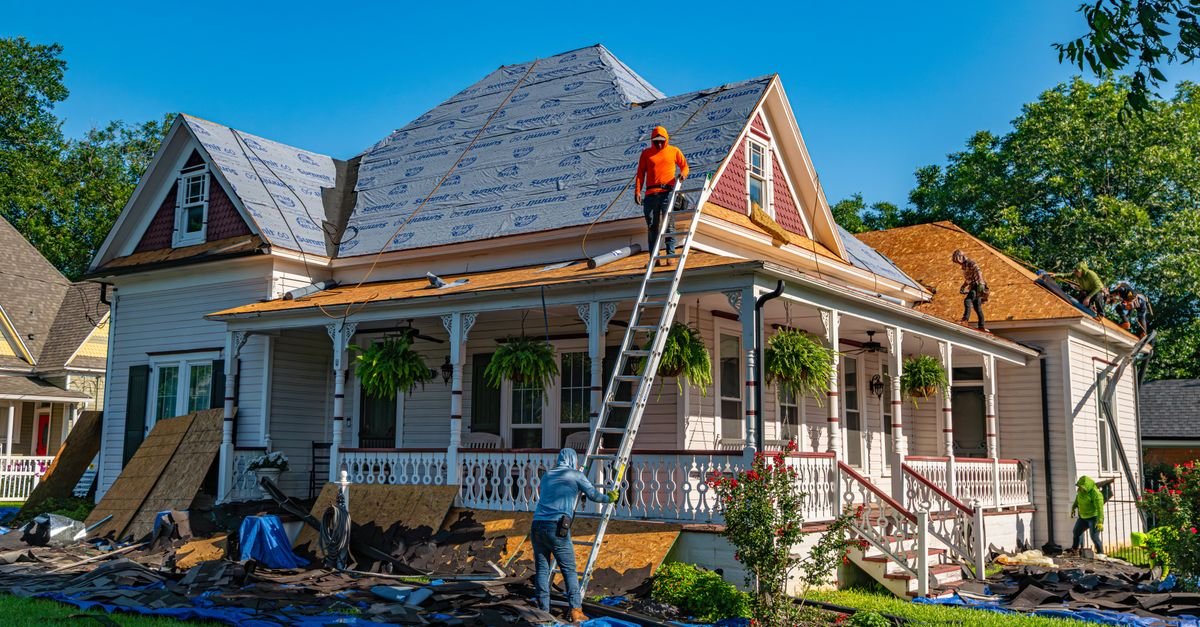
And then there is the ladder, which is the most dangerous object in this entire article and gets the least respect. Most of this job can be done from a ladder set at the eave with a long-handled brush and a leaf blower, which is the good news. The rest of it is the usual discipline: move the ladder rather than leaning sideways for one more foot, tie it off, and never work a wand from a ladder. Wand thrust is real, and a ladder has nothing on it to absorb thrust except you.
FAQ
Can you pressure wash a composite roof?
You should not clean one with a pressure washer, and you do not need to. The published method from the manufacturers is mild detergent, a soft or medium-bristle brush and a clean-water rinse. A machine is defensible only as a rinse at soap-nozzle pressure where reach makes a hose impractical, and even then the nozzle stays well back and moves with the lap direction.
Is a composite roof the same as an asphalt shingle roof?
Not in the trade’s own vocabulary, though the words get used interchangeably. “Composition” or “comp” means an asphalt shingle. “Composite” properly means a moulded polymer tile imitating slate or shake — DaVinci, Brava, EcoStar and similar. Chip a corner of a spare tile: black underneath means asphalt.
Can you use bleach on synthetic slate?
Only after asking the manufacturer. EcoStar’s installation guide says not to use any chemicals or solvents without checking with its technical department first, and DaVinci’s warranty lists chemical exposure among its exclusions. No major maker publishes a maximum sodium hypochlorite concentration for polymer tile, so anyone quoting you a confident ratio is guessing.
How often does a composite roof need cleaning?
Far less often than asphalt, because nothing is growing into the surface. An annual debris clear of valleys, laps and gutters is the real maintenance task. Actual washing is cosmetic and usually a once-every-several-years job, driven by tree cover and road grime rather than by any schedule.
Why does my composite roof look lighter in patches after cleaning?
You removed the weathered surface layer and exposed fresher polymer underneath. That layer is only tens of micrometres thick, so it comes off easily under abrasion or high pressure. The patch is not damaged structurally, but it will not match its neighbours until it has weathered for several seasons.
Does cleaning void a DaVinci or Brava warranty?
Cleaning with mild soap and water does not. Using a chemical the maker has not approved can — DaVinci’s warranty names “chemicals, paints, solvents, or metals” among circumstances that will not result in a permitted claim. Get approval by name for anything stronger than detergent, and keep a note of what you used and when.
Can you walk on a composite roof?
More safely than on clay tile, but it is still not free. Tiles are rigid and take concentrated load at the lap edges, they show every footprint, and cold polymer is less forgiving of impact. Do as much as you can from a ladder at the eave with long-handled tools, and never walk a wet, soapy slope.
Do composite roofs get black streaks like asphalt?
Rarely, and not for the same reason. Asphalt streaking is algae feeding on limestone filler in the shingle. Polymer tile has no filler to feed on and, in closed-cell products, effectively no water absorption, so dark marks are usually deposited soot, tannin from overhanging trees, or chimney ash rather than living growth.
What removes moss from a synthetic shake roof?
Usually just removing what the moss is rooted in. On a polymer roof moss almost never anchors into the tile itself — it colonises leaf litter trapped in laps and valleys. Blow and brush the debris out dry, and the moss leaves with it. If a stain remains, mild detergent and a soft brush, repeated, beats anything stronger.
Is composite roof tile the same as composite decking?
Different products, same lesson: the brand’s own published number beats the internet’s folklore, and it changes by generation. Trex publishes a hard 3,100 PSI ceiling for current boards and no pressure washing at all for its early range, which is the level of specificity roof tile makers have not yet reached. Our guide to what PSI to pressure wash composite decking shows how that works in practice.
Mild Soap, a Soft Brush, and the Warranty Still Yours
Composite roof cleaning is the rare exterior job where doing less is not a compromise — it is the manufacturer’s actual instruction, printed in the installation manual, with a bucket in it.
Work out which roof you own first, because half the advice written under this phrase is about asphalt and will steer you wrong. Blow and brush the debris out dry, because that is most of the job. Use mild detergent and soft bristles on what remains, rinse with clean water, and let it dry before you decide whether it worked. Keep solvents, acids and metal away from the tile, since those are the three words the warranties actually name. And if the roof still looks tired after a wash, hold it against a shielded tile before you buy anything stronger — you may be looking at fade, which is a phone call rather than a cleaning problem, and one with a ten-year clock on it.
The roof was chosen so nobody would have to climb up there much. Let it do that job.