Last Updated on September 24, 2026 by Umar Farooq
Cedar roof cleaning is mostly a debris-removal job with a mild chemical step on the end — you are taking away the things that hold the wood wet, not scrubbing the wood itself, and the USDA Forest Products Laboratory says outright that a power washer should not be necessary on a wood roof at all.
Here is why that matters more on cedar than on anything else up there. An asphalt roof is a mineral surface glued to bitumen; nothing eats it, and cleaning it is cosmetic work you do carefully to avoid losing granules. A cedar roof is a stack of wood that is quietly being composted by whatever sits on it. Cleaning is not the cosmetic option on this roof. It is the maintenance.
Which means the usual advice — leave the roof alone, nothing good happens up a ladder — is wrong here, and I want to be specific about why.
Cedar Roofs Fail From the Back First
The face of a cedar roof is the part you can see and the part that matters least. Sun greys it, rain erodes the soft wood between the growth rings, and after forty years it looks terrible and still sheds water. The side that kills the roof is the side pressed against the deck.
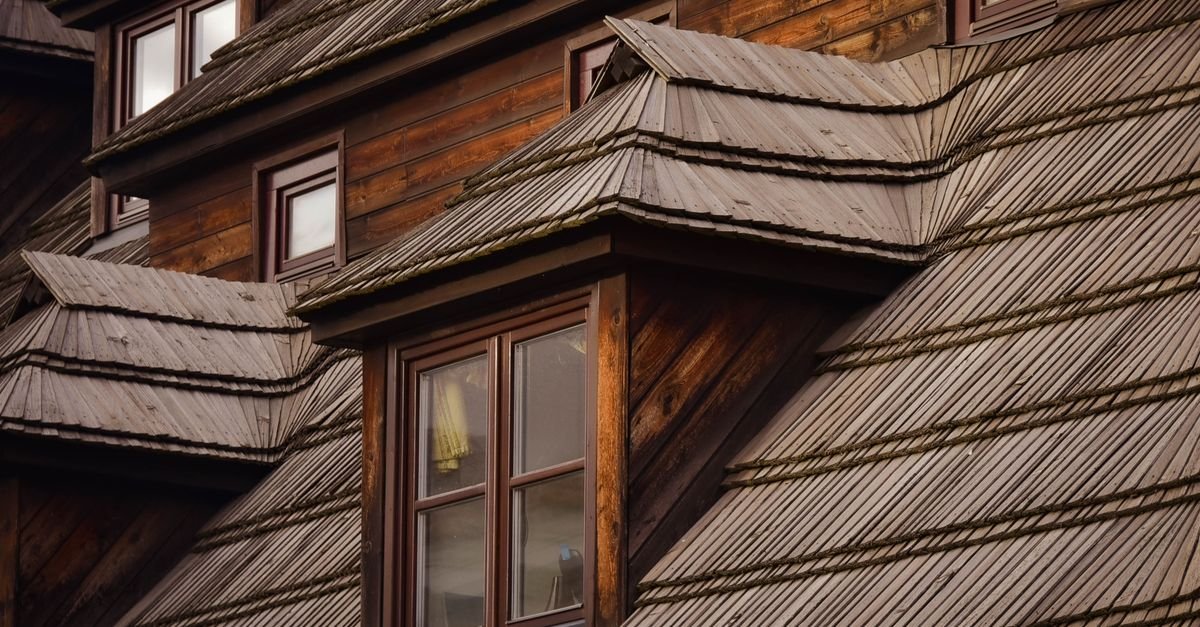
Traditionally shakes and shingles are nailed to spaced sheathing — 1-by-4 or 1-by-6 boards run horizontally across the rafters, set on centres equal to the exposure of the shake. The gaps are not a cost saving. They are the drying path. Air gets at the back of each piece between rainfalls, and the wood dries from both faces instead of one. Where a solid plywood deck is required, the Forest Products Laboratory’s roof guidance asks for a rain screen or horizontal nailing strips instead, because “this ventilation between the shakes/shingles and the plywood sheathing improves performance” (FPL-GTR-201, Installation, Care, and Maintenance of Wood Shake and Shingle Roofs).
The National Park Service, which has to keep 200-year-old shingle roofs alive on a preservation budget, reached the same conclusion from the other end of the telescope: “Historically, the longest lasting shingle roofs were generally the ones with the best roof ventilation.” It warns that roofs with shingling laid directly on solid sheathing, with insulation packed tightly between the rafters, “run the risk of condensation-related moisture damage to wooden roofing components,” and notes that examples of roofs lasting 60 years owe it partly to under-shingle ventilation (NPS Preservation Brief 19, The Repair and Replacement of Historic Wooden Shingle Roofs).
So everything you do on top of a cedar roof should help it dry faster. Three things reliably do the opposite, and all three are sold as improvements:
- Heavy building felt interwoven between courses. FPL is blunt that you do not interlay shingles with felt, because it impedes drying and decreases service life. NPS puts the mechanism plainly: the absorptive material “can hold moisture on the underside of the shingles and accelerate deterioration.”
- Film-forming finishes. Latex semitransparent stains, solid-colour stains and paints trap moisture in the wood and shorten the roof’s life. A cedar roof is not a cedar wall, and it does not get painted.
- Sealers. The Cedar Shake and Shingle Bureau does not hedge: “Never seal your cedar roof. Sealing the roof will lock in moisture that would otherwise naturally evaporate during normal weather conditions” (CSSB, Cedar Maintenance FAQ).
That is three separate bodies telling you the roof needs air more than it needs a coating. If a contractor’s proposal ends with a sealer, you have found the part of the quote to argue about.
What Gets Packed Into the Keyways
Look closely at any course of cedar shingles and you will see a deliberate gap beside each one. NPS records these at an eighth to a half inch depending on the wood, left so the shingles can expand when wet, with each overlapping piece staggered at least an inch and a half sideways so no keyway sits directly above the one below. It is a drainage layout that took a couple of centuries to settle on, and it works beautifully right up until it fills with pine needles.
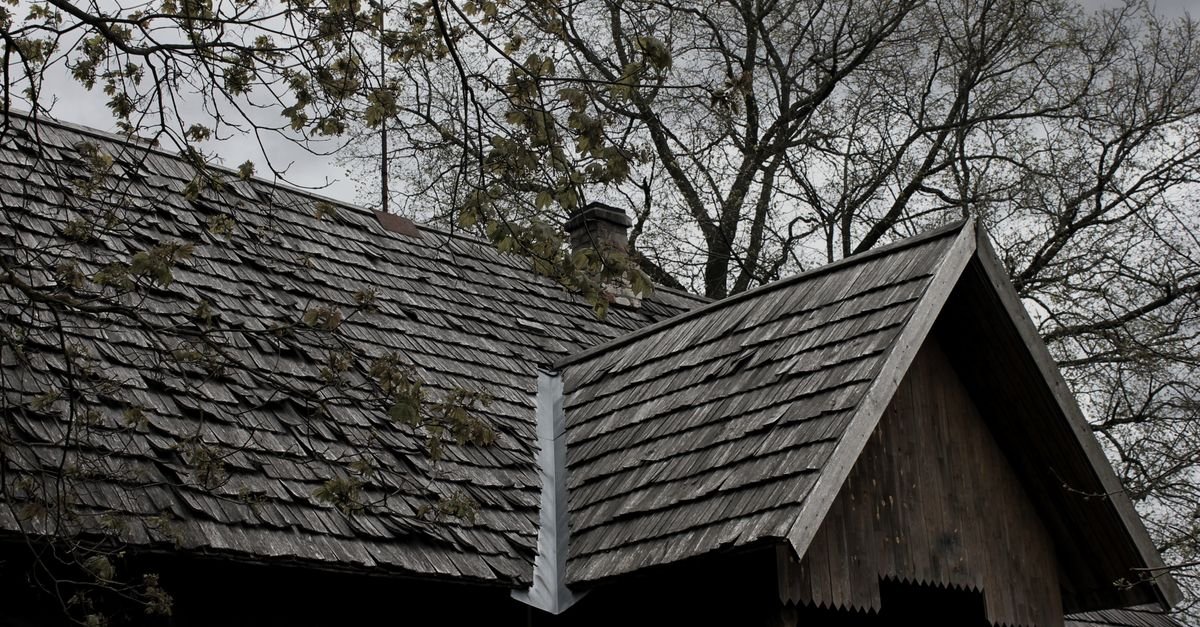
Needles are the worst debris a cedar roof can get, because they arrive edge-on, wedge into the keyways at exactly the width of the gap, and knit into a felt mat that holds water against end grain for weeks. Leaves blow off. Needles move in. FPL’s framing is that if moss grows or debris collects, “they trap moisture and encourage decay, thereby decreasing the life expectancy of the roof,” and CSSB says the same thing in one sentence: “Cedar needs to breathe, and therefore any accumulation of needles, branches, leaves and dirt will affect its lifespan.”
FPL’s remedy is the part of the advice nobody enjoys: “Remove all overhanging branches and if necessary, trees that encroach on the roof.” I have read a lot of maintenance guidance that softens that into “consider trimming.” The federal document says remove the tree. It is the only recommendation on this page that requires a conversation with your spouse.
Clearing the keyways is a brush-and-blower job, always worked down the slope. Never aim a jet into a keyway. The gap goes somewhere, and what is behind it is the underlayment, the deck and the top edge of the course below — which is precisely why FPL’s rinse instruction is to “keep the water stream pointed down the roof to avoid forcing water behind the courses of shakes or shingles.”
Heavy Moss Makes Water Run Uphill
Most moss advice stops at “moss holds moisture,” which is true and incomplete. CSSB gives the mechanism that actually explains the leaks: “Heavy moss can cause water to back up the roof enough to run over the top of the shingles.”
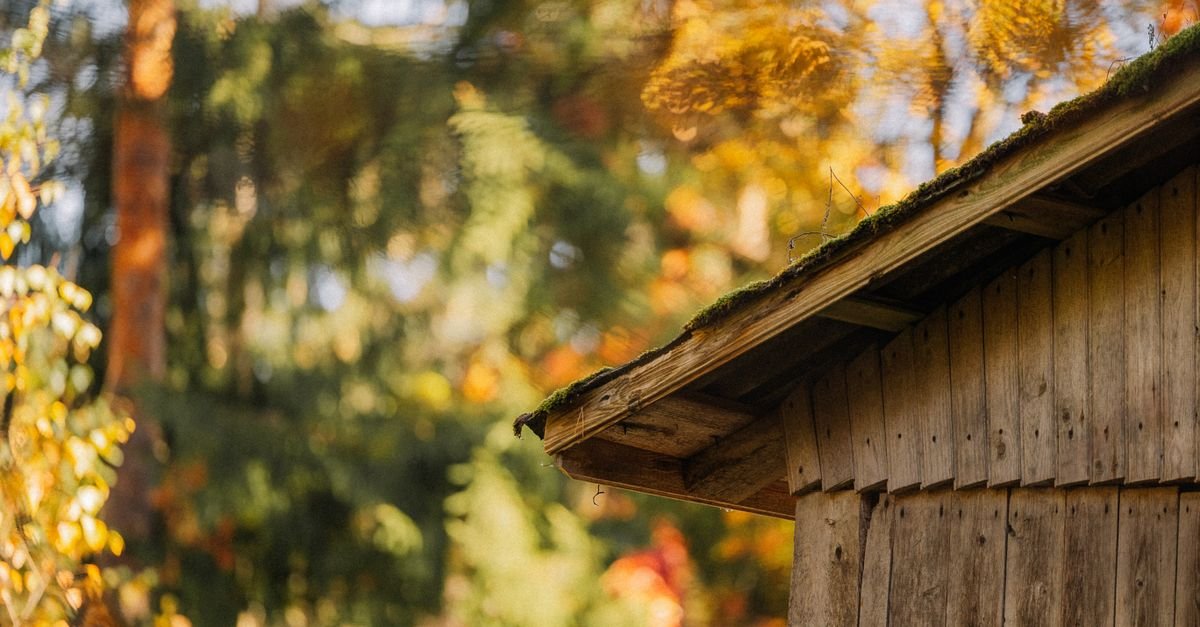
A shake roof is not waterproof and was never meant to be. It is a gravity system: each course overlaps the one below by enough that water running down the face never reaches a nail or a joint before it is shed onto the next piece. A ridge of moss growing along a butt line raises a low weir across that path. Water arriving from above ponds behind it, and once the pond is deeper than the overlap is tall, it goes over the top edge of the shingle and in behind the course above. The roof has not failed. The geometry has been altered by something green.
Cedar is better at resisting the biology than most wood — NPS notes that red cedar carries a natural fungicide in its own cells, and that an applied fungicide is usually unnecessary unless the shingles are somewhere unusually warm and moist. But that resistance sits in heartwood extractives that leach out over decades, which is why a roof that shrugged moss off for twenty years suddenly seems to grow it everywhere.
The preventive hardware is worth a number. FPL says zinc or copper strips at the ridge control algae, mould and moss “for a short distance down the surface of the roof,” and that recent experience puts the required spacing at about 6 feet (2 m) between strips. Space them further apart and you get inconsistent protection and a striped roof, which is a cosmetic result nobody is paying for. The same document notes that shakes sitting below galvanised steel valley flashing are visibly cleaner, because a small amount of zinc erodes off the metal and washes down. Your roof has been running a live experiment on this for years and you can go and read the result from the driveway.
Cedar Roof Cleaning With Bleach: The Argument the Trade Is Still Having
This is the genuinely contested question, and it deserves an honest answer rather than a confident one.
One camp — most soft-wash contractors — runs dilute sodium hypochlorite on everything, cedar included, because it kills fast and it is cheap. The other camp says chlorine oxidises the lignin binding the surface fibres, leaves shakes a flat bleached grey rather than a weathered silver, corrodes the fasteners holding the roof on, and cannot reach growth rooted below the surface of something as porous as a shake anyway.
What does the federal lab that tests wood say? Something more interesting than either camp quotes. FPL-GTR-201 states that a discoloured roof “can be cleaned quite effectively with chlorine bleach (5% sodium/calcium hypochlorite) or oxygen bleach (sodium percarbonate) mixed with water” — chlorine is not forbidden — and then, in the very next line, “We recommend commercial cleaners having sodium percarbonate as the active ingredient.”
The reasoning is in the sentence most people skip. Sunlight has already partially degraded the surface, and FPL admits that “the bleach solution will remove some of the weathered [fibre] from the surface.” Part of what looks like cleaning is removal of wood. That is why the instruction that follows is to use “the weakest strength of cleaner possible” and to apply it with a sprayer, sponge or soft bristle brush.
The practical numbers, all from the same page:
| Item | What FPL specifies |
| Preferred active ingredient | Sodium percarbonate (oxygen bleach) |
| Household bleach ceiling | No stronger than 1 part bleach to 3 parts water |
| How to start | Weakest that works; increase only if mildew remains |
| Dwell before rinsing | About 15 minutes |
| Rinse | Garden hose, stream pointed down the roof |
| Detergent additive | Powdered only — never liquid |
That last row is not a preference. FPL flags it as a safety item: liquid detergents may react with bleach to form toxic fumes. Powdered, non-ammonia, or nothing. If you want the wider chemistry behind sodium hypochlorite mixing and storage, it lives on its own page, but carry the roof ceiling with you rather than a house-wash recipe.
I went looking for a controlled comparison of hypochlorite against percarbonate on cedar shakes — same roof, same exposure, measured fibre loss — and I could not find one. So the honest position is narrower than either camp’s: the lab that tests wood for a living picks percarbonate, does not ban chlorine, and tells you to go weak. Everyone certain beyond that is ahead of the evidence, including the person quoting a dilution ratio at you with a straight face.
Step Against the Butt of the Course Above
If you take one physical instruction away from this page, take this one, because it is published, specific, and almost never repeated.
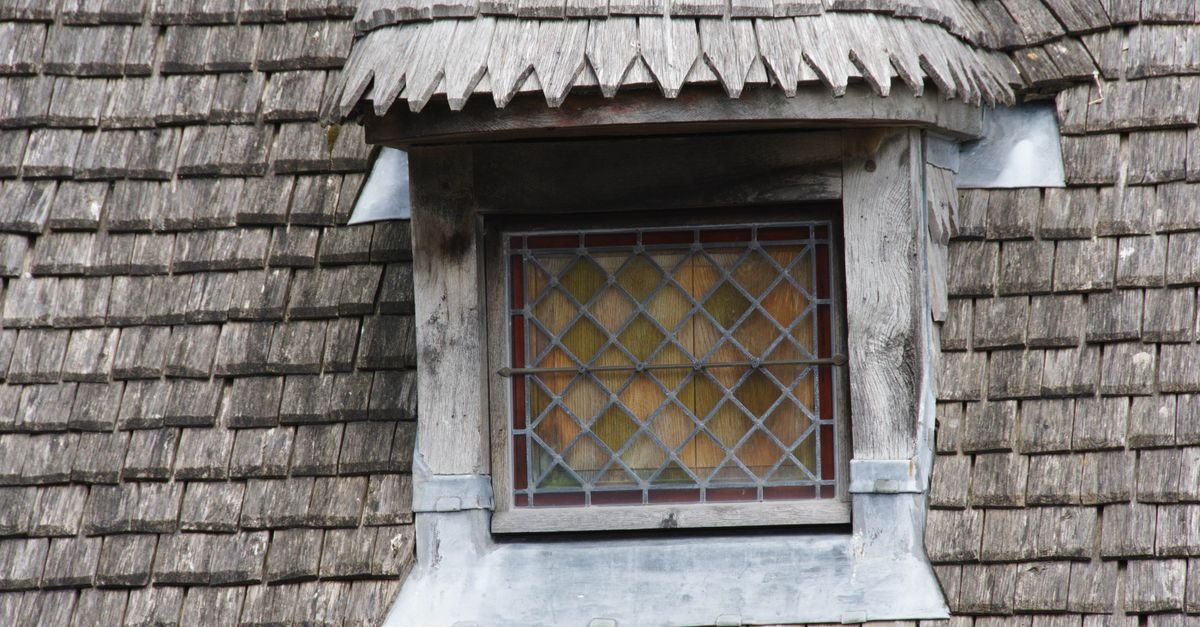
FPL: “As shakes and shingles age, they may become brittle. Walking on the roof can cause extensive cracking of aged shakes or shingles and may lead to leaks.” Then the technique: “Walking on the butt-end (lower edge of the shake or shingle) causes cracking. Cracking can be minimized by stepping on the upper part of the shake or shingle directly against the butt-end of the row above.”
The mechanism is simple once you see it. The butt end is a cantilever — thick, tempting, and unsupported, with an air gap under it created by the course beneath. Put a boot there and the shake is a plank bridging a void. The upper part of the same shake is backed by solid wood below and pinned by the course above, so the load has somewhere to go. Same roof, same boot, two completely different outcomes, separated by about four inches.
CSSB’s position is that homeowners should not be up there at all and that a roof survey is a job for a contractor with the training and equipment. NPS lists workmen walking on the roof alongside falling branches as a cause of localised damage, which tells you something about how the profession is regarded on this point. And wet cedar under a film of dead moss is one of the slickest surfaces available to a homeowner on a Saturday morning.
Do the Whole Job Without Standing on It
Most of a cedar roof clean can be done from a ladder, a pole and the ground — and the parts that cannot are the parts worth paying someone for. FPL’s own timing note applies to all of it: apply cleaners on a cloudy day, because it slows evaporation and lets the cleaner work.
| The job | What reaches it from a ladder or the ground | What not to use |
| Needles and leaves in the keyways | Soft-bristle brush on an extension pole, worked down-slope; leaf blower from the ridge end | A jet, a scraper, or anything metal |
| Applying cleaner | Pump sprayer, or the machine on the black soap nozzle purely as a long-reach applicator | Any tip that builds pressure |
| The 15-minute dwell | Nothing. Wet it, re-mist anything drying, wait | Scrubbing to speed it up |
| Rinsing | Garden hose, stream angled down the slope | A wand held at the roof, ever |
| Moss on the ridge courses | Zinc or copper strip at about 6-foot spacing, fitted once | A pressure washer, a stiff brush, a putty knife |
| Anything you cannot reach safely | A contractor experienced with wood roofs | Optimism |
FPL’s line on machines is the one to keep: except in rare cases of extensive moss and debris build-up, “it should not be necessary to power-wash wood roofs,” and aggressive power washing combined with strong cleaners can damage cedar and redwood roofs in particular. If it genuinely has to happen, they say hire someone who has done it before, because in the wrong hands a machine removes wood and drastically cuts the life of the roof. The red 0-degree tip and the turbo nozzle are not part of this conversation on any surface made of trees.
Does Cleaning Buy Years, or Just a Nicer-Looking Roof?
Both, but not in the way most people assume — and this is the one place I will plant a flag.
On asphalt, cleaning is cosmetic. The streaks are cyanobacteria eating limestone filler, the roof is not structurally worse for having them, and the entire discipline of cleaning shingles without pressure is about improving the look without costing granules. On cedar, that logic inverts. The debris and moss are not a stain on the roof; they are a wet blanket on something that rots. FPL ties them directly to life expectancy in a single sentence, and NPS’s list of what shortens a shingle roof includes lichens and moss, poor ventilation under the shingle, overhanging tree limbs, and “the history of the roof maintenance.”
So here is the split, and it is worth being precise about: the chemical wash is the cosmetic half, and the clearing is the half that buys years. Killing the black film makes the roof look thirty years younger and does very little for it. Getting the needles out of the keyways, cutting back the branch that keeps the north slope damp, and letting the back of the shakes dry — that is the work that changes the number. If you are only going to do one of them, pick the one that produces no visible result.
The spread is large enough to be worth the Saturday. FPL says shakes and shingles “should last more than 30 years” if properly installed and maintained. NPS puts the observed range at 15 to over 60. Same material, same species, a 45-year gap, and most of it decided by how the roof was built and what was allowed to sit on it.
Twenty Percent Is Where Cleaning Stops Being the Answer
There is a published threshold for this, which is rarer than it should be. NPS: if over 20% of the shingles on any one surface appear eroded, cracked, cupped or split, or if there is evidence of pervasive moisture damage in the attic, replacement should be considered.
Go and count before you buy anything. Binoculars from the lawn, one elevation at a time, and be honest about the north slope. Under 20%, individual bad shingles can be pulled and replaced — the traditional trick is sliding a new one in and holding it with a thin metal tab, so the sound shingles above are not disturbed. Over 20%, you are paying a contractor to make a roof that is finished look better for two summers.
Then go into the attic with a torch, because the underside tells you first. That is the whole theme of this page: the roof reports its condition from the back long before the front admits anything. Daylight through the sheathing gaps is normal on spaced sheathing. Dark staining on the underside of the boards, soft sheathing, or rust tracks down the nails is not.
And if somebody offers to finish the job by coating the roof, the answer is the same as it was at the top of the page. Cedar dries or it dies. There is a longer argument about pressure and film finishes on wood if you want it, but on a roof it collapses to one line.
FAQ
Should you pressure wash a cedar shake roof?
Almost never. The Forest Products Laboratory states that except in rare cases of extensive moss and debris build-up, it should not be necessary to power-wash wood roofs, and that aggressive power washing with strong cleaners can damage cedar and redwood roofs specifically. If it truly has to happen, it is a job for a contractor experienced with wood roofs, because a machine in the wrong hands removes wood and drastically decreases the life of the roof.
What is the best cleaner for a cedar roof?
A commercial cleaner with sodium percarbonate — oxygen bleach — as the active ingredient. That is FPL’s stated recommendation for wood roofs. Household chlorine bleach is not forbidden and works, but the ceiling is one part bleach to three parts water, you start weaker than that, and any detergent you add must be powdered rather than liquid.
How often should cedar roof cleaning be done?
Debris clearing is seasonal work wherever conifers overhang the roof, and annual almost everywhere else. A chemical wash is only needed when growth is established, which for most roofs is years apart. I should say plainly that a five-to-seven-year interval is widely attributed to the Cedar Shake and Shingle Bureau online, and I could not find it stated on CSSB’s own maintenance FAQ, so treat it as trade convention rather than a published figure.
Will bleach damage cedar shakes?
Dilute and once, it will not wreck anything, but it is not neutral. FPL concedes that the bleach solution removes some of the weathered fibre from the surface, which is part of why the roof looks better afterwards. That is fine occasionally and expensive as a habit, and it is the reason the same document tells you to use the weakest strength that works and apply it with a sprayer or soft brush.
Can you walk on a cedar shake roof?
Aged shakes become brittle and crack under foot, and CSSB advises homeowners not to go up at all. If someone does walk it, the published technique is to step on the upper part of the shake directly against the butt end of the row above, never on the butt end itself, which is unsupported and splits.
Does moss actually shorten the life of a cedar roof?
Yes, and by two routes. It holds water against the wood so the shakes never fully dry, and heavy moss can back water up far enough to run over the top of the shingles and in behind the course above. NPS states that the life of a shingle roof can be drastically shortened if moss, lichens, fungi or bacterial spores grow on the wood.
Air Is the Product, Not the Colour
Every recommendation on this page points the same direction. Space the sheathing or vent the deck, keep the keyways open, cut the branch, skip the felt, skip the sealer, and put nothing on the roof that slows it drying. The chemistry at the end is the smallest part of the job, and the part that most people think is the job.
If you are on the ladder right now with a sprayer in one hand, do the keyways first. The wash will still be there in an hour. The needles have been there since October.