Last Updated on September 25, 2026 by Umar Farooq
Cleaning paint off concrete is a coating-removal job, not a stain-removal job, and that one distinction decides everything that follows — which bottle you buy, whether a pressure washer helps at all, and whether you should be removing the paint in the first place.
Almost every article on this subject files paint alongside oil, rust and tyre marks. It does not belong there. Oil soaked in and discoloured the concrete. Paint is a manufactured film engineered, at some expense, to stay stuck to masonry in the rain for a decade. Treat the second like the first and you end up on your third bottle of concrete cleaner.
Paint Is a Coating, Not a Stain, and the Difference Decides the Method
A stain has migrated into the pore structure and discoloured it from the inside, and you remove it by attacking the molecule — alkaline degreaser for a carbon chain, an oxidiser for organic colour, oxalic acid for iron. The concrete is never the target. That side of the problem is covered in will pressure washing remove oil stains from concrete.
Paint is the opposite geometry. It is a cured film sitting on top of the slab, mechanically keyed into roughly the top millimetre of pores like a thousand tiny anchors. Nothing about it is dissolved into the concrete. It is gripping it.
That flips the toolkit. Bleach does nothing — no chromophore to break. Degreaser does nothing — the binder is a polymer, not a grease. Acid attacks calcium in the cement paste, so it chews the concrete out from under the edges and leaves the paint proud of a softened slab. You have not removed a coating. You have excavated around it.
So the job is one of three verbs: soften the film until its grip fails, abrade it off, or accept it and coat over the top.
Latex, Oil-Based or Masonry Paint: Three Different Fights
Before anything else, find out what you are looking at, because the three common families behave nothing alike and the wrong stripper is a wasted afternoon plus disposal.
The field test takes two rags. Denatured alcohol on the first: gummy paint colouring the rag means latex or acrylic. Acetone on the second: if only that softens it, you are in alkyd territory. If neither does anything after a minute of rubbing, you have a masonry, elastomeric or epoxy coating, and the plan just changed.
| Paint type | How it cured | What breaks its grip | Difficulty |
| Latex / acrylic | Water evaporates, particles coalesce | Solvent-type stripper, heat, sometimes hot water | Easiest |
| Oil-based / alkyd | Oxidises into a hard brittle film | Caustic (sodium hydroxide) or solvent stripper | Moderate |
| Masonry / elastomeric | Thick flexible film, keyed deep into pores | Mechanical, usually | Hard |
| Epoxy / polyaspartic floor coating | Two-part chemical cure, bonded to profile | Grinding, near enough always | Hardest |
Or pick at an edge with a knife. A brittle chip that snaps is alkyd. A rubbery lip that stretches before it tears is elastomeric, and no stripper on a retail shelf makes that a pleasant morning.
Caustic strippers are worth understanding rather than just buying. Sodium hydroxide saponifies an oil-based binder — it converts the cured oil back into soap. Elegant, and it works. It is also strongly alkaline, and every trace has to come out of the pores before a new coating goes down, or that coating fails for reasons the manufacturer will happily blame on you.
The Pressure Washer’s Real Job on This Slab
Here is the opinion I would defend hardest on this page: the pressure washer is the rinse stage of this job, not the strip stage. It is superb at removing paint that had already stopped being stuck, so mostly it tells you how much of your coating was failing before you started.
The mechanism is a ceiling, not a preference. Concrete flatwork takes roughly 2,500–3,000 PSI with a 15- or 25-degree tip before the jet erodes cement paste rather than dirt, and sound masonry paint routinely survives that. To beat a properly adhered film you have to climb past the point where you are cutting the slab, and the result is unmistakable: a shallow crater of exposed aggregate in exactly the shape of the paint, untouched concrete a foot away. The numbers behind that ceiling are in how much PSI to clean a concrete driveway.
And unusually for this site, flow does not rescue you either. GPM carries debris away; it does not break a bond that fails in shear at a point. This is the one common job where both numbers on the box are beside the point.
Where the washer earns its keep: knocking loose softened sheets after a stripper has worked, flushing residue out of the pores, and taking down fresh latex overspray in the first day or two before the film fully coalesces.
What a Chemical Stripper Does to the Slab Underneath
If you remember a porch floor being stripped in an afternoon with something that smelled like a hospital, that product is not on the shelf any more. In March 2019 the EPA finalised a rule under which “all persons are prohibited from manufacturing (including importing), processing, and distributing in commerce, including distribution to and by retailers, methylene chloride for consumer paint and coating removal.” The prohibition took effect on 22 November 2019, after acute fatalities among consumers using it (EPA, risk management for methylene chloride).
What replaced it — benzyl alcohol, dibasic esters, soy and citrus terpene blends — is safer and slower. Dwell times run to hours, sometimes overnight, not the fifteen minutes the old chemistry needed. Most complaints that modern strippers do not work are complaints that they were scraped at after twenty minutes.
Two things matter for the slab. Concrete is porous, so a stripper does not sit politely on the surface the way it would on a door — it wicks in and keeps working below the film. That is why plastic sheeting over the treated area is not optional dressing: it stops the solvent flashing off and holds the dwell where the paint is. And whatever soaks in has to come back out. Residue in the pores is the most common reason a freshly stripped slab rejects its new coating a month later.
A Pre-1978 Slab Is a Lead Question First
Concrete gets painted more often than people remember: garage floors, basement floors, porch decks, front steps, foundation skirting. Much of that paint is decades old, and lead was routine in oil-based floor and porch enamel.
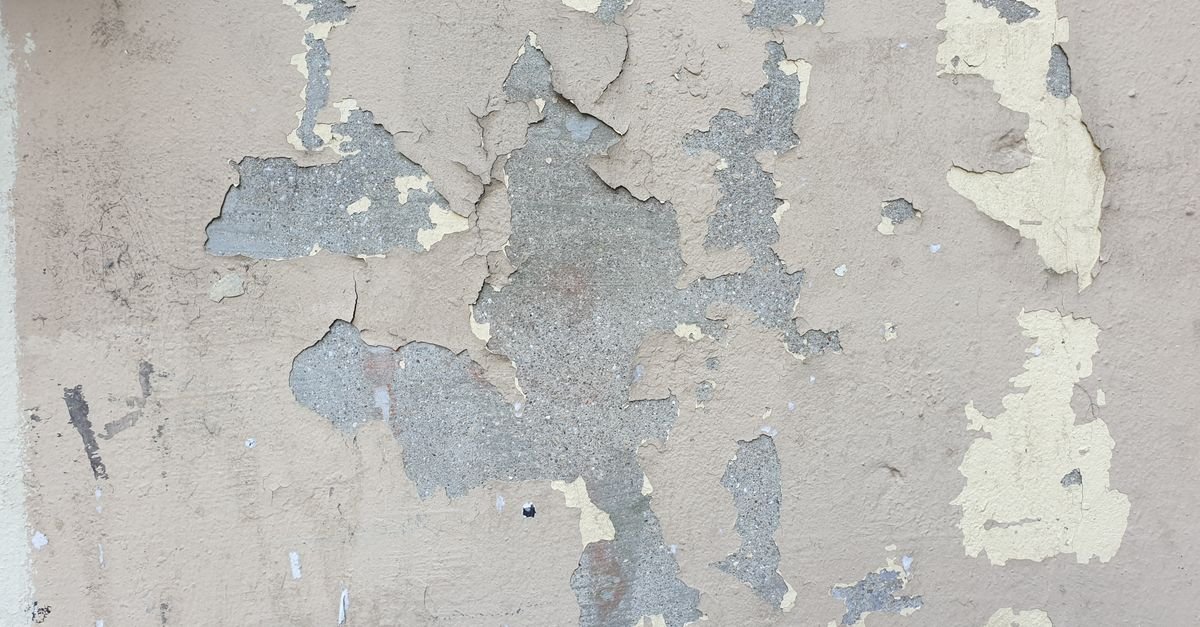
If the structure went up before 1978, assume lead until a test says otherwise. The EPA’s Renovation, Repair and Painting rule governs paid contractors disturbing paint in pre-1978 housing. Work on your own home is not covered, which is the quiet trap: the rule is where the safe practice is written down, and the dust does not check who is holding the grinder.
That changes the order of your options, not just your protective gear. Dry grinding, dry sanding and wire-brushing all convert a stable film into airborne dust and chips. Pressure washing flaking pre-1978 paint distributes those chips into the soil beside the slab, which is precisely the pathway the rule exists to close. On a suspect slab, chemical stripping under plastic with careful bagging keeps the material in one place — and painting over it, covered below, is often the better answer.
Wire Brush, Grinder or Soda Blast: Matching Force to the Mess
Mechanical removal is a ladder, and most of the misery here comes from starting three rungs too high for a problem measured in drips.
| Method | Proportionate for | What it costs the slab | Dust |
| Stiff floor scraper | Softened film after a stripper | Nothing, if you keep it flat | None |
| Wire cup brush on a drill | A handful of drips or overspray spots | Scours the paste, leaves it rougher | Moderate |
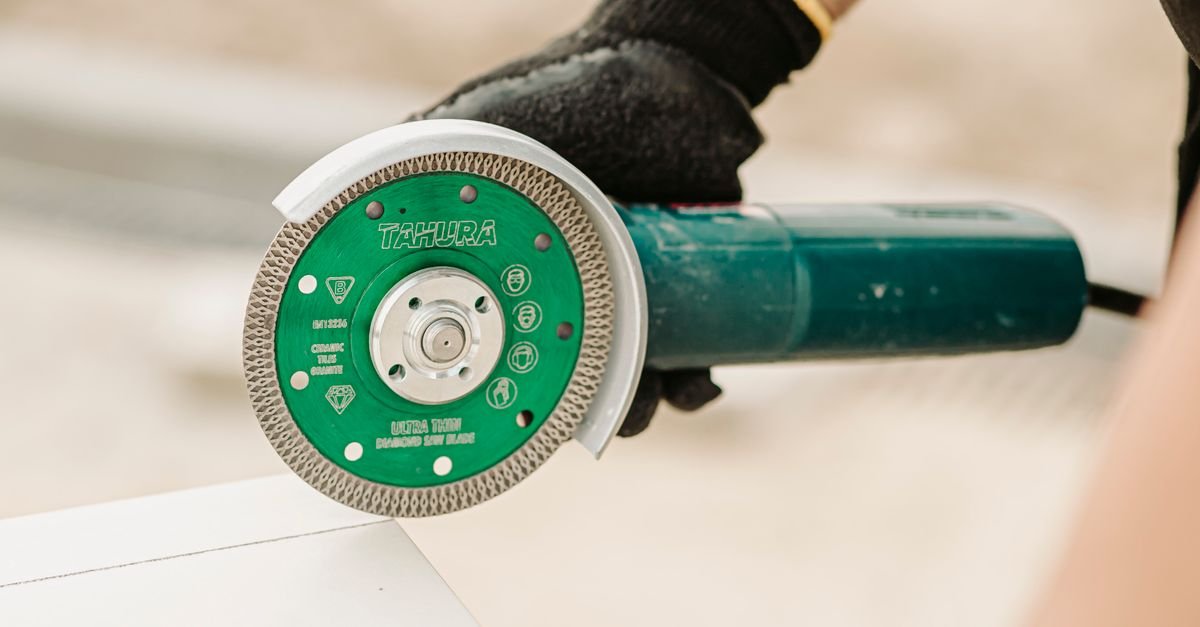
| Diamond cup wheel on a grinder | Whole floors, epoxy, full bare-concrete prep | Removes concrete — that is the mechanism | Severe |
| Soda blasting | Decorative, stamped or textured slabs | Least profile change of the powered options | Moderate, alkaline |
The grinder deserves a warning that has nothing to do with paint. Dry-grinding concrete generates respirable crystalline silica, and OSHA’s workplace limit is 50 micrograms per cubic metre averaged over an eight-hour day (Federal Register, final rule on occupational exposure to respirable crystalline silica, 2016). Nobody regulates your garage, which is exactly why nobody hands you the shroud and the HEPA extractor either. Wet-grind, or run dust collection at the tool. A paper mask and an open door is not dust control.
Soda blasting is the option most homeowners never consider, and it fits more cases than you would think. Sodium bicarbonate is softer than the aggregate, so it fractures the coating without meaningfully re-profiling the concrete underneath — the whole point on a stamped patio or a troweled floor you want to keep. It is messy, the spent media is alkaline enough to matter to nearby planting, and it is usually a rental. Still the right call when the finish is worth more than the paint is annoying.
Cleaning Paint Off Concrete, Step by Step
1. Identify the film and the era. Alcohol rag, acetone rag, knife at an edge. Check when the structure was built before anything becomes dust.
2. Test one square foot somewhere nobody looks. It tells you the dwell time the label was optimistic about.
3. Sweep and degrease first. A stripper cannot reach paint through grit or an oil film, and on a garage floor there is always an oil film.
4. Apply the stripper thick. Trowel it, do not brush it out. A thin coat flashes off and does nothing.
5. Cover it with plastic sheeting for the full time on the label. Hours. Put the kettle on.
6. Lift with a stiff floor scraper, held flat, into a pile. Bag the debris rather than hosing it into the garden — mandatory on a pre-1978 slab, sensible on any of them.
7. Expect a second pass. There is always a second pass. Old paint in deep pores does not surrender on schedule.
8. Rinse and neutralise per the label, then pressure wash at 2,500–3,000 PSI with a 25-degree tip to pull residue out of the pores.
9. Let it dry properly before any new coating — days, not hours.
One honest note: the pores keep a ghost. Painted concrete does not come back as unpainted concrete. It comes back as clean concrete with a faint memory of where the paint was, and anyone who tells you otherwise has never stripped one.
The Honest Case for Painting Over It
This is the question the other results skip, so it is worth asking plainly: does the paint actually have to come off?
If the film is sound — no flaking, no lifting at the edges, no bubbling — full removal is the most expensive, dustiest and most destructive answer available. Clean it, spot-repair the failures, prime for adhesion, recoat. The same soundness test used on siding and trim applies here, and it is set out in can you pressure wash painted wood.
Strip properly when one of three things is true. You are applying a coating that needs a mechanical bond to bare concrete — epoxy, polyaspartic, penetrating sealers and densifiers all need pores to get into. The paint is delaminating in sheets, in which case you are collecting a coating rather than removing one. Or the slab is pushing moisture vapour up from below and the film is trapping it, which shows as blisters that refill after you pop them.
That last one is the trap. A slab poured without a vapour barrier moves water upward continuously, and a non-breathable film over it blisters no matter how carefully it went on. Stripping and recoating with the same product just restarts the clock, which is an expensive way to reach the same Tuesday.
FAQ
Will a pressure washer take paint off concrete?
It takes off paint that has already failed, and very little else. Concrete tolerates about 2,500–3,000 PSI before the jet starts cutting cement paste, and adhered masonry paint survives that comfortably. Past that ceiling you are removing concrete, not coating.
Does vinegar remove paint from concrete?
No. Acid does not attack a cured polymer film at all — it attacks the calcium in the cement paste underneath. At household strength vinegar does nothing; at any useful strength it damages the slab and leaves the paint in place. This problem needs a solvent or a caustic.
What is the fastest way to get dried paint off a concrete floor?
For a whole floor, a diamond cup wheel on a grinder with dust extraction — accepting that you also remove the top layer of concrete. For drips and spots, a stripper under plastic overnight then a floor scraper beats any amount of enthusiasm with a wire brush. Fast and gentle are not on offer together.
Can you paint over old paint on a concrete floor?
Yes, if the existing film is sound, dry and clean and the new product is compatible with it. Spot-repair the failed patches, degrease, prime for adhesion, recoat. What you cannot do is put epoxy or a penetrating sealer over old paint — those need bare pores to bond into.
Will muriatic acid remove paint from concrete?
Not usefully. It undercuts the paint by dissolving the cement paste around it, loosening a few edges and leaving a softened, dusting patch that weathers badly and spalls in freezing conditions. Acid has real jobs on concrete. This is not one.
Strip What Has To Go, Paint Over the Rest
Work the question in this order and the job gets much smaller: is it a coating rather than a stain (it is), which coating, does it genuinely need to come off, and what is the least forceful thing that will move it. Chemistry before abrasion, abrasion before pressure, washer last.
And if you are standing in the garage looking at a floor that is forty percent paint and sixty percent regret — that is a paint-over, not a strip. Prime it and pick a colour you can live with.