Last Updated on September 24, 2026 by Umar Farooq
Cleaning concrete floors properly comes down to one question you answer before you fill a bucket: is the slab sealed, unsealed, polished or painted? Sealed and polished floors get dust-mopped and damp-mopped with a pH-neutral cleaner and nothing acidic. Unsealed slabs want a stiff brush, an alkaline cleaner and as little standing water as you can get away with. Painted floors want the gentlest thing in the cupboard. And indoors, a pressure washer is almost always the wrong tool, for reasons that have nothing to do with pressure.
Concrete is the only floor in the house people treat as indestructible, which is odd, because it is also the only one most owners cannot identify. Ask what a worktop is made of and you get the quarry. Ask what is on the basement floor and you get “concrete” — the equivalent of answering “wood” when asked about a deck. That gap is where the damage happens. Almost every ruined concrete floor I have read about was ruined by a cleaner that would have been perfectly fine on a different concrete floor.
Work Out What You Are Standing On First
There are four finishes you are likely to meet, and three quick tests that separate them. None of the tests need equipment.
The water drop test. Put a tablespoon of water on the floor in an out-of-the-way spot and wait 60 seconds. If it sits there as a bead with a defined edge, the floor is sealed or coated. If it spreads and the concrete underneath goes noticeably darker, the floor is unsealed and you have just watched it drink. This is the single most useful thing in this article and it takes a minute.
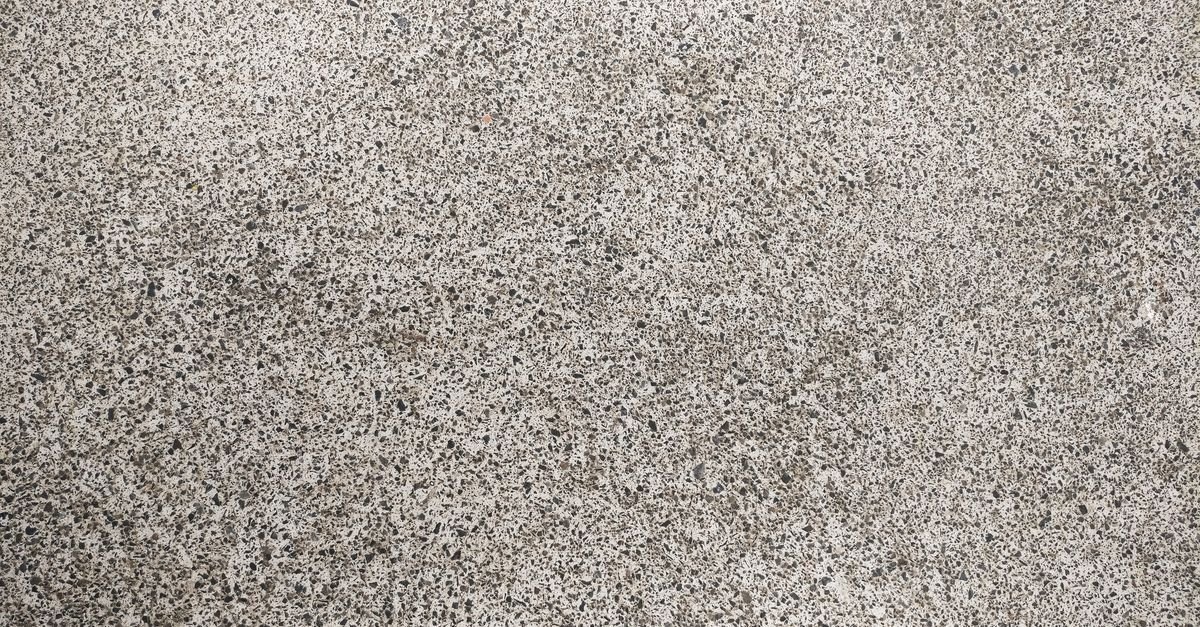
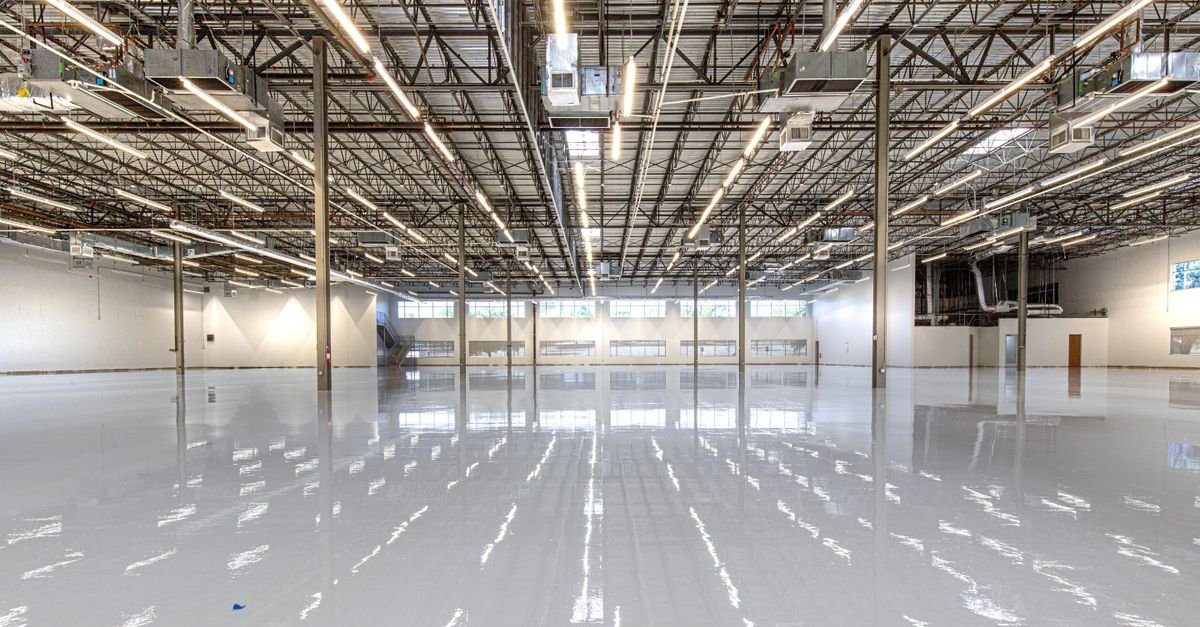
The low-angle sheen test. Crouch and look across the floor towards a window. A topical sealer gives an even, plastic-looking gloss sitting on top of the texture. Polished concrete gives a deeper, mottled reflection that looks like it comes from inside the slab, because it does. Bare concrete gives you nothing.
The edge test. In a corner or behind a door, scratch gently with a coin. A topical film shows a fine white scuff line. A penetrating sealer and a polished floor will not, because there is no film to scuff.
| Finish | How it looks | Water drop | Cleaning approach |
| Unsealed / bare | Matte, chalky, often dusty | Soaks in, goes dark | Alkaline cleaner, brush, minimal water, dry it |
| Penetrating sealed | Matte to satin, no film | Beads, no darkening | pH-neutral damp mop |
| Topical sealed or polished | Even gloss or deep reflection | Beads and sits | pH-neutral damp mop, microfibre only |
| Painted / epoxy coated | Solid colour, visible edges | Beads, may show chips | Mild soap, soft mop, no scrubbing pad |
If you get a mixed result across the room — beads by the wall, soaks in down the middle — the sealer has worn through the traffic lane. Treat the whole floor as unsealed until it is resealed, because the worn strip is the part that will stain.
Sealed Concrete: You Are Cleaning the Sealer, Not the Slab
This is the part that reframes everything else. On a sealed floor, your mop never touches concrete. It touches a film of acrylic, epoxy or polyurethane that is a few thousandths of an inch thick, and every cleaning decision you make is about that film rather than the eight inches of stone underneath it.
Which is why the pH number matters more than the brand name. Sherwin-Williams puts the target plainly: pH-neutral cleaners sit at a pH of 6.5 to 7.5, and that band is what a daily cleaner should stay inside. Go acidic and you soften and dull the film. Go strongly alkaline and you start stripping it. The same page notes that bleach and ammonia can etch the surface and compromise the finish, which is a manufacturer telling you not to use the two products most people reach for first.
So the banned list on a sealed floor is longer than you would expect: vinegar, lemon, any citrus cleaner, pine-based cleaners, bleach, ammonia and every “heavy duty” degreaser in the garage. They do not eat through the sealer in one pass. They take the gloss off a bit at a time until the floor looks tired and nobody can point to the day it happened.
Use a flat microfibre mop, wrung out rather than sopping, and change the water the moment it turns grey. A sealed floor mopped with dirty water is a floor with a thin layer of dirty water dried onto it, which is the actual cause of most “my sealed concrete looks cloudy” complaints.
Unsealed Slabs Drink Whatever You Mop On
An unsealed slab is a sponge that weighs two tonnes. Mop water does not sit on it and wait to be wiped up — it goes in, carries whatever was dissolved in it down with it, and then comes back out later as a pale ring around where the puddle used to be.
That changes the method three ways. Use less water than feels right: a mop wrung until it barely darkens the floor lifts dirt, where a wet one pushes it into the pores. Work in small sections and pick the dirty water up rather than spreading it — two buckets, or a wet vac. And dry it, because a damp unsealed floor collects airborne dust and footprints for hours afterwards.
On chemistry, go alkaline rather than acidic. Acid dissolves the cement paste that holds the sand and stone together, which opens the surface up and makes the next stain worse than the last one. This is the opposite of the advice you will find on a hundred cleaning blogs, and it is why I would rather you used a proper alkaline concrete detergent with ten minutes of dwell time than a bottle of vinegar and a lot of optimism. Our guide to power washing chemicals covers which detergent family suits which mess.
Oil is the exception that needs its own treatment rather than a stronger mop. If your workshop slab has dark patches that reappear after every clean, the oil is below the surface and needs drawing out — the method is in our piece on whether pressure washing removes oil stains from concrete.
Polished Floors and Painted Floors Are Not the Same Thing
They get lumped together because both are shiny, and they fail in completely different ways.
Polished concrete is mechanically ground with progressively finer diamond pads and then treated with a chemical densifier that reacts inside the slab to harden it. There is no coating. The shine is the stone itself, which is why polished floors are so hard to damage with a mop and so easy to damage with grit. Sand tracked in on a boot sole is a lapping compound, and every step grinds it into the surface. Mats at the door do more for a polished floor than any cleaner in the catalogue.
Painted or epoxy-coated concrete is a film with edges, and the edges are the problem. Where the coating has chipped, water gets underneath and works sideways, lifting the paint from the slab outwards. Scrub a chipped floor with a stiff pad and you will take a coin-sized flake off and turn it into a dinner plate by spring. Soft mop, mild soap, minimal standing water, and repair the chips before you deep clean rather than after.
Why a Pressure Washer Indoors Is the Wrong Tool
Here is the opinion, and it is the one this site exists to say out loud: a pressure washer is the wrong tool for an interior concrete floor, and the reason is not pressure. It is that you have nowhere to put the water.

Do the arithmetic. A modest homeowner machine moves about 2.0 gallons per minute. Twenty minutes of actual trigger time is 40 gallons on a floor that has no fall, no drain and no gutter. That water finds the lowest point in the room, which is usually a wall, a stud plate or whatever was stored on the floor. Drying it is a bigger job than the cleaning was.
Then there is the overspray. Outdoors, a 25-degree tip on flatwork throws a plume of water and grit sideways for ten or fifteen feet and nobody notices, because it lands on more driveway. Indoors that plume lands on the walls, the joists, the boiler and the boxes you meant to move. A surface cleaner attachment contains most of it — which is why professionals use one indoors — but a surface cleaner generally needs around 3 GPM to work properly, and most homeowner machines do not have it.
And if the machine is gas-powered, stop. A farm owner died of carbon monoxide poisoning about 30 minutes into cleaning his barn with an 11-horsepower gas pressure washer — a case NIOSH uses in its alert on carbon monoxide hazards from small gasoline-powered engines. A barn is not a sealed room. It did not matter. The EPA lists “generators and other gasoline powered equipment” among indoor CO sources precisely because the gas is odourless, colourless and impossible to smell coming. Open doors are not ventilation. They are a feeling of ventilation.
There is a narrow case where a pressure washer indoors is fine: an empty space with a working floor drain or a slab that genuinely falls to an open doorway, an electric machine, and a surface cleaner. That is a garage bay or a basement with a sump, and not much else. If what you are actually cleaning turns out to be outside after all, the settings are in our guide to how much PSI to clean a concrete driveway.
Cleaning Concrete Floors Week to Week
The routine that keeps a concrete floor looking right is dull, and being dull is the point. Almost all of the work is removing grit before it gets walked in.
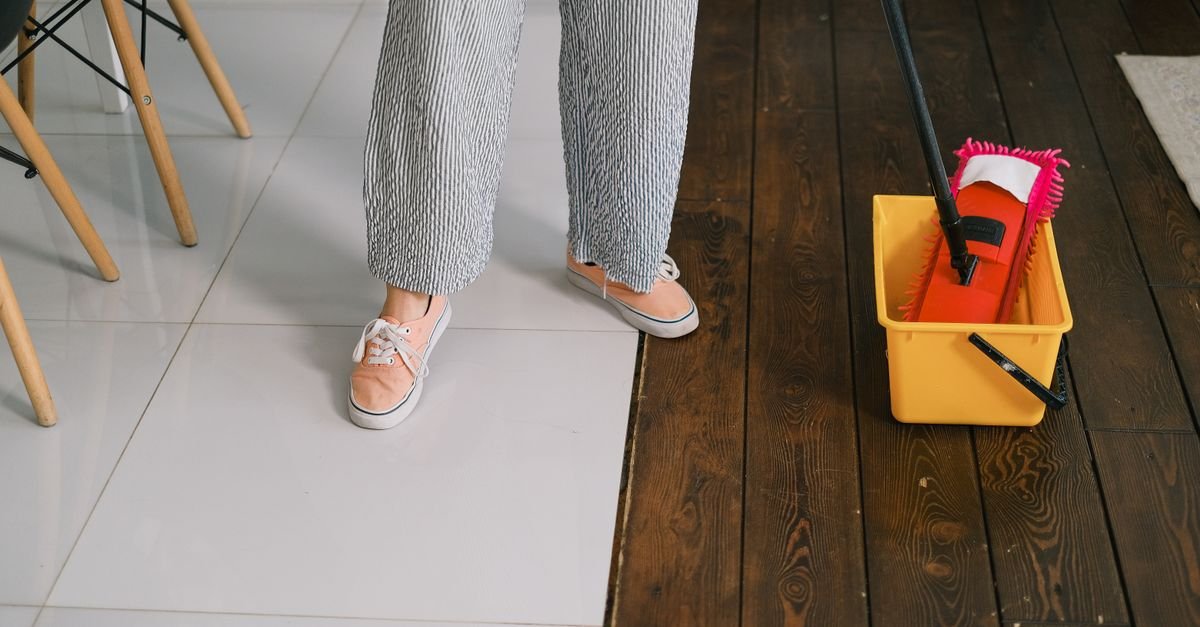
- Every few days: dry dust mop or vacuum with a hard-floor head. No water. This is the step that decides how the floor looks in five years.
- Weekly: damp mop with a neutral cleaner, diluted at the rate on the label. Neutral cleaners are usually concentrates, and doubling the dose leaves a film that attracts dirt rather than removing it.
- Quarterly: a deeper pass with a scrubbing brush on the seams and edges, where dust collects and nobody mops.
- Always: mats at every entrance, and something under anything with a metal foot.
Two habits beat any product. Do not let the solution dry on the floor — mop a section, pick the water up, move on. And on an unsealed slab, clean spills the day they happen, because tomorrow the spill is no longer on the floor, it is in it.
Why Does the White Dust Keep Coming Back?
If you mop, the floor looks great, and four days later there is a chalky white bloom or a fine grey powder again, you are not cleaning badly. You are cleaning a symptom.
Two different things cause it. Efflorescence is salt. Water moving up through the slab dissolves mineral salts, carries them to the surface, evaporates, and leaves the salt behind as a white crust. Mopping it with water dissolves the salt, some of which soaks back in, and then comes back out again next week. The fix is a dry fix: sweep and vacuum it off, do not wet it, and then deal with the moisture underneath. Dusting is a weak, chalky top layer left by a bad finishing job or a slab finished with water on the surface; it keeps shedding regardless of how much you mop, and it needs a chemical densifier rather than a cleaner.
To find out which you have, tape an 18-inch square of clear plastic sheet to the slab on all four edges and leave it for two or three days. Condensation underneath, or a dark patch on the concrete, means moisture is coming up through the slab. That is a drainage and vapour-barrier problem, and it is also the reason not to seal the floor yet — a sealer applied over a slab that is still driving moisture will blister off, usually about six weeks after you finish congratulating yourself.
What Never Touches an Indoor Slab
- Vinegar and lemon, on anything sealed, polished, stained or coloured. Acid dulls the finish and etches the surface, and it does it in one pass on a polished floor.
- Muriatic acid, indoors, full stop. It belongs to etching bare concrete before a coating goes down, with proper ventilation, and not to cleaning.
- Bleach and ammonia on a sealed or coated floor, per the coating manufacturers themselves. Never together, anywhere, for the obvious reason.
- Pine and citrus cleaners, which are not pH-neutral no matter how domestic the bottle looks.
- Oil soaps and wax-based floor cleaners, which leave a film on concrete that turns into a slip hazard the first time it gets damp.
- Wire brushes, steel wool and green scouring pads on any finish. White or red pads only.
- Rock salt tracked in on boots. It is not a cleaner, but it does more damage over a winter than anything on this list.
FAQ
What is the best cleaner for concrete floors?
For sealed, polished or painted floors, a pH-neutral floor cleaner in the 6.5 to 7.5 range, diluted per the label. For bare, unsealed concrete, a mild alkaline concrete detergent with five to ten minutes of dwell time. A quarter cup of dish soap in a gallon of warm water is a reasonable stand-in for either, and will not harm anything.
Can you use vinegar on concrete floors?
Not on sealed, polished, stained or coloured concrete. Vinegar is acidic, it dulls sealers, and it etches a polished surface. On bare, uncoloured concrete it will not destroy anything in a single use, but it dissolves cement paste and opens the pores, which makes the next stain harder to remove than the one you just treated.
How do I know if my concrete floor is sealed?
Put a tablespoon of water on it and wait a minute. Beading with no colour change means sealed. Soaking in and darkening means unsealed. Check two or three spots, including the middle of the main walking route, because sealers wear off traffic lanes first.
Can you use a pressure washer on an indoor concrete floor?
Rarely, and not because of the pressure. Indoors there is no drainage for the 40-plus gallons a twenty-minute session puts down, and the overspray coats everything within about fifteen feet. Never use a gas machine indoors or in an attached garage at all — the carbon monoxide risk is real and has killed people in half an hour.
Why is my concrete floor still dusty after mopping?
Either the slab is shedding a weak surface layer, which needs a densifier rather than a cleaner, or moisture is carrying salts up through the slab and leaving them behind as it evaporates. The plastic-sheet test tells you which.
How often should concrete floors be cleaned?
Dust mop or vacuum every few days, damp mop weekly, deep clean quarterly. The dry passes matter most — grit is abrasive, and a floor swept often outlasts one mopped often.
Can you use a steam mop on a concrete floor?
On bare concrete, yes, sparingly. On a topical sealer or an epoxy coating, be careful: sustained heat can soften some films and leave a dulled patch where you paused. If you use one on a coated floor, keep it moving and test in a corner first.
Find the Finish Before You Fill the Bucket
Everything above collapses into one habit. Before you buy a cleaner, pour a tablespoon of water on the floor and watch what it does. Sixty seconds of that tells you more than an afternoon of reading product labels, including this one.
And if you were planning to drag the pressure washer down the basement stairs, it is not that it will not work. It is that it will work, all forty gallons of it, and then you will be the person standing in a wet basement at nine at night with a shop vac and a rethink.