Last Updated on September 26, 2026 by Umar Farooq
Protecting plants when pressure washing is a concentration problem, and every step that actually works is a way of lowering the concentration of cleaning solution that reaches a leaf or a root. The jet is the minor actor here. A 40-degree fan that catches a hosta leaf will tear it, and that is cosmetic damage the plant grows out of by August. What kills a shrub three weeks after you have packed the machine away is the chemistry — and specifically the part of the chemistry that never breaks down.
Twelve pages on this site tell you to wet your plants before you start. I went back and read them, and not one says how much water that means or what the water is doing. That is not a criticism — it is one sentence inside an article about a wall. But it is why the advice gets followed for ten seconds and then treated as complete.
So: four decisions, in the order you have to make them. What goes in the sprayer, how you prepare the planting, whether you cover anything at all, and what the flush afterwards has to be. The fourth is the one everybody underdoes, and it is the only one that removes anything.
Protecting Plants When Pressure Washing Is a Salt Problem, Not a Pressure Problem
Start here, because this decision is made in the garage before you pick up a hose, and it sets how much the other three matter.
Household bleach is sodium hypochlorite. Two of those three words are a salt. The hypochlorite ion is the working part — it is the oxidiser, it is what destroys the algae, and doing that job is what uses it up. The sodium and the chloride are not consumed by anything. When the reaction is over they are still sitting in your border, and what they are is table salt.
That matters because the two ions do different damage in different places, and only one of them is a foliage problem. Illinois Extension splits it cleanly: “High levels of sodium can damage the soil’s structure, preventing it from clumping and making it susceptible to compaction. This can then lead to reduced permeability in soils.” Sodium, in other words, is a soil-engineering problem — it turns a friable bed into something that sheds water instead of taking it. Chloride is the one that gets into the plant: “Chloride ions can also accumulate in the growing points of plants and become toxic, resulting in stunted, yellow foliage, leaf scorch, twig dieback, and overall stunted growth” (Illinois Extension, Deicing salt and plants).
Leaf scorch and twig dieback are not what a rinse fixes, because by the time they show, the chloride is already inside the plant and the sodium is already in the soil structure.
Which gives you the first real decision. Does this job need chlorine at all? A wall that is merely dirty does not — a surfactant and a rinse will do it, and you will have added nothing to the bed. A wall carrying established black mildew does, and then the answer is dilution rather than avoidance; the correct mix strengths are worked out in siding cleaning solution, and how to get the chemical onto the wall without sending it through your pump is in sodium hypochlorite for pressure washing. Sodium percarbonate is the genuine alternative where the planting is the priority, and its real trade-off — no chloride, but a slower afternoon and an oxidiser that still burns leaf tissue on contact — is argued out in oxygen bleach for cleaning. Acids are a separate mechanism with their own dilution rules, and those live in concrete cleaning acid.
Wet Leaves Dilute, They Do Not Shield
Now the pre-wet, and the reason it works is not the reason most people assume.
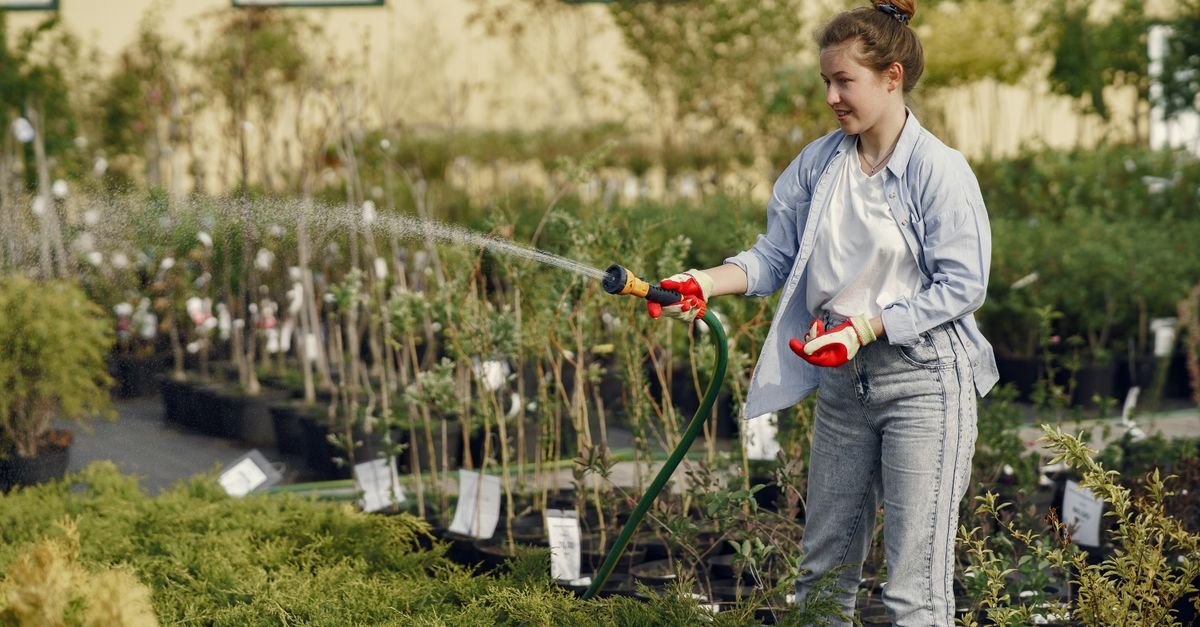
There is no gate on a leaf that water closes. The injury from a salt deposit is mechanical in the plumbing sense: “Salt that lands on plant tissues can dry them out by pulling water out of plant cells,” says the same Illinois sheet. That is osmosis running backwards through the leaf surface, and its severity tracks the concentration of what is sitting there. A film of clean water on the leaf lowers that concentration on arrival and lets the mix run off instead of drying in place — and drying in place is the worst case, because as the water evaporates the salt left behind gets stronger, not weaker.
So the pre-wet is a concentration control. It is not armour and it is not a barrier. Illinois makes that boundary explicit in passing, noting that thick waxy leaf surfaces protect plants from salt spray but that those adaptations “won’t protect them from salt in the soil.” The leaf and the root zone are two separate exposures, and wetting handles one of them better than the other.
On the soil side the mechanism is infiltration capacity, not uptake. Soluble salts travel with soil water, so a dry bed under a wall you are washing is a sponge pointed the wrong way — it takes the runoff straight down into the root zone. A saturated bed has less room to accept anything, so the runoff sheets sideways and leaves. Worth four minutes, certainly. But it is a diversion rather than a defence: the water still goes somewhere.
Two things the one-line version leaves out. A drying deposit is a strengthening deposit, so the enemy is evaporation and the fix is keeping everything wet throughout rather than wet at the start. And the weather does half the work either way: Colorado State notes that “salt injury generally is more severe during periods of hot dry weather, when water use is high.” The overcast, still day you were already told to pick for the sake of the detergent is also the day your border does best on. A hot bright Saturday makes the job harder in two directions at once.
Cover, Move, or Leave It Open?
Three options, and most people reach straight for the worst one because it looks like the most effort.
Move it, if it will move. Pots and containers come first and this is not a close call — a pot holds a finite volume of soil with no route below the root zone, which makes it the one case where the rinse cannot save you later. Ten minutes shifting planters is the highest-value ten minutes in the whole job.
Leave it open and keep it wet. This is the default for anything growing in the ground within range of the wall. Wet foliage in open air dilutes, drains and dries; it is the state you actually want the plant in.
Cover it only as a last resort, and only briefly. Plastic sheeting over a shrub in sun is a small greenhouse with one occupant and no ventilation policy. The closest published figure I could find is from cold-frame guidance rather than from anyone draping a tarp over a viburnum, and it is blunt enough to settle the argument: “During the day, the covering MUST be opened, at least a slit, to prevent overheating,” because “with just an hour of sun, temperatures under a closed cover can quickly rise to over 130 degrees F” (Colorado State University Extension, CMG GardenNotes #722).
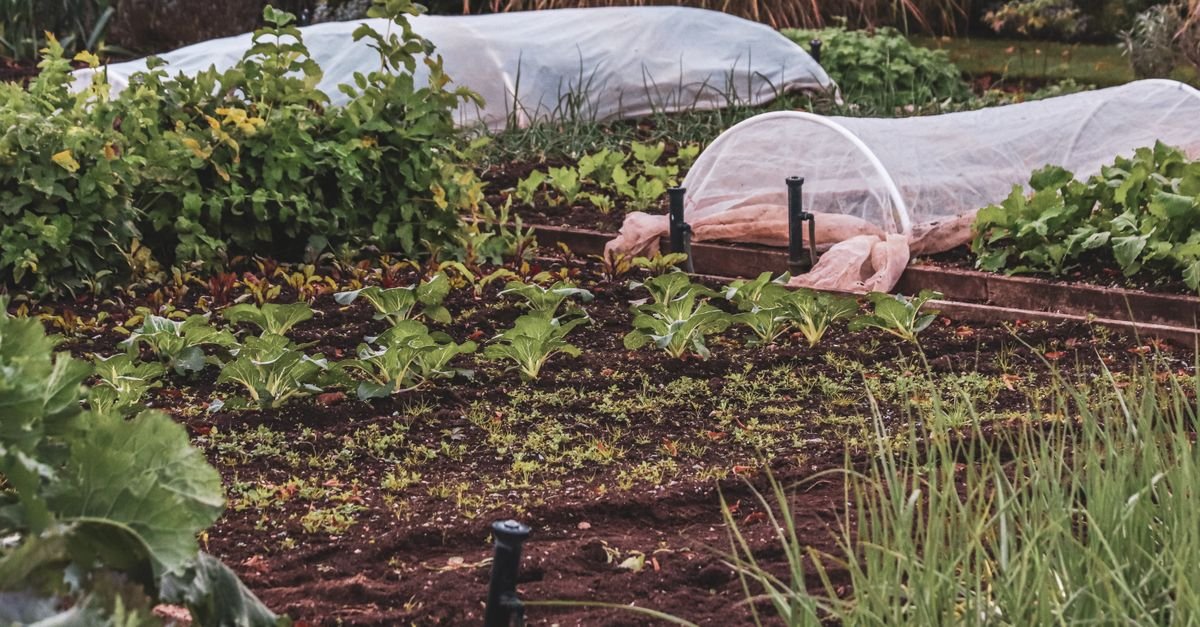
Note what that figure describes: a cover held clear of the plants, over a bed, designed to be vented. Polythene lying on the leaves of a shrub is worse ventilated than that, not better. I could not find a measured number for the tarp-on-a-shrub case and I am not going to invent one — but the direction is not in doubt, and neither is the second problem, which is geometry rather than heat.
A tarp sheds. Everything that lands on it runs to its lowest edge, and the lowest edge of a tarp thrown over a shrub sits at the drip line, directly above the root ball. You have not excluded the runoff. You have collected it and delivered it to the one place you wanted it kept away from, in one concentrated dose instead of a diluted spread. That is reasoning from the shape of the thing rather than from a study, and I would rather say so than dress it up.
If you must cover, use burlap or a breathable landscape fabric rather than polythene, cover one section at a time, uncover it the moment you move on, and never cover anything and then stop for lunch. On a raised deck, where the planting is underneath you and cannot be pre-soaked at all, the tarp goes on the ground instead of on the plants — that case is worked through in cleaning decks with bleach.
Your Rinse Is Measured in Inches, Not Minutes
Here is the one strong opinion on this page, and it is the part of the job that the advice everywhere gets backwards. The pre-wet gets all the attention and the flush afterwards is where the actual protection is — and almost nobody does enough of it, because a real flush does not look like a rinse.
Colorado State University Extension is unambiguous about what removes salt from soil: “Leaching is the only practical way of removing excess salts.” There is no neutraliser, no additive and no waiting it out. Water carries salt down below the root zone or the salt stays. And the amounts published for doing it are not hose-pass amounts:
| Water applied in one continuous soaking | Salt leached from the soil |
| 6 inches | about 1/2 |
| 12 inches | about 4/5 |
| 24 inches | about 9/10 |
Those figures come with two conditions that matter as much as the numbers: the water “should be applied slowly so amounts do not exceed the ability of the soil to take in water,” and it “must not run off the surface” (CSU Extension, Saline Soils).
Put a tape measure on that. Six inches of water over a border three feet deep and ten feet long is fifteen cubic feet, or about 110 US gallons — and that buys you half the salt. The forty-second pass with a trigger nozzle that most of us call rinsing the plants is around one percent of that, applied fast enough to run off. It is not a small version of leaching. It is a different activity.
Which is the reframe worth keeping: stop thinking of it as a rinse and think of it as a watering. You are not washing a leaf, you are irrigating a bed, and it should look like the deepest watering that border has had all year. Set a sprinkler or a soaker on the affected planting and leave it running while you coil the hose and put the machine away. Slow and long beats hard and brief, because a fast flood runs across the surface and leaches nothing.
You also have more time than you think, which resolves the awkward tension in all of this — a bed you pre-soaked has already spent some of its infiltration capacity, so it cannot take a deep leach in the same ten minutes. It does not have to. Colorado State’s timescale for flushing a salt spill off planting, given for the analogous case of pet urine, is to “rinse, and flush with water within 8 hours.” That is your window: hose the foliage off immediately, then give the soil its real soaking that evening, once it has drained enough to accept it.
One thing to get right while the water is running: aim the wash-water runoff at lawn rather than at a border. Grass sits in the tolerant tier and an ornamental bed sits in the sensitive one, so you are choosing which one takes the load — and where house-wash runoff naturally heads on most properties is covered in power wash your house. If the surface in question is a slab that drains into planting rather than a wall above it, the direction of work becomes the variable to plan around, which is the argument made in cleaning concrete with bleach.
Hours, a Season, or Gone
Damage from this arrives on three different clocks, and knowing which one you are on tells you whether to act or to wait.
Hours to two days: foliar burn. Marginal scorch and browning at leaf tips and edges, worst on the side that faced the wall, worst on older foliage. This is the concentrated deposit doing its osmotic work, and it is the only tier with a live response window — Illinois’s instruction is simply to “hose off any plants that have experienced salt spray as soon as possible.” If the tissue is already brown it is dead and will not green up again, but brown leaves are not a dead plant. The leaves are lost; the buds usually are not, and most established shrubs will push new growth once the load is flushed.
A season: the soil. This is the tier nobody watches for, because there is nothing to see in week one. Stunted growth, twig dieback, early autumn colour, evergreens turning pale or bronze in late winter — the symptoms Illinois lists for chloride accumulating in growing points show up months later, by which time nobody connects them to a Saturday in June. Colorado State adds the figure that makes this properly uncomfortable: yields “may be reduced as much as 25% without easily visible damage to plants.” A plant can be losing a quarter of its performance and still look fine from the patio. It is also why repeat cleanings in the same spot compound — you are adding to a load that only leaching removes, so if you never leach, every wash stacks on the last one. If you have washed the same elevation three summers running and the planting beneath it has quietly stopped thriving, CSU is clear that the amount of salt in a soil “can be quantified only by a soil test.”
Gone. Two honest cases. A container, first: a pot has a fixed volume of soil and nothing underneath to leach into, so the salt has nowhere to go and the only remedy is repotting. Then drainage, where CSU’s limit is flat — “salty soils are not reclaimable when the soil’s clay content, compaction, or hardpan prevents leaching.” If your bed sits on compacted clay or a hardpan, leaching is not available to you and neither is recovery. That pushes the whole problem back to the first decision: on heavy soil, the plant protection is choosing not to use chlorine there at all.
FAQ
Will pressure washing kill my plants?
The water will not. A direct hit from a narrow tip tears leaves and strips bark on soft new growth, which looks dramatic and heals. What kills plants is the cleaning chemical, and mostly the salt left behind after the oxidiser in it has been used up. If you are rinsing a surface with plain water and no detergent, your planting is in no real danger beyond a shredded leaf or two.
Do I really need to wet plants before pressure washing?
Yes, and for longer than people do it. Wet foliage dilutes whatever lands on it and lets the mix run off rather than drying on the leaf, where it would only get stronger. Saturated soil also has less capacity to absorb runoff, so more of it moves away across the surface. Soak until water briefly stands, then keep everything wet for as long as you are working, not just at the start.
Should I cover plants with plastic when pressure washing?
Only briefly, and only if you cannot move or wet them. Plastic in sun overheats fast — cold-frame guidance records over 130 degrees F under a closed cover after an hour of sun — and a tarp draped over a shrub also funnels everything that lands on it down to the drip line, straight onto the root ball. Breathable fabric, one section at a time, uncovered as you move on, is the version that helps.
How long after pressure washing is it safe for pets and plants?
For pets, until the surface has been rinsed with clean water and has dried. For plants, the useful window is the other way round: get foliage hosed off straight away, and give the soil a deep, slow soaking within about eight hours while the salt is still near the surface and has not moved into the root zone.
Is oxygen bleach genuinely safer around planting?
Safer on one specific axis. Sodium percarbonate contains no chloride, so it leaves nothing permanent in the soil, and that is a real advantage where a wall sits above a bed you care about. It is still a strong oxidiser and will burn leaf tissue on contact, so it is not a licence to skip the pre-wet, and it is slower on established black mildew.
Can I pressure wash near a vegetable garden?
With plain water, yes. With chlorine bleach, treat the bed as off limits. Vegetables are shallow-rooted and densely planted, and they include some of the most salt-sensitive plants you will grow — Colorado State recommends beans specifically as an indicator, on the basis that if the beans are doing well, soluble salts are not your problem. Sheet the bed completely, work away from it, or use a chloride-free chemistry and accept the longer dwell.
Water the Bed Twice and the Wall Once
If you take one thing from this page, make it the ratio. The wall gets one wash. The planting under it gets soaked before you start and flooded properly afterwards, and the second of those is the one that removes anything — six inches of water for half the salt, and no shortcut exists because nothing else takes salt out of soil.
The rest is small and cheap. Move the pots. Pick the dull, still day. Keep the foliage wet rather than covered. And if you have already finished the job, put the machine down and go and turn a sprinkler on that border for an hour — you are inside the eight hours, and the hydrangea does not know yet.