Last Updated on September 24, 2026 by Umar Farooq
Cleaning decks with bleach is a trade-off rather than a technique: chlorine bleach kills mildew and algae faster and more reliably than anything else you can buy in a jug, and the same oxidation that kills them keeps going into the wood underneath — so the right mix is the weakest one that works, and the USDA Forest Products Laboratory puts the hard ceiling at one part household bleach to three parts water. One to five is usually plenty.
That single sentence is more specific than most of what is written about this, and it is also where the argument starts rather than ends. The deck trade has spent roughly two decades quietly migrating away from chlorine bleach towards sodium percarbonate, and if you ask why, you get an answer delivered with enormous confidence and almost no citation behind it. I went and read what the federal wood laboratory actually says about the comparison. It is more interesting than either camp lets on.
The Growth Dies First, the Wood Goes Second
Sodium hypochlorite is an oxidiser. It does not dissolve the black off your boards or lift it away the way a detergent does — it destroys the dark pigment in the fungal cells until there is nothing left to see. That is why the colour change looks instant and slightly magical, and it is also why a bleached deck can still be furry with dead mildew that has simply gone transparent.
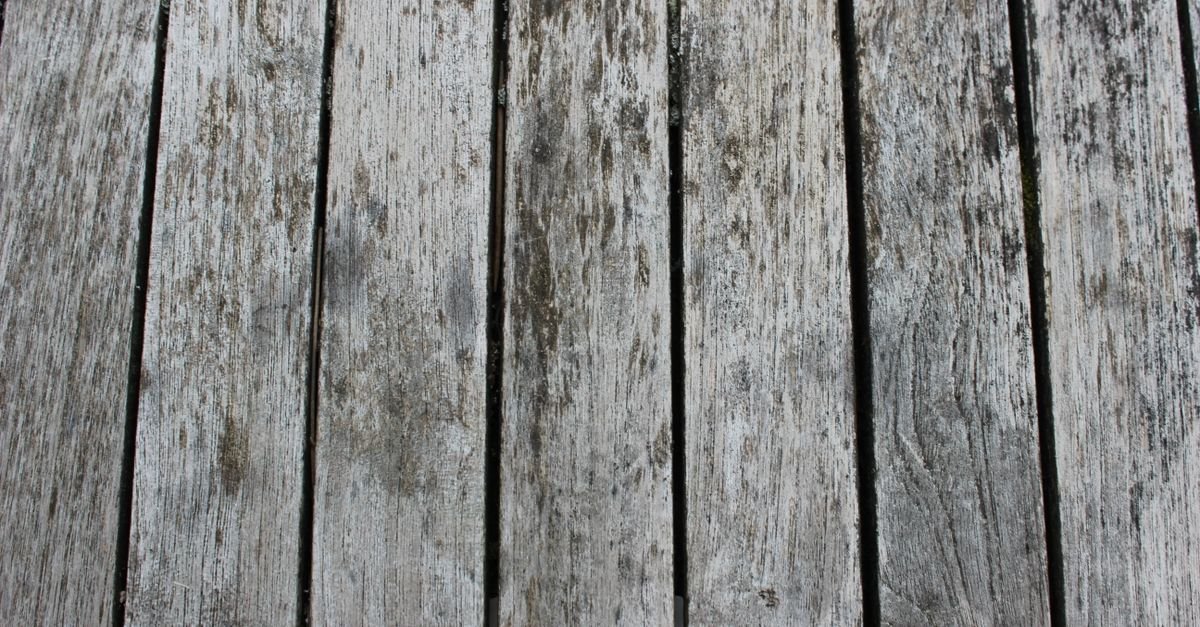
The oxidation does not politely stop at the organism. Wood is cellulose fibre glued together with lignin, plus a set of natural extractives that give cedar and redwood their colour and much of their decay resistance. The Forest Products Laboratory describes the end state plainly: in advanced weathering, “or after strong bleaching, when extractives and lignin have been removed leaving a cellulose surface, the clear cells at the surface give a bright silvery sheen when dry” (FPL-GTR-282, Chapter 16, Finishing Wood). A deck that comes up unnaturally bright and then goes chalky-silver in the sun has not been cleaned especially well. It has been partly stripped.
Before you mix anything, there is a ten-second test worth doing, and it is the most useful thing in that whole chapter. Put two drops of undiluted household bleach on the discoloured patch. FPL: “The dark color of mildew will usually bleach out in a few seconds. Surface discoloration that does not bleach is probably dirt, extractives bleed, or iron stain.” If your grey stays grey, bleach is the wrong chemical for your problem and no amount of it will fix the thing you are looking at.
One quick fence to put up: none of this transfers to composite boards. A capped composite deck has a polymer shell with no lignin in it to lose, so the constraint there is mechanical rather than chemical — see what PSI to pressure wash composite decking for the brand-by-brand limits.
Why the Deck Trade Moved to Oxygen Bleach
Walk into any deck restoration forum and the consensus is settled: chlorine bleach is for roofs and concrete, and wood gets sodium percarbonate. Percarbonate is sodium carbonate with hydrogen peroxide locked into the crystal — washing soda and peroxide holding hands until they hit water, at which point they let go and the peroxide does the oxidising. It is the active ingredient in most of the bagged deck cleaners on the shelf.
FPL confirms that is what is in the bag, and then says something the trade almost never quotes. Oxygen bleaches “have been reported to be less likely to damage wood surfaces than chlorine-based bleaches, particularly with low-density woods like western redcedar, Alaska yellow-cedar, and redwood. However, it is difficult to compare the advantages and disadvantages of the two types of cleaner (oxygen and chlorine) because of the wide range of active ingredient concentrations in the cleaners, additives in the cleaners, bleach consumption by unintended chemical targets, and various wood substrates that have been used for evaluating the cleaners.”
Here is my position, and it is not the one either side wants. The trade’s switch to oxygen bleach is the right default and the evidence for it is weaker than anyone selling it admits. There is no clean head-to-head trial, because nobody has run two cleaners at matched active concentrations on matched boards. What there is: a known mechanism, a consistent direction of anecdote, and a decisive asymmetry in failure modes. Percarbonate fails by being slow and needing a second pass. Chlorine fails by leaving a surface you have to sand. When you cannot measure the difference, pick the one whose bad day is cheaper.
Two things that consensus does not protect you from. Percarbonate solutions are strongly alkaline themselves, so “oxygen bleach” is not a licence to leave it on the boards all afternoon. And some products sold as deck cleaners are neither — they are sodium hydroxide, which FPL describes as “a strongly alkaline chemical that pulps wood,” to be used “only as a last resort.” Read the active ingredient on the bag rather than the adjective on the front of it.
Cleaning Decks With Bleach: The Dilution Ceiling in Writing
If you are going to use chlorine anyway — because it is what is under the sink, or because the growth is heavy and you want it gone today — there is a published recipe to work from instead of guessing. FPL’s mildew cleaner for wood surfaces:
| Component | Quantity |
| Household bleach, 5% sodium hypochlorite | 1 part (1 gal) |
| Warm water | 3–5 parts (3–5 gal) |
| Powdered household detergent | a little (1/4 cup) |
The sentence that matters sits underneath it: “One part household bleach to five parts water should be adequate. In no case should a mixture stronger than one part bleach to three parts water be necessary.” That is a ceiling, in writing, from a federal wood laboratory. One in five off a 5% jug lands you a bit under 1% sodium hypochlorite on the boards, which is a long way below what most people pour.
Three details in that recipe that get skipped:
- Powdered detergent, not liquid. FPL is blunt about why: “Do not use liquid detergent because it may contain ingredients that react with bleach to give toxic fumes.” This is the single most ignored line in the document and it is the one about fumes.
- Scrub, then rinse thoroughly. The instruction is a bristle brush or sponge, gently, followed by a proper rinse. The chemistry kills; the brush lifts.
- If a machine is involved, it is the rinse step. FPL’s wording on power washing here is “keep the pressure low to avoid damaging the wood.” The base guide to cleaning decks covers the material-by-material figures; nothing about adding bleach raises them.
If you are mixing from a 12.5% contractor jug rather than a 5% supermarket one, you are starting at roughly two and a half times the strength and the ratios above need adjusting down accordingly — the product-side detail lives in our guide to sodium hypochlorite for pressure washing. Keep the surface wet for the dwell and do not let it dry on the boards, which is the failure that produces streaks you then try to remove with more bleach.
The Hardware Underneath Is Downstream of Everything
A deck is a grid of gaps with a structure holding it up, and this is the part that separates it from every other bleaching job you might do. On a roof, your solution runs to the gutter. On a deck, it runs between the boards and lands on the joists, the joist hangers, the ledger bolts, the post bases and the hurricane ties — the exact set of parts whose failure is the one that matters.
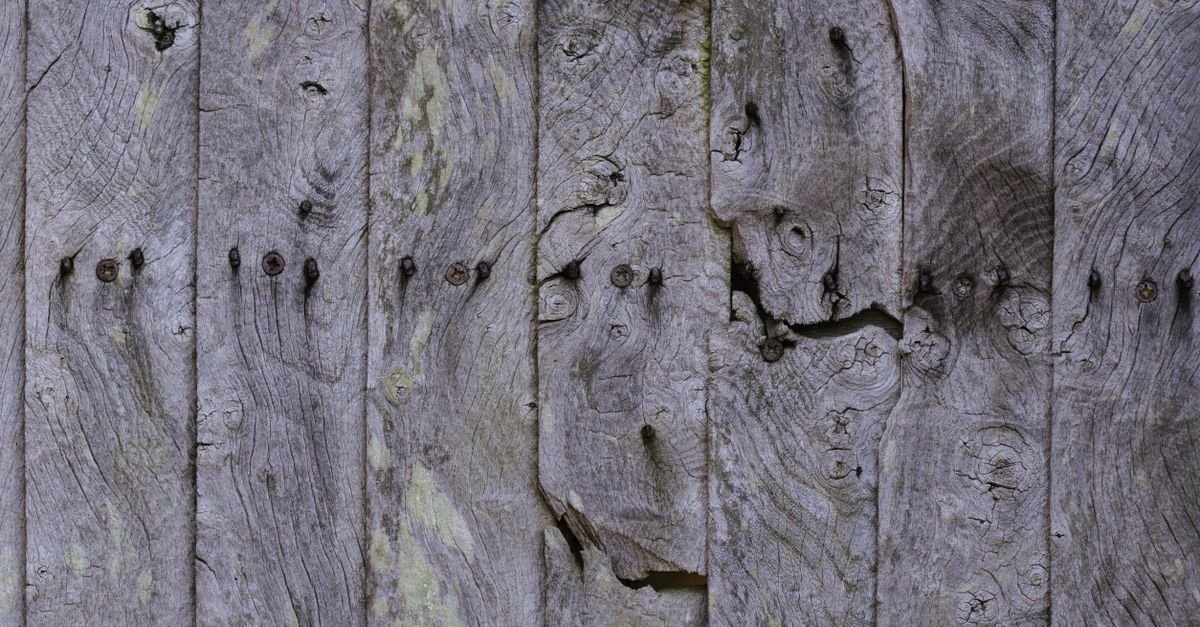
The visible half of the problem is iron stain, and it has a threshold worth knowing. FPL notes that “the wood moisture content must be above about 16% for iron (or the stain) to move through the wood” — and a deck you have just soaked for a ten-minute dwell is comfortably above that. Iron from a corroding fastener reacts with tannins to make the black rings you see around screw heads on cedar and redwood, dark enough that iron-tannin solutions were historically used as black ink. On pine, which has little tannin, you get a brown halo instead plus “slight degradation of the wood near it.” Stainless fasteners are, in FPL’s words, “safe from iron stain.”
The invisible half I cannot give you a number for, and I looked. I wanted a published figure for what a deck-strength hypochlorite mix does to a hot-dip galvanised joist hanger. The corrosion literature that exists is about water tanks and treatment plant pipework, working in milligrams per litre — hundreds of times weaker than anything you would put on a deck — and nobody appears to have run the deck version. So I am not going to invent a service-life figure. What I will say is that the rinse is free: flush the framing underneath from a hose after you finish, not just the walking surface, and pay particular attention to the ledger, where water sits in the joint against the house.
Will the Stain Still Take Afterwards?
Cutting straight to it: bleaching improves finish adhesion in one specific way and can hurt it in another, and which one you get is decided by concentration.
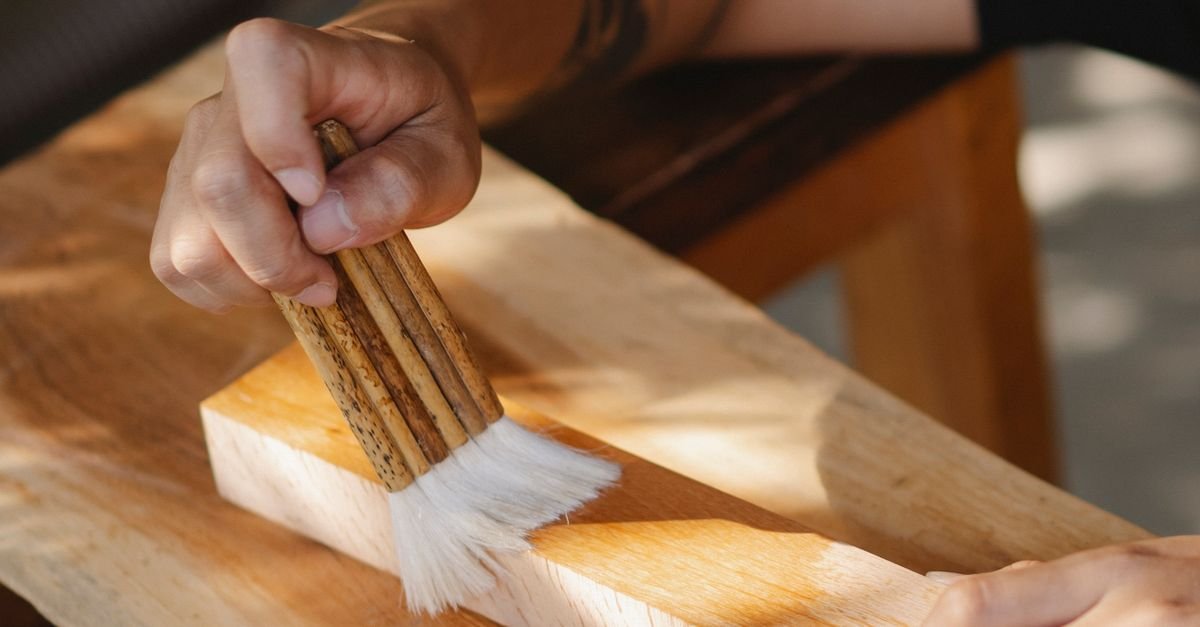
The help: live mildew is a genuine adhesion problem, not just an appearance one. FPL notes that dark fungal spores and mycelia on the surface “interfere with adhesion of coatings applied over the mildew,” and its instruction after cleaning is direct — refinish the cleaned surface as soon as it has dried, using a finish that contains a mildewcide. Staining over untreated mildew is how a two-year finish becomes a one-season finish.
The harm: go too strong and you take the extractives with the mildew. Those extractives are part of the colour and part of the natural decay resistance, and the bright silvery cellulose surface left behind is a different substrate from the one the stain manufacturer tested on. There is a related trap in the marketing, which FPL dismantles neatly — cleaners that claim to restore colour do not add anything. “Some commercial cleaners pulp the wood surface and subsequent power washing removes the pulped surface. In this case, the color is ‘restored’ because the surface of the wood was removed. Sanding would give the same result.”
What I could not find is a published waiting period between bleaching and finishing. The 48-hour figure that circulates is a moisture number borrowed from ordinary washing, not a chlorine number, and I could not source a chlorine-specific one anywhere. Rinse thoroughly, let the boards dry through rather than dry on top, and if the deck carries a solid stain or paint rather than bare wood, the chemistry sits on the film instead of the timber — that is a different job, covered in can you pressure wash painted wood.
Nothing Under a Raised Deck Can Be Pre-Soaked
Every bleach guide tells you to wet the plants first. That advice assumes the plants are beside the surface. Under a raised deck they are beneath it, in shade, out of sight from where you are standing, and directly downhill of every gap in the floor.
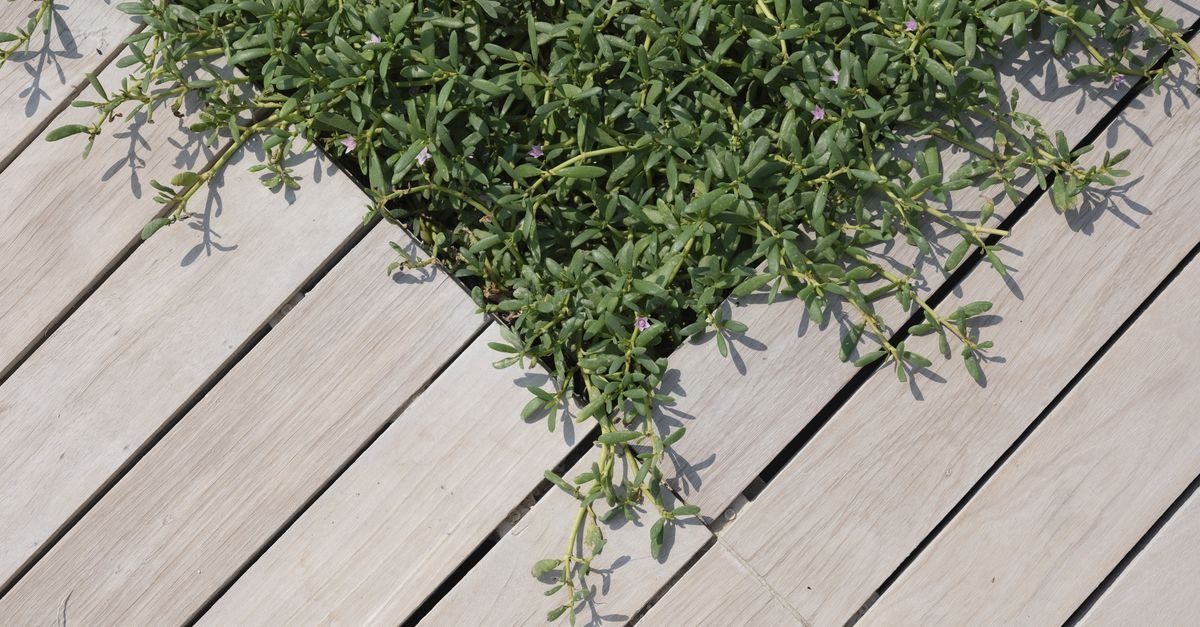
The reason this matters more than a splash on a border is that chloride does not break down and go away. A review of chlorine-based disinfectant use found that chloride ions “are stable in soil environments,” that chloride “accumulates in plant tissues, especially in leaves, and results in the death of the whole plant,” and that “the microbial population in the rhizosphere which is important for plant health are also destroyed” by these products. Its summary of direct application is short: it “is unfavorable for plants” (Environmental impacts of the widespread use of chlorine-based disinfectants, PMC8799444). The comforting idea that the next rain sorts it out is half right — rain moves chloride around, it does not destroy it.
So the routine for a raised deck is different from the routine for a patio:
1. Sheet the ground underneath before you start, running the tarp out past the drip line at the edges. It is the only pre-wet that actually works when you cannot see the plants.
2. Soak what you cannot sheet — the shrubs against the skirting, the bed at the foot of the steps — and keep them wet while you work, not after.
3. Move pots out rather than covering them. A pot has a finite volume of soil and no way to flush.
4. Flood the ground afterwards. Dilution is the entire remedy, and the soil under a deck stays dry enough in normal weather that nothing else is going to do it.
A ground-level deck sitting on soil is the harder case, because the whole footprint is the runoff zone and there is no underneath to tarp. That is the situation where I would reach for percarbonate and accept the slower afternoon.
Never the Brightener on the Same Afternoon
Two-step deck kits are sold as a cleaner followed by a brightener, and almost nobody reads what the second bottle is. It is usually oxalic acid. FPL is specific about what it does: “Oxalic acid removes extractives bleed and iron stains, but it is not effective for removing mildew” — which is precisely why it is sold alongside something that is.
Sodium hypochlorite and acid make chlorine gas. The ATSDR states it without qualification: sodium hypochlorite “releases chlorine gas when it comes in contact with acids” (ATSDR, Medical Management Guidelines for Chlorine). You do not have to put them in the same bucket for this to happen. A deck is a shallow tray with a house wall down one side, and plenty of them sit under a balcony, a pergola with a solid cover, or a first-floor deck above. Acid poured onto boards still wet with hypochlorite is a mix, and a partly enclosed deck is where a lungful becomes an ambulance.
The working rules:
- Rinse the deck properly between steps — not a pass with the wand, a flood until the runoff is clear.
- Rinse the sprayer, the pump-up and any injector too. The accident that actually happens is an acid pulled through kit that still had bleach in it.
- Better still, put a day between them. There is nothing about a deck that needs both chemicals inside the same afternoon.
- Gloves and sealed eye protection for the brightener as well. Oxalic acid is not the gentle half of the kit; it is just the half that does not smell.
And apply the same caution to the small stuff: keep rust removers, patio acid and anything descaling away from a deck you have just bleached.
FAQ
Does bleach damage a wood deck?
At the concentrations people typically use, yes. Sodium hypochlorite oxidises the pigment in mildew and then keeps going into the extractives and lignin at the wood surface. The Forest Products Laboratory describes strong bleaching as leaving a cellulose-only surface with a bright silvery sheen. At one part bleach to five parts water, with a short dwell and a proper rinse, the effect is modest and the mildew still dies. At the “just pour it on” strength, you are removing wood.
What is the correct bleach to water ratio for a deck?
One part 5% household bleach to five parts water is FPL’s working recommendation, with a quarter cup of powdered detergent per gallon of bleach. Its stated ceiling is one part bleach to three parts water, and it says nothing stronger should ever be necessary. Use powdered rather than liquid detergent, because liquid detergents can contain ingredients that react with bleach to produce toxic fumes.
Is oxygen bleach genuinely better than chlorine bleach on a deck?
It is the better default, but the evidence is thinner than the trade suggests. FPL says oxygen bleaches “have been reported” to be less damaging, particularly on low-density woods like western redcedar and redwood, then adds that the two types are hard to compare because product concentrations, additives and test substrates all vary. The honest case for percarbonate is not a study — it is that its failure mode is a second pass, and chlorine’s failure mode is sanding.
Will bleach kill the plants under my raised deck?
It can, and the damage is delayed rather than immediate. Chloride is stable in soil, accumulates in leaves and is toxic to the root-zone microbes plants depend on. Because plants under a deck sit in shade, out of sight and directly under the gaps, they get the runoff and cannot easily be pre-wet. Sheet the ground before you start, move pots out, and flood the soil afterwards.
Can you stain a deck after cleaning it with bleach?
Yes, and you should refinish as soon as the boards have dried through, using a finish containing a mildewcide — mildew left in place interferes with coating adhesion, so killing it first genuinely helps the stain. What hurts is over-concentration, which strips the extractives along with the growth and leaves a different surface from the one the stain was formulated for. I could not find a published chlorine-specific waiting period; the 48-hour figure in circulation is about moisture content.
Does bleach rust deck screws and joist hangers?
Bleach carries a heavy chloride load and chloride attacks the protective films on zinc and steel, so the mechanism is real. The visible result is iron stain: black rings on cedar and redwood where iron reacts with tannins, brown halos on pine. FPL notes wood needs to be above about 16% moisture content for that stain to travel, which a freshly washed deck comfortably is. I could not find a published figure for how many washes it takes to compromise a galvanised hanger, so rinse the framing underneath and check the ledger.
Does bleach remove the grey from a deck?
Not really, and that is worth understanding before you buy a stronger jug. Grey is UV weathering, not dirt, and bleach acts on the fungal pigment sitting in and on it. FPL points out that cleaners advertising colour restoration do not add anything — some of them pulp the surface, and the subsequent wash removes the pulped layer. The colour looks restored because the top of the board is gone. Sanding would do the same thing more honestly.
The Weakest Mix That Kills the Green
Chlorine bleach on a deck is not forbidden and it is not free. It is the fastest way to kill what is growing on the boards, and the price is paid in surface fibre, in the steel underneath, in whatever is planted below, and occasionally in a finish that fails a year early. Every one of those costs scales with how strong you mixed it, which is the only variable fully under your control.
So do the two-drop test before you mix, because half the grey people attack with bleach is not mildew at all. Mix at one in five. Sheet the ground under the deck. Rinse the framing, not just the floor. And if the brightener bottle is still sitting there unopened when you are done, leave it there until tomorrow — the deck will still be clean in the morning, and you will still be able to breathe.