Last Updated on September 24, 2026 by Umar Farooq
Cleaning and staining wood deck boards is not one job — it is two jobs with a gap between them, and almost every failed deck finish is a gap that was handled badly: the stain went onto boards that were still wet inside, still standing on torn fibre, or had been left bare in the sun long enough to stop holding anything. The washing part is easy. The waiting part is where the weekend gets wasted.
Search for cleaning and staining wood deck advice and you will get five steps: sweep, apply cleaner, scrub, rinse, stain. Every one of those is correct and none of them is the hard part. The hard part sits in the white space between step four and step five, where every guide writes “allow to dry” and moves on.
Cleaning and Staining Wood Deck Boards: Why the Order Matters
A stain is not paint. A penetrating deck stain works by soaking into the open cell structure at the surface of the board and leaving pigment and resin behind inside the wood. That means it needs three things from the surface it lands on, and washing affects all three.
It needs somewhere to go. Wood cells already full of water have no room for a finish. The stain sits on top, half-cures, and wears off in a season.
It needs something solid to hold. Loose surface fibre — the fuzz you get from too much pressure, or the powdery layer on wood that has been bare in sunlight too long — is not anchored to the board. Whatever you put on it comes away when the fibre does.
It needs an open surface. Mill glaze, old water repellent, and a film of previous solid stain all block absorption. A deck that repels water will also repel a penetrating finish, which is a sentence worth reading twice.
So the sequence is not decorative. Wash, then neutralise, then dry, then sand if needed, then finish — in that order, because each step changes what the next one is working on. Skip the drying and you get blotching. Skip the sanding and you get a finish that wears off the raised tips within a year. Skip the assessment of what is already on the boards and you may be staining a surface that was never going to accept it.
If your deck is composite rather than timber, none of this applies: composite does not get stained at all, and the only decision you have is the washing pressure, which is covered in what PSI to pressure wash composite decking.
The Old Finish Decides How Much Work This Is
Before you buy anything, answer one question: is the existing finish a film sitting on top of the wood, or a penetrating finish that soaked into it? Everything downstream changes with the answer, and the test takes about four seconds.
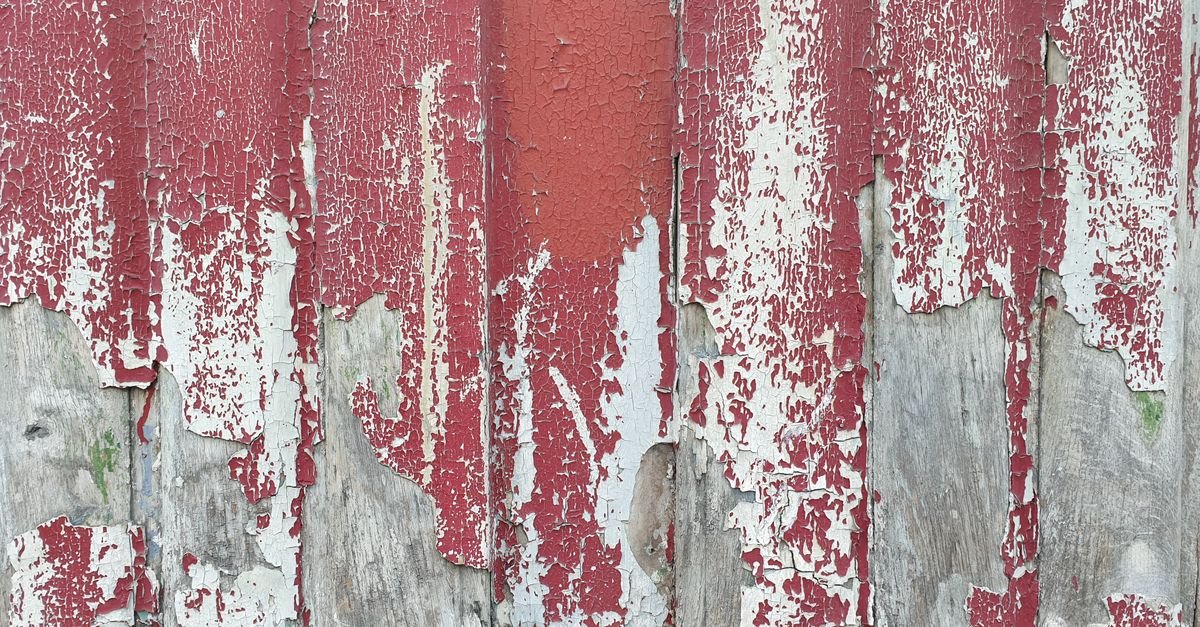
Push a fingernail into the finish at the edge of a board, or slide a putty knife under any lifted patch. If something peels, flakes or rolls up — that is a film. Paint and solid-colour stain both build films. If the colour is in the wood and the surface simply looks faded and chalky with no edges to lift, it is penetrating: a semi-transparent stain, an oil, or a water-repellent preservative.
A failing film has to come off. Not most of it — all of it, at least in the failing areas, with the remaining edges feathered. Staining over a peeling film produces a new finish bonded to something that is already letting go, and it will fail on the same schedule the old one did. The Forest Products Laboratory’s refinishing instruction for peeled film is blunt about the labour involved: scrape off all loose material, then “sand areas of exposed wood with 50- to 80-grit sandpaper to remove the weathered surface and to feather the abrupt paint edge” (FPL-GTR-282, Chapter 16, Finishing Wood).
A worn penetrating finish usually does not. This is the genuinely good news of the whole article. Penetrating finishes erode a pigment particle at a time rather than lifting in sheets, so refinishing is, in FPL’s words, “a simple matter of cleaning the surface and applying another coat.” No stripper, no sanding, no scraping. Wash it, let it dry, put more on.
There is a reason decks end up penetrating-finished in the end. FPL notes that “persistent moisture in the wood is one reason it is so difficult to get a film-forming finish to perform on horizontal surfaces, such as decks,” and that manufacturers generally do not recommend solid-colour stains for horizontal wood at all, because they lack abrasion resistance. A deck is a floor that lives outdoors and gets rained on. Films on floors are a difficult argument to win.
If the film in question is paint rather than stain, the washing rules are different again and there is a lead question to answer first — that is covered separately in can you pressure wash painted wood.
Sunburn: The Reason a Clean Deck Can Still Reject Stain
This is the part nobody tells you, and it is the reason I would rather you finished a slightly dirty deck than a perfectly clean one that has sat bare for a month.
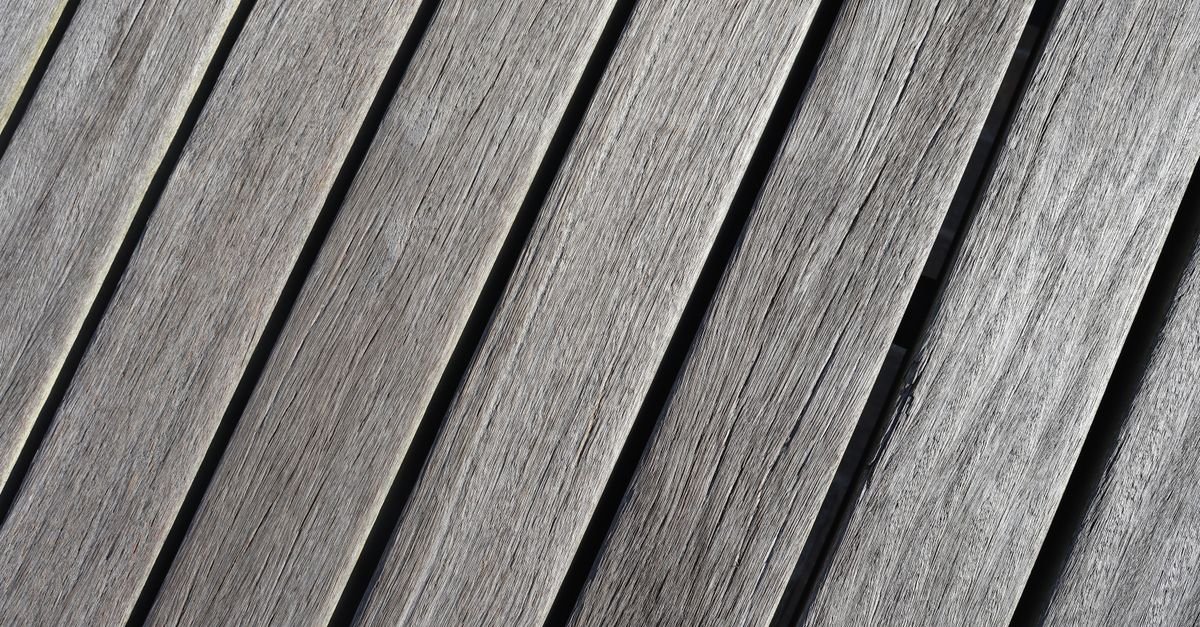
Ultraviolet light chemically degrades the top fraction of a millimetre of bare wood, and it does it fast — long before anything looks different. FPL calls it sunburn and has the numbers. In a trial on vertical-grain western redcedar with a commercial primer and two latex topcoats, panels that were never pre-exposed were still in good condition after 20 years. Panels exposed to south-facing sun for just one week before painting started peeling after 13 years. Panels left 16 weeks needed refinishing within 3 years. On denser species such as Douglas-fir and southern yellow pine, little adhesion was lost until three or four weeks of exposure — but the direction of travel is the same.
Here is the opinion I will defend on this page, because it reorders the whole job: the cleaning is the least important step in cleaning and staining a wood deck, and the bare-wood waiting time is one of the most important. A week of sunshine on stripped boards cost that cedar seven years of finish life. No amount of extra scrubbing buys seven years back.
FPL also publishes a free test for it, which I have not seen on a single retailer’s how-to page. Press a strongly adhering tape hard onto the dry bare wood and snap it off quickly. If wood fibres come away on the tape, those cells are not bonded to the board, and — in FPL’s words — “the paint film will tear them off the board just like the tape did.” The remedy is to sand off about 100 micrometres, roughly four thousandths of an inch, and test again. And the diagnosis at a glance: “If wood looks weathered and silver or grey, it is severely sunburned.”
Now the inversion that makes this useful rather than depressing. Sunburn is a disaster for a film and an *advantage* for a penetrating stain. FPL states it plainly: “Any film-forming finish will be prone to peeling if applied to sunburned wood. Alternatively, a penetrating finish lasts longer on sunburned wood than on fresh wood.” A grey deck is a bad candidate for solid stain and an unusually good one for semi-transparent. Which means the silver colour everybody scours off is telling you which product to buy.
Stop Guessing at Drying Time, Start Measuring It
Every guide gives a number of days. Twenty-four hours, forty-eight, seventy-two. I went looking for a published, sourced figure behind any of them and found none — they are rules of thumb repeating each other. The sourced instruction is not a duration at all. It is a reading.
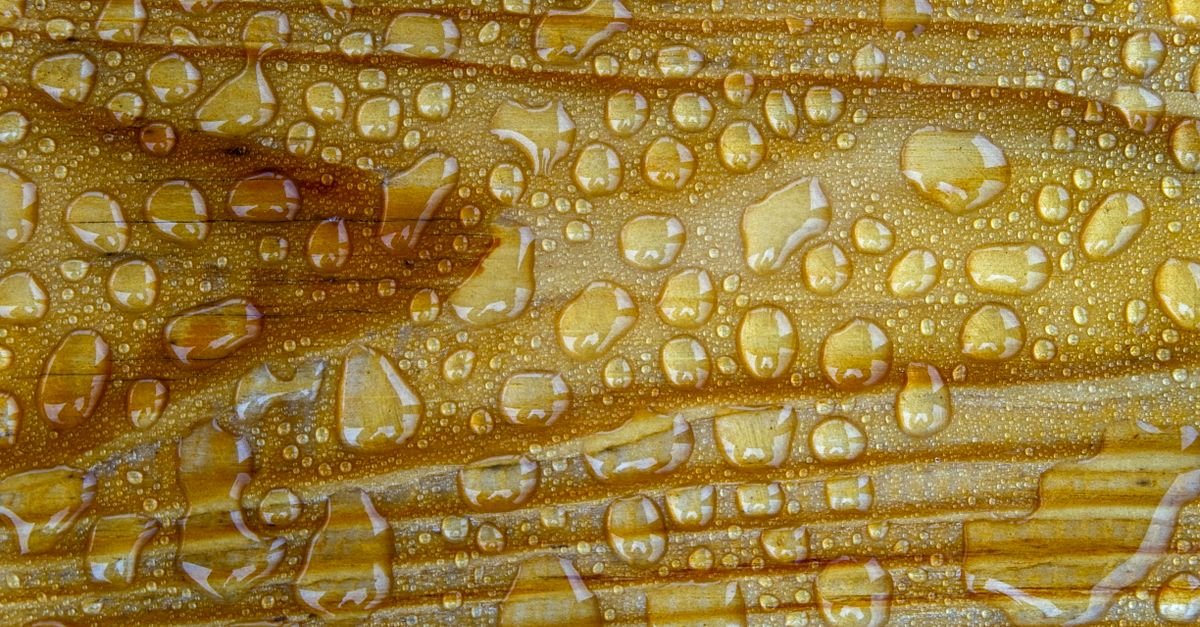
FPL’s general rule for wood in service is to keep it at or below roughly 20% moisture content, and notes that wood outdoors under cover across most of the United States settles at around 12% to 14%. Finish manufacturers set the bar tighter because they need absorption, not just dryness: Ready Seal, for one, publishes that “the wood must be 12% moisture or less” for its oil-based product to penetrate as intended, and tells homeowners to use a meter (Ready Seal, How to Clean a Wood Deck). A pin-type moisture meter costs about what a gallon of stain does and is the only tool in this job that will argue with you.
A deck is the hardest shape to dry and nobody warns you about it, so here is what makes it different from the siding on the same house:
- It is horizontal, so it does not shed. Water sits in the grain and pools in the shallow cup of every slightly dished board instead of running off.
- The gaps hold water for days. The end grain on either side of each gap is the most absorbent surface on the whole deck and the slowest to release.
- The underside is in permanent shade. A board can read 11% on top and 20% underneath, and the moisture moves back up overnight.
- Half the deck is in sun and half is not. Take readings in at least four places including the shaded end and the step treads, not one in the middle where you are standing.
- Sealed boards over joists never dry from below. The wettest square inch of any deck is where the board sits on the joist.
No meter? Use the absorbency test, and know its trap. Sprinkle water on the boards. If it soaks straight in within a few seconds, the wood is dry enough and open enough to take a finish. If it beads and sits there, stop — but do not assume you know why. Beading means one of two opposite things. Either the wood is still saturated and has no room, or an old water repellent is still working and is blocking the stain. The first is fixed by waiting. The second is fixed by cleaning, and possibly sanding. Sprinkle on a spot you know is bare and compare.
And a deck-specific timing point: the moisture reading you take at four in the afternoon on a sunny day is the best one the boards will give you all week. Overnight dew resets the top millimetre. If the plan is to stain first thing in the morning, the boards were wet at dawn.
What the Brightener in the Second Bottle Actually Does
Two-step deck kits sell you a cleaner and a brightener, and the second bottle is the one people either skip or misunderstand. Manufacturers call them Part A and Part B, which is a tidy way of not printing “bleach” and “acid” on the front of a box.
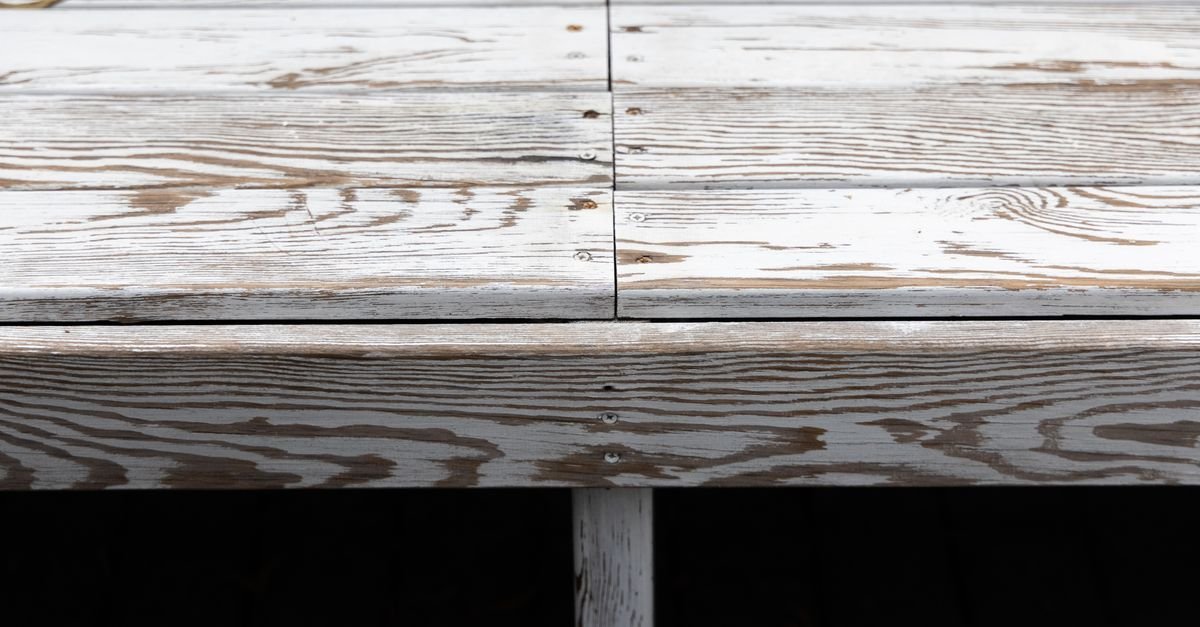
A brightener is usually oxalic acid, and it exists between the wash and the stain for reasons that have nothing to do with brightness. FPL is specific about its actual job: “Oxalic acid removes extractives bleed and iron stains, but it is not effective for removing mildew.” Those are two real, distinct deck problems that a cleaner will not touch:
- Iron stains are the black or blue-black halos around screw heads and nail holes, where corroding steel has reacted with tannins in the wood. Cedar, redwood and oak show them worst.
- Extractives bleed is the brown-to-rust discolouration that migrates out of the wood itself, most visible on cedar and redwood and on anything under an overhang.
The second job of the acid is chemical rather than cosmetic: most deck cleaners are strongly alkaline, and a brightener neutralises what the cleaner left behind so the stain is going onto wood at something near its normal pH. That is why the kit gives you two bottles rather than one strong one.
Three working rules, in order of how much trouble they save:
1. Rinse thoroughly between the two steps, and never mix them. Sodium hypochlorite releases chlorine gas on contact with acid, and a deck with a house wall down one side and a balcony overhead is a poor place to discover that. Rinse the sprayer as well as the boards.
2. A brightener is not a mildew treatment. If the deck is black with growth, the cleaner has to do that work first. Acid on live mildew simply gives you bright, clean mildew.
3. Keep steel wool and wire brushes off a deck you intend to stain. Purdue Extension’s finishing guidance is explicit that they “should not be used to clean surfaces to be finished with semitransparent stains or water-repellent preservatives since small iron deposits may be left behind” (Purdue Extension NCR-135). You will then need the brightener to remove the stains you made with the brush that was meant to help.
Furred Boards Have to Be Sanded Before Anything Goes On
If the wash raised the fibre — the suede-like fuzz you feel with a dry palm rather than see — the job has quietly changed. You are no longer cleaning a deck. You are refinishing one, and sanding is now on the list.
Stain over standing fibre is a specific kind of expensive mistake. The finish soaks unevenly into fibre that has vastly more surface area than flat wood, so it goes on blotchy, and it then wears off the raised tips within the first season of foot traffic. A deck that was washed too hard often looks worse one year after staining than it did the day before it was washed, which is a hard thing to explain to whoever paid for the stain.
Sanding a deck is not furniture work. Go with a random-orbit sander at 60 to 80 grit to knock the fibre flat, then 100 if the boards will be viewed closely, and stop there — finer than 120 starts closing the surface and reducing absorption, which works against a penetrating stain. Sand along the boards, not across them. Do the stair treads and the handrail tops by hand, because those are the two surfaces anybody actually touches. Then vacuum and wipe, because sanding dust is the other thing that stops a finish bonding.
One more thing worth knowing if the boards came out rough or weathered rather than smooth: Purdue’s guidance for penetrating oil stain on rough-sawn or weathered lumber is two coats applied wet on wet — let the first coat soak for 20 to 60 minutes while you work elsewhere, then put the second on before the first has dried. Rough wood swallows more finish than smooth wood, and a single coat on a weathered deck is how you end up with a deck that looks finished in April and bare in August. The same logic applies to the adjoining fence, which is usually the same timber in worse condition: the washing side of that job is in how to pressure wash a fence.
FAQ
How long should you wait between cleaning and staining a wood deck?
Long enough for the boards to read at or below about 12–15% moisture on a meter, which in warm dry weather with a breeze is usually two to three days and in cool or humid weather can be a week. There is no sourced number of hours — the widely repeated 24, 48 and 72-hour figures are rules of thumb rather than measurements. Measure it, or use the water-sprinkle test, and take readings in the shaded end as well as the sunny one.
Do I have to strip the old stain before restaining a deck?
Only if it is a film. Solid-colour stain and paint form a film that peels, and a peeling film has to be scraped off and the edges feathered with 50- to 80-grit paper before anything new goes on. A semi-transparent or penetrating stain erodes instead of peeling, and refinishing it is usually just washing the surface and applying another coat. Test by pushing a fingernail under the finish at a board edge: if it lifts, it is a film.
What does deck brightener actually do?
Oxalic acid brightener removes iron stains from corroding fasteners and extractives bleed from the wood itself, and it neutralises the alkaline cleaner used in the first step so the stain lands on wood at a normal pH. It does not remove mildew. It is not optional if your deck has black rings around the screws, and it is not a substitute for the cleaner if the deck has live growth on it.
Can you stain a deck the same day you wash it?
Almost never, and the reason is not only moisture. The wood is saturated, so a penetrating finish has nowhere to go, and it will sit on the surface and cure badly. Even a deck that looks dry within a few hours has wet end grain in every gap and a wet underside feeding moisture back up through the board overnight. The exception is a product specifically sold as wet-application, and the label will say so in large letters because it is unusual.
Why is my new deck stain blotchy?
Three usual causes, in order of likelihood. The boards were not dry, so absorption varied across the surface. The boards were furred from too much pressure, so the raised fibre drank more stain than the flat wood beside it. Or an old water repellent was still active in patches, blocking the new finish where it survived and letting it in where it had worn away. The first is prevented by measuring, the second by sanding, the third by testing absorbency in several spots before you open the tin.
Does a grey deck need to be sanded back to fresh wood before staining?
Not for a penetrating stain, and doing so is usually counterproductive. Grey is UV-degraded surface, and FPL notes that a penetrating finish actually lasts longer on sunburned wood than on fresh wood. For a film-forming finish the answer flips: grey means severely sunburned, and a film applied over it will peel, so it does need sanding back. The colour of your deck is a hint about which product to buy, not a defect to remove.
How soon after staining can I put the furniture back?
Long enough for the finish to cure rather than just feel dry, which for most oil-based deck stains is a day for foot traffic and two to three days before anything heavy or anything with feet that trap moisture goes back down. Putting a planter back on day one leaves a permanent pale ring, and the finish underneath never cures properly.
Wait for the Wood, Not the Weekend
The order in this job is fixed and the timing is not. Identify the old finish, wash, neutralise with the brightener, dry until the meter says so, sand if the wash raised fibre, then stain. Five steps, four of which take an afternoon, and one of which takes as long as the weather decides.
That last one is the whole article. The boards do not care that you booked Saturday and Sunday, and a deck stained onto 19% moisture on a Sunday evening looks exactly like a deck stained onto 12% moisture — for about four months. If you have already washed it and the meter is reading high, the honest answer is to cover the stain tin back up and go and find something else to do with the afternoon. The deck will still be there. So, annoyingly, will the stain.