Last Updated on September 24, 2026 by Umar Farooq
Cleaning decks safely comes down to one number you have to look up before you pull the trigger: softwood such as cedar, pine and fir is handled at 500–600 PSI, hardwood tolerates up to roughly 1,200 PSI, and composite depends entirely on the brand — Trex publishes 3,100 PSI for current boards and none at all for its early generations. Everything else — the detergent, the brush, the order you work in — matters less than not exceeding that figure.
Here is the part that catches people out. Most homeowners approach a deck assuming wood is the tough one and the plastic-looking stuff is delicate. It is the other way round, by a factor of five. That single inversion is behind most of the ruined decks I have read about, and it is where this guide starts.
Cleaning Decks Starts With the Material, Not the Machine
Before you touch a dial, identify what you are standing on. The three families behave so differently that a setting which is gentle on one will visibly destroy another.
| Deck material | Safe PSI | Nozzle | What failure looks like |
| Softwood — cedar, pine, fir, spruce | 500–600 | 25°–40° | Furring, raised grain, wand stripes |
| Pressure-treated pine | 500–800 | 40° | Furring, lifted surface fibre |
| Painted or solid-stained wood | 500–800 | 40° | Flaking, peeled patches |
| Hardwood — ipe, teak, cumaru, mahogany | up to ~1,200 | 25° | Fine surface fuzz, colour lightening |
| Composite | Brand-specific — look it up | Fan tip only | Cap erosion, permanent flash marks |
Three quick ways to tell what you have. Composite carries an unnaturally repeating grain — walk down a run and the same knot appears every few feet, because it came off an embossing roller. Hardwood is dense and heavy, usually screwed from below or plugged, and a dropped spanner barely marks it. Softwood dents with a thumbnail.
If you genuinely cannot tell, treat it as softwood. Six hundred PSI has never damaged anything on that list.
Softwood Fibre Gives Up at Around 600 PSI
Cedar, pine, fir and spruce are the default deck woods across most of North America, and they have the lowest ceiling on the whole chart. Five to six hundred PSI, with a 25-degree green tip or a 40-degree white one. That is roughly a fifth of what a 3,000 PSI gas machine puts out, which is the entire problem in one sentence.
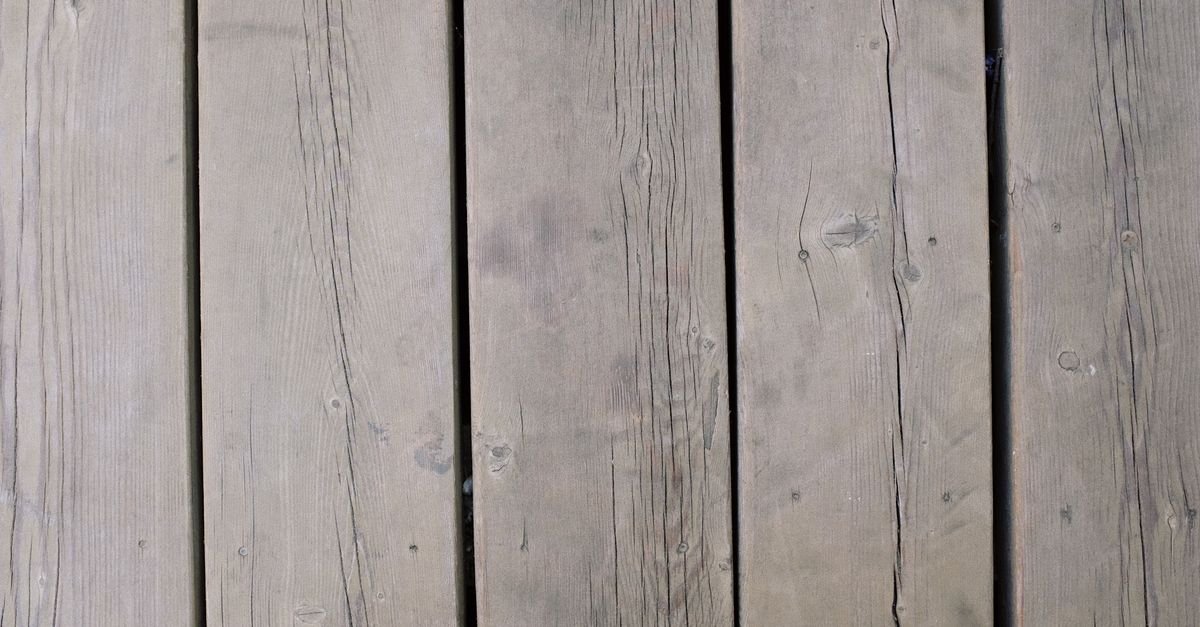
The mechanism is not complicated. Softwood is built from long hollow cells running the length of the board, bonded together by lignin. Weather breaks that lignin down at the surface long before it touches the wood underneath, so the top fraction of a millimetre on any older deck is already loose fibre sitting there waiting to be lifted. A jet at 2,000 PSI does not clean that layer. It removes it, and takes some sound wood with it.
The USDA Forest Products Laboratory puts it plainly in its deck finishing guidance: “Aggressive scrubbing with a caustic cleaner or power washing can remove wood from the surface, particularly on softer wood such as western redcedar” (Finishes for Wood Decks, Forest Products Laboratory). That is a federal wood laboratory describing your Saturday afternoon.
Two practical ways to stay under the limit if your machine has no regulator:
- Change the tip. Moving from 25° to 40° spreads the same flow over a wider band and drops impact pressure substantially. Nothing narrower than 25° goes near a deck, and a turbo nozzle is a 0° jet in disguise — it belongs on concrete.
- Back off. Impact pressure falls away sharply with distance. At 12 to 18 inches a 1,500 PSI machine behaves far more like a 600 PSI one held at 6 inches. Distance is a pressure dial that came free with the wand.
Hardwood Buys You Headroom, Not Immunity
Ipe, cumaru, teak and mahogany are dense enough that published guidance takes them up to about 1,200 PSI with a 25-degree tip. That is double what cedar gets, and people immediately spend the difference in the wrong place.
Density buys resistance to fibre lifting. It does not buy resistance to two other things. The first is colour: tropical hardwoods carry their rich brown in an oily surface layer that pressure strips readily, and a deck that has gone patchy pale is not repaired by washing the pale bits harder. The second is the wand stripe — those parallel light bands you get when the tip sits closer on one pass than the next. Hardwood displays them beautifully, because the surface around them is smooth enough to make the contrast obvious.
So treat 1,200 PSI as the ceiling and 800 as the working number, hold a constant height, and accept that some silvering only comes out with a cleaner and a brush. If you are not certain which tip is which colour, the full breakdown is in our pressure washer nozzle chart.
Composite Tolerates More Pressure Than Cedar Does
This is the opinion I will defend hardest on this page, and nobody expects it. Current-generation composite decking is rated for roughly five times the pressure a cedar deck can take. Trex publishes a maximum of 3,100 PSI for Transcend, Enhance and Select, with a fan tip held no closer than 8 inches, and states that exceeding that figure “could damage the boards and void the warranty” (Trex Care and Cleaning). Cedar’s figure is 500–600.
I read the Trex page three times because I did not believe the number. It is the number.
A very large exception is attached to it. Early-generation Trex — Accents, Origins, Contours, Profiles and Brasilia — must not be pressure washed at all, and doing so voids the warranty with respect to any condition the washing caused. Those are uncapped boards: exposed wood flour in a plastic binder, with no polymer shell over the top. So composite does not have one answer, it has two opposite ones, and the deciding factor is the year your deck went down.
Other brands land somewhere else again, and some publish limits less than half of Trex’s. Because those numbers are tied to warranties worth thousands, take the brand-by-brand figures from our dedicated guide on what PSI to pressure wash composite decking rather than from whichever number happened to stick in your head from this page.
What Furring Is, and Why It Means Sanding
Furring is the mistake in the title, and it earns a name because the moment it shows up, the job has changed from cleaning to refinishing.
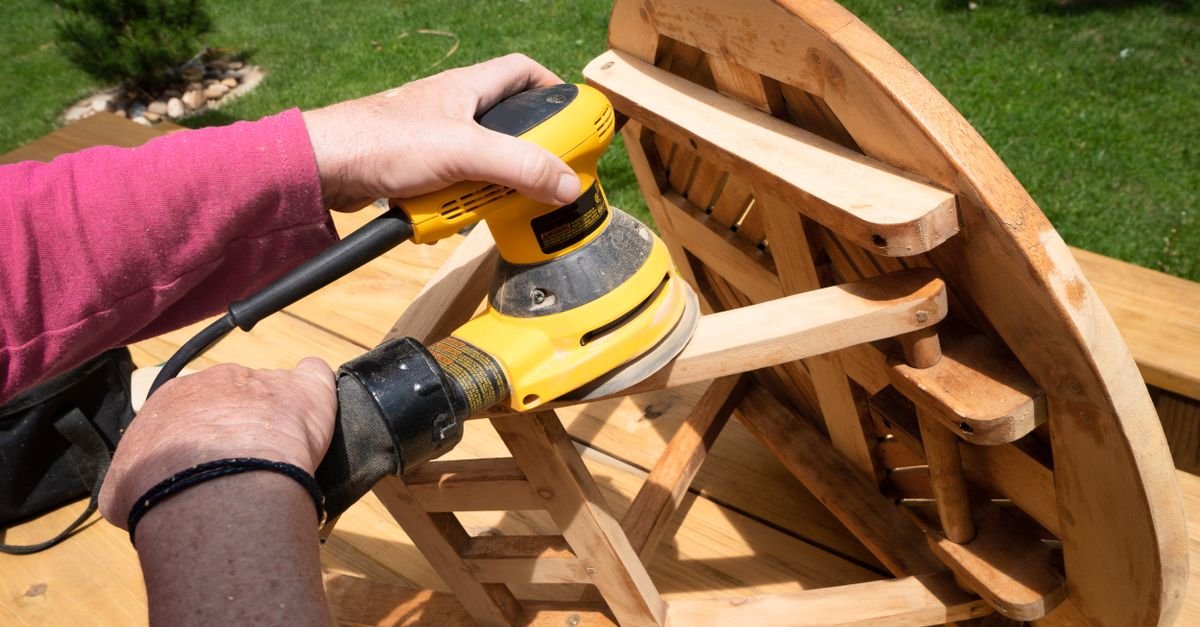
A furred board has a soft, hairy, slightly fuzzy texture — run a palm over it and it feels like suede rather than wood. What you are feeling is wood fibre that the jet tore loose at one end and left standing upright. It is not dirt and it is not a film, and it will not rinse off, because it is still attached.
Furring matters for three reasons, and they compound:
1. It cannot be washed out. More pressure raises more fibre. The only real fix is abrasion — sanding back flat once the boards are completely dry, typically 60 to 80 grit followed by 100.
2. It drinks water. Raised fibre has vastly more surface area than flat wood, so a furred deck absorbs and holds moisture, which speeds up greying, mildew and eventually rot.
3. It ruins the finish. Stain applied over standing fibre soaks in unevenly and wears off the raised tips within a season, which is why a deck that was washed too hard often looks worse a year after refinishing than it did before.
Here is the counterintuitive part, and it comes straight from that same Forest Products Laboratory sheet. A weathered deck goes silver because of “empty wood fibers that should not be removed because they absorb stain well.” Grey is not dirt. Grey is a surface that has lost its colour and become unusually good at taking a finish. The urge to scour it back to fresh timber is precisely the urge that causes furring, and it strips out the layer that would have held the stain.
Test Patch First: Where to Put It and How Long to Wait
A test patch takes ninety seconds and is the only thing standing between a setting you guessed at and four hundred square feet of consequences.
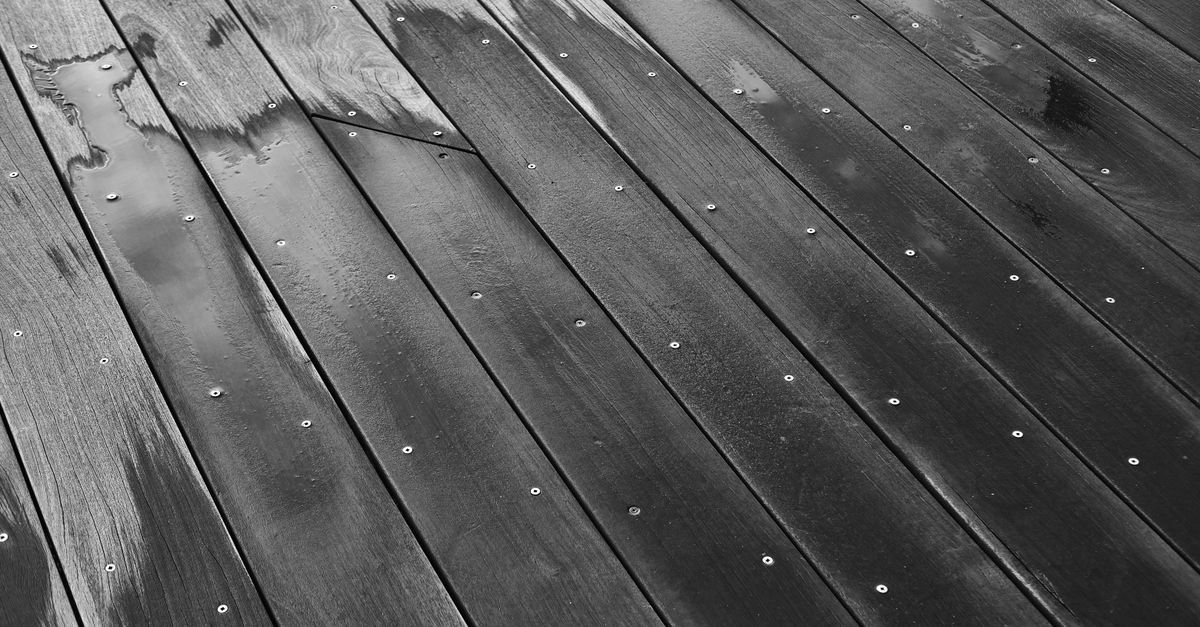
Where it goes. Somewhere permanently out of sight but made of the same material as the rest: under the barbecue, beneath a bench that never moves, the tread of the bottom step where it tucks against the house, or the underside of a rail. Not the middle of the main run, and not a stair nose, which is the most looked-at square foot of any deck.
How to run it. Start at the lowest setting your machine offers, widest tip fitted, wand about 18 inches out. Wash one square foot along the grain, moving the whole time. Then step in by three or four inches and do the square next to it. You now have a ladder of settings on the same board.
How long to wait. Long enough for the wood to dry all the way through — a couple of hours on a warm breezy day, and honestly better left overnight. Wet wood hides everything. A furred patch looks smooth and dark while it is soaked and only stands up and goes pale as it dries, which is exactly why people discover the damage after they have finished the entire deck.
What to look for on the dry patch: fuzz or hairiness under a palm, a lighter band where the tip passed closer, a visible ridge between the washed square and the untouched board, and on composite, any dulling or change in texture. Any of those means you are one step too close or one setting too high. Drop back and test again.
Follow the Grain and Keep the Wand Moving
Technique is where a correct PSI figure gets thrown away. Three rules cover almost all of it.
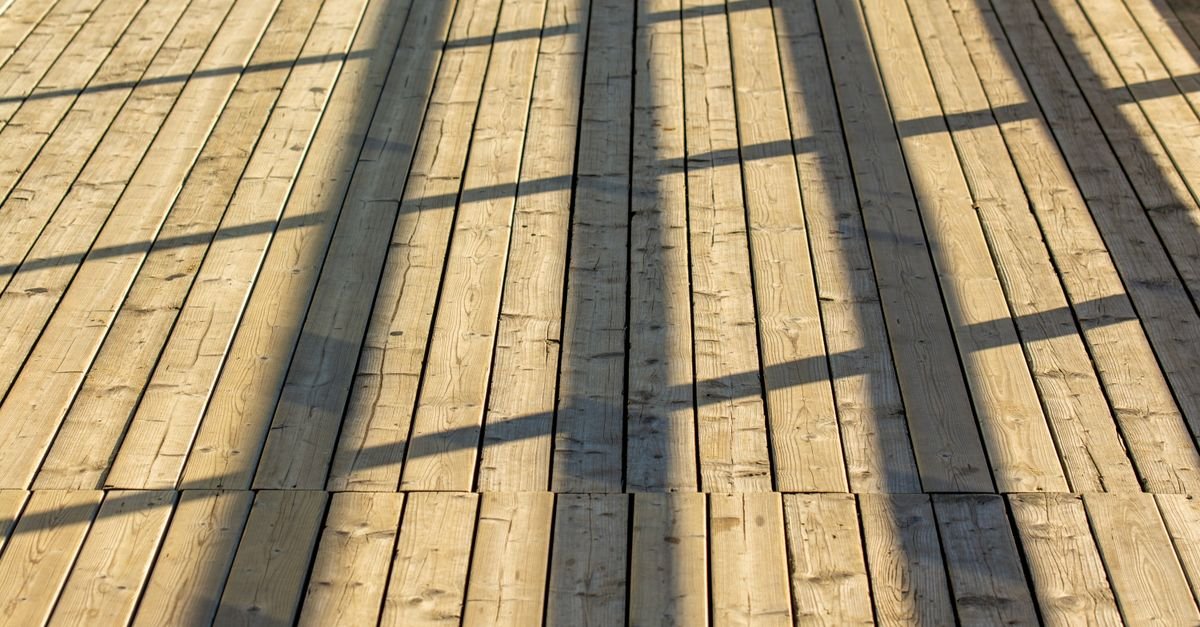
Spray along the grain, never across it. Wood grain runs the length of the board, and so do the fibres. A jet travelling along them pushes dirt out of the open grain and rides over the fibre ends. A jet travelling across them strikes every fibre end square-on at full force, which is the geometry that lifts them. Composite gets the same treatment for the same reason — its embossed texture runs lengthwise too.
Never stop with the trigger down. A stationary wand at any pressure will eventually cut. Work board by board from the house toward the steps, keep the wand travelling at a steady walking pace, overlap each pass by about a third of the fan width, and ease off at the end of a board rather than stopping on it.
Keep the height constant. Swinging the wand in an arc from a fixed elbow brings the tip closer to the boards mid-sweep and further away at the edges, which leaves a scalloped pattern of light and dark that only appears once the deck dries. Move your feet, not just your arm. It is less elegant and it works.
And before any of that: sweep, clear the gaps between boards with a putty knife, wet the surrounding plants, apply a deck cleaner through the black soap nozzle, and let it dwell five to ten minutes without letting it dry. Chemistry lifts the dirt; the machine only carries it away. If you were planning to do the adjoining fence in the same session, the settings are not the same — our guide to pressure washing a fence covers those.
FAQ
What PSI is safe for cleaning decks?
It depends on the material. Softwood decking — cedar, pine, fir — is handled at 500–600 PSI with a 25° or 40° tip. Hardwood such as ipe or teak takes up to around 1,200 PSI with a 25° tip. Composite is manufacturer-specific: Trex publishes 3,100 PSI for its current lines with a fan tip at 8 inches, while early-generation Trex must not be pressure washed at all.
Can you clean a deck without a pressure washer?
Yes, and on old or unidentified boards it is the better choice. A deck cleaner, a stiff-bristled brush on a pole and a garden hose will lift dirt, pollen and mildew from any deck material. It takes longer and carries no risk of furring, cap erosion or a denied warranty claim. Most manufacturers effectively describe this method and treat the washer as the rinse step.
Why did my deck go fuzzy after pressure washing?
That is furring — surface wood fibre torn loose at one end by the jet and left standing upright. It happens when the pressure was too high, the tip too narrow, the wand too close, or the pass ran across the grain instead of along it. It cannot be washed out, and more pressure raises more fibre. The fix is sanding the boards flat once they are bone dry, then refinishing.
Should a deck be cleaned with the grain or across it?
Always with the grain, meaning along the length of each board. The fibres run lengthwise, so a pass travelling along them slides over the fibre ends and flushes dirt out of the open grain. A pass travelling across them hits each fibre end at full force and lifts it. Composite behaves the same way, because its embossed texture also runs lengthwise.
Does a grey deck mean it is dirty?
No. Grey is UV weathering — sunlight breaking down lignin at the surface and leaving pale, empty wood fibre behind. The Forest Products Laboratory notes that those empty fibres absorb stain well and should not be removed. Cleaning will lift the dirt and mildew sitting on top of the grey, but the silver colour itself is normal, and scouring it off is how decks get furred.
How often should a deck be cleaned?
Twice a year suits most decks — a wash in spring and a clear-out in autumn — plus sweeping every couple of weeks in season and clearing the gaps so leaf litter cannot pack down and hold moisture against the boards. Decks kept to that rhythm never need aggressive pressure. The ones that get damaged are the ones cleaned once every five years by someone who has run out of patience.
Let the Wood Tell You When to Stop
Every deck on this page gives you a warning before it gives you damage. Softwood fuzzes. Hardwood goes patchy pale. Composite dulls where the cap has thinned. All three show up on a dry test patch an hour after you made them, and none of them show up while the board is still wet, which is the only real reason to wait.
So find out what your boards are made of, set the machine at the bottom of that material’s range rather than the top, put the test square somewhere nobody will ever look, and go and have a coffee while it dries. If it comes back smooth, you have your setting for the whole deck. If it comes back hairy, you have just saved yourself a weekend with a belt sander and the particular silence of someone who has worked out what “voids the warranty” means.