Last Updated on September 24, 2026 by Umar Farooq
Cleaning a metal roof is a detergent job with two published ceilings: keep the water under 500 PSI and under 160 degrees Fahrenheit, mix a quarter cup of mild detergent per gallon of water, let it stand five to ten minutes, and rinse down-slope with plain water. Nothing abrasive touches the panel. Ever.
Those numbers sit far below anything you would use on concrete because you are not cleaning metal. You are cleaning a paint film that happens to be sitting on metal, and on a coil-coated panel that film is about a thousandth of an inch thick. Published Kynar 500 coil-coating specifications put the topside system at 1.0 mil plus or minus 0.1 — roughly 0.2 to 0.3 mils of primer under 0.7 to 0.8 mils of topcoat. A sheet of office paper is four times that. Everything below follows from it.
The Coating Is the Roof, Not the Metal
A metal roof panel is a stack, and only the top of the stack does the job you can see. Underneath is steel with a metallic coating — zinc on galvanized, a 55% aluminium-zinc alloy on Galvalume — or, on a lot of residential work, aluminium. Over that goes a primer, and over that a topcoat, usually a PVDF fluoropolymer sold as Kynar 500 or Hylar 5000, or a cheaper siliconized polyester.
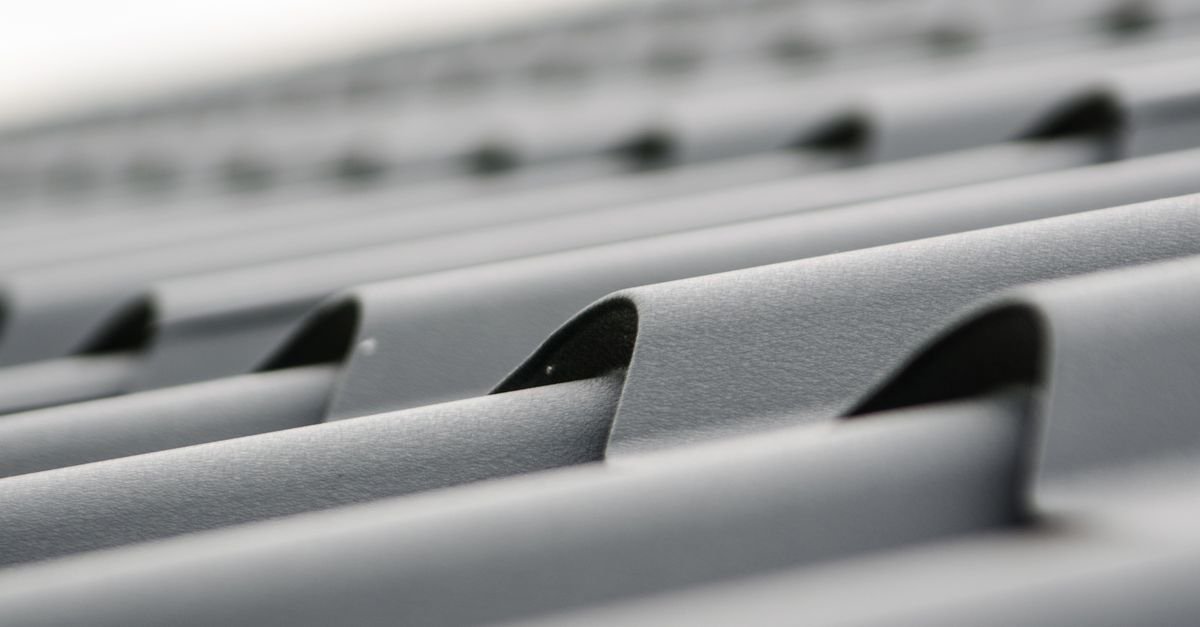
That topcoat is the UV barrier and the first line of corrosion defence, because the metallic layer beneath it only protects what it is still covering. Scratch through to bare steel and you have not made a cosmetic mark — you have opened a site where rust starts and then creeps sideways under the paint, lifting it as it goes. The panel looks fine for a season and then grows a blister with an orange middle.
Siding you can repaint. A deck you can sand. A factory coil coating was baked onto a moving strip of steel in a plant, at a temperature nobody is reproducing on a roof, and it is the only one that panel will ever get. So the honest framing for the whole job is this: you are not removing dirt from a roof, you are removing dirt from a very thin and very expensive layer of paint, without removing any of the paint.
Standing Seam, Corrugated and Stone-Coated Are Three Different Jobs
“Metal roof” covers at least four products that fail in different ways, and advice that is safe on one is careless on another.
| Roof type | What it is | What goes wrong |
| Standing seam | Concealed fasteners, panels joined by a raised folded seam | Water forced up under the seam or into ridge and eave closures; dents in the flat pans |
| Exposed-fastener corrugated or ribbed | Panels lapped and screwed down through the face | Water driven past ageing EPDM screw washers and under the side laps |
| Stone-coated steel | Steel base with acrylic-bonded stone granules | Granules dislodged by force; behaves more like a shingle than a panel |
| Aluminium shingle or panel | Softer substrate, no rust but easy to deform | Dents, and the highest sensitivity to copper and graphite contact |
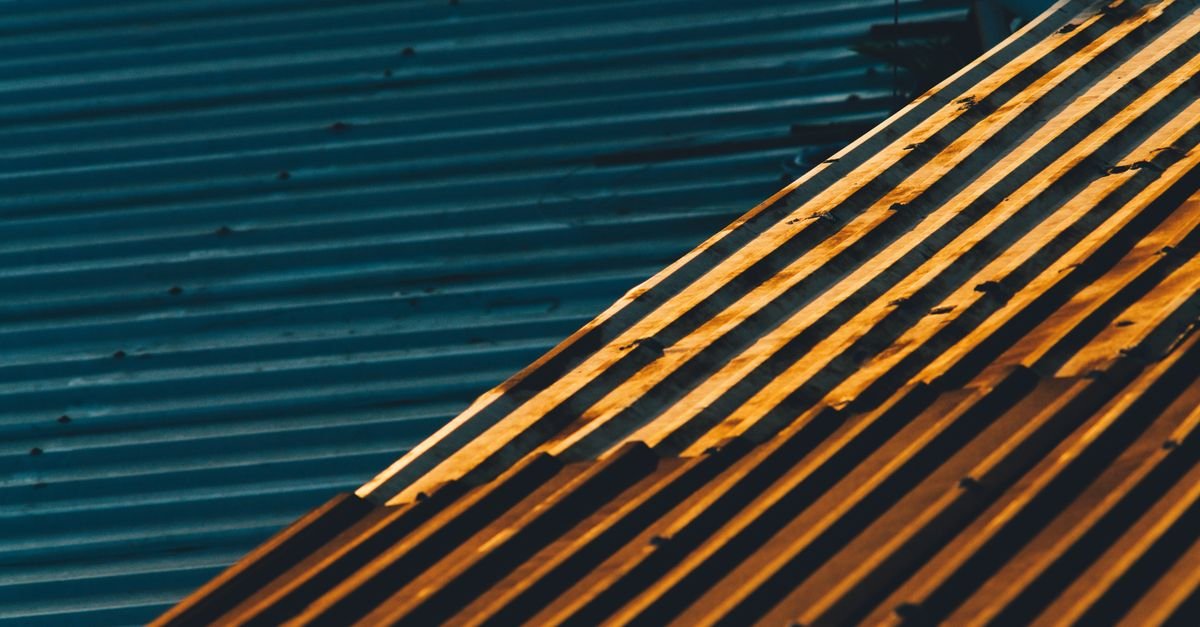
The difference matters most when you decide which way to point water. A metal roof is engineered against gravity: every lap, seam and screw washer is built to shed rain falling downward, and none of them is built against a jet aimed up-slope. That is why cleaning a metal roof is always a top-down rinse following the run of the ribs, and why the urge to get under a lap and flush it out is the most expensive instinct in this job.
Stone-coated steel is the odd one out. DECRA, whose panels are the most common stone-coated product in the US, tells owners not to forcibly remove the granules and not to exceed 500 PSI (DECRA, how to clean a DECRA metal roof). If that sounds familiar it is the same argument as an asphalt shingle — the protective layer is a bonded granule coat, and force takes it off. The full version of that case lives in the piece on cleaning roof shingles without pressure washing.
Chalking Is a Coating Breaking Down, Not Dirt
Run a finger down a fifteen-year-old painted panel and it comes away white. Most people assume dust. It is not dust. It is the resin in the topcoat breaking down under ultraviolet light and releasing the pigment it used to hold, which then sits loose on the surface. The industry calls it chalking, and it is the coating quietly handing you small pieces of itself.
Two things follow, and they pull in opposite directions. The first is that you should wash it off, because chalk holds dirt and dirt holds moisture. Sheffield Metals notes that most metal roofing paint warranties do not cover excessive chalking in the presence of pollutants, which is a polite way of saying that if you let a decade of grime sit on a chalking roof, the warranty conversation goes badly (Sheffield Metals, how to clean a painted metal roof).
The second is that washing chalk does not reverse it. Every pass removes loose pigment that was already gone, and if you press hard enough it also takes some of the film that has not gone yet. A soft sponge and mild detergent lift the chalk. A stiff brush and a scouring motion lift the chalk plus a share of the remaining 0.7 mils. There is no version of scrubbing harder that ends well. If the chalk returns within weeks of a wash and the colour underneath looks faded and blotchy, you are past cleaning — that roof needs a recoat specialist, and a bucket of soap will only keep confirming the diagnosis.
Every Abrasive Leaves Something Behind
Steel wool, wire brushes and sandpaper appear on the prohibited list of every metal roofing manufacturer I read, always with one line of explanation: abrasives scratch the finish. True, and incomplete. There is a second mechanism nobody mentions, and it is arguably the worse one.
A carbon-steel wire brush does not only cut. It sheds. Fine steel particles break off the bristles and embed in the coating, and because they are ordinary unprotected steel sitting on a wet roof, they rust — not in years, in a few weeks of weather. What you get is a haze of orange freckles across the area you cleaned, in the exact pattern of your scrubbing, and the homeowner’s reasonable conclusion is that the roof has failed. The roof has not failed. The brush is still on it.
The list of prohibited tools and cleaning products is longer than most people expect, and it is worth reading once rather than discovering by experiment:
- Steel wool, brass and steel wire brushes, sandpaper of any grit
- Scouring powders and cleaning pastes
- Paint removers, paint thinners, acetone
- High-pressure power washers
- Anything containing graphite, near aluminium especially
The one narrow exception in the manufacturer guidance is for rust stains — not rust, stains, the orange streaks left by something else corroding above. Sheffield allows a mild abrasive cleaner on a non-abrasive pad, light pressure, rinsed immediately. That is a spot treatment on a mark you can point at, not a technique for a roof.
Cleaning a Metal Roof: The Sequence That Protects the Finish
Here is the order that keeps the film intact. Almost all of it happens from a ladder with a long handle rather than from the roof itself.
1. Pick a cool, overcast day. A panel in direct August sun will flash a detergent film dry in under a minute, and the streaks need a second wash. DECRA caps this from the other direction too: never exceed 160 degrees Fahrenheit on the water or solution.
2. Clear the dry debris first. Leaves in the valleys, pine needles packed against the seams, the branch that has been up there since March. Long-handled soft brush, from the ladder. Wet leaf mulch is far harder to move and it stains.
3. Rinse with plain water, top down. A surprising amount of dry soil leaves with water alone, and what remains tells you how much of the discolouration is chalk or growth.
4. Mix a quarter cup of mild detergent per gallon of water. Car wash soap, mild dish soap or mild laundry detergent. That ratio is the standard across painted metal building guidance and it has not moved in twenty years.
5. Apply with a soft non-foam sponge or a soft-bristle brush on a telescoping pole, in sections small enough that nothing dries before you rinse it.
6. Let it stand five to ten minutes. Do not let it dry. If it starts to, mist it.
7. Rinse thoroughly with plain water, top down, following the ribs. Detergent residue left on a coating is itself a staining agent, and on metal the rinse is half the job.
8. Test anything unfamiliar on a hidden run first — the rear elevation, a section behind a dormer, somewhere you will not look at a mistake every morning.
9. Touch up bare scratches with the panel maker’s own paint, matched to that coating system, not a hardware-store can of enamel.
Everything you move off the roof lands in the gutters or on the siding below. Rinse both, before the solution dries on them.
500 PSI and 160 Degrees Are the Two Numbers in Writing
I went looking for a metal roofing manufacturer willing to publish an actual pressure figure, because nearly all of them say “no high-pressure power washers” and then stop. DECRA is the one that commits: do not use water pressure above 500 PSI, and do not exceed 160 degrees Fahrenheit on water or solution temperature.
Put 500 PSI next to what you actually own.
| Source | Typical pressure |
| Garden hose, open nozzle | 40–60 PSI |
| The published manufacturer ceiling | 500 PSI |
| Homeowner electric pressure washer | 1,300–2,000 PSI |
| Homeowner gas pressure washer | 2,000–3,200 PSI |
Here is my one strong opinion on this topic, and it is not really about the metal. A pressure washer is the wrong tool for a metal roof because of the joints, not the panel. The steel itself would shrug off 2,000 PSI at a sensible distance; it is a structural sheet, not a shingle. What will not shrug it off is the side lap, the ridge closure, the EPDM washer under a fifteen-year-old screw head and the sealant inside a standing seam — all engineered against water arriving from above at the speed of rain. Aim a fan tip up under a lap and you have run a small, targeted leak test that the roof will pass in front of you and fail in November.
The white 40-degree tip does not solve it either. Changing tips changes fan width, and therefore impact per square inch, but it does not divide your machine’s pressure by five. Distance is the real control, and the distance at which a 2,000 PSI machine lands near 500 PSI is far enough that you are mostly holding an awkward, expensive hose. The full nozzle colour breakdown is worth knowing anyway, but on a metal roof the answer comes out the same at every colour. The machine does keep one job: fitted with the black soap nozzle it is a decent low-pressure applicator from the ground — a soap sprayer with a very good engine, which is a fair description of most soft washing.
Bleach on Painted Steel Is Not Bleach on a Shingle
The 50:50 household bleach and water mix the asphalt roofing industry recommends for algae does not transfer to metal, and copying it across is one of the commoner ways to damage a finish while following advice that was correct somewhere else.
For mildew, algae or mould on a painted metal panel, Sheffield’s published mix is much weaker: one third of a cup of powdered laundry detergent, one quart of 5% household bleach and three quarts of water — bleach diluted roughly one part in four, applied to affected areas with a soft brush or rag, worked lightly, rinsed well.
The reason for the weaker mix is what travels with the hypochlorite. Household bleach is sodium hypochlorite plus sodium chloride plus a little sodium hydroxide, and chloride is the part that matters here. Chloride attacks the passive oxide layer protecting zinc and aluminium coatings, and it concentrates exactly where you least want it: at cut edges, screw penetrations and scratches, anywhere the substrate is already exposed. On a shingle, leftover bleach is a plant problem. On metal it is a corrosion problem, which is why the rinse matters more on this surface than anywhere else on the house. There is more on how that chemistry behaves and stores in the piece on sodium hypochlorite for pressure washing.
One honest gap, flagged as a gap. Bare unpainted Galvalume — the bright spangled stuff with no colour coat — is the case where soft wash contractors will tell you not to use a hypochlorite mix at all, on the grounds that it streaks and oxidises the alloy coating permanently. The mechanism is consistent with what chloride does to a zinc-aluminium alloy and I am inclined to believe it. What I could not find is a manufacturer bulletin that puts it in writing. So take it as trade practice rather than published spec, and if your roof is bare Galvalume, ask the panel maker before anyone sprays anything at it.
Where Two Metals Meet, Something Corrodes
Galvanic corrosion needs three things: two dissimilar metals, an electrical path between them, and an electrolyte. On a dry roof you have two of the three. The moment you start rinsing you supply the third, and a wash day is the wettest that roof will be all year outside a storm.
The Metal Construction Association’s technical bulletin on the subject is blunt about the worst offender: copper has a very severe corrosive effect on steel, aluminium and zinc, and graphite is extremely corrosive to aluminium and aluminium alloys (dissimilar metal corrosion in roofing installations). The same bulletin notes that water running off a more noble metal onto a less noble one causes corrosion and staining, and that preservative-treated lumber — loaded with copper salts — should not contact metal roofs at all.
Translated into things that happen on a cleaning day:
- Look uphill before you rinse. A copper vent cap, copper flashing or a copper gutter above the panels means your rinse water is carrying copper ions down across steel or aluminium. Move it through rather than letting it pool and evaporate into a streak.
- Check what is in the bottle. DECRA warns off copper-based products, which cause galvanic reactions, and iron-based products, which stain. A fair number of roof moss killers are copper-based, because copper kills moss beautifully. It also works on panels.
- Zinc strips are not automatic here. They are the standard prevention trick on asphalt. On aluminium panels they are a galvanic pairing rather than a free win, so ask the panel manufacturer before fitting metal strips to a metal roof.
- Do not leave steel on the panel. A dropped screw, a steel tool, a ladder hook on a rib, a stray tuft of steel wool. Small anode, large cathode is the bad ratio, and the MCA bulletin uses exactly that case — a galvanized nail in an aluminium roof — to explain why it goes so fast.
Metal Gets Slick Long Before It Looks Wet
A painted metal panel in morning dew has roughly the traction of a laminate floor and a wet sock. Add detergent and it stops being a roof and becomes a slide with a gutter at the bottom. This is not the risk profile of asphalt, which at least offers grit underfoot and tells you when you have started moving.
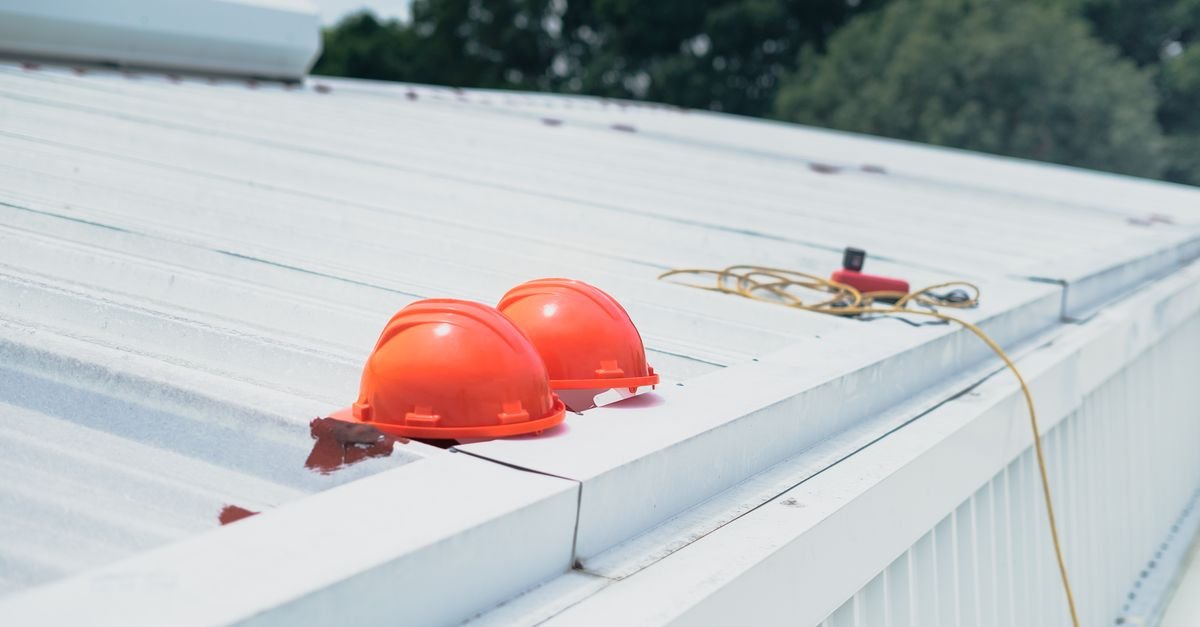
There is a second, quieter problem nobody warns about until afterwards. Standing seam panels have wide flat pans between the ribs, and those pans are unsupported sheet. A boot in the middle of one leaves a permanent oil-can dimple that nothing brings back out. On exposed-fastener corrugated you walk on the low ribs, over a purlin, or not at all. A roof that will take a hailstorm without complaint still remembers exactly where you stood.
Which is why the whole method above is written for a ladder and a pole: long-handled soft brush, garden hose, solution in a pump sprayer, feet on the rungs. If the roof genuinely needs someone on it — large area, steep pitch, two storeys — that is a contractor with a harness and an anchor point, not a Saturday. And whatever you were planning to do to the walls afterwards, the pressure limits down there are their own conversation.
FAQ
Can you pressure wash a metal roof?
Not at the pressure your machine produces. DECRA publishes a 500 PSI ceiling and a homeowner electric washer starts around 1,300 PSI. Most other manufacturers prohibit high-pressure power washers outright. The panel would survive it; the seams, laps and screw washers are what fail, because they are designed against rain falling downward, not a jet aimed up-slope.
What is the best cleaner for a metal roof?
The standard metal roof cleaning solution is a quarter cup of mild detergent per gallon of plain water — car wash soap, mild dish soap or mild laundry detergent. Let it stand five to ten minutes, then rinse with plain water. That mix handles ordinary dirt, pollen and chalk, and it beats most branded metal roof cleaning products on cost and on risk. Save anything stronger for the specific stain that needs it.
Will bleach damage a metal roof?
At the 50:50 strength used on asphalt shingles it can. Sodium hypochlorite carries chloride, which attacks the protective zinc or aluminium coating at cut edges, scratches and screw penetrations. The published mix for painted metal is far weaker — a third of a cup of powdered detergent, a quart of 5% bleach, three quarts of water — applied to affected areas only and rinsed thoroughly.
Why does my metal roof leave white powder on my hand?
That is chalking: ultraviolet light breaking down the resin binder in the topcoat and freeing the pigment, which then sits loose on the surface. It is normal on an older coating. Wash it off gently with mild detergent, because chalk holds dirt and dirt holds moisture — but understand that washing does not reverse it, and scrubbing hard removes coating along with the chalk.
How do you remove rust stains from a metal roof?
Work out what is rusting first, because on a coated panel it is usually something above the stain rather than the panel itself — a fastener, a steel vent, a bracket. Fix the source. For the mark, manufacturers allow a mild abrasive cleaner on a non-abrasive pad with light pressure, rinsed immediately. Acid-based removers appear in the guidance too, at short contact times, never allowed to dry on the surface.
How often should a metal roof be cleaned?
A light wash once a year is the common manufacturer recommendation, with a more thorough clean every two to three years. Heavy tree cover, coastal salt, agricultural dust or nearby construction all argue for more often. Coastal properties in particular benefit from a plain-water rinse a few times a year simply to move salt off the coating.
Can you walk on a metal roof?
You can, and mostly you should not. Wet or dewy metal has very little traction, detergent removes what little is left, and standing seam pans dent permanently where a boot lands between the ribs. Clean from a ladder with long-handled tools where you can, and where the roof genuinely needs access, that is a job for someone with fall protection and an anchor point.
Does cleaning a metal roof void the warranty?
Cleaning it correctly does not. Cleaning it wrongly can. The warranty language generally targets over-concentrated solutions, incompatible chemicals, excessive contact time, abrasives and high-pressure washing. Test an unfamiliar product on a hidden section first, follow the label, and keep a note of what you used and when.
Mild Chemistry, Long Handles, Both Feet on the Ladder
All of this gets easier once you stop thinking of it as a roof and start thinking of it as a painted surface that happens to be forty feet up. You would not take a wire brush to a car bonnet, you would not aim 2,000 PSI at a windowsill, and you would not scrub a chalking finish until it came back shiny. Same paint, same logic, considerably worse footing.
Mild detergent, five to ten minutes, plain water top-down, nothing abrasive, nothing copper. If the roof still looks wrong after that, it is not dirty — it is old, and a bucket of soap has never yet talked a coating out of retirement.