Last Updated on September 26, 2026 by Umar Farooq
Cleaning a pergola is the one timber job on your property where you cannot point the water downward, and that single geometric fact decides the whole method: the spray comes back into your face, the runoff lands on whatever the pergola was built to shade, and the top faces of the rafters are neither visible nor reachable from the ground. Work from below with a pump sprayer and a pole brush, keep the machine for the posts and the final rinse, and accept that the tops get cleared of debris rather than washed.
Almost every pergola guide is a deck guide with the nouns swapped, which is how you end up reading about grain direction and drying times and nothing at all about the fact that you are standing underneath the thing. The species matters, and it is covered properly elsewhere on this site. The shape is what nobody writes about, and the shape is the problem.
Every Wood-Washing Rule Says Point the Stream Down
Read enough published wood-cleaning guidance and one instruction turns up in all of it: keep the water stream angled downward. It is there to stop you driving water up behind a lap, into a joint, or into a cavity that has no drainage route out. It is good advice, it is nearly universal, and on a pergola it is impossible.
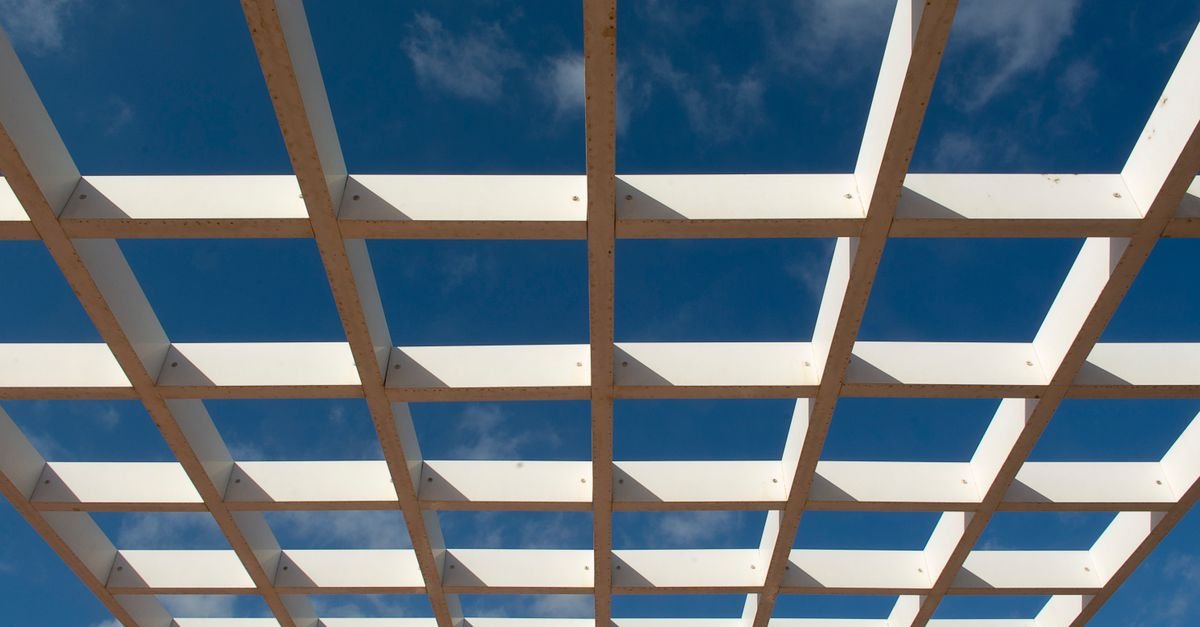
The surface you are trying to clean is the underside of a beam eight or nine feet above your head. There is no angle from which that is a downward stroke. So every consequence of spraying upward, which other surfaces let you design around, is fixed here.
The first consequence is that everything you loosen has one direction to travel. Grit, pollen, an abandoned wasp nest, four seasons of web, flakes of failed stain, and all of the cleaner you just applied. None of it lands on the pergola. It lands on the floor, the furniture, and your face, in roughly that order of quantity and reverse order of how much you mind.
That makes eye protection a specification on this job rather than a good habit. The American Academy of Ophthalmology publishes the number plainly: “Simply wearing protective eyewear can reduce your risk for eye injury by 90 percent.” The same page notes that “about half of all eye injuries happen right at home,” and that “only about three out of 10 people wear protective eyewear during home projects that could hurt their eyes” (AAO, Eye Safety at Home). Sealed goggles, not safety glasses with a gap at the brow — the debris path on this job is straight down into the gap.
The second consequence is control. Working distance is your real pressure adjustment on softwood, and holding a steady eighteen to twenty-four inches above shoulder height, looking up, with nozzle reaction pushing back down the wand, is not something anybody does accurately for forty minutes. An extension wand makes the reach easier and the control worse, for reasons worked through in telescoping pressure washer wands.
So here is the opinion I will defend on this page: a pergola is the only structure on your property where I would tell you to keep the wand off the part you are actually trying to clean. Softwood gives up its surface fibre somewhere around 500 to 600 PSI — the cedar figures and what furring looks like afterwards are set out in full on that page — and you cannot hold a consumer machine anywhere near that number while aiming at the ceiling. The underside of a pergola is a brush-and-dwell job. The posts are where the machine gets to earn its keep.
Clear the Floor Before You Aim at the Roof
A deck has nothing underneath it. A fence has nothing underneath it. A pergola exists specifically to have something underneath it, which is why this is the one wash where the preparation is heavier than the work.
Go and look at what is actually under there. A table, six chairs with cushions, a rug that is only weatherproof in the sense that it survives rain, a grill, a fire bowl, a sofa, a hot tub lid, a run of string lights, and a speaker somebody left out. Every one of those sits directly in the fall line of everything you are about to dislodge. Move it out, and move it further than the footprint — the drip line of a pergola in any breeze is wider than its plan, so the chair you parked at the edge is still in range.
Cushions deserve the specific warning, because sodium hypochlorite mist does not announce itself. It lands, it dries, and three weeks later somebody notices that the navy cushion has a pale constellation on it. Fabric goes indoors, not under a sheet at the edge.
The floor itself is the part people forget is a floor. If your pergola stands on a timber deck, you are going to wash that deck today whether or not it was on the list, so put it on the list and do it last. If it stands on pavers, the runoff carries dirt and cleaner straight into the joints. If there are beds along the edge, soak them with clean water before any chemistry goes up, and rinse them again afterwards.
And kill the circuit. Pergola lighting is usually a surface-run low-voltage string or a fan hung off a beam, installed by whoever owned the house before you, at a height that puts it exactly where your spray is going. Breaker off, fittings bagged, and the fan gets a cloth rather than a rinse.
The Top of Every Rafter Is a Debris Trap, Not a Surface You Wash
This is the honest limit, and it is the part I have not seen stated anywhere, so it is worth being blunt about.
Count the faces. A modest twelve-by-sixteen pergola with rafters at sixteen inches and slats laid across the top has several hundred linear feet of timber in it, and every piece has four long faces. From the ground you can see and reach one of them properly — the underside — and parts of the two sides. The top face of every single rafter and every single slat is invisible from below and out of reach from below.
That top face is the one that decides how long the structure lasts. It is horizontal, it faces up, nothing shades it, and it collects leaves, needles, seed, grit and pollen which then sit there holding water against the wood indefinitely. Drying checks that open upward turn into small funnels pointing into the heart of the timber; the mechanics of a check and which direction it has to face to matter are worked out on the log wall page, because a log is the same problem in a larger diameter.
So the tops do not get washed. They get cleared. A leaf blower from the ground moves loose debris off a slatted top far better than water does, and it does it without wetting anything. Packed, damp debris in the angle where a slat meets a rafter needs a stiff brush drawn along the top of each member, from a stepladder at the perimeter, working inward as far as your arm honestly reaches. Then protection rather than cleaning: pressure-treated lumber makers are specific about the schedule, and YellaWood publishes “Apply water repellent within six weeks of the project’s completion. For the best results, water repellents should be applied annually” (YellaWood, Care & Maintenance). An annual repellent on the top faces is worth more to a pergola than any amount of washing the undersides.
The aluminium version of this rhymes exactly, which is how you know it is the geometry talking and not the material. On a louvered aluminium pergola the beams are gutters and the posts are downspouts, and StruXure’s own maintenance guidance tells owners to clear “leaves, twigs, and debris,” to use “a vent duster or a long, flexible brush to carefully dislodge packed leaves or pine needles from the downspout,” and to “Flush the internal channel with a standard garden hose to confirm that water drains freely away” (StruXure, Pergola Maintenance). Different material, same instruction: the top of the structure is a debris trap you clear, not a surface you clean.
What you clean when you clean a pergola is the part people look at. What decides whether it is still standing in twenty years is the part nobody looks at. Those are two separate jobs, and only one of them involves water.
Why the Posts Streak and the Slats Do Not
Here is the failure that identifies a pergola wash from across the garden. The rafters come out fine. The posts come out striped, top to bottom, in four vertical smears that were not there yesterday.
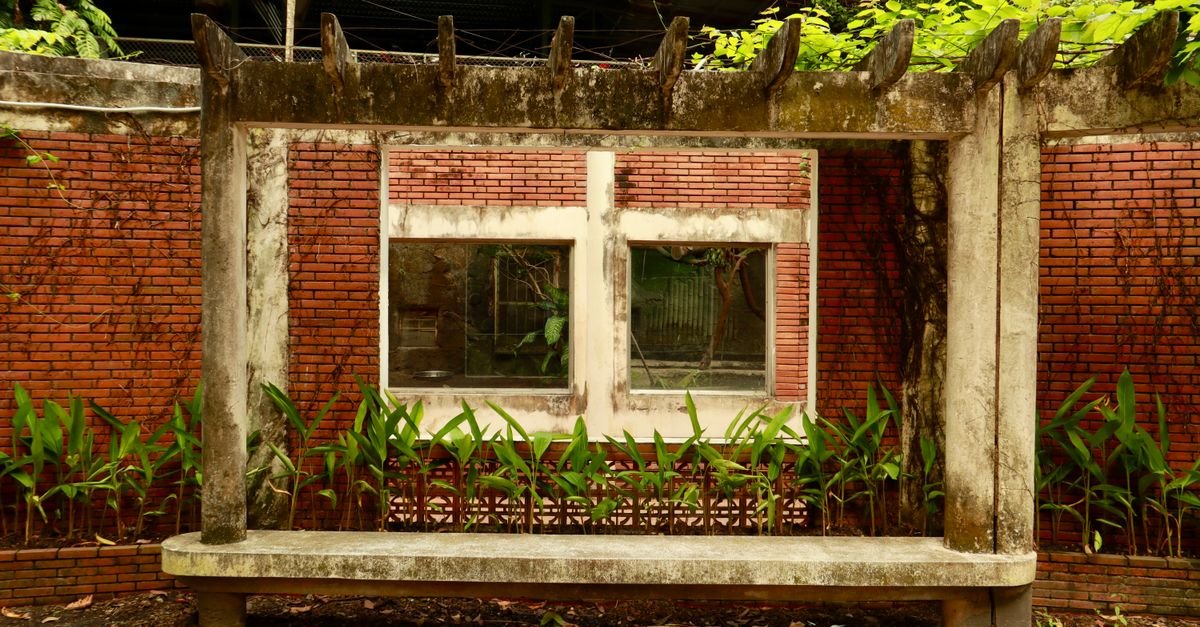
The mechanism is only gravity, but the arithmetic is unkind. Every slat drains to a rafter, every rafter drains to a beam, and every beam drains to a post. Four posts therefore carry the dissolved output of a couple of hundred square feet of dirty timber, and they carry it down a dry vertical surface. Dirty water crossing dry wood leaves a tide mark at every point where it slowed down. That is not a cleaning failure. That is the structure working as designed, on the one day you wish it would not.
The fix is unglamorous and takes ninety seconds. Soak all four posts with clean water before any cleaner touches the rafters, and keep them wet. A wet post has no dry surface for a tide mark to form on, so the runoff passes over it instead of into it. Then rinse the posts last, from the top of each one to the bottom, in a single continuous pass rather than in sections — a post rinsed in three goes has two joins in it, and both will show.
Two more streak sources specific to this shape. Cleaner that dries on an overhead surface before you can rinse it leaves a pale bloom, and an overhead surface in July dries faster than a wall does because air moves on both sides of it, so work in sections of one or two bays and remist rather than reapplying. And the paving underneath will print a plan of the pergola onto itself — a grid of clean strips where the runoff fell and dirty strips where it did not — which is why the floor gets washed after the structure and not before. If the result looks less like clean wood and more like a barcode, the general causes of streaking after a wash will tell you which of the three you have.
Finally: finish the whole structure in one session. A pergola abandoned at dusk with three bays done dries into a line that stays visible until the timber weathers back, which takes a season.
Cedar, Treated Pine, Aluminium or Vinyl: Identify It First
Material does not change the geometry, but it changes what you are allowed to put on it, and a surprising number of people do not know which of four things their pergola is made of. Tap it. Look at an end cut. A cedar pergola smells like cedar when it is wet, treated pine has staple-sized incision marks in the surface, aluminium sounds hollow and has no grain, and vinyl flexes under a thumb.
| Material | How to tell | What the maker’s own guidance says | Where the detail lives |
| Western red cedar, redwood | Fine grain, warm colour, distinct smell when wet | Gentle oxidiser, long dwell, soft brush; chlorine bleach pulps the surface | Cleaning cedar siding |
| Pressure-treated pine | Greenish or tan, incision marks, heavier | Mild soap, low pressure, 45-degree fan, keep the wand moving | This page, below |
| Painted or solid-stained timber | A film you can lift with a fingernail | Sound film only, wide tip, far back | Pressure washing painted wood |
| Powder-coated aluminium | Hollow, no grain, often louvered | Manufacturer says do not pressure wash at all | This page, below |
| Vinyl or PVC | Flexes, hollow sections, moulded corners | Mild detergent, never aim into a seam | — |
For treated pine, the mill publishes its own instruction and it is worth having in front of you because it is a nozzle spec rather than a PSI: “A simple solution of mild soap and a pressure washer will help clean your project of surface mold and dirt. Just keep the pressure low, use a 45-degree fan and keep the wand moving so you don’t damage your deck” (YellaWood, linked above). A 40-degree white tip is the closest thing in a standard five-nozzle kit.
For powder-coated aluminium, StruXure is unambiguous: “We do not recommend pressure washing your powder-coated aluminum pergola. High-pressure water streams can compromise the electrical components, degrade the automated track mechanisms, and potentially damage the protective surface finish.” Their cleaning method is a mild detergent at “a neutral pH level between 5 and 8,” a soft sponge or microfiber cloth, and no wire brushes, abrasive sponges or steel wool. Worth knowing that this instruction gets bent in the field — at least one of the brand’s own regional dealer pages publishes pressure-washer settings anyway, a 25 or 40 degree tip at eighteen inches, which tells you something about how often it is asked for. The maker’s page is the one I would follow, because the maker is the one holding the warranty on the motor inside the beam.
If your pergola is stained rather than painted and you are washing it in order to re-coat it, stop before you buy anything and settle whether the existing finish is a film or a penetrating one, because the answer changes the entire job. That test, and the moisture reading that has to come before any finish goes on, are both on cleaning and staining a wood deck.
Doing It From the Ground With a Pole and a Sprayer
The kit list is short and the pressure washer is not at the top of it: a five-gallon pump sprayer, a soft car-wash brush on an extension pole, a garden hose, sealed goggles, and the machine for the posts and the floor at the end.
1. Clear the floor. Furniture out, fabric indoors, breaker off, fittings bagged, beds soaked with clean water.
2. Clear the tops. Leaf blower from the ground first, then a stiff brush along the top of each member as far as you can honestly reach from a stepladder at the edge.
3. Wet the posts. All four, all the way up, and keep them wet for the rest of the job.
4. Apply cleaner to the undersides with the pump sprayer, one or two bays at a time, from below, as a mist rather than a jet. An oxygen-bleach wood cleaner on bare timber, a mild detergent on aluminium or vinyl.
5. Let it dwell ten to fifteen minutes and remist anything that starts to go matte. This step is the job. Everything else is delivery and rinsing.
6. Brush the undersides along the grain with the pole brush. Gently — the cleaner has already done the work, and a stiff brush on softwood does its own damage without any help from a machine.
7. Rinse the rafters at garden-hose pressure or a 40-degree tip from well back, then the posts top to bottom in one pass each.
8. Wash the floor last, at whatever pressure that surface takes.
One thing a pergola genuinely makes easier, and it is worth saying because so little else about the shape is generous: it is open-topped, so a petrol machine parked at the edge of it is outdoors in the way an engine needs to be outdoors. That is the single largest difference between this job and washing a roofed structure, where the exhaust question is real and covered on the porch page. A pergola has beams and no ceiling. The air moves.
FAQ
Is cleaning a pergola a pressure washer job at all?
Partly. The posts, the steps and the paving underneath are fine for a machine at the usual settings for those materials. The undersides of the rafters and slats — the part you are actually looking at — are better done with a cleaner, a dwell time and a soft brush on a pole, because you cannot hold a useful working distance overhead and everything you dislodge falls back onto you. Treat the machine as an applicator and a rinse tool, not the cleaning force.
What PSI should you use on a wooden pergola?
Stay in the softwood band, 500 to 600 PSI, with a 40-degree tip, and understand that no consumer machine dials down that far — distance is doing the work. Pressure-treated lumber makers give a nozzle instruction rather than a number: low pressure, a 45-degree fan, and constant wand movement. If a test patch on a hidden rafter end feels rough once it has dried for a few hours, you were too close.
How do you clean the top of a pergola?
You mostly do not, and that is the honest answer. Clear it instead: a leaf blower from the ground for loose debris, a stiff brush drawn along the top of each rafter from a stepladder at the perimeter for anything packed, and then an annual water repellent on the exposed top faces, which does far more for the timber than washing them would. Do not walk on the rafters to reach the middle.
Can you pressure wash an aluminium pergola?
The manufacturers of louvered aluminium pergolas say no, and they give three reasons: the electrical components, the automated track mechanisms, and the powder-coat finish itself. Use a mild neutral-pH detergent, a soft sponge or cloth, and a garden hose. If yours is a plain fixed-louvre aluminium frame with no motor and no wiring in it, the argument is weaker, but the powder coating is still the only corrosion barrier it has.
What is the best cleaner for a pergola?
On bare or weathered timber, a sodium percarbonate wood cleaner — oxygen bleach — kept wet for ten to fifteen minutes. It handles the grey-black film and the green on the shaded faces without the surface pulping that chlorine bleach can cause on softwood. On aluminium or vinyl, a mild detergent at neutral pH is all that is wanted. Never put an acid brightener on a surface still wet with a hypochlorite mix.
Do you really have to move the furniture out from under a pergola?
Yes, and further out than you think. Everything you loosen from the underside of the structure lands directly below it, and any breeze widens that fall zone well past the pergola’s footprint. Cushions and fabric go indoors rather than under a sheet, because bleach mist finds its way around a sheet and the spotting does not show up until the fabric has dried.
Wash What You Can See, Clear What You Cannot
That is the whole reframe, and it is the thing the deck guides cannot tell you because a deck has no overhead. A pergola splits into two jobs by geometry alone: the visible undersides and posts, which want chemistry, a dwell time and a brush; and the invisible top faces, which want a blower, a brush and a coat of repellent once a year. Neither of them wants a narrow tip, and only one of them wants water.
Move the furniture further out than feels necessary, soak the posts and the visible undersides, give the oxygen bleach its ten to fifteen minutes without letting it dry, then rinse from further back than feels useful. The top faces get a blower, a brush worked from a stepladder at the perimeter, and a coat of repellent once a year. Fibre torn off the underside of a rafter does not grow back, and you are the only person who will ever be lying under there looking up at it.