Last Updated on September 26, 2026 by Umar Farooq
Steam cleaner vs pressure washer is not an argument about temperature — it is an argument about flow, and the two machines sit so far apart on that one axis that the trade rates them in different units.
A pressure washer is sold in gallons per minute. A steam cleaner is sold in gallons per hour. One commercial vapour steam unit I looked up carries a water tank of 1.3 gallons in total, which the cheapest electric pressure washer in the shop would empty in about a minute.
That is the whole comparison, and the rest of this page is the consequence. Steam softens and sterilises. Pressure loosens and carries away. If the soil has to be carried away, you need volume, and steam has none to give you. If the water has nowhere to go, you need the machine that barely produces any.
(Which means the honest answer to “which one should I buy” is often “both, for different rooms.” I am aware that is nobody’s favourite answer.)
“Steam Cleaner” Names Three Different Machines
Half the confusion here comes from the phrase itself. “Steam cleaner” is doing duty for at least three products that share a physical principle and very little else, and the answer changes completely depending on which one is sitting in front of you.
The domestic vapour steamer. A kettle with a hose on it. A small boiler heats tap water past boiling and the vapour leaves through a trigger gun, a brush head or a flat pad. It runs off a wall socket, weighs about what a vacuum weighs, and lives indoors — grout, tiled walls, sealed floors, hobs, mattress seams, the inside of a car.
The commercial dry-steam generator. Same principle, built for food plants, breweries, kitchens and hospitals. The published figures are modest by pressure-washing standards: Goodway’s compact commercial unit, the GVC-1502, lists an adjustable output of 0 to 90 PSI at 290°F, drawn from a 1.3-gallon water tank and a 0.8-gallon boiler, running on a 115-volt socket at 13 amps (Goodway, commercial vapour steam cleaner specification). Heavier units in the same family reach 0 to 145 PSI. They do not exist because they are powerful. They exist because they clean in places where water is not allowed.
(I found that same unit listed at 220°F on the manufacturer’s buying guide and 290°F on its own spec table, on the same website. I have quoted the spec table, and I am mentioning the other number because you will run into it too.)
The steam setting on a hot-water pressure washer. This is the one that muddies the whole comparison, because it is not a steam cleaner at all — it is a pressure washer with a burner and a restricted tip, trading gallons for degrees. Alkota, which has built both classes since 1964, states the gap plainly: “While industrial steam cleaners usually run in the 250-400 PSI range, the average hot water pressure washer packs 2,000-4,000 PSI,” with hot-water machines running “at about 200 degrees F” (Alkota, steam pressure vs hot water pressure). What the burner actually does to the dirt is a separate argument, worked through in full on hot water pressure washing — it is chemistry rather than force, and it is not this page’s fight.
Laid out side by side, the classes barely overlap.
| Class | Output pressure | Water temperature | Where it belongs |
| Cold pressure washer | 1,300–4,400 PSI | whatever the tap gives | outdoors |
| Hot-water pressure washer | 2,000–4,000 PSI | around 200°F | outdoors, trade |
| Steam setting on a hot-water unit | 250–400 PSI | higher, at reduced flow | outdoors, trade |
| Vapour or dry steam cleaner | 0–145 PSI | 220–290°F | indoors |
The verdict on this axis: if someone tells you steam cleans better than pressure, ask which of the three they mean. Two of them are indoor appliances that could not strip a driveway if you gave them a fortnight. The third is a pressure washer wearing a coat, and comparing it to a pressure washer is not a comparison.
Steam Cleaner vs Pressure Washer: the Whole Argument Is Flow
Two things clean a surface, and only one of them is pressure. Pressure breaks the bond between the dirt and the material underneath it. Flow picks the loosened dirt up and takes it somewhere else. Leave out either half and the job is not finished, which is why the GPM figure decides more jobs than the PSI figure on almost everything a homeowner cleans.
Now put the flow figures next to each other, from spec sheets rather than from marketing.
The heaviest industrial unit in that same range, the GVC-36000, is rated at 118 pounds of steam per hour. Water weighs about 8.34 pounds a gallon, so that works out at roughly 14 gallons an hour — about 0.24 GPM. The smallest homeowner electric pressure washer on the shelf delivers 1.2 GPM. That is five times the water, from the cheapest machine in the shop, against the largest steam generator in a professional catalogue. The compact commercial unit is further down again, and a domestic steamer further still: its entire tank is a couple of litres and it runs for half an hour on it.
So here is what actually happens when steam meets a surface. It arrives, condenses, gives up its heat, softens what is there, kills what is living in it — and then stops. There is nothing behind it. The soil is now loose and sitting exactly where it was. Something has to pick it up, and that something is you with a cloth. This is not a flaw in the design; it is the design. The commercial answer is not more water but suction: units in that class are built with integrated vacuums to recover the loosened debris and liquid, which is a tidy way of saying the machine cannot rinse and everyone involved knows it.
The verdict on this axis: anything that has to leave the surface in bulk needs volume. Grit off a patio, a slurry of dead algae off siding, moss out of a driveway joint, flaking paint, sand washed out of a paver bed — every one of those is a carrying problem, and a steam cleaner has nothing to carry it with. Give it a bathroom instead.
Does Either Machine Actually Sanitise Anything?
Steam does. A pressure washer does not, unless you have put something in the water.
The clearest published account of how steam actually kills things is not from an equipment catalogue. It is from the EPA’s guidance on bed bugs, which treats a steam cleaner as a treatment rather than as a cleaning product, and gives three requirements. The second one is the one worth stopping on: “The steam temperature must be at least 130o F,” the steam should “not have a forceful airflow, or it may cause bed bugs to scatter,” and “Use a diffuser to prevent scattering” (EPA, Do-it-yourself Bed Bug Control).
Read that again with a wand in your hand. A forceful jet is a defect in steam application. Force spreads the problem around instead of ending it. What does the work is heat held against the surface long enough to matter — which is dwell time, the same lever detergent uses, arriving as temperature instead of chemistry.
A pressure washer has the exact opposite profile: all force, no contact time, because the water is gone the instant it lands. Cold water at any pressure is a rinse, not a disinfectant. The reason exterior cleaning works at all is the chemistry riding in the water and sitting on the surface, which is the whole basis of soft washing rather than power washing.
I am going to plant a flag here, because the equipment trade has no reason to: sanitising an outdoor surface is a marketing claim, not a maintenance one. A driveway is open to the sky. Whatever you killed on Sunday is being re-seeded by Tuesday from spores in the air and the damp film in the shaded third of the slab. Nothing about a driveway’s job depends on it being sterile, and I have yet to find a homeowner problem that was caused by bacteria on concrete. Indoors it inverts completely: a kitchen floor, a mattress seam, a car cabin and a bathroom grout line are all places where the thing living in the surface *is* the complaint.
The verdict on this axis: steam wins sanitising outright, and outdoors that barely matters. Where hygiene is the actual reason you are cleaning, steam is the correct machine and pressure is not even a contender.
Where the Runoff Has Nowhere to Go, Steam Wins
Here is the decision rule, and notice that it is not about the dirt at all. Before you pick a machine, ask where a gallon and a half a minute is going to end up.
Outside, that question has a boring answer. It runs down the slope, onto the grass, into a gully, and it only becomes interesting when there is chemistry in it. Inside, or on anything absorbent, the same question has no good answer at all — and that gap is exactly what a steam cleaner is for.
Steam is the right machine when:
- The floor is sealed, finished, or sitting on a subfloor. Water that gets under a sealed floor does not evaporate. It waits.
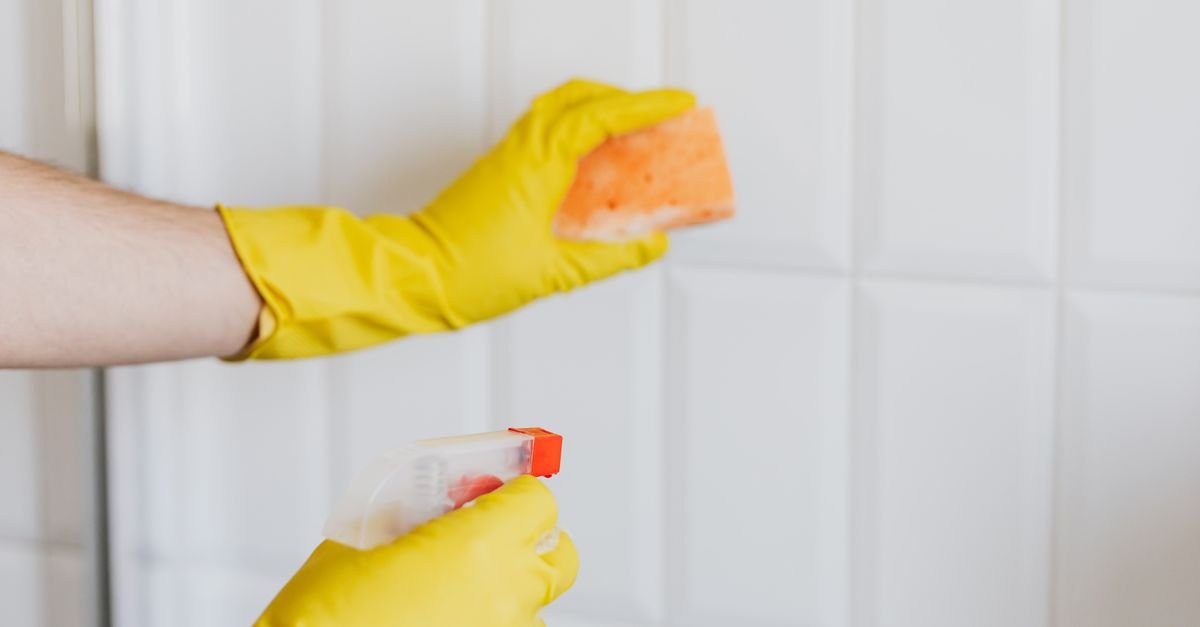
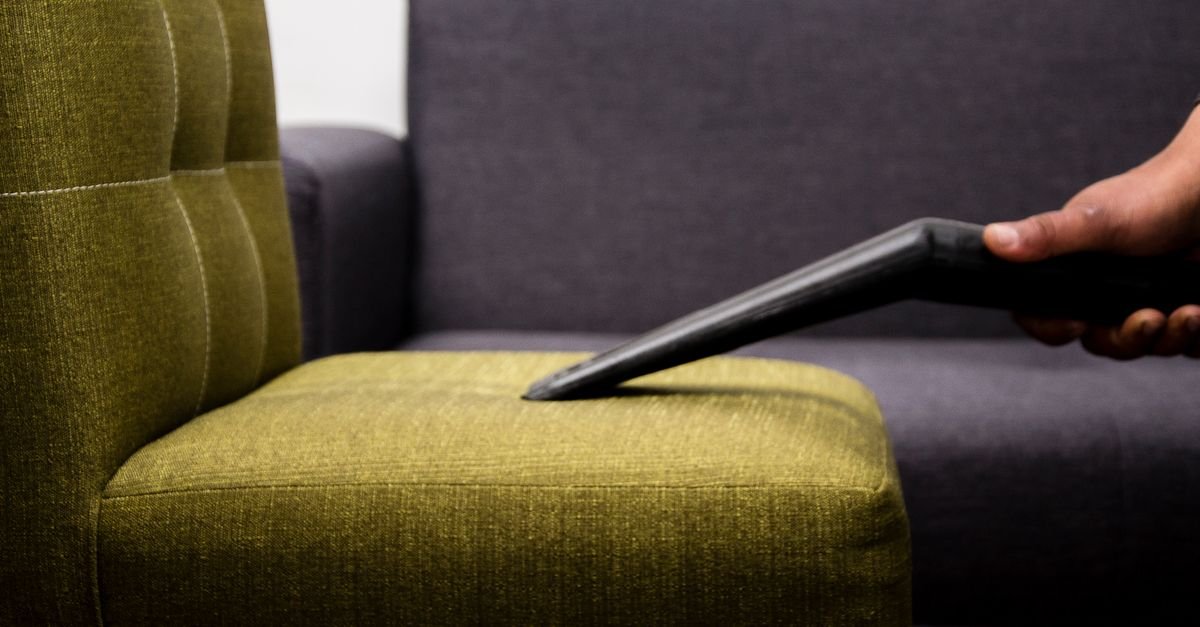
- The thing is upholstered. Cushions, mattresses, carpet, fabric seats. A pressure washer puts more water into foam than the foam will ever give back, which is why cleaning a car interior is a different job from washing the car.
- The soil is down in a joint rather than sitting on a face. Grout lines, tile edges, appliance seams. Steam goes into a gap that a fan jet skates straight over. EPA’s own phrasing is that steam cleaners “can get into cracks and fabrics.”
- Chemistry is off the table. Food preparation surfaces, a household with someone who reacts to cleaners, anywhere a residue is the actual problem.
- Somebody lives underneath you. Two litres an hour is a machine you can run on a first-floor balcony. Two gallons a minute is a conversation with a neighbour.
The reverse list is just as short. Siding, decking, fencing, driveways, patios, gutters, vehicles, garden furniture: volume is available, free, and going somewhere harmless, so use it. A steam cleaner pointed at a driveway is not dangerous, particularly. It is just going to take you until Christmas.
The verdict on this axis: the runoff picks the machine, not the dirt. Where the water has a route out, buy flow. Where it has not, buy heat.
FAQ
Is a steam cleaner more powerful than a pressure washer?
No, and it is not close. Published output pressure for commercial dry-steam units runs from 0 up to about 145 PSI, while a homeowner pressure washer starts around 1,300 PSI and the prosumer machines reach 4,400. Steam’s advantage is temperature and contact time, never force.
Can you use a steam cleaner on a driveway or a patio?
On a small greasy patch, yes. On a driveway, no — flatwork is a volume job. The grit has to be carried off the slab, and a steam cleaner produces a fraction of a gallon a minute to carry it with. For anything flat and large, pressure plus a surface cleaner is the right tool and it is not a close call.
Does a pressure washer sanitise a surface?
Not on its own. Cold water at any pressure is a rinse. What disinfects an exterior surface is the chemistry carried in the water — an oxidiser for algae, mould and lichen — held on the surface long enough to work. The pressure then removes what the chemistry has already killed.
Do you have to wipe up after steam cleaning?
Usually, and it surprises people the first time. Steam softens and loosens the soil, then has no flow behind it to rinse the residue away, so something has to pick it up: a cloth on a domestic machine, or a built-in vacuum on a commercial one.
Is a steam pressure washer the same thing as a steam cleaner?
No. A steam pressure washer is a pressure washer with a burner and a restricted tip, making very hot water at reduced flow — still hundreds of PSI, still a machine for outdoor work, still needing somewhere for the runoff to go. A steam cleaner is a boiler with a hose and almost no flow at all.
Which one uses less water?
The steam cleaner, by an enormous margin. It is rated in gallons per hour where a pressure washer is rated in gallons per minute. That is genuinely the strongest line on its spec sheet, and it is the reason it can work in rooms a hose cannot enter.
Outside Takes Volume, Inside Takes Heat
The comparison only feels hard while you are treating the two as rivals. They are not competing for the same jobs — they are each fairly hopeless at the other one’s. A pressure washer breaks a bond and carries the mess away, and it needs somewhere for the mess to go. A steam cleaner softens and sterilises and leaves the mess precisely where it found it, which is a fair trade indoors and no use whatsoever on a slab.
So the question to answer is not which machine is better. It is whether the water has a route out. If it does, buy gallons per minute and stop reading spec sheets for degrees. If it does not — if you are standing over a grout line, a mattress, or a kitchen floor you would rather keep — then the machine you want has a tank measured in litres and a flow rate measured in hours, and the pressure washer in the garage was never going to help.