Last Updated on September 25, 2026 by Umar Farooq
A hot water nozzle does not spray any harder than a cold one — heat adds no impact force at all. What it adds is thinner grease and faster chemistry, and that single distinction decides whether heat transforms a job or quietly burns diesel for nothing.
Heat is the third lever on a pressure washer, alongside pressure and flow, and it is the only one most homeowners will never own. Which makes it worth understanding properly before you spend money trying to.
Heat Is Chemistry, Not Force
Pressure breaks the bond between the dirt and the surface. Flow carries the mess away. Heat does neither. It changes what the dirt *is* while the water is touching it.
Two mechanisms, and they are both worth knowing by name because they tell you exactly when heat will help.
One: it drops the viscosity of fats, oils and greases. A cold film of motor oil or beef fat behaves like a solid that has been argued into lying flat. Warm it and it becomes a liquid that a surfactant can surround, break into droplets and float away. Heat does not dissolve grease — water and oil do not mix at any temperature you can reach with a burner. It makes the grease pourable so that the detergent can do the part detergent is for.
Two: it speeds up every reaction in the bucket. The chemists’ rule of thumb is that reaction rates roughly double for every 10 degrees Celsius you add. That applies to the alkaline degreaser saponifying a fat, and it is why an identical product behaves like two different products in January and in July. The full chemistry of those degreasers is covered in concrete cleaning chemicals — heat multiplies what that page describes rather than replacing it.
Notice what is missing from that list. Heat does not add PSI. It does not add gallons per minute. A hot machine and a cold machine of the same specification hit the surface with identical energy. Everything heat contributes happens in the chemistry, not in the impact.
Why a Hot Water Nozzle Is the Same Nozzle Wearing Better Steel
Here is the part that disappoints people: there is no special angle, no secret colour, no thermal spray pattern. A hot water nozzle is a 0, 15, 25, 40 or 65-degree tip exactly like the cold one, sized to the machine’s pressure and flow in the standard way. The colour and angle system is identical and it is laid out in full in the pressure washer nozzle chart.
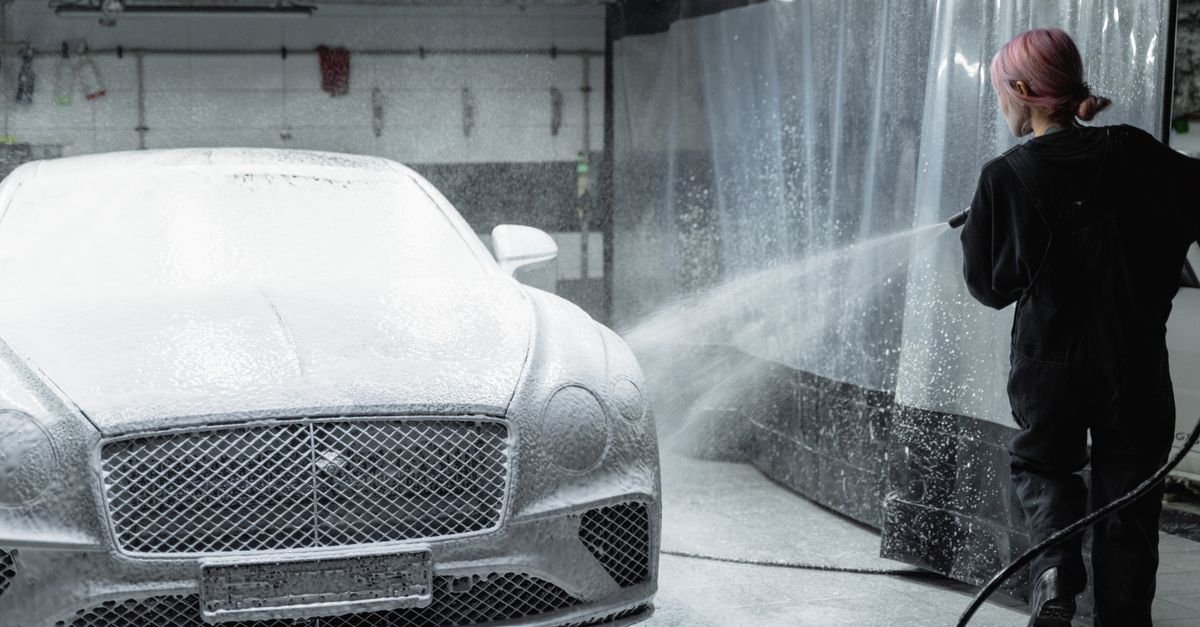
What changes is materials, and it changes quietly.
- The tip and the coupler. Stainless rather than plated brass, because hot water and thermal cycling strip plating and then eat what is underneath.
- The elastomers. Nitrile o-rings harden and take a set in hot service. Hot machines run seals chosen for temperature — a different compound, not interchangeable with the bag of spares in your drawer.
- The hose. A cold-water hose has a temperature rating printed on the jacket and it is not a suggestion. Running hot water through one swells and delaminates the inner tube, and that failure is sudden rather than gradual.
- The steam tip. Many hot-water machines carry a low-flow tip for the steam setting. Less water per minute for the burner to heat means a higher outlet temperature. That is the one genuinely different nozzle in the box, and it exists to trade gallons for degrees.
Nothing on that list makes the machine clean harder. It makes the machine survive the temperature it is producing, which is a less exciting job and a more expensive one.
Five Jobs Where Heat Earns Its Fuel Bill
Heat pays where the soil is a fat, an oil, a wax or a resin — something with a melting behaviour. That is a narrower list than the marketing suggests, and it looks like this.
| Job | Why heat works | Cold-water substitute |
| Engine bays, gearboxes, workshop floors | Petroleum grease thins sharply with temperature | Solvent degreaser plus long dwell |
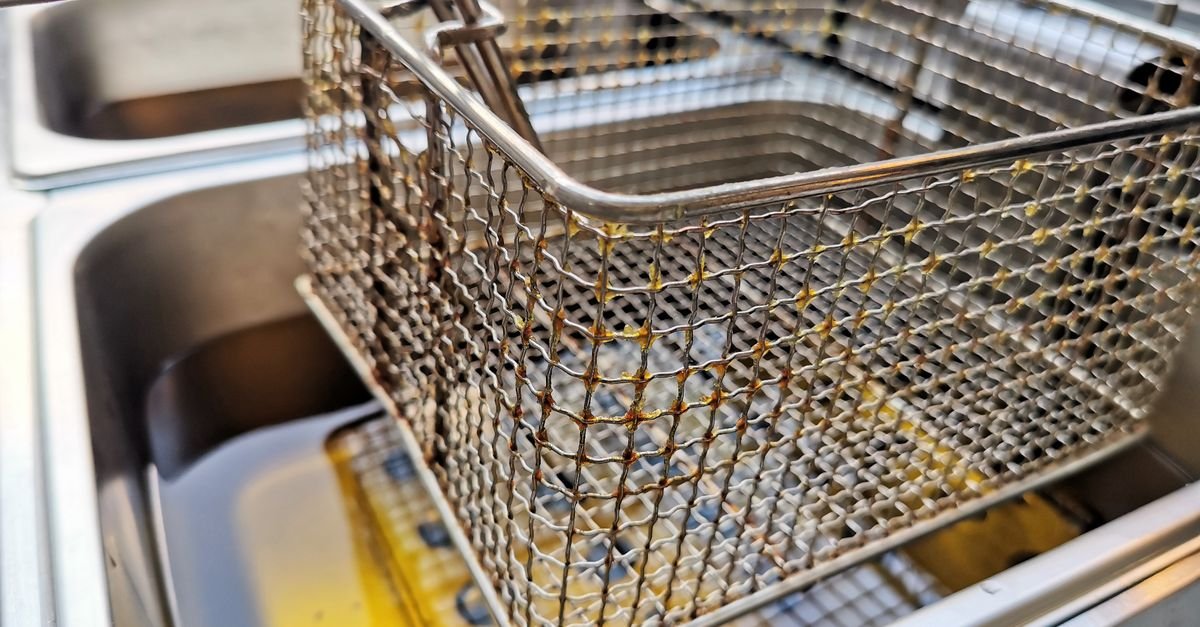
| Kitchen floors, extract hoods, fryer surrounds | Animal and vegetable fats soften near body heat and melt well below boiling | Hot alkaline degreaser applied by hand |
| Chewing gum on paving | Gum base is a polymer that goes plastic when warm and releases from the pore | Freeze it, or scrape it |
| Wax, tar, asphalt spatter, adhesive residue | All soften rather than dissolve, so temperature is the only lever | Solvent, which brings its own disposal problem |
| Fleet and trailer road film | The binder holding the grey film on is oily, not mineral | Two-step acid and alkaline chemistry |
The pattern is clear enough to state as a test. If you can melt it in a pan, heat will help. If you cannot, heat is a spectator.
That last column matters as much as the first. Every one of those jobs has a cold-water answer, and the cold answer is usually chemistry plus patience. Heat is not a capability you lack — it is a way of buying back time on jobs you do all day, which is why the trade owns hot machines and homeowners generally should not.
Where Heat Buys You Nothing at All
This is where I will spend my one strong opinion, because the industry will not: heat is the most oversold upgrade in pressure washing, and on the surfaces a homeowner actually cleans it does approximately nothing.
Algae, moss and lichen on siding or a roof. These are living films, removed by an oxidiser rather than by temperature. Sodium hypochlorite kills the organism and bleaches the pigment; hot water does not. Worse, heat is one of the two things that destroy hypochlorite — the honest reading of the stability research is that heat and sunlight are what kill a jug of bleach, so warming your mix works against you.
Ordinary dirt and mineral grit. The grey on a patio is predominantly mineral soil — grit, sand and pulverised stone. It has no melting point you can reach and no bond that heat weakens. Detergent and agitation move it. Nothing else does.
Most flatwork. A driveway is a volume problem, not a chemistry problem. Gallons per minute and a surface cleaner move more square feet per hour than any amount of temperature, which is why the useful way to compare two machines is still cleaning units — pressure multiplied by flow — and not degrees.
Wood, vinyl, painted and sealed surfaces. Heat is an added risk with no matching upside. Sealers soften, some coatings blister, and vinyl is a thermoplastic that is not improved by a hot jet. On every one of these the correct answer is less pressure, not more temperature.
The Grease You Melt Has to Go Somewhere
This is the part every hot-water article I read left out entirely, and it is the reason a hot machine in inexperienced hands can make a site worse rather than better.
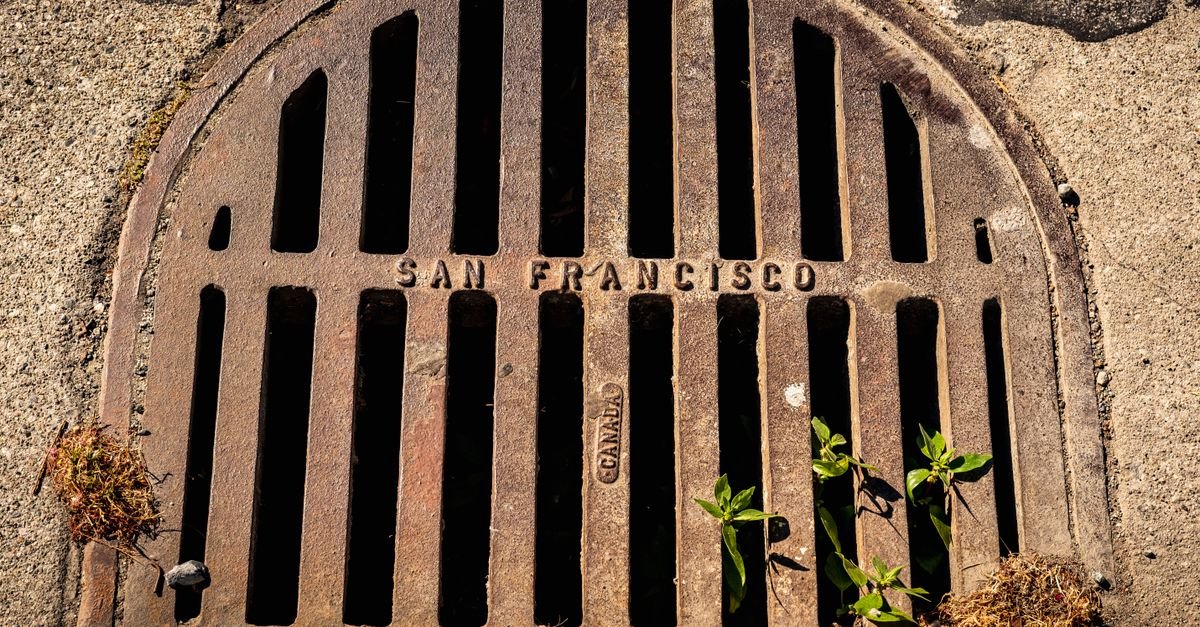
Heat does not destroy grease. It relocates it. The moment that warm, mobile film leaves the hot zone it starts cooling, and when it cools it sets again — at the low end of the slab, in the gully, or somewhere in the pipe. Clemson’s extension factsheet on fats, oils and grease puts it flatly: “Hot water and soap do not eliminate F.O.G. because it will eventually reform and solidify in pipes.” The same sheet records the EPA figure that grease from restaurants, homes and industrial sources is “the most common cause (47 %) of reported blockages” (Clemson HGIC, F.O.G. Pollution).
So heat without two other things is an expensive way to move a stain three metres downhill:
1. A surfactant in the water. The detergent holds the oil in suspension once it has been thinned, so it travels as an emulsion rather than re-depositing as a film. Heat with no chemistry is a warm rinse.
2. Somewhere for it to go that is not a storm drain. Storm drains discharge untreated in most places. If you have just mobilised the grease on a workshop floor, the point is to capture it, not to speed it on its way.
Melting is the easy half. Carrying is the half that decides whether the job got done.
Can You Feed a Cold Machine From the Hot Tap?
Sooner or later everyone has this idea, usually standing next to an oily patch with a cold machine and a laundry tap within reach. The honest answer is a number, and it is lower than almost anyone expects.
Kärcher publishes its home-machine limits plainly. For its electric pressure washers: “The water temperature should not exceed 104℉” (Kärcher, electric pressure washers). For its home gas machines the figure is 122°F, rising to 140°F only on the 3,500 to 4,000 PSI models. A domestic water heater is commonly set well above the first of those numbers, which means the machine most people own cannot legitimately take water straight from the hot tap at all.
Two separate things go wrong when you exceed the rating, and only one of them is obvious.
The seals cook. Cat Pumps, who make the triplex pumps inside a great many serious machines, put it in one line: “Pumps have a maximum operating temperature to protect seals and O-rings from heat damage. High temperature will cause seals to wear at an accelerated rate.” Note *accelerated rate*, not *immediate failure*. Nothing dramatic happens on the day. The pump just starts consuming its own seals faster than it should, and you find out two seasons early.
The pump starts boiling its own inlet. Less intuitive and more destructive. As water warms, its vapour pressure rises, and a plunger pump’s suction stroke can drop the local pressure far enough to flash some of that water into vapour. Those bubbles collapse inside the pump — that is cavitation, and it erodes valve seats. Cat Pumps’ technical bulletin opens with it: “As the temperature of the pumped water increases, the likelihood of vaporization and cavitation increases.” Its first listed remedy is telling: “Pressurize inlet above 130°F” (Cat Pumps, Tech Bulletin 002). A garden hose on a domestic tap does the opposite of that.
So: warm water inside your machine’s published rating is fine and mildly useful. Anything above it is a slow bill, and on most machines it ends the warranty conversation before it starts. Read the specification for your own model rather than trusting a number from a forum. (I read that bulletin twice on a weeknight to be sure I had the direction of the inlet-pressure rule right. I did not enjoy it, but it beats the eleven blogs that all quoted 150°F and cited each other.)
What the Burner Costs You Before It Cleans Anything
A hot-water machine is a cold-water machine with a small oil-fired boiler bolted to it. That means a burner, a heating coil, a fuel tank, a thermostat, a flow switch and high-temperature plumbing throughout, typically producing water somewhere around 60 to 90 degrees Celsius. That assembly roughly doubles the size, weight and complexity of the machine, and the class boundary it creates is covered in commercial vs residential pressure washers.
Three costs follow, and only the first appears on a price tag.
- Purchase. Heat is the most expensive line on the spec sheet, and the one capability no residential machine offers at any price.
- Fuel. The burner has its own appetite, separate from the engine. You are running two fuel bills at once for as long as the trigger is down.
- Scale. The coil is a heat exchanger full of your tap water, and hard water deposits carbonate inside it. The USGS classes water at 121 to 180 mg/L as calcium carbonate as hard and above 180 as very hard; in that range, descaling the coil is routine maintenance rather than a repair.
For a one-off greasy floor, hire the capability for a day rather than buy it forever. For an annual driveway, forget heat exists and buy flow instead.
FAQ
Does a hot water nozzle clean better than a cold one?
Not by itself. The nozzle is the same angle and the same orifice, and it delivers the same impact force either way. What cleans better is the water going through it, and only on soils that respond to temperature — fats, oils, greases, waxes and gum.
What temperature does a hot water pressure washer actually run at?
Commercial hot-water machines typically deliver water in the 60 to 90 degree Celsius range, with a steam setting on many models that goes higher by restricting flow. That is hot enough to cause a serious scald, which is why hot-water work is done in boots and long sleeves rather than in shorts.
Can I put hot water in my electric pressure washer?
Check your model’s published maximum inlet temperature first. Kärcher states 104°F for its home electric range, and household hot taps commonly run above that. Exceeding the rating accelerates seal wear and raises the risk of cavitation inside the pump, and it generally voids the warranty.
Do hot water machines use different nozzles?
The angles and colours are identical. The materials are not — stainless tips and couplers, heat-rated seals, and hose with a higher temperature rating. Many machines also carry a low-flow steam tip that trades gallons per minute for outlet temperature.
Will hot water remove an old oil stain from concrete?
It will help lift what is still on the surface. It will not reach what has soaked into the pore structure, because that is a penetration problem rather than a viscosity one. A poultice or a microbial cleaner is the tool for the stain that remains after washing.
Is a hot water pressure washer worth it for a homeowner?
Almost never. Domestic surfaces are dirt, algae and moss, none of which respond to temperature. Unless you are cleaning a workshop floor or a commercial kitchen every week, the money buys more cleaning as gallons per minute than as degrees.
Let Heat Do the Softening and Let Flow Do the Rest
Heat is a good tool with a narrow job description. It thins grease so a surfactant can lift it, and it speeds up the chemistry you were already using. It does not hit harder, it does not reach further, and it does nothing to anything that was never greasy.
Which leaves most people in a comfortable position. If the stain would melt in a frying pan, heat is genuinely the answer and probably worth a day’s hire. If it would not, you already own everything you need, and the upgrade you were eyeing was never going to fix the thing annoying you. Put the wand down, warm up the degreaser instead, and give it ten minutes.