Last Updated on September 25, 2026 by Umar Farooq
A CAT pressure washer pump is a triplex plunger pump made by Cat Pumps of Minneapolis, and the whole point of it is that it comes apart — seals, valves and plungers are all replaceable parts rather than the reason you buy a new machine.
That sentence is the entire argument, and it is why the name comes up in every forum thread about pumps that outlive their engines. What follows is how the thing actually works, how to find out which one you have, what the kits and the oil are, and — the part nobody selling them will write — the case for not having one at all.
Three Plungers, a Crankcase, and No Wobble Plate
Inside a CAT pump is a crankshaft sitting in an oil-filled crankcase, driving three ceramic plungers set 120 degrees apart. Each plunger has its own inlet valve and its own discharge valve in the manifold above it. As one plunger draws water in, another is pushing water out, which is why the flow arrives as a fairly smooth stream rather than three separate shoves a second.
That is a positive-displacement pump: it moves a fixed volume per revolution, and the pressure you see on the gauge is whatever restriction downstream decides to create. Your pump makes flow. Your nozzle makes pressure. The pump does not know or care what number appears on the box.
Compare that to the axial wobble-plate pump bolted to most homeowner machines. There, the pistons ride against an angled plate spun directly off the motor shaft, inside a housing that was never meant to be opened. It works, it is cheap to make, and when the seals go it is usually cheaper to buy another machine than to argue with it. That split — sealed versus serviceable — is the real dividing line between homeowner and commercial equipment, more than any PSI figure, and it is covered in more depth in the commercial vs residential pressure washer breakdown.
Cat Pumps builds far beyond pressure washing, with a catalogue running from a fraction of a gallon a minute up to 240 GPM, and from 100 PSI to 10,000 PSI. The pressure washing slice of that range is small. The 3CP, 5CP, 4DNX and 66DX families are the ones that end up on cleaning equipment, typically somewhere between 2 and 5 GPM.
Reading the Data Plate on a CAT Pressure Washer Pump
Before you order a single part, you need the full model number, and the full model number is stamped on the pump rather than printed in the manual you have lost.
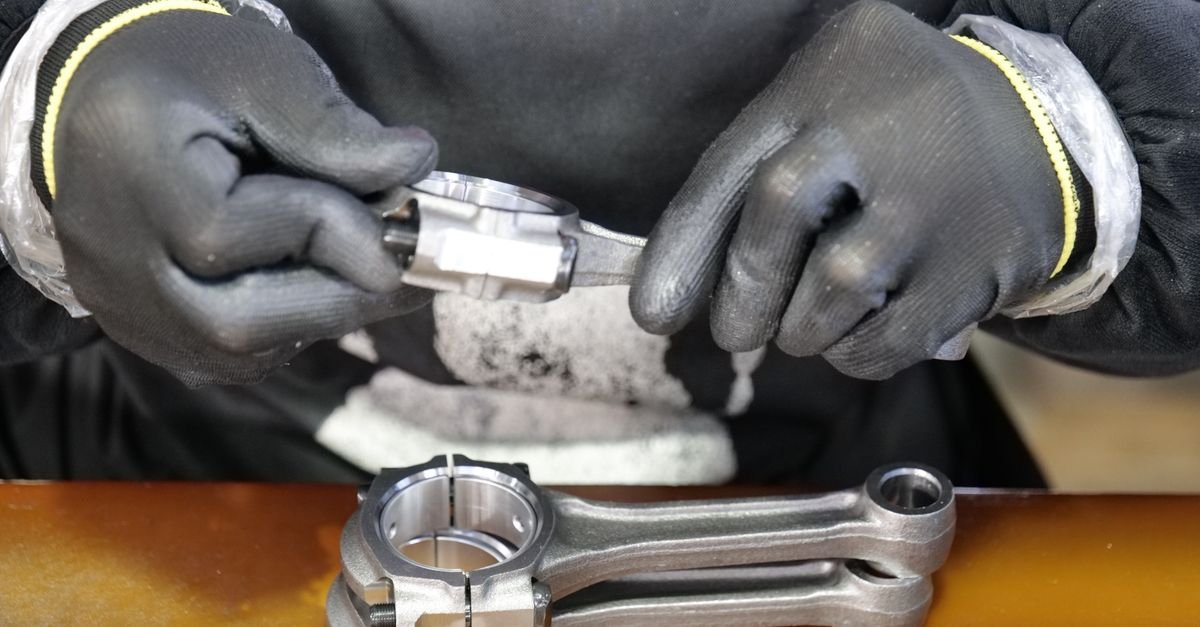
Cat Pumps says the information is stamped on the crankcase near the mounting feet. On SF models, the serial number is on a label on the pump flange instead (Cat Pumps FAQ). Wipe the casting with a rag before you go looking — stamped characters in aluminium hide under a decade of road film very effectively.
The serial number is readable once you know the code. It runs month, then year, then the unit count for that month. Months one through nine are the digits 1 to 9. October, November and December are the letters O, N and D, presumably because 10, 11 and 12 would not fit. So a serial reading N010101 is November 2001, unit 101 of that month.
That date is more useful than it looks. A pump that turns out to be twenty years old and still holding pressure is not a pump you throw away because it dripped once.
If the plate has gone entirely — sandblasted, painted over, or simply worn smooth — the manufacturer’s own answer is blunt: removing the manifold and measuring the plungers may be required, along with the stamp number on the end of the crankshaft. That is a real job, and it is the strongest argument I know for photographing the data plate the day the machine arrives.
What the Letters After the Model Number Mean
The suffix is not decoration. It tells you what the manifold is made of and how it is plumbed, and the kit you order depends on it. Cat Pumps publishes the meanings:
| Suffix | What it means |
| C or K | A flush-style manifold that lets a flushing liquid circulate between the high-pressure and low-pressure seals |
| S | Stainless steel inserts in the seal and valve chambers |
| B | Manifold made from a special brass alloy |
| W | Manifold made from a special alloy metal |
The flush-style manifold is the one worth understanding. It exists because some liquids destroy seals from the inside, so the design deliberately runs a clean fluid through the gap between the two seal sets to keep the aggressive stuff away from the crankcase. If your pump has a C or a K on it and you have never worked out what those two extra ports are for, that is what they are for.
The practical rule: write down the model and every letter after it before you phone anyone. “It is a 5CP” is not an answer. “It is a 5CP3120 on a belt drive” is.
Rebuildable Is a Design Decision, Not a Slogan
Here is the opinion, and it is the one I would defend hardest on this site: you are not buying a pressure washer, you are buying a pump with an engine attached. An axial pump is a sealed wobble-plate unit that is not designed to be rebuilt — when it goes, the machine goes with it. A triplex plunger pump has serviceable valves and seals and will comfortably outlast several engines. That difference, not the headline PSI number, is what separates a machine that lasts two seasons from one that lasts ten.
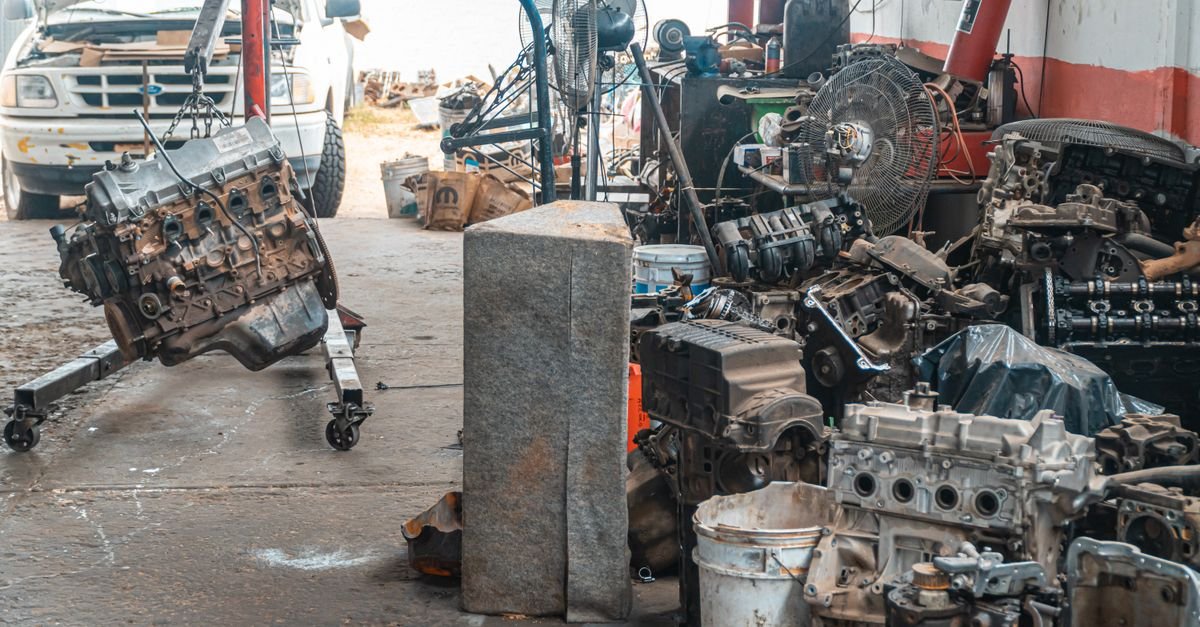
What makes a CAT pump rebuildable is not marketing. It is that nothing inside it is pressed, glued or welded into place. The manifold unbolts from the crankcase. The seals sit in counterbores in that manifold. The valves drop into their own chambers in the same casting, held by retainers. The plungers slide off the rods once the retaining hardware is out. Every wear item is a part with a number, and every part with a number can be ordered.
The consequence is that a fifteen-year-old CAT pump on a tired machine is often the healthiest component in the whole assembly. Engines wear out. Frames rust. Hoses fail. The pump gets new seals and carries on, slightly smugly.
Kit 300 and Kit 310: Seals First, Valves Second
Cat Pumps organises its wear parts into two kit numbers that repeat across the whole range: the #300 Seal Kit and the #310 Valve Kit, both offered in optional material configurations (Cat Pumps, pump repair). Materials are chosen for what the pump is moving — Buna-N for ordinary water, fluoroelastomer or PTFE blends where chemicals and heat are involved.
Two things decide whether the kit you receive will fit. The first is the complete model number, suffix included, from the section above. The second is plunger diameter, which is why kits are not interchangeable between models that look near-identical on the shelf.
There is one instruction from Cat Pumps worth memorising, because it is the most common way a rebuild goes wrong. On seal orientation: “The side with the groove should be installed towards the area that will ‘see’ or be exposed to water.” Seals are directional. Fitted backwards they will hold for about four minutes and then deliver a short lesson in fluid dynamics.
Order of operations matters too. Seals are the consumable; valves last longer. Cat Pumps’ guidance is that valves should be replaced at every other seal replacement, which means a seal kit on its own is a perfectly normal service and a valve kit on its own almost never is. If the pump is already apart and the valves look pitted or the seats have a ring worn into them, do both. If the valves still look like valves, close it up.
Cat Pumps Says ISO 68 and Declines to Discuss It
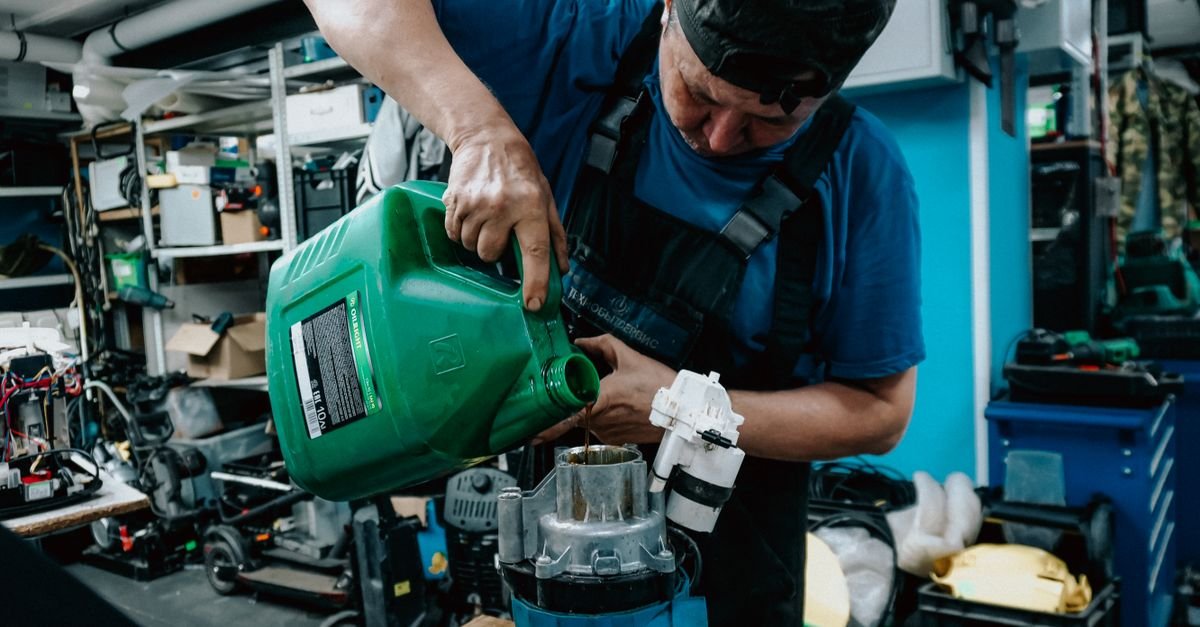
Pump oil is not engine oil, and on this particular pump the manufacturer has gone further than most and named exactly one product.
Cat Pumps specifies its own custom-blended, premium-grade, petroleum-based ISO 68 hydraulic oil. It is sold as part number 6107 for a 21-ounce bottle, 6100 for a case of twelve, 6102 for a 2.5-gallon jug, 6105 for a twin pack of those, and 6109 for a 30-gallon drum. Crankcase capacity varies by model and lives in Tech Bulletin 134 rather than on the website (Cat Pumps, oil inquiries).
Then there is this, which is unusually direct for a manufacturer page: Cat Pumps states that it does not recommend the use of any alternative oils, because some manufacturers have reformulated their products in ways that caused pump problems. Not “we suggest.” Not “for best results.” They looked at what was coming back from the field and closed the door.
The mechanism behind the blanket refusal is the same one that rules out motor oil everywhere else in this hobby. Detergent additives in engine oil exist to hold contaminants — water included — in suspension so a filter can catch them. A pump crankcase has no filter. Anything that keeps water floating in the oil instead of letting it settle out is doing precisely the wrong job in precisely the wrong place. Non-detergent is not a quirk of tradition; it is the requirement.
Hours, Not Seasons: the Real Service Schedule
Everything a CAT pump wants is measured in running hours, which is an awkward unit for anyone who cleans a patio in April and then forgets the machine exists until August.
The schedule Cat Pumps and its distributors publish looks like this:
| Item | Interval |
| First oil change | After the first 50 hours |
| Routine oil change | Every 500 hours, or every 3 months, whichever comes first |
| Oil change if a non-Cat oil is used | Every 300 hours |
| Seals | Typically 1,500 to 8,000 hours, depending entirely on conditions |
| Valves | Every other seal replacement — roughly 3,000 to 16,000 hours |
I want to be straight about the last two rows, because they are ranges wide enough to drive a van through, and the reason is not vagueness. Seal life collapses under excessive temperature, cavitation, dry running, abrasives, harsh water and chemicals. A pump fed clean cold water at full flow sits at the top of that range. A pump that gets run dry for thirty seconds every morning while somebody goes to find the tap does not.
Cat Pumps’ own preventive maintenance page declines to give a single universal number and sends you to the data sheet for your specific model instead, which is the correct answer even though it is not the one anybody wants. I went looking for one tidy figure to print here and came back with a range and a shrug. Your model’s data sheet is on their site, filed under the model number you now know how to read.
The one symptom that overrides the whole schedule is milky oil. Cloudy, coffee-with-milk oil in the sight glass means water has come past the low-pressure seals and travelled up the plunger rod into the crankcase. Left long enough it turns to black sludge and starts working on the bearings. Milky oil is not a service item, it is a seal kit and an inspection, and it is due now rather than at 500 hours.
When a CAT Pump Is More Pump Than a Driveway Needs
Run the arithmetic before you get attached to the idea.
Suppose you wash the car, do the patio twice a year, and clean the fence when it starts going green. Call it twenty hours of running time annually, which is generous. At that rate the first 500-hour oil interval arrives in twenty-five years. The bottom of the seal range, 1,500 hours, arrives in seventy-five. The pump will be a museum piece before it is a wear item.
Those intervals were written for a self-serve car wash bay running most of the day, or a contractor doing flatwork five days a week. In that world, a pump you can rebuild on a bench for the price of a kit instead of replacing every eighteen months changes the economics completely. In a suburban garage it is mostly a heavier thing to lift.
There is a second catch, and it is the one that actually damages pumps. A triplex pump rated at 4 GPM needs a tap that can reliably deliver 4 GPM with headroom. Starve it and it cavitates: the inlet cannot fill the chamber, the pump pulls air instead, and those bubbles collapse against the valve seats thousands of times a second. Cavitation is on the list of things that shortens seal life, and it is the one homeowners cause most often, usually with a long thin garden hose. Work out what GPM you actually need and confirm the tap can supply it before going anywhere near a pump that can out-drink your plumbing.
And the third: none of this rebuildability protects a pump from freezing. Water left in the head expands, and a cracked manifold is not something a #300 kit fixes. Serviceable is not the same as immortal — winterize it like any other pump.
FAQ
What is a CAT pump on a pressure washer?
It is a triplex plunger pump made by Cat Pumps: three ceramic plungers driven by a crankshaft in an oil-filled crankcase, each with its own inlet and discharge valve. It is a positive-displacement design, so it delivers a fixed volume per revolution and the pressure comes from the restriction at the nozzle.
Are CAT pressure washer pumps rebuildable?
Yes, and that is the main reason they exist. The manifold unbolts, the seals sit in counterbores, the valves drop into chambers with retainers, and the plungers come off the rods. Cat Pumps sells a #300 seal kit and a #310 valve kit for the wear parts and publishes a service manual for each model.
What oil goes in a CAT pressure washer pump?
Cat Pumps specifies its own custom-blended, petroleum-based ISO 68 hydraulic oil and states that it does not recommend any alternative. It is non-detergent. Engine oil is the wrong product, because its detergent package holds water in suspension inside a crankcase that has no filter to catch it.
How do I know which CAT pump I have?
Find the stamping on the crankcase near the mounting feet; on SF models the serial is on a label on the flange. Record the model and every suffix letter. The serial decodes as month, year, unit count, with October to December written as O, N and D.
How often should CAT pump seals be replaced?
Manufacturer and distributor guidance puts typical seal life between 1,500 and 8,000 hours, with the spread driven by temperature, cavitation, dry running, abrasives and chemicals. Valves are replaced at every other seal change. Check your model’s data sheet for the figure that applies to your pump.
Why is my CAT pump oil milky?
Water has passed the low-pressure seals and run up the plunger rod into the crankcase. Change the oil, fit a seal kit, and inspect the plunger rods and bearings. Milky oil left in place eventually turns to black sludge and starts damaging the drive end.
Is a CAT pump worth it for a homeowner?
For most people, no. Twenty hours of use a year puts the first 500-hour oil change roughly twenty-five years out, and the seal interval well past that. The rebuildability pays for itself in commercial duty cycles, not in weekend ones.
It Earns Its Keep in Hours, Not Weekends
If you already own one — on an inherited machine, a used rig, or something a contractor moved on — you have a pump worth keeping alive, and the parts to do it are three clicks and a model number away. Photograph the data plate today, while you can still read it. If you are weighing one up for a driveway you clean twice a year, the honest answer is that the pump will spend most of its service life waiting for you to catch up with it.