Last Updated on September 25, 2026 by Umar Farooq
Soft washing brick comes down to six things: saturate the wall with plain water first, mix a solution landing near 1% chlorine with a surfactant in it, spray it on at no more than about 50 psi, keep every square foot visibly wet for five to ten minutes, never let it dry, and rinse until the water coming off the bottom of the wall runs clear.
The method exists because the wall is not made of brick. It is made of brick and mortar, and the mortar was deliberately mixed weaker than the brick so that any movement in the wall cracks the cheap material rather than the expensive one. Excellent structural thinking, catastrophic cleaning situation — a jet of water takes no interest in which material the mason intended to sacrifice.
Soft Washing Brick Works Because the Wall Is Porous
Stand close and look at what is actually discolouring the wall. On the shaded elevation it is green algae, near the ground it is moss and lichen, and the grey film under the eaves is both plus whatever the road has thrown at it. Very little of it is dirt in the sense of something that landed and stuck.
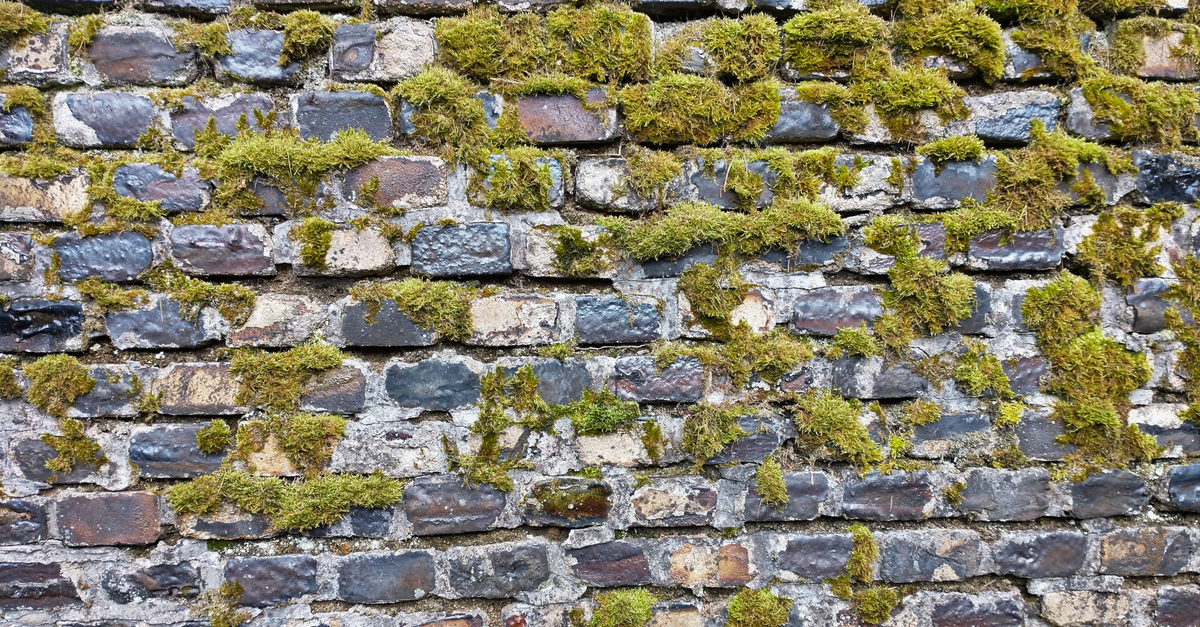
That matters twice on masonry. A colony is anchored by filaments running down into the pores of the brick and the sand of the joint, so force removes the visible part and leaves the part that grows it back. And on brick the growth is not merely ugly. A metabolomic study of green algal biofilms on building materials found oxalic, acetic and citric acids in the biofilm, which “efficiently chelate structural and charge-balancing cations (e.g., Al³⁺, Fe³⁺, Ca²⁺, Mg²⁺), thereby enhancing aluminosilicate dissolution” (biogeochemical deterioration of building materials by green algae, PMC13554127). On vinyl, algae is cosmetic, because the cladding was never its food. On brick and mortar, the biofilm is working on the mineral binder.
So you want it gone at the root, without touching the joints — which rules out pressure faster than most people expect. I went looking for a published ceiling, and the Brick Industry Association has one in writing. Its technical note on cleaning brickwork defines very low pressure as under 100 psi, low as 100 to 400, medium as 400 to 800 and only “if permitted by the brick manufacturer,” then says of anything above 800 psi that “high-pressure water cleaning is not appropriate for brick and may damage the brickwork” (BIA Technical Note 20, Cleaning Brickwork). Whether your particular wall can take more, and how to tell, is the subject of can you pressure wash brick. This page is about the method that never has to ask.
The Mix for a Brick Wall, and Where It Differs From Vinyl
The chemistry is the same chemistry: sodium hypochlorite oxidises the organic matter, a surfactant makes it stick, water carries both. The target is around 1% chlorine at the surface — roughly one part 12.5% pool chlorine to eleven parts water, or one to five from standard 6% household bleach. The arithmetic for every bleach strength, and what to do about the plants at the base of the wall, is in the siding cleaning solution breakdown.
What changes on brick is not the strength. Vinyl has a face; brick has a face and a depth, and it will take as much liquid as you hand it. Mix more than you would for the same square footage of siding, and expect the wall to swallow the first pass without visibly reacting.
Here is the part I will argue hardest for, because it is not the number you are worried about. It is not the rinse pressure that ruins brick. It is the application pressure. The BIA’s instruction for spraying a cleaning solution onto brickwork is a fan tip at 30 to 50 psi, with the mechanism stated plainly: “No more than 50 psi (350 kPa) of pressure should be used, because higher pressure can force the cleaning solution deep into the masonry to become a source of future staining.”
Fifty psi is not a pressure washer setting. It is about what an ordinary garden tap delivers, which is a disappointing thing to learn if you bought the machine specifically for this. The same note adds the sentence that summarises the whole method: “Depend on the chemical reaction of the cleaner rather than the scrubbing action of the brush or pressure of the sprayer.”
Surfactant Is What Stops the Solution Running Down the Wall
A brick wall is vertical, textured and thirsty, which is three separate reasons for a thin liquid to be somewhere else within four seconds. Without a surfactant, a chlorine mix splits into two useless halves: the part that runs to the ground and the part that vanishes into the brick. Neither spends five minutes in contact with an algal filament, which was the only thing that was ever going to work.
A surfactant fixes both at once. It drops surface tension so the mix spreads instead of beading and running, and it slows drainage enough that a vertical face holds a film. Dwell time on brick is not a number you set. It is a consequence of how well the liquid clings.
Which surfactant matters more on masonry than on plastic. The National Park Service specifies a non-ionic detergent and gives the reason directly: a non-ionic detergent, “unlike most household detergents, does not leave a solid, visible residue on the masonry” (NPS Preservation Brief 1, Assessing Cleaning and Water-Repellent Treatments for Historic Masonry Buildings). That is the argument against emptying the washing-up liquid into the tank. On vinyl a detergent residue rinses off the face. On brick it soaks into the pores, dries to a film you cannot see while the wall is wet, and then spends two years gathering road dust in a pattern that follows your spray passes.
Two to four ounces of a chlorine-stable non-ionic surfactant per five gallons is the working amount. More produces a foam that looks impressive, slides off in a sheet, and takes the chlorine with it.
Wet the Brick First or It Drinks Your Chlorine
This is the step homeowners skip and the masonry industry treats as non-negotiable, and the reason is not gentleness. Dry brick is a sponge that will take your solution to a depth you cannot rinse it back out of.
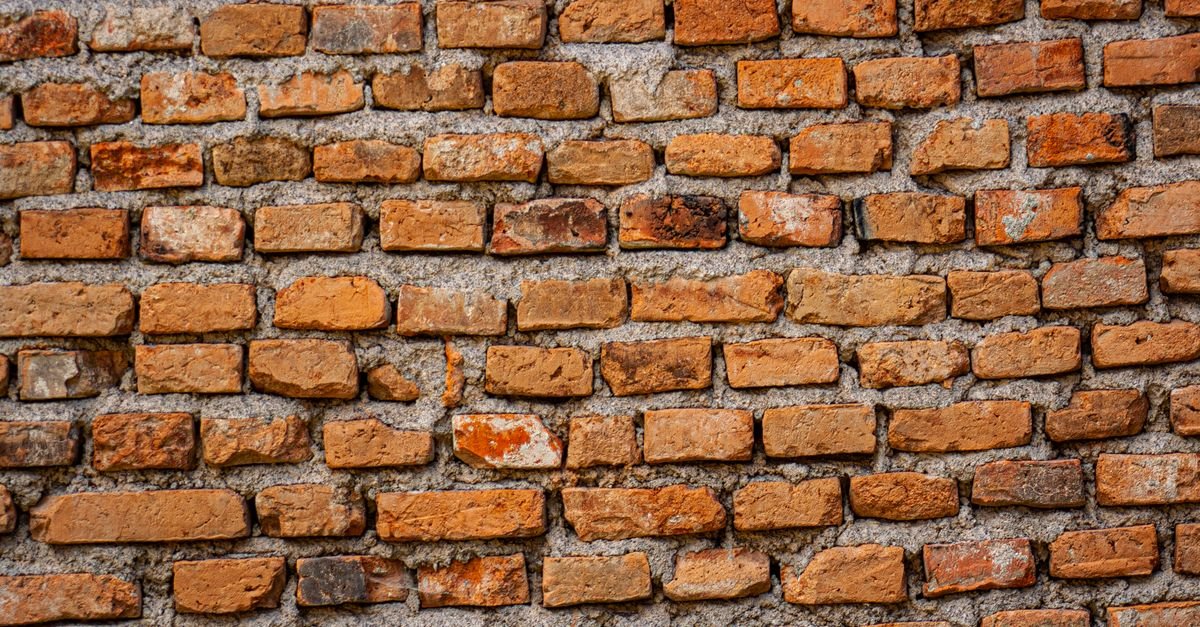
The BIA procedure is specific about what to wet. Saturate the area to be cleaned so it cannot absorb the solution “to a depth where they will be difficult to remove,” at no more than 100 psi — and, the part that gets missed, saturate the brickwork *below* it as well, keeping that wet “until after the final rinse to prevent streaking and absorption of the runoff from above.”
What happens otherwise is worth spelling out, because it is the most common way a well-meant brick wash produces a worse-looking wall. The same document lists failure to saturate as the first cause of cleaning failure, and names the results: dry masonry “permits absorption of the cleaning solution and may result in white scum, efflorescence, manganese or vanadium stains.” Skipping the pre-wet is one of the ways people *create* the white bloom they were trying to remove. If the bloom is there before you start, it is a moisture problem rather than a cleaning one, and removing efflorescence from brick covers why it keeps returning.
Work in sections of about twenty square feet, which is the area the BIA specifies and is roughly as much wall as one person can keep wet in summer. And soak the beds and foliage below properly rather than with a token pass — saturated soil sheds runoff sideways, dry soil takes it straight to the roots.
What a Soft Wash Will Not Touch on Brick
Soft washing is an oxidation process aimed at living things. That is a limit rather than a caveat, and it is where most of the disappointment in this job comes from: people treat a wall, get a good result on four fifths of it, and conclude the mix was weak when the remaining fifth was never organic.
| What is on the wall | Organic? | Soft wash result |
| Green algae, black algae, mildew | Yes | Removed, roots and all |
| Moss and lichen in the joints | Yes | Killed; dead pads brush off after a few days |
| Atmospheric soiling and road film | Partly | Mostly lifted by the surfactant |
| Efflorescence, the white powdery bloom | No | Untouched. It is salt from inside the wall |
| Mortar smear and cement haze | No | Untouched. Needs a masonry cleaner |
| Iron and rust staining below fixings | No | Untouched. Needs an oxalic-acid product |
| Manganese or vanadium staining | No | Untouched, and chlorine can worsen it |
| Paint, oil and graffiti | No | Untouched |
No amount of extra dwell changes a row in the lower half of that table. Hypochlorite breaks down organic molecules, and a salt crystal, a metal oxide and a smear of cured cement paste have nothing in them for it to break. If the wall still looks wrong once the growth has gone, you have moved from a cleaning problem to a staining problem, and those get matched to their own chemistry one at a time.
Lime Mortar Changes the Chemistry, Not Just the Pressure
Everyone knows old brick wants less pressure. Less widely understood is that it also wants less chemistry, for a different reason.
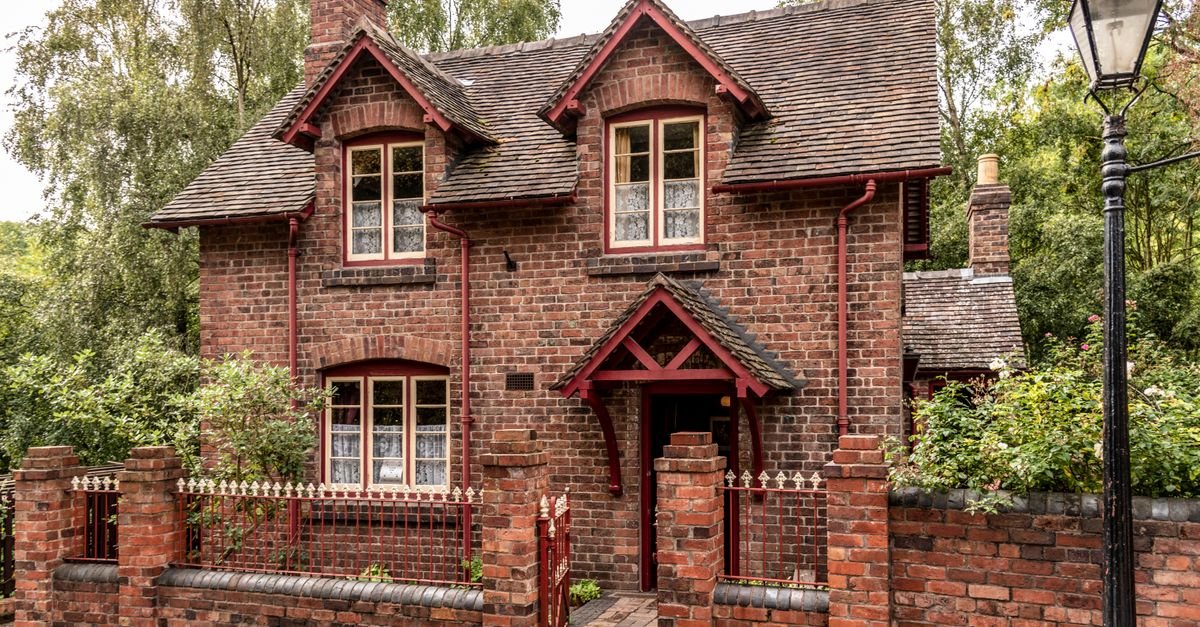
Lime-and-sand mortar is far more absorbent than portland-cement mortar, and soft-fired brick of the same era is usually worse. A wall built that way does not shed a cleaning solution, it stores it. And sodium hypochlorite does not disappear once it has worked — it ends up as sodium chloride, in a wall whose entire weathering behaviour is governed by how much soluble salt it is carrying. The NPS brief is blunt about the related case of muriatic acid, which “can dissolve lime-based mortar, damage brick and some stones, and leave chloride deposits on the masonry.” Nobody is putting acid on your house, but the chloride point travels.
For pre-1930 brick, or anything where a key drags sand out of a joint, the honest sequence is the one conservation practice has used for a century. The NPS notes that biological growth on masonry “has traditionally been kept at bay through regularly-scheduled cleaning as part of a maintenance plan,” and that “simple cleaning of the masonry with low-pressure water using a natural- or synthetic-bristled scrub brush can be very effective if done on a regular basis.” Plain water, a soft brush on a pole, an afternoon, and a wall you have not loaded with anything. If growth is heavy enough that water alone will not shift it, use the weakest biocide that works, on a test patch, on a wall you have soaked thoroughly, and rinse longer than feels necessary.
Does Bleach Strip Painted Brick?
Short answer: a 1% mix will not strip sound paint, and it will absolutely finish off paint that was already failing.
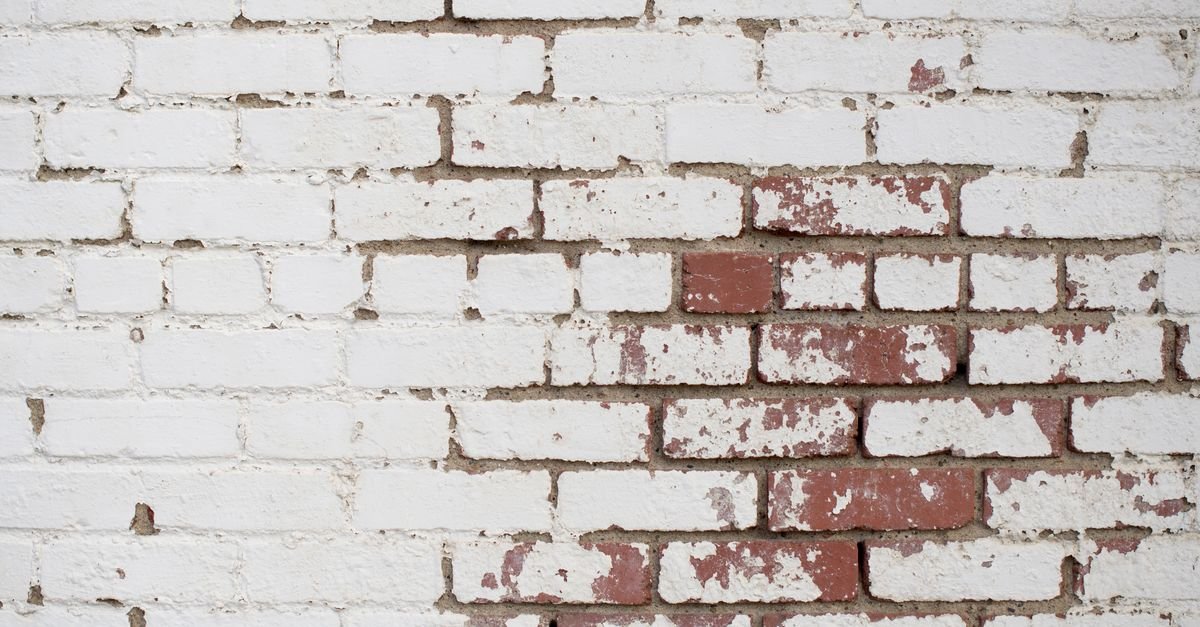
A cured masonry film is fairly indifferent to dilute hypochlorite for ten minutes. What it is not indifferent to is being lifted at the edges. Anywhere the film has blistered or chalked — on painted brick, usually the bottom three courses and anything under a sill — the solution gets underneath and the rinse takes the flake with it. That is not chemistry stripping paint; it is chemistry finding paint that was leaving anyway. Coloured coatings also fade with repeated washing, so a test patch out of sight earns its ten minutes.
There is a larger point that applies whatever you clean painted brick with. Paint is a vapour barrier on a material designed to breathe, so water that gets into a painted wall leaves slowly if at all. Use less liquid, not more, and do the job in late spring rather than in the four weeks before your first frost.
Rinsing a Wall That Holds Water
The rinse is where brick differs most from every other surface, because here it has an endpoint you can actually observe.
Flush with large volumes of clean water, top down, under 400 psi, which for most people means a 40-degree tip at a comfortable distance rather than any attempt at precision. Get to it before the treated surface dries — the technical note puts that at roughly five to ten minutes after application. Then keep going until the water arriving at the bottom of the wall is clear: “clear runoff at the base of the wall indicates adequate rinsing.”
That is the most useful sentence in the whole document, because it replaces a judgement call with something you can see. Stop when the wall looks clean and you get white scum, the film left by solution that was never fully flushed, which shows up a week later once the brick has dried. Stop when the runoff runs clear and you do not.
Then accept that the wall will look patchy and damp for several days. A brick wall that has just absorbed forty gallons does not dry on your schedule, and judging the result while it is still drying is how people talk themselves into a second wash they did not need.
FAQ
What is soft washing brick?
Cleaning brick with a dilute chemical solution applied at very low pressure and left to work, rather than with force. On a brick wall that means saturating the masonry with plain water, spraying on roughly 1% sodium hypochlorite with a surfactant at 30 to 50 psi, letting it dwell five to ten minutes without drying, then rinsing thoroughly at low pressure.
What pressure should I use to soft wash brick?
Apply the solution at no more than about 50 psi, because higher pressure drives the cleaner deep into the masonry where it becomes a source of later staining. Pre-wet at under 100 psi and rinse at under 400 psi. The Brick Industry Association classes anything above 800 psi as inappropriate for brick.
How long do you let the solution sit on brick?
Five to ten minutes, and the wall must stay visibly wet for all of it. A section that dried out is an untreated section, not a lightly treated one. In sun or wind, work smaller areas and re-wet the leading edge rather than increasing the strength of the mix.
Will soft washing remove efflorescence from brick?
No. Efflorescence is soluble salt carried out of the wall by moisture, not a living organism, so an oxidising cleaner has nothing to act on. Washing a dry wall can even produce fresh efflorescence by driving solution into the masonry. Treat it as a separate moisture problem.
Do I need to pressure wash brick before soft washing it?
No, and it defeats the purpose. The only water that goes on before the solution is the pre-wet, at garden-hose pressure, and that exists to stop the brick absorbing the cleaner rather than to remove anything.
Is soft washing safe on old or historic brick?
More so than pressure, but not automatically safe. Lime mortar and soft-fired brick retain whatever you apply, and hypochlorite leaves salt behind in a wall whose weathering is already salt-driven. Conservation practice for these walls is low-pressure water and a soft bristle brush on a schedule, with chemicals reserved for growth that water will not shift.
How often should a brick house be soft washed?
Every two to four years suits most walls, and shaded north elevations come round sooner than sunny ones. Cleaning on a schedule rather than on appearance is a real strategy on masonry: light regular growth comes off with water and a brush, and it is heavy growth that forces you into chemistry.
Can I soft wash brick with the pressure washer I already own?
Partly. It will do the pre-wet and the rinse well. For the application step, a pump-up garden sprayer or a dedicated low-pressure setup gets you far closer to 50 psi than a trigger gun on a soap tip does, and costs very little.
Give It Time and the Joints Survive
Every rule on this page is one idea in different clothes: on brick the cleaning happens during the dwell, so every decision should protect the dwell. The pre-wet protects it by stopping the wall drinking the solution. The surfactant protects it by keeping liquid on a vertical face. The 50 psi limit protects it by leaving the chemistry on the surface where it can work instead of inside the brick where it can stain. The rinse protects the wall from the chemistry once it has finished.
The joints are what you are really looking after. A mortar joint runs the width of two fingers across every course of the wall, it was designed to be the weakest thing in the assembly, and repointing costs several times what a clean does.
If you are standing at the wall with a machine in your hand and a growing suspicion that this job does not need it — you are right, and the hose will do fine.