Last Updated on September 25, 2026 by Umar Farooq
You can pressure wash inside car cabins in exactly three places — removable rubber mats, a rubber boot or cargo tray, and a stripped metal load floor with its drain plugs out — and the rest of the interior is not a pressure washing job at all.
That is a shorter list than the internet suggests. There is a whole genre of video where someone opens all four doors, walks round the car with a lance, and produces a torrent of brown water out of the door sill. It looks enormously satisfying, and the bill arrives about three weeks later in the form of a warning light.
The reason is not that the pressure is too high, although it usually is. A pressure washer is an input-only device: it puts water in and has no opinion about where the water goes afterwards. The outside of a car is engineered to shed water. The inside is engineered to keep it out, which is a different problem entirely, and the parts of the cabin that get wet are the parts with no drains, no airflow and a layer of bare steel underneath.
What You Can and Cannot Pressure Wash Inside Car Cabins
Here is the whole answer in one table, so you can stop reading if that is all you came for.
| Verdict | Part | Why |
| Safe | All-weather rubber floor liners | Non-absorbent, removable, dries in minutes |
| Safe | Rubber boot or cargo tray | Same, and usually the filthiest thing you own |
| Safe | Stripped metal load bed or van floor, drains open | Nothing to soak, somewhere for the water to go |
| Avoid | Bonded carpet and its underlay | Glued to sound deadening on bare steel |
| Avoid | Seat cushions and backs | Foam holds water for weeks |
| Avoid | Headliner | Adhesive fails, the fabric sags and never returns |
| Avoid | Door cards and trim panels | Hardboard or fibreboard backing swells |
| Avoid | Airbag modules and pretensioners | Corrosion is a false-deployment risk |
| Avoid | Seat position motors and heater elements | Live connectors, low down, permanently wet |
| Avoid | Under-seat modules and wiring looms | Corrosion starts quietly and never stops |
| Avoid | Dash, cluster and infotainment | Sealed against splashes, not against a jet |
| Avoid | Seat belt mechanisms and seals | Retractors rust; seals swell and leak after |
Three yes, nine no. The three are all things you can pick up and carry outside, which is the actual test — if the part cannot leave the car, the pressure washer cannot come in.
Take the Liners Out and the Jet Is Suddenly Fine
Rubber and thermoplastic floor liners are the one interior component that genuinely enjoys this. They are non-absorbent, they have no electronics, and a winter’s worth of road salt sits on them in a crust that a brush will not shift. Pull them out, lay them flat on a driveway, and clean them the way you would clean anything else made of moulded plastic.
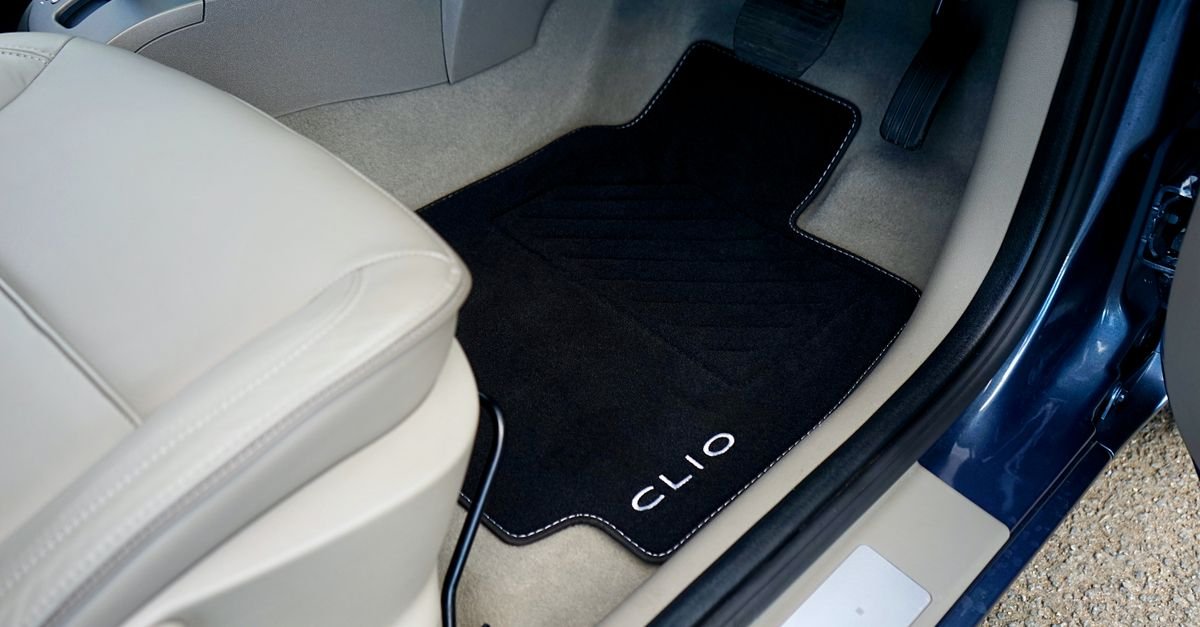
Keep it in the same window you would use on paint — roughly 1,200 to 1,900 PSI with a 25 or 40-degree tip, standing well back. Liners are not painted steel, but the deep channels and the branded logos are thin, and a narrow tip held close will scuff or thin them. Detergent and a medium brush do more here than pressure does. Rinse, shake, and stand them on edge against a wall rather than laying them flat, or you will trap a puddle in every channel and put it straight back in the footwell.
Fabric mats are a different animal and belong with the rug advice rather than the car advice — the reasoning is the same as pressure washing a rug, which is to say the backing usually loses before the pile gets clean. If the mats are carpet with a rubber nib backing, a wet vacuum and a stiff brush will do a better job and will not delaminate them.
The Stripped Van Floor Is the One Real Exception
Work vehicles change the maths. A panel van with a bare metal or ply load floor, no carpet, no trim below the bulkhead and factory drain plugs in the floor pan is, structurally, an outdoor surface with a roof on it. Plasterers and landscapers hose these out for a reason.
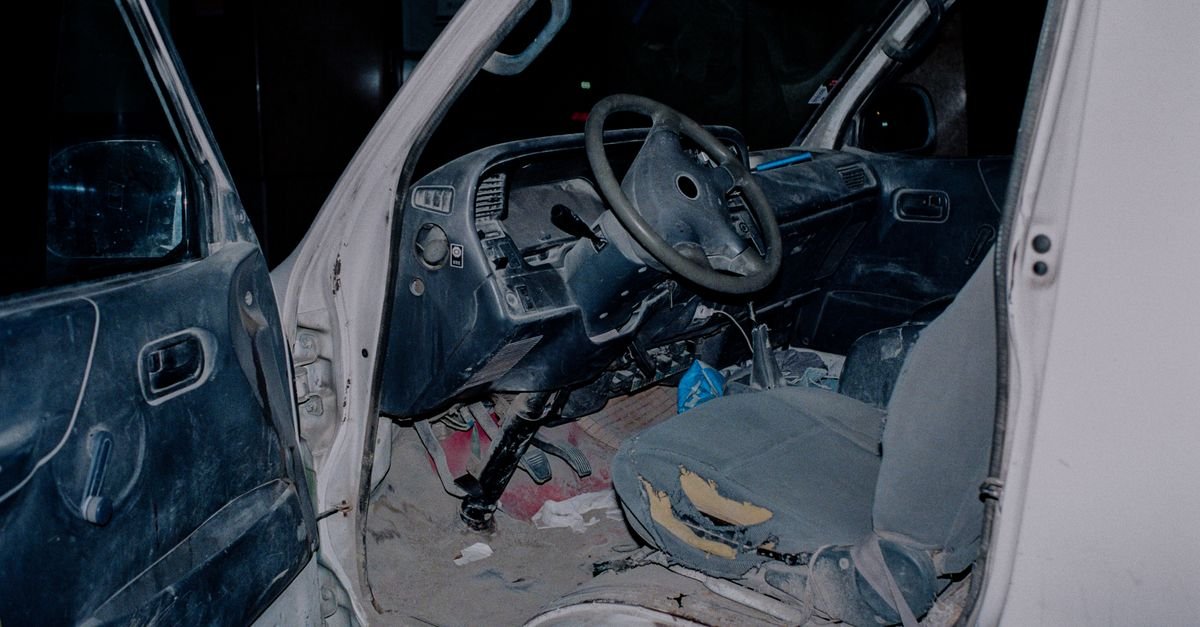
Four conditions, all of them, before you start. The drain plugs come out first and go back in afterwards, or you have simply built a paddling pool. Nothing soft stays in — no seat bases, no cardboard, no sound deadening mat. The jet stays away from the bulkhead, the rear light clusters and any loom clipped along the sill, because those are the same connectors that live in a passenger cabin and they corrode the same way. And the van gets left open in moving air until the floor is dry to the touch.
If your van has a carpeted or trimmed cargo area, or the factory never fitted drain plugs, it is not on this list. If yours does not have them, the floor pan was never designed to be filled.
Under the Carpet Is a Sponge Glued to Bare Steel
Lift the edge of a car carpet and you will find something that surprises most people: a thick felt or foam pad, often jute, bonded to the carpet and sitting directly on painted floor pan steel. That pad is sound deadening. Its whole job is to be dense and absorbent, which makes it superb at killing road noise and catastrophic at giving water back.
Water that gets into it does not evaporate upward through the carpet in any useful quantity. It sits in the low corners of the floor pan, under the seat rails and in the sill sections, against paint already chipped by twenty thousand shoes. Toyota’s own flood bulletin for Lexus vehicles is blunt about what is going on: car bodies contain pressure relief vents that “can allow water entry into the passenger cabin” and “have inherently low points or pockets that can retain flood water.” It then tells technicians that any component “that became wet or saturated that has fabric, cloth, padding, or soft trim” — it lists carpet and padding, seats, door trim panels, the console and the package tray — “may need to be replaced and/or require follow-up mold remediation.” Not dried. Replaced. (Lexus/Toyota TSB L-SB-0113-12, filed with NHTSA)
That bulletin is written about flooding, and a lance through an open door is not a flood. But it is the same water in the same places, and it is the only document in this subject written by people who have to fix the result under warranty scrutiny.
Which Electronics Actually Sit Below Your Knees?
More than you would guess, and all of them below the height a jet of water reaches on the rebound.
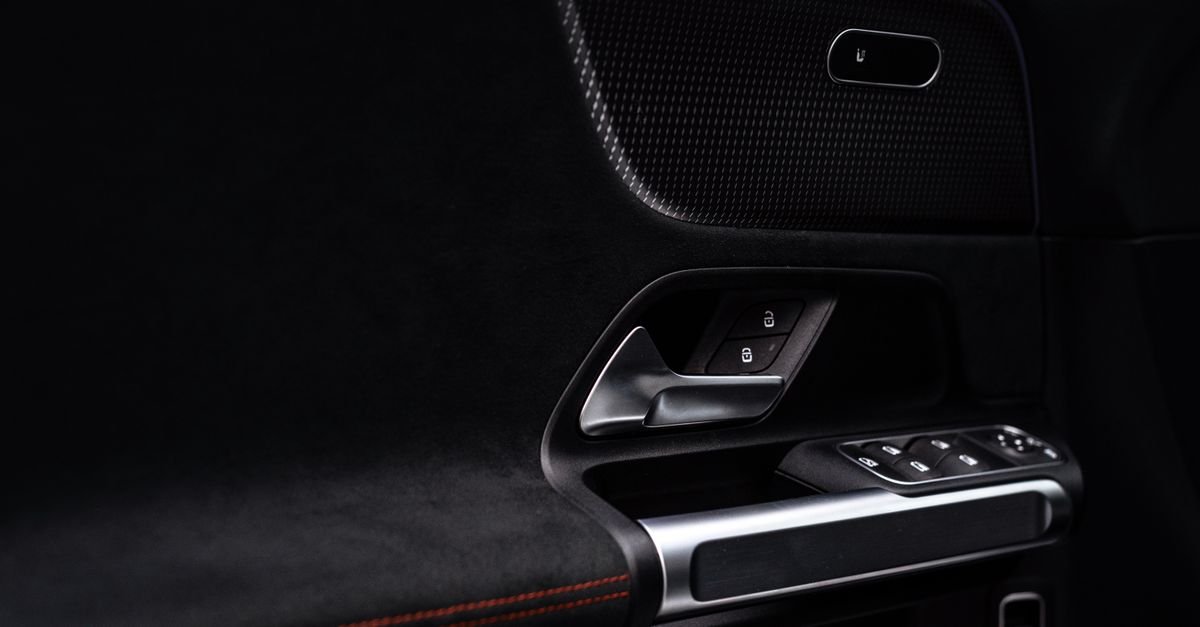
The airbag control module in most cars is mounted on the transmission tunnel under the centre console, at ankle height. Occupant classification sensors live in the seat base. Seat position motors, heater elements and belt pretensioners are all in or under the seat. Body control modules and amplifiers are often under a front seat or behind a kick panel. And every one of those is joined by a loom that runs along the sill, under the carpet, through exactly the channel where water collects.
The same Lexus bulletin sets out the failure modes when water reaches them: “improper power distribution/system operation/overcurrent conditions,” “high resistance from corrosion and abnormal heat generation that could lead to a fire,” and “SRS airbag, pretensioner, and/or side curtain airbag false activation/deployment.” It also gives an instruction that ought to settle the argument on its own — if any water is found in the vehicle, or the carpet is found wet, do not attempt to start it until the inspection and any repairs are complete.
This is the point where I will state the opinion plainly. A pressure washer is not banned from the inside of a car because it is too aggressive. It is banned because cleaning a cabin is mostly a drying job, and a pressure washer only does the half that was never the hard part. The right tool for an interior is whichever one takes the most water back out.
Forty-Eight Hours Is the Number Nobody Mentions
The EPA’s guidance on water damage gives the threshold that actually decides this: “In most cases, mold will not grow if wet or damp items are dried within 24-48 hours.” (US EPA, Mold Course Chapter 4)
Now apply it to a car. To dry wet carpet the EPA tells you to pull the carpet and the pad off the floor and blow air over both. In a house you can do that. In a car the carpet is bonded to the pad, the pad sits on the floor, the seats are bolted on top and there is one small volume of still air above the whole thing. A warm, breezy weekend with every door open might dry the surface pile in a day. The felt underneath, under a seat rail, in a sill corner, is a different matter — and the surface drying first is what convinces people it worked.
That is why the smell arrives a fortnight later and why it is so hard to shift. The musty note is not a stain you missed; it is a set of volatile compounds produced by something living in the padding, and it keeps being produced as long as the padding is damp. You cannot rinse your way out of that, because rinsing is what caused it.
Extractor, Wet Vac, Steam: What to Reach For Instead
For everything on the nine-item list, the tool you want is one that removes more liquid than it applies.
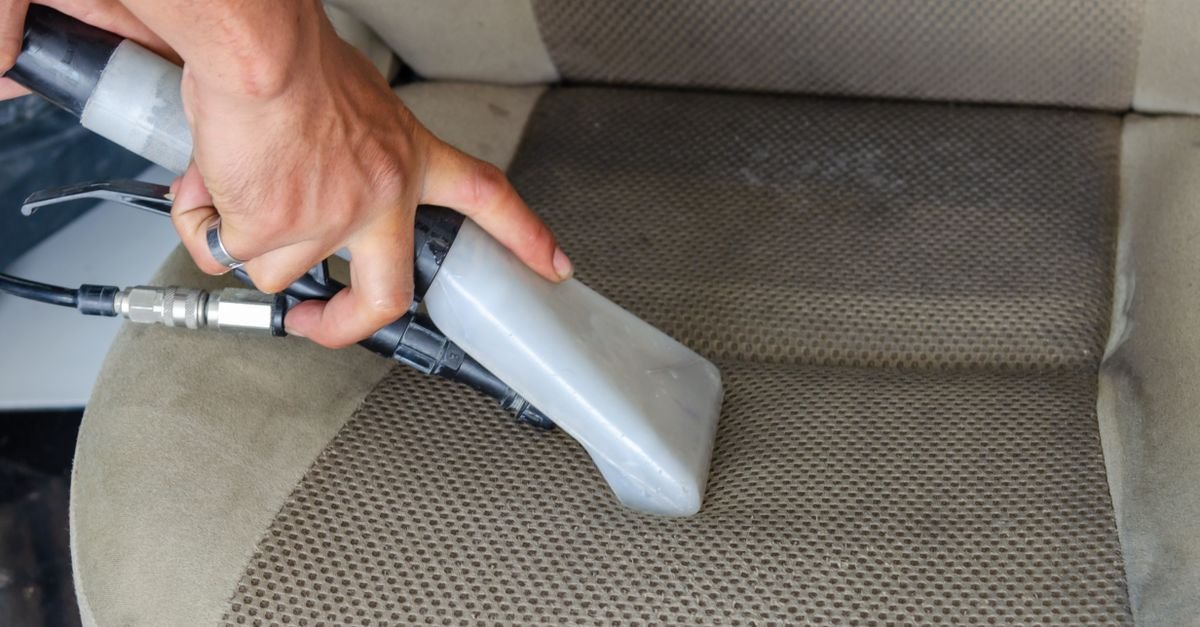
A hot water extractor is the honest answer for carpets and cloth seats. It sprays a small amount of solution and immediately sucks it back, so the material ends up damp rather than saturated. Work in overlapping passes and finish with two or three dry passes with no trigger — the dry passes are the part everyone skips and the part that decides whether the car smells right next week.
A wet/dry vacuum with a narrow upholstery tool does most of the same job for less money if you pre-treat with an interior cleaner, agitate with a drill brush, then extract. Slower, and it needs more patience.
A steam cleaner is the right tool for vents, seams, switchgear surrounds and the ring of grime around a gear selector. It uses very little water and the heat does the work, which is the opposite trade-off to a pressure washer. Keep it off leather at close range and away from screens.
Then move air. Doors open, a fan pointed into the footwells, and the car left until the underlay reads dry, not until the carpet looks dry.
A Damp Interior Follows the Car to Resale
Water damage in a cabin is one of the few faults a buyer can detect without tools. It has a smell, it fogs the inside of the glass on a cold morning, and every used-car inspection guide in circulation tells people to lift a carpet edge and feel underneath. Corrosion there is not cosmetic either — the floor pan is structural, and rust that starts on the inside is invisible from the driveway until it is well advanced. There is also the diagnostic trail: water in a connector produces intermittent faults that a scan tool records, and stored airbag or body control codes alongside a damp carpet tell a story that is hard to argue with at trade-in. The Autopian, watching the same videos as everyone else, made the point that the body cavities being filled were never given drains because nobody expected anyone to fill them (The Autopian).
I went looking for a published figure on what a wet interior takes off a car’s value and could not find one traceable to anything — the numbers in circulation all come from firms selling remediation. So I am not going to give you one. The mechanism is enough: a smell, visible corrosion and stored fault codes are three of the things a buyer negotiates with, and you can generate all three in an afternoon.
FAQ
Can you pressure wash car carpets?
Not while they are in the car. If the carpet set has been removed completely — unbolted, lifted out, separated from the vehicle — some trim shops do wash them outside and dry them flat over days. Bonded to the floor pan, no. The pad underneath cannot be dried on any timescale that prevents mould.
Will a pressure washer damage car seats?
Yes, in two stages. The fabric or leather may survive the jet, though stitching, foam edges and piping often do not. The lasting damage is the foam core holding water against the seat frame, the position motors and the occupant sensors, none of which are designed to sit wet. Seat bases are also where a lot of the cabin’s electronics live.
How do you clean a genuinely filthy car interior without a pressure washer?
Strip everything loose out, vacuum thoroughly with a crevice tool, pre-treat with an interior or upholstery cleaner, agitate with a drill brush, then extract with a hot water extractor or a wet/dry vac. Steam the hard surfaces and vents. Finish with airflow. It takes an afternoon rather than ten minutes, and the car is dry at the end of it.
What happens if water gets under the car carpet?
It stays. The sound deadening pad holds it against the floor pan, the pan is low-lying and poorly ventilated, and factory drain plugs are usually sealed. Expect a musty smell within a week or two, condensation on the inside of the glass, and corrosion starting at the paint chips in the pan.
Can I hose out the inside of my car if it has rubber mats?
If the entire floor is rubber, the seats are out or waterproof, and the floor has open drain plugs — that is the work-vehicle case above, and yes. A normal passenger car with rubber liners over carpet is not that car. Take the liners out and wash them on the drive.
Keep the Jet Outside the Door Seals
The door seal is the line. Outside it, a pressure washer at a sensible distance is the most efficient tool you own. Inside it, every surface is absorbent, every low point is a dead end, and the only thing the machine is good at is the half of the job that was never difficult.
Carry the rubber out to the machine, and bring a vacuum to everything else. Your car has spent its whole life keeping water out of that carpet, and it would probably like to keep doing that.