Last Updated on September 25, 2026 by Umar Farooq
When a pressure washer loses pressure after a few seconds, the pump is almost certainly fine — the machine handed you the pressure that was already stored in the hose, then discovered it could not get water in as fast as it was pushing water out. Four things produce that exact timing: a supply that cannot sustain the flow, an unloader dropping into bypass and staying there, an inlet hose that collapses once water starts moving, and a blocked inlet screen. One free test tells you which.
The good second is the useful part. A machine that made rated pressure and then lost it inside five seconds has already told you most of what you need to know, and it did it before you found the toolbox.
It Worked for a Moment, and That Rules Out Half the List
Full pressure, even briefly, is a signed statement from the machine. It means the plungers are moving, the inlet and discharge valves are sealing, the unloader closed, the nozzle orifice is intact, the wand is seated and there is no air lock in the pump head. Every one of those is a static fault, and a static fault cannot produce one good second. It produces a bad first second and a bad thousandth.
Look at what a pump manufacturer actually lists against this symptom. Comet’s troubleshooting guide gives three causes for a plunger pump with a “Drop In Pressure”: a “Worn Nozzle,” “Worn or Dirty/Blocked Valves” and “Worn Packing” (Comet Pump troubleshooting). All three are real faults. None of them hands you three seconds of rated pressure and then takes it away. They give you a machine that is quietly ten percent weaker than it was last spring, which is a different article.
So the timing is doing diagnostic work for free. It eliminates the expensive end of the list and points upstream of the pump. If your machine never had full pressure, or if it holds for a minute or two before sagging, stop here — that is the general sweep, and it lives on pressure washer low pressure, which walks the whole path from spigot to spray tip. One thing this is also not: a stuck inlet check valve gives you a machine that will not draw or prime at all, so it never produces the good second in the first place.
Time the Burst, Then Time the Recovery
This is the whole page, and it needs a phone and a trigger. Do it with the nozzle you were using, at the tap you were using, with nothing else changed.
First, time the burst. Squeeze the trigger and start counting. Note the seconds between full pressure and the drop. Keep holding for another ten and watch whether it settles at a steady weak spray or keeps sliding.
Then, time the recovery. Release the trigger completely. Wait twenty seconds by the clock, not by feel — twenty seconds standing in a driveway feels like five. Squeeze again and see whether the full burst comes back.
That second measurement is what sorts the causes, because only one kind of fault repairs itself while you stand there doing nothing.
| What you observe | What it means |
| One to five seconds of full pressure, then a fade, and the full burst returns after a twenty-second pause | Supply side. The hose re-pressurised during your pause and you spent it again |
| The same fade, but each successive burst is shorter than the last | Supply side, and the reserve is not keeping up with your trigger finger |
| Fades within seconds and never returns, however long you wait | An unloader stuck over in bypass, or a restriction that has not moved |
| Fades and recovers repeatedly while you are still holding the trigger | Not this page. That rhythm is pressure washer surging |
| Holds for thirty seconds to several minutes, then sags | A volume problem rather than a pressure one — a tank or a well emptying, covered on pressure washer low pressure |
Write both numbers down before you touch anything. They are the only evidence you get for free, and they stop being available the moment you start swapping parts.
What Ran Out Was Pressure, Not Water
Here is the part that confuses people, and it is worth thirty seconds of physics because it explains the timing exactly. When the spray collapses, your garden hose is still completely full of water. Nothing drained. What ran out was the pressure holding that water against the pump inlet.
A pressure washer pump does not need water to be present. It needs water to be pushed in. The chamber fills in a few thousandths of a second while the plunger retracts, and atmospheric pressure alone will not do it quickly enough — which is why manufacturers specify a supply floor rather than just saying “connect a hose.” Kärcher’s K1700, about the smallest electric machine anyone sells, states that the “Flow rate of water supply must not fall below 2 GPM/gallons per minute (7.6 L/min)” and that the “Garden hose must be at least 5/8 inch (16mm) in diameter” (Kärcher K1700 operator manual, PDF). Gas machines ask for considerably more.
Now the arithmetic for why this takes seconds and not minutes. Water is very nearly incompressible, so a hose full of water at tap pressure is holding only the small extra volume that stretched the hose wall to get there. A machine rated at 2.5 GPM moves about five and a third fluid ounces every second. It takes that stored stretch back in a couple of heartbeats, inlet pressure falls away, and the pump starts filling half-empty chambers — while the hose lying on your lawn is as full as it ever was.
That is also the cleanest way to separate seconds from minutes. A fade in seconds is a pressure problem. A fade in minutes is a volume problem — a barrel going down, a well pressure tank dispensing its usable gallons, bypass water warming up. Different timescale, different cause, and the stopwatch tells them apart before you have formed an opinion.
A Tap That Cannot Keep Up With a Trigger
This is the commonest cause by a comfortable distance, and Kärcher’s own troubleshooting table puts it there too — under “Unit does not reach high pressure” it lists the garden hose diameter, a restricted supply and “Not enough inlet water supply” before it mentions anything inside the machine.
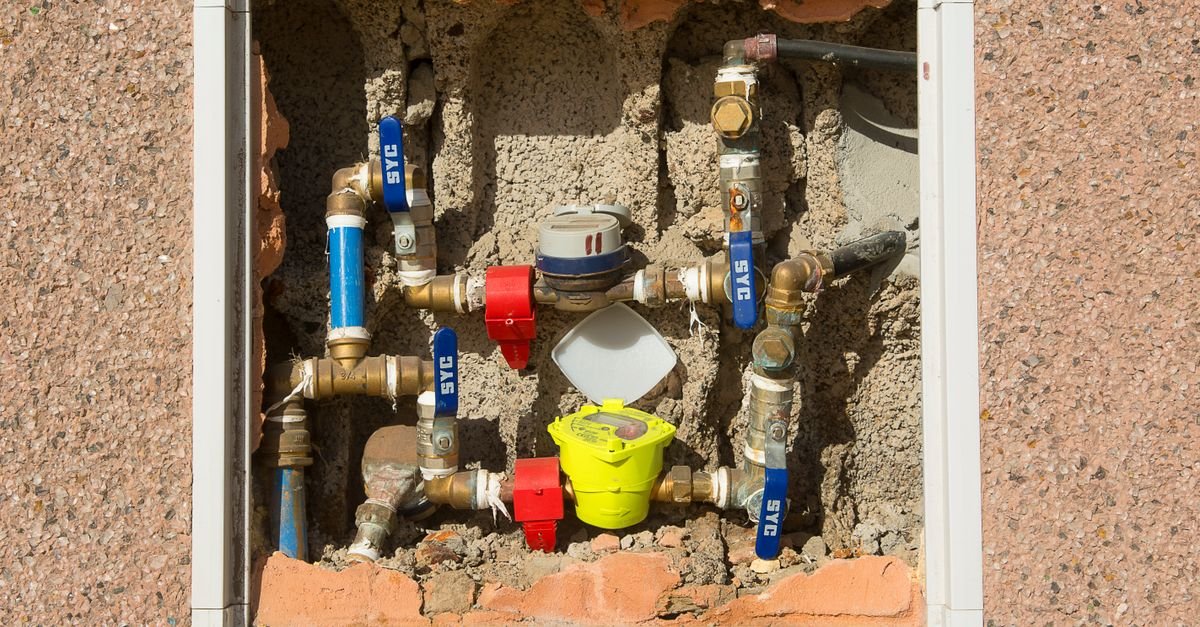
The signature is the recovery. Let go for twenty seconds, the supply hose comes back up to tap pressure, and the next burst is as good as the first — for about as long. That is a reservoir being filled and spent, and nothing inside the machine behaves that way.
Work the free end first. A tap half a turn short of fully open is the most common version and the one nobody believes. After that: a Y-splitter with both legs open, a half-inch hose feeding a machine that wants five-eighths, more than fifty feet of run, the hose still wound on its reel, or an aquastop quick-connect with a spring-loaded check sitting in the flow path. Any of those will pour water into a bucket and still starve a pump.
Then measure it rather than guessing, because a number ends the argument. Timing a container of known volume and dividing it against the machine’s rated GPM takes ninety seconds, and the arithmetic — including what your hose costs you against a bare tap — is worked through on pressure washer not enough water supply.
The Unloader That Goes to Bypass and Stays There
The unloader’s job is to send water back round to the pump inlet when you release the trigger. When the seat is worn or the spring has tired, it trips early — under load, while you are still spraying — and then fails to re-seat. Pressure collapses, and it stays collapsed.
The tell is the exact opposite of the supply tell. A failing unloader does not give the pressure back when you pause. There is no reservoir to refill, so twenty seconds off the trigger buys you nothing, and neither does two minutes. If your recovery test came back blank, this is where to look.
Which brings me to the thing I will be blunt about. The unloader gets blamed first and it belongs fourth. Search this symptom and the first suggestion you meet is almost always to adjust or replace the valve — which is a part somebody can sell you, and the water in your garden hose is not. The recovery test costs nothing, takes twenty seconds and rules the valve in or out before you have opened a browser tab, and it is skipped almost universally. Worse, the two faults are not independent: *Cleaner Times* notes that a flow-actuated unloader “requires back pressure in the bypass line between 43 psi and 72 psi to work correctly” (Cleaner Times, troubleshooting unloaders). Starve the supply and you can push a perfectly healthy valve outside its working window. Fix the water first, or you will spend an afternoon proving a healthy valve guilty.
If the valve genuinely is at fault, clean or rebuild it. Do not wind the adjusting screw up to chase the pressure back — that raises the trip threshold above the hose’s safe rating and hides the fault rather than curing it. What the knob actually does, and the safe way to move it, is on pressure washer unloader valve adjustment.
Your Inlet Hose Goes Flat the Instant You Ask for Flow
A collapsing inlet hose is a supply fault that passes every supply test, which is why it earns its own section rather than a bullet. At rest the hose looks perfect and fills a bucket at a respectable rate. Put a pump on the end of it and the pressure inside drops below the pressure of the air outside, and from that moment the only thing keeping the hose round is how stiff its wall happens to be. A tired wall folds, the bore shuts down to a slot, and your measured tap flow stops being the flow the pump receives.
The timing is identical to a starved tap — a second or two of full pressure, a fade, then a full recovery after a pause — so the stopwatch alone will not separate them. Two things will. Go and look at the hose while the trigger is held, because a collapse is visible: the round section goes oval somewhere along the run, usually just downstream of the tap or at the reel. And swap in a short fat length straight from tap to machine. If ten feet of five-eighths fixes it, the hose you were using was the entire fault. Old hoses, thin-walled hoses and anything that has spent a summer in full sun are the usual suspects, and the mechanism is unpacked on pressure washer inlet hose collapsing.
The Screen That Only Blocks While Water Moves
The mesh screen behind your hose connection is a fine-sand filter, and a blinded one behaves like a narrow pipe: static pressure passes through it happily, flow does not. That is why the screen can look clean in your hand and still be the fault. What blocks it is rarely a visible lump of grit — it is a film of scale, silt or rust laid evenly across the mesh, which is much harder to notice and does the same job.
Kärcher lists “Water inlet filter is clogged” against both of its low-pressure symptoms, with the remedy “Remove garden hose adapter and rinse out in warm water.” That is the right order: take it out, hold it up to the light, and if you cannot see daylight through the whole disc, rinse it from the clean side. A torn screen is worse than a dirty one, because everything it used to stop now goes into the pump instead. Where it hides on each type of machine, what a rinse will and will not shift, and when to replace rather than clean are all on pressure washer inlet filter.
FAQ
Why does my pressure washer have full pressure for one second and then lose it?
That second is the pressure stored in your garden hose, not the water in it. The hose stays full; what empties is the small volume of stretch holding it at tap pressure. Once that is gone the pump cannot fill its chambers fast enough and output collapses. Release the trigger for twenty seconds and squeeze again — if the burst comes back, your supply is the fault.
Does a pressure washer that loses pressure after a few seconds mean the pump is worn out?
Almost never, and the timing is the reason. Worn valves, worn packing and a worn nozzle all produce a machine that is steadily weaker, not one that makes rated pressure and then drops it. A pump that gave you full pressure for three seconds has just demonstrated that its valves seal and its plungers move. Look upstream of it.
How long should I hold the trigger before deciding the pressure has dropped?
Fifteen seconds is plenty, and most supply faults show inside five. Holding longer tells you nothing extra and does keep the pump running on a starved inlet, which is the condition that erodes valve seats. Once you have your number, let go.
My pressure comes back if I let go of the trigger for a while. What does that mean?
Something is refilling between bursts, and that is a supply-side reservoir — the garden hose, or a tank. A worn unloader, a clogged nozzle and a tired pump have nothing to refill, so none of them recover on a pause. That one observation moves the water supply to the top of your list and the pump to the bottom.
Can a clogged nozzle cause this pattern?
No. A partially blocked nozzle raises system pressure and makes the spray narrow and mean; a badly worn one makes it wide and misty. Both are wrong from the first second and both are steady. A nozzle does not give you three good seconds and then change its mind.
How do I tell the unloader from the water supply without a pressure gauge?
The recovery test. Release the trigger, wait twenty seconds, squeeze again. Full pressure returning points at the supply; nothing returning points at the valve. If you want to go further, fit a gauge at the pump outlet and watch what it does the instant you release — but the free version answers the question most of the time.
Three Seconds Is a Measurement, Not a Complaint
The frustrating thing about this fault is also the useful thing: it is specific. “No pressure” could be fifteen causes. “Full pressure for three seconds, a fade, and a full recovery after a twenty-second pause” is a fingerprint, and it fits one family of faults — everything on the supply side of the pump inlet.
So before you price an unloader kit, do the two timings and write them down. Then open the tap properly, take the hose off the reel, pull the inlet screen out and look through it, and watch the hose for an oval section while somebody holds the trigger. Four checks, no parts, about ten minutes. If the machine still gives you only three good seconds after all that, you have earned the right to go and look at the valve — and you will be looking at it for a reason rather than a hunch.