Last Updated on September 25, 2026 by Umar Farooq
A clogged pressure washer inlet filter is a blocked mesh screen sitting inside the water inlet fitting, directly behind where your garden hose screws on — and it is the smallest, least expensive part on the machine standing between your water supply and a pump manifold that costs more than the machine is worth. When it blocks, the pump is starved. When it tears, the grit it was holding back goes straight into the valves.
Most people do not know their machine has one. That is not a failure of attention; it is a failure of packaging. The screen is roughly the size of a thimble, it is recessed out of sight, and no manufacturer puts a sticker on the inlet saying “there is a filter in here.” So it sits there for four seasons collecting sand, scale and rust flakes, and then one Saturday the machine will not build pressure and the owner starts pricing pumps.
One thing to get out of the way first, because the two searches collide constantly: this page is about the water filter on the inlet side. If you came here looking for the engine’s air filter, that is a completely different part on a completely different circuit — it lives under a plastic cover next to the carburettor and has nothing to do with your water. Wrong filter, right site, that link will sort you out.
Where Your Pressure Washer Inlet Filter Is Hiding
Look at the brass or plastic fitting where the garden hose connects. Unscrew the hose. Now look *into* that fitting rather than at it. Somewhere in the first inch you will find a mesh screen — on most homeowner machines a small plastic-framed cylinder or a shallow cone, on better machines a stainless disc, and on some a cone pressed into a rubber garden-hose washer so that it looks like part of the washer.
On gas machines the inlet is usually a horizontal brass stub low on the frame, often partly behind a wheel, which is exactly the place nobody points a torch. On electric machines it is frequently a threaded plastic collar that also holds the hose washer, and the screen lifts out with the washer as one piece. If you have pulled the fitting and found nothing, check the washer you just discarded. It is probably in there.
Then there is the second one, which is the part of this that surprises people. Briggs & Stratton’s own pre-use routine lists two screens, not one: “Check water inlet screen” and, immediately after it, “Check in-line screen: Flush with clear water if dirty or clogged; replace with new screen and O-ring if damaged” (Briggs & Stratton, preventative pressure washer maintenance). The in-line screen sits further along the water path, and on many machines there is a third small filter on the detergent siphon tube. So if you have cleaned the inlet screen and the machine is still soft, you may simply not have found all of them yet.
Grit Is What the Screen Is Actually Stopping
Municipal water is clean in the sense that you can drink it. It is not clean in the sense that a pump cares about. Mains water carries suspended mineral particles, scale that has flaked off the inside of an older service pipe, iron oxide from galvanised plumbing, and whatever was living in your garden hose since last September.
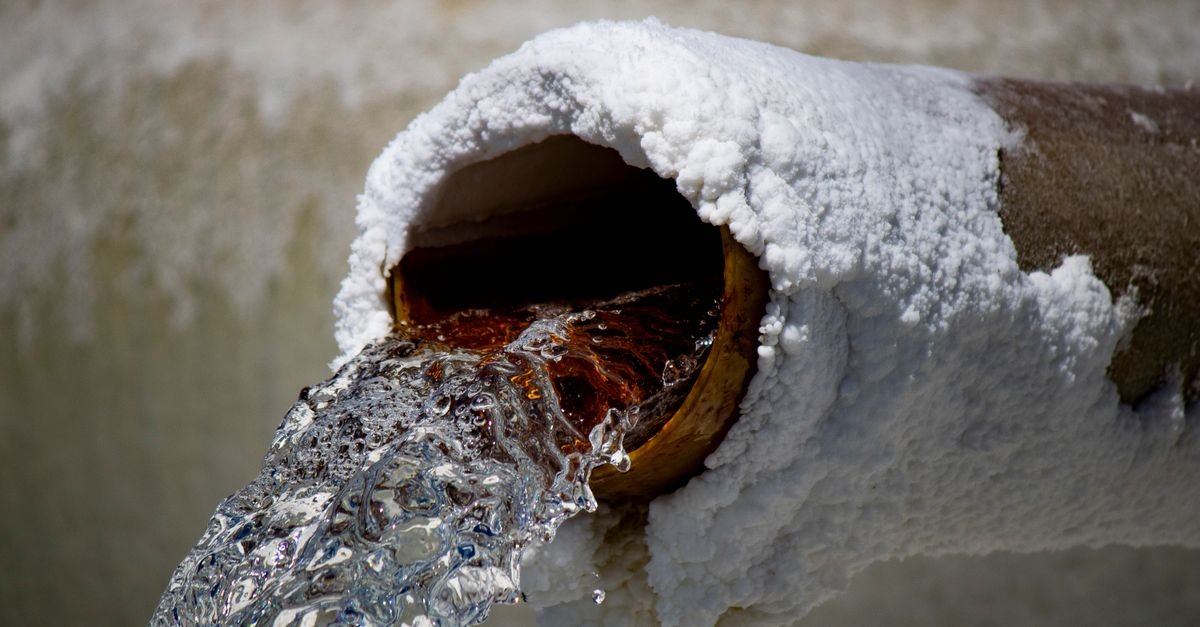
A pressure washer pump is not a forgiving environment for any of that. Three plungers travel in and out of seals at a few thousand strokes a minute, against a set of valve poppets that have to close on a machined seat tightly enough to hold 2,500 PSI. Every one of those surfaces is a precision fit, and every one of them is lubricated by the water itself.
Cat Pumps, who build the plunger pumps a lot of prosumer machines are fitted with, list abrasives as a standalone cause of early seal failure and put it in one sentence: “Water with abrasive is very hard on seals and causes the seals to wear quickly.” Their prescribed remedy is not a better seal. It is to “add proper inlet filter to remove abrasives down to an acceptable level.” The filter *is* the fix.
The plunger side is worse, because it compounds. From the same page: “Plungers are manufactured with extremely concentric and smooth finishes. Scored or cracked plungers produce an irregular ‘rough’ surface finish that causes seals to wear quickly or unevenly. In extreme cases, seals may tear, resulting in seal failure.” So a single hard particle does not just cost you one seal. It scores a ceramic plunger, and that scored plunger then destroys every seal you fit to it afterwards, at a rate you will find baffling until somebody explains why.
Grit in a valve does something similar in a different key. A poppet that lands on a fragment of sand does not seal; the pressure leaks back past it; the pump loses efficiency; and the fragment gets rolled into the seat face on the next stroke and stays there as a permanent pit.
Fifty Mesh, Sixty Mesh and What Still Gets Through
Mesh is a count, not a measurement: it is the number of openings in one linear inch of screen, so a higher number is a finer screen. Hydro Tek, a pressure washer manufacturer, publishes the industry convention plainly — “Most pressure washer pump manufacturers recommend 50 or 60 mesh screens” — and their own machines ship with 50 mesh cone strainers on the 3/4-inch garden hose feed.

The same page converts mesh into microns, which is the number that actually tells you what your screen does and does not catch:
| Mesh | Microns | Particle at that size |
| 28 | 700 | Beach sand |
| 60 | 250 | Fine sand |
| 80 | 180 | — |
| 100 | 150 | — |
| 200 | 74 | Portland cement |
| 325 | 44 | Silt |
Read that table once and the whole part makes sense. A standard 60 mesh inlet screen is a fine-sand filter. It is there to stop the particles that behave like grinding compound, and it does that job well. It is not a silt filter and it was never meant to be — at 44 microns, silt goes through a 60 mesh screen without touching the sides, and so does cement dust at 74.
That is the honest limit of the part, and it is worth knowing before you go finer. Fitting a 100 mesh screen to a machine that wants 50 does not make the pump happier; it makes the screen block roughly twice as fast and hands you a flow restriction instead of a filtration upgrade. If your water is genuinely dirty enough to need 100 mesh, the answer is more screen area — an inline filter with a clear bowl ahead of the machine — rather than a finer version of the same thimble.
Symptoms That Read Like a Dying Pump
Here is the diagnostic problem with this part. A restricted inlet and a worn-out pump produce almost the same symptoms, because they are the same physics arriving from opposite ends: in both cases the pump is not moving the water it should be. Six things to look for.
1. Pressure that sags rather than dies. Total loss of water is usually a full blockage, a closed tap or a frozen pump. A partly blocked screen gives you a machine that works, just weakly — a 3,000 PSI unit behaving like a 1,500 PSI one, with a spray that pushes dirt around instead of lifting it.
2. Fine for a minute, then fading. This is the most characteristic pattern of the lot. On start-up the pump empties the volume of water already sitting in the hose and the head, so you get a normal first thirty to ninety seconds. Then it has to draw everything through the restriction in real time, and the pressure settles down to whatever the screen will allow. Anything that is fine cold and weak after a minute is an inlet problem until proven otherwise.
3. Pulsing at the wand. Not the slow, even rise and fall of a hunting unloader — a faster, rougher irregularity, as the pump alternately catches enough water and does not. If your machine is doing a clean, countable rhythm you are more likely looking at surging, which is a control-loop fault with a different culprit and its own page.
4. A gravelly note from the pump head. This is the sound of the pump beginning to cavitate because its inlet is starved, and it is the one symptom on this list that is not just a symptom. The noise is metal being removed. The mechanism, the damage and the reason a cavitated pump never fully recovers are covered in the piece on pressure washer cavitation, and if you can hear gravel, stop the machine before you finish this section.
5. The detergent stops drawing. A downstream injector needs a decent flow rate through the venturi to create suction. Starve the machine at the inlet and the injector loses its draw, so people conclude the injector has failed and go looking for a part that is fine.
6. The engine sounds unloaded. On a gas machine, a pump that is not moving water is not absorbing power, so the engine note stays high and untroubled where it ought to bog slightly under load. An engine that sounds like it is doing nothing usually is.
Two things this list is not. It is not a collapsing inlet hose — a soft supply hose that sucks itself shut under flow gives you identical readings and a different fix. And it is not a pump that cannot prime, which is an air problem rather than a water problem. Both get their own pages. Check the screen first, because it takes two minutes and it is free.
Taking the Screen Out Without Tearing It
The whole job is five minutes and the only way to get it wrong is to be impatient with a mesh that is thinner than it looks.
1. Shut off the water and disconnect both hoses. Squeeze the trigger with the machine off to dump any pressure still in the line. There is no reason to do this job with a charged hose attached.
2. Run the garden hose on its own for thirty seconds into a border or a bucket. A hose that has been coiled in a shed all winter will push out a slug of rust and biofilm, and there is no sense cleaning a screen and then immediately feeding that into it.
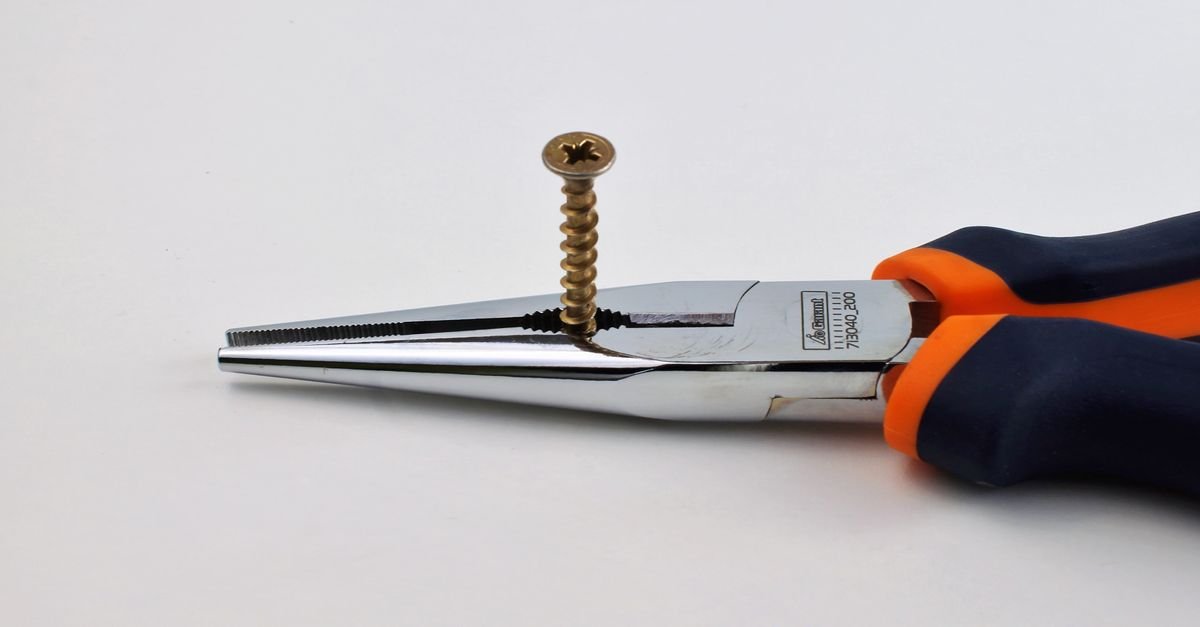
3. Get the screen out with needle-nose pliers, closed. Slide the tips in, let them spring open against the *frame* of the screen, and draw it straight out. Gripping the mesh itself is how screens get torn, and a torn screen is worse than the blocked one you started with. If it is a cone type it may come out with the rubber washer as an assembly; leave them together.
4. Rinse it from the clean side outwards. Debris arrived from the hose side, so push it back the way it came rather than driving it further into the weave. An old toothbrush and cold water will do it. Skip the wire brush, which flattens the wires and opens the weave.
5. Look at it against a bright window. The whole face should light up evenly. A grey felt across part of it is scale and sand; a rust-coloured stain that will not rinse off is usually iron from the supply and is generally cosmetic.
6. Refit it the same way round. A cone screen points its apex *into the machine* on most designs, so it presents a larger surface area to the incoming water. Fitted backwards it still filters and blocks noticeably sooner.
Before you screw the hose back on, check the rubber washer while it is in your hand. It is a few cents, it is almost certainly squashed flat, and a leaking inlet coupling costs you flow in exactly the same way the blocked screen did.
When a Rinse Is Not Enough
Cleaning is the default, but three findings mean the screen is finished and should not go back in.
The mesh is torn, split or has a hole. This is not a partial failure. A hole in a filter is a bypass, and every particle the screen was built to stop now takes the direct route. Briggs & Stratton’s instruction is unambiguous on this: “replace with new screen and rubber washer if damaged.” No judgement call required.
The weave is deformed or flattened. Usually from somebody prying it out with a screwdriver, or scrubbing it with something metal. Distorted wire no longer holds its aperture, so the rated mesh size becomes a fiction.
Scale will not come off. Hard-water deposits bond to the wire and gradually shrink every opening. If a rinse and a brush leave a screen that is still visibly furred, you can soak it in white vinegar for an hour, but honestly the part costs a couple of dollars and you are holding the machine hostage to save it.
That price is the entire argument of this page, and it is where I will plant my flag. The inlet screen is the only component on a pressure washer whose failure sits upstream of every expensive component, and it is priced like a washer. A replacement screen is a few dollars. A valve and seal kit is a sizeable fraction of what the machine cost. A scored ceramic plunger, or a manifold with pitted seats, is usually the end of a homeowner machine, because sealed axial pumps have no serviceable parts to buy. Every other fault on the machine costs what it costs. This one is a multiplier — it decides whether the next repair is three dollars or three hundred. Check it more often than it deserves.
How Often to Look, and Who Needs to Look Weekly
Briggs & Stratton put the water inlet screen in the “Prior to Each Use” list, alongside checking the oil and inspecting the high-pressure hose. Not annually, not at the start of the season. Before each use. That sounds excessive until you remember the inspection is twenty seconds and the alternative is a pump.
In practice, a realistic floor for a homeowner on clean municipal water is a look at the start of every session and a proper clean every few jobs. Then there are the situations where that is nowhere near enough:
- Well water. Untreated well supplies carry sand, silt and iron in quantities municipal water does not. Check before every session and expect to clean, not just inspect. An inline sediment filter with a clear bowl ahead of the machine is the single best accessory purchase anyone on a well can make.
- Any tank, IBC or rain butt supply. Standing water grows biofilm and drops sediment, and the outlet is usually near the bottom where the sediment is. Baffled tanks help; checking the screen after every session helps more.
- A new build, or a house that has recently been replumbed. Fresh pipework sheds swarf, jointing compound and pipe scale for months. This is the scenario where a screen goes from clean to blocked inside one job.
- After any work on the mains. A burst main, a meter change, a street repair or a stopcock replacement all disturb decades of settled deposit in the distribution pipe, and it arrives at your tap as a grey slug. If your cold tap has run cloudy or brown in the last fortnight, look at the screen before you look at anything else.
- After winter storage. Hoses that sat outside collect grit through their open ends and grow things in the water left inside them. Flush the hose before the first connection of the year, every year.
- Drawing from a stream, pond or water butt for a mobile setup. At that point a single thimble of 50 mesh is not a filtration strategy, it is a formality.
Running Without the Screen “Just for Today”
Sooner or later a screen tears while you are halfway through a driveway, the shops are shut, and leaving it out looks like a sensible field repair. It is the one shortcut on this page that is genuinely expensive, and the reason is that it fails silently.
Take the screen out and nothing bad happens. The machine runs beautifully — better, in fact, since you have just removed a restriction. There is no noise, no warning, no drop in performance. The damage is being done to the valve seats and the plunger surfaces at a rate you cannot hear, and it presents itself three months later as a pump that will not hold pressure, by which point nobody connects the two events. Faults that announce themselves get fixed. This one does not, which is precisely why it wins.
If you genuinely cannot wait, the least bad version is to cut a disc from a fine stainless kitchen sieve, or to fit an inline garden hose sediment filter at the tap end, and to treat either as a repair with an expiry date. What does not work is a fold of muslin or a piece of window screen, both of which restrict flow badly enough to starve the pump — swapping abrasion damage for cavitation damage, which is not an improvement, just a different invoice.
And while the hose is off, the natural next step if the pressure has not come back is the ordered triage in pressure washer low pressure: supply, then screen, then hose, then nozzle, then unloader, then pump. Suspect the pump last. It is almost never the pump.
FAQ
Where is the inlet filter on a pressure washer?
Inside the water inlet fitting, directly behind where the garden hose screws onto the machine. Unscrew the hose and look into the opening: you will find either a small plastic-framed cylinder, a stainless disc, or a cone pressed into the rubber hose washer. On gas machines the inlet is often a brass stub low on the frame, sometimes partly hidden behind a wheel. Many machines also have a second, in-line screen further along the water path and a third small filter on the detergent siphon tube.
Can you run a pressure washer without the inlet filter?
You can, and the machine will run noticeably well while you do it, which is the trap. The screen is a restriction, so removing it increases flow. It is also the only thing stopping sand and scale reaching valve seats and ceramic plungers, and that damage is silent and cumulative. Running without one for a single tank of fuel is unlikely to be fatal; running a season without one is how a healthy pump quietly becomes a soft one.
How often should I clean the pressure washer inlet filter?
Briggs & Stratton lists checking the water inlet screen in its “prior to each use” routine, alongside the oil check. A realistic homeowner rhythm on clean municipal water is a glance before every session and a proper rinse every few jobs. On well water, a tank supply, a new build, or after any disruption to the mains, check and clean before every session without exception.
Can a clogged inlet filter damage the pump?
Yes, by starving it. A restricted inlet drops the pressure inside the pump chamber far enough that the water flashes into vapour, and those vapour bubbles collapse against the valve seats — cavitation, which removes metal continuously for as long as it lasts. A torn screen causes the other kind of damage, letting abrasives through to score plungers and pit seats directly. Both routes end at the same part.
Why does my pressure washer lose pressure after a few minutes?
Because the machine starts by using water already sitting in the hose and the pump head, and only then has to pull everything through the restriction in real time. Strong for the first thirty to ninety seconds and weak afterwards is the signature pattern of an inlet restriction — a blocked screen, a half-open tap, an undersized hose or a kink. A worn pump is weak from the first second.
Do electric pressure washers have an inlet filter?
Almost all of them do, and it is usually easier to miss because it is small, plastic and often integrated into the hose-connection collar rather than sitting in a separate brass fitting. Electric machines tend to run smaller pumps with tighter clearances, so the consequences of debris are, if anything, less forgiving. Most of them also use sealed axial pumps that cannot be rebuilt, which makes the filter the only maintenance that matters.
What mesh should a pressure washer inlet filter be?
Most pressure washer pump manufacturers specify 50 or 60 mesh, which corresponds to roughly 250 microns — about the size of fine sand. Going finer sounds like an upgrade and usually is not: a 100 mesh screen in the same small housing blocks around twice as fast and becomes a flow restriction. If your water needs finer filtration, add surface area with an inline filter ahead of the machine rather than a finer screen in the same place.
Go and Look at Yours Before the Next Job
Not later. Now, while the idea is still in your head and before the next job gives you something more interesting to think about. Unscrew the garden hose, shine a torch into the fitting, and find out whether your machine has been breathing through a sock for the past two summers.
If it is clean, you have lost two minutes and gained a sentence you can say with confidence when the pressure drops next spring. If it is grey and felted, you have just found the answer for nothing, and the pump you were about to replace is fine — which is the best possible outcome of any troubleshooting page and, I am aware, a slightly anticlimactic one.