Last Updated on September 25, 2026 by Umar Farooq
Pressure washer not enough water supply is a fault you can settle in ninety seconds with a bucket and a stopwatch: time how long your tap takes to fill a known volume, convert that to gallons per minute, and compare the answer with what the pump is rated to pass. Almost nobody does this. They look at the hose, see water coming out of it, and conclude the supply is fine — which is a bit like checking your bank balance by confirming the card is still in your wallet.
I have read a lot of pressure washer manuals this year, and the water supply page is the one that surprised me most. Manufacturers do not ask for slightly more water than the machine sprays. They ask for roughly double, in writing, in the first ten pages — one of the most specific numbers in the document and one of the least read.
Two boundaries first, because three pages on this site meet at the inlet. The mesh screen behind your hose connection is the commonest restriction on the machine side, and it is diagnosed on the pressure washer inlet filter page. What under-supply does to the metal inside the pump belongs to pressure washer cavitation. This page owns what comes before both: measuring what your tap actually delivers, and doing the arithmetic on it.
Your Machine Asks for Roughly Twice What It Sprays
Take a real example. Simpson’s MS60850 is a 3,000 PSI, 2.4 GPM gas machine — an entirely ordinary homeowner unit. Its manual states: “The minimum requirements for a water supply are 20 PSI and 5 Gallons Per Minute,” and repeats it at the connection step as “Water source must provide a minimum of 5 gallons per minute at 20 PSI” (Simpson Cleaning, MS60850 instruction manual).
Five gallons a minute, for a machine that sprays 2.4. That is a factor of 2.08, printed by the people who built it.
Generac writes the same rule with different numbers. Its troubleshooting article for erratic pressure and low water volume tells owners that “Flow must be greater than 3.8 gallons per minute and no less than 30 PSI,” and to “confirm the water supply hose length does not exceed the 50-foot maximum length” (Generac, troubleshooting erratic pressure and low water volume). Different brand, different figure, same shape: a flow floor well above what the machine puts out, paired with a pressure floor that is barely above nothing.
The gap is that wide for two reasons. First, a pressure washer pump does not draw water smoothly. Three plungers take turns retracting, and each one fills a chamber in a few thousandths of a second. The rated GPM is an average over a minute; the instantaneous demand during the fraction of a stroke when a chamber is actually filling is a great deal higher, and the supply has to answer at that instant rather than on average.
Second, flow at a domestic tap is not a constant. It is whatever is left after the irrigation zone, the dishwasher and the neighbour on the same service have taken theirs. Size your supply to the best reading you ever get and you will be short on a normal afternoon.
So the working rule, when you cannot find your own manual: aim for at least 1.5 times the machine’s rated GPM at the tap, and treat 2x as the number the manufacturer would have told you. Then go and find the manual anyway, because the real figure beats my rule of thumb.
Time a Bucket, Then Do the Division
This is the whole point of the page, and it takes less time than reading about it. You need a container whose volume you know and something that counts seconds.

Set it up honestly. Use the tap you will actually use, with the hose you will actually use, with everything you normally leave attached still attached. A bare spigot measured with no hose on it tells you what your plumbing can do and nothing at all about what your machine will get. Take the spray nozzle off the end — you are measuring the supply, not the nozzle.
Run it. Open the tap fully. Let it run for a few seconds first so the flow settles, then swing the hose into the container and start counting. Stop when it is full.
Do the division.
GPM = (gallons in the container x 60) ÷ seconds to fill
Three worked examples, because this is where people talk themselves out of the answer:
- A 5-gallon bucket filling in 48 seconds: 5 x 60 = 300, divided by 48 = 6.25 GPM. Comfortable for anything a homeowner owns.
- A 5-gallon bucket filling in 100 seconds: 300 ÷ 100 = 3.0 GPM. That is fine for a 1.6 GPM electric machine and marginal for a 2.4 GPM gas one.
- A 2-gallon watering can filling in 34 seconds: 2 x 60 = 120, divided by 34 = 3.5 GPM.
Working in litres, the sum is (litres x 60) ÷ seconds, then divide by 3.785 to get US gallons per minute. A 10-litre bucket in 40 seconds is 15 litres per minute, which is 3.96 GPM.
Now measure it twice. This is the step that turns a number into a diagnosis. Measure once with the hose attached, then unscrew the hose and measure again straight off the tap. The difference between the two figures is exactly what your hose, your reel and your fittings are costing you. If the bare tap gives 7 GPM and the hose gives 3.5, the plumbing is fine and the problem is lying on your lawn. If the bare tap gives 3.5 as well, the hose is innocent and the restriction is inside the house.
Then compare. Divide your measured through-the-hose GPM by the machine’s rated GPM. Below 1.5 and the supply is at least part of your fault. Below 1.0 and it is the whole fault, and nothing you buy for the machine will fix it.
One caution on containers. A “5-gallon” builder’s bucket is a little over five gallons to the brim and a little under to the moulded line, and a household bucket may be anything at all. Check it once against a measuring jug if you want the figure to be worth quoting — though a number carrying five percent of error still beats a shrug carrying a hundred.
“The Tap Pressure Is Fine” Is the Wrong Measurement
This is the sentence that sends people off to buy a pump they do not need. Somebody screws a pressure gauge onto the outside tap, reads 55 PSI, decides the water supply has been ruled out, and starts pricing unloader valves.
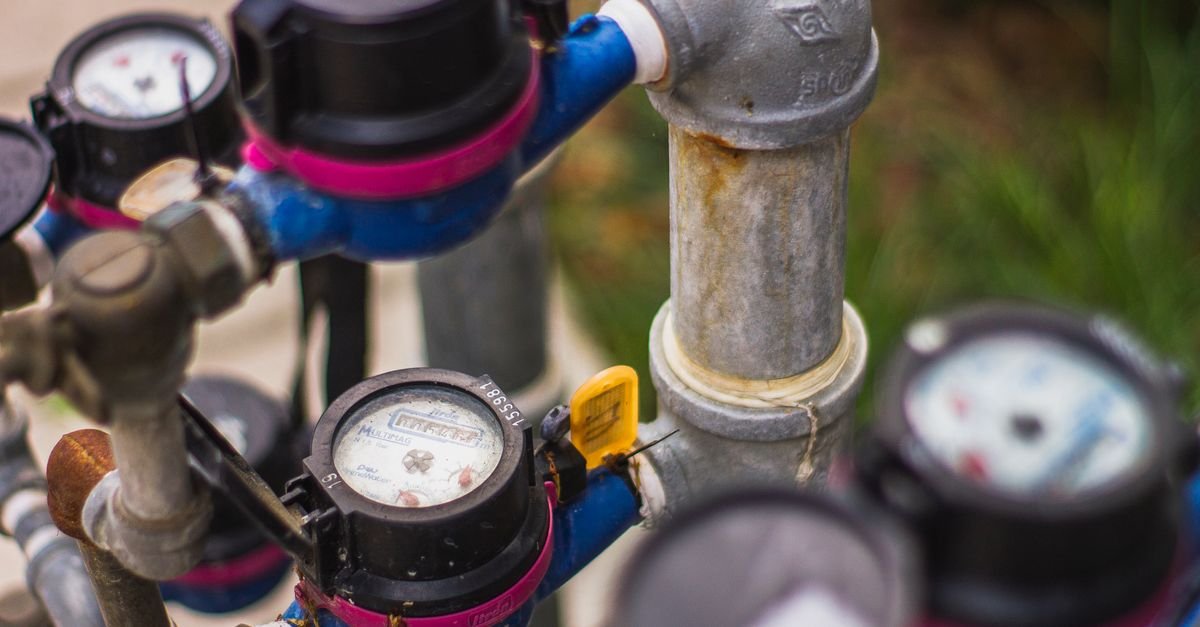
A gauge on a closed tap reads static pressure — the pressure in the pipe when no water is moving. Static pressure is patient. Given enough time, a pipe with a pinhole bore will fill up behind a closed valve and read the full mains figure, because there is no flow for the restriction to restrict. Pressure is how hard the water pushes. Flow is how much of it arrives. One does not imply the other.
Fit the gauge on a tee with the hose running and watch the needle as you open the tap. Static pressure that collapses under flow is the signature of a restriction upstream of the tap — an old service line, a half-closed isolation valve, a pressure-reducing valve that has failed shut. Static pressure that holds up while the flow stays poor points downstream, at the hose and the fittings. Either way, the number that matters is taken while the water is moving.
Notice that both manufacturers quote two figures. Simpson asks for 20 PSI *and* 5 GPM; Generac for 30 PSI *and* 3.8 GPM. They specify both because one does not tell you the other, and the pressure floor is startlingly low in each case — 20 PSI is less than half what a normal domestic tap makes. The pressure figure is a formality. The flow figure is the one your machine is judged on.
Nine Places Your Flow Goes Missing Before the Inlet
Every item on this list does the same thing: it takes gallons per minute out of the water between the mains and the pump, while leaving the static pressure looking perfectly healthy. Work down it with your two bucket readings in hand and you will usually know which half of the list to search.
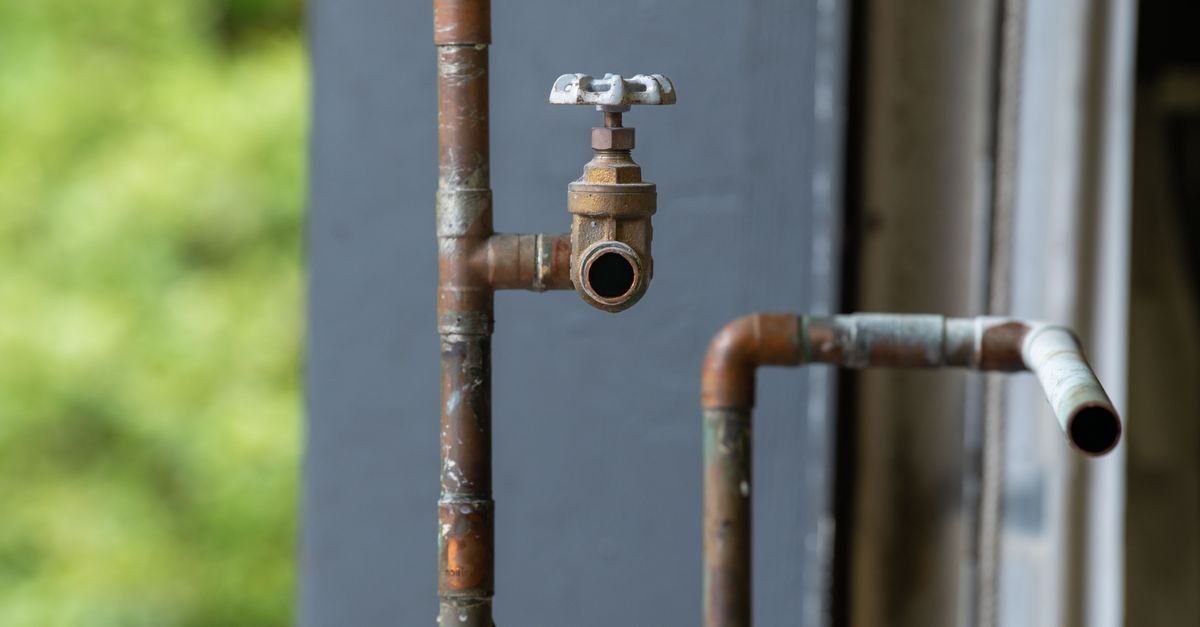
1. A tap that is not all the way open. Half a turn short delivers plenty of water into a bucket and not enough into a pump. It is the first thing to check and the last thing anyone believes.
2. Half-inch hose feeding a machine that wants five-eighths. The couplings are identical, so the fitting in your hand tells you nothing — the bore is printed on the jacket or nowhere. A half-inch bore has roughly two-thirds the cross-section of a 5/8-inch one, and friction widens that gap further over a long run.
3. Too much hose. Generac caps the supply run at 50 feet. Every extra foot is friction, and friction is paid for in gallons per minute.
4. A hose still on the reel. This one is invisible because the water is visibly running. A reel holds the entire length of hose in a continuous tight curve, which is both maximum length and maximum bend radius at once. Pull the whole thing off and lay it flat. Reels are for tidiness, not for flow.
5. A Y-splitter at the tap. Two open outlets do not give you two taps’ worth of water. They give you one tap’s worth, divided, and the pressure washer gets the half it was already short of. Shut the other leg, or take the splitter off.
6. A flow-stop or aquastop quick-connect. The clever fitting that shuts itself off when you unclip the hose contains a spring-loaded check mechanism sitting directly in the flow path. It is a restriction you installed on purpose. Use a plain brass connector for pressure washing.
7. A partly closed isolation valve, or a pressure-reducing valve on the way out. Both live indoors, both are invisible from the garden, and both let a tap read full static pressure while quietly rationing the flow.
8. An old galvanised supply line. Galvanised steel corrodes inward over decades and the bore closes up a little every year. Static pressure is unchanged; flow is a fraction of what it was when the pipe went in. If the property is old enough to have galvanised pipe and every tap in it is slow, this is your answer, and it is a plumber’s job.
9. Something else drawing on the same line. An irrigation zone on a timer, a second tap left cracked open, a softener regenerating, or a shared service to a neighbouring property. If your bucket reading changes with the time of day, this is why.
One thing is deliberately off the list. The mesh screen behind your machine’s hose connection is a genuine and common restriction, but it sits on the machine side of the coupling and gets its own treatment on the inlet filter page. Check it after you have measured, not instead of.
Wells Do Not Deliver, They Dispense
If your water comes from a private well, the bucket test needs doing twice more, and the second reading is the one that counts.
A well system does not supply water continuously. The pump fills a pressure tank, and the tank dispenses between two set points. Penn State Extension describes the cycle plainly: “When the pressure on the surface of the water reaches about 40 pounds per square inch (psi), a pressure activated switch stops the pump. When a faucet is opened, the air pressure forces the water out of the tank through the pipeline until the pressure drops to about 20 psi” (Penn State Extension, Using Low-Yielding Wells).
The usable volume in that cycle is far smaller than the tank’s label suggests. From the same page: “A 42-gallon tank will discharge about 8 gallons before the pump starts; (an 82 gallon tank — 16 gallons; a 120 gallon tank — about 24 gallons).”
Eight gallons. Put a 2.4 GPM machine on a 42-gallon tank and you have about three and a half minutes of stored water, after which you are living on whatever the well pump itself produces. If that is 8 GPM you will never notice. If it is 4 GPM you have a machine that works beautifully for three minutes and then sags, recovers, sags again, on a slow cycle that follows the pressure switch rather than anything inside the machine. That rhythm is the tell — a fault in the pump does not keep time with your well.
A bigger tank is not the fix either, and Penn State says so directly: “larger pressure tanks alone will provide slightly larger amounts of stored water, but the increased storage is not enough to solve problems with a low-yielding well.”
So on a well, measure twice: once cold with a full tank, once after five minutes of running. The five-minute reading is your real supply figure. Everything before it is the tank emptying. And note Simpson’s separate rule for well owners, stricter than its mains one: “If your water source is a well, the garden hose length can only be 30 ft. (9 m) max.”
Putting a Barrel Between the Tap and the Machine
When the measured supply genuinely cannot keep up — and only then — the answer is to buffer rather than to boost. A barrel or tank fills continuously at whatever slow rate you have, and the machine draws from it at full rate. You are trading runtime for flow, and the trade is usually generous.
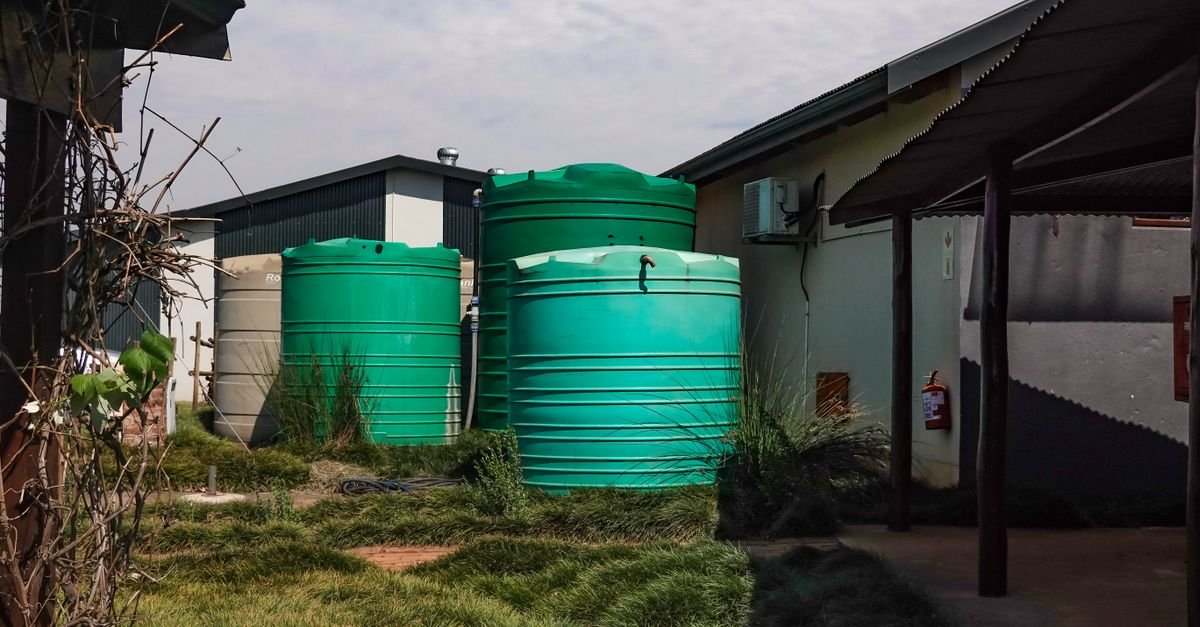
The arithmetic is simple. Runtime in minutes equals the tank’s usable volume divided by the shortfall — the machine’s GPM minus your tap’s GPM. A 55-gallon barrel, a 3 GPM machine and a 2 GPM tap gives 55 ÷ 1 = fifty-five minutes of continuous trigger time, and in practice much longer, since nobody holds a trigger down for fifty-five consecutive minutes and every pause refills the barrel. Widen the gap and it drains fast: a 4 GPM machine on the same tap has a shortfall of 2, so the same barrel gives twenty-seven minutes. That calculation tells you what size container to look for before you buy one.
Height decides whether this works at all. The outlet needs to sit above the pump inlet so water falls into the machine rather than being lifted into it. Most homeowner machines use a sealed axial pump with no meaningful suction ability, and a barrel standing on the ground asks it to do something it was never built to do. A barrel on a pallet, a stand or a trailer bed is a different proposition. The rest of the geometry — outlet size, gravity feed, float valves, what grows in a tank left standing — is in pressure washing water tank.
Two things a buffer is not. It is not a bucket: a five-gallon pail is four seconds of supply with bad geometry attached. And it is not a fix for a hose problem. If your two readings showed the tap is fine and the hose is the thief, buy a hose.
Pressure Washer Not Enough Water Supply: What It Costs the Pump
Running a pump short of water is not a performance compromise you can choose to live with. When the inlet cannot fill the chamber fast enough, the pressure inside drops far enough for the water to boil at ordinary temperature, and the vapour collapses again as the plunger reverses, taking a little metal off the valve seats each time. The mechanism, the damage pattern and the reason a starved pump never fully recovers are on the cavitation page. The only part that belongs here is the consequence: the weak spray you are trying to diagnose is also, quietly, the thing doing the damage.
Which brings me to the one point I will be blunt about. “I checked, the water’s fine” is not a check. It is an impression, and it is based on something — water visibly coming out of a hose — that is equally consistent with 6 GPM and with 2. A 2.4 GPM machine on its specified 5 GPM supply has 108 percent headroom. The same machine on a perfectly ordinary 3 GPM tap has 25 percent, which sounds survivable and is not, because the shortfall is paid in valve seats rather than in minutes. Ninety seconds and a bucket converts the impression into a number. Nothing else on a troubleshooting list is that cheap or that decisive, and it sits near the bottom of almost every list I read while the pump sits at the top.
FAQ
How do I test whether my pressure washer has enough water supply?
Fill a container of known volume from the hose you actually use, with the tap fully open and the nozzle removed, and time it. Gallons per minute equals the container’s gallons multiplied by 60, divided by the seconds it took. Compare that figure with the GPM on the machine’s data plate. You want at least one and a half times the rated GPM, and manufacturers commonly specify closer to double.
How many GPM does my tap need for a 2.5 GPM pressure washer?
Somewhere between 3.75 and 5 GPM, depending on whose manual you read. Simpson specifies 5 GPM at 20 PSI for a 2.4 GPM machine; Generac asks for more than 3.8 GPM at 30 PSI. The floor is never the machine’s own rating, because a plunger pump’s instantaneous demand during the filling part of each stroke is much higher than its average output.
Can low water supply damage a pressure washer pump?
Yes, and it is the most expensive way a pressure washer commonly dies. A starved pump drops its internal pressure low enough that water vaporises inside the chamber, and those vapour bubbles collapse against the valve seats thousands of times a minute, taking metal with them. The pressure loss you notice and the damage you do not are the same event.
Why does my pressure washer work at one outside tap but not another?
Because two taps are almost never on the same run of pipe. The one nearest where the main enters the house sees the shortest, widest path and often measures a gallon or two a minute better than a tap on a long spur at the far corner. Run the bucket test at both and use whichever wins, even if it means a longer high-pressure hose to reach the job.
Does opening the tap harder increase flow to the pressure washer?
Only up to the point where the valve is fully open, and then not at all. A tap is a variable restriction, not a pump. Once it is wide open you have all the flow that pipe can deliver, and turning harder achieves nothing but eventual damage to the spindle washer. If fully open is not enough, the bucket test will tell you which side of the tap the restriction is on.
Can I run a pressure washer off a well?
Usually yes, with two provisos. Your well pump’s sustained output, not the pressure tank’s label, is the real supply figure — a 42-gallon tank discharges only about eight usable gallons per cycle. And check your manual, because well owners often get a separate instruction: Simpson limits the garden hose to 30 feet on a well supply against 50 feet on mains.
Will a booster pump solve a weak water supply?
Rarely, because a booster raises pressure and the thing you are short of is flow. If the bore of the pipe feeding your tap is the constraint, adding pressure upstream moves very little extra water and can make an old line leak. A buffer tank is almost always the better answer: it lets a slow supply fill at its own rate while the machine draws at its own.
Do the Sum Before You Buy a Part
If you take one thing from this page, make it the container and the stopwatch. Two readings — one through the hose, one straight off the tap — and a single division will tell you whether you have a water problem, a hose problem or a machine problem, and it will do it before you have spent anything at all.
And if the number comes back fine, that is not a wasted ninety seconds. It is the first item on the troubleshooting list crossed off with evidence instead of a hunch, which is rarer than it ought to be in a garage on a Saturday morning.