Last Updated on September 25, 2026 by Umar Farooq
A pressure washer frozen pump must be thawed completely at room temperature before the machine is switched on — never started, never heated with a torch or a heat gun, and never filled with boiling water. Water expands about 9% as it turns to ice, a pump head is a closed cavity, and the expansion has to go somewhere. If the pump has already split, starting it turns a cracked casting into a cracked casting plus a cooked motor.
This is the article for the machine that has already sat through the cold, not the one you are putting away. It is late March, the hose bib works again, and the pressure washer has been in an unheated garage since October with an inch of water still in it. You want to know two things: whether it is broken, and what you can do in the next hour that does not make it worse.
The answer to the second one is mostly *wait*, which is unsatisfying. Everything below is what to do while you are waiting.
What Ice Actually Does Inside a Pump Head
A pump manifold is a solid block with narrow galleries bored through it, a set of check valves that seat one way on the inlet side and the other way on the discharge side, and three plungers running in sealed bores. When the trigger is released and the hoses come off, a few ounces of water stay behind. Surface tension holds it in passages narrower than a drinking straw, and no amount of tipping the machine upside down gets it out.
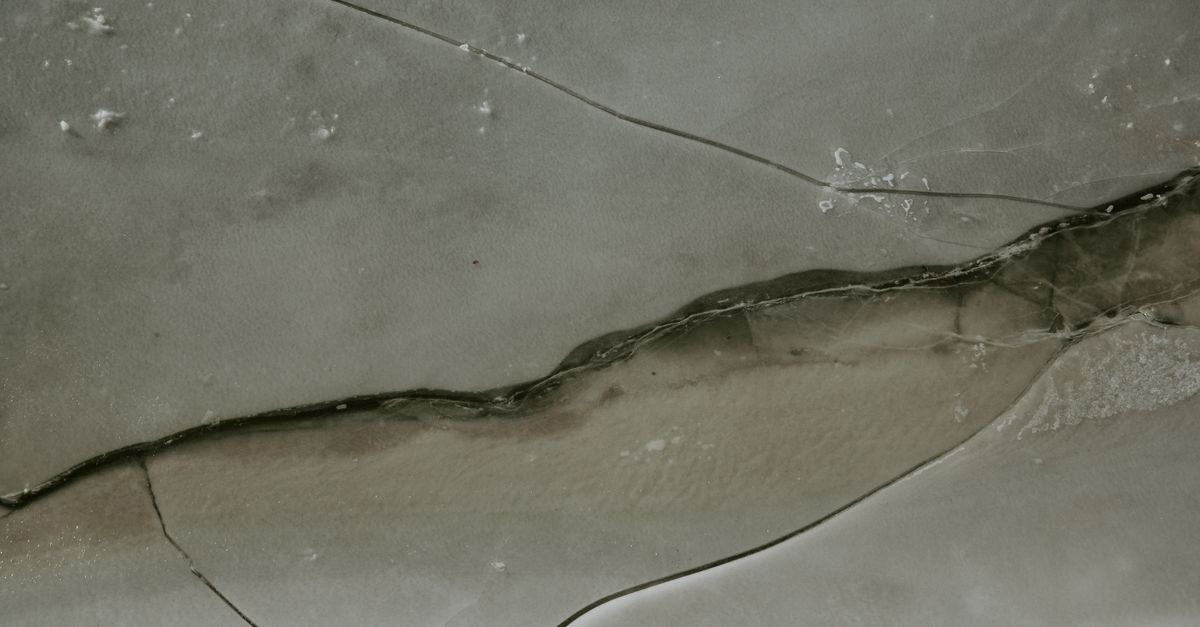
Then it freezes, and the geometry does the rest. Kärcher says it plainly in its own winter guidance: “Because water expands when frozen, seals and, in the worst-case scenario, pump engineering can be destroyed” (Kärcher, making the garden winter-proof). The 9% has nowhere to go, and aluminium does not stretch to accommodate it. It cracks.
Where it cracks is not random. Ice forms first in the thinnest, coldest passages — usually the inlet gallery — and once an ice plug seals a passage, the water still liquid behind it is trapped against a closed check valve. Water is effectively incompressible, so that trapped pocket does not squash; it loads the casting from the inside like a hydraulic ram with no relief. That is why the split usually runs through the manifold web between two galleries, or out of a threaded boss, rather than neatly along a seam where you would think to look.
Four things break, in rough order of how often:
- The manifold cracks. Hairline, often hidden under a fitting or the discharge elbow.
- The unloader seizes. Its piston runs in a close-tolerance bore, and ice distorts the bore.
- A plunger chips. Ceramic plungers are hard and brittle; ice forming around one takes a flake off the edge.
- A seal lip is nicked. Ice sliding past a rubber lip leaves a permanent notch that does not show up for a week.
Only the first one is visible from outside, and only sometimes.
Reading a Pressure Washer Frozen Pump Before You Switch It On
Six checks, in this order. None of them need the machine running, and that is the point.
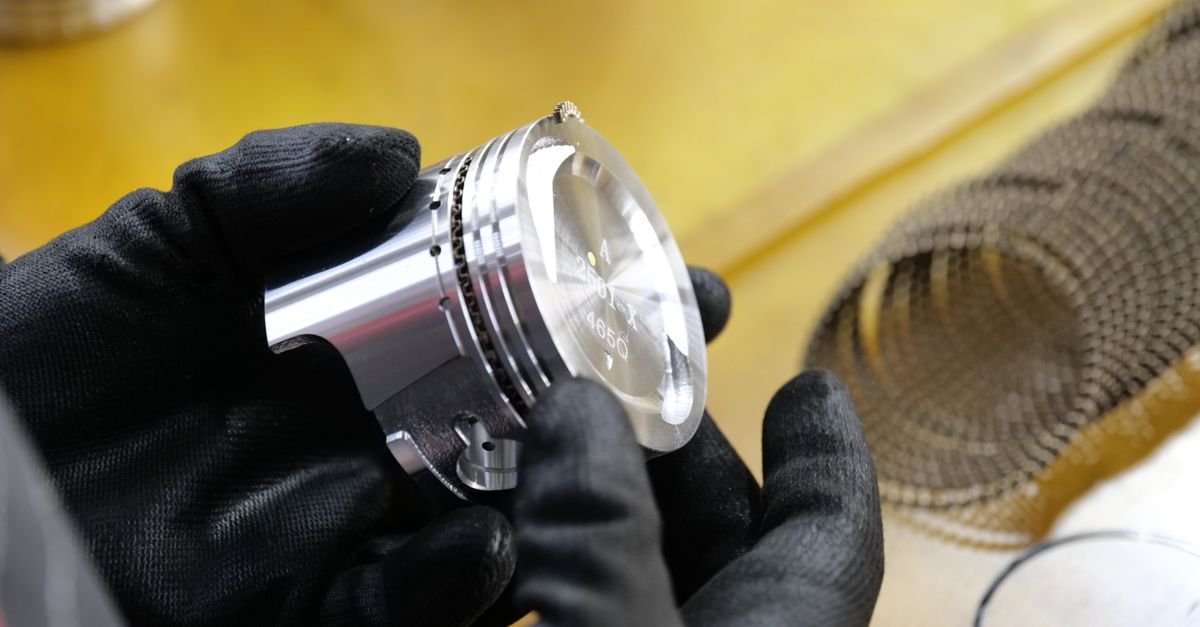
1. Take the power away first. Unplug an electric machine. On a gas machine, pull the spark plug lead off and tuck it clear. You are about to turn the engine over by hand, and a spark plug lead you forgot about is a bad time.
2. Turn the pump over by hand. On most gas machines the pump is bolted straight to the crankshaft, so a slow, steady pull on the recoil *is* turning the pump. It should feel like normal compression and nothing else. If it hits a dead stop that will not move, stop pulling. On an electric machine, look for an accessible shaft end or a fan that turns the rotor; if there is no way to turn it by hand, skip to check 3 and assume the worst until thawed.
3. Look for a hairline split at the manifold. Wipe the pump body completely dry with a rag, then look at it in bright light: around the inlet boss, around the discharge boss, along the web between the water inlet and the outlet, and at the thermal relief valve if there is one. A freeze crack is a fine dark line, sometimes with a chalky white mineral trace where water has already crept out and evaporated. Run a fingernail across anything suspicious — a crack catches.
4. Check the pump oil. If your pump has a sight glass or a dipstick, look at it now. Amber is fine. Milky, hazy or the colour of weak coffee means water crossed into the crankcase, and after a freeze that usually means the split runs deeper than the manifold. Milky pump oil has several other causes, most of them less alarming than this one, but on a machine that has done no work since autumn, condensation and a crack are the only two candidates.
5. Look for actual ice. Pull the inlet screen out of the garden hose fitting. Ice in the screen mesh, or a quick-connect that will not seat because there is a plug of ice in it, is a straight answer: the machine is still frozen and nothing else you check today is meaningful.
6. Check the hose, the gun and the wand. A high-pressure hose that froze full has a swollen, softened liner and a weak spot you cannot see from the jacket. A trigger gun that froze may have a cracked valve body. Both will find out under load, which is the worst moment to find out.
One Locked Pump, Two Dead Parts
Here is the rule that matters more than every diagnostic step above: if there is any chance the pump is frozen, do not press the switch.
A pump that cannot turn does not politely refuse. On an electric machine, the motor is a small induction unit that has no idea the shaft is stuck. It draws locked-rotor current — several times its rated draw — produces no rotation and therefore no cooling airflow, and starts converting all of that into heat in the windings and the start capacitor. You get somewhere between a tripped breaker and a burnt motor, and which one you get depends on how long your finger stays on the button. That is the difference between a machine that hums because of ice and one that hums because you have now also killed the capacitor.
On a gas machine it is worse in a different way, because the engine has plenty of torque and will happily win. A direct-drive pump shears its coupler or snaps the pump shaft. A belt drive burns the belt, which is at least the cheap outcome.
There is a third failure mode that nobody expects. If the ice plug is on the *discharge* side and the pump manages to turn, you have a positive-displacement pump pushing water into a sealed passage. The unloader cannot bypass what it cannot reach. Something has to give, and on a casting already weakened by the freeze, what gives can give suddenly. A machine that makes 2,500 PSI will happily make it through a crack you did not know was there.
Turn the water off, take the power away, and go and do something else for the rest of the day.
Thaw It Slowly or Crack It Twice
The whole thaw is one instruction: move the machine somewhere above freezing and leave it alone. Repair shops quote about twelve hours for a pressure washer to come back to liquid in a heated space, and that figure is not padding.
The physics explains why. Melting ice absorbs an enormous amount of heat without the temperature moving at all. The USGS puts it in units you can picture: a gram of ice needs 80 calories to melt, and then only 100 calories to go all the way from freezing to boiling. Thawing the water inside your pump costs nearly as much heat as it would take to boil that same water. The pump is a lump of metal in a cold garage with a cold engine bolted to it, and it will sit at zero degrees for hours while the ice quietly drinks everything the room can give it.
Which brings us to the thing people do at hour two, when nothing appears to be happening.
No heat gun. No blowtorch. No kettle. The mechanism is thermal shock, and it is specific. You heat the outside of a casting that has an ice core in the middle. The outer skin wants to expand and the frozen core physically will not let it, so you load the surface in compression and the transition zone in tension — in cast aluminium, which is strong in compression and mediocre in tension, with a crack already possibly started. Aluminium also conducts heat roughly five times better than steel, so a flame on one spot does not warm the block; it makes a very steep gradient across a small area, which is exactly the loading you were trying to avoid. And long before any of that helps the ice, the heat has reached the nitrile seals and O-rings sitting a few millimetres inside.
Boiling water poured on a frozen casting does the same thing with worse aim.
If you genuinely cannot wait, the acceptable version is *gentle and general*: a fan heater a few feet away pointed at the whole machine, or tepid — not hot — water run over the pump body for several minutes. Get the machine off bare concrete first. A slab is a heat sink with an unlimited budget, and it will pull warmth out of the frame faster than the room puts it in.
Do not try to push pump saver into a frozen pump. It cannot get past the ice, and all you achieve is a puddle at the inlet.
The Failures That Show Up a Week Later
Once it is fully thawed, the temptation is to start it, hear it run, and declare the problem imaginary. Resist that for ten more minutes, because there are two failures that pass a start-up test and fail later.
The crack that only opens under pressure. A hairline in a casting is closed when the metal is cold and unloaded. Put 2,000 PSI behind it and it opens. The free test: with the machine completely dry and switched off, connect the garden hose only and open the tap. Mains pressure is somewhere around 40 to 80 PSI — enough to find a real leak, nowhere near enough to do damage. Watch the casting body for thirty seconds, not the fittings. Then start the machine, run it at low pressure for a minute, and look again, this time at the whole pump under load. Water appearing from the body of the casting rather than from a joint is freeze damage. Water at a joint is usually an O-ring and a much better day.
The seal that survived and then failed. Ice sliding past a seal lip nicks it. Ice around a plunger chips the ceramic. Neither shows up on the first run — they show up as a weep at the seam or a steady pressure drop a week in, and a chipped plunger then destroys every new seal you fit, which is why a pump that weeps at the seam after a freeze rarely gets fixed by a seal kit alone.
Check the pump oil again after that first run, too. Clear on Monday and milky on Sunday is a crack that goes all the way through.
One boundary worth drawing so you do not go looking: a machine that turns over freely, has clean oil and simply will not start after the winter is a fuel and spark problem, not a frozen pump. This article is about a pump that will not turn, or one that turns and leaks.
Is a Cracked Axial Pump Worth Fixing?
Almost never, and the reason is structural rather than financial. Axial wobble-plate pumps — the type on nearly every homeowner machine — are assembled sealed. There is no manifold sold as a separate part, no published torque figures, and often no service manual, because the design was never meant to be opened.
Here is the one position I will not soften: do not weld or epoxy a cracked pump head. The crack is in the pressure boundary of a part that cycles from zero to full pressure every single time you release the trigger. Welding cast aluminium leaves a heat-affected zone that is weaker than the parent metal, in a casting that is already porous by nature and already has a crack propagating through it. Epoxy is worse — it is a coating over a moving joint, and it will hold beautifully right up until the afternoon it does not. A pump body is not a bracket. If the casting is split, the pump is scrap.
The warranty will not help either, and manufacturers are unusually direct about this. AR North America’s pump warranty lists the exclusions in a single line: “normal wear (such as but not limited to: seals/ packings, valves, plungers and sealing O-rings), freight damage, freezing damage” (AR North America, warranty). Kärcher’s machine warranty excludes freezing in the same breath as misuse and neglect. Freeze damage is not treated as a defect anywhere in the industry, because it is not one.
Two things save money here. First, a dead pump on a healthy engine is a pump problem, not a machine problem — a bolt-on replacement pump on a good engine is usually the cheapest outcome on the table, and the repair-or-replace maths is laid out in full elsewhere. Second, check what the head is made of before you write it off. Brass manifolds tolerate freezing better than cast aluminium because brass yields a little instead of cracking. I went looking for a manufacturer willing to put a number on that, found the claim that General Pump warrants its forged brass manifolds against freeze damage for the life of the pump repeated word-for-word across a dozen dealer listings, and then read General Pump’s own warranty page in full and could not find it there. So take it as a material property, not as a promise.
Pump Saver Versus a Blast of Air
The most common thing people say after this happens is “but I blew the pump out.” Blowing it out is genuinely useful. It is also the first step of the job, not the whole job.
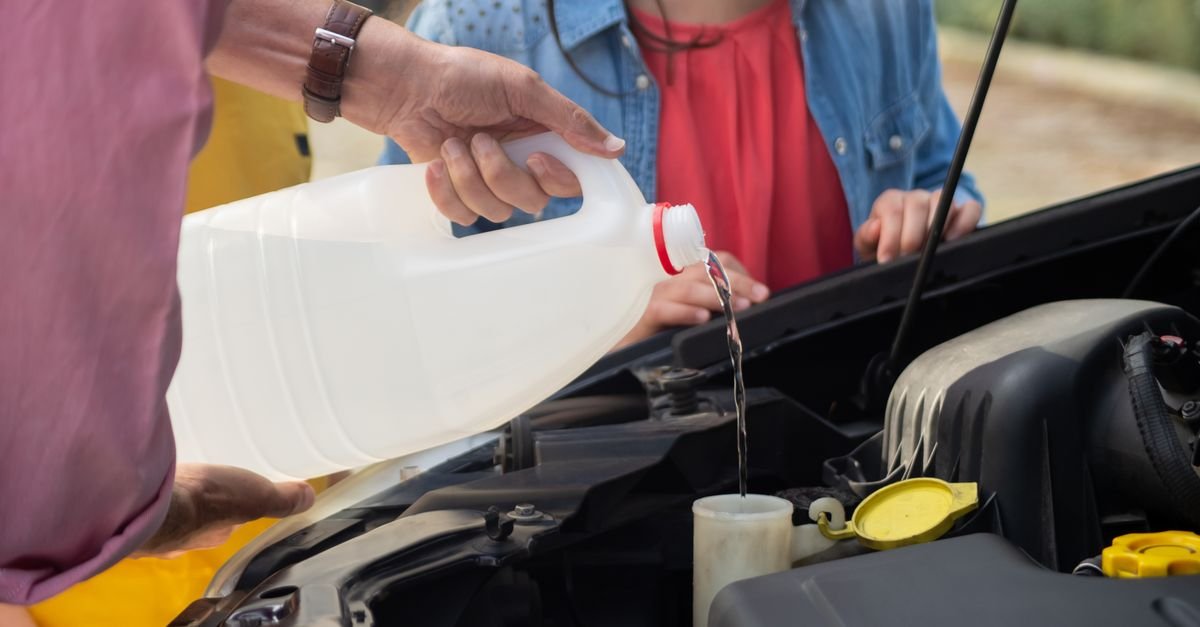
Kärcher’s own instruction is to “switch on the high-pressure cleaner without a water connection for approximately half a minute until it has run totally dry” — and then it recommends Pump Guard on top of that. The manufacturer that publishes the dry-run does not stop at the dry-run, which tells you what the dry-run leaves behind.
What it leaves behind is a wet film. Surface tension keeps a meniscus across every check-valve seat and a skin of water on every gallery wall, and a film that freezes still lifts a seal lip off its plunger. Running the pump dry to clear it is also mildly self-defeating, since water is the only thing lubricating and cooling those plungers while it runs.
Pump saver does two separate jobs, and manufacturers publish both. Kärcher’s Pump Guard claims it will “protect your pressure washer from corrosion, premature wear and freezing (down to -25º F)” and that it “adds lubrication to your pressure washer’s valves and seals to prevent sticking in the future” (Kärcher, Pump Guard). RV antifreeze does the first job and not the second, which is why a pump stored with plain glycol comes out unfrozen and stiff.
That is as far as this article goes on prevention, because the full storage routine — fuel, oil, hoses, where the machine lives — is covered properly in the winterizing guide. The short version, for anyone reading this in April with a cracked casting in front of them: it is about thirty seconds of work, once a year, and it is the only maintenance task on the machine where skipping it can end the machine.
FAQ
Can a frozen pressure washer pump be fixed?
If the casting is cracked, no — not on a sealed axial pump, which is what most homeowner machines have. Seals, O-rings and valves are replaceable; a split manifold is not, and welding or epoxying a part that sees full pressure on every trigger release is not a repair worth trusting. If the freeze only seized the unloader or stiffened the seals, a thaw and a seal kit can bring it back. The manifold is the part that decides.
How do I know if my pressure washer pump is frozen?
Try to turn it over by hand with the power disconnected — on a gas machine, a slow pull on the recoil with the spark plug lead off. A dead stop means ice or a seized pump. Then look for ice in the inlet screen and the quick-connects, check the oil for milkiness, and go over the casting in good light for a fine dark line, especially around the inlet and discharge bosses.
How long does it take to thaw a frozen pressure washer?
Roughly twelve hours in a heated space, and that estimate comes from repair shops rather than from any manufacturer. Melting ice absorbs a great deal of heat without the temperature changing at all, so the pump sits at zero for hours while the ice melts. Leave it longer than you think it needs and do not judge the machine until it is thawed all the way through.
Can I use hot water or a heat gun to thaw the pump faster?
No. Heating the outside of a casting that still has an ice core inside puts the surface in compression and the transition zone in tension, and cast aluminium is weak in tension — that is how you crack a pump that survived the freeze. Direct heat also reaches the seals long before it reaches the ice. A warm room, or a fan heater several feet away pointed at the whole machine, is the fast version.
Does a pressure washer always crack if it freezes?
No, and this is the genuinely good news. Plenty of machines freeze and come out intact, usually because the pump was nearly empty or the freeze was short and shallow. The damage depends on how much water was trapped, how cold it got and for how long. That is exactly why the sequence matters: thaw first, test at garden-hose pressure second, and only then decide.
Is freeze damage covered under warranty?
Effectively never. AR North America lists “freezing damage” among its warranty exclusions, and Kärcher excludes damage caused by freezing alongside misuse and neglect. Manufacturers treat it as a storage failure rather than a defect, which is a fair reading of the mechanism. Check your own paperwork, but do not plan around a claim.
What happens if I start a pressure washer with a frozen pump?
On an electric machine, the motor cannot turn, so it draws locked-rotor current, makes no cooling airflow and heats its windings and start capacitor until the breaker trips or something burns. On a gas machine the engine wins and the coupler, the pump shaft or the belt loses. If the ice plug is on the discharge side and the pump does turn, pressure builds against a sealed passage in a casting that may already be cracked.
Will pump saver thaw a frozen pump?
No. It cannot get past an ice plug, so it simply pools at the inlet. Pump saver is a preventive — antifreeze plus a lubricant for the seals and valves. Thaw the pump fully, test it, and put pump saver in at the end of the season when the passages are clear.
Patience Costs Nothing, Starting It Costs the Machine
Everything expensive about a frozen pump happens in the first ten seconds after somebody presses the switch. The freeze may have done nothing at all; the start-up is what converts a maybe into a bill. So take the power away, turn the pump over by hand, look at the casting in good light, check the oil, and then give the machine a day in a warm room doing absolutely nothing.
Test it with the garden hose before you test it with the engine. Watch the body of the casting, not the fittings. And if water comes out of the aluminium itself, that is the answer — a sealed pump with a split head is scrap, the engine underneath it probably is not, and the whole thing was thirty seconds of pump saver away from never happening.
Next autumn, put it in the calendar for the week the clocks change. Nobody has ever regretted winterizing a machine that turned out not to need it.
Verified sources: Kärcher — Making the Garden Winter-Proof · Kärcher — Pump Guard · AR North America — Warranty