Last Updated on September 25, 2026 by Umar Farooq
Pressure washer water in oil is not an emergency, and that is precisely what makes it expensive — the pump will start, build full pressure and finish your driveway on milky oil, right up until the afternoon it will not.
Water in a crankcase is one of the very few faults on this machine that arrives with no noise, no pressure loss and nothing on the floor. It announces itself as a colour change, in a sight glass most owners have never deliberately looked at. So the useful question is never whether the machine is broken. It plainly is not. The question is how much of the pump’s remaining life you spend every time you pull the trigger, and whether the cause behind it is the free one or the four-hundred-dollar one.
Those two causes look nearly identical on a dipstick. Separating them takes one oil change and about twenty minutes of patience, which is the single most valuable thing on this page and gets a section of its own.
Reading the Dipstick: Amber, Hazy, Milky, Tar
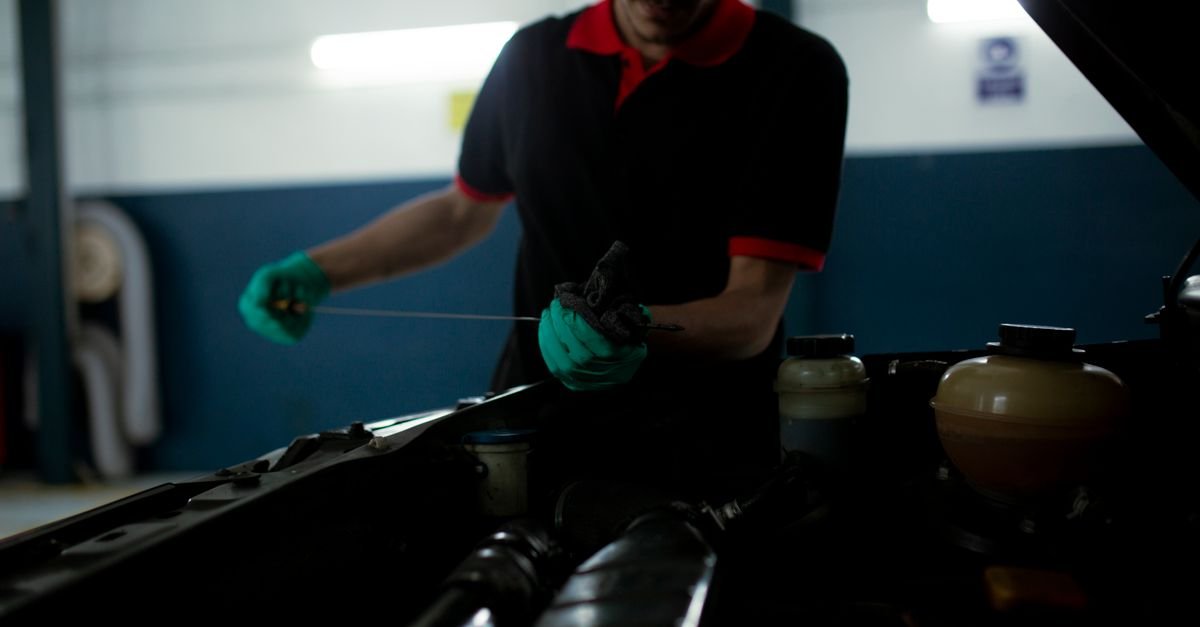
Pump oil moves through four recognisable states, and each one is a different conversation with your wallet. Get the machine level, cold and stood on a flat surface first, because a pump tilted on a lawn will read whatever you want it to read.
| What you see | What it is | How worried to be |
| Clear amber or pale straw | Healthy non-detergent pump oil | Not at all |
| Faintly hazy, slightly grey, level unchanged | Condensation out of the air | Mildly |
| Opaque and beige, somewhere between café au lait and emulsion paint | Water crossing the seals into the crankcase | Properly |
| Dark, thick, sludgy, moving like cold treacle | Water plus oxidised oil, months of it | It is a salvage question now |
Two things separate the middle two rows, and neither is the colour. The first is whether the level has risen. Water that crosses the seals is added volume, so the oil climbs past the upper mark and the crankcase runs out of the air space it needs to breathe. Cat Pumps describes exactly that consequence in its own troubleshooting: when fluid seeps past worn seals, “the oil level can rise causing oil to leak from the vented red oil cap” (Cat Pumps, troubleshooting). A machine that has started weeping oil from the top of the pump while the oil underneath has gone pale is not two faults. It is one fault with two symptoms.
The second is how fast it comes back after a change, which is the next-but-one section.
The same manufacturer is blunt about what to do at the moment you notice: “If there are any signs of milky, foamy, or white oil, stop using the pump and evaluate for cause.” That is the correct advice and almost nobody follows it, so the rest of this article is written for the person who is going to finish the patio first anyway.
The fourth row deserves a note. Run a pump long enough on emulsified oil and heat takes the mixture somewhere worse than milky — the drive end ends up turning in something closer to tar than to lubricant. That end state belongs to the same family as a pump that has been cooked in bypass, because the two problems feed each other. If your oil is already there, the diagnosis in this article is academic and the decision section is where to go.
How Water Crosses Into the Crankcase
The part that surprises people is that water does not get forced into the crankcase by pressure. Several thousand PSI is pointing the other way. Water gets carried in, a film at a time, on a moving rod.
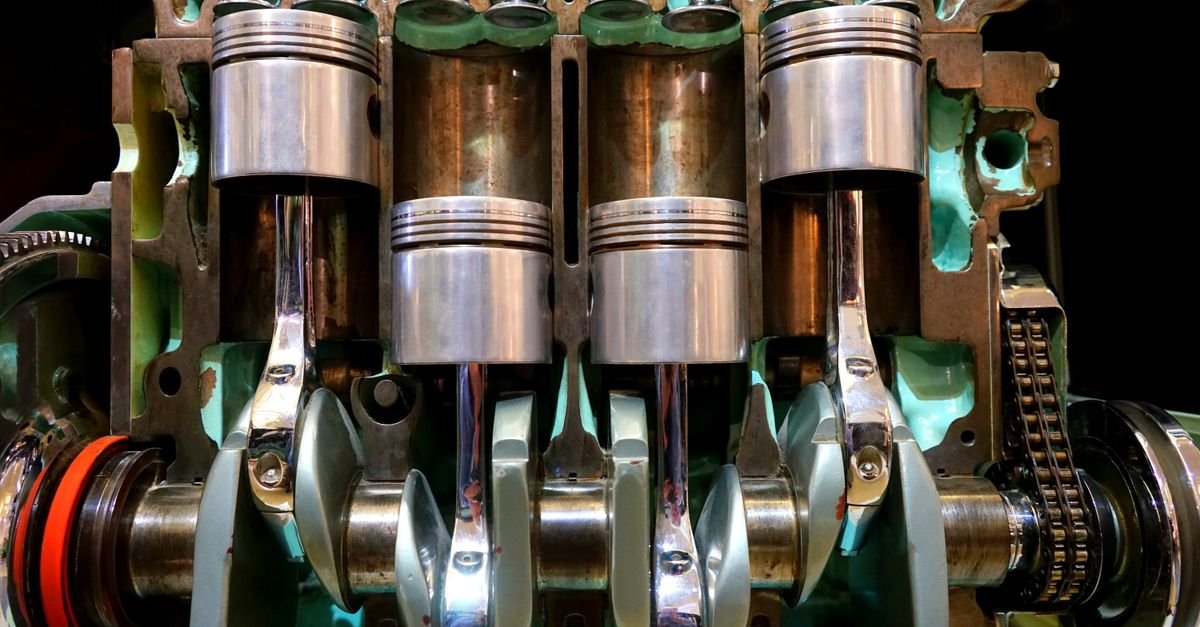
Each plunger runs through two seals in series. At the front, a high-pressure packing holds back the working pressure. Behind it sits a low-pressure seal whose entire job is to catch whatever the first one lets through, with a vented gap between the two so that escaping water has somewhere to go that is not your oil. Behind that again is a barrier slinger and then the crankcase oil seal.
When the low-pressure seals wear, the rod comes back out of the manifold wet on every stroke. On the return stroke it withdraws into the crankcase, and the film of water clinging to it goes with it. There is no jet, no spray and no rush of water — just a few microns of wet rod, three plungers, and a pump stroking somewhere north of a thousand times a minute. That is why milky oil takes weeks to appear and then appears all at once.
Cat Pumps describes the escalation in the same document: “prolonged operation with worn low-pressure and high-pressure seals” lets fluid travel back along the rod, and once the rod scores, the scoring itself “can cause wear to the crankcase oil seal.” A scored plunger rod is the fault that turns a seal job into a seal-and-rod job, and it is entirely a function of how long the machine ran after the first symptom.
Which is worth saying plainly: the machine almost always warns you before the oil changes colour. Water that defeats the high-pressure packing reaches the vent gap between the seals and drips onto the ground first, so a weep at the joint between the manifold and the crankcase is the early edition of this fault, arriving weeks before the late one. Most people wipe it and carry on. I understand the impulse and it is still the wrong call.
Condensation Is the Good News, and It Looks Almost Identical
There is a version of this that is barely a fault at all, and Cat Pumps gives it its own heading in the troubleshooting list: humid air condensing into water inside the crankcase.
The mechanism is ordinary physics. A crankcase breathes. The oil warms during a run, the air above it expands and leaves through the vented cap, and when the pump cools that air comes back in — from a garage, in autumn, carrying whatever humidity was in the room. It condenses on cool metal, runs down the casting, and joins the oil. Do that thirty times over a winter and the oil will go hazy without a single seal having failed.
Two habits make it much worse, and both are the opposite of what people assume. Short runs are the bigger one: a machine run for four minutes to do the bins never gets its oil warm enough to drive the accumulated moisture back out, so each session adds a little and removes nothing. Cold storage is the other: a shed that swings from freezing overnight to warm at midday cycles the crankcase through that breathe-in, breathe-out routine every single day, with nobody touching it. Condensation is the only fault on this machine that gets better if you use it more, which is the kind of advice that only works once.
There is also a false positive worth knowing before you panic, and it comes straight from a manufacturer. Simpson’s own troubleshooting note points out that oil which looks frothy or bubbly during and right after use is usually just aerated by high-speed operation, not contaminated: “Within a few hours after shutting off the pressure washer, the air bubbles in the oil will dissipate, and the oil will return to its regular appearance” (Simpson Cleaning, is water in my pump oil). So if you have just shut the machine off, walked round to the sight glass and found something pale and lively in there, go and have lunch before you order parts. Real water contamination does not clear up because you waited.
The Oil Change That Doubles as a Diagnosis
This is the test that actually settles it, and it costs a bottle of pump oil. The logic is simple: condensation is a finite amount of water that you can remove, and a failed seal is a supply. Remove the water, run the machine, and see which one you have.
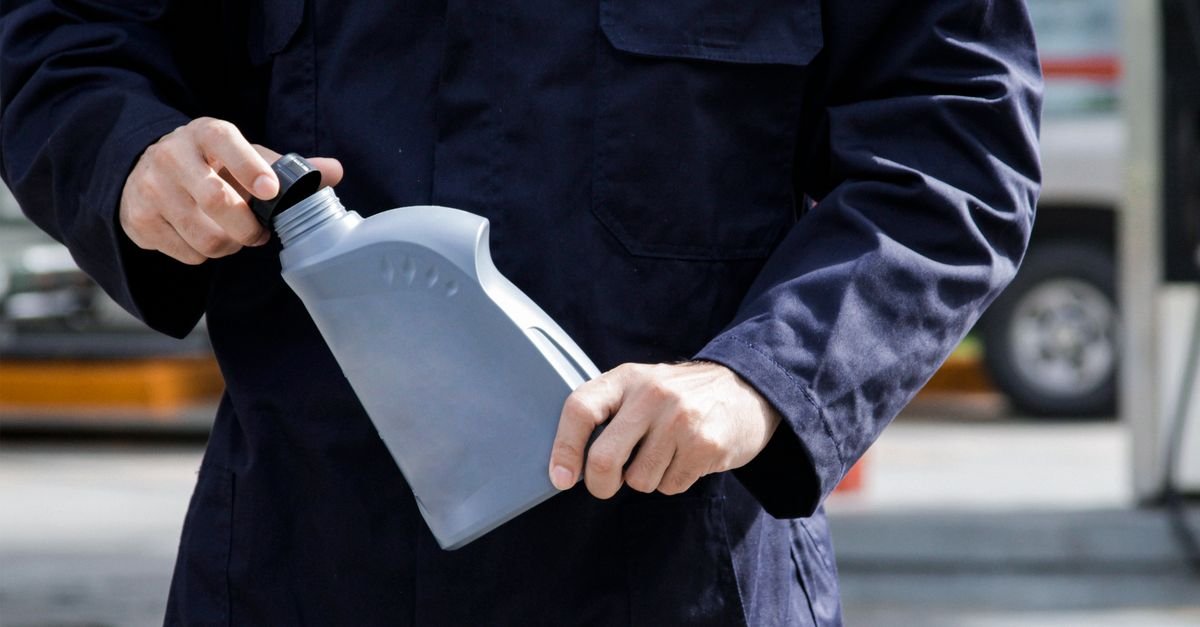
1. Run the machine five minutes under load first. Warm oil drains properly and carries the water out with it. Cold oil leaves a slug of water sitting in the bottom of the case, which is where it does the most harm.
2. Drain it into a clear glass jar, not a black drain pan. You want to see what comes out.
3. Let the jar stand twenty minutes. Pump oil is non-detergent, which means it has no additives holding water in suspension, so free water drops out and pools clearly at the bottom. That single property is the reason this test works at all, and the reason motor oil has no business in a pump.
4. Look at how much water separated out. A consumer pump crankcase holds somewhere around 10 to 15 fluid ounces. A visible layer in the bottom of the jar is a large fraction of that, and it was not there when the oil went in.
5. Refill to the middle of the sight glass with the grade in your manual. Not above it.
6. Run fifteen minutes with the trigger open, then leave the machine overnight and look again in the morning.
Now read the result:
- Still clear the next morning, and still clear a week later. Condensation. You are finished. Change it again at the end of the season and store the machine somewhere less damp.
- Hazy again within one or two sessions. Seals. Water is being added faster than a change can remove it, and no amount of fresh oil will outrun it.
- Level above the upper mark again after a couple of hours of running. Seals, confirmed, and now with a volume measurement attached. This is the least ambiguous result on the list.
So the honest answer to “will an oil change fix milky oil” is: yes for condensation, no for seals, and the change is how you find out which you have. Anyone who tells you an oil change fixes it outright is describing a machine that did not have the expensive fault.
Why Pressure Washer Water in Oil Is a Countdown, Not a Breakdown
Here is the number that changed how I think about this fault. R. E. Cantley ran full-scale tapered-roller-bearing fatigue tests with water deliberately added to the oil at 25, 100 and 400 parts per million. Noria’s summary of the work puts the result in one line: bearing life “could be extended by a factor of five, if the bearing lubricant contained only 25 ppm dissolved water compared to 400 ppm” (Machinery Lubrication, water contamination in hydraulic and lube systems).
Sit with the scale of that. Four hundred parts per million is 0.04% water by weight — four hundredths of one per cent, in an oil that still looks entirely like oil. The same article notes that surface fatigue in bearings “can be promoted even if all the water present in the fluid is dissolved,” which is to say before there is anything visible in there at all. By the time a crankcase has gone opaque, you are orders of magnitude past the concentration at which the life curve had already turned downward.
That is the whole argument for urgency, and it is a different argument from the usual one. Milky oil is not dangerous because the pump might seize this afternoon. It almost certainly will not. It is dangerous because the meter is running quietly, the damage is cumulative, and nothing about the machine’s behaviour will tell you how far along you are.
So here is the opinion: the expensive mistake is not the seal that let the water in, it is the decision to finish the driveway first. The seals were going to wear out eventually — that is what seals do. What is optional is the three hours of running you do after you have seen the oil, on a crankcase full of an emulsion that is stripping the film off the bearing surfaces the entire time. Drain it the same day. A bottle of pump oil is a trivial purchase; crank journals are not sold separately.
And to head off the obvious counter-question: no, you cannot separate it and pour it back. Emulsified oil is not recoverable, and the water you can see in the jar is only the free water. Some of it is still dissolved in the oil you were planning to reuse.
Heat and Frost: The Two Causes Nobody Connects to the Oil
The two remaining causes are not really about the oil at all. They are about what happens to everything standing between the water and the oil.
Heat ages the seals that keep water out. Leave a machine idling with the trigger released and the same water circulates through the pump warming on every pass, and the elastomer in those low-pressure seals goes soft, then takes a set, then stops following the plunger. Nobody thinks of an idling pressure washer as a cause of milky oil, because the two events are a season apart. They are the same event. The mechanism, the temperature at which it starts and the two-minute rule that avoids it all belong to the overheating article, and if your machine spends a lot of time running while you move a ladder, read that one next.
Frost skips the seals entirely. Water left in the pump over a hard freeze expands as it turns to ice, and the aluminium casting is the part that gives. Usually the crack goes through the manifold and you get a water leak. Occasionally it runs through into the crankcase, and then the two chambers that were never meant to meet are introduced. The tell is a machine that was fine in October, has milky oil in April, and has done no work in between — because a seal cannot wear while a machine sits, and a casting can split while it does. Prevention is thirty seconds of pump saver, which is the argument the winterizing guide makes at length.
One thing this article is not about, so you do not go looking: a pump that is frozen solid and will not turn over, or one that has begun knocking under load, is a different symptom with a different first step. Milky oil on a pump that still runs smoothly is the case here.
Reseal It, Repump It, or Let the Machine Go?
Once the oil change has told you it is seals, the decision is short, and it is decided by what kind of pump you own rather than by how bad the oil looks.
| Pump type | What the repair actually is | Honest verdict |
| Triplex plunger, no rod scoring | Low-pressure seal kit through the manifold | Worth doing, an afternoon |
| Triplex plunger, rods scored | Seal kit plus plunger rods, crankcase seal inspected | Worth doing if the pump was decent |
| Triplex that ran milky for a season | Drive end stripped, bearings and journals inspected | Price a new pump before you start |
| Axial cam or wobble plate | There is no published low-pressure seal kit | Replacement pump |
| Cracked crankcase, any type | Nothing | Replacement pump |
Two rows there deserve a word.
The scored-rod row comes straight from the manufacturer, and it is the step people skip. Cat Pumps’ instruction after draining and cleaning the drive end is to inspect the plunger rods before ordering anything: if there is no scoring, a seal kit in the manifold is the whole job. If there is, new seals will be running on a rough surface and will wear out at the same rate the old ones did, which is a tidy way to spend a weekend achieving nothing.
The axial row gets to the same destination as the article on oil leaking out of a pump, by a different road. That one argues from parts availability. This one argues from what has already happened inside. By the time water has crossed the low-pressure seals on a sealed axial pump, it has been in a drive end that has no drain plug, no dipstick, no inspection access and frequently no serviceable oil at all — which means you cannot measure how long it has been contaminated, cannot flush it properly, and cannot see the bearings you would be gambling on. You are not choosing between a seal kit and a pump. You are choosing between a pump and a pump plus a surprise.
And the usual consolation holds. A dead pump does not mean a dead machine — the engine underneath it has done nothing wrong and will take a bolt-on replacement without complaint.
Keeping the Water Out Next Season
None of the four causes are difficult to prevent. They are just boring to prevent, which is worse.
- Winterize the pump, every year, without a judgement call about how cold it will get. Pump saver displaces the water and lubricates the seals, and it costs a fraction of what a crankcase does.
- Run the machine long enough to get the oil warm. Five minutes minimum. A pump used in ninety-second bursts accumulates condensation it never drives back out, and paradoxically ages faster than one that gets used properly.
- Do not aim the wand at your own pump. Cat Pumps puts it in one line — protect the pump from excessive moisture or direct spray. A high-pressure jet at the crankshaft seal is a way of testing that seal to destruction while standing right next to it.
- Store it somewhere with a stable temperature, and cover it with something that breathes. A sealed plastic sheet in a cold garage is a condensation trap with a handle.
- Change the pump oil annually, at the end of the season rather than the start. Fresh oil sitting over winter is better than contaminated oil doing the same, and you get a look at the sight glass while the year is fresh in your memory.
- Act on the first external weep at the manifold seam. That is the same fault, four to eight weeks earlier and considerably cheaper.
FAQ
Why is there water in my pressure washer pump oil?
Either the low-pressure seals behind the plungers have worn and are letting water travel back along the plunger rods into the crankcase, or humid air is condensing inside the crankcase as the pump cools between uses. Worn seals add volume, so the oil level rises. Condensation does not. The level, not the colour, is the thing to check first.
Can I still use a pressure washer with milky oil?
The machine will run and build pressure normally, which is what makes this fault so easy to ignore. Manufacturer guidance is to stop and find the cause, and the reason is that water in a lubricant shortens bearing fatigue life dramatically at concentrations far below the point where oil looks cloudy. For one short session it is unlikely to be the thing that kills the pump. As a habit it is.
Will changing the oil fix milky pump oil?
It fixes it permanently if the cause was condensation, and only temporarily if the cause was worn seals. That is exactly why the oil change is the diagnostic test. Change it, run the machine fifteen minutes, then check again after a day and again after a week. Oil that clouds within one or two sessions means water is still being added.
How much water in pump oil is too much?
Any visible cloudiness is already well past the point where the oil is doing its job properly. Bearing fatigue testing shows a measurable effect at a few hundred parts per million, which is under a tenth of one per cent and invisible in the glass. There is no safe visible amount; if you can see it, treat it as a fault rather than a tolerance.
Does milky oil mean the pump is ruined?
Not by itself. It means water is present and the clock has started. A pump caught early, drained, resealed and refilled will usually go on for years. A pump that ran a full season on emulsified oil is a different case, because water in a crankcase becomes rust on the crank journals and scoring on the bearing surfaces, and no seal kit addresses that.
Why is my pump oil frothy right after I use the machine?
Frothy or bubbly oil immediately after a run is usually air, not water. Simpson’s own troubleshooting says high-speed operation aerates the oil and that the bubbles dissipate within a few hours of shutting the machine off, leaving the oil looking normal again. Check the sight glass the next morning before concluding anything.
Can I get water in pump oil from washing the pressure washer itself?
Yes, and it is a more common own goal than people expect. Directing a high-pressure jet at the pump body drives water past the crankshaft oil seal, which is a lip seal designed to hold oil in at low pressure, not to resist a jet aimed at it. Rinse the machine with a hose, not with itself.
Clear Oil by Sunday, or a Decision by Spring
If you take one thing from all of this, make it the jar. Drain the oil warm into something you can see through, let it settle for twenty minutes, and the pump will tell you in plain language whether you have a damp garage or a worn seal. That answer is worth a bottle of oil and an evening, and it is the difference between a machine you top up in October and a machine you replace in June.
The rest is patience. Condensation forgives you. Seals do not, but they do give warning — a weep at the seam, then a haze, then the colour change you came here about. You have almost certainly caught it earlier than you think. Just do not spend the discount finishing the driveway.