Last Updated on September 25, 2026 by Umar Farooq
A pressure washer overheating is nearly always the machine cooking its own water: when you let go of the trigger, the unloader sends that water round a loop inside the pump, and it absorbs the full output of the engine with nowhere to dump it. Simpson’s own manual puts the limit at two minutes. Most machines are fine for a minute or two of that and in trouble after five.
That is the short version, and it is deliberately blunt because you are probably reading this next to a machine that is running. If it is idling right now with the trigger untouched, go and switch it off, then come back. Everything below still applies in five minutes. The pump might not.
Why a Pressure Washer Overheating Is Nearly Always a Bypass Problem
Your pump is a positive-displacement device. It moves a fixed volume of water per revolution whether you are spraying or not, and it does not have an idle setting. The engine turns, the plungers stroke, the water moves.
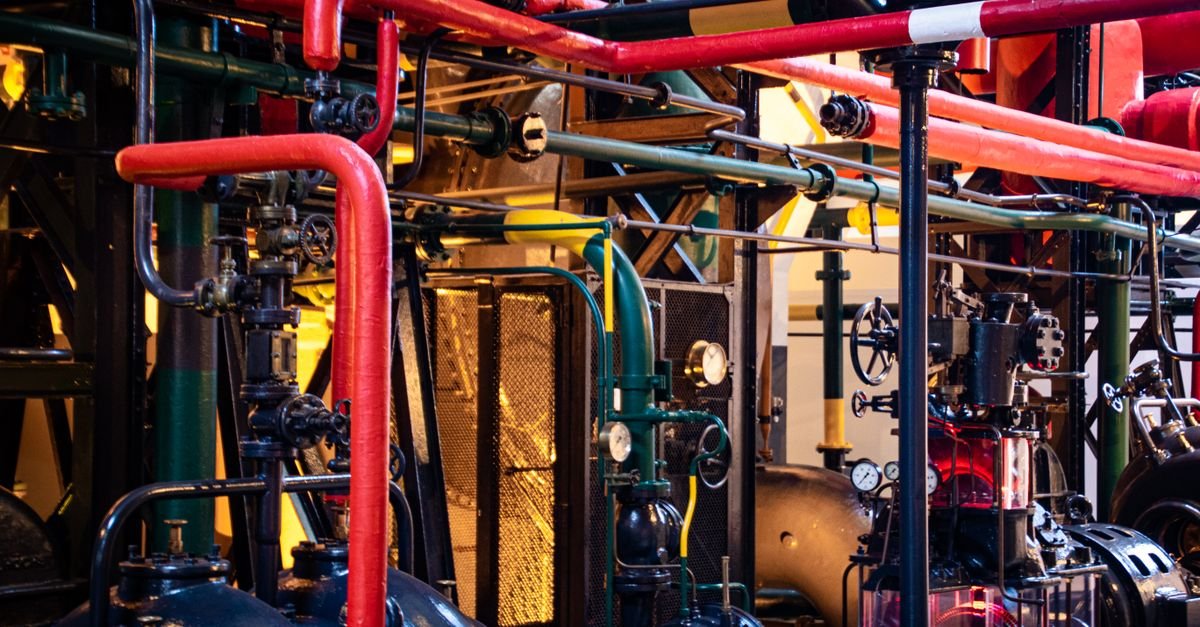
Release the trigger and that water has no exit. The unloader valve catches it and routes it back to the pump inlet, so the same small volume goes round and round. Every pass through the pump adds the energy the engine is producing, and none of it leaves. A 2,500 PSI machine at 2.5 GPM is putting roughly three and a half horsepower into the water. Send that to a nozzle and it goes down the driveway. Send it round a loop holding maybe a litre and you no longer have a pump. You have an immersion heater with a pull cord.
That is the mechanism behind almost every heat complaint. The rest of the list is really a list of things that make the loop hotter, or stop cool water arriving to replace what is in it.
| # | Cause | What it actually does | How fast it bites |
| 1 | Trigger released, engine running | Full engine output goes into a closed loop of water | Minutes |
| 2 | Tap flow below the machine’s rated GPM | Pump never fully refills, so less water absorbs the same heat | Minutes |
| 3 | Clogged inlet screen, kinked or still-on-the-reel hose | Same as above, self-inflicted | Minutes |
| 4 | Drawing from a small tank, drum or bucket | The supply itself heats up, so there is no cold water left to fetch | Tens of minutes |
| 5 | Feeding from the hot tap, or a hose baked in the sun | Starts the loop 20–30°C up the scale | Immediate |
| 6 | No airflow — a corner, a garage, direct sun | Engine, motor and pump body cannot shed heat to the air | Tens of minutes |
| 7 | Packed cooling fins or blocked motor vents | The machine’s only cooling path is closed | Gradual, then sudden |
Cause 1 is the one that matters, and it is the one nobody thinks of as a cause because it does not feel like doing anything.
The Two-Minute Clock Printed in the Manual
The two-minute figure gets repeated on every forum without anyone saying where it comes from, so I went and found it in a manufacturer’s manual rather than another blog. Simpson prints it as a NOTICE in the operating section: do not let the “pressure washer run for more than two minutes in Bypass Mode. Turn off the engine and relieve the pressure in the gun during these extended situations” (Simpson pressure washer manual, PDF). The same manual repeats it in the safety warnings, adding that past two minutes “internal components of the pump can be damaged.”
That is a manufacturer limit rather than a trade rule of thumb, which makes it the number sitting behind any warranty conversation. It is also phrased as an absolute rather than a range, because the manual has no idea what your tap is doing. So treat two minutes as a ceiling on a good day and less on a bad one: a machine fed by a strong tap in the shade will take the full two, and one pulling through a hose still coiled on the reel in a sunny corner in August will not.
The practical version is simpler than a stopwatch. If you are going to stop doing something with the wand, stop the machine. Moving a ladder, untangling the cord, taking a phone call, taping down a plant — all of those take longer than two minutes once you are actually doing them, and none of them are improved by an engine running behind you.
Hot to the Touch Is Normal. Here Is Where That Stops.
This is where most people get the diagnosis wrong, and it is the one opinion I will push on this page.
A pump is supposed to be hot. Cat Pumps states that the typical crankcase temperature of its pumps is around 120 to 140°F, and that higher-RPM models running between 1,725 and 3,450 RPM “may run in the 150-180F range” (Cat Pumps FAQ). Those are healthy pumps doing their job. You cannot hold your hand on 150°F metal, which means a perfectly well machine will feel alarming and a genuinely cooked one will feel identical.
Your hand is a thermometer with a range of about four degrees and very strong opinions. It is not an instrument. By the time a pump feels *wrong* rather than merely hot, the water inside it has usually been past the seal limit for a while, because water heats faster than the aluminium or brass around it. The only reliable measurement available to you is the clock — how long has this thing been running without spraying — and that is precisely why the manuals give you a time limit rather than a temperature.
If you want an actual number, a cheap infrared thermometer pointed at the pump head costs less than a set of seals and turns this whole section into a two-second check. Under 140°F on the head, carry on. Climbing past it with the trigger closed, shut down.
What Heat Does to Seals, Packings and Pump Oil
Heat does not blow a pump up. It softens things, and the failure arrives weeks later looking like something else entirely.
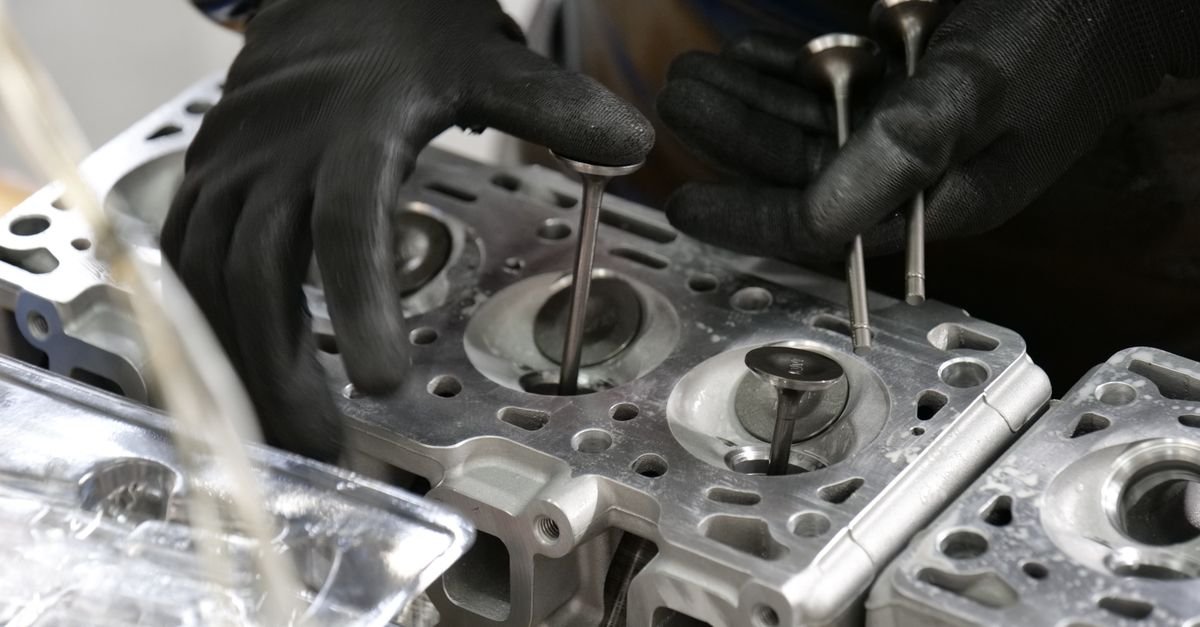
Pumptec, which builds high-pressure pumps, puts the threshold plainly: liquid flowing through a pump “should never reach 140° F, as such extreme temperatures can deteriorate Viton or Buna seals and o-rings,” and at that point the seal material becomes “too malleable, almost like chewing gum, and doesn’t properly seal, resulting in leaks” (Pumptec, preventing heat buildup in high-pressure pumps). Buna-N is what the seals in a homeowner machine are made of, so that is your number, not a commercial-equipment number.
What the damage looks like afterwards, in the order you tend to meet it:
- Water weeping from the pump body a week later. Softened high-pressure seals take a set and stop sealing once they cool.
- Pressure that sags under load but reads fine at first pull. Deformed packings let water past the plungers instead of down the hose.
- Milky or grey pump oil. Once the low- and high-pressure seals are worn, water tracks back along the plunger rods into the crankcase. Cat Pumps describes the oil turning milky first and, in severe cases, to a “black tar-like consistency” — at which point the drive end is being run without real lubrication. Our guide to pressure washer pump oil covers what the oil should look like and how often to change it.
- A thermal relief valve that now vents constantly. Heat-set seats leak. If yours has started dripping when the pump is cold, the thermal relief valve guide explains how to tell a failed one from one doing its job.
None of this is dramatic. That is the problem with heat damage: there is no bang, no smoke, no moment where you know. There is just a machine that was fine in June and weeps in July.
Thermal Shock: Why the Damage Lands on the Way Back Down
Here is the part almost nobody covers, and it is why “just pull the trigger to flush the hot water out” needs a caveat attached.
Cat Pumps lists thermal shock as a distinct failure mode: running a pump dry “will cause the plungers to become heated. The cold liquid then will cause the plungers to crack due to thermal shock.” Ceramic-coated plungers are hard, stiff and unforgiving about sudden temperature change, which are exactly the properties that make them last in normal use.
So if a machine has been cooking in bypass, or has run a while with no water at all, dumping mains-cold water onto hot ceramic is its own event. Shut it down first, let the pump sit a few minutes, then restore flow. If it has only been idling a minute or two and is not dramatically hot, pulling the trigger to bring fresh water through is fine and is what the thermal relief valve is doing anyway. The distinction is between warm and cooked. Warm gets flushed. Cooked gets switched off and left alone.
Starve the Inlet and You Have Built a Kettle
Everything above assumes cool water is arriving to replace what leaves. Take that away and the two-minute clock becomes a thirty-second clock.

A pump that cannot fill completely does the same work on less water, so the same heat is shared among fewer molecules. It also starts drawing vapour into the chamber, and hot water flashes to vapour more readily than cold, which is why a hot pump cavitates sooner than a cold one and why the two problems tend to arrive together. Cavitation is its own subject with its own fixes; here it matters only as evidence that the inlet is what to check.
Work through the supply in this order, which is roughly the order of likelihood:
1. Tap fully open. Not mostly. All the way.
2. Hose off the reel and laid flat. A hose coiled on a reel is a long series of bends, and reels are usually the narrowest part of the whole path.
3. Inlet screen out and rinsed. It is a small plastic cone in the inlet fitting and it catches grit from the mains. A minute’s work.
4. Shortest, fattest hose you own. A 5/8-inch hose delivers substantially more than a 1/2-inch one over the same run.
5. Check what the tap actually gives you. Your supply should comfortably exceed the machine’s rated GPM.
Two supply situations deserve naming because they cause heat complaints that look like faults. Drawing from a drum, tank or bucket means the water you dump in bypass goes straight back into the supply, so the whole system climbs together and there is no cold reservoir to fetch. And feeding a machine from the hot tap, or a black hose that has been lying in full sun, starts you 20 to 30°C up the temperature scale before the pump has done anything at all. Cold-water pumps are cold-water pumps; machines actually built to deliver heat use different seals and a much higher thermal valve setpoint.
Shade, Airflow and the Machine Wedged in a Corner
Ambient heat does not cause overheating on its own. It shortens the time everything else takes.
Air-cooled engines and universal motors shed heat to the air around them, and the rate they do it depends entirely on the difference between the metal and that air. On an 18°C morning, a machine has plenty of margin. At 33°C in full sun, against a south-facing wall, with the exhaust warming the air it is about to breathe, the same machine is starting from a much worse position and every other fault on this page arrives sooner.
Three habits cost nothing:
- Put the machine in shade and drag the hose to the work, rather than parking the machine where you are standing.
- Leave clear air on all sides. A pressure washer tucked into the angle of two walls is sitting in its own exhaust.
- Keep the cooling fins and motor vents clear. Grit and dried detergent pack into fins and turn a cooling surface into an insulating blanket.
And the obvious one that still needs saying: a gas machine never runs in a garage, shed or partly enclosed space, no matter how good the cooling would be. That is a carbon monoxide question, not a heat question, and it has a worse answer.
An Electric Motor That Cuts Out Is Saving Itself
Electric machines overheat differently. There is no combustion, no exhaust and no fins, but there is a motor winding with an insulation temperature rating and a thermal protector watching it.
When the winding gets too hot, the protector opens the circuit and the motor stops dead — no warning, no noise, just off. Simpson’s electric manuals describe the same device: an “overload protection device which will automatically shut off the motor in the event the motor draws excessive current or overheats.”
This is not a fault, and it is not a part to replace. It is a component doing the only thing that stands between a warm motor and a burnt one. The repair is patience: unplug it, move it into shade, and leave it thirty minutes. Restarting after five usually just trips it again and adds another heat cycle to windings that have already had one.
What drives an electric motor into its cutout is nearly always duty cycle rather than a defect. Consumer electric machines are built for intermittent household work, not for an unbroken hour. Long spells in bypass count as running time even though nothing is coming out of the nozzle, which is why an electric machine that is cutting out on a hot day is very often a bypass problem wearing a different hat. If the pattern is shutdowns rather than heat specifically — dies cold, dies on startup, dies on the trigger — the full fault tree is in why a pressure washer keeps shutting off.
You Have Just Realised It Has Been Idling for Twenty Minutes
Right. No lecture. This is the sequence.
1. Shut the machine down. Engine off, or unplug it. Do not pull the trigger first.
2. Squeeze the trigger with the machine off to release trapped pressure in the gun and hose. Point it somewhere sensible; what comes out may be genuinely hot.
3. Leave the water running to the inlet if you can do it without touching the machine. A cold supply sitting against the pump helps it come down.
4. Wait. Fifteen minutes minimum, thirty for an electric unit that tripped its own protector.
5. Look underneath. A puddle of clear water is probably the thermal relief valve having done its job and is not bad news. Oily or milky fluid is.
6. Check the pump oil if the machine has a sight glass or a dipstick. Milky means water has already reached the crankcase.
7. Restart and test at low pressure with the trigger *open* — spray into the grass for thirty seconds before you go near anything you care about. Weak, pulsing or surging pressure means the seals took damage. Normal pressure means you got away with it.
Most people get away with it. Heat damage is cumulative, and one long idle is usually a warning rather than a sentence. The machines that die are the ones that spend every job idling, whose owners never find out that was the cause.
FAQ
How long can a pressure washer run without spraying?
Two minutes is the published limit in Simpson’s manuals, and it is the figure the trade works to. Past that, the water circulating inside the pump is absorbing the engine’s full output with nowhere to lose it. If a pause will be longer than a couple of minutes, switch the machine off — restarting takes three seconds.
How do I know if my pressure washer is overheating?
Time it rather than feel it. A pump running at 120 to 140°F is normal and will feel too hot to touch, so your hand cannot tell you much. The useful signs are a thermal relief valve venting repeatedly, pressure sagging after several minutes of use, an electric motor that cuts out and will not restart, or a gas engine bogging down under load.
Is it bad to leave a pressure washer running while I move around?
Yes, and it is the most expensive habit in pressure washing precisely because it feels like nothing. The machine is working at full output the entire time, with the energy going into a litre of trapped water instead of down the hose. Two minutes of that is tolerable. Twenty is what kills pumps.
Why does my pressure washer get hot when the water is cold?
Because the heat is not coming from the water supply, it is coming from the pump. Friction and compression put the engine’s power into whatever water is inside the pump, and in bypass that water never leaves. A cold tap slows the climb by replacing hot water with cool; it does not stop it.
Can a blocked inlet filter cause overheating?
It can, and it is one of the more common versions. A restricted inlet means the pump chambers never fill completely, so the same heat is shared among less water and the temperature climbs faster. Pull the inlet screen out, rinse it, and check the hose is off the reel and laid flat while you are there.
Will the thermal relief valve protect my pump?
Only partly. It dumps a slug of hot water when the pump reaches its setpoint so cooler water can come in behind it, which buys time rather than solving anything. Plenty of consumer machines have no thermal relief at all, and a valve that vents on every pause is telling you the machine is living in bypass.
What should I do if my electric pressure washer overheats and shuts off?
Unplug it, move it out of the sun, and leave it thirty minutes before touching anything. Most thermal protectors reset themselves once the windings cool. Then work out what caused it — long unbroken running, dust-packed motor vents, or a long spell in bypass are the usual three, and all of them are habits rather than faults.
Shut It Off. It Costs You Three Seconds.
If you take one thing from this, make it the clock rather than the thermometer. A pressure washer overheating is a time problem dressed as a temperature problem: the pump is happily working at 140°F, cannot tell you when it stops being happy, and is destroyed by minutes rather than degrees. Manufacturers give you two minutes because two minutes is the number they can defend, and everything else on this page — the tap, the reel, the inlet screen, the shade — is about making sure those two minutes are as good as they can be.
The rest is a habit. Trigger closed and not about to open it? Switch it off. You will feel slightly ridiculous stopping and starting a machine eleven times to clean a patio, right up until the first summer your pump does not start weeping in July.