Last Updated on September 23, 2026 by Umar Farooq
The phrase “pressure washer relief valve” covers two completely different parts: a thermal relief valve, which dumps hot water out of the pump before it cooks the seals, and a pressure relief valve, which opens when system pressure spikes past a set limit. They fail differently, they cost differently, and they are mounted in different places.
Almost every page I read while researching this treated them as one component, then wandered into unloader valves halfway through and never came back. So let us separate the three of them first.
Two Parts, One Confusing Name
Three things get called “the relief valve” in forums, parts catalogues and repair videos. Only two of them are.
| Part | What triggers it | Where it sits | What it does when it opens |
| Thermal relief valve (thermo valve, pop-off valve) | Water temperature inside the pump | Screwed into the pump head or inlet manifold | Dumps hot water on the ground so cool water can enter |
| Pressure relief valve (safety valve) | System pressure above a preset limit | Downstream of the pump, upstream of the gun | Vents flow to stop a pressure spike damaging the pump or hose |
| Unloader valve | The trigger closing | On or beside the pump outlet | Diverts flow back to the pump inlet — it relieves nothing, it redirects |
The unloader is the one that gets misfiled. It is a flow-diverting device, not a safety device. Let go of the trigger and it sends water round a loop instead of out of the nozzle. That loop is called bypass, and it is the reason the thermal relief valve exists at all.
Most consumer machines have a thermal relief valve and no pressure relief valve; commercial and hot-water machines usually have both. If you are looking at a small brass or plastic fitting with a vent hole, threaded straight into the pump and pointing at the ground, that is thermal relief.
Why Bypass Cooks the Water Inside the Pump
Your pump moves a fixed volume of water per minute whether you are spraying or not. Release the trigger and that water has nowhere to go, so the unloader loops it back to the inlet. The pump keeps pumping, and the same water goes round and round through the pistons and valves, picking up friction heat on every pass. It is a kettle with a very inefficient element.
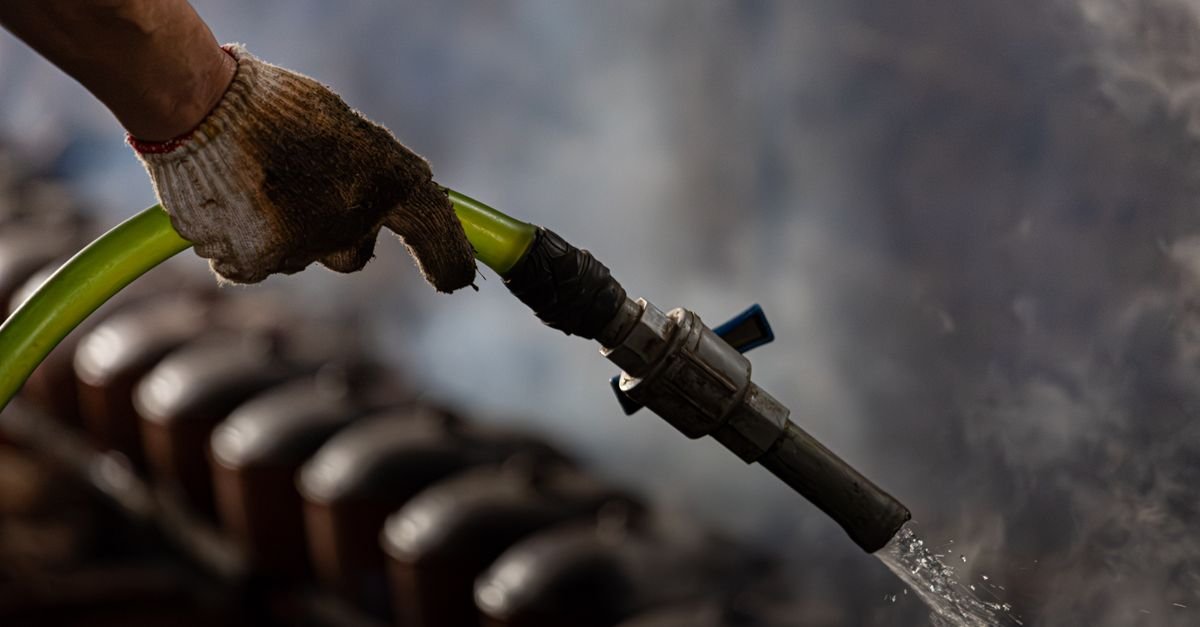
The climb is fast. Water in bypass can pass 60°C (140°F) within a couple of minutes and keeps going from there. Above roughly 60 to 65°C the pump’s seals, O-rings and packings begin to soften, which is where a cheap afternoon turns into a pump rebuild. Cat Pumps describes the thermal valve’s job in exactly those terms — it exists “to eliminate heat build-up in a closed loop by-pass system when liquid is being returned to the pump inlet,” and when the setpoint is reached “a bleed port dumps a portion of the over-heated fluid” (Cat Pumps thermal valves).
Dump some hot water, let cold mains water in behind it, repeat. The valve is not fixing the heat. It is buying you time.
Which brings me to the one opinion I will push here: a thermal relief valve is a consumable bandage over a bad habit, not a feature. It costs under $20 and protects a pump head worth more than the rest of the machine. If yours vents constantly, the valve is not the problem — the machine is spending its life in bypass with the trigger untouched. Two minutes is the working limit people in the trade use. Past that, switch it off rather than letting it idle.
The Drip That Means Everything Is Working
This is the part almost nobody tells homeowners, and it sends a steady stream of perfectly healthy machines to repair shops.

A thermal relief valve that drips during a pause is doing its job. You stopped to move a ladder, the machine kept running, the water in the pump got hot, the valve opened and let some of it out. Water on the concrete under the pump is the expected outcome, not a fault. (A component whose entire purpose is to leak is a difficult thing to print on a spec sheet, which may be why so few manuals mention it.)
The distinction is in the pattern, and it comes down to three questions:
- Is it intermittent or constant? Normal venting comes in bursts, during or just after a pause, and stops once cool water has replaced the hot water. A constant dribble is not.
- Is the pump hot? Put the back of your hand near the pump head. A valve venting from a cold pump at startup has failed open, usually because a grain of grit is sitting on the seat or the spring has weakened.
- Does pressure at the wand drop? A valve stuck open sends part of your flow to the floor instead of the nozzle, so the machine feels weak and may surge. That is the version that genuinely is a fault, and it is a cheap one.
A valve that has failed open cannot usually be nursed back — they are sealed, temperature-sensitive units sold as replacements for a reason. Unscrew the old one, wrap the threads, fit the new one, and match the setpoint.
If the machine is weak and you have not yet worked out where the pressure is going, our walkthrough on tracing pressure washer low pressure runs the checks in the order that finds it fastest, and no water at all coming out covers the case where the wand produces nothing.
Dead-Heading and the Valve That Catches It
The pressure relief valve is the other half of the phrase, and it guards a different failure entirely.
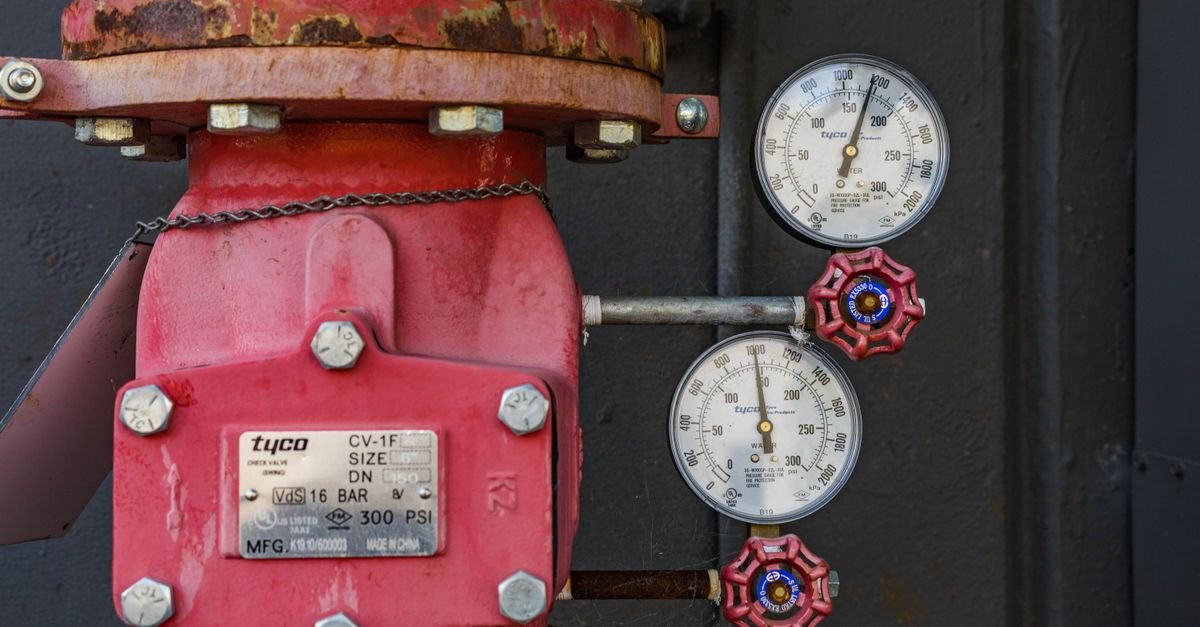
Dead-heading is what happens when the pump is running and the water has genuinely nowhere to go — a fully blocked nozzle, a closed ball valve, a kinked high-pressure hose, or an unloader that has stopped unloading. Pressure climbs past the machine’s rating in seconds, and then something gives: a burst hose, a cracked pump head, a fitting leaving at speed.
A pressure relief valve is a spring, a ball and a seat, set to open above the normal pressure spike you get when the trigger closes. It only ever acts once something else has already gone wrong. General Pump is direct about the case for fitting one: “We strongly recommend installing a safety relief valve in addition to the unloader to add more protection from dead-heading” (General Pump FAQs).
On a homeowner machine you will not have one and do not need one: the pump and unloader were matched at the factory. Build a rig, though — a hose reel, a ball valve, a second gun, a long hose run — and you have changed the system the unloader was set up for, which is precisely what the safety valve is for. Aim its discharge somewhere sensible. It opens without warning, and nobody wants that pointed at their ankles.
Reading the Number Stamped on the Valve
Thermal valves are sold by setpoint, and this is where a lot of advice online quietly goes wrong.
Cold-water machines are normally fitted with a valve that opens around 140 to 145°F, because a cold-water pump has no business seeing water hotter than that. Hot-water machines are a different animal: they are built to deliver heated water, so their valves are set much higher. Cat Pumps publishes its thermal valve range at 130°F, 145°F, 165°F, 180°F and 190°F, rated to 25 GPM and 125 PSI on the discharge side (Cat Pumps data sheet 7090). Which is why the single “correct” temperature every blog quotes is not a real number.
So the rule is short. Replace like for like. Fit a 190°F valve to a cold-water pump and it will sit there politely while your seals deform. Fit a 130°F valve to a hot-water machine and it will vent continuously, because the machine is doing exactly what it was built to do.
Check the thread size too — 1/4-inch and 1/2-inch NPT are both common, and they are not interchangeable no matter how enthusiastically you lean on the spanner. The setpoint is usually printed on the valve body or a hex flat; if it has worn off, the part number in your manual beats guessing.
Worth saying plainly, because it comes up: a thermal relief valve will not save you from a frozen pump. Freezing is a volume problem, not a heat one, and no valve on the machine is watching for it.
FAQ
Is my pressure washer supposed to leak water from the relief valve?
During a pause with the machine running, yes. A thermal relief valve vents hot water from the pump in bypass, which is its designed behaviour. What is not normal is a constant drip from a cold pump, or venting that continues while you are spraying.
What temperature does a pressure washer thermal relief valve open at?
Cold-water machines typically use a valve set around 140 to 145°F. Hot-water machines use higher setpoints, up to 190°F. Always replace with the rating your pump came with.
What is the difference between a relief valve and an unloader valve?
The unloader responds to the trigger closing and diverts water back to the pump inlet so the pump is not fighting a closed nozzle. A relief valve responds to something that has already gone wrong — too much heat, or too much pressure — and vents water out of the system. One is routine, the other is a last line.
Can I just plug or remove the thermal relief valve?
You can, people do, and it is a false economy. Plugging it means water in bypass keeps heating with nothing to stop it, and the seals go first. If the valve is annoying you, the answer is a shorter bypass habit, not a blanking plug.
How long can a pressure washer safely sit in bypass?
Use two minutes as the working limit with the trigger released. The water is heating the entire time and thermal relief only slows the climb. If the pause will be longer than that, shut the machine down.
My machine loses pressure and the relief valve is dripping — which is the cause?
Usually the same thing. A valve stuck open sends part of your flow to the ground, so the wand goes weak and may pulse. Check whether the drip is there when the pump is cold. If it is, replace the valve before chasing nozzles and filters.
Let It Drip, Then Pull the Trigger
Make it the split: thermal relief watches temperature and lives on the pump, pressure relief watches pressure and lives downstream, and the unloader is neither. Once you know which part is wet, the fix is obvious and usually costs less than a takeaway.
And if you came here because there is a puddle under your machine and you were bracing for bad news — there probably is not any. Let it vent, pull the trigger, and go back to the patio. The machine that worries me is the one that never drips at all, while its owner leaves it idling through a phone call — which is the other half of the story in why a pressure washer keeps shutting off.