Last Updated on September 23, 2026 by Umar Farooq
Pressure washer pump oil is non-detergent oil, and that one word is the entire difference between the bottle you should be using and the motor oil already sitting on your shelf. Put motor oil in a pump and it will run. It will also hold every drop of water that gets past the seals in permanent suspension, right where the bearings are.
That is the fatal mistake, and it is an easy one to make, because the two bottles look identical and one of them is already in the garage. The correct bottle costs about as much as a sandwich. The pump costs about as much as the machine.
Non-Detergent Is the Whole Point
Detergent additives in motor oil are not soap in the way you are imagining. Their job is to grab contaminants — soot, water, combustion acids — and hold them in suspension rather than let them settle into sludge. In a car engine that is right, because the oil passes through a filter several times a minute and the filter catches what the detergent is carrying.

A pressure washer pump has no filter, and usually no oil pump either. It is a splash-lubricated bath: a crank sitting in a small pool of oil, throwing it at the bearings and crossheads as it turns.
So in a pump, “hold contaminants in suspension” translates to “keep water in permanent contact with the bearing surfaces.” Non-detergent oil does the opposite — it lets water drop out of suspension and pool at the bottom, where it is visible and where it is not being whipped onto the crank. That is the only reason milky oil works as a diagnostic at all.
The second reason is foam. A crank slapping through a shallow oil bath at 3,400 RPM aerates it enthusiastically, so pump oils carry anti-foam and anti-rust additives for that duty. Foamed oil does not support a load, and an oil film that collapses under load is how bearings get scored.
What Your Pump Actually Takes: SAE 30, 15W-40 or ISO 68
There is no single answer, which is inconvenient but true. Here is what three manufacturers publish for their own pumps:
| Pump | Published spec |
| Generac direct-drive triplex | SAE 30 non-detergent |
| Generac belt-drive triplex | SAE 15W-40 non-detergent |
| Generac XC4000 / XC4200 | ISO 68 hydraulic oil |
| Cat Pumps (all) | ISO 68 petroleum-based, their own bottle, no alternatives |
| Simpson | 15W-40 proprietary blend |
ISO 68 looks like a foreign language next to SAE 30, but the scales overlap — it sits roughly where an SAE 20W/30 lands at operating temperature. It is a hydraulic grading, not a different substance. What matters is that Cat Pumps states plainly that it does not recommend any alternative oils, including synthetics, and that Generac splits its recommendation three ways by pump type inside one brand.
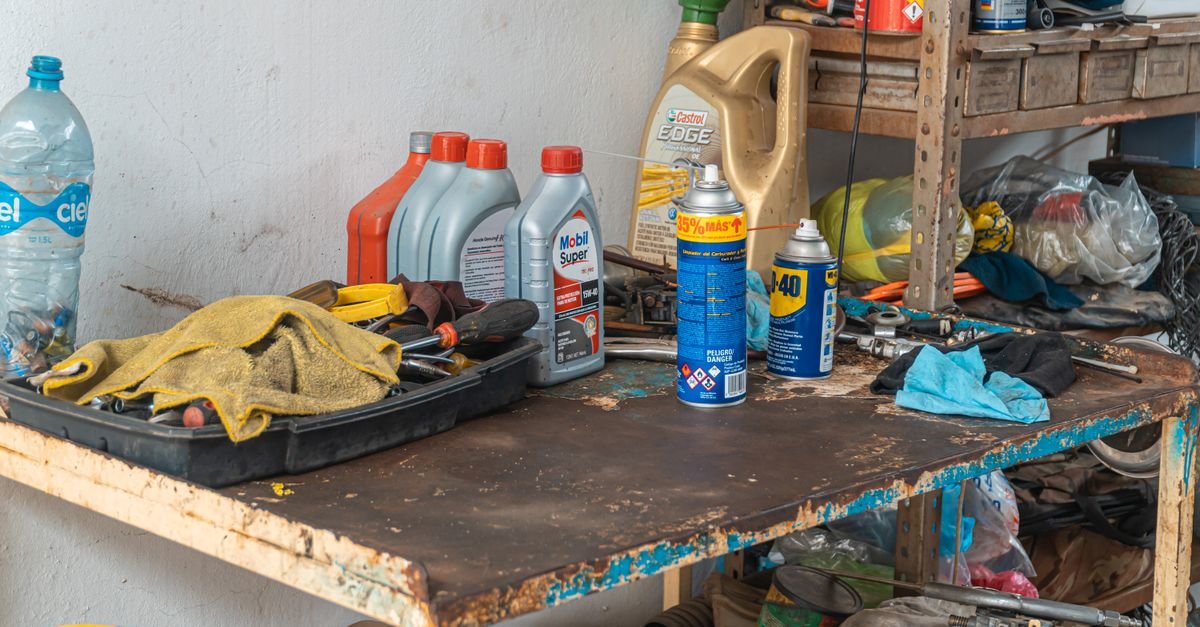
Practical advice: buy the bottle with your pump manufacturer’s name on it. Usually 21 ounces, usually two changes worth, and it removes the question entirely.
Three Manufacturers, Three Different Change Intervals
I went looking for the interval, expecting a number I could hand you. I found a tenfold spread between companies who all make good pumps.
| Manufacturer | After break-in | Thereafter |
| Cat Pumps | first 50 hours | every 500 hours |
| Simpson | first 50 hours | every 100 hours or 3 months |
| Generac | — | every 50 hours |
That is not a consensus. That is three companies in three different rooms. It is also why the “every 50 hours” line repeated across the internet is really one manufacturer’s figure applied to everybody else’s hardware.
What they agree on is break-in. Change the oil after the first 50 hours, whatever you own. A new pump sheds machining debris in its first hours of work, and the cheapest way to get that metal out of the crankcase is to pour it out.
After that, be honest about how you actually use the machine. A homeowner running fifteen hours a year will never reach 500 hours, or 100, or even 50 in a season. For that person the oil ages by condensation and contamination rather than by wear, so the useful interval is annually, at the end of the season, as part of winterizing the machine — same afternoon, same drain pan. In Simpson’s guidance of every 100 hours or three months, it is the three months doing the work for most owners, not the hours.
Check your own manual before you commit to a number. It is the only document that knows what is inside your pump.
Changing Pressure Washer Pump Oil in About Fifteen Minutes
The job itself is unremarkable. Both ways to get it wrong are about the fill, not the drain.
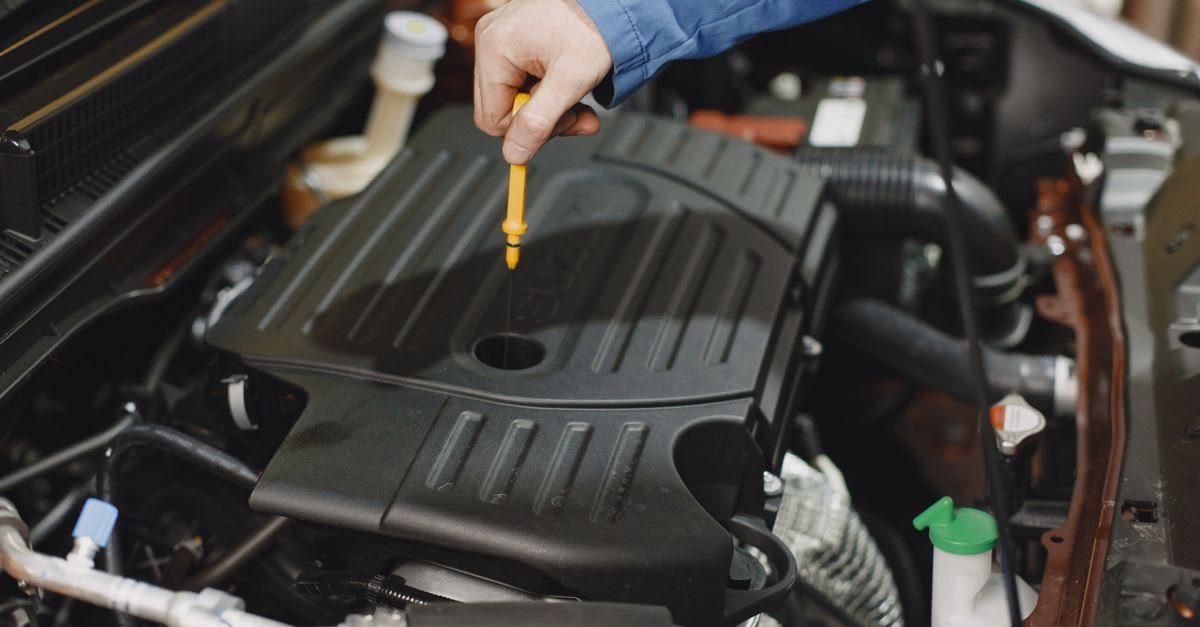
1. Warm it and flush it. Run the machine two minutes with the trigger open, which purges grit from the wet end and thins the oil so it drains. Then shut it down, kill the water, and squeeze the trigger to release pressure.
2. Find the drain plug. A single hex-head bolt low on the pump casing — that rectangular aluminium or brass block bolted to the engine. An 18 mm socket fits a lot of them.
3. Drain into a pan and tilt. Give it a few minutes, then tip the machine toward the drain for the last of it.
4. Refit the plug snugly, not heroically. It threads into aluminium. Over-tightening is how a drain plug becomes a machine shop appointment.
5. Fill to the middle, not the top. Halfway up the sight glass, or between the L and H marks on the dipstick. Most homeowner triplex pumps hold 14 to 21 ounces, so a quart bottle is roughly two changes.
Do not overfill. A crankcase needs air space above the oil, because the oil expands as it warms and the case has to breathe. Fill it to the brim and the expanding oil has one way out: past the crankshaft seals. You then spend an evening diagnosing a seal failure you caused with a funnel.
Check the cap is the vented one. Plenty of pumps ship with a solid plastic plug in the fill hole for transport and a vented dipstick cap in the parts bag that is meant to replace it. Leave the shipping plug in and the crankcase pressurises with nowhere to vent — and again, the oil leaves past the seals. If your pump has been marking its territory on the garage floor since day one, look at the cap before anything else.
Milky Oil Means Water, and Water Means Seals
Pump oil the colour of milky coffee is water. That part is not ambiguous. What it means for your weekend depends on one thing most guides skip: whether the oil level has gone up.
- Level risen and the oil properly milky. Water is crossing the plunger seals into the crankcase, and actual volume has been added. This is a seal and packing job, and it will not resolve itself.
- Level unchanged and the oil faintly cloudy. Usually condensation — an unheated garage, a machine that went cold to hot to cold all winter, moisture out of the air rather than out of the pump. Change the oil, run the machine five minutes, let it stand fifteen, look again. Clear oil means you are done.
If it clouds again within a few hours of running, treat it as seals. Water in a crankcase does not stay water for long — it becomes rust on the crank journals and scoring on the bearings, and by the time that shows up you are buying a pump rather than a seal kit. Milky oil also turns up alongside a machine that has quietly lost pressure over a season, because worn plunger seals leak in both directions.
One thing that is not water: fine grey specks with a metallic glint. That is wear debris, and a shorter conversation.
Sealed or Serviceable: Which Pump Did You Buy?
You are not buying a pressure washer. You are buying a pump with an engine attached, and the pump decides whether any of this maintenance is available to you at all.

Axial cam and wobble-plate pumps — the ones under most homeowner machines — are factory sealed. Generac says exactly that about its own axial pumps, in the same document that gives three oil specs for its triplex ones. No drain plug, no dipstick, no service interval, because there is no service.
“Maintenance-free” reads like a feature on the box. It is closer to a prediction. It means the factory fill is expected to outlast the pump, which tells you something about how long the pump is expected to last.
Triplex plunger pumps have a drain plug, a dipstick or sight glass, and available seal and valve kits. They are the reason some machines outlive two engines. That difference — not the PSI figure on the carton — separates a machine you maintain from a machine you replace, and it is the real dividing line between residential and commercial equipment.
If you have been on your knees for twenty minutes hunting a fill plug that does not exist, stop. Check the manual. Sealed pumps are not hiding it from you.
FAQ
Can I use motor oil in a pressure washer pump?
No, unless your manual specifically permits it. Motor oil contains detergent additives that hold water and contaminants in suspension so an oil filter can catch them. A pump has no filter, so those contaminants stay suspended against the bearings instead.
What kind of oil does a pressure washer pump take?
It depends on the pump. Published specs include SAE 30 non-detergent for direct-drive triplex pumps, SAE 15W-40 non-detergent for many belt-drive pumps, and ISO 68 hydraulic oil for Cat Pumps and some high-flow units. Manufacturers differ within their own product lines, so check the manual.
How often should I change pressure washer pump oil?
Change it after the first 50 hours in every case. After that, published intervals run from every 50 hours to every 500 hours depending on the manufacturer. For typical homeowner use, once a year before storage is the practical answer.
Why is my pressure washer pump oil milky?
Water has entered the crankcase. If the oil level has risen as well, water is crossing the plunger seals and the pump needs a seal kit. If the level is unchanged and the oil is only faintly cloudy, it is likely condensation — change it, run the machine, and check again.
How much oil does a pressure washer pump hold?
Most homeowner triplex pumps hold roughly 14 to 21 ounces, so a standard bottle usually covers two changes. Fill to the middle of the sight glass or between the dipstick marks, never to the top.
Does an axial pump need an oil change?
Generally no. Axial cam and wobble-plate pumps are typically sealed at the factory with no drain plug or dipstick, so there is nothing to change. If yours has no fill point, that is the answer rather than a missing part.
What happens if I overfill the pump oil?
The oil expands as it warms and the crankcase has no air space left for it, so the pressure pushes oil past the crankshaft seals. The symptom is oil weeping down the pump body, which looks exactly like a failed seal and is regularly mistaken for one.
Half a Bottle, Once a Year
Three rules cover it. Use non-detergent oil in the grade your manufacturer publishes. Change it after the first 50 hours, then follow your own manual rather than the internet’s favourite number. Fill to the middle, and check the vented cap is fitted.
And if you go looking for a drain plug, find nothing, and feel slightly cheated — that is a reasonable reaction. You have a sealed pump, the decision was made for you at the factory, and the best thing you can do for it now is keep water out of it over winter. Half a bottle of the right oil, once a year, is the cheapest insurance on the machine.