Last Updated on September 25, 2026 by Umar Farooq
A pressure washer smoking is burning either oil or fuel, and the colour tells you which: white, grey and blue are oil and rarely urgent, black is a fuelling fault, and smoke from an electric machine is an electrical fault — unplug it at the wall now and do not restart it.
That goes first because you are probably standing next to a running machine deciding whether to panic. On a gas engine the honest answer is usually no: the two causes behind most smoking pressure washers are a crankcase filled slightly too high and a machine that got tipped to move it, and both burn themselves off in minutes on flat ground.
The internet’s version of this page is “check your oil.” That is a third of the answer, and it gets applied to black smoke, where the oil level is irrelevant.
Pressure Washer Smoking: Read the Colour, Then the Location
Two questions decide everything: what colour is it, and is it actually leaving through the exhaust. Look at the smoke against something dark — a wall, a fence, the shadow under the frame — because colour is close to unreadable against a bright sky.
| What you see | Where it comes from | What it is | What to do now |
| Thin white haze, no smell, gone within a foot of the pipe | Muffler | Condensation on a cold morning | Nothing. It stops as the engine warms. |
| White or grey, oily smell, thinning over minutes | Muffler | Oil where it should not be — tipping, overfill, over-oiled filter | Run it level with the trigger open |
| White or grey, still going past ten minutes | Muffler | Oil still reaching the cylinder | Check the oil level cold and level |
| Blue, oily smell, worse under load | Muffler | Oil past the rings or valve stem seals | Free checks first, then compression |
| Black and sooty, smells of raw fuel | Muffler | Running rich — choke, air filter, carburettor | Open the choke, check the filter |
| From the top or side of the engine, not the pipe | Block, muffler casing, breather | Spilled oil or fuel burning off hot metal | Shut off, cool, wipe down |
| White vapour from the pump end, no smell | Pump body or relief valve | Flash steam, not smoke | Stop running it in bypass |
| Any smoke, any colour, from an electric machine | Motor, cord, plug | Electrical fault | Unplug at the wall. Stop. |
One more reading before you touch anything: when did it start? Smoke that appeared right after you moved the machine, changed the oil or serviced the filter is almost certainly something that happened in the last ten minutes. Smoke that crept in over two seasons is wear.
White and Grey Smoke Is Oil in the Wrong Room
A four-stroke engine keeps oil in the crankcase and fire in the cylinder, and those are meant to be separate rooms with a piston between them. White, grey and blue exhaust smoke all mean the same thing: oil has found its way into the room where things get set alight.
There are only a handful of routes in. Briggs & Stratton publishes the list, and half of it is things you did:
Overfilling the crankcase with oil. Incorrect oil grades. Operating engine at greater than a 15 degree angle. Inoperative crankcase breather. Crankcase air leak. Blown head gasket. Worn cylinder and/or rings. Turning/tilting the engine on its side for storage, oil change or any other reason.
(Briggs & Stratton, why white/blue smoke comes from the engine)
Fifteen degrees is the number I went looking for and did not expect anyone to publish. Most pages say “do not run it on a steep slope” and leave you to decide what steep means. Fifteen degrees is not steep. Fifteen degrees is a driveway with a decent fall on it.
One free cause is missing from that list because it is a Honda instruction rather than a Briggs one: if you have just serviced a foam air filter element, you may have made the smoke yourself. Honda’s GX-series manual — the engine family under a great many pressure washers — says to dip the element in clean engine oil and then “squeeze out all excess oil. The engine will smoke when started if too much oil is left in the foam” (Honda GX120/GX160/GX200 owner’s manual, PDF). Tacky, not dripping.
The same manual covers the other benign case: “If the cylinder was coated with oil during storage preparation, the engine will smoke briefly at startup. This is normal.” Fog a cylinder for winter and the first run of the season is supposed to smoke.
One thing white smoke here is *not*: a head gasket pushing coolant. These engines are air-cooled. There is no coolant.
You Tipped It to Fit It in the Car
If the smoke started the first time you ran the machine after moving it, stop diagnosing. You already know.

A horizontal-shaft small engine holds its oil in a shallow bath under the crank. Lay the machine over and the oil goes where gravity sends it — down the valve guides into the cylinder, out through the breather into the intake, or, if the exhaust valve was open, straight into the muffler. That is not damage. It is oil in the wrong place, and the engine deals with it by burning it, visibly, for several minutes.
Briggs & Stratton gives the direction and the fix in two lines: “If the engine has to be tilted, ensure that either the spark plug is facing upwards or the muffler side is facing downwards,” and “Right the machine before moving forward. Smoking should clear after a few minutes of running on a flat surface.” Honda says the same from the storage end — “Keep the engine level in storage. Tilting can cause fuel or oil leakage.”
So the procedure is no tools and about ten minutes. Put the machine on genuinely flat ground — not the drive, which slopes by design — connect the water, open the tap, and run it with the trigger held open, spraying at the grass. Do not let it idle with the gun shut while you wait, because that stacks a cooked pump on top of a smoke problem and two minutes is the published bypass limit. The smoke should thin steadily and stop. Still going as hard at fifteen minutes as it was at two? Tipping is not your answer, and the dipstick is next.
Here is the position I will push, because most competing pages go from “white smoke” straight to “piston rings.” Rings wear out on hours, and a homeowner pressure washer does not accumulate hours. A driveway, a patio and the back of the house might come to fifteen hours a year. Worn rings are a fair call on an engine with several hundred hours on it and a poor one on a machine that spends fifty weeks in a shed. If yours started smoking the day you moved it, the engine is not worn out. Something changed, and it was you.
Two Ounces Over the Mark, Smoking for Ten Minutes
Overfilling is the other free cause, and the margin is narrower than people expect.
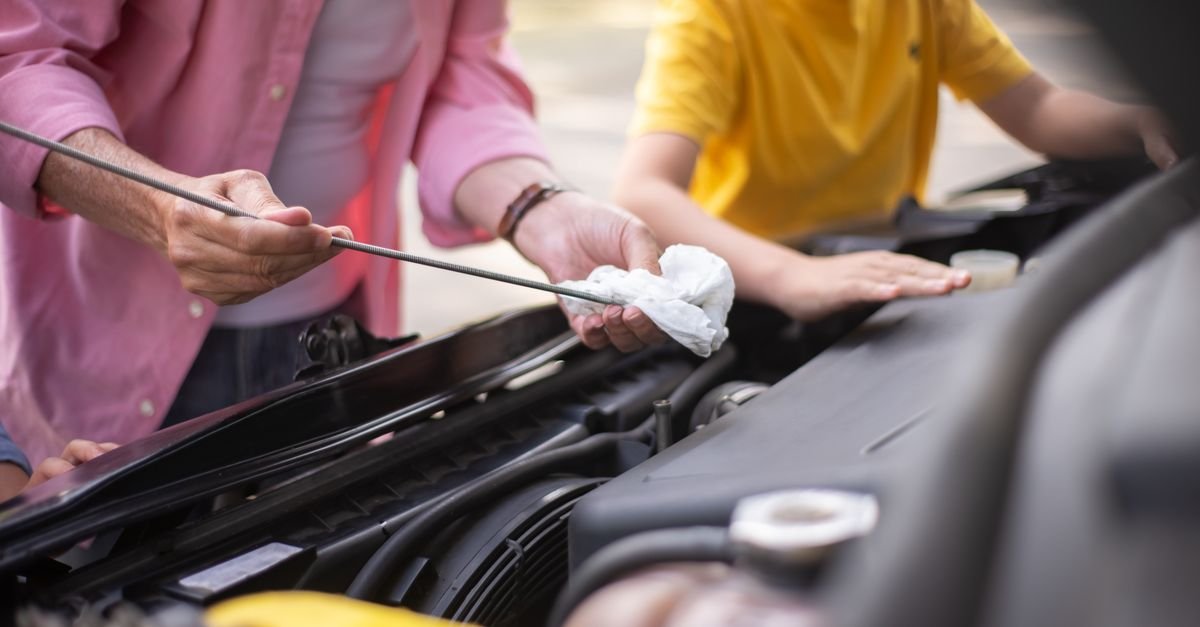
Most residential pressure washer engines hold well under a litre. The crankcase needs air space above the oil, because the crank runs partly submerged and flings oil around the case. Fill it above the mark and the counterweights slap through liquid instead of skimming it: the oil foams, crankcase pressure rises, and the excess is pushed up the bore and out through the breather into the intake, where it is drawn in with the air and burnt. That is your white smoke, and it keeps coming as long as the level is high.
Reading the dipstick is where most overfills are created, because small engines are inconsistent about it. Honda’s instruction for the GX series is explicit: machine stopped and level, and you “insert the oil filler cap/dipstick into the oil filler neck as shown, but do not screw it in, then remove it to check the oil level.” Screw it in on an engine that wants it resting and you read low, then top up a level that was already correct. The manual follows with two words: “Do not overfill.”
Getting the excess out takes two minutes. Use the drain plug and catch a little in a pan, or draw it through the dipstick tube with aquarium tubing and a syringe. Do not tip the machine to pour some off, or you will cure the overfill and create the tipping fault in the same movement. An over-full crankcase also pushes oil past the seals, which arrives as a puddle rather than a cloud — that version is in pressure washer leaking oil.
Blue Smoke Is the Same Diagnosis With a Worse Prognosis
Most pages hand you a crisp three-colour key with white and blue as separate diagnoses. Manufacturers do not. Briggs files both under one heading with one cause list, which is a fair reflection of the problem: greyish-white against bluish-white, in daylight, at ten feet, is a judgement rather than a reading.
Density and persistence are more useful than hue. Steam vanishes a foot from the pipe, has no smell, and only happens when the engine or the air is cold. A burn-off — tipping, over-oiled foam, storage fogging — starts thick and thins out over minutes. Blue that is steady and worse when you squeeze the trigger is oil being consumed continuously, and that is the one that means something.
Two confirmations: hold a clean white rag across the exhaust outlet for a couple of seconds, because water leaves it damp and oil leaves a brown-grey film you can smell, then pull the spark plug, where wet black oily deposits mean oil fouling and dry sooty black means fuel.
If it is continuous consumption, the candidates split by *when*. Blue at startup that clears as the engine warms points at valve stem seals, because oil drains down the guides while the machine sits. Blue all the time and worse under load points at rings and bore. Check the crankcase breather before accepting either: it is on Briggs’ list, it is cheap, and a blocked one pressurises the case and pushes oil into the intake exactly the way an overfill does.
Black Smoke Belongs to a Different Fault Family
Black smoke has nothing to do with oil. Do not check the dipstick. Check the choke.
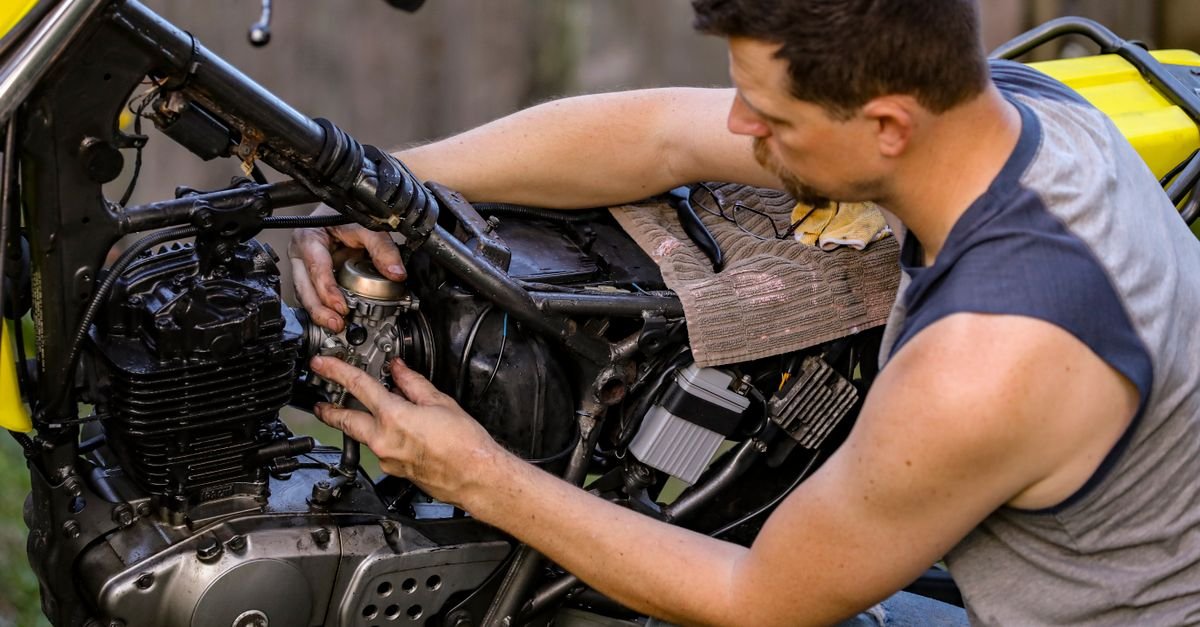
Black smoke is carbon: fuel that reached the cylinder and did not finish burning, because there was not enough air to burn it with. A small-engine carburettor meters fuel against airflow through fixed brass holes, so it cannot cut the fuel back when the air falls off. Restrict the air and the mixture goes rich, and rich engines make soot.
Work it in this order, which is also the order of cost:
1. The choke. Left closed after a cold start, it does precisely what a blocked filter does. Free, instant, and common — the engine will also run rough and smell strongly of fuel.
2. The air filter. Hold the element up to daylight. If light will not pass, air will not either. The full air filter service and the 25-hour interval are worth reading, because a pressure washer works inside its own spray cloud and gets through filters faster than anything else in the garage.
3. The fuel. Stale, water-contaminated or wrong-grade petrol burns badly.
4. The carburettor. A stuck float or a worn needle floods the engine, and that is its own strip-down.
Do not shrug black smoke off because the engine still runs. Honda lists “black exhaust smoke or high fuel consumption” among the symptoms that should send an engine to a servicing dealer, alongside hard starting, rough idle and backfiring. Soot fouls plugs and glazes bores, and both cost more than a filter.
One boundary: on a hot water machine, black smoke from the burner stack is a separate system. That is the diesel burner on the wrong air-to-fuel ratio or a worn nozzle, and it sooties the heating coil, not the engine.
Smoke That Is Not Coming From the Exhaust at All
Watch where it actually leaves the machine. A good share of alarming smoke never went through a cylinder.
Oil or fuel burning off hot metal. A muffler runs hot enough to vaporise whatever lands on it. Spill a little during an oil change, slop a tank while filling, or tip the machine and let oil out of the breather, and the next run produces dense acrid smoke from the *top* of the engine rather than the pipe. It looks far worse than exhaust smoke and it is harmless. Shut down, cool completely, wipe the block and muffler, run again. If it returns after a proper clean-down, you have a leak rather than a spill.
White vapour from the pump end. Not smoke. A pump left running with the trigger closed heats the water trapped inside it, and either the thermal relief valve dumps a slug of it or hot water meets cold air at a fitting.
Two smells that override everything above. Hot rubber from between the engine and the pump is a slipping belt on a belt-drive machine. An electrical smell from a gas machine’s electric-start wiring is a starter cooking its own insulation, and that is the start of a fire rather than a sign of one.
An Electric Pressure Washer That Smokes Is Done Running Today
Unplug it at the wall. Do not restart it, do not press the reset button, and do not open the housing while it is connected to anything. This is the one hard rule on the page.
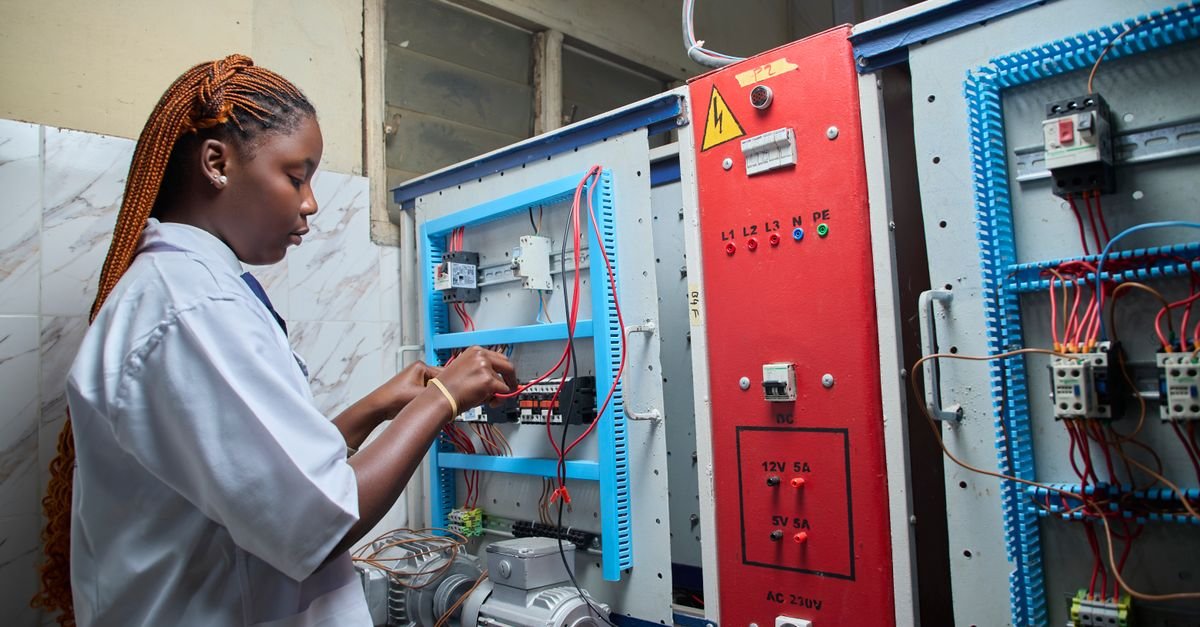
An electric pressure washer has no combustion, no exhaust, no crankcase and no oil near the motor, so there is no benign source of smoke on it. Everything that can smoke is insulation, winding varnish, carbon brushes, a capacitor or a cable joint, and all five are failures rather than symptoms. A gas engine that smokes is usually telling you about oil. An electric motor that smokes is telling you it is on fire, slowly.
The usual candidates, none of which you chase under power: winding insulation cooking, from a motor run too long or a cord too thin for the current; brush arcing, which smells sharp; a failing start capacitor, which can bulge, leak and vent; and an overheating plug or cord reel, where a coiled cord gets hot in the middle rather than at the ends.
The capacitor has a recall attached, which is why the first move after unplugging is to read the model number. In August 2025 TTI recalled about 780,000 Ryobi brushless electric pressure washers — models RY142300, RY142300VNM and RY142711VNM — because the capacitor could overheat and burst, forcefully ejecting parts. TTI had received 135 reports of overheating capacitors, including 41 explosions, causing 32 injuries to fingers, hands, faces and eyes. They sold at Home Depot and Direct Tools between July 2017 and June 2024 for roughly $300 to $400, and the remedy is a free repair kit (CPSC, 28 August 2025). Three models and one component with a free fix is not a reason to distrust Ryobi. It is a very good reason to spend ninety seconds on the recall database before spending anything else.
Do not confuse any of this with a thermal cutout. A motor that stops mid-job and will not restart for half an hour has protected itself and is fine. A motor that *smoked* has already passed the point the cutout exists to prevent, and capacitors hold a charge after the plug comes out.
FAQ
Is it normal for a pressure washer to smoke?
Briefly, sometimes. A thin white haze on a cold morning is condensation. A few minutes of smoke after the machine has been tipped, after an oil change, or on the first start after winter storage is oil burning off — Honda’s manuals say an engine fogged with oil for storage “will smoke briefly at startup. This is normal.” Smoke still going strong after fifteen minutes on level ground is not.
Why is my pressure washer blowing white smoke?
Oil has reached the combustion chamber. The four common routes are an overfilled crankcase, a machine tipped or stored on its side, a foam air filter with too much oil left in it, and a blocked crankcase breather. Check the oil level cold and on flat ground before considering anything internal.
What does blue smoke from a pressure washer mean?
The same thing as white, with more of it. Blue exhaust smoke is oil being consumed continuously rather than burning off once. Blue only at startup suggests valve stem seals; blue all the time and worse under load suggests worn rings or bore. Rule out the free causes first — both of those are rare on a machine with a homeowner’s hours on it.
Why is my pressure washer blowing black smoke?
It is running rich: too much fuel for the available air. Check the choke is fully open, hold the air filter element up to a light, then look at the fuel. Black smoke has nothing to do with the oil level, so the dipstick is the wrong place to start.
Should I turn my pressure washer off if it is smoking?
If it is electric, yes, immediately, and unplug it at the wall. If it is a gas machine making white or blue exhaust smoke, no — run it on level ground with the trigger open for five to ten minutes and see whether it clears. Shut a gas machine down if the smoke comes from the engine body rather than the exhaust, if it smells electrical, or if it arrives with knocking or a loss of power.
Colour First, Dipstick Second
Read the colour, work out where the smoke is leaving the machine, and only then pick up a tool — because “check your oil” is the right advice for exactly one of the four things that make a pressure washer smoke, and it is misleading for black smoke and useless for an electric one.
Most of what lands on this page is temporary. A machine tipped into a car boot, a crankcase topped up with an enthusiastic hand, a foam filter dipped in oil and not squeezed out: all three make impressive clouds, all three cost nothing, and all three are gone in ten minutes on flat ground. Rings and valve seals are real, and they are also the last thing to reach for, on a machine that has actually earned them.
And if it is electric and it smoked, the answer is not on this page or any other. It is the plug, and then the model number.