Last Updated on September 25, 2026 by Umar Farooq
A pressure washer gun leaking with the trigger released has a worn internal valve seat; a pressure washer gun leaking only while you squeeze the trigger is almost always an O-ring at one of the two threaded joints — and that second one is a rubber ring costing pennies.
The difference between those two sentences is worth roughly the price of a new gun, and you can tell them apart in under a minute without taking anything apart. So before you order the part that a forum told you to order, stand there and watch the thing leak. Water is a surprisingly honest witness.
Six Places a Trigger Gun Lets Water Out
Start by making the evidence readable. Shut the machine down, turn the tap off, point the gun somewhere harmless and squeeze until the spurt stops — that is the stored pressure in the hose, and it is why people get wet doing this next bit. Then dry the whole gun with a cloth, including both ends and the underside of the handle. A dry gun tells you where water arrives. A damp one tells you nothing.
Now restart, and look at these six addresses in order:
| # | Where the water shows | What it normally is |
| 1 | The hose inlet fitting at the back of the handle | O-ring, flattened or missing |
| 2 | The swivel stem, if your gun has one | The swivel’s own O-ring, on its little bearing |
| 3 | Around the trigger pin, or dribbling from the outlet with the trigger released | The internal valve seat — the classic |
| 4 | The gun outlet where the wand screws or clips in | O-ring at the joint, or a cross-threaded fitting |
| 5 | The quick-connect collar between gun and wand | The coupler O-ring, or grit holding the balls off their seat |
| 6 | A weep from the moulding seam of the handle body | A cracked shell, and the end of the conversation |
Five of those six are a rubber ring or a piece of grit. That is not me being optimistic — it is the arithmetic of a part that has two threaded joints, one moving valve and a plastic case.
Three things are deliberately not on that list. Water arriving at the far end of the wand, at the nozzle, is a wand-and-tip problem rather than a gun problem. A nozzle that physically launches itself off the wand is a quick-connect retention fault, not a leak. And water pooling under the machine, away from your hands entirely, is a leak at the pump and belongs to a different troubleshooting sequence.
Drip Now or Weep Under Pressure? The Timing Is the Diagnosis
Here is the part the repair guides skip, and it splits those six locations cleanly in half.
The trigger valve is a dam. Everything behind it — the hose, the inlet fitting, the swivel, the valve seat itself — is at full system pressure the entire time the machine is running, trigger or no trigger. Everything in front of it — the gun outlet, the quick connect, the wand, the nozzle — only sees pressure while you are actually squeezing.
So the timing tells you which side of the dam has failed:
| When the water appears | Which side | Suspect |
| Trigger released, machine running | Upstream of the valve | Inlet O-ring, swivel seal, or the valve seat itself |
| Only while the trigger is held | Downstream of the valve | Wand joint, quick-connect collar, nozzle seat |
| Both, equally | Upstream | The valve seat is not sealing at all |
Then read the character of the leak. A joint that has lost its seal tends to produce a fine, fast fan of spray the instant pressure arrives and stop dead the instant it goes — it is water escaping through a gap of a few thousandths of an inch, and gaps do not have a memory. A worn seal weeps. It starts as a bead, grows over ten minutes as the machine warms up in bypass, and runs down the handle onto your wrist.
If the leak gets worse the longer the machine idles, you are watching rubber that has gone hard. If it is identical at minute one and minute twenty, you are watching a gap.
Why the O-Ring Gets Replaced Before Anything Else
Because it is nearly free, it takes two minutes, and the manufacturers put it first in their own instructions. Simpson’s published troubleshooting for water leaking at the gun runs in exactly this order: “Try tightening the connector to see if this stops the leaking. If it does not, with the pressure bled off, unscrew the connector and focus on the o-rings. If they are not intact or appear to be damaged, replace the o-rings. If they appear to be in good condition, lubricate the o-rings with white lithium grease” (Simpson, troubleshooting water leaking at spray gun).
Two details make this fix fail more often than it should.
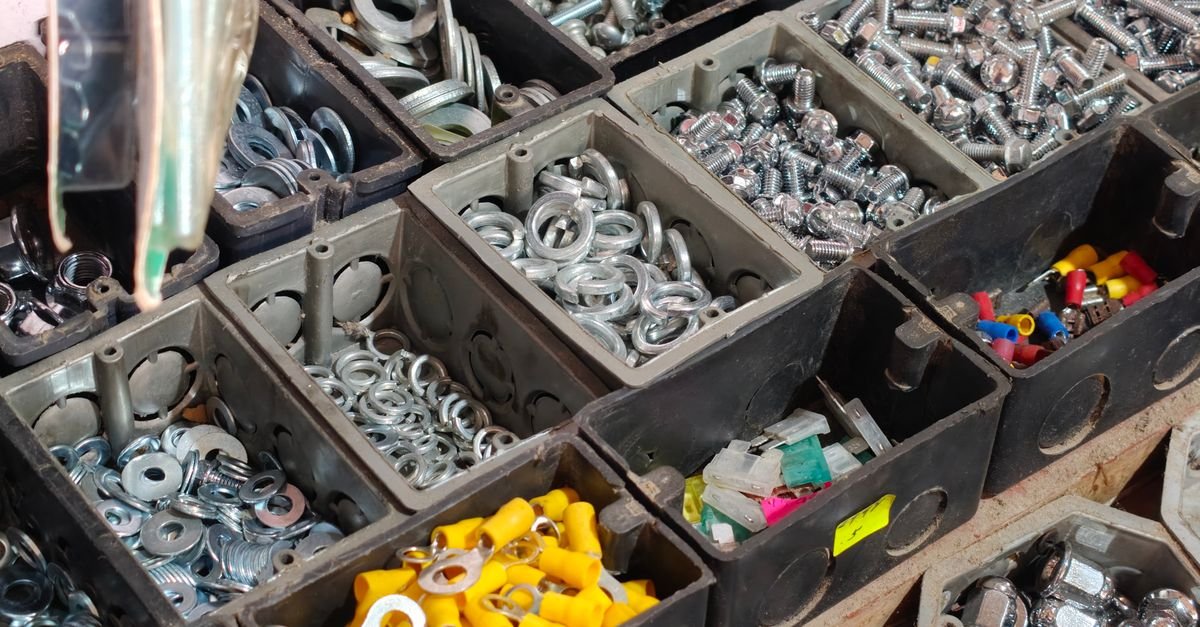
The ring is frequently not missing, it is elsewhere. When you pull a hose or a wand off a gun, the O-ring sometimes stays behind in the mating coupler instead of coming with the fitting. Reconnect, and you now have two rings in one groove and nothing in the other, which leaks beautifully. Look inside both halves with a torch before you buy anything.
The threads are not what seals. On an M22 joint the metal-to-metal contact does nothing except hold the two halves together; the rubber does the work. That is why tightening harder past snug does not stop a leak — it just stretches the thread and squashes a ring that was already flat. If you have reached for a bigger spanner, stop, because you are now solving a different problem. The sizing, material and measuring routine lives in the guide to pressure washer hose O-rings, which is where to go if you need to know which of the three common sizes you are holding.
When You Let Go and the Water Does Not Stop
Inside the handle there is a spring, a ball — ceramic on the better guns — a machined seat for it to sit on, and a pin that lifts the ball when you pull the trigger (MTM Hydro, servicing a spray gun). Release the trigger and the spring plus the water pressure behind it slams the ball back onto the seat. That is the whole shut-off mechanism, and it is a sealing surface roughly the area of a grain of rice.
Put a grain of sand on it and it does not seal. Put a grain of sand on it two hundred times and the seat is no longer flat.
A gun in that state dribbles continuously, and the knock-on symptoms are what usually bring people here rather than the drip itself. The pump never reaches the pressure at which the unloader diverts flow, so a gas machine sits there sounding busy and slightly unwell instead of settling into bypass. On an electric machine with a total-stop system, the pressure switch reads the bleed as a trigger pull and the motor clicks on and off by itself while the gun lies on the driveway, unattended, doing nothing at all. That one is worth fixing quickly, because the switch is doing a season of cycling in an afternoon.
Is Your Pressure Washer Gun Leaking From Wear or From Grit?
This is the test that decides whether you spend money, and almost nobody runs it.
Disconnect the gun, hold it upside down over a bucket, and flush clean water through it backwards from the outlet end while working the trigger ten or fifteen times. If the gun has hard-water scale rather than grit, soak it overnight in white vinegar first and then flush. Reconnect and run it.
- The leak has gone and stays gone for a full session. It was a particle sitting on the seat. Your gun is fine.
- The leak goes, then returns within minutes. Debris is still arriving from upstream, and the seat is being worked on every time it does.
- The leak never goes. The seat is damaged. Flushing a pitted seat is like wiping a scratched lens.
The second outcome is the interesting one, because it means the problem is not the gun. Grit reaches the seat through the inlet screen, and that screen is a coarser filter than its reputation suggests — manufacturers generally specify 50 to 60 mesh, which works out at roughly 250 microns. That is a fine-sand filter. Portland cement dust at 74 microns and silt at 44 microns go straight through it and arrive at the only precision sealing surface in your hand. If you have been cleaning render, block paving or anything that produces mineral dust from a bucket or a tank, the gun is the downstream victim rather than the culprit.
You can also just look. Pull the wand off, shine a torch into the gun outlet, and compare what you see to a new gun if you have one. A healthy seat is a bright, continuous ring. A dead one is dull, green with dezincification, or visibly notched on one side.
The Wand Is Live and You Do Not Know It
Now the part that is not about money.
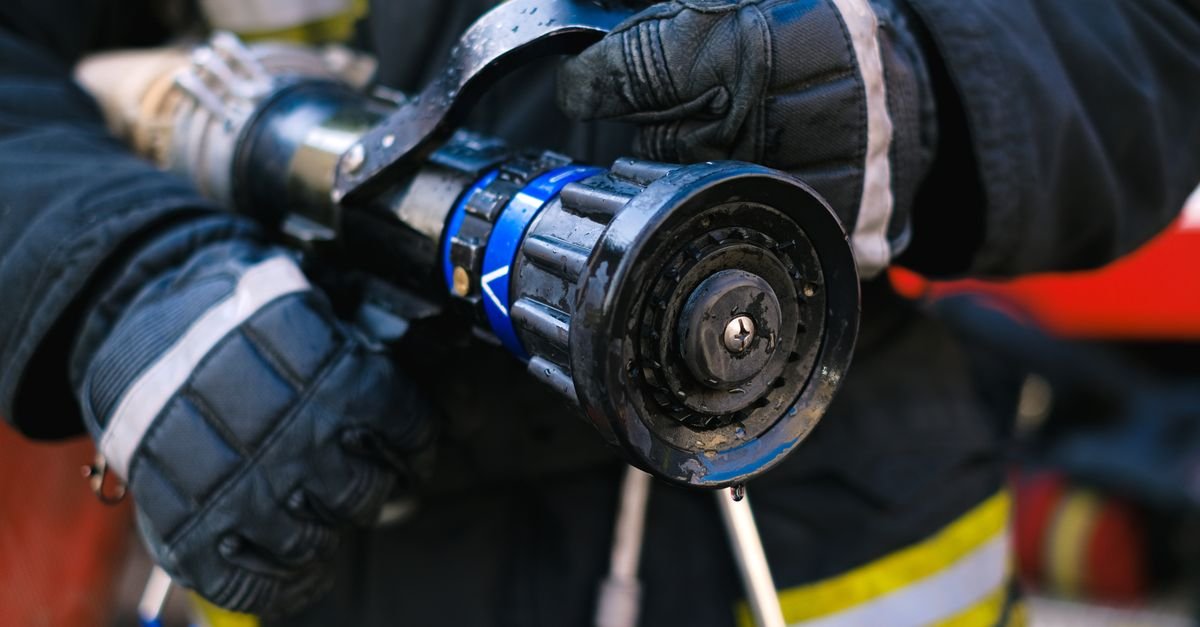
A trigger gun is the shut-off valve for the entire machine. It is the thing standing between a running pump and the open end of a tube you are holding. When the seat stops sealing, the wand does not stop being a nozzle just because your finger has come off the lever — it becomes a nozzle with a reduced and unpredictable output, which is a far worse thing to pick up by the wrong end than one that is obviously firing.
And the trigger safety lock does not help here, which is the detail that catches people. The lock is a mechanical block on the lever. A leaking seat is water going past the ball, not past the lever, so engaging the lock changes nothing about it. A locked gun that dribbles is still a live wand lying on the ground.
That matters because of how small the injuries look. A 2025 review of high-pressure water injection injuries to the hand notes that they “often appear deceptively minor on initial presentation due to small or superficial entry wounds, yet they can mask extensive internal damage” (Cureus, 2025). A jet that is not strong enough to clean a patio is still comfortably strong enough to break skin at close range, and the entry wound will look like a splinter mark.
So: if your gun will not shut off fully, that is not a leak to finish the driveway with. Shut the machine down, relieve the hose, and do not carry the wand by its business end in the meantime.
Rebuild Kits Exist, but Not for the Gun You Probably Own
Here is where two manufacturers flatly contradict each other, and both are right.
Simpson, a consumer machine manufacturer, states it plainly in its own troubleshooting: “Never repair a pressure washer spray gun. If the body of the gun is leaking, it will need to be replaced. There are no user-serviceable parts within the spray gun assembly.” Meanwhile MTM Hydro, which sells guns as standalone equipment, publishes a step-by-step teardown of its own spray gun showing the plugs, the spring, the ceramic ball and the seat coming out, with a kit part number for the lot.
They are describing two different products that happen to share a shape. The gun that arrived in the box with your machine is a sealed consumable with no published kit and no exploded diagram, and prising it open gets you a handful of parts and a trip to the shops. A gun bought separately from a pressure washing supplier has a documented kit because it was designed to be opened.
So the honest sequence is: identify your gun before you diagnose it. Search the part number moulded into the handle. If a repair kit comes back, buy the kit — it is a fraction of the gun and it fits a body that was built for more pressure than yours makes. If nothing comes back, the gun is a consumable and the decision is which replacement to buy.
And on that: I would not replace a bundled gun with another bundled gun. A gun rated at 4,000 PSI with a published seal kit costs perhaps twice what the throwaway does and can be rebuilt for years, while the one that came free with the machine is rated roughly level with the pump — and line pressure briefly exceeds the machine’s rated figure every time the unloader shifts. Buying the same part a third time is not thrift. The wider question of how the gun, hose and ratings fit together is covered in the guide to the pressure washer gun and hose.
FAQ
Is it safe to keep using a pressure washer gun that is leaking?
A leak at a threaded joint is a nuisance and a small loss of pressure, and finishing the job is reasonable. A gun that will not shut off when you release the trigger is different: the wand stays live, and high-pressure water can break skin at close range with an entry wound that looks trivial. Stop for that one.
Can a pressure washer trigger gun be rebuilt, or does it have to be replaced?
Both answers exist, depending on which gun you have. Guns sold as standalone equipment by pressure washing suppliers usually have a published repair kit containing the seat, ball, spring and O-rings. Guns supplied in the box with a consumer machine generally do not, and their makers say outright that there are no user-serviceable parts inside.
Why is my pressure washer gun leaking where the wand screws in?
That joint is sealed by an O-ring, not by the threads, so it is either a damaged ring, a missing one, or one that stayed in the other half last time you disconnected. Check both sides with a torch before ordering. Tightening harder rarely helps and usually makes it worse.
Does a leaking gun stop the machine building pressure?
It can. A gun that bleeds water continuously prevents the pump reaching the pressure its unloader needs to divert flow, so the machine never settles into bypass and the nozzle feels weak. If pressure is low and the gun is dripping with the trigger released, fix the gun before touching the unloader.
Can I use thread tape or sealant to stop a leak at the gun?
Not on an M22 joint or a quick connect, because neither seals on the thread. Tape there adds bulk and can hold the faces apart, which makes the leak worse. Tape belongs on tapered NPT fittings only, and a leaking gun connection is almost never one of those.
Why does my electric pressure washer keep restarting itself when nobody is holding the trigger?
A pressure switch is reading the pressure drop caused by a leak and treating it as a trigger pull. The leak is usually the gun’s internal valve or an inlet O-ring. The motor cycling on an unattended machine is the symptom worth acting on quickly, because the switch and the capacitor are both taking the hits.
Buy the Ring, Then the Kit, Then the Gun
The order is not negotiable, and it is cheapest first for once. Watch where the water actually comes out, note whether it happens with the trigger held or released, replace the O-rings, flush the seat, and only then decide whether you are buying a kit or a gun. Most people who end up buying a gun did so at step one, which is how a two-minute rubber ring becomes a shopping trip.
The one exception is the gun that will not shut off. That is not a drip to work around for the rest of the afternoon — it is your machine’s only off switch, quietly reporting that it has resigned.