Last Updated on September 23, 2026 by Umar Farooq
Most leaks at a pressure washer connection are not the hose and not the thread — they are pressure washer hose o rings, a part that costs about fifteen cents and comes in three sizes you can learn in a minute.
The frustrating thing about a weeping fitting is how out of proportion it feels. You have a machine that cost a few hundred dollars, a hose rated to several thousand PSI, and the whole thing is being defeated by a rubber band the size of a Cheerio. The good news is that the rubber band is also the cheapest part on the machine, and it is the one you can change standing up in the driveway.
Is It the Ring, the Thread, or the Hose Itself?
Before you buy anything, work out which of the three is actually leaking. They look similar from six feet away and they have completely different fixes.
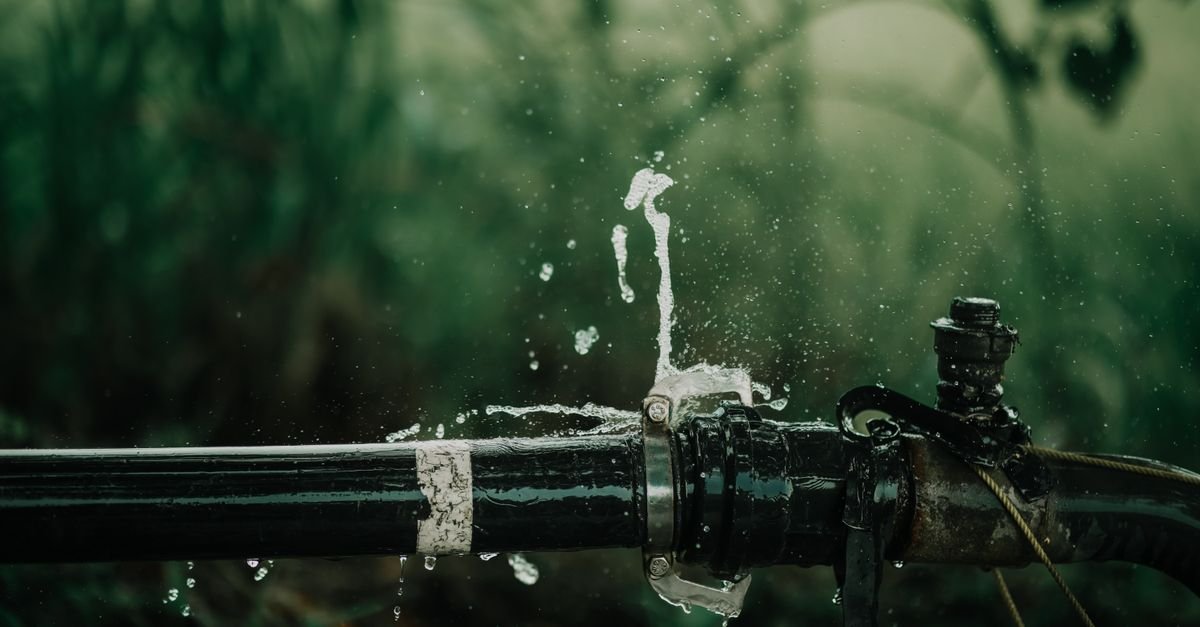
Dry every joint with a rag first. Then start the machine, pull the trigger at the lowest pressure that gets water moving, and watch for the first bead of water rather than the puddle it eventually makes. Water travels along a hose and lies convincingly about where it came from.
An O-ring leak comes from the joint face — the seam where two fittings butt together, or the gap around a quick-connect plug where it enters the socket. It appears the moment you pull the trigger and stops when you let go. It is often a fine mist rather than a drip, because the gap it is escaping through is measured in thousandths. The tell that clinches it: tightening the fitting does almost nothing. An O-ring seals by being squeezed in its groove, and it is already squeezed.
A thread leak comes from the threads themselves — water beading out from between the turns of a screwed joint, typically an NPT connection at the pump or the gun body. Tapered NPT threads seal on the thread flanks with tape or sealant, not on a ring, so a thread leak usually does change when you snug it up. If tightening helps for ten minutes and then it weeps again, the tape is finished.
A hose leak is the hose. Either a pinhole that throws a fine fan of mist several inches out from the jacket, a soft bulge where the reinforcement has let go, or weeping from under the crimp collar at the end fitting. The first two mean the hose is scrap. The third also means the hose is scrap — a crimped end is not serviceable, whatever the internet tells you about hose clamps. (It will hold. Right up until it does not, at which point you find out how much energy was in there.)
One more candidate worth ruling out: if water drips from the gun body or trickles out of the wand when the trigger is released, that is a worn gun seal, not a connection.
Three Ring Sizes Cover Almost Every Home Machine
Once you know it is a ring, the question is which one. On a typical homeowner setup there are only three answers.
| Where it lives | Fitting | Ring inner diameter | Cross section |
| Machine outlet, both hose ends, gun inlet | 3/8 in quick connect | ~11.8 mm (0.46 in) | ~2.6 mm (0.10 in) |
| Gun outlet, lance joints, nozzle socket | 1/4 in quick connect | ~9.2 mm (0.36 in) | ~2.6 mm (0.10 in) |
| Hose stem screwed to pump or gun | M22 x 1.5 | ~9.2 mm (0.36 in) | ~2.4–2.6 mm |
The trade shorthand is easier to remember than the numbers: everything from the bottom of the gun back to the machine is 3/8 inch, and everything from the top of the gun forward is 1/4 inch. High pressure travels through the big fittings; the small ones only have to survive the last two feet.
Now the part that costs people an order. Sellers describe these rings two entirely different ways. Some name the fitting — “O-rings for 1/4 inch quick coupler.” Others name the ring’s own inner diameter — “3/8 inch O-rings.” Those two bags contain the identical part. So a packet labelled 3/8 is for your 1/4 inch coupler, and a packet labelled 1/2 is for your 3/8 inch coupler, and if you buy by the number on the front without reading the description you will get exactly the wrong one. I have watched enough people do this in product reviews to be confident it is the single most common mistake in the whole topic.
There is also no universal published standard here, which surprised me. The dimensions above cluster around the AS568 100-series (a uniform 1/16-inch cross section), but pressure washer couplers are not consistently built to it, and vendor listings for the same fitting disagree by up to a millimetre. Assortment packs exist because the industry has quietly given up on the question. Buy the assortment.
Measuring One You Have Already Destroyed
The ring you pulled out is the worst possible reference. It has been squeezed flat for two seasons, it may have swollen from chemical exposure, and it probably tore on the way out. Measuring it tells you what it became, not what it was.
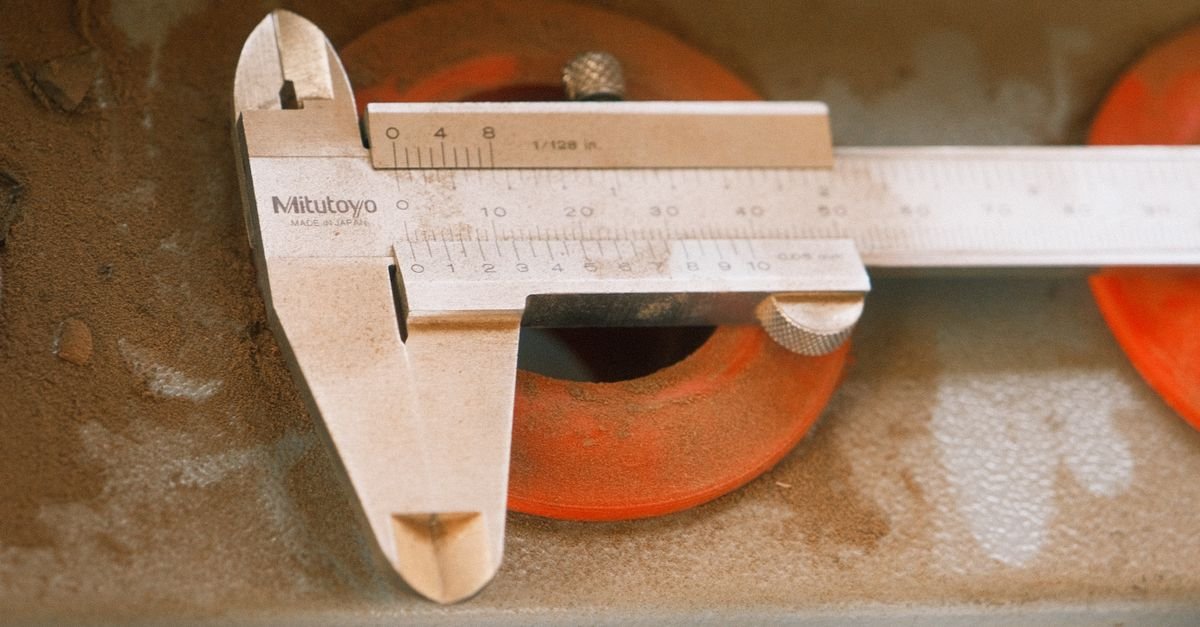
Measure the groove instead. With a cheap pair of calipers:
- Inner diameter = the diameter of the groove floor, taken at the bottom of the channel.
- Cross section = (groove outer diameter − groove floor diameter) ÷ 2.
No calipers? Two honest workarounds. Take the fitting itself to the store and try rings against it — every counter has a drawer. Or pull the ring from the *other* end of the same hose, which has done the same work but has almost always failed less, and match that.
Of the two dimensions, the cross section is the one that seals. Inner diameter only has to be close enough to hold the ring in its groove without it flopping about. Get the cross section wrong by half a millimetre and you either cannot get the fitting together or it blows out on the first trigger pull.
NBR or Viton: Let the Water Temperature Decide
There are two compounds worth caring about and a third worth knowing exists.
NBR — nitrile, also sold as Buna-N. The plain black ring in the bag that came with your machine. Cheap, tough, entirely happy with water and mineral oils. Its published ceiling sits around 250°F.
FKM — fluoroelastomer, usually sold under the Viton trade name. Brown, sometimes green. Rated to roughly 400°F and carrying much broader chemical resistance: Marco’s side-by-side of the two materials credits FKM specifically with resistance to steam, strong acids, chlorinated and halogenated hydrocarbons, where Buna-N’s list is essentially water, dilute alkalis and hydraulic fluid (Marco Sealing Solutions, FKM vs Buna-N).
EPDM is the third. Excellent with hot water and oxidising chemistry, and destroyed by petroleum oil, which is why it is not the default on a machine that has oil in the pump a few inches away.
Here is why hot-water machines need the fluoroelastomer and cold-water machines usually do not. Hotsy states that by the time water leaves the coil and passes through the wand on one of its hot units, it has reached “temperatures of up to 200°F,” and a steam combination unit superheats to 280°F (Hotsy, hot vs cold water pressure washers). Two hundred is technically inside nitrile’s range. It is also within fifty degrees of the ceiling, which is not a margin so much as a rounding error, and 280°F is simply past it. A nitrile ring on a hot-water machine does not fail dramatically. It goes hard, takes a permanent set in the shape of its groove, and then weeps every time the fitting is disturbed.
And here is the opinion: if you run sodium hypochlorite through your machine — which is anyone who has ever cleaned siding, a fence or a north-facing patio — buy Viton even on a cold-water unit. The mechanism is in the polymer backbone. Nitrile’s chain still carries carbon-to-carbon double bonds left over from the butadiene it is made of, and oxidising chlorine chemistry attacks precisely those bonds; the rubber hardens, crazes and cracks. FKM’s backbone is fluorinated and saturated, so there is far less for the chlorine to get hold of. The upgrade costs a few cents a ring. The downgrade costs you a Saturday.
Why Pressure Washer Hose O Rings Fail Long Before the Hose Does
A hose is rated for years. The rings at its ends often do not manage a season, and there are five reasons, all of them avoidable.
Heat from bypass. Hold the trigger closed and the pump has nowhere to send its output, so it recirculates the same water and dumps the pump’s entire energy into it. That water climbs past 60–65°C within a couple of minutes, which is the temperature at which the rubber in the system starts to soften and deform. Your connection rings sit directly downstream of it. This is the same failure that makes a machine cut out on thermal protection — see pressure washer keeps shutting off for what is happening inside the pump while you take that phone call.
Chemical attack. Covered above, and worth repeating only because people flush the surface and forget the machine. Pull two minutes of clean water through the injector at the end of any day you ran hypochlorite.
Over-tightening. This one is counter-intuitive and it is why the section on diagnosis matters. A static O-ring seals by being compressed roughly 15–30% of its cross section, and the groove is designed to be only 60–85% full so the rubber has somewhere to go (Global O-Ring, groove design). The geometry sets that squeeze, not your wrist. Extra torque does not compress the ring further — it drives the fitting faces together, closes the clearance gap and extrudes rubber into it, where pressure cycling nibbles the extruded edge away. Snug is correct. Grunting is not.
Dry connection cycles. A quick coupler gets pulled apart and shoved together dozens of times in an afternoon of nozzle changes. Each cycle drags the ring across a machined edge, and a dry ring drags harder than a lubricated one. This is abrasion, and it is cumulative.
Compression set in storage. Leave everything coupled and coiled over winter and the rings spend five months squashed at one point in their circumference. They come out of it with a flat spot. This is part of why the winterizing routine says to break connections down and leave nozzles out of their holder rather than storing the machine fully assembled.
Two Minutes, a Bent Paperclip, and No Special Tools
1. Depressurise properly. Shut the machine off, close the tap, then squeeze the trigger until nothing more comes out. A hose holds pressure after shutdown, and a fitting that lets go while it is still loaded turns into a projectile with a jet behind it.
2. Separate the fitting. Pull the collar back on a quick connect; unscrew an M22 stem by hand or with a light turn of a spanner.
3. Lift the old ring out with something soft. A bent paperclip, a dental pick, the corner of a cable tie. Not a screwdriver — a steel blade scores the groove, and once the groove has a scratch across it no ring will ever seal there again. That is how a fifteen-cent job becomes a fitting replacement.
4. Clean and inspect the groove. Wipe it out, then run a fingernail around it. Any burr, nick or embedded grit you can feel will cut the new ring within minutes.
5. Fit the new ring without twisting it. Roll it on rather than stretching it over sharp threads, then walk it around the groove with a fingertip until it sits flat all the way round. A twisted ring leaks exactly like a worn one.
6. Thin smear of silicone grease. See below.
7. Reassemble, run at low pressure, and look at the seam. Dry seam, done.
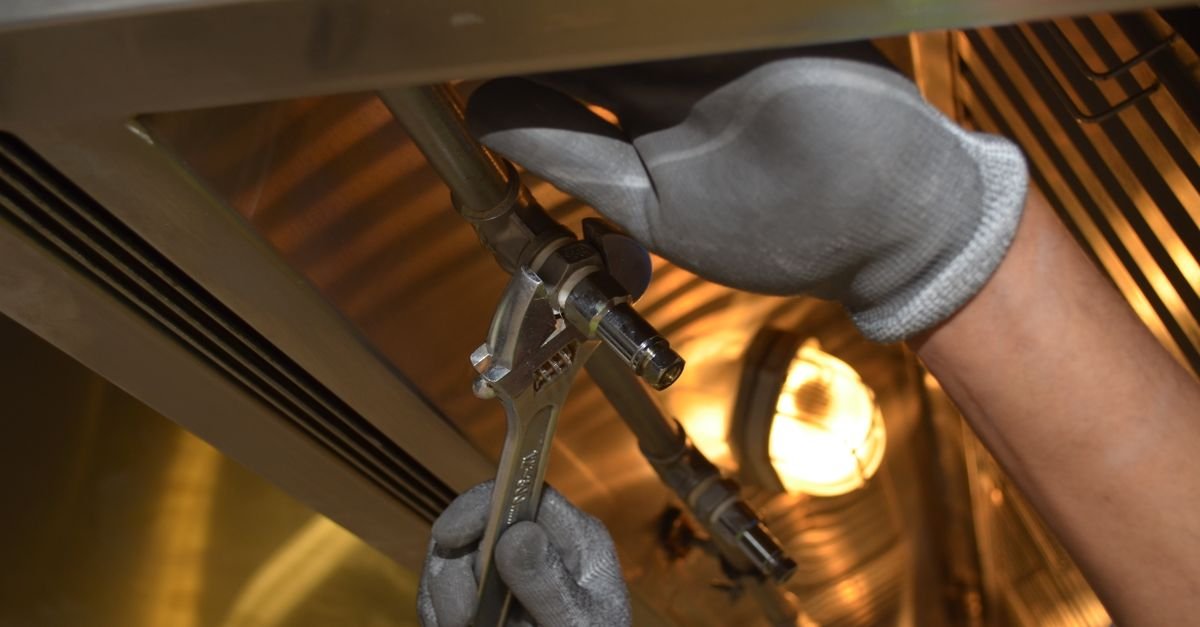
If the brand-new ring still weeps, stop replacing rings. The groove or the mating face is damaged, and the fitting itself needs to go.
The Case for and Against Silicone Grease
Against: grease is sticky, grit sticks to it, and grit is the abrasive you were trying to keep out of the groove in the first place. Lay it on thick and you also risk holding the ring off its seat on the first connection.
For: the dominant wear mechanism on a coupler ring is being dragged dry across a metal edge, dozens of times a day. Lubrication removes most of that.
The for side wins, with a qualifier — a film you can barely see, not a bead. And silicone specifically, not whatever grease is on the bench. Silicone is compatible with nitrile, FKM and EPDM alike, whereas petroleum grease will swell an EPDM ring into uselessness. If you cannot remember which compound you fitted six months ago, silicone means you never have to.
FAQ
Are all pressure washer O-rings the same size?
No. Three sizes cover most home machines: a larger ring for 3/8 inch quick connects between the machine and the gun, a smaller one for 1/4 inch connects from the gun forward, and a ring on the M22 hose stem that is close to the 1/4 inch size. Within those, dimensions vary slightly between manufacturers, which is why assortment packs are the sensible purchase.
Can I use automotive or plumbing O-rings on a pressure washer?
Only if the cross section matches and the material suits. A hardware-store nitrile ring of the right dimensions will seal fine on a cold-water machine. What will not work is a ring that is merely close — half a millimetre of extra cross section stops the coupler seating, and half a millimetre less blows out on the first trigger pull.
How often should pressure washer hose O-rings be replaced?
There is no hour interval worth quoting, because the wear is driven by connection cycles, heat and chemistry rather than runtime. The practical rule is to replace the ring the first time a joint weeps, and to replace both ends of a hose together rather than one at a time — they have done identical work, so the second one is not far behind.
Why does my pressure washer still leak after a new O-ring?
Three usual causes. The ring is the wrong cross section. The ring went in twisted or pinched. Or the groove is damaged — scored by a screwdriver during a previous change, or eroded by a leak that ran for a while before you noticed. The third means replacing the fitting, not the ring.
What is the brown O-ring for?
Brown, and sometimes green, is the conventional colour for FKM — Viton. It marks the higher-temperature, higher chemical-resistance ring. If you have a hot-water machine or run bleach-based detergent, those are the ones you want on every connection.
Do I need to grease the O-rings on my quick connects?
A very thin film of silicone grease is worth it. It reduces the drag that wears rings out during nozzle changes and helps them seat evenly. Keep it to a barely visible film, and use silicone rather than petroleum grease so it is safe with any compound you might have fitted.
Replace in Pairs, Grease Light, Stop Wrenching
Three habits will retire this problem for good. Buy an assortment pack and keep it in the machine’s bag, because the ring you need is never the one you have. Fit FKM at every connection if there is heat or hypochlorite in your routine, and nitrile if there genuinely is not. And when a fitting weeps, put the wrench down — an O-ring that is squeezed correctly cannot be squeezed harder, and the only thing another quarter turn achieves is chewing the rubber you just paid fifteen cents for.
If your fitting is still dripping after all that and you are starting to suspect the problem was never the seal, the leak may be costing you pressure somewhere else entirely — work through the low pressure checklist before you buy anything bigger than a rubber band.