Last Updated on September 25, 2026 by Umar Farooq
A pressure washer chemical injector is not a pump — it is a venturi, a deliberate narrowing in the water path that creates suction only while the pressure on the far side of it stays low. Everything the part does, including all the behaviour people mistake for a fault, follows from that one sentence.
The injector itself is about the size of a thumb. Brass or stainless, an inlet, an outlet, a hose barb on the side, and one small ball inside that moves. That is the entire device. It has no electrical connection, no setting on most machines, and no way of telling you what it is doing. It just sits between the pump and the hose, quietly obeying physics, while its owner stands in the driveway concluding it has died.
This article is about the component — how it makes suction, how much chemical it actually pulls, how hose length and flow rate change that number, and what genuinely breaks. The chemicals that go through it are a separate subject, covered in power washing chemicals, and if your soap has stopped flowing today and you want the fault list in order of likelihood, start with why a pressure washer soap dispenser stops working instead.
The Venturi Throat Does All the Work
Water enters the injector at whatever flow your pump produces. Partway through the body it hits a machined orifice — the throat — which is much narrower than the bore either side of it. Flow rate cannot change, so velocity has to rise, and when velocity rises, static pressure falls. That low-pressure zone sits directly under the side port. Atmospheric pressure on the surface of your detergent bucket does the rest, pushing chemical up the tube into the gap.
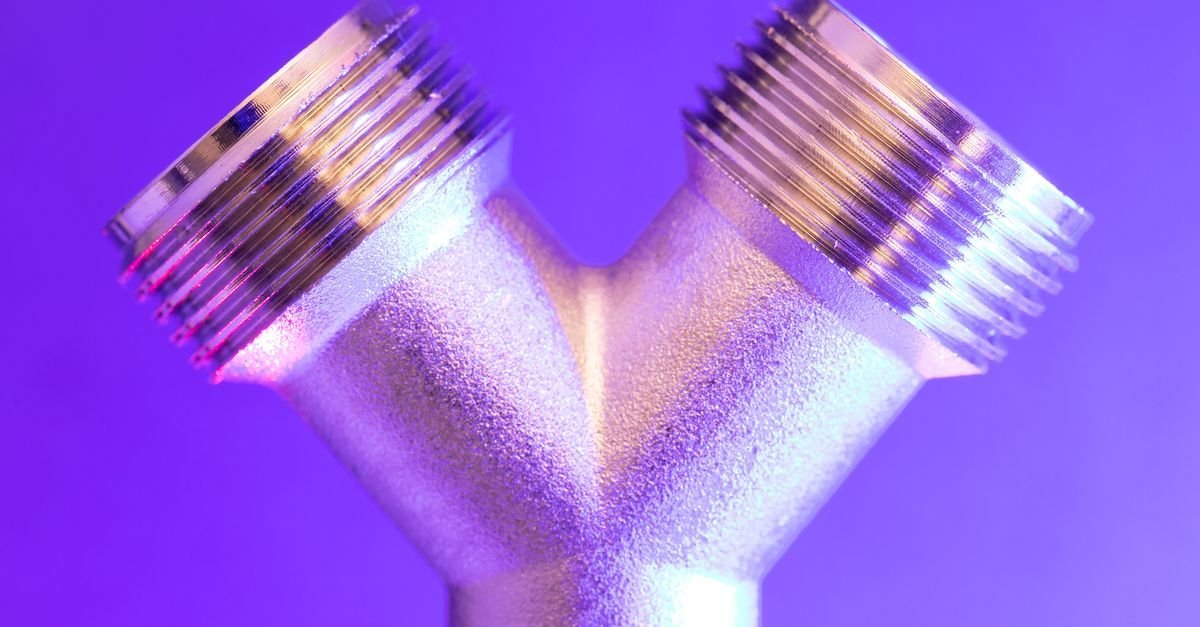
There is no clever part. The suction is the shape.
What makes the injector feel temperamental is that the throat only produces a usable low-pressure zone while the water leaving it can get away freely. Squeeze the outlet — with a narrow nozzle, or a great deal of hose — and pressure backs up through the throat until the differential collapses. Pressuretek puts the working requirement at roughly a 30% pressure differential across the outlet side before the vacuum forms at all (Downstream Injection, Pressuretek). Envirospec approaches the same limit from the other end: about 800 PSI sitting on the outlet is enough to shut the draw down completely (Chemical Injectors, EnviroSpec technical library).
Two consequences fall out of that, and neither is obvious from the outside.
First, the throat is a fixed size on most injectors. A fixed injector has no adjustment because there is nothing to adjust. The draw rate was decided on a lathe.
Second, the throat wears. Years of hard water and hypochlorite slowly open the orifice, and a wider throat means less velocity, less pressure drop, and less suction. An injector that pulls beautifully in its first season and feebly in its fifth has not broken. It has relaxed.
The only moving part is a check ball sitting behind the barb, held on a light spring or simply by gravity. A typical quarter-inch stainless check valve opens at about 0.5 PSI, which is a very small amount of suction, and closes the instant pressure tries to come back the other way. That ball is the difference between drawing detergent out of the bucket and firing hot water into it.
Downstream or Upstream: Where the Chemical Joins the Water
The names describe one thing only: where the injector sits relative to the pump. Everything else follows from that position.
| Downstream injector | Upstream injector | |
| Position in the plumbing | Between pump outlet and high-pressure hose | On the pump inlet, before the water reaches the pistons |
| What the chemical touches | Hose, gun, wand, nozzle | Pump valves, seals, unloader, then everything else |
| Draws at | Low pressure only — soap nozzle fitted | Any pressure, any nozzle |
| Body material | Brass or stainless, rated to full system pressure | Usually plastic or brass, low pressure |
| Typical fitment | Nearly every consumer machine, and every soft-wash rig | Some onboard-tank electrics, some older gas units |
| Safe with sodium hypochlorite | Yes, with a flush afterwards | No |
| Why a maker chooses it | Protects the pump | Cheap, and it works with any tip |
Upstream injection sounds like the better engineering, and for suction alone it is — it draws at any pressure because it is not fighting system pressure at all. The problem is the route. Everything you put in that tank goes through the pump before it goes anywhere else, and a pump is a box full of elastomer seals and brass. Sodium hypochlorite is unkind to both. If the machine you own has an onboard soap tank, check the manual for which side of the pump it feeds before you pour anything stronger than car shampoo into it.
Downstream injection protects the pump by giving the chemical nowhere to go but out. That is why it dominates, and it is also why it comes with the one behaviour everybody finds baffling.
Why the Injector Ignores You Until the Black Nozzle Is On
A downstream injector cannot draw while a high-pressure tip is fitted. Not weakly. Not slowly. At all.
The black soap tip is roughly 65 degrees and has by far the largest orifice in the set, which drops outlet pressure to somewhere around 15 to 25% of the machine’s rating — a 3,000 PSI unit falls to something in the 400–700 PSI region. That collapse is what opens the differential across the throat. Fit a green tip instead and the injector stays at full system pressure on both sides, sees no gradient, and does nothing.
This is the single most common reason a soap system appears dead, and it is not a fault report. It is the mechanism working exactly as designed. The first time you do it the machine feels broken, because you have just traded a jet for a dribble. That trade is the price of the suction.
Two related details are worth knowing:
- A partly blocked black tip kills the draw as effectively as a green one. Back-pressure is back-pressure, and the injector cannot tell the difference between a narrow nozzle and a clogged wide one.
- Chemical application wants a large orifice. Pressuretek’s working guidance is a #40 orifice as the minimum for chemical work — anything tighter starts pushing outlet pressure back up. If your low-pressure tip is a mystery brass item with no marking, that is the number to compare it against.
For the full order of causes when the black tip is on and nothing is happening, the pressure washer nozzle chart covers which tips exist and what each one does to system pressure.
Draw Ratio: What the Bucket Mix Becomes on the Wall
Here is the part that most owners never find out, and it changes how you mix.
An injector does not deliver your bucket to the surface. It delivers a fraction of your bucket, diluted into the entire water stream. That fraction is the draw rate, usually quoted as a percentage, occasionally as a ratio like 10:1 meaning ten parts water to one part chemical.
Advertised draw rates run high — 20%, 27%, 30% for the aggressive units. Real ones do not. Envirospec, which sells the things, states plainly in its own technical library that it is “unrealistic to expect field draw rates to be equal or even close to the advertised draw rate,” and puts typical field performance at 10 to 14%. I went looking for someone selling injectors who would admit that in writing, and found it on the first one I checked, which is more honesty than the category usually manages.
So the arithmetic you actually need is one line:
Strength on the surface = strength in the bucket × draw fraction.
Run that with a 12.5% sodium hypochlorite concentrate and it stops being abstract.
| Draw rate | Rough ratio | 12.5% SH lands at | What that suits |
| 20% | 4:1 | 2.5% | Heavy roof or concrete work |
| 14% | 6:1 | 1.75% | Strong house wash, stubborn organic growth |
| 10% | 9:1 | 1.25% | Standard house wash |
| 7% | 13:1 | 0.9% | Light siding, soft surfaces |
| 5% | 19:1 | 0.6% | Barely doing anything |
Two things fall out of that table. One, the professional habit of downstreaming concentrate neat is not recklessness — the injector is the dilution step, and a 10% draw turns 12.5% into a shade over 1%, which is the house wash target. Two, if you dilute the bucket first and then downstream it, you have diluted twice, and the wall gets a rinse with a rumour of detergent in it.
Viscosity matters here too. The thicker the chemical, the lower the draw — a gel-textured car shampoo may draw at half the rate of a thin house-wash mix through the same injector on the same day.
Measure Your Real Draw Ratio With a Jug and a Timer
You do not have to take anyone’s number, including mine. Measuring your own takes five minutes and a kitchen jug.
1. Fill a marked jug with plain water — 64 fluid ounces is a convenient start. No detergent, so nothing sticky is left in the tube.
2. Drop the siphon tube in, filter and all, at the same height you normally work at.
3. Fit the black nozzle, connect the hose you actually use, and hold the trigger fully open into a drain for exactly 60 seconds.
4. Measure what is left in the jug. The difference is your draw per minute.
5. Do the sum: draw % = ounces drawn ÷ (GPM × 128) × 100.
The 128 is fluid ounces in a US gallon, so `GPM × 128` is simply your machine’s output for that minute.
| Machine flow | Output per minute | Jug should drop this much at 10% | At 5% |
| 1.4 GPM | 179 fl oz | 18 fl oz | 9 fl oz |
| 2.0 GPM | 256 fl oz | 26 fl oz | 13 fl oz |
| 2.5 GPM | 320 fl oz | 32 fl oz | 16 fl oz |
| 3.0 GPM | 384 fl oz | 38 fl oz | 19 fl oz |
| 4.0 GPM | 512 fl oz | 51 fl oz | 26 fl oz |
Then do it twice. Once with 25 feet of hose, once with every hose you own daisy-chained together. The gap between those two numbers is the most useful thing you will learn about your own setup, and it is usually larger than anyone expects.
Every 50 Feet of Hose Takes Some of Your Soap
Everything between the injector and the nozzle is resistance, and resistance is pressure the throat has to fight. Pressuretek’s rule of thumb is about 1 PSI lost per foot of high-pressure hose, which is why the draw fades gradually rather than failing cleanly. Most downstream injectors will still pull something at 150 feet, and most have given up entirely by 200.
Three things add back-pressure, and only one of them is obvious:
- Length. The one everybody knows. A 50-foot extension added to an existing 50-foot hose is a different machine as far as the injector is concerned.
- Internal diameter. Three-eighths of an inch is the standard for a reason. Plenty of homeowner machines ship with quarter-inch hose, which has substantially more friction loss per foot — 50 feet of quarter-inch does not behave like 50 feet of three-eighths.
- Lift. Raising the gun far above the injector costs you suction in the ordinary way gravity costs anyone anything. Working above roughly ten feet of elevation starts to show.
So here is the opinion, and it will save someone forty dollars: if your draw is weak, do not buy a stronger chemical or a high-draw injector. Take fifty feet of hose off. At a pound of pressure per foot, a 100-foot run is asking the venturi to work against another 100 PSI of back-pressure before it does anything useful — and a high-draw injector fighting that same 100 PSI is just a more expensive way to be disappointed. Apply the soap on a short hose, reconnect the extension, and rinse from wherever you like. Rinsing does not need the injector at all.
Which Injector Size Does Your GPM Need?
Injectors are sold in flow bands, not as one universal part, and the band matters because the throat has to be sized to the water going through it. Too large for your flow and velocity never rises enough to make suction. Too small and it becomes a restriction, costing you pressure at the nozzle.
Common bands run roughly 1–2, 2–3, 2–5 and 5–8 GPM, with fixed-orifice models sized by number instead — EnviroSpec’s range runs from orifice #1 for 4 GPM and under up to #5 for over 10 GPM.
| Your machine | Injector band to look at |
| 1.2–1.6 GPM electric | 1–2 GPM |
| 2.0–2.5 GPM gas homeowner | 2–3 GPM |
| 2.5–3.2 GPM gas homeowner | 2–5 GPM |
| 4 GPM and up | 5–8 GPM, or a fixed orifice sized to flow |
One piece of counter-intuitive advice from the trade is worth repeating: Pressuretek recommends fitting the 3–5 GPM injector on a 5 GPM machine rather than the 5–8, because sitting at the top of a band draws better than sitting at the bottom of the next one up.
If your machine came with an injector built in, none of this is a decision you need to make — it was sized at the factory. This section is for the person standing in front of a parts listing wondering why there are nine of them.
Clearing a Clogged Pressure Washer Chemical Injector
Blockages come from three sources: dried detergent in the passages, mineral scale from hard water, and grit that got past the filter. The order of work is the same for all three.
1. Start at the filter. The small mesh sleeve on the end of the siphon tube is the most ignored part of the whole system and the most frequently blocked. Pull it off, rinse it, hold it up to a light.
2. Check the tube before the injector. A split, a perished barb or a loose push-fit lets the injector suck air instead of chemical, which looks identical to a blockage from where you are standing.
3. Remove the injector body. Most unscrew between the pump outlet and the hose. Note which way round it goes — they are directional, and fitted backwards they do nothing at all.
4. Soak it. Warm water for dried detergent. White vinegar for scale. Give it an hour rather than a minute.
5. Backflush it. Run water through from the outlet toward the inlet, the opposite of its working direction. That pushes debris off the check ball seat rather than further onto it.
6. Work the ball gently. A wooden cocktail stick, light pressure, nothing else.
Then the rule that matters more than any of the above: never put metal through the throat. Not a drill bit, not a wire, not a nozzle pin. The orifice diameter is the whole mechanism, and enlarging it by a few thousandths permanently lowers the draw. You would be curing a blockage by manufacturing the wear pattern that kills injectors anyway, only faster.
Briggs & Stratton’s own detergent siphoning guidance recommends the same isolation approach before you take anything apart: reconnect components one at a time until the siphoning stops, and the last thing you added is the thing at fault.
Check Valve Failure Has Two Tells
The check ball fails in two directions, and they look nothing alike.
Stuck open. High-pressure water forces its way back down the siphon tube. The signs are unmistakable once you know them: the level in the chemical container rising instead of falling, the clear tube running the wrong way, foam boiling up out of the bucket, or detergent that comes back warm. Left alone this also pushes water into your concentrate, which quietly ruins a whole jug of chemical while you are busy blaming the injector for not drawing.
Stuck shut. No draw at all, even after you have confirmed the black nozzle, cleaned the filter, fitted a short hose and thinned the chemical. Put a fingertip over the barb with the machine running and the soap tip on. You should feel a definite pull. Nothing at all points at the ball.
There is a third, quieter failure worth knowing: a weeping barb. If you smell detergent around the injector body after running clean water, or find a damp patch that is not condensation, the seal at the port has gone. On many injectors the check valve is a separate quarter-inch screw-in item costing a few dollars, so it is worth checking whether yours can be replaced before you buy a whole new body.
FAQ
Do all pressure washers have a chemical injector?
No. Most consumer machines have one, usually downstream and usually not labelled as anything more exciting than “soap”. Some budget electrics have only an onboard tank feeding upstream, and some pro-grade cold-water units ship without any injection at all on the assumption that the owner will fit the one they prefer.
Can a chemical injector work at high pressure?
A downstream one cannot, and no setting will change that. The suction exists only because pressure drops across the throat, and a high-pressure nozzle removes the drop. An upstream injector or an onboard tank feeding the pump inlet will draw at any pressure, which is its single genuine advantage and comes at the cost of running chemical through your pump.
What draw ratio should a downstream injector have?
Somewhere in the 10 to 20% range covers almost all homeowner work. Measure what yours actually does with the jug test rather than trusting the figure on the packaging — advertised and field rates are different numbers, and the honest suppliers say so.
Can I run bleach through a pressure washer chemical injector?
Through a downstream injector, yes, and that is exactly what soft washing is. Through an upstream injector or an onboard tank that feeds the pump, no — sodium hypochlorite attacks pump seals and brass directly. Either way, flush with clean water afterwards.
Why does my injector draw on the machine but not with the hose connected?
Back-pressure. Disconnected, the outlet is open to atmosphere and the venturi has an easy job. Add 100 feet of hose and you have added roughly 100 PSI for it to fight. Shorten the hose for the soap pass and the draw usually comes straight back.
How long does a chemical injector last?
Years, but its performance fades rather than stopping. The throat wears wider, the check ball seat picks up scale, and draw drops season by season. If yours measures well below the band it should be in and cleaning has not helped, replacement is a small part and a five-minute job.
Can I fit a chemical injector to a machine that does not have one?
Usually yes, provided you buy one sized to your flow and rated for your pressure. It goes inline at the pump outlet, in the direction marked on the body. The alternative is a foam cannon at the gun end, which skips the injector question entirely and gives thicker foam at the cost of a smaller bottle.
Sixty Seconds of Clean Water
Almost everything in this article — the scale on the ball, the crusted passages, the throat opening up a thousandth at a time — is a slow consequence of leaving chemical sitting inside a part that was designed to have water in it. Drop the siphon tube into a bucket of clean water, fit the black nozzle, and spray for a minute before you put the machine away. That is the whole maintenance routine.
The injector will never thank you, because it has no moving parts to speak of and no way of expressing gratitude. But it will still be drawing 12% in five years, and the person who skipped the minute will be on the internet at that point, searching for what is wrong with theirs.