Last Updated on September 25, 2026 by Umar Farooq
The power wash vs soft wash question is really two arguments wearing the same coat. In the trade, power washing means heated water and pressure washing means cold — that is the entire difference, and it barely touches a homeowner. Soft washing is the one that matters: not a low setting, but a cleaning solution applied at garden-hose pressure and left to work.
Get the first one wrong and you use the wrong word. Get the second one wrong and you take the granules off a roof you are still paying for.
Power Wash vs Soft Wash: Settling Both Arguments at Once
Three phrases, two of which mean the same thing to almost everyone using them.
Pressure washing is cold water forced through a small orifice at high speed. Power washing, if you take the trade definition seriously, is the same thing with a burner heating the water on its way out. Soft washing is not in that family at all. It is a chemical process that uses water only as a carrier — a lot of flow, almost no force, and a dwell period where the operator stands there doing nothing on purpose.
So when a neighbour says they power washed the patio and a contractor says they pressure washed it, they almost certainly did the identical thing with the identical cold-water machine. The words drifted. Nobody is going to un-drift them, and correcting people about it at a barbecue has never once improved an afternoon.
What does not drift is the third word. Soft washing describes a different physical process with a different failure mode, and treating it as a synonym for “gentle pressure washing” is how roofs get ruined by people who thought they were being careful.
Heated Water Is the Only Real Power Washing Distinction
If you want the honest version of power washing, it is not a marketing tier or a pressure band. It is a heating system bolted to a pressure washer.
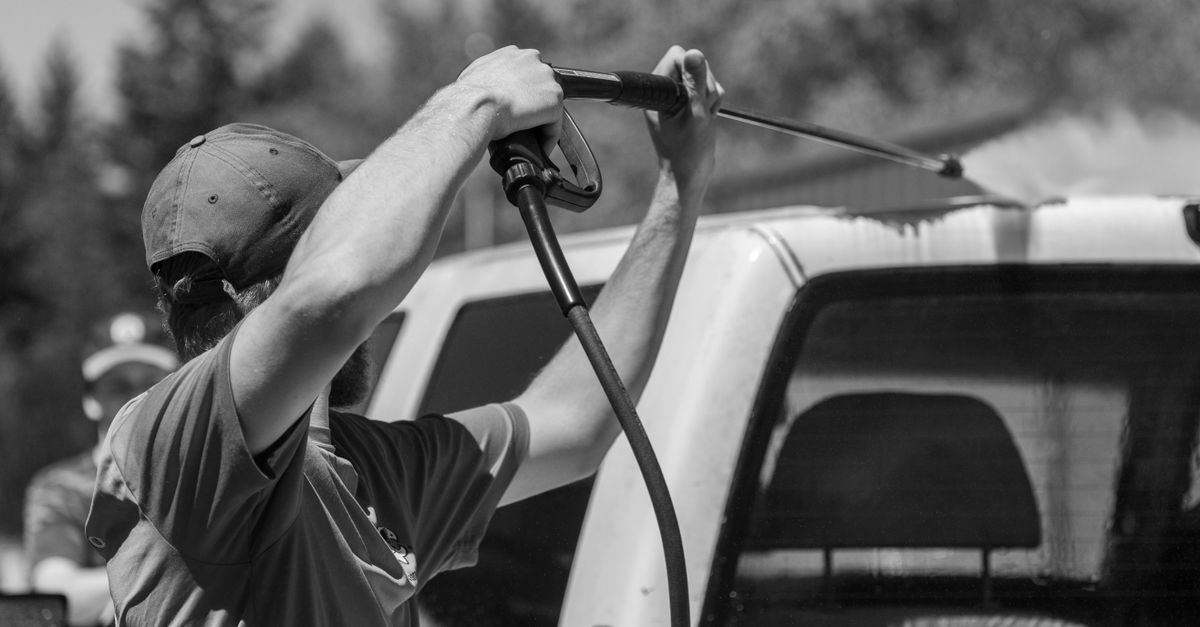
Kränzle’s own FAQ describes a hot water unit as two power systems — “the pump-motor to create the high-pressure water, and the burner-coil to heat the stream of pressurized water” — with the burner running on diesel or kerosene even when the pump itself is electric (Kränzle USA, FAQs). That is a second machine, carrying its own fuel, with its own coil to descale. Nobody accidentally owns one. If the thing in your garage came out of a cardboard box with a handle on it, you own a cold-water pressure washer, whatever the label says.
Heat earns its keep on a narrow band of work. The same source puts hot water at up to 50% faster on dirt, gum, grease and oil, and notes that cold water only matches it when the right chemical is doing the difference. That is fleet washing, kitchen extraction, engine bays and oily shop floors. It is not algae on siding, because heat does nothing for algae that a chlorine solution does not do better and cheaper.
The move people try instead is feeding the hot tap into a cold-water machine, and it is worth knowing exactly what that costs. Most pumps cap inlet water at 140°F, and at that inlet temperature the pump’s seals and O-rings are already near the maximum they can handle. The moment you release the trigger and the pump drops into bypass, that already-hot water starts recirculating inside the pump with nowhere to dump its energy. Manufacturers do not publish how fast it climbs, and the figures circulating online are unsourced, so the number worth having is the one they do print: Simpson’s manuals say in two separate places not to run in bypass for more than two minutes, because “internal components of the pump can be damaged” (Simpson generic pressure washer manual). Start at the inlet limit and that two-minute allowance is already spent. The tell is the pump oil turning milky as water slips past the failing seals, which is the machine’s way of filing a complaint before it stops filing anything.
Soft Washing Trades Pressure for Flow, Time and Chemistry
Soft washing runs at roughly garden-hose pressure and does its work through three things a pressure washer does not have: a solution that kills what is growing, enough flow to wet a whole wall evenly, and a dwell period.
The dwell is the part that looks like a scam. You apply the solution, and then for ten or fifteen minutes the surface does approximately nothing while you stand there resisting the urge to help. That is the step. ARMA’s roof guidance asks for a bleach-and-water solution left on for at least 15 minutes and no more than 20 before a gentle rinse (ARMA, Algae Discoloration of Roofs). The water that follows is not cleaning anything. It is carrying off something that has already died.
The flow matters as much as the low pressure, and this is the bit that gets missed. A soft wash gun is built around a large orifice — high gallons per minute at low PSI — because you need every square foot of a wall wet at the same time and still wet when the dwell ends. Volume keeps it wet. Force does not.
Which brings up the thing everybody tries first: easing off the trigger, or backing the wand away, and calling the result a soft wash. It is not, and the reason is arithmetic rather than opinion — our guide to low pressure roof cleaning works through why a pressure washer has no usable volume knob and what the black soap nozzle actually gets you. If you want the full method rather than the definition, roof soft cleaning covers the application, the dwell and the rinse end to end.
The Question Is What Is Holding the Dirt On
Every comparison article sorts surfaces into delicate and durable. That is the wrong axis, and it is why so much of the advice reads as arbitrary. The surface does not decide the method. The soiling does.
There are two kinds of dirty. One is alive: algae, cyanobacteria, moss, lichen. The other is inert: mineral grit, tyre rubber, carbon, oil, oxidised paint binder.
Living soiling can be killed, and once it is killed it stops. It also has an anchored part you cannot see, which is why pressure fails on it twice over — the jet takes off the visible colour and leaves the anchorage, and the anchorage is a crop. Water and light grow it back from there, on whatever schedule your climate runs. Nothing you do with a wand changes that.
Inert soiling cannot be killed, because it was never alive. There is no chemical that persuades a tyre mark to stop being carbon, or a decade of road grit to release from open concrete pores. It has to be physically sheared off the surface, and the only things that shear are pressure to break the bond and flow to carry the debris away.
That is the whole rule. If the dirt is alive, use chemistry. If the dirt is dead, use force. Most of the confusion in this topic comes from people applying force to living growth, getting a result that looks good for four months, and concluding the surface just gets dirty quickly.
Surface by Surface: Which One Gets Which
Numbers are starting points, on a test patch, out of sight, at the widest tip you can stand. Where a manufacturer publishes its own figure, that figure wins.
| Surface | Method | Number to work to | Why |
| Asphalt shingle roof | Soft wash only | ARMA: do not power wash, at all | Granules are glued on; the algae is rooted between them |
| Concrete tile roof | Soft wash; pressure only if needed | 1,200 PSI max, nozzle 1–2 ft off | The colour layer is a consumable, not the tile |
| Vinyl siding | Soft wash, low-pressure rinse | 1,300–1,600 PSI if rinsing at all | Growth is cosmetic on PVC; laps shed rain downward only |
| Stucco, render, fibre cement | Soft wash | 1,200–1,500 PSI if rinsing | Algal acids attack the mineral binder itself |
| Painted wood | Soft wash | 500–800 PSI, 40° tip | Paint fails in sheets once the bond is broken |
| Softwood decking | Chemistry first, then low pressure | 500–600 PSI, 25°–40° | Fibre tears before the grey layer lifts |
| Composite decking | Soap, soft brush, gentle rinse | Current Trex: 3,100 PSI max, fan tip, 8 in. Early generations: none | Manufacturer-specific, and the warranty is explicit |
| Brick with sound mortar | Soft wash by default | 400 PSI or less, 25° | Crumbling mortar changes the answer to neither |
| Concrete flatwork and driveways | Pressure | 2,500–3,000 PSI, or a surface cleaner | Inert soiling, no coating to lose |
| Windows | Neither — hose and a cloth | Garden-hose pressure, 40° | Seals and glazing beads are the weak point |
| Cars | Pressure, gently | 1,200–1,900 PSI, 25°–40° | Clear coat is a coating like any other |
The composite row is the one worth reading twice. Trex publishes 3,100 PSI with a fan tip held no closer than eight inches for Transcend, Enhance and Select, and states plainly that its early-generation boards must not be pressure washed at all (Trex Care and Cleaning). A great deal of content online invents a single much lower blanket number for composite. The real answer is a question: which generation do you have?
A Shingle Roof and a Driveway Are the Two Far Ends
Put those two next to each other and the whole argument resolves, because they fail in opposite directions for opposite reasons.
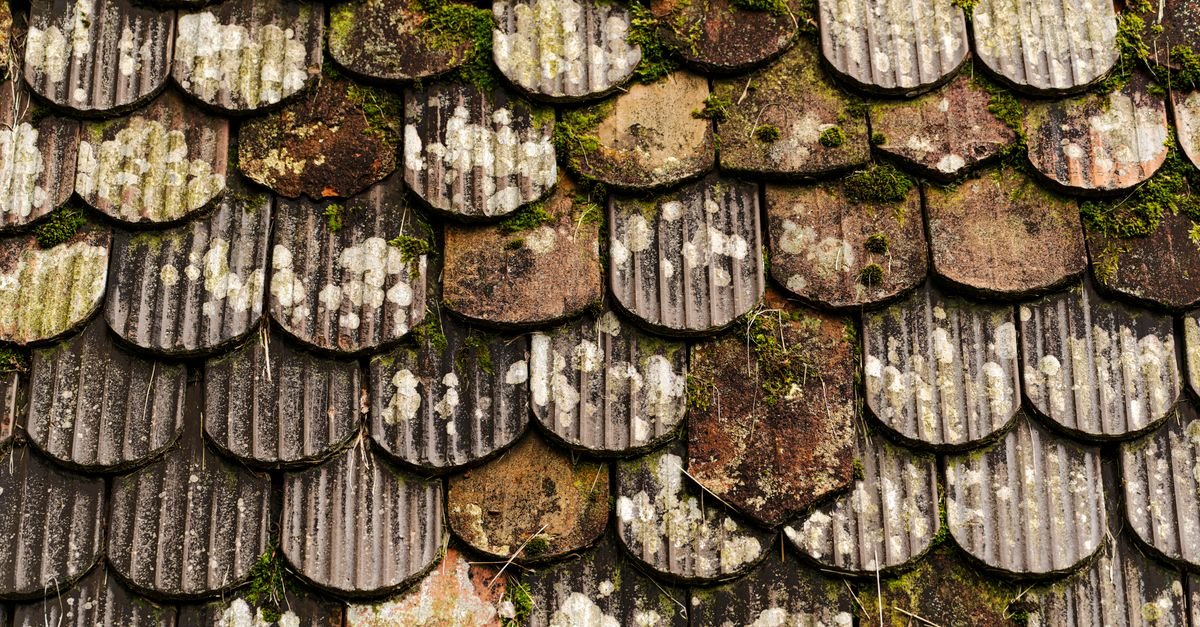
A shingle is a layer of mineral granules adhered to an asphalt mat. The granules are the product — they carry the colour and they take the ultraviolet hit so the asphalt underneath does not. They are also finite, and once a jet has moved them there is no putting them back. Meanwhile the thing you are aiming at is a photosynthetic organism anchored in the gaps between those granules. Pressure removes the expensive part and leaves the living part. It is difficult to design a worse method, and ARMA does not hedge about it either.
A concrete driveway is the inverse on both counts. It is the same material all the way down, with no coat to lose, and the soiling is mineral, oily and thoroughly dead. Chemistry helps — a degreaser and a dwell will do more for an oil stain than another 500 PSI — but nothing in a bottle will finish the job by itself, because there is nothing alive to kill. This is where flow does the heavy lifting and where the PSI numbers are allowed to get large; how much PSI to clean a concrete driveway has the settings by finish type.
Everything else on the house sits somewhere between those two ends, arguing with itself. Brick is the clearest example: sound mortar takes pressure comfortably, crumbling mortar takes it exactly once.
Read the Quote for Which One They Mean
If you are hiring rather than doing it yourself, the words on the quote are nearly meaningless and the equipment on the van is not.
A crew that genuinely soft washes arrives with a tank, a 12-volt pump and a proportioner, and they will be able to tell you the dwell time before you ask. A crew that pressure washes arrives with a wand and a reel. Both are legitimate businesses. They are just not interchangeable, and a company that says “we power wash roofs” has told you something important about your roof.
Three questions get you most of the way:
- What pressure reaches the surface, and how do you know? A number, not an adjective. If the answer is “we turn it right down,” they are pressure washing.
- What is in the tank, and how long does it sit? Soft washing has a dwell. If nobody on the van can name one, what you are buying is a rinse.
- What happens to the plants and the runoff? Anyone who soft washes regularly has a pre-wet and rinse routine for landscaping, because they have learned the hard way.
Expect a soft wash to take longer in wall-clock time and look like less is happening. That is the product. You are paying for the fifteen minutes where nobody touches anything.
FAQ
Is power washing the same as pressure washing?
In everyday use, yes — the two words are interchangeable and almost every machine sold to homeowners is a cold-water pressure washer regardless of what the box says. In the trade there is a real distinction: a power washer heats the water with a burner-coil, usually running on diesel or kerosene, and a pressure washer does not.
Is soft washing just pressure washing on a low setting?
No. Soft washing is a chemical process that uses low-pressure, high-volume water to apply a solution, hold it on the surface for a dwell period, and rinse it off. Turning your pressure washer down does not give you the solution, the volume or the dwell, and a pressure washer cannot be throttled to garden-hose pressure in any case.
Can I soft wash with the pressure washer I already own?
Partly. Fitting the black soap nozzle drops system pressure enough for a downstream injector to draw detergent, and that is a genuine low-pressure application method. But it lands you in the hundreds of PSI rather than near 100, and the injector dilutes at a ratio you do not control. For siding it is often workable. For an asphalt roof it is not.
What PSI is soft washing?
Roughly garden-hose pressure — the low end of the hundreds at most, and under 100 PSI at the tip for roof work. Professional rigs use 12-volt diaphragm pumps precisely because they sit in that band and hold a steady application rate across a whole wall.
Which is better for vinyl siding, power washing or soft washing?
Soft washing, in almost every case. The growth on vinyl is algae, which is alive and has a chemical kill, and vinyl siding sheds rain downward rather than resisting a jet aimed upward under the laps. If you rinse with a pressure washer afterwards, stay in the 1,300–1,600 PSI range with a 25° or 40° tip and never spray upward.
Does a soft wash last longer than a pressure wash?
On organic growth, yes, and the reason is mechanical rather than magical. A jet removes the visible colour and leaves the anchored organism to regrow; a biocide kills it at the root. That is why black streaks return within months of a pressure wash and take considerably longer to return after a soft wash.
Can I put hot water into my cold water pressure washer?
You can, and most pumps are rated to a 140°F inlet, but it is a poor trade. At that inlet temperature the seals and O-rings are already at their limit, and the moment you release the trigger that water starts recirculating with nowhere to dump its heat. How fast it climbs is not published anywhere credible, so go by the limit that is: Simpson caps bypass running at two minutes. Milky pump oil is the sign it has started.
Is soft washing safe around plants?
Safer than most people assume, and only if you do the routine: wet the planting down before you start, keep it wet, and rinse it thoroughly afterwards. Dilution is what protects plants, and dry foliage takes the solution up concentrated.
The Dirt Picks the Method, You Just Agree With It
Stop asking whether the surface is delicate and start asking whether what is on it is alive. Algae, moss and lichen have a kill, so give them chemistry and fifteen boring minutes. Grit, oil and tyre rubber have no kill, so give them pressure and flow and a wide tip. Almost every surface on a house sorts itself once you ask the question in that order.
And if you have been calling it power washing for twenty years, carry on. The machine has never once minded.