Last Updated on September 26, 2026 by Umar Farooq
Citric acid cleaning has a second mechanism that vinegar does not have — the citrate ion wraps around a dissolved metal ion and holds it there, so it lifts rust and iron staining where acetic acid lowers the pH and then stalls. That one property is the entire case for the stuff, and it is the property nobody selling it bothers to explain.
What they put on the front instead is “natural”, “plant-derived”, “food grade”, and a picture of a lemon. All true, all beside the point. I went looking for what the chemistry literature actually says about citrate and metal ions, because the consumer writing on this compound is a wall of recipes with no mechanism underneath any of them, and the mechanism turns out to be the interesting part.
So this is citric acid as a chemical rather than as a hack. What it does that the other acids on the shelf cannot, what it does not do at all, and the surfaces where it is every bit as destructive as the jug of muriatic you were sensibly avoiding. If you want the family overview first — which acid for which stain — concrete cleaning acid is the article that sorts the shelf. This one is about the powder.
Citric Acid Cleaning Is Chelation First, Acidity Second
Citric acid is a tricarboxylic acid: three carboxyl groups hanging off a short carbon backbone, plus a hydroxyl group in the middle. That shape is the whole story, because it lets the molecule do two unrelated jobs at once.
The first job is the ordinary one. Those carboxyl groups release protons in water, the solution turns acidic, and the protons attack carbonate — limescale, efflorescence, mortar haze. Vinegar does this too. Any acid does.
The second job is the one vinegar cannot copy. Once a metal ion is loose in solution, the citrate ion can clamp onto it at more than one point at the same time, closing a ring around it. That is chelation, from the Greek for claw, and the practical effect is that the metal stops behaving like a free ion. It cannot find a partner, it cannot precipitate, it cannot re-deposit on the surface you just cleaned. It leaves in the rinse water instead.
A 2023 study in *Foods* set out to settle whether citric acid and iron actually form a true chelate or just sit in the same beaker looking friendly, and concluded that “the chelation of citric acid is achieved in the liquid form and at a low pH and that the molar ratio is very important.” The number that matters for a bucket is the pH: the authors found chelation “has taken place even at low pH (around 1)”, and noted this matches earlier work showing citric acid at pH 1 outperforming EDTA, EGTA and CDTA operating at higher pH (Mattar et al., *Are Citric Acid-Iron II Complexes True Chelates or Just Physical Mixtures and How to Prove This?*, Foods 12(2), 2023).
That is the useful part. Most chelating agents want a friendly pH to work in. Citrate carries on chelating in exactly the acidic range you get when you tip the powder into water, which means the acid attack and the metal grab happen in the same application rather than needing two products.
Acetic acid has one carboxyl group and nothing positioned to close a ring. It can push protons at a stain and that is the end of its repertoire. This is why vinegar stalls on rust and citric does not — one hand versus three, reaching for the same object.
Why It Ships as a Powder and Vinegar Ships as Water
Citric acid is sold as a white crystalline solid. That sounds like a packaging detail and it is actually the second real advantage, for three reasons.
A five-pound bag is five pounds of acid. A gallon of white vinegar is roughly 95% water that somebody put on a lorry, and the gap widens the more of it you need.
It stores without drama. No fumes, nothing venting into the shed, no gradual loss of strength on the shelf the way sodium hypochlorite quietly weakens over a summer, and nothing off-gassing hydrogen chloride at the tools on the bench above it the way an open jug of muriatic does. A sealed tub you bought last year is the same tub this year, provided it stayed dry.
And you mix the strength you need, which gets its own section because it is the bit people get wrong.
This is the same argument this site already makes for sulfamic acid on decorative concrete, and it is not a coincidence — the solid acids are easier to live with than the liquid ones. Citric is the other solid on that shelf, it is the one that also chelates, and it is the one sold in the canning aisle next to the pectin. Which is a strange amount of overlap for something you would still rather not get in your eye.
Mix It by Weight and You Know the Strength You Have
Because it is a solid, concentration is arithmetic rather than guesswork. Weigh the powder, measure the water, and you know what you have — which is not true of anybody eyeballing a glug of liquid acid into a bucket.
The two strengths worth knowing:
- 5% — the general working mix. Around 50 grams of citric acid per litre of water, or roughly 6.5 to 7 ounces in a US gallon. Limescale, efflorescence, sprinkler haze, mineral film on glass, light rust marks.
- 10% — the rust and heavy-scale mix. Double that: 100 grams per litre, about 13 ounces per US gallon. This is where you go when the 5% has visibly worked but not finished.
Four working notes, in the order they matter.
Dissolve it fully in warm water before it goes anywhere. Warm water dissolves it much faster, and citric acid is soluble enough that you will not approach its ceiling at cleaning strengths. Powder into water, stir until the liquid runs clear. Undissolved grit is not a stronger mix; it is a blocked sprayer filter with an audience.
Ten to fifteen minutes, kept wet. Long enough for the chelation to get hold of dissolved metal, short enough that the acid has not moved on to whatever else is calcium-based nearby. Re-mist rather than watch it dry.
Agitate with a stiff nylon brush. Not a wire one. Steel bristles shed fragments into open pores, those fragments rust, and you have manufactured the exact stain you came to remove.
Rinse with far more water than feels necessary. There is a specific reason for this on mineral deposits, and it is the next section.
Start at 5% even when you are fairly sure you need 10%. You can run it again tomorrow. You cannot un-etch anything.
Calcium Citrate Is a Solid, Which Changes How You Rinse
Here is the part that explains a complaint I found repeatedly and saw nobody account for: people descale something with citric acid, it works, and then it dries to a faint white film.
The reason is what the reaction actually makes. A 2025 paper in *Materials* on converting shell carbonate into calcium citrate writes the reaction out as `3CaCO3(s) + 2C6H8O7(aq) → Ca3(C6H5O7)2(s) + 3H2O(l) + 3CO2(g)` (Chanwetprasat et al., *Effect of Citric Acid Concentration on the Transformation of Aragonite CaCO3 to Calcium Citrate*, Materials 18(9), 2025). Read the state labels. The carbonate goes in as a solid and the calcium citrate comes out as a solid.
Now the honest caveat, because I am not letting a paper do more work than it can. Those researchers were deliberately precipitating calcium citrate out of 2 to 4 molar solutions. Your 5% cleaning mix is around a quarter of a molar, well below that, and the excess citrate in the bucket keeps a good share of the calcium chelated and in solution where you want it. Nothing is going to set solid on your patio.
But the direction of travel is real, and it produces two consequences you can use.
Rinse properly and do not let it dry. Calcium citrate is only sparingly soluble compared with the calcium salts other acids leave behind, so a puddle of spent solution evaporating on a surface has somewhere to go, and it goes white. Flood it, do not blot it.
It partly limits itself, which is why it is gentler on cement than its pH suggests. This site’s vinegar article makes the opposite point about acetic acid: calcium acetate is highly soluble, so it washes clear of the reaction front and the acid keeps eating into the paste behind it. Citric acid leaves something at the table. That is not a protective coating and I would not sell it as one, but a reaction product that does not entirely get out of the way is a slower reaction, and slower is what you want on a slab you intend to keep.
Where It Sits Between Vinegar and Muriatic
Five acids, and the only column that really sorts them is the third one.
| Acid | Sold as | Chelates iron? | Its actual job |
| Acetic (vinegar) | 5% liquid | Poorly | Light carbonate deposits, and the ten-second fizz test |
| Citric | Crystalline powder | Yes, and it keeps doing it at low pH | Scale, efflorescence, light-to-moderate rust, iron-bearing sprinkler staining |
| Oxalic | Powder | Yes, strongly | Set-in rust and red clay, plus wood brightening |
| Sulfamic | Dry crystals | No | Mortar smear and efflorescence on coloured or stamped concrete |
| Muriatic (hydrochloric) | 14.5–31% liquid | No | Heavy mortar smear, and etching before a coating |
Two things that table does not show.
The first is the safety gap, and it is wider than the pH numbers imply. Citric acid is a food acid — it is in soft drinks, sweets and home canning, which tells you something real about handling a dilute solution of it. Muriatic acid wants an acid-gas cartridge respirator, sealed goggles and an outdoor job, because hydrogen chloride pools at the height of a person kneeling on a slab. Citric acid wants nitrile gloves and eye protection, and that is a genuinely different afternoon. Do still wear the goggles: any acid in an eye is an eye injury, and the dry powder is an airway irritant while you are scooping it.
The second is the planting, and here I want to be precise rather than reassuring. Citric acid brings no chloride, so it is not loading your soil with the ion that accumulates and moves with the rain — a real advantage over muriatic, and a mechanism rather than a slogan. It is still an acid, it will still burn foliage at working strength, and “biodegradable” is not a permit. Pre-wet the beds and steer the run-off onto ground rather than into a drain.
Which brings me to the one strong claim on this page. Citric acid’s advantage is not that it is mild. It is that it is a solid chelator: you control the strength exactly, and it goes after the metal in the stain instead of only the calcium in your slab. That is a far better argument than “natural”, and unlike “natural” it survives someone asking how.
Nothing in That Bag Will Kill Algae
Now the limits, and this is the one that sends people back to the shop.
Citric acid has no oxidising ability whatsoever. Organic colour — the green on a north-facing patio, the black on a fence, leaf tannin, mildew shadow — is pigment sitting in the pores, and removing it means breaking the molecules that absorb the light. Lowering the pH around a pigment molecule does not break it. Even where a strong acid mix knocks living growth back, the colour stays exactly where it was, which is a dispiriting result after twenty minutes of scrubbing. That job wants an oxidiser: sodium percarbonate on timber, hypochlorite on masonry and shingles.
Here is the nuance that the internet gets wrong in both directions, though. Citric acid genuinely is a registered antimicrobial active ingredient — it appears on the EPA’s own list of active ingredients available in Design for the Environment certified disinfectants, alongside hydrogen peroxide, ethanol, lactic acid and isopropanol (US EPA, DfE-Certified Disinfectants). So “citric acid cannot kill anything” is not true either.
What is true is that a registered disinfectant is a whole formulation — a specific concentration, surfactants to wet the surface, and a contact time printed on the label that the EPA reviewed. None of that describes a bag of powder you mixed at 5% in a bucket. A registered active ingredient is not a permission slip for your own dilution, and even the registered products are indoor hard-surface disinfectants. Nothing on that list is an exterior algaecide for a patio.
Two more things it does not touch, for completeness. Oil and grease need alkaline chemistry to saponify and emulsify them, so acid does nothing at all to a hydrocarbon chain. Paint and coatings are films sitting on top rather than minerals soaked in, and there is no calcium or iron in them for citrate to grab.
On Limestone, Travertine and Marble It Is Just Another Acid
This is the limit that costs money, and the “natural” branding makes it more dangerous rather than less, because it invites people to skip the test patch.
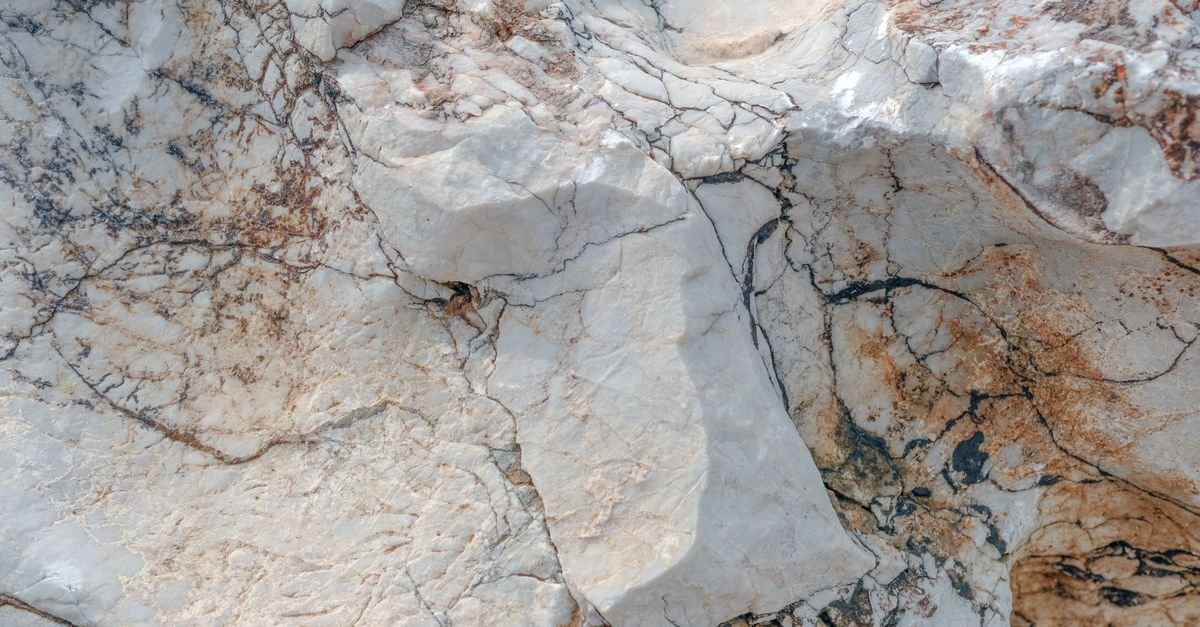
The National Park Service sorts masonry for cleaning purposes by exactly this property, and its graffiti removal brief states it without hedging: “Acid-sensitive stones consisting of carbonate materials may be damaged or even destroyed by contact with acids.” The list it gives is the one to memorise — “stones such as limestone, marble, travertine, calcareous sandstones and shales; most polished stones; and glazed architectural terra cotta and glazed brick” (NPS Preservation Brief 38, *Removing Graffiti from Historic Masonry*).
The mechanism is almost funny. Those stones *are* calcium carbonate. Citric acid’s best trick is dissolving carbonate and then chelating the calcium so it cannot re-deposit — which on a limestone paver is not cleaning, it is quarrying in slow motion. The chelation makes it worse here, not better, because the calcium that would otherwise settle back into the surface is instead held in solution and carried away in your rinse water.
And etching is not a stain you can have another go at. It is a texture change: a dull, slightly rough patch that catches light differently from the stone around it, permanently, from every angle in the garden.
So there is a test, and it is not the same test as the one in the vinegar article. There, a drop of acid identified the *deposit* — fizz meant the white patch was carbonate and worth treating. Here you are identifying the *substrate*, somewhere invisible, before anything touches the visible part. A drop of your mixed solution on the underside of a paver or inside a joint. If that fizzes, the surface itself is carbonate and the bucket goes back in the shed. Same ten seconds, opposite conclusion.
The same answer covers polished and sealed concrete, honed stone worktops, and waxed or lacquered wood. If there is a finish on it, a mild acid dulls the finish and leaves you a patch instead of a stain.
“Eco” on the Bottle Usually Means This Molecule
Worth knowing purely as a label-reading skill: citric acid is the working ingredient behind a great many products sold on their gentleness. Plant-based descalers, “non-toxic” rust removers, eco toilet cleaners, kettle tablets, stainless passivation kits. The front of the bottle sells the absence of something; the back tells you what is actually in there, and it is usually this.
That is not a swindle — the chemistry works, and it is the same chemistry described above. But it changes how you shop. Three things to look at:
- The word. *Citric acid* or *citrate* in the ingredient panel. If neither appears, the gentleness is coming from somewhere else, most often lactic or acetic acid, or from simply being weak.
- The percentage. If it is stated, compare it to the 5% and 10% figures above, because that is what you would have mixed yourself. Many ready-to-use sprays sit well under 5%.
- The position in the list. Ingredients run in descending order. An acid listed after the fragrance is not the star of the show.
What a formulated product legitimately adds is wetting agents and thickeners, and on a wall that is worth real money — a thin watery mix runs off in seconds and does most of its cleaning at the skirting board. On a soak or a flat surface you can keep wet, you are paying for water and a thickener you did not need.
FAQ
What can you clean with citric acid?
Anything where the problem is mineral or metallic: limescale in a kettle, coffee machine or showerhead, hard water film on glass, efflorescence and mortar haze on masonry, sprinkler-iron staining, and light to moderate rust marks. The common thread is calcium or iron. If the mark is organic growth, oil or paint, citric acid has nothing to offer it however long you leave it on.
How much citric acid per gallon of water should I use?
About 6.5 to 7 ounces of powder in a US gallon gives roughly a 5% solution, which is the general working strength for scale and mineral film. Double it to around 13 ounces a gallon for a 10% mix on rust and heavier scale. Dissolve it in warm water first and stir until the liquid is clear, because undissolved grit blocks sprayers and injectors rather than cleaning harder.
Is citric acid better than vinegar for cleaning?
For anything involving iron, yes, and it is not close — citrate chelates dissolved metal ions and acetic acid does so poorly, which is the difference between a rust mark lifting and a rust mark shrugging. Citric acid also lets you mix a known strength rather than being stuck at whatever the bottle happens to be, and it has no smell. On plain carbonate deposits like light limescale the two are much closer, and the vinegar is already in the cupboard.
Does citric acid kill mould and algae?
Not in any form you would mix yourself. It has no oxidising ability, so it cannot break down the pigment that makes growth visible, and a dead colony is the same colour as a live one. Citric acid does appear as a registered antimicrobial active ingredient in some formulated indoor disinfectants at specific concentrations and contact times, but that is a finished product with a reviewed label, not a bucket of 5% solution on a patio. For exterior growth you want an oxidiser.
Will citric acid damage concrete?
Cured concrete is held together by calcium compounds, so any acid takes a little of it — citric acid included. A single dilute application, kept wet for ten to fifteen minutes on sound unsealed concrete and then rinsed thoroughly, will not do visible harm. Repeated strong applications will etch the surface and leave it more porous, which makes it absorb the next stain faster. Never use it on sealed, stamped, coloured or polished concrete.
Can you use citric acid on natural stone?
Not on limestone, marble, travertine or calcareous sandstone. The National Park Service classes those as acid-sensitive carbonate stones that acids may damage or destroy, and the damage is etching — a permanent dull, rough patch rather than a stain you can retry. Granite, slate and unglazed brick are not acid-sensitive in the same way, but test an out-of-sight patch first. If a drop of your solution fizzes on the stone itself, stop.
Does citric acid remove rust?
Yes, and by the right mechanism. It dissolves the iron oxide and then the citrate ion holds the dissolved iron in solution so it cannot re-deposit as a fresh orange shadow when the surface dries. A 10% solution with a fifteen-minute wet dwell handles light and moderate marks. For rust that has been soaking into concrete for years, oxalic acid is the stronger chelator and the better tool.
Can I put citric acid solution in a pressure washer?
Through a downstream injector only, never into the pump or a high-pressure line, and only once it is completely dissolved. Honestly, though, a pump-up garden sprayer applies it better: this chemical wants a long wet dwell on the surface and a pressure washer is good at putting solution on and immediately taking it off again. Bring the machine out for the rinse, flush the injector with clean water afterwards, and keep an acid away from your pump seals.
Reach for It When the Stain Contains Metal
That is the whole selection rule. Citric acid earns its place on the shelf because it is an acid that also grabs metal ions and keeps grabbing them in the acidic range you actually mix — so on rust, on sprinkler iron, on scale carrying a rusty tinge, it does something vinegar structurally cannot. Add that it arrives as a solid you can weigh, stores without fuming, and ships without a gallon of water attached, and the case is a good one.
The case just is not the case on the label. It is not gentle because it is natural. It is a carbonate-dissolving acid that will etch limestone, travertine and marble as thoroughly as anything else in the shed, it has no oxidiser in it so organic growth stays exactly as green as it was, and it does nothing whatsoever to oil.
Weigh out 5%, keep it wet for ten minutes, rinse harder than feels reasonable, and test an invisible corner first. And if you already own three eco-branded bottles that turn out to be this powder and some water — fair enough. So do I. At least now you know what you are holding.