Last Updated on September 26, 2026 by Umar Farooq
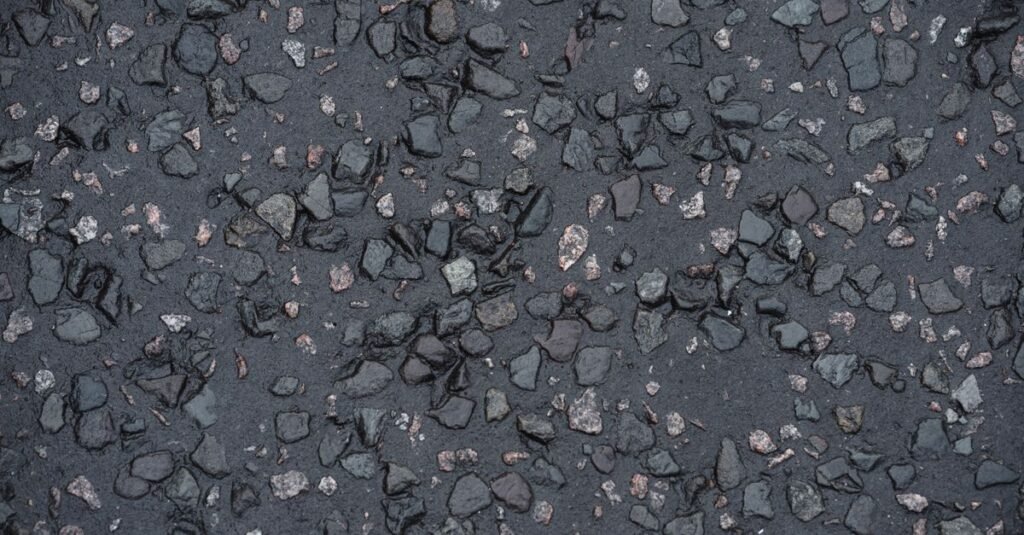
Exposed aggregate concrete cleaning is the one flatwork job where overdoing it produces something that still looks like the finish. The stones are not glued to the slab. They sit in sockets of cement paste, and the depth of that socket is the only thing holding them. Take paste off the top and you have exposed more aggregate, which is what the surface was sold for — so use a detergent with real dwell time, a stiff brush, and a wide low-pressure rinse that never stops moving. Judge the job by what is in the run-off rather than by how sharp the stones look.
Most surfaces tell you plainly when you have gone too far. Wood furs up. Paint lifts at an edge. Vinyl goes matte and chalky in a stripe you can see from the pavement. Exposed aggregate does something more awkward than any of those: it becomes more exposed, which is the word in its own name. There is no warning stripe, because the damage arrives wearing the finish’s uniform.
I went looking for how deep this surface is meant to be exposed in the first place, on the theory that a number for the intended depth is also a number for the depth you must not pass. There are two, they come from different continents, and they agree closely enough to be useful.
Two Thirds of Every Stone Has to Stay Buried
A paper on exposed aggregate pavements presented at the 2015 ERMCO congress, by Aldona Wcisło of Lafarge, puts the durability limit in one sentence. In order to ensure proper durability, “the grains should be immersed to a level of at least 3/5 of their diameter. This prevents against individual grains falling out.” The same page gives the matching ceiling from the other direction: a deeper wash “may present up to 2/5 of the actual size of the used grade.”
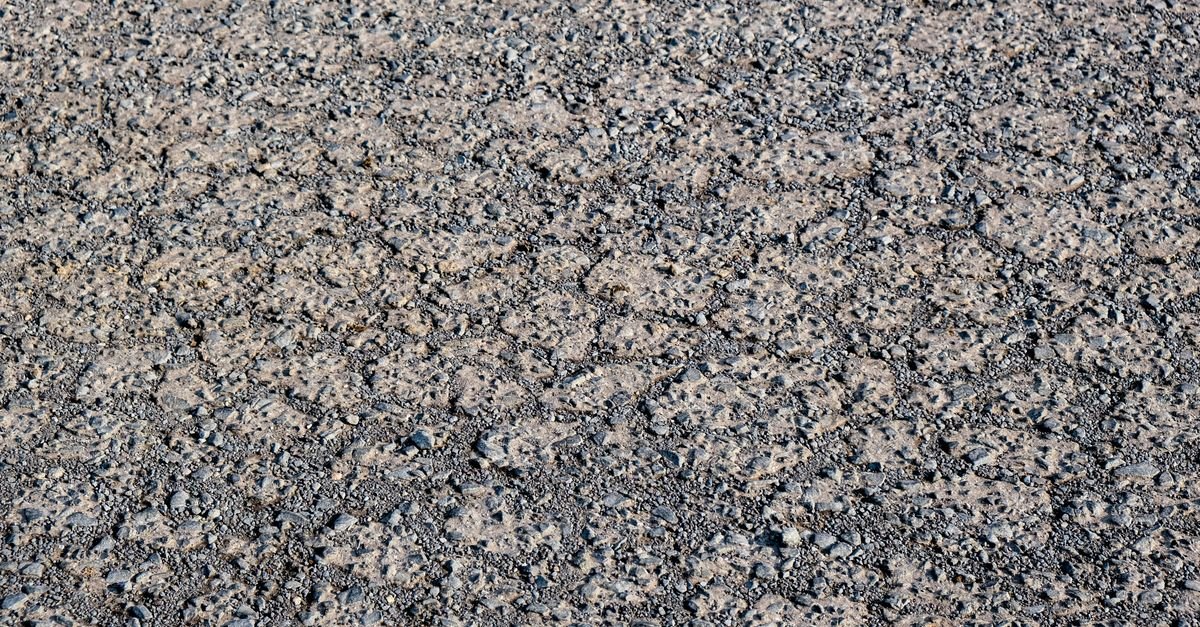
The American finishing trade’s rule of thumb runs alongside it and is stricter: remove surface mortar to a depth no more than one third the diameter of the aggregate particle. That version is widely attributed to the Portland Cement Association, and I could not find it on a PCA page I was able to open, so I am giving it to you as the trade rule of thumb it demonstrably is rather than as a specification. Concrete Network states it in those words, and this site has already used that page elsewhere.
Put the two together and they land in the same place. Three fifths embedded, or two thirds embedded — either way, most of every stone in your driveway is underground, and the visible pebble is the small part. That is not decoration. It is the fixing.
Which is the whole mechanism, and it is worth saying slowly because nothing about the surface suggests it. There is no adhesive in exposed aggregate concrete. There is no mesh, no key, no mechanical clip. Each stone is a lump of granite or river gravel sitting in a hole of hardened cement paste that fits it exactly, and the grip is a function of how much of the stone that hole still contains. Wash a millimetre of paste off the top of the slab and you have not cleaned a millimetre of dirt away — you have shortened every socket on the surface by a millimetre at once.
The proportions are geometry, not force, and they will not convert into a pressure. Three fifths of a stone’s diameter is a ratio; a machine’s rating is water pressure at an orifice, and there is no arithmetic that turns one into the other. I mention it because the temptation to build a tidy equation out of those two numbers is strong and the result would be fiction. What the ratio does give you is a picture: a wash that takes the reveal from two fifths to half the diameter has not changed the look of the slab much, and has moved every stone on it measurably closer to falling out.
None of this means the surface is delicate. Exposed aggregate is a road finish in places, chosen partly because the texture is quiet under tyres and resists polishing. It means the failure is cumulative and one-directional. Nobody publishes the pressure at which cement paste begins to erode — I went looking, and every figure circulating for it traces back to a contractor’s blog — so the number you need does not exist. What does exist is a published safe working range by concrete finish, and the PSI table for concrete driveways is the page on this site that owns it, including the row for this one.
Over-Washing Looks Exactly Like a Deeper Finish
Here is the part that makes this surface unusual, and it is the reason the damage gets a whole section rather than a warning box. On almost every other material, a too-aggressive wash leaves a mark that contrasts with the undamaged surface. Etching on a broom-finish slab is lighter and rougher than the concrete beside it. A furred cedar board is fuzzy next to a smooth one. Those are legible faults.
On exposed aggregate, a too-aggressive wash produces more exposed aggregate. It is the same finish, a grade deeper. Worse, for about the first week it looks like a job well done: the stones stand out more crisply, the colours read stronger, the whole slab looks like the photograph in the brochure rather than the tired thing you started with. The surface’s failure mode and its sales pitch are the same sentence.
So the tells are not visual, and you have to go looking for them deliberately.
The run-off is the live reading. Water coming off a slab you are cleaning should be dirty. Water coming off a slab you are eroding is gritty, faintly milky, and leaves a fine sandy deposit where it pools at the low end. That grit is the sand fraction of the paste, and there is only one place it can have come from. Stop the moment you can feel it between your fingers.
The shadow gap around a stone. Look at a single pebble close up, in raking light. Intact paste comes up to meet the stone with no gap. A stone whose socket has been washed back sits with a thin dark rim around it where the paste has retreated below the contact line. Once a few stones show that, the slab is shedding.
The sheltered patch is your original depth. This is the free check, and it takes a torch and two minutes. Find a strip the weather and the wand have never reached — under the lip of a step, behind a planter, along the wall where a machine will not fit, inside the footprint of something that has sat there for years. That is the reveal depth the finisher signed off on. Compare it with the middle of the traffic lane. If the sheltered stones are noticeably less proud than the ones out in the open, the difference is what has already been lost, and it did not all come from your pressure washer — but some of it did.
Pea gravel underfoot after rain. By this point the argument is over. Stones that have lost their socket do not fall out on the day you wash; they sit loose until water, frost or a tyre lifts them. A driveway that needs sweeping for loose gravel every wet week is a driveway that has passed the embedment limit, usually over several seasons and several washes.
The last of those is why this matters more than an etched patch would. An etched mark on plain concrete is ugly and permanent, and that is the end of the cost. The site’s page on wand marks and streaking makes the point that an etched stripe is exposed aggregate created by accident, and it is right — but on a slab that is *already* an exposed aggregate finish, the honest repair is worse than the fault. Resurfacing is the only real fix for lost paste, and resurfacing an exposed aggregate slab means burying the pebbles you were trying to look after under a grey topping. There is no product that refills a socket, and the repair that works destroys the reason you have the surface.
Which is the one strong position I will take on this page: stop trying to find the safe PSI for exposed aggregate and start reading the water. The published limit on this surface is geometric — three fifths of the stone below the paste — and no pressure figure maps onto a depth you cannot see. The run-off does. It is the only real-time instrument you have, it costs nothing, and it tells you about the socket rather than about the pump.
Somebody Already Washed This Slab Once, With a Hose
Every argument above gets easier once you know how the finish is made, because the manufacturing step is a wash. Not a metaphor for a wash. An actual one, with water, at a published pressure, with a published stop signal.
There are three routes to the finish. Stone can be seeded into the fresh surface by hand and floated in, which gives a heavy, decorative reveal. The aggregate already in the mix can be uncovered by abrading the hardened slab — sand or water blasting, grinding, acid etching. Or, most commonly on driveways and paths, a chemical surface retarder is sprayed onto the fresh concrete, which holds the top few millimetres of mortar soft while everything underneath sets normally. The next morning, somebody washes that soft mortar off and the stones appear.
The retarder route is the one with the paperwork, and the paperwork is what makes this page possible.
Euclid Chemical’s Concrete Surface Retarder Formula S describes itself as being “for horizontal exposed aggregate surfaces” and states the depth it works to: it “provides up to 1/4″ (6 mm) depth retardation”, with the recommended coverage of 100 to 200 square feet per gallon giving “1/8″ to 3/16″ (3.2 to 4.8 mm) of surface retardation.” Removal is not a machine operation: “When the underlying concrete has hardened, the retarded mortar surface can be flushed off with a stream of water and/or removed by scrubbing with a stiff brush.” Timing is 12 to 24 hours after application.
So the entire finish is a specified thickness of paste between an eighth and a quarter of an inch deep, removed with a stream of water and a stiff brush. Read that as a depth budget and the arithmetic is uncomfortable: the whole decorative effect lives inside three to six millimetres, and a wash that takes another half a millimetre off the top has spent a meaningful fraction of it.
Sika’s data sheet for SikaCem-110 Surface Retarder 05 goes further and gives the method a stop condition. Under *Removal and Exposure*: “Expose the aggregate by washing it within 6-24 hours after application, depending on the temperature and humidity… Washing off shall be started in one corner and evaluated before proceeding to complete the remainder of the concrete surface. Use a garden hose and a new, clean broom or pressure washer to work the surface. Work in a small area. If the reveal depth is too deep, stop washing and let the concrete cure and harden further.“
Note what the manufacturer’s own instruction ranks and in which order. A garden hose. A new, clean broom. Then, third, a pressure washer. Work in a small area, evaluate one corner first, and the published signal to stop is that you have exposed too much. That is not a caution bolted onto a cleaning procedure — it is the procedure, and the failure mode it warns about is precisely the one a homeowner produces on a cured slab years later.
The ERMCO paper supplies the geometry the data sheets leave out. Where a machine is used for the finishing wash rather than a hose, “the nozzle should be directed at 45 degree angle to the surface at a distance of about 20 cm and pressure of 4-6 BAR.” Twenty centimetres is about eight inches, which is closer than you would expect. Four to six bar is roughly 58 to 87 psi — my conversion, not anybody’s specification — and it is about what a garden tap does, which is exactly what Sika and Euclid say to use. Two independent sources, one American and one European, describe the same operation at hose pressure with a brush.
Do not take 87 psi as your cleaning setting, and I want to be blunt about why, because it would be an easy and wrong conclusion to draw from a good number. Twelve-hour-old retarded mortar is deliberately unset. Your slab’s paste has had years to hydrate and is a genuinely hard material. The figure does not transfer. What transfers is the direction of the whole process: the trade’s method for *removing* paste from this surface is water at hose pressure, oblique, with mechanical contact from a brush — which tells you that pressure was never the active ingredient, and that a machine doing the same job on cured paste is doing a slower version of a finishing operation rather than a faster version of cleaning.
Against that, the consumer SERP is remarkable. Of the three pages ranking for this query that I could open, two publish the identical figure — 2,100 to 3,800 PSI — and both describe it as a *low* pressure setting. The number is attributed to nobody. Its upper end is three hundred psi past the 3,500 psi minimum the Decorative Concrete Council publishes for stripping old sealer off a patio before resealing it, which is the highest-stakes wash in decorative concrete. A range whose top is a stripping figure is not a low setting, and two pages quoting each other is not a source.
One boundary worth marking, since it is the same chemical in two very different places. The DCC’s best-practice note on surface tears in textured stamped concrete tells finishers not to spray stamped work with a surface retarder, describing retarders as materials “typically used to create exposed aggregate finishes.” The trade body draws the line between these two decorative surfaces using your retarder as the marker. Everything about colour hardeners, release powder and film sealers on patterned slabs belongs to cleaning stamped concrete, including the argument about why a nozzle’s angle matters on a textured surface at all.
Exposed Aggregate Concrete Cleaning Happens Below the Tops of the Stones
Knowing the finish is made by washing does not tell you how to clean it, and the practical question is still the one you started with: this surface gets filthy in a way a smooth slab does not, and pressure is the obvious answer. It is worth understanding why the surface collects dirt before deciding what to point at it.
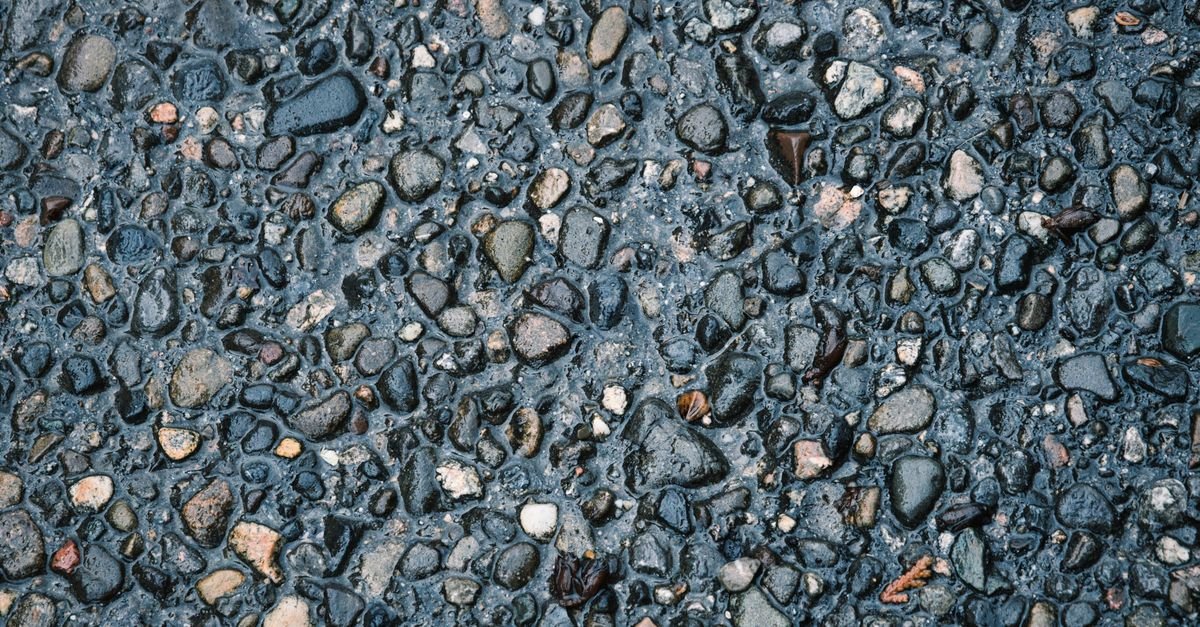
Sika lists a “fully cured surface is attractive and slip resistant” as a selling point, and slip resistance is roughness. Roughness on a horizontal plane is a sediment trap. Between every pair of stones there is a small depression with a sheltered floor, and the total number of those on a driveway is in the tens of thousands. Rain fills them, sediment settles in them, and nothing sweeps them out, because a broom rides on the tops of the stones and a leaf blower moves air across them rather than into them.
That is also the reason a jet disappoints. The dirt is in shadow and the stones are in the light. Water leaving a nozzle travels in straight lines, so a jet aimed at the slab strikes every high point and skips the far side of each one; you get a clean set of pebble tops, a dark line behind each pebble, and a slab that looks washed from standing height and grubby from a chair. The instinctive response is more pressure. More pressure does not change where the water can reach. It only raises the energy landing on the one part of the surface that did not need it — the paste at the shoulders of the stones, which is the paste holding them.
So the sequence that works on this finish is not a pressure sequence, and it is essentially the one both retarder manufacturers already wrote down.
Chemistry does the lifting, at the bottom of the cups. A cleaner applied wet and left to dwell goes where water goes, which is down into every depression, and works on the dirt in place. That is the opposite of a jet’s coverage pattern and it is why detergent outperforms pressure here by a wider margin than on flat concrete. Which product depends entirely on what the mark is — algae and tannin, oil, rust and mineral deposit all need different chemistry and ignore each other’s — and the four stain families and the correct order of operations are covered properly in cleaning stains from concrete, which owns that method. Do not skip the diagnosis on this surface. You get fewer attempts than you do on a grey slab, because each attempt costs a fraction of a millimetre.
The brush is not the poor relation. Both data sheets name a stiff brush or a clean broom as the tool that does the actual work of getting mortar out of the texture, and what is true for soft mortar is more true for set-in grime. A stiff-bristled deck brush on a long handle reaches into the depressions because the bristles are narrower than the gaps and flex around the stones. Twenty minutes of that changes a textured slab more than any nozzle upgrade. It is also the least fun paragraph on this page, and I am aware of that.
Then a rinse whose only job is carrying, at the widest tip you own. Flow moves the loosened dirt; pressure does not clean it any better once the chemistry has let go. Keep the fan wide, keep the standoff generous, keep the wand moving at a constant height and never let it hover — a paused wand on exposed aggregate is a small, circular finishing operation. Leave the turbo and rotary nozzles in the bag entirely. However wide the circle a rotary tip draws, at any given instant its whole output is landing on one small patch of paste, and the mark it leaves on this surface is a shallow bowl of loose stones you will find next spring.
Push the water one way. On a slope, work from the high side down so the run-off leaves across concrete you have already treated. There is one case where that inverts: if you have used a dilute acid or an efflorescence remover, the water is carrying dissolved material rather than dirt, and then you rinse *upward* so the solution never runs onto untreated concrete below. That is backwards from the rest of this site on purpose, and concrete cleaning acid is where the reasoning lives.
Biological growth needs killing, not shifting. Moss and algae settle into the depressions because the depressions hold water, and attacking live moss with a jet redistributes it and leaves spores in the next thousand cups along. Kill it, wait, then sweep it out dead. The sequence for moss on concrete applies without modification, and it suits this surface better than most.
Finally, the sealer. Both manufacturers treat sealing as part of the finish rather than an option: Euclid names a cure-and-seal for exposed aggregate in the same data sheet, and Sika instructs that “to protect the exposed aggregate finish, reseal the concrete with the same product initially used to cure it.” A sealed exposed aggregate slab is easier to clean, releases dirt at lower pressure, and puts a film between your wand and the paste. It also brings its own calendar, its own failure modes and its own reason not to wash hard, and the choice between the two sealer families belongs to driveway cleaning and sealing rather than here.
FAQ
Can you pressure wash exposed aggregate concrete?
Yes, with a wide tip, a long standoff and a wand that never stops moving — but understand that you are running a mild version of the operation that created the finish. Both surface retarder manufacturers whose data sheets I read rank a garden hose and a stiff brush ahead of a pressure washer for removing paste from this surface, and Sika’s published stop signal for that job is the reveal getting too deep. Treat the machine as the rinse at the end of a chemical clean rather than as the clean itself.
What PSI is safe for exposed aggregate concrete?
Nobody with standing in the field publishes a cleaning ceiling for it, which is worth knowing because the figure circulating on the SERP — 2,100 to 3,800 PSI, described as a low setting — is attributed to no source at all and its upper end is above the decorative concrete trade’s published minimum for stripping sealer. This site’s own working figure by finish is 2,000 to 2,500 PSI with a 25 or 40-degree tip at 12 to 18 inches, which sits in the PSI-by-finish table for concrete driveways. Start lower than that and only come up if the dirt genuinely will not move after a proper dwell.
Why is my exposed aggregate driveway losing stones?
Because the cement paste around them has been worn back past the point where the socket can hold them. The published durability limit is that grains stay immersed to at least three fifths of their diameter, and a stone below that comes out on its own schedule — usually after rain or frost rather than during the wash that caused it. Repeated high-pressure washing is one cause; so are de-icing salt, freeze-thaw cycling, and a reveal that was cut too deep on the day the slab was finished.
Can lost stones be put back?
Not in any way that matches. Individual pebbles can be re-bedded in a patching compound, and on a small area out of the main sightline that is a reasonable afternoon, but the patch will read as a patch because the surrounding matrix colour and the reveal depth will not agree. The full repair is resurfacing, and on this finish that buries the aggregate under a new topping — which fixes the slab and removes the reason you had it. That asymmetry is the strongest single argument for washing gently.
Can I use a surface cleaner on exposed aggregate concrete?
A surface cleaner’s real advantage here is that it fixes the nozzle height and makes it impossible to pause, which removes the two operator errors that do the most damage. Against that, it rides on the high points of a textured slab, so it cleans the tops of the stones well and reaches into the depressions no better than a wand does. I could find no published guidance from any manufacturer on running one over exposed aggregate, so take that as practical reasoning rather than a specification: it is a safer way to apply the rinse, not a substitute for dwell time and a brush.
Will bleach or acid damage exposed aggregate concrete?
Sodium hypochlorite at household dilution is the standard treatment for the algae and mould that thrive in the texture, and it does not attack the aggregate. Acid is the one to be careful with, because acid etching is itself a recognised way of exposing aggregate — a wash strong enough to remove a mineral deposit is working on the same paste that holds the stones. Use the mildest product that does the job, keep the dwell short, pre-wet first, and rinse upward so the spent solution does not run onto concrete you have not treated.
How often should exposed aggregate concrete be cleaned?
Often enough that the dirt in the depressions has not had time to set hard, which in practice means an annual detergent-and-brush wash rather than a heroic one every five years. The economics are specific to this surface: a light clean every year costs you almost no paste, while one aggressive rescue costs a measurable fraction of a reveal that was only three to six millimetres deep when it was new.
The Slab Is Already Exposed Enough
Every stone out there is sitting in a socket of cement paste that somebody measured in eighths of an inch, washed to a depth they had agreed in advance, and then deliberately stopped washing. Three fifths of the stone below the line, two fifths above it, and a twelve-hour window in which a garden hose could still have taken too much. That afternoon was the only one where the depth was a decision. Every wash since has been a small unbudgeted withdrawal from the same account, and no product on any shelf makes a deposit — the repair that genuinely works buries the pebbles under grey topping and ends the argument by removing the surface.
So read the water, not the pressure gauge. Dirty run-off means you are cleaning. Grit in it means you are finishing, and the finishing was done years ago by somebody with a broom.