Last Updated on September 24, 2026 by Umar Farooq
Driveway cleaning and sealing is one job in two halves with a wait in the middle: wash the slab, then give it at least 24 hours of dry weather before any sealer touches it — 48 to 72 hours if the day is humid, the slab is shaded, or it rained at any point.
That wait is the whole article. Everything else about sealing a driveway is product choice and roller technique, and both are recoverable. Sealing over water is not, because the failure happens underneath the film where you cannot reach it, and it shows up a fortnight later as cloudy patches that were not there when you packed the roller away.
The washing half is covered in full in how to pressure wash a driveway. This picks up the moment you turn the machine off.
Sealer Does Not Stick to Dirt, and It Will Not Dry Over Water
Every sealer, of every chemistry, makes the same assumption: that it is meeting clean, open, dry cement paste. Two things break that assumption, and they break it in different ways.
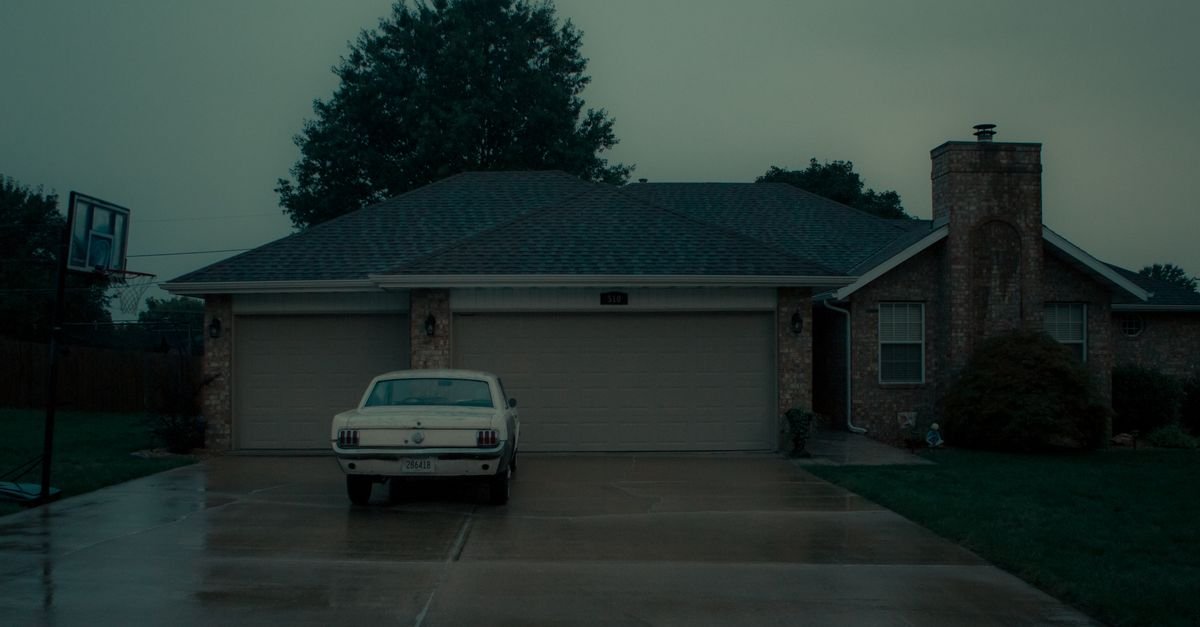
Dirt is the obvious one, and the less interesting. A film-forming sealer laid over road grime bonds beautifully — to the grime. The grime is bonded to nothing in particular. So the coating lifts in sheets the following spring, taking a thin grey layer of last year’s traffic with it, and you now have a stripping job instead of a cleaning job. That is why washing is not an optional first step recommended by people who also sell washing. It is the surface prep.
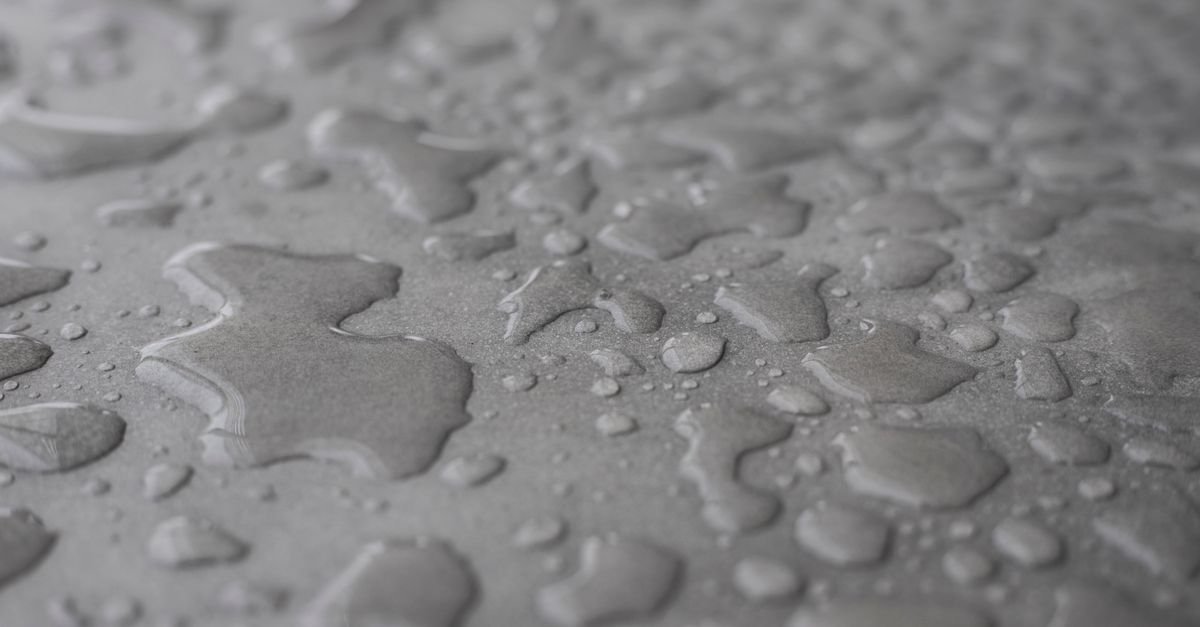
Water is the one that catches careful people out. It hides. A slab in July sun feels bone dry on top within an hour while the pores underneath are still holding the several gallons you just put through them, and concrete pores are capillaries — they release moisture slowly, upward, for as long as it takes.
What that trapped water does depends on which sealer you chose:
- Film-forming sealers (acrylics) cure into a continuous skin. The water below still wants out, so it turns to vapour against the underside of that skin and pushes. You get blisters, pinholes, and the milky white blush that people describe as “the sealer went cloudy.” It did not go cloudy. It went over a wet slab.
- Penetrating sealers (silane, siloxane, siliconate) need the pores empty so they can get into them and react. Pores already full of water do not admit anything. The product sits on the surface, flashes off, and protects nothing — an expensive rinse.
One more thing to check on that first dry inspection: if a white powdery bloom has appeared as the slab dried, that is efflorescence, salts carried up from inside the concrete, and it is not dirt you missed. Remove it with an efflorescence cleaner and let the slab dry again. Sealing over it locks a growing layer of salt under your film, which is the one driveway problem that genuinely looks worse every year.
Driveway Cleaning and Sealing: What the Waiting Period Is Actually For
The manufacturers are unusually consistent here, and their numbers are better than the internet’s. Eagle’s application guidance for its Armor Seal is to “allow 24 hours for concrete surface to completely dry after pressure washing,” with the note that it “may take longer to dry if humid environmental conditions exist,” and to apply only when surface and air temperatures are above 50°F and below 95°F. Foundation Armor’s data sheets say the same 24-hour minimum and add the sentence that matters most — the surface may look dry and feel dry to the touch while water is still sitting in the pores below it.
So 24 hours is a floor, not a target. Here is how the floor moves.
| Conditions after the wash | Wait before sealing |
| Full sun, moving air, humidity under about 60% | 24 hours |
| Overcast, still air, or humidity above 70% | 48 hours |
| Shaded slab — north side, under trees, beside a fence | 48–72 hours |
| Rain at any point during the wait | Start the clock again when it stops |
| Below 50°F or above 95°F | Do not seal at all; wait for the window |
Two practical consequences. First, this is a weather-window job, not a Saturday job: you want three consecutive dry days on the forecast before you wash, not before you seal. Second, the slab does not dry as one object. The strip along the garage that never sees sun, the low corner where the fall stops, and the two metres under the tree are all on a different timetable from the middle, which is the part you will be looking at when you decide it is ready.
Three Ways to Check the Slab Is Dry Enough
Rather than trusting the forecast and your palm, spend ten minutes proving it. All three of these are free, and the first one is an actual published standard rather than a trick from a forum.
The Plastic Sheet Test, Which Is an Actual Standard
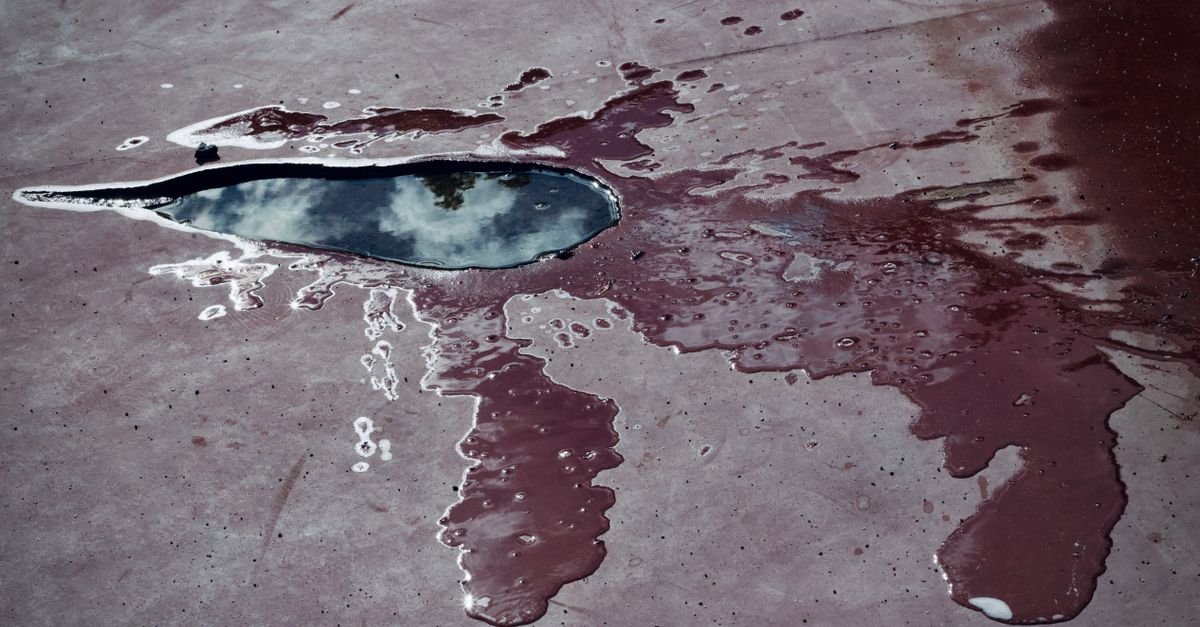
ASTM maintains D4263, the Standard Test Method for Indicating Moisture in Concrete by the Plastic Sheet Method, and its purpose is exactly yours: it exists to indicate capillary moisture “prior to the application of coatings on concrete.” Tape a roughly 18-inch square of clear polyethylene to the slab, seal all four edges so nothing breathes, and leave it at least 16 hours. Lift it and look. Condensation on the underside, or concrete that has gone visibly darker beneath it, means moisture is still moving up out of the slab and the sealer will be trying to cure on top of it.
The standard is honest about its limits — it tells you moisture is present, not how much — but for a driveway that is the entire question. A roll of painter’s plastic and some tape costs less than one gallon of the sealer you are about to waste.
One Even Grey, Corner to Corner
Wet concrete is darker than dry concrete, which makes the slab its own moisture meter. Stand at one end in flat morning light and look across the whole surface for a single, consistent light grey. Any patch reading darker than its neighbours is still holding water, and a slab that is 90% ready is not ready, because you will seal the whole thing anyway.
This is also the test people fool themselves on most reliably, since a driveway reads beautifully even at the exact moment it is at its worst. Judge it from a distance and in daylight, not from directly above with a hopeful expression.
The Low Corner and the Shaded Strip
Put the plastic sheet where the slab is slowest, not where it is convenient. The low end of the fall, the north-facing strip, the two square metres under the tree, the seam against the garage threshold — those are the places that will still be damp when the middle is ready. If you only have the patience for one test square, tape it down in the shade.
Penetrating vs Film-Forming: Two Different Bargains
At summary depth, driveway sealers split into two families, and they are not competing versions of the same product. They are different deals.
| Compared on | Penetrating (silane / siloxane) | Film-forming (acrylic) |
| Where it lives | Reacts inside the pores | Cures as a skin on top |
| Look | Unchanged — the concrete still looks like concrete | Darkened, satin to wet-look gloss |
| Failure mode | Quietly stops repelling water | Peels, blisters, hazes |
| Wet traction | Unchanged | Slippery unless grit is added |
| Reseal interval | Manufacturer claims 7–10 years | Typically 1–3 years |
Foundation Armor, which sells both, puts the difference plainly: its silane-siloxane products “will not change the look or color of the concrete” and give “up to 7-10 years of life before the need to reseal,” while acrylics “leave behind a visible, protective surface film” and “typically need to be re-applied every 1-3 years”.
Here is the opinion, and it is about the driveway specifically rather than sealers in general. A wet-look acrylic is the wrong bargain for a surface you park a hot car on. You are choosing a film that needs redoing three to seven times as often, that gets slick in rain unless you add anti-slip grit, and that will wear visibly in the tyre tracks while the edges stay glossy. Eagle’s own instruction is to “reseal surface as needed, but not more than every two years to prevent buildup of sealer” — read that as a manufacturer warning you, in writing, that its product accumulates. Penetrating sealers have no such problem, because there is nothing on the surface to accumulate. If you want a driveway that looks wet, a penetrating sealer will disappoint you. If you want a driveway you stop thinking about, it will not.
Whichever you pick, two thin coats beat one generous one. Eagle specifies two thin coats with the surface tack-free between them — roughly four hours — and the second cross-rolled perpendicular to the first. Coverage runs from about 300 square feet per gallon on smooth troweled concrete down to 100 on exposed aggregate and pavers, which is worth knowing before you buy one gallon for a 600 square foot slab and discover halfway across that you are rationing.
The Week It Takes to Do Both Properly
Timings assume a 600 square foot concrete slab and reasonable weather. The calendar, not the labour, is what people underestimate.
| Stage | Roughly | Why it takes that long |
| Degrease and spot-treat the stains | 30 min plus dwell | Sealer over an oil stain seals in an oil stain |
| Wash the full slab | 1–2 hours | Detergent, dwell, rinse, perimeter detail |
| First dry inspection | Next morning | Efflorescence, cracks and empty joints only show up dry |
| Repair cracks and refill joints | 1 hour plus cure | Follow the sealant’s own cure time, often 24 hours |
| The drying wait | 24–72 hours | The reason this page exists |
| Plastic sheet test | Overnight, 16 hours | Runs inside the drying wait, not after it |
| Seal, two thin coats | 2–3 hours | Tack-free between coats, roughly 4 hours |
| Keep water off | 24 hours | Rain on uncured sealer is the same failure, later |
Total labour is most of one day. Total elapsed time is three to five. If a forecast puts rain anywhere in that block, do the washing another weekend — a clean driveway waiting two weeks for a dry window is a completely fine outcome, and considerably better than a sealed one with a cloud pattern in it.
If your driveway is asphalt rather than concrete, none of the above transfers. Sealcoating asphalt runs on its own timings, its own cure gates and its own two-to-three-year cadence, and it is covered in can you pressure wash an asphalt driveway.
What a Sealed Driveway Does to Your Next Wash
Sealing changes the maintenance job, and mostly in your favour. On bare concrete, oil, tannin and algae soak into open pores, which is why removing them needs degreaser, dwell time and a second attempt. On a sealed slab the same spills sit nearer the surface, so most of them come off with detergent and a stiff brush before the machine is even involved.
The catch is that your old settings are now too aggressive. Bare concrete tolerates 2,500 to 3,000 PSI and a surface cleaner, and the reasoning behind those figures is in how much PSI to clean a concrete driveway. A film-forming sealer does not. A narrow tip held close will cut through an acrylic film and leave a bright patch of bare concrete inside a glossy driveway, which is the most conspicuous possible result. Three habits change:
- Drop the pressure and widen the tip. Start at the lowest setting that lifts the dirt, a 40-degree tip, and a foot of distance. You are washing a coating now, not a slab.
- Check your degreaser. Strong solvent degreasers soften some acrylics. On a sealed driveway, a pH-neutral cleaner and a brush first, and reserve the aggressive product for spots.
- Let the calendar do more of the work. An annual light wash keeps a sealed slab presentable. Save the full chemistry-and-surface-cleaner treatment for the wash immediately before the next reseal, when the coating is being replaced anyway.
Penetrating sealers are far more relaxed about all of this, since there is no film to remove, though they do wear out — silently. The tell is water. A slab that has stopped beading and starts darkening where rain lands has stopped repelling, and is telling you the reseal is due.
FAQ
How long after pressure washing can I seal a concrete driveway?
Twenty-four hours minimum in warm, dry, moving air, and 48 to 72 if the day is humid, the slab is shaded, or rain interrupted the wait. Sealer manufacturers publish the 24-hour figure themselves as a minimum, not as a target.
Can I seal a driveway that is only slightly damp?
No, and “slightly damp” is the exact condition that produces the worst results, because it looks ready. Trapped moisture blisters a film sealer and blocks a penetrating one from entering the pores at all.
What actually happens if you seal concrete too soon?
With an acrylic, a milky white haze, blisters and pinholes as vapour pushes up through the curing film. With a penetrating sealer, nothing visible at all — it simply fails to soak in, and you find out two winters later when the slab stops repelling water.
Do I really need to clean a driveway before sealing it?
Yes. Sealer bonds to whatever it lands on, and if that is road film it will peel off next spring carrying a layer of grime with it. Cleaning is not a cosmetic step before sealing, it is the surface preparation.
How often should a concrete driveway be resealed?
It depends entirely on the family of sealer. Acrylic films are typically reapplied every one to three years; silane-siloxane penetrating sealers are claimed at seven to ten. One manufacturer specifically warns against resealing more often than every two years, because film sealers build up.
Can I pressure wash a driveway that is already sealed?
Yes, at lower pressure and with a wider tip. A close-range narrow jet will cut a film sealer off in patches and leave a blotchy slab. Sealed concrete also gets cleaner at lower pressure than bare concrete does, so you are not losing much.
Does sealing stop oil stains?
It reduces them substantially rather than preventing them. A sealed slab keeps oil closer to the surface where detergent can still reach it, instead of letting it soak into open pores. It does nothing about a stain that was already there when you sealed over it.
Should I seal over efflorescence?
No. That white bloom is salt migrating out of the slab, and sealing traps it under the coating where it keeps arriving. Clean it off with an efflorescence remover, let the slab dry again, and restart the drying clock.
Dry Slab, Dry Week, Then Seal
Nothing about sealing a driveway is difficult. The roller work is roller work. What the job demands is patience at the one point where nothing appears to be happening — the day and a half where a clean, dry-looking slab sits there asking to be finished.
Tape a square of plastic down in the shadiest corner, leave it overnight, and let it answer instead of you. If it comes up dry, roll two thin coats and keep the hose off it for a day. If it comes up beaded on the underside, you have just saved yourself a gallon of sealer and a spring weekend with a stripping product, which is a reasonable return on a piece of painter’s plastic.